
Historical Hawaii
Remember James Michener? Author of super long books with super short titles that were on all the bestseller lists? Many years ago, I got about a third of the way through one of his books, Hawaii. It was a valiant effort, but ultimately I was defeated by its 1130 pages.
My mom finished the book, though. I have a distinct memory of her rant about the some of the characters in Michener’s novel — the American missionaries, to be precise. How stupid, she said, that they insisted on wearing fashions more suited to New England than the hot, tropical climate of Hawaii.
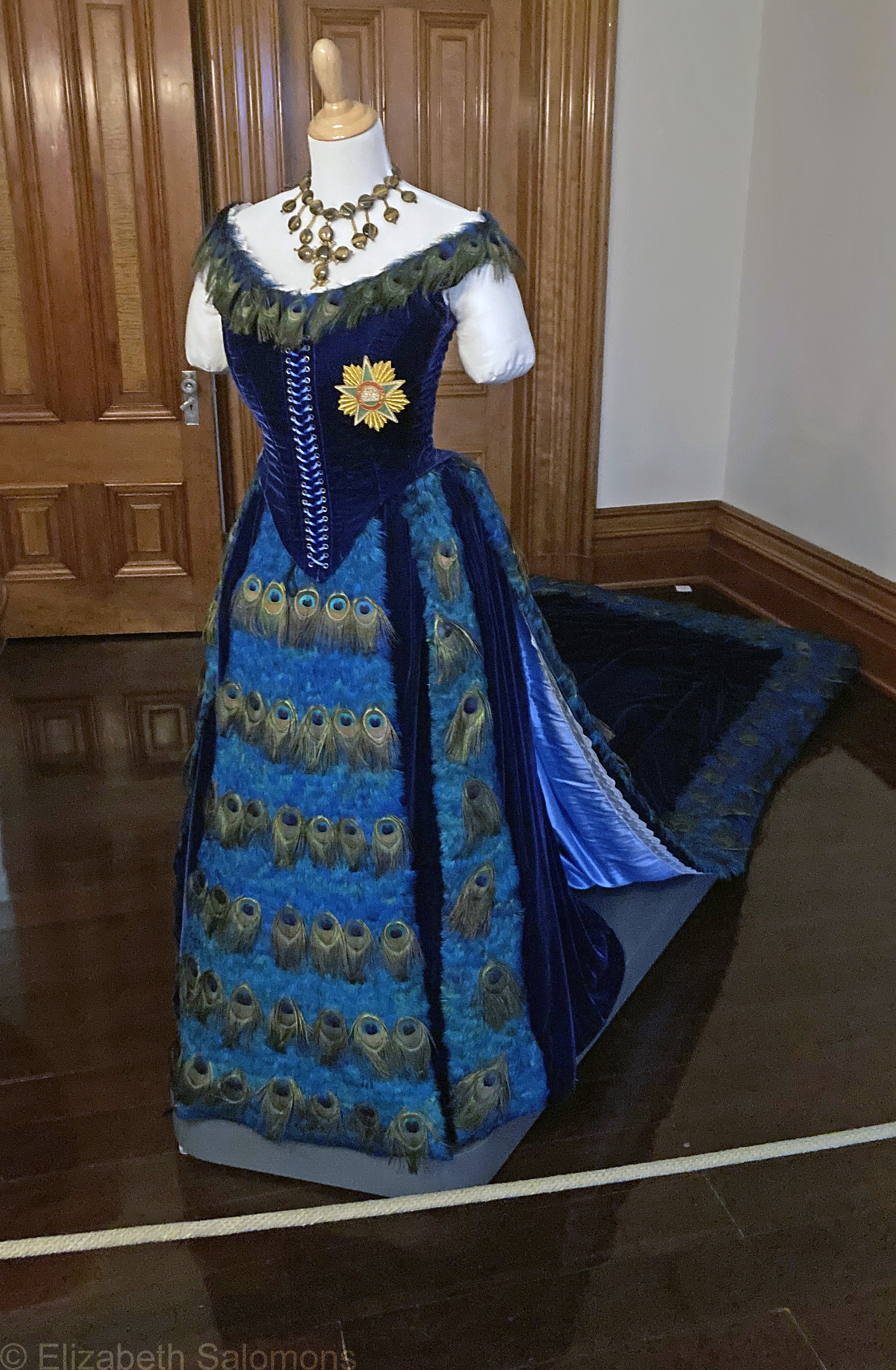
So imagine my surprise, as I took a deep dive into Hawaii’s colonial history last winter, when I learned that the Hawaiian royals also preferred Victorian fashion. This dress, for example. It’s a replica of the Peacock Gown that Queen Kapi‘olani wore to Queen Victoria’s Golden Jubilee in 1887.
I was also surprised to learn that Hawaii came this close to becoming a part of the British Empire. The first European to sail to the islands was the English explorer James Cook — he arrived in 1778. We’ll skip over the part where he was killed by the Hawaiians and jump ahead to George Vancouver, a member of Cook’s crew who returned with his own expedition in 1792, and again in 1793 and 1794. Vancouver became good friends with King Kamehameha I, and Hawaii became the base for British trade in the Pacific. It was Kamehameha who wanted the Union Jack as part of the Hawaiian flag that was adopted in 1816.
However, around this time, an assortment of missionaries was making advances in the Pacific. Amongst themselves, the British and American missionaries divided the Pacific between them: the British would restrict their evangelistic efforts to the south of the Equator, and the Americans went north. The Hawaiians would have preferred the reverse arrangement; Kamehameha II even went to England to arrange for a formal agreement with the King.
But as time went on, Hawaiian trade was increasingly linked to the US economy. Hawaiian independence suffered a fatal blow when a group of white planters and businessmen overthrew the last Hawaiian monarch, Queen Lili’uokalani, in January of 1893. She was held prisoner in her own palace for eight months. Formal annexation with the US took place in 1898 when the Spanish–American War made Hawaii a critical base for the American military while they were fighting in the Philippines, and the islands attained statehood in 1959.
About that deep dive into Hawaii’s colonial history: it took place here, at Honolulu’s Bishop Museum.

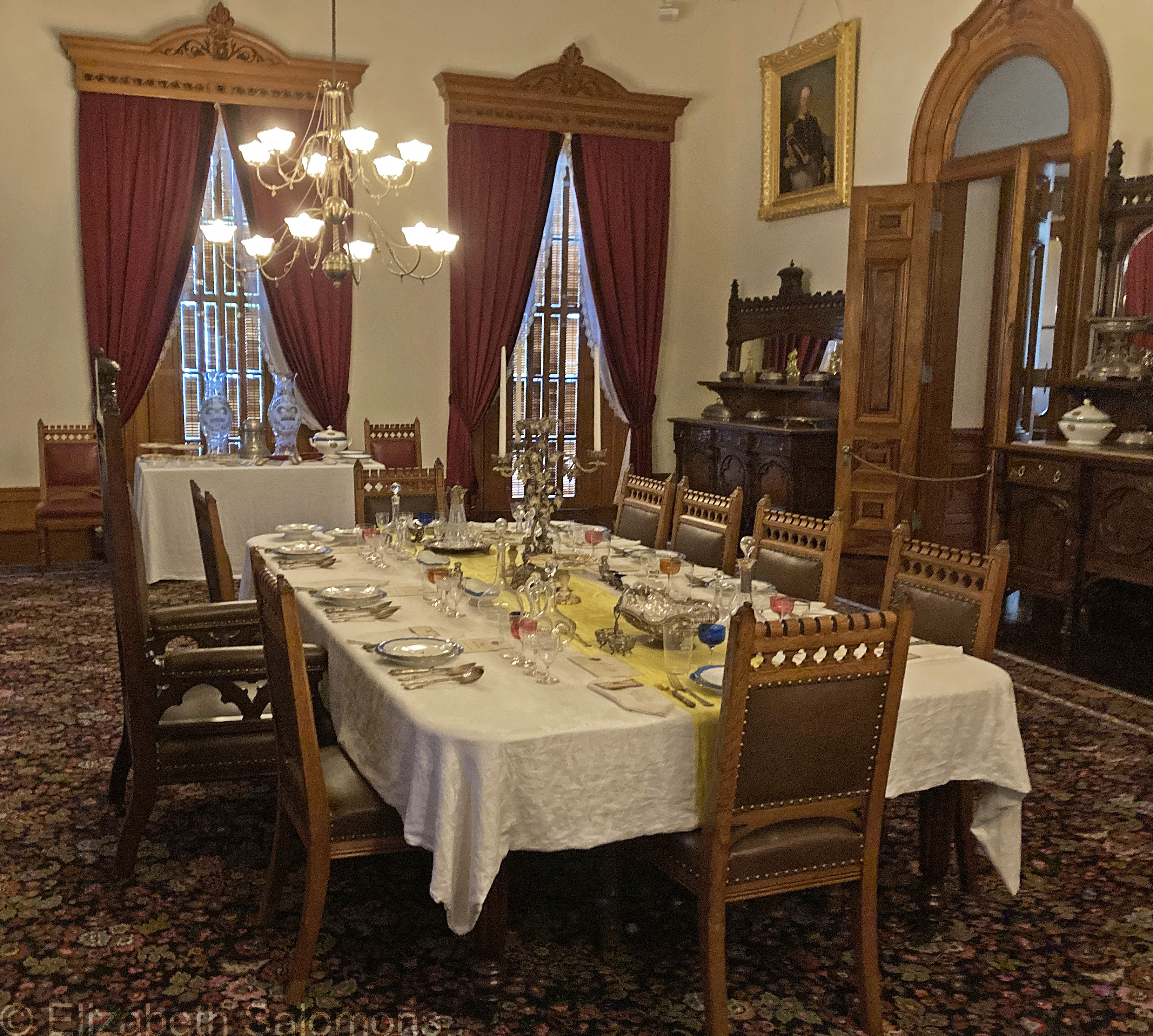
And also here, at Iolani Palace.

Bishop Museum was established in 1889 by Charles Reed Bishop to house objects and heirlooms of his wife, Princess Bernice Pauahi Bishop, last heir of the royal Kamehameha family. It is now considered the best collection of natural and cultural history in the Pacific, and it’s a great way to get a crash course in Hawaiian history in just a few hours.
Iolani Palace, located in downtown Honolulu, served as the State Capital until 1969. When it was built in the 1880s, it was fitted out with electric lights, indoor plumbing, and telephones — all modern conveniences far ahead of their time. It is the only official residence of royalty in the United States.
I still have my mother’s copy of Hawaii. And one of these days, I will finish the novel, now that I have a better and more complete understanding of the history of Hawaii.


 There and Back Again
Trackbacks / Pingbacks