
Getting Around Serifos
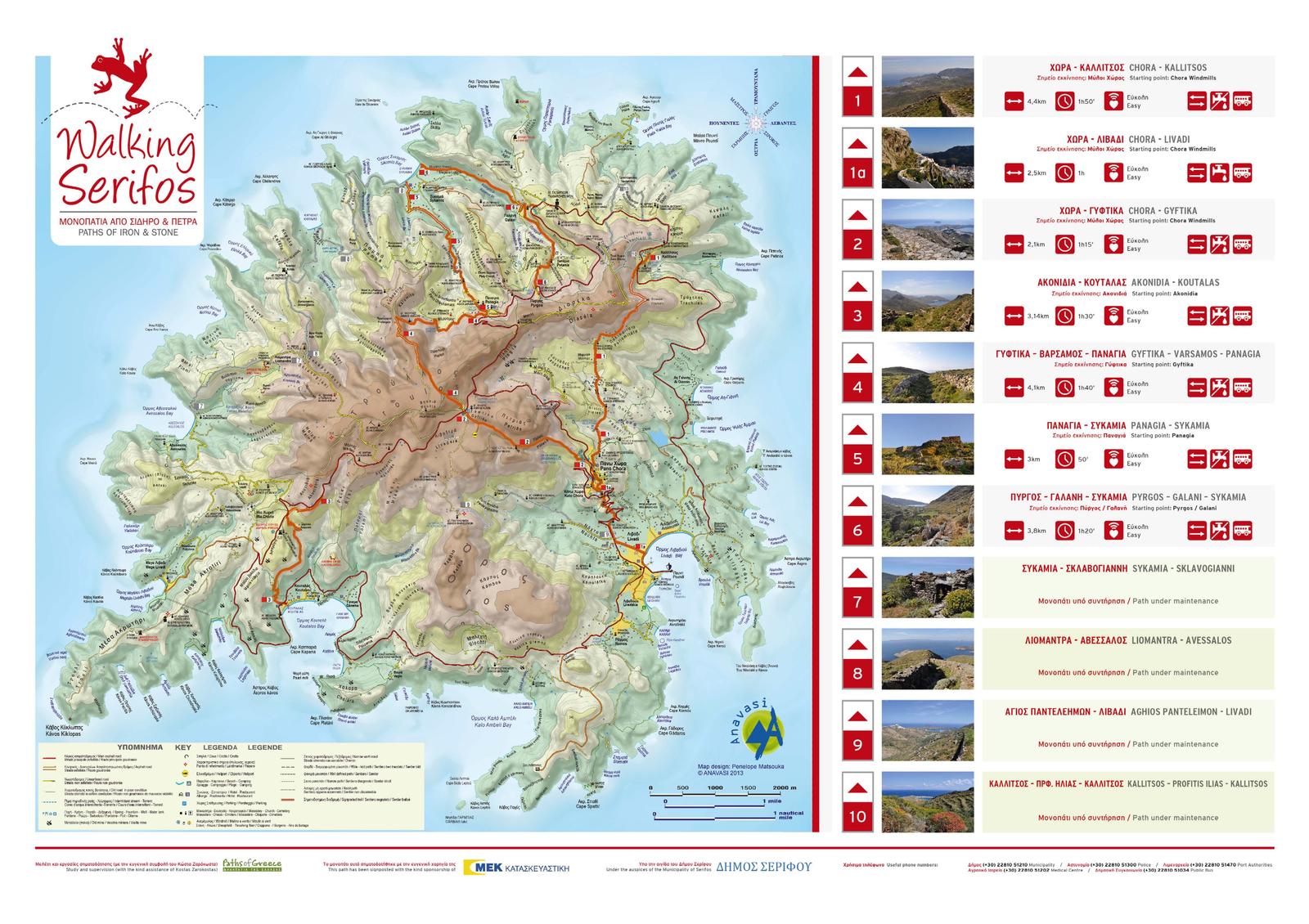
Serifos is not a large island — only 10 kilometres across at any given point — and I had a few options for getting around.
One choice was to rent either a car or scooter in Livadi. There is basically one road encircling the entire island, and your biggest decision is whether to go clockwise or counterclockwise.
When I told my home-exchanger I was going to hire a car for a day or two, she offered to loan me hers. I dubbed it the Purple Raison (for obvious reasons) and used it to get to a monastery on another side of the island, as well as some of the beaches.
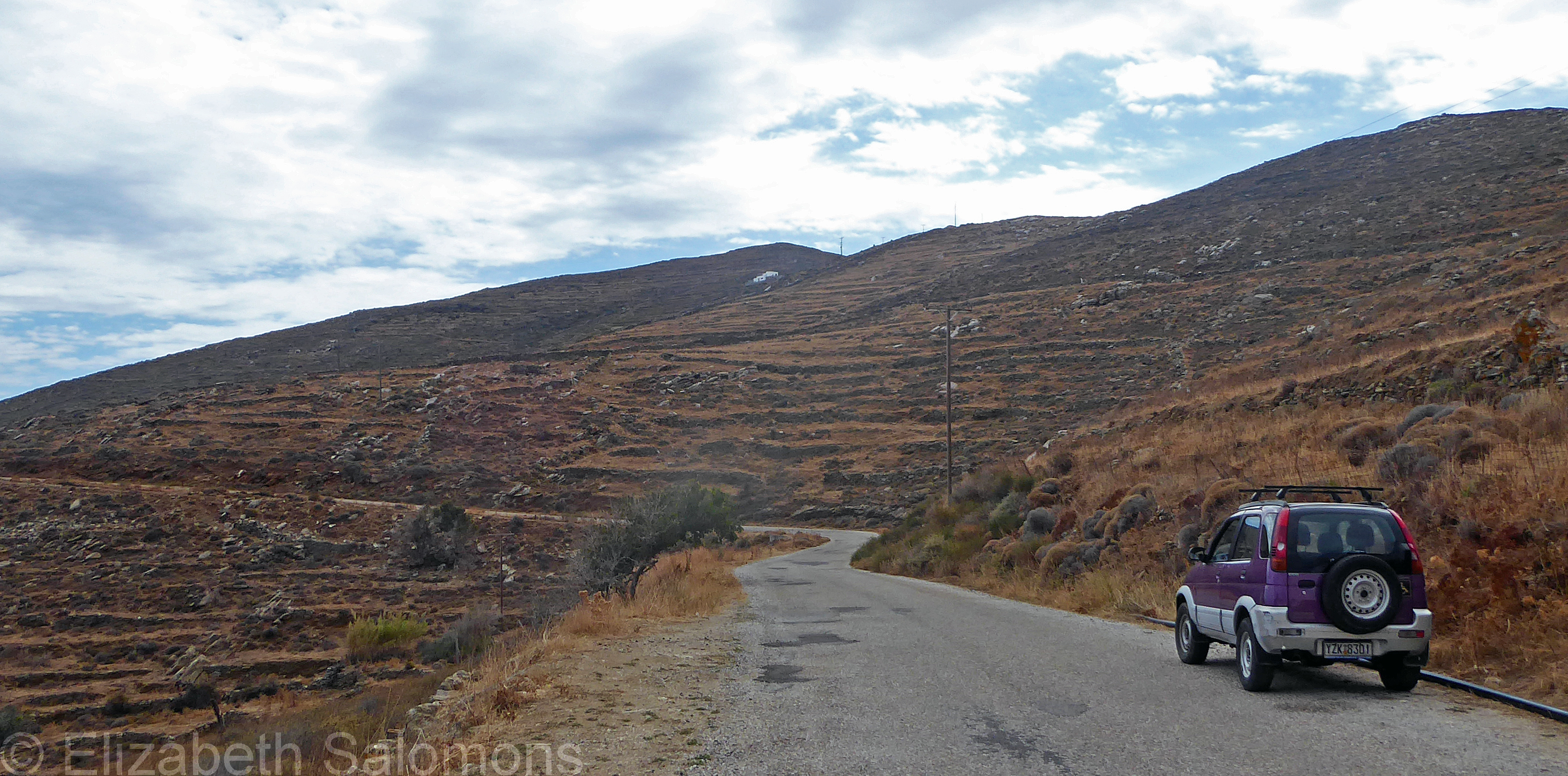
To be honest, though, I was perfectly happy to return the car and go back to my usual way of exploring: on foot or, occasionally, by boarding a bus.
The bus that runs between Livadi and the Chora goes once an hour in either direction. It was never full and you pay the driver your 2 euros when you board. There’s no way to signal your stop, however; you simply make your way to the front of the bus as it gets close to where you want to be let off.
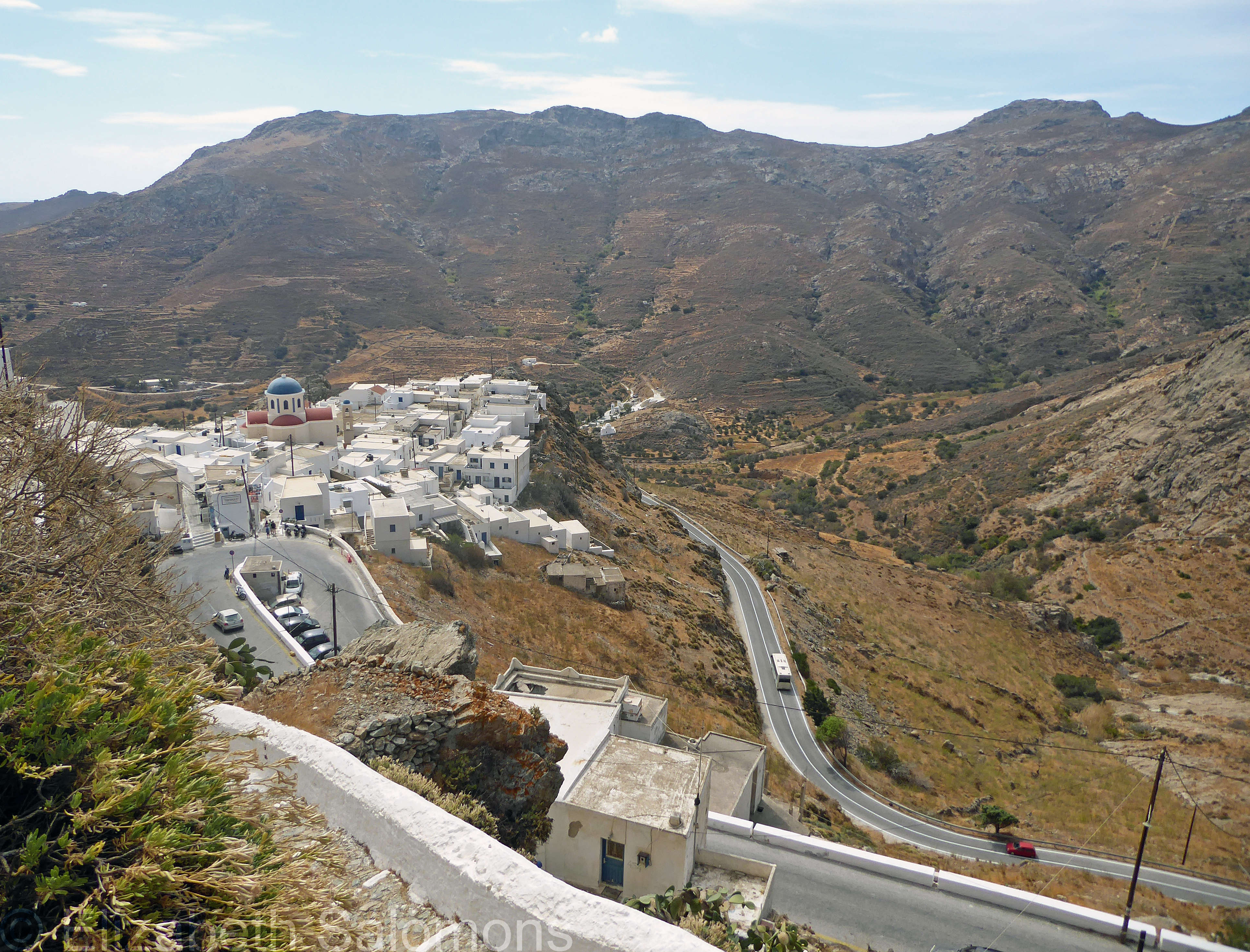
That Livadi–Chora bus switched to its winter schedule while I was on Serifos — meaning its last run up to the Chora was in the middle of the afternoon. Apparently, the winter schedule is dictated by the school run, not the tourists. My last few days on Serifos, if I happened to still be in Livadi in late afternoon, my only option was to walk up the old donkey path.
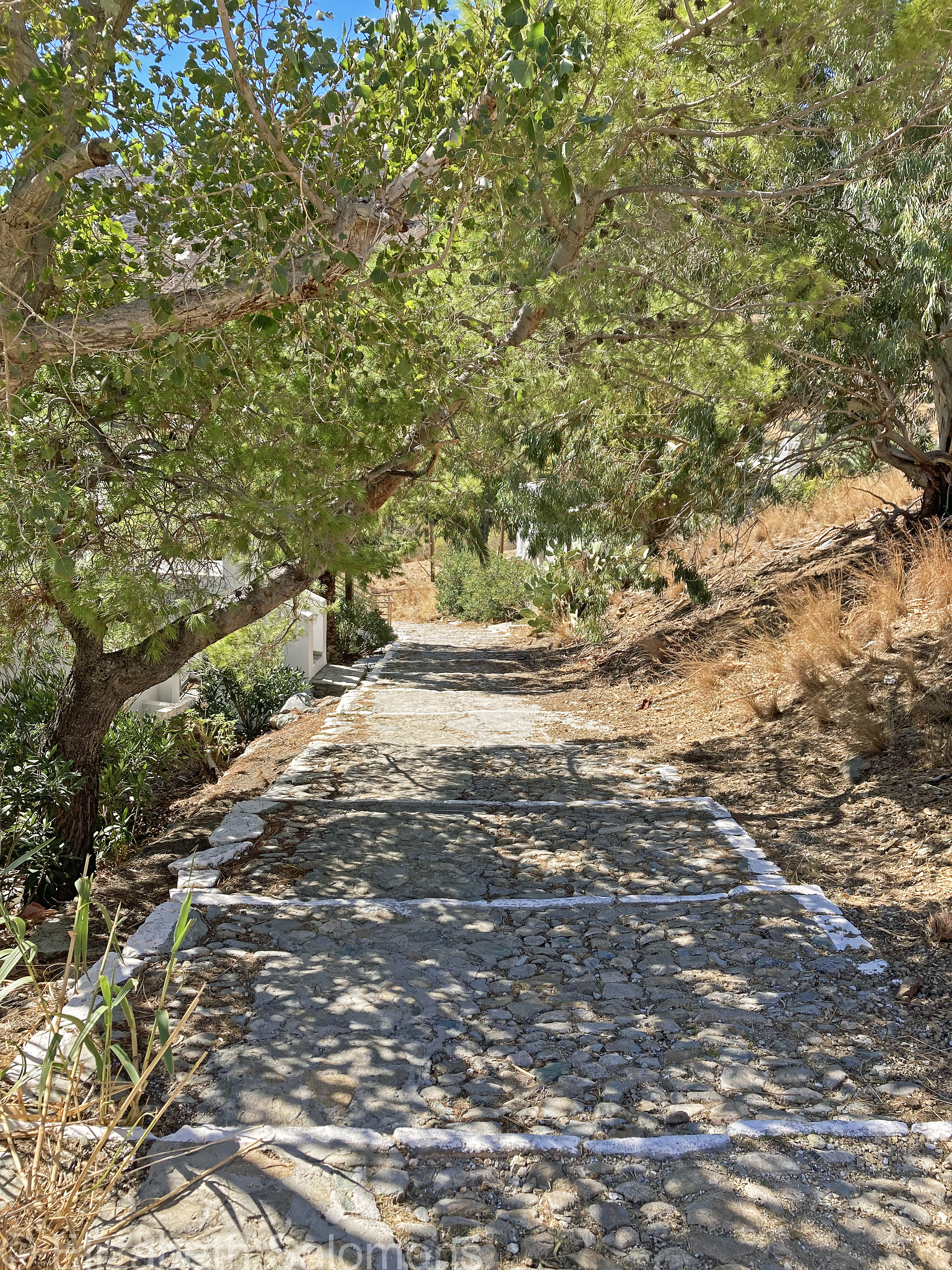
One day, I walked from my home in the Chora to Paralia Psili Ammos, and then, when I’d had my fill of the beach, over to Livadi where I caught the bus up to the Chora.
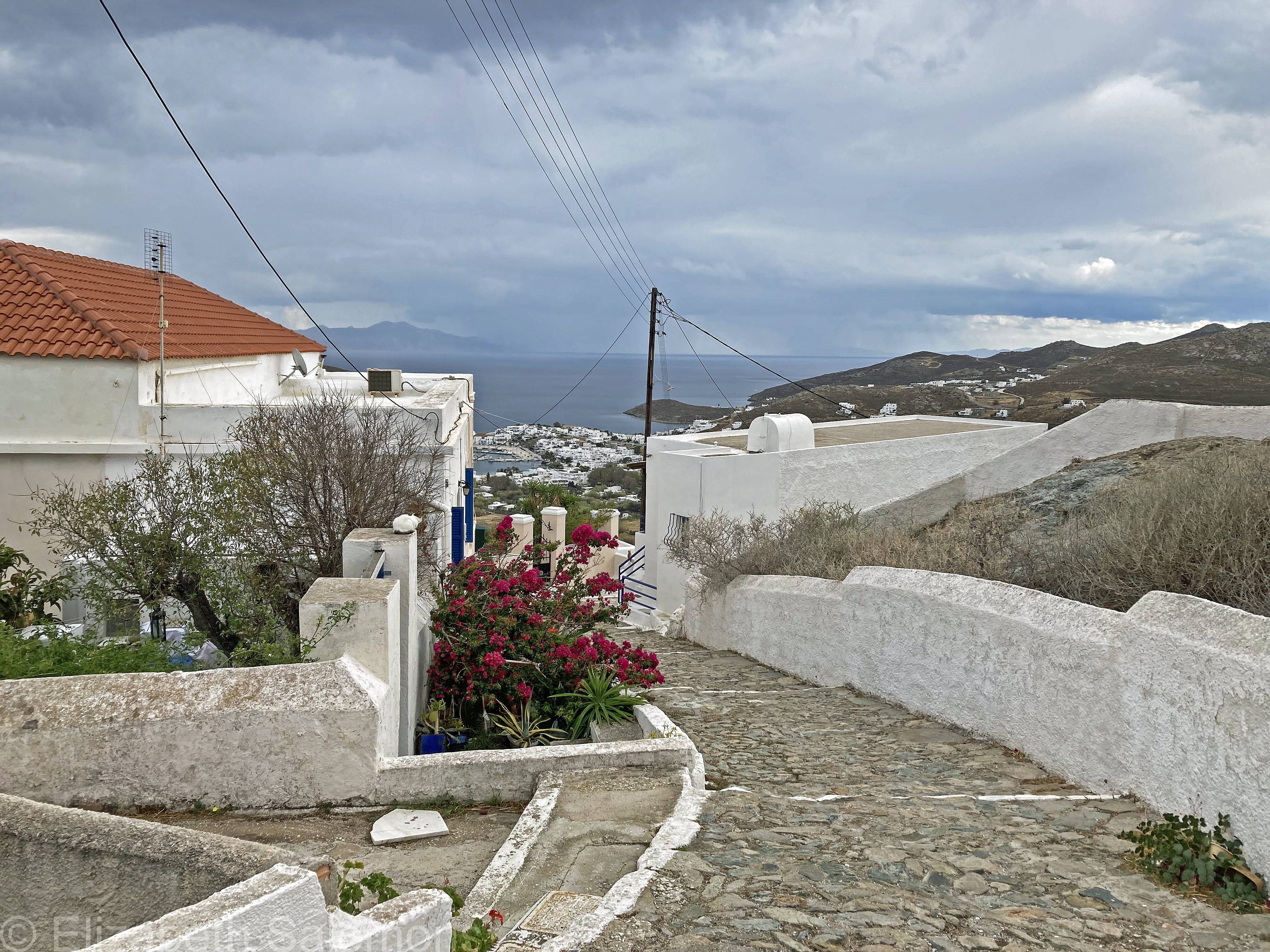
I didn’t get to every corner of the island during my two weeks on Serifos because, as I’m fond of saying, I always like to leave something to do to ensure a return visit. There are some 80 kilometres of hiking trails on Serifos, and I look forward to exploring more of them when I return to Serifos.
Happy Easter!
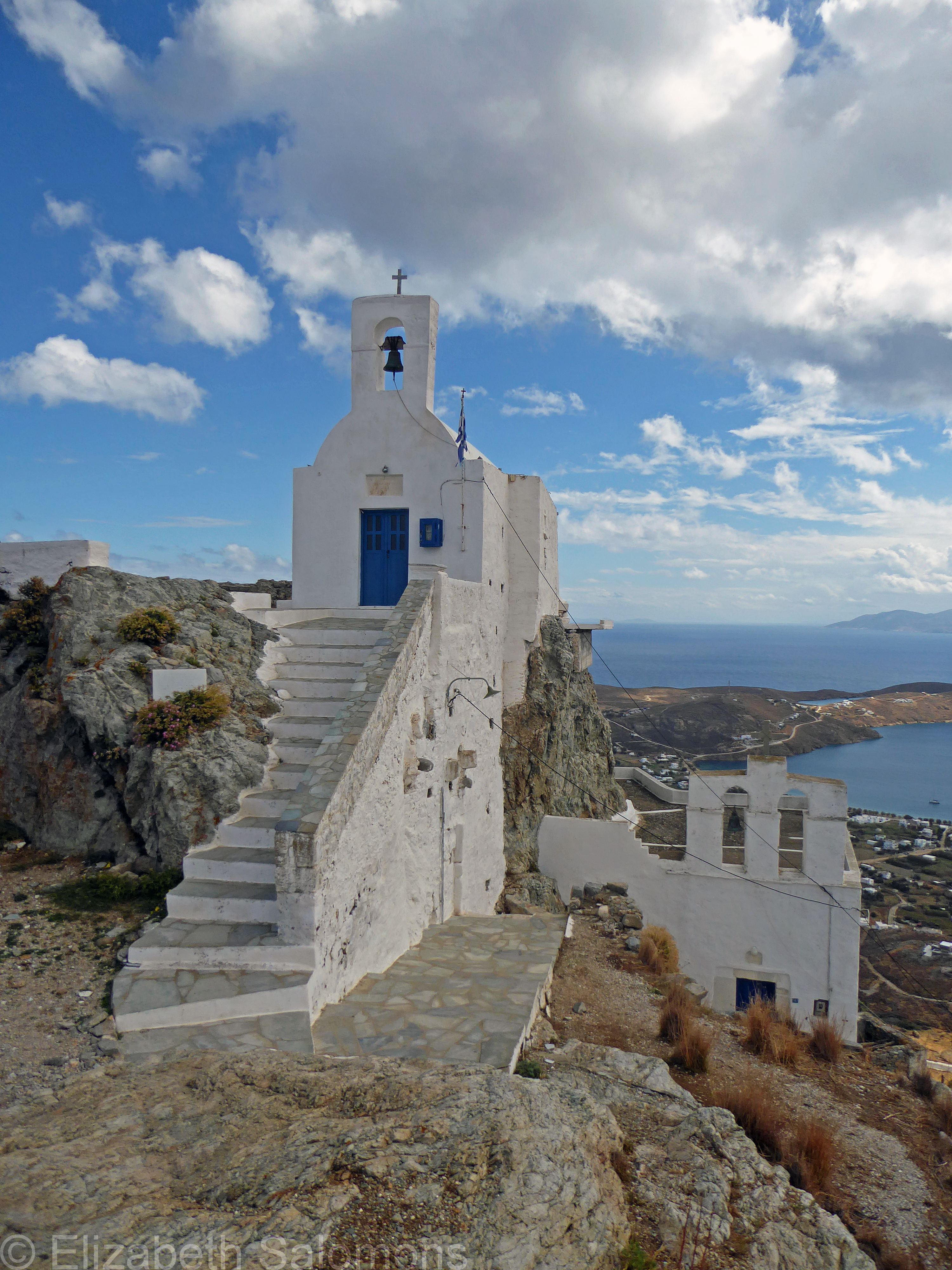
Agios Konstantinos and Agios Ioannis o Theologos, Serifos, Greece, October 2025
Donkeys of Serifos
Of course, you can’t spend any amount of time in the Cyclades without encountering one or two donkeys.
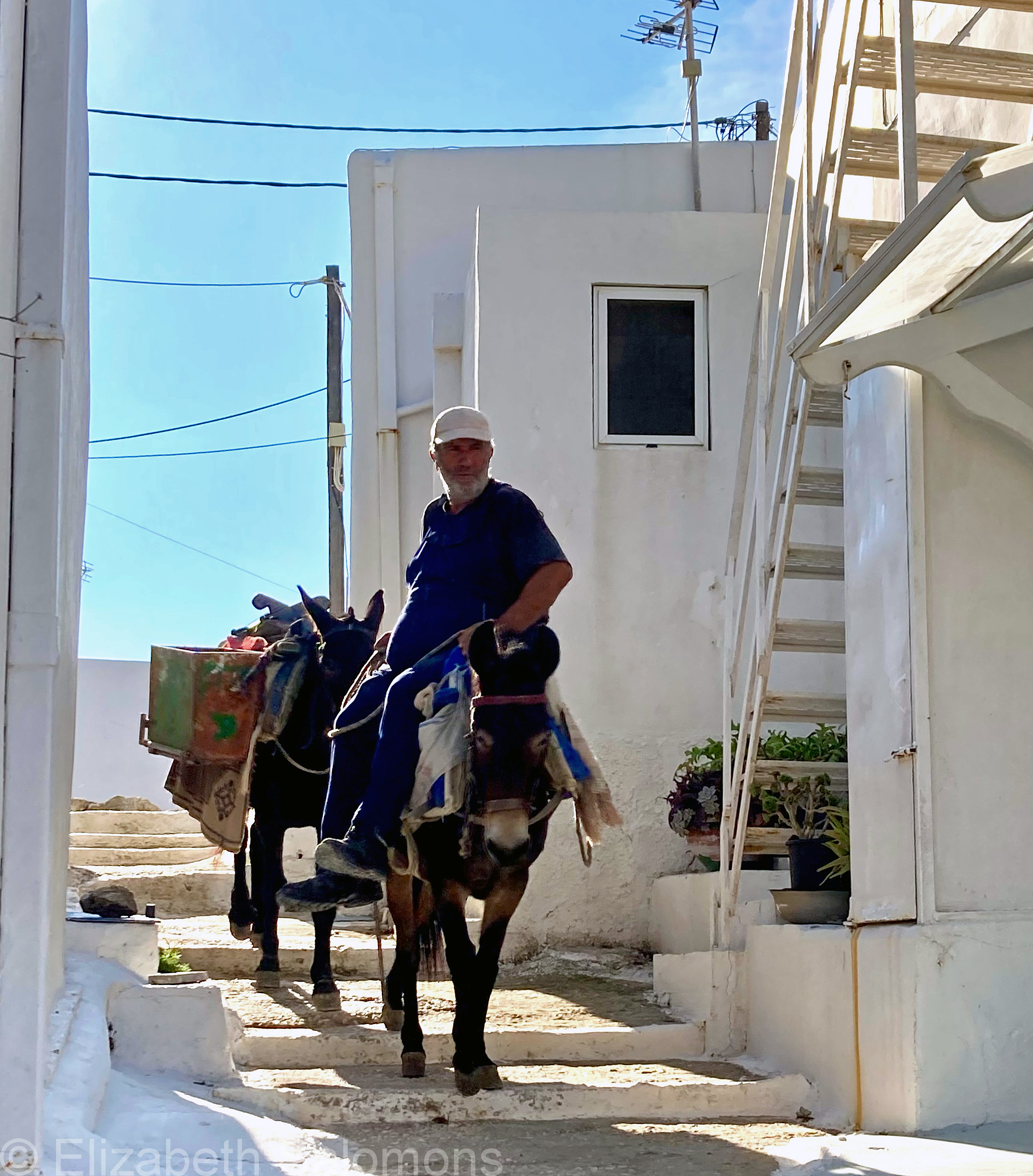
Donkeys have a long history as beasts of burden in the Mediterranean. And no wonder — they are sure-footed and able to easily navigate the narrow passageways of the Chora.
All they need for fuel are food and water. These two are drinking their fill at the tap just outside my door. I was all set to leave one morning when I realized they were blocking my way.
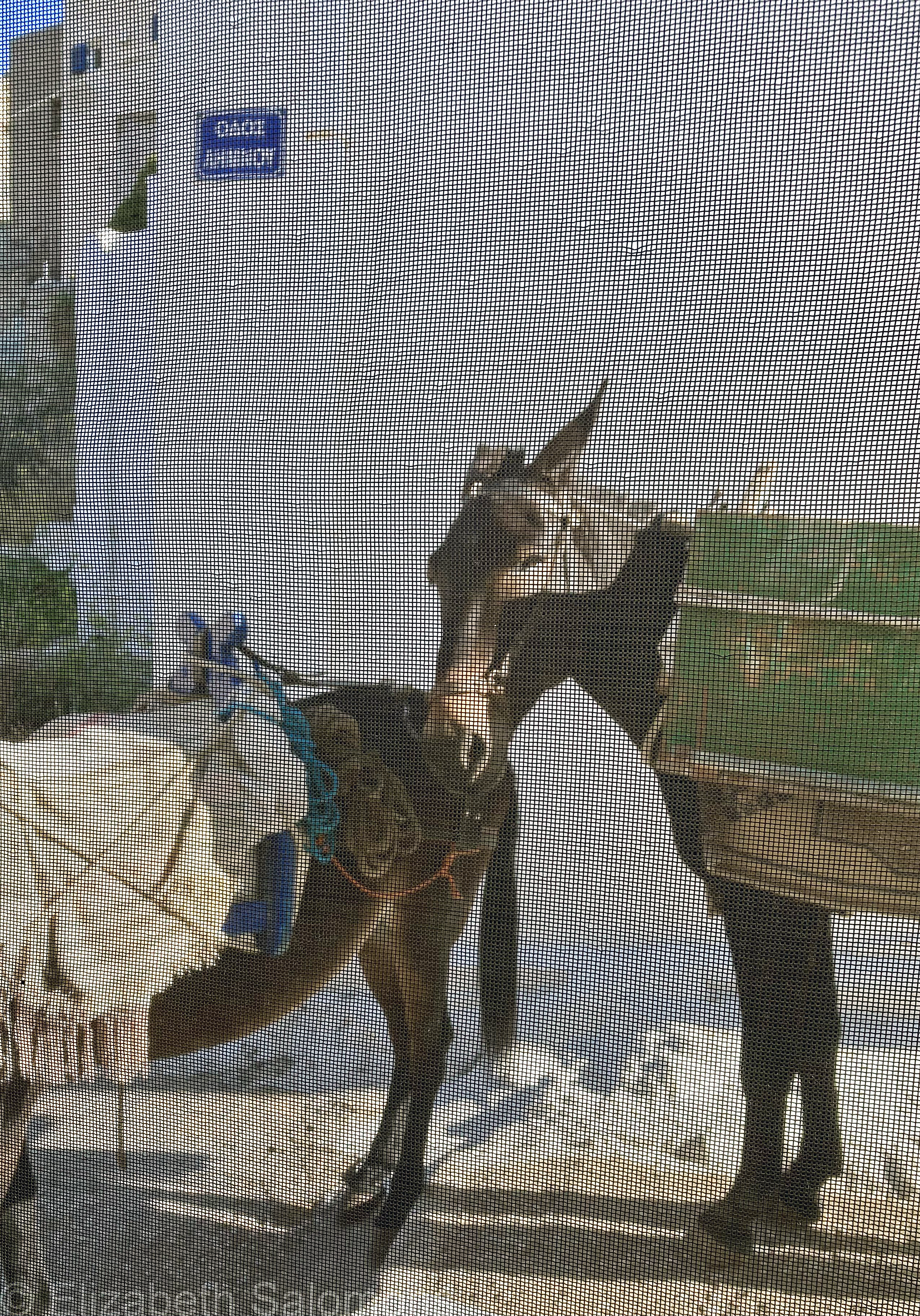
So I waited until they were sated and on their way.
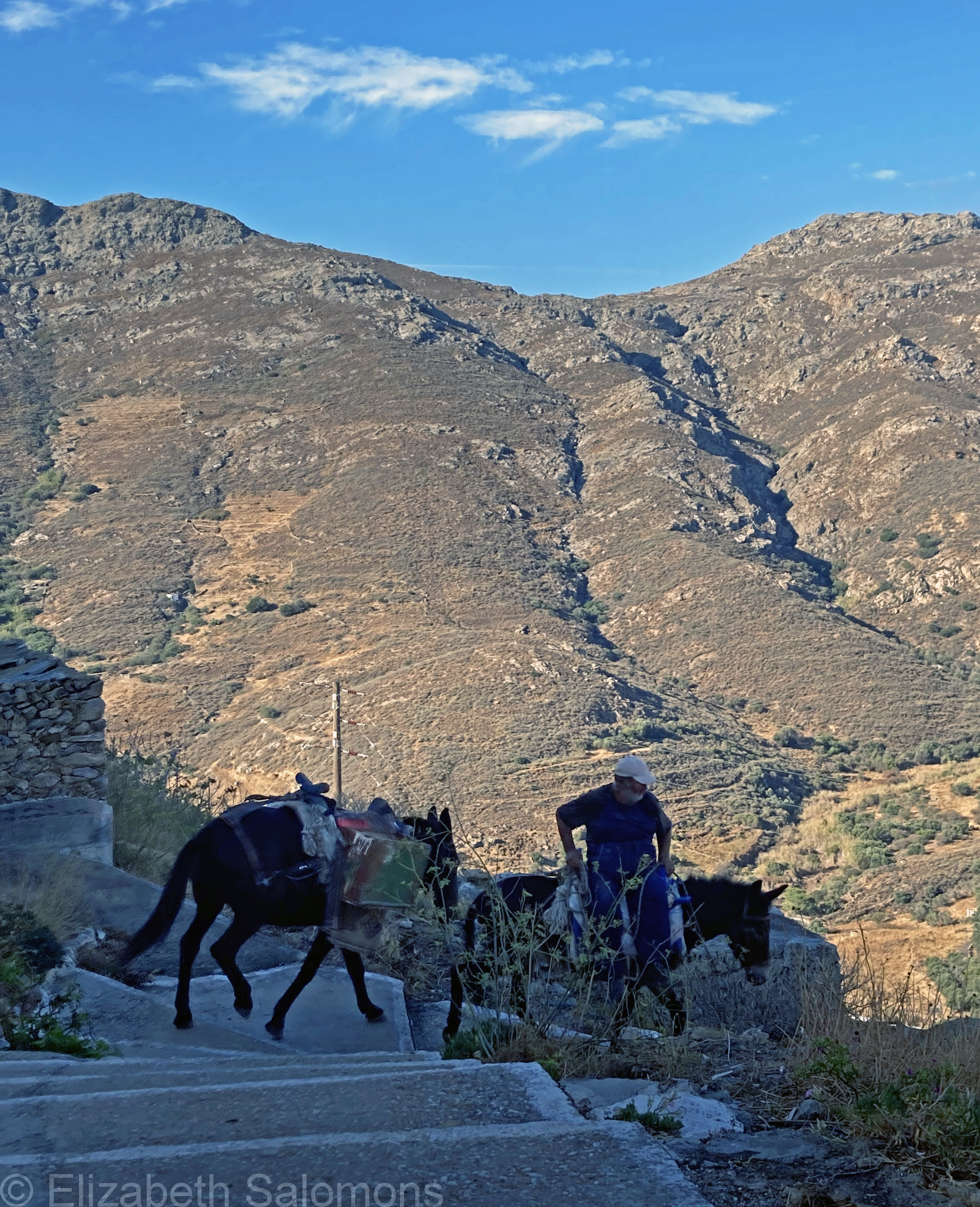
The man and his donkeys were hauling gravel from the road below my house to some unknown construction site above my house. And you know what I discovered?
There is no better way to remind yourself you are on vacation than watching others work.
Through My Lens: Ekklisia Christou
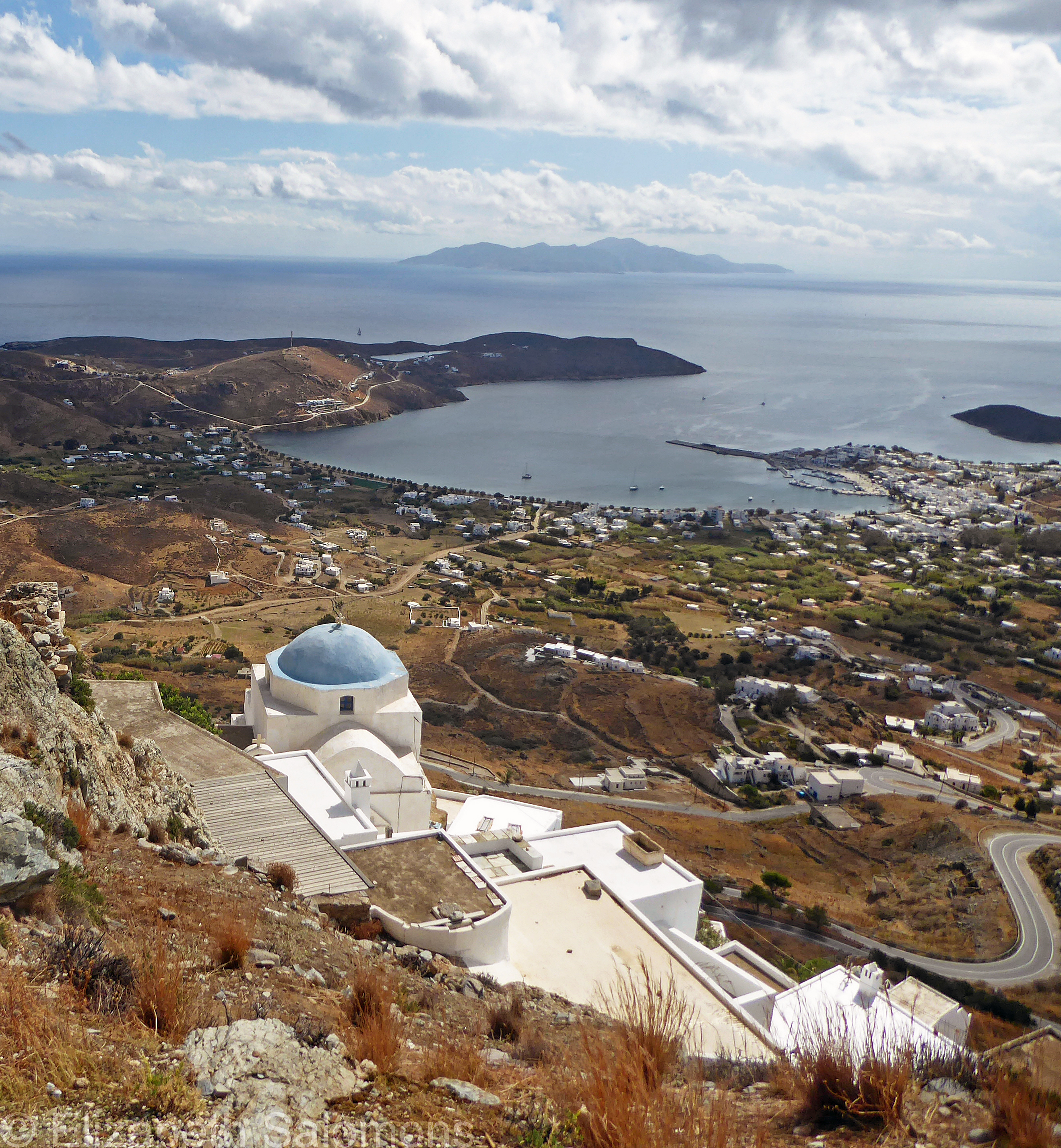
Ekklisia Christou (Church of Christ) is my photo choice for today, Palm Sunday. This small domed church is located just below Agios Konstantinos and to the right of Agia Varvara. Like all the churches at the top of the Chora, Ekklisia Christou gives you a fabulous panoramic view of Serifos and the Aegean Sea.
Cats of Serifos
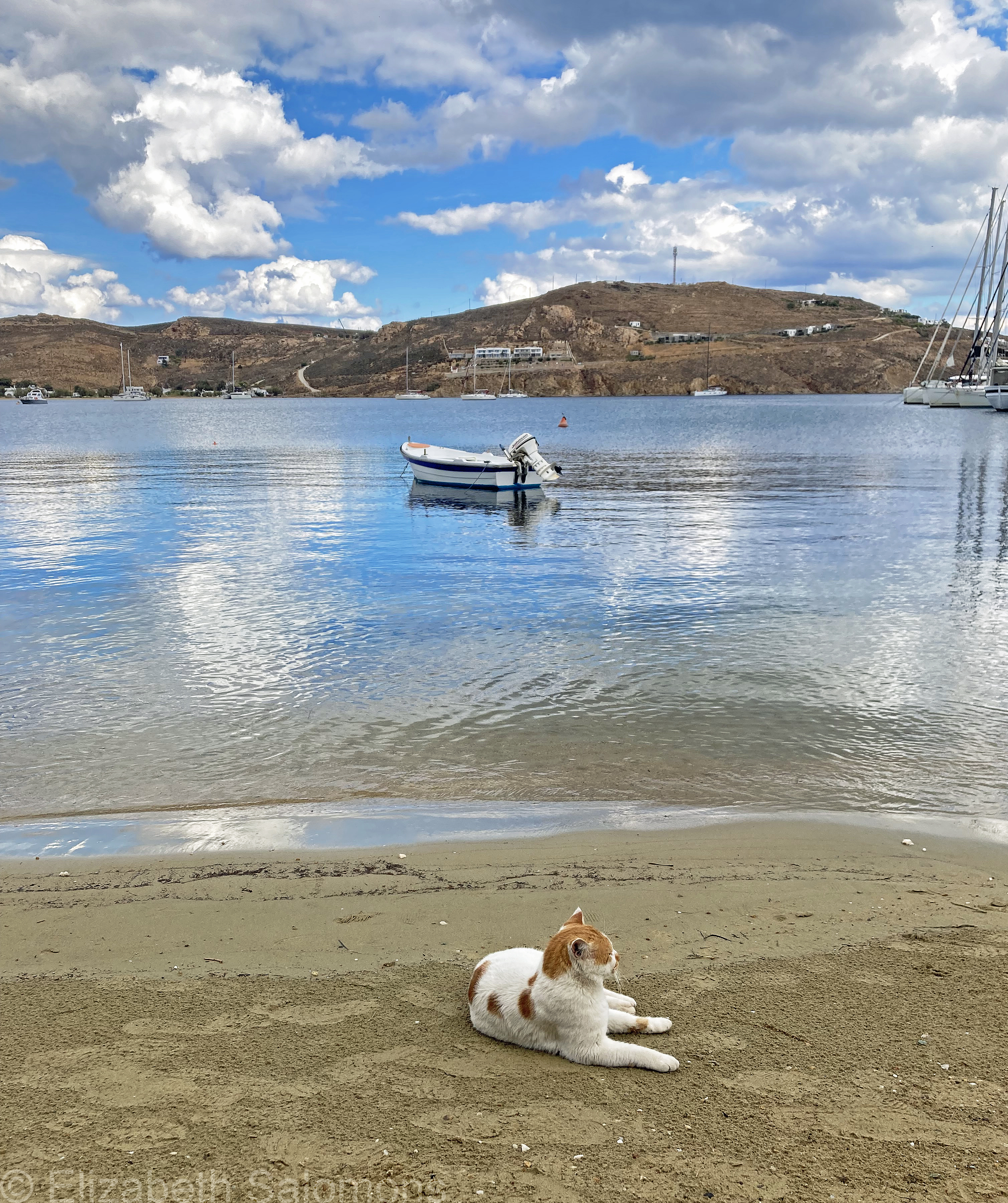
I now know why my home exchange partner did such a fabulous job taking care of my cats when she and her partner stayed in my Vancouver home.
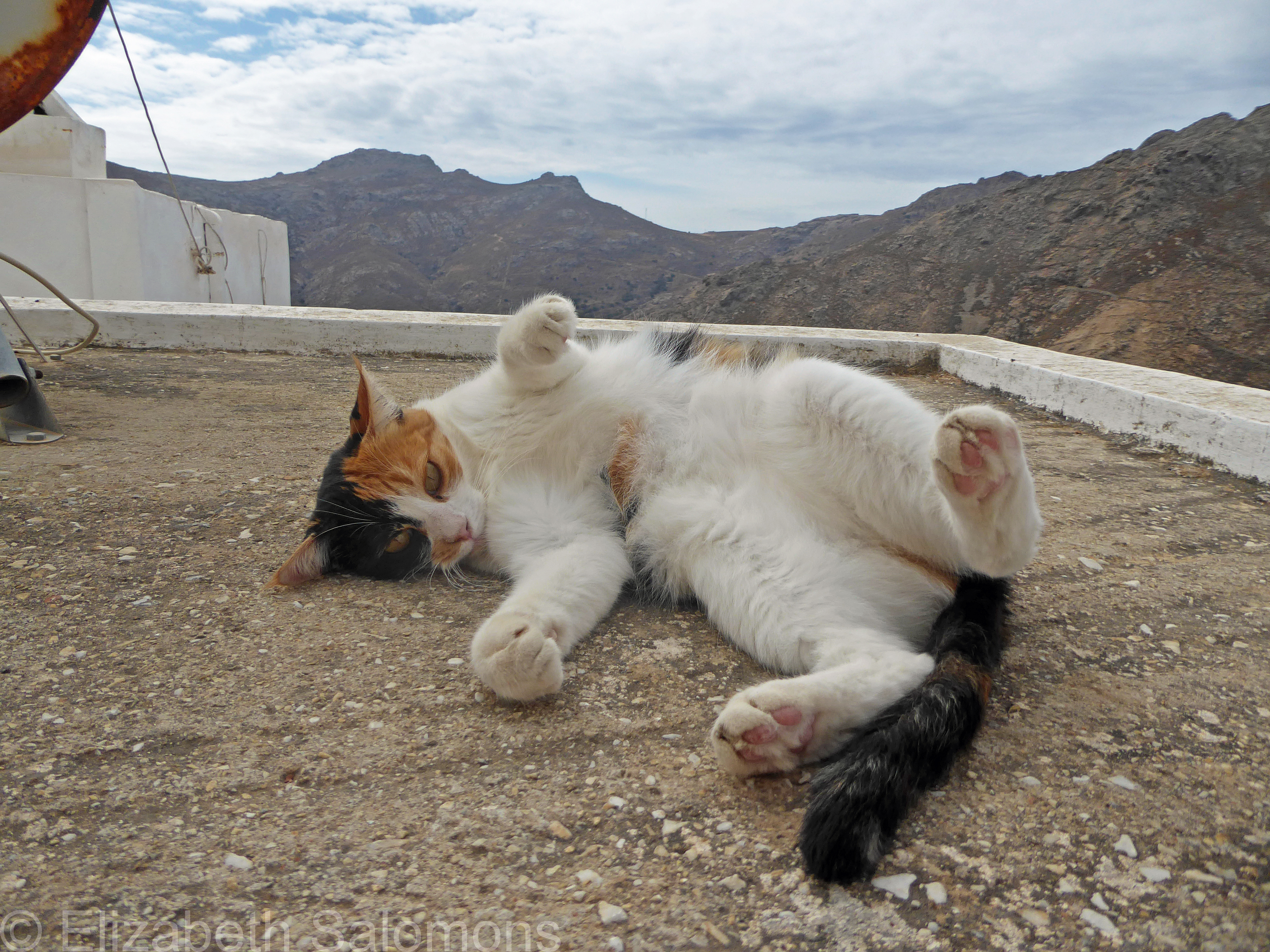
It’s because cats are as much a part of Serifos as whitewashed walls and blue domes.
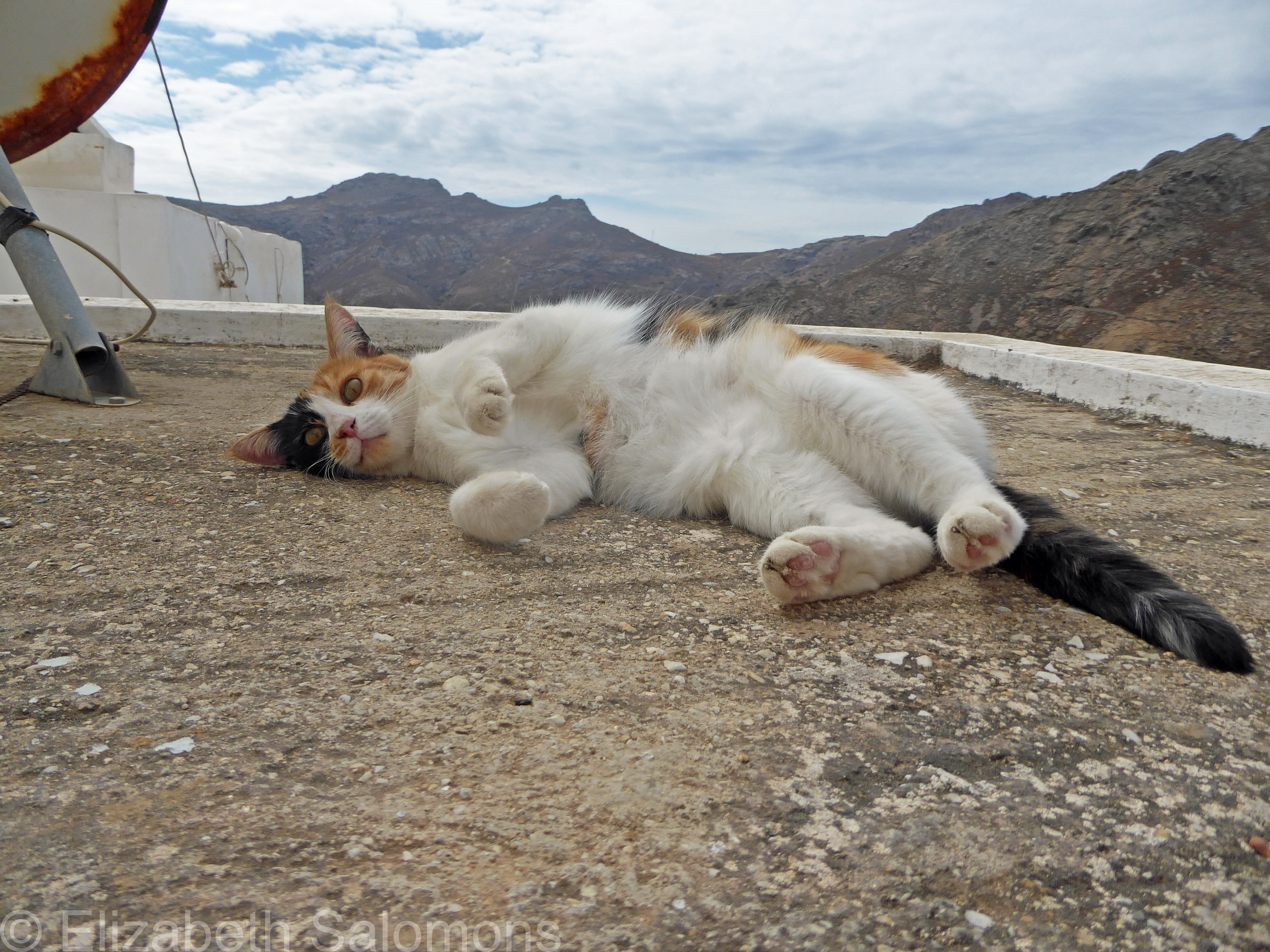
As far as I know, the cats of Serifos live completely outdoors and come and go as they please. But I wouldn’t call them feral. Or even strays.
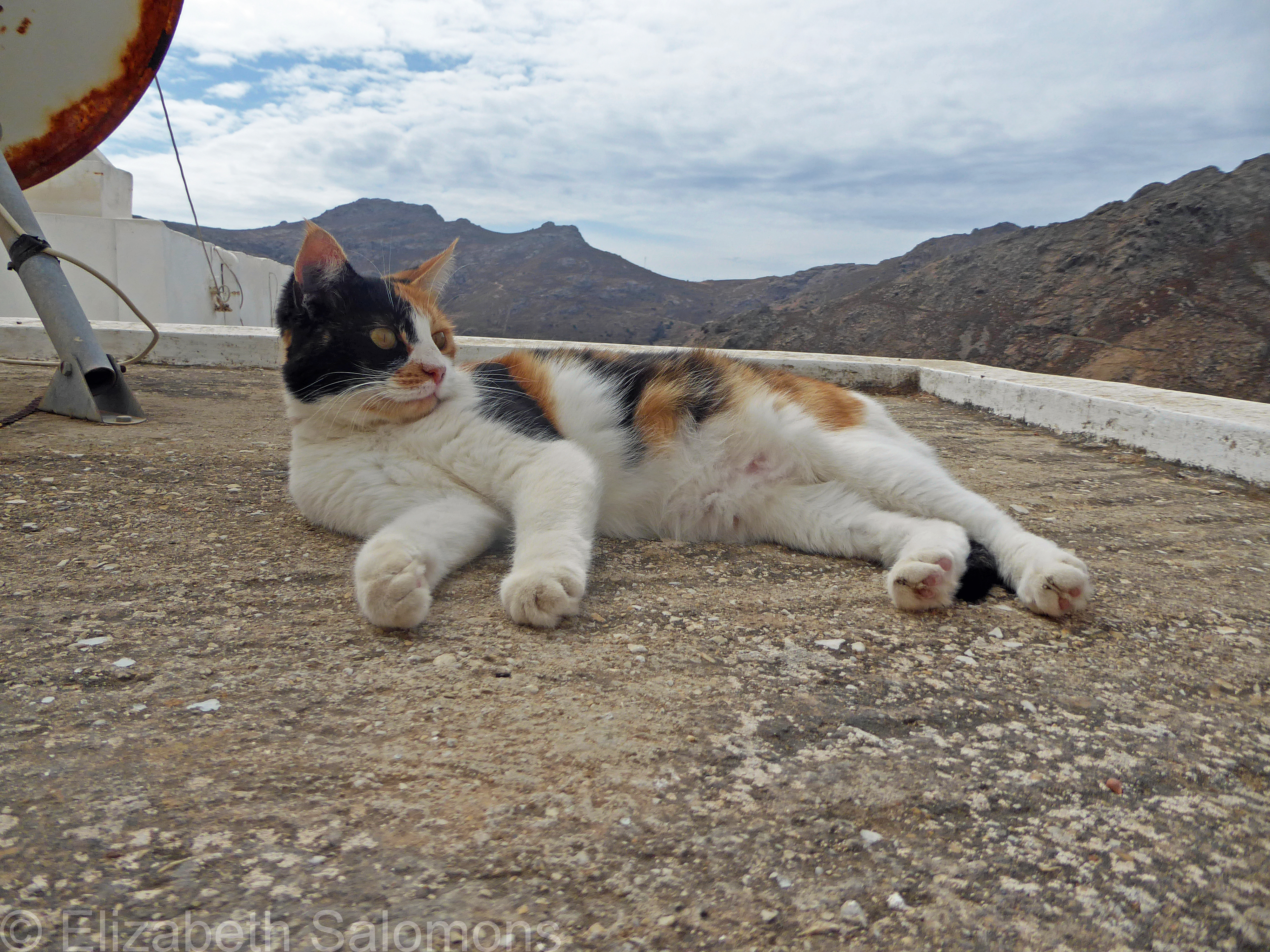
They belong to everyone and to no one. “Community cats” is probably the best way of describing them.
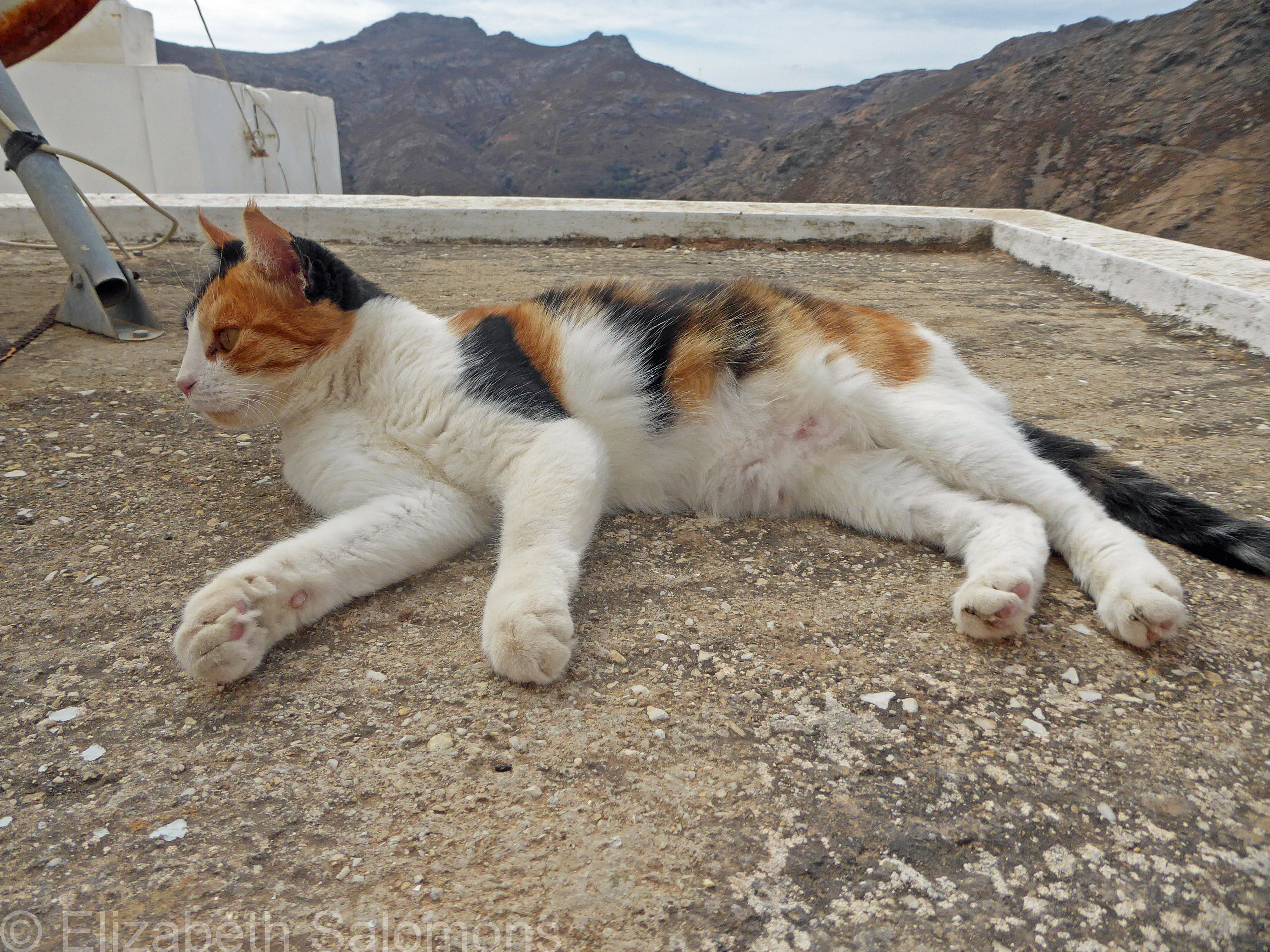
I fed my clan every morning and evening. The most I had at any one time was nine. Nine cats! (Isn’t that the name of a song?)
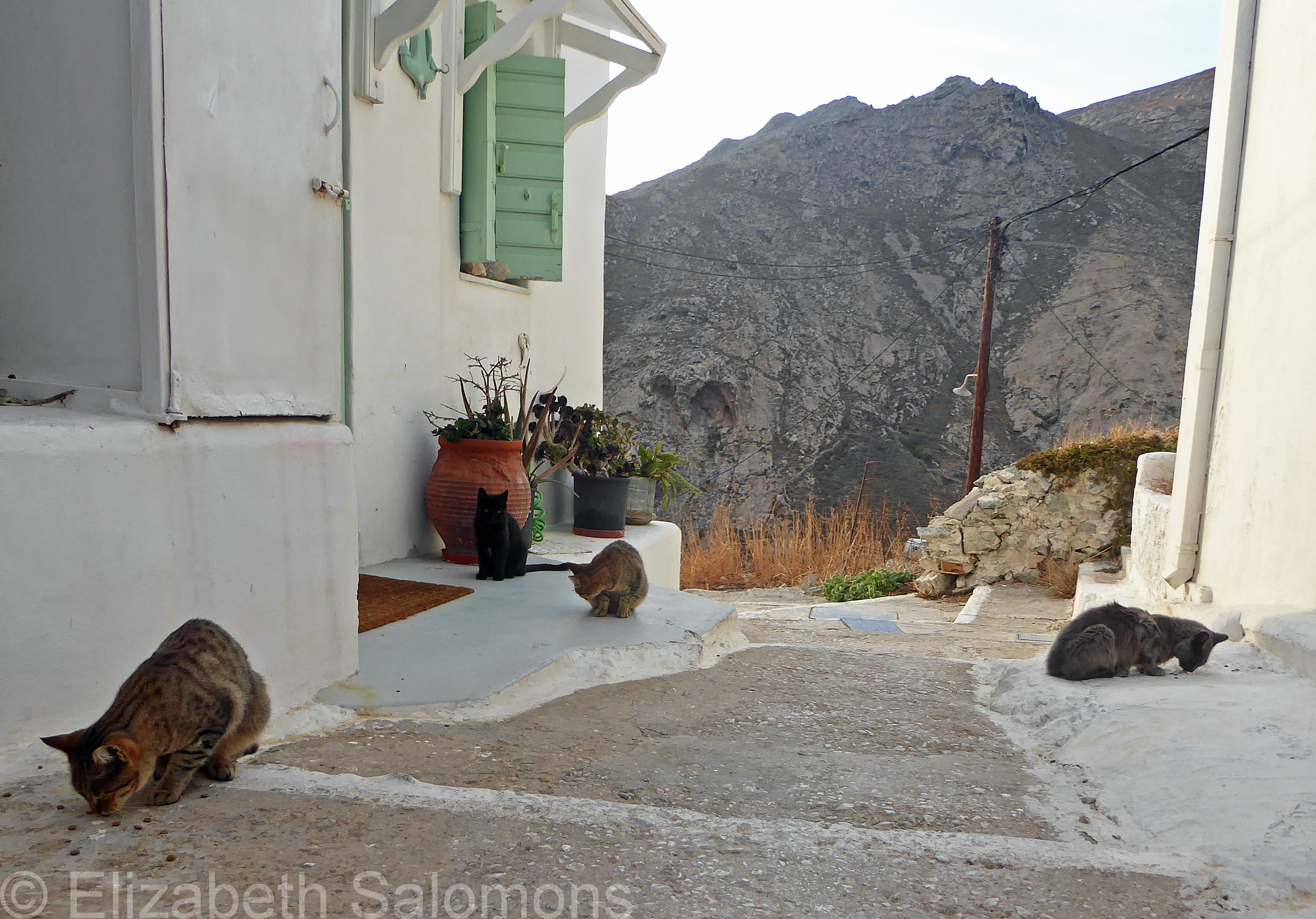
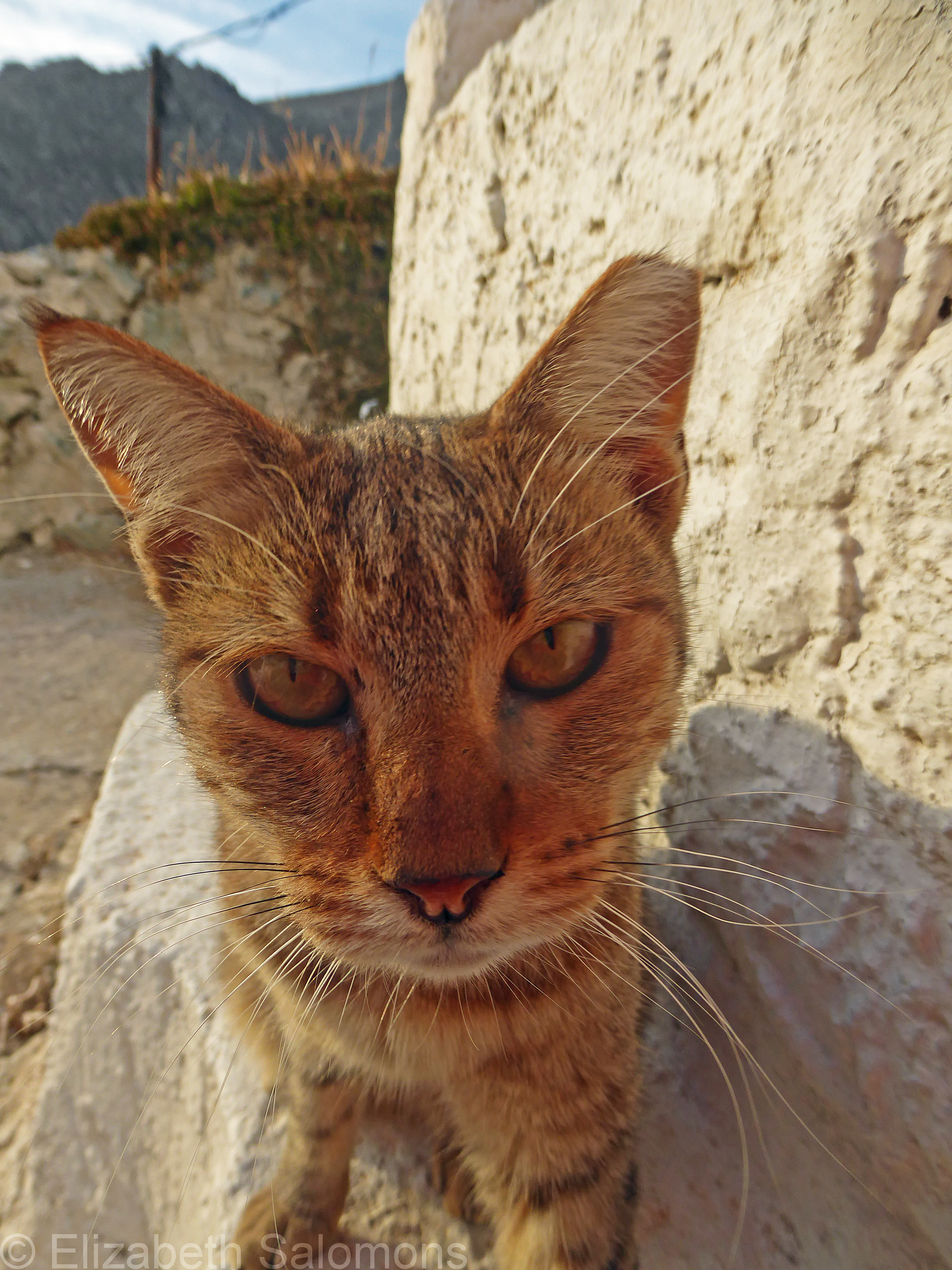
The cats of Serifos are small, but healthy and well fed (see above). I’m told the Aegean cat is a breed native to the Cyclades that developed naturally, without any human intervention.
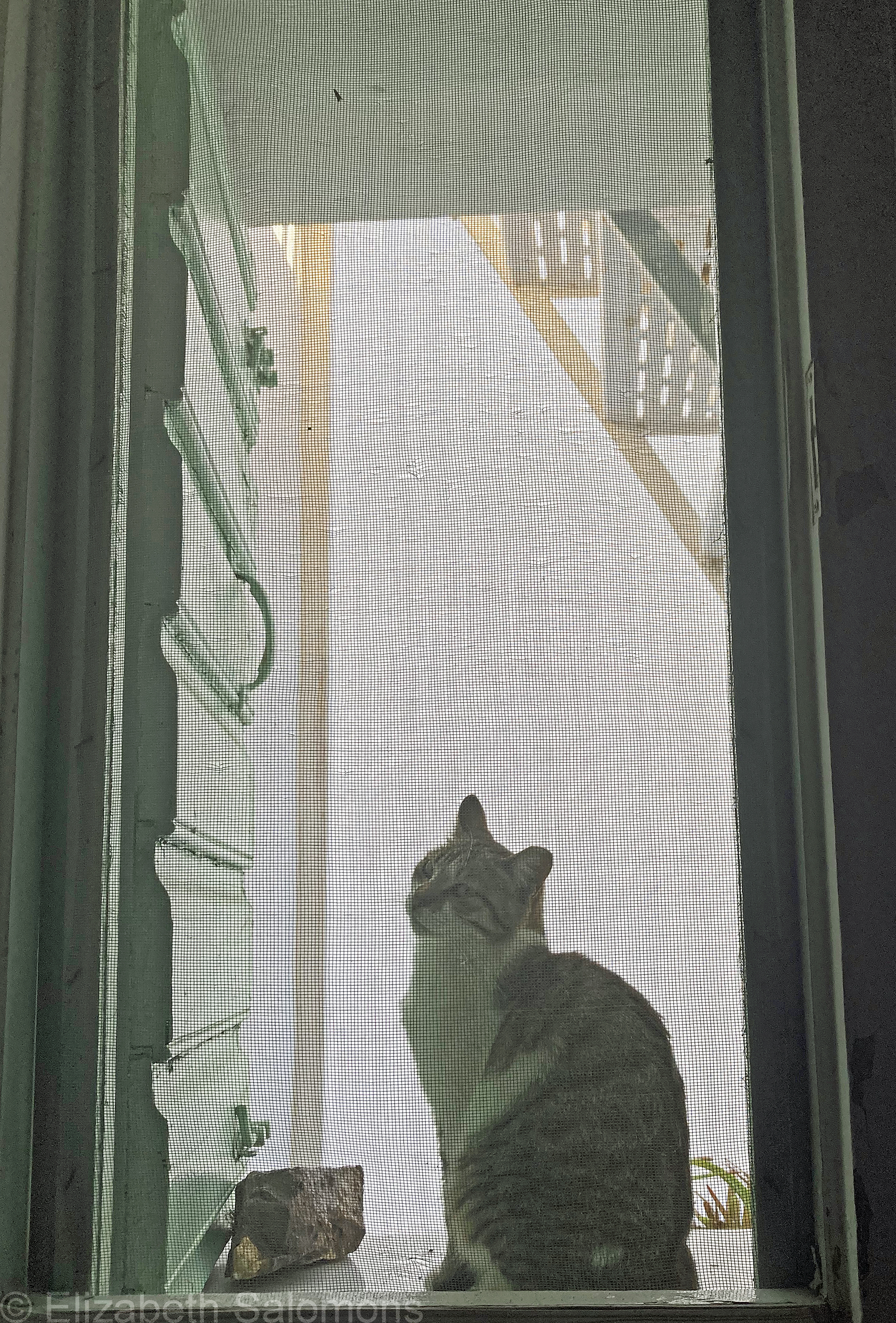
Often on my wanderings through the Chora, I’d see little piles of kibble set out for the cats — I wasn’t the only one feeding them.
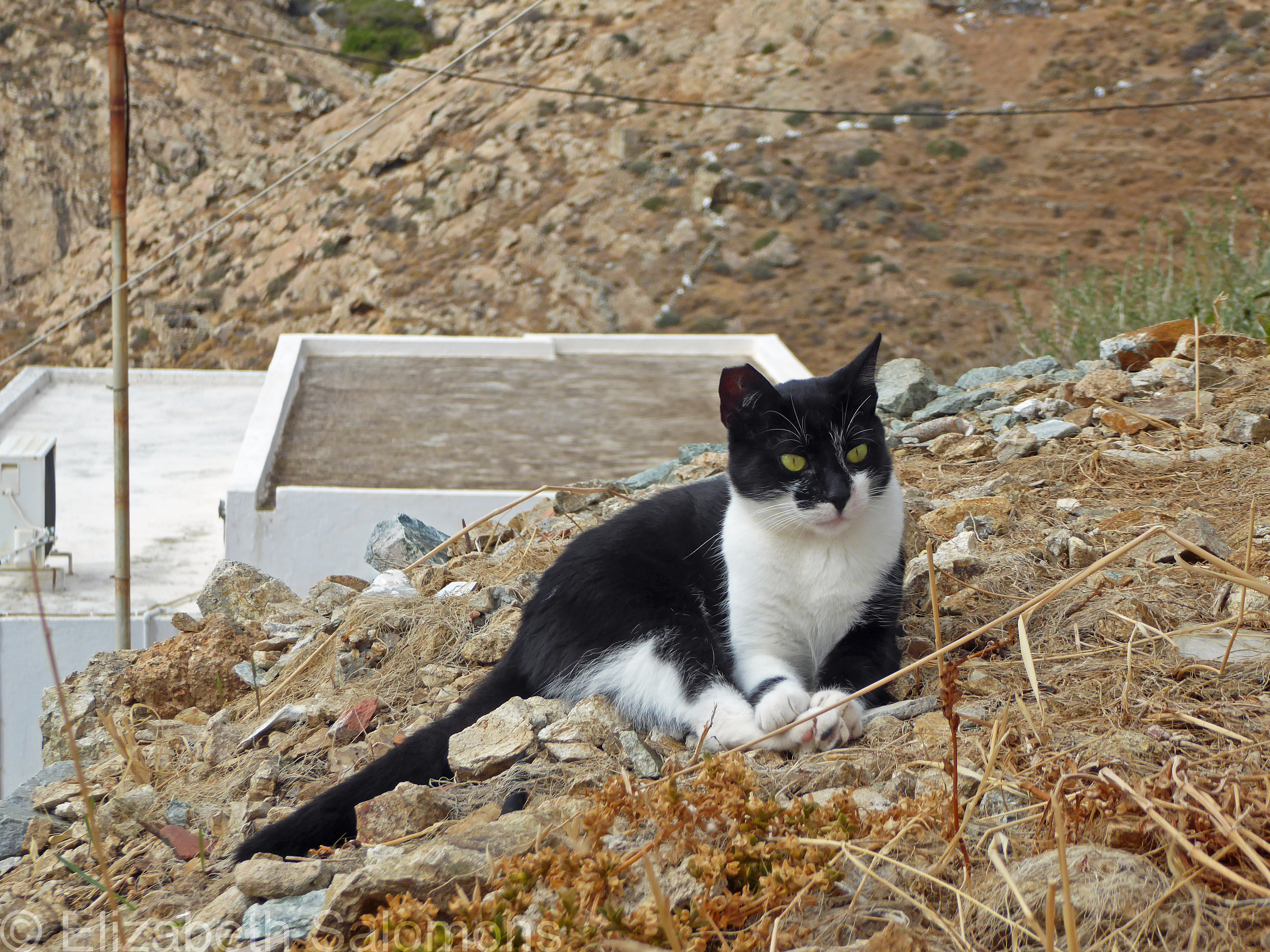
I loved how completely relaxed they looked and acted in their environment.
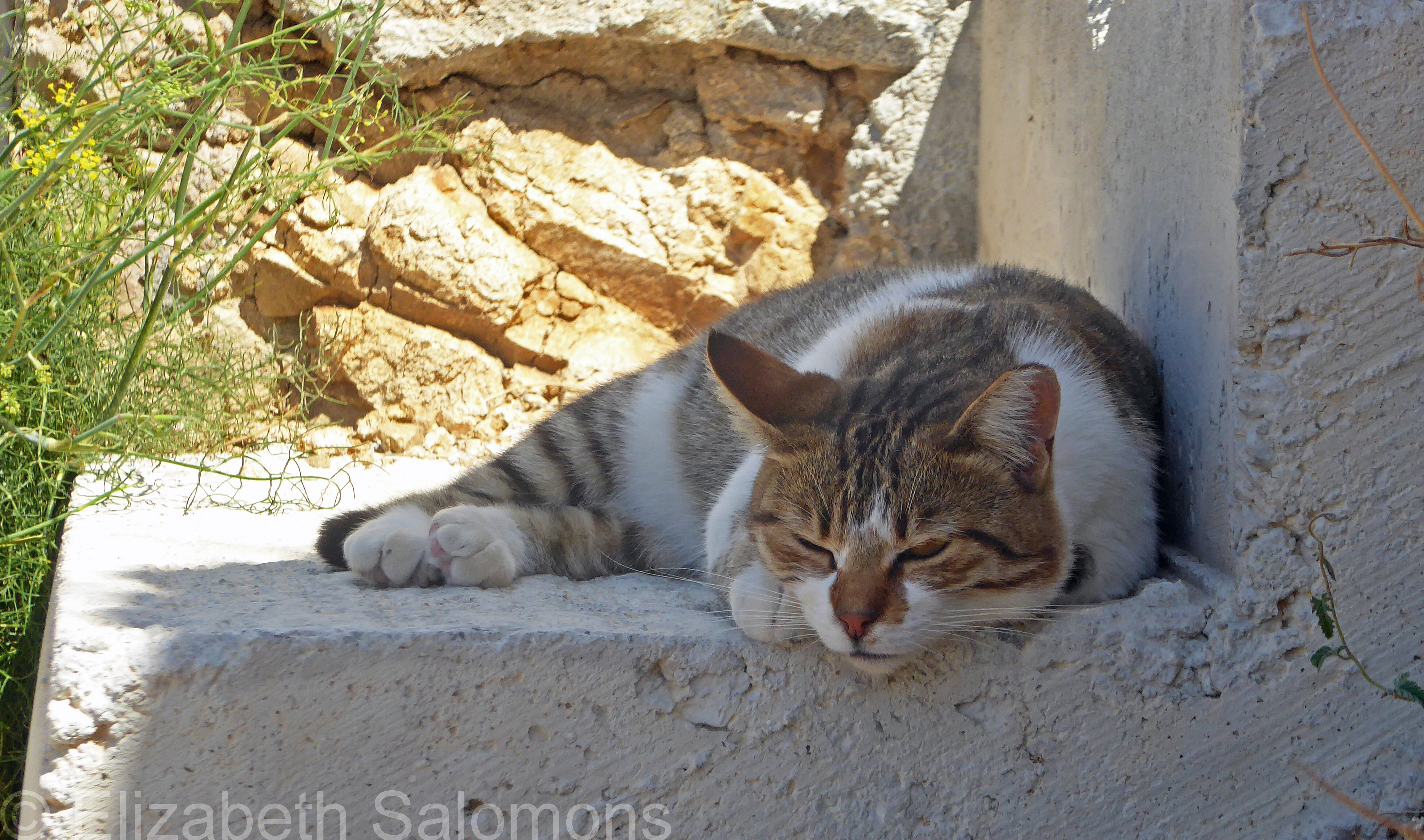
And they kept me good company while I was in my Grecian home.
Through My Lens: Agia Varvara
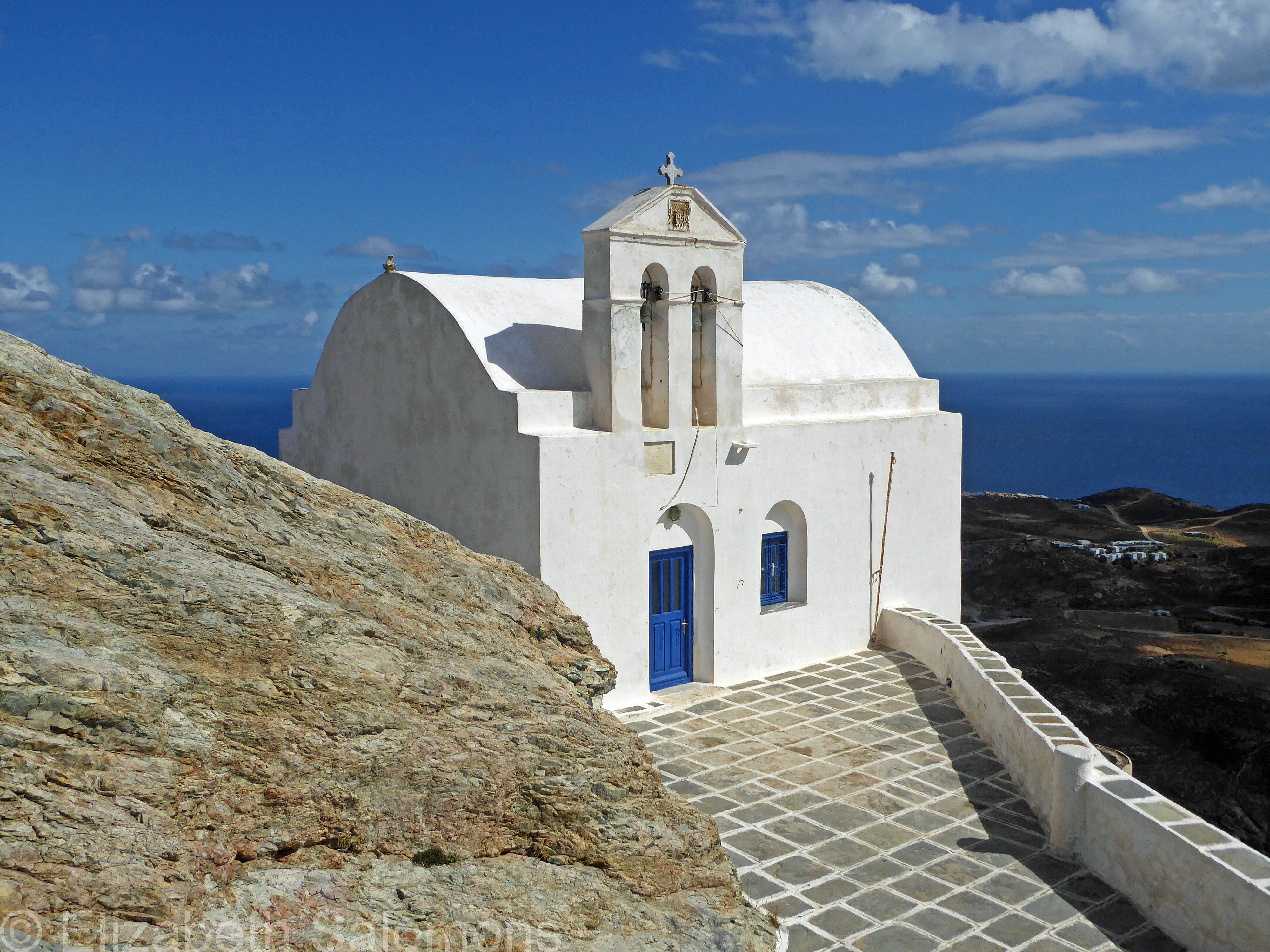
For today, the Fifth Sunday of Lent, here is a photo of the church of Agia Varvara (Saint Barbara). You come to it when you keep walking down the steps from where I took last week’s photo. It was built in the post-Byzantine era and renovated in the late nineteenth century.
Saint Barbara lived in the third century CE and is the patron saint of anyone working with explosives, including miners. For that reason, she was considered the patron saint of Serifos, which has a history of mining going back to Roman times that continued until as recently as 1965.
Through My Lens: Agios Konstantinos From the Back
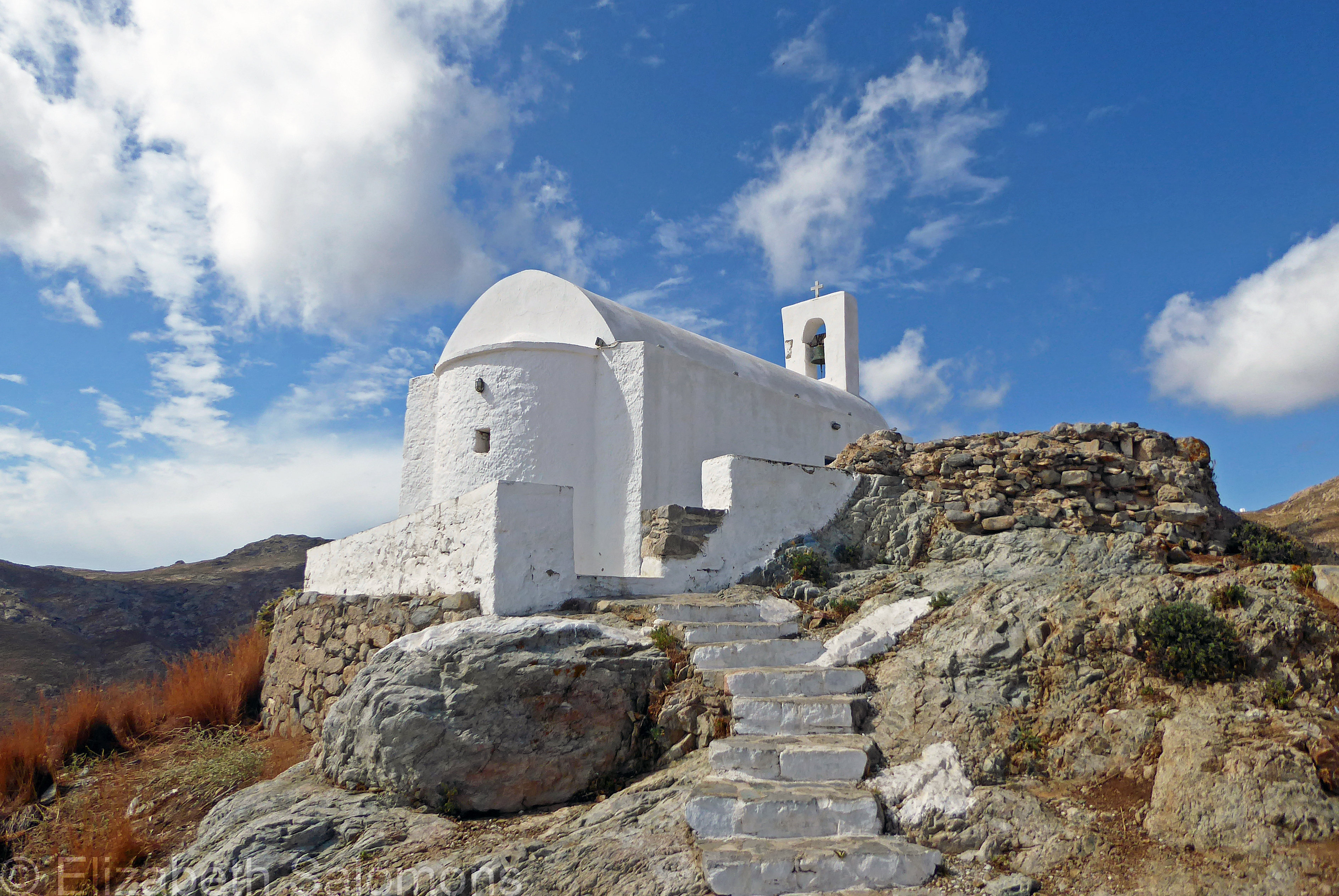
If you take a few steps from where I took last week’s photo, you have an excellent view of how the church of Agios Konstantinos was built on the ruins of the castle at the top of the Chora of Serifos. This view of Agios Konstantinos from the back is my photo choice for today, the Fourth Sunday of Lent.
Doors and Windows of Serifos
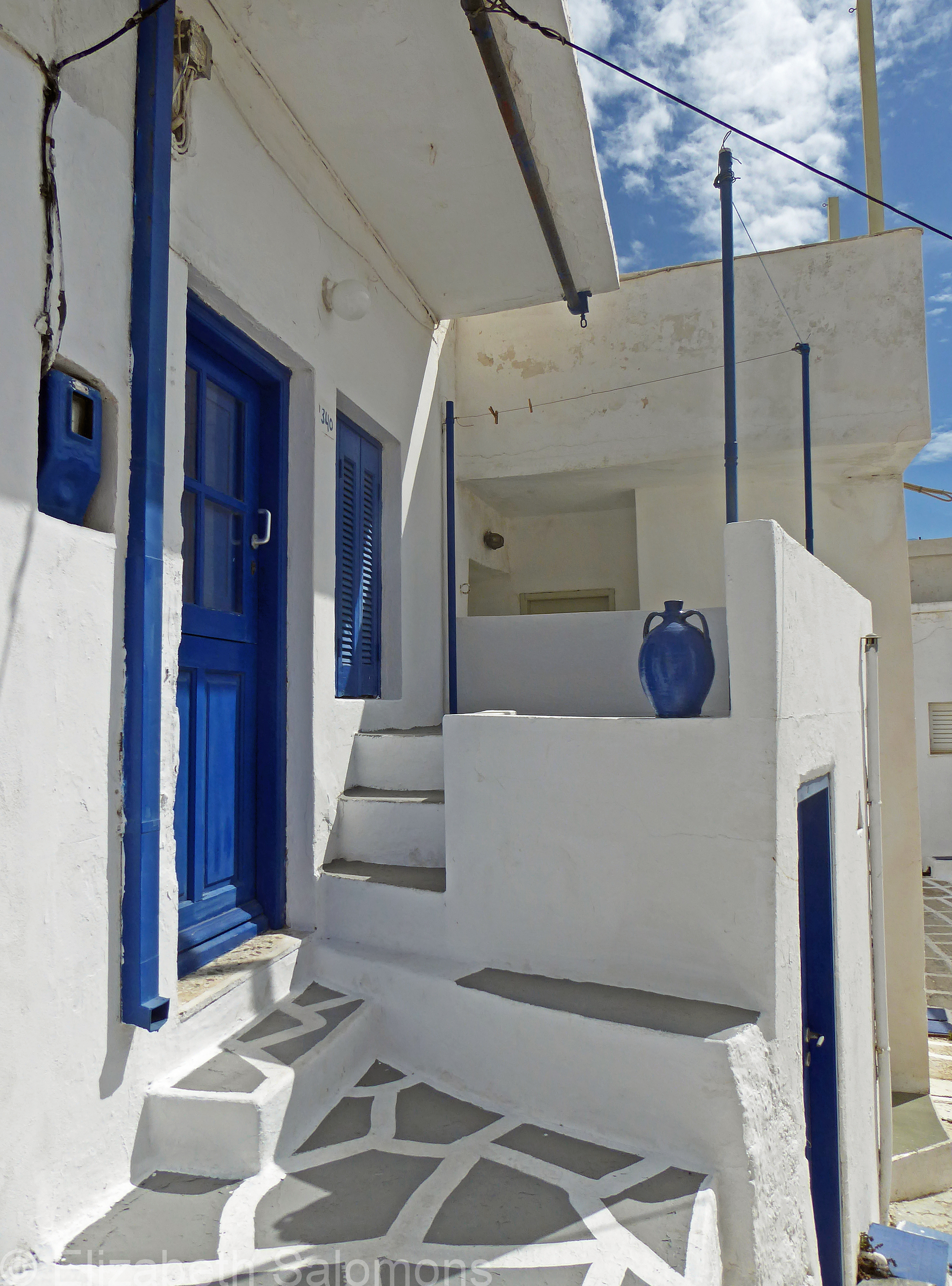
Naturally, I had far too many photos for my post about the Chora of Serifos, so here are some of the outtakes — most of them doors and windows.
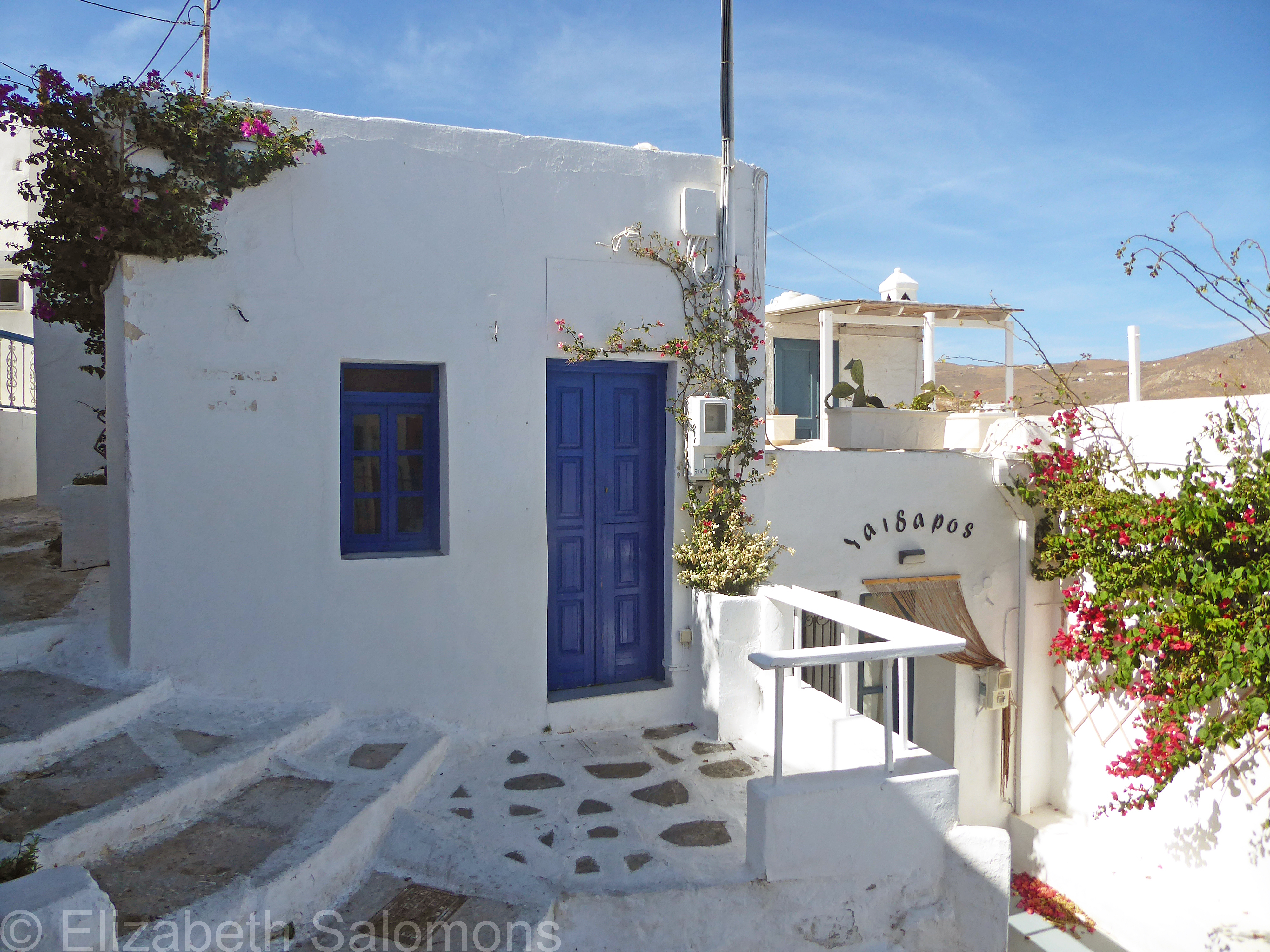
One might assume, as I did, that the colours of the Cycladic houses come from the Greek flag. Or from the colours of the Aegean Sea and the Grecian skies. But it turns out the blue-and-white colour scheme has a much more basic origin.
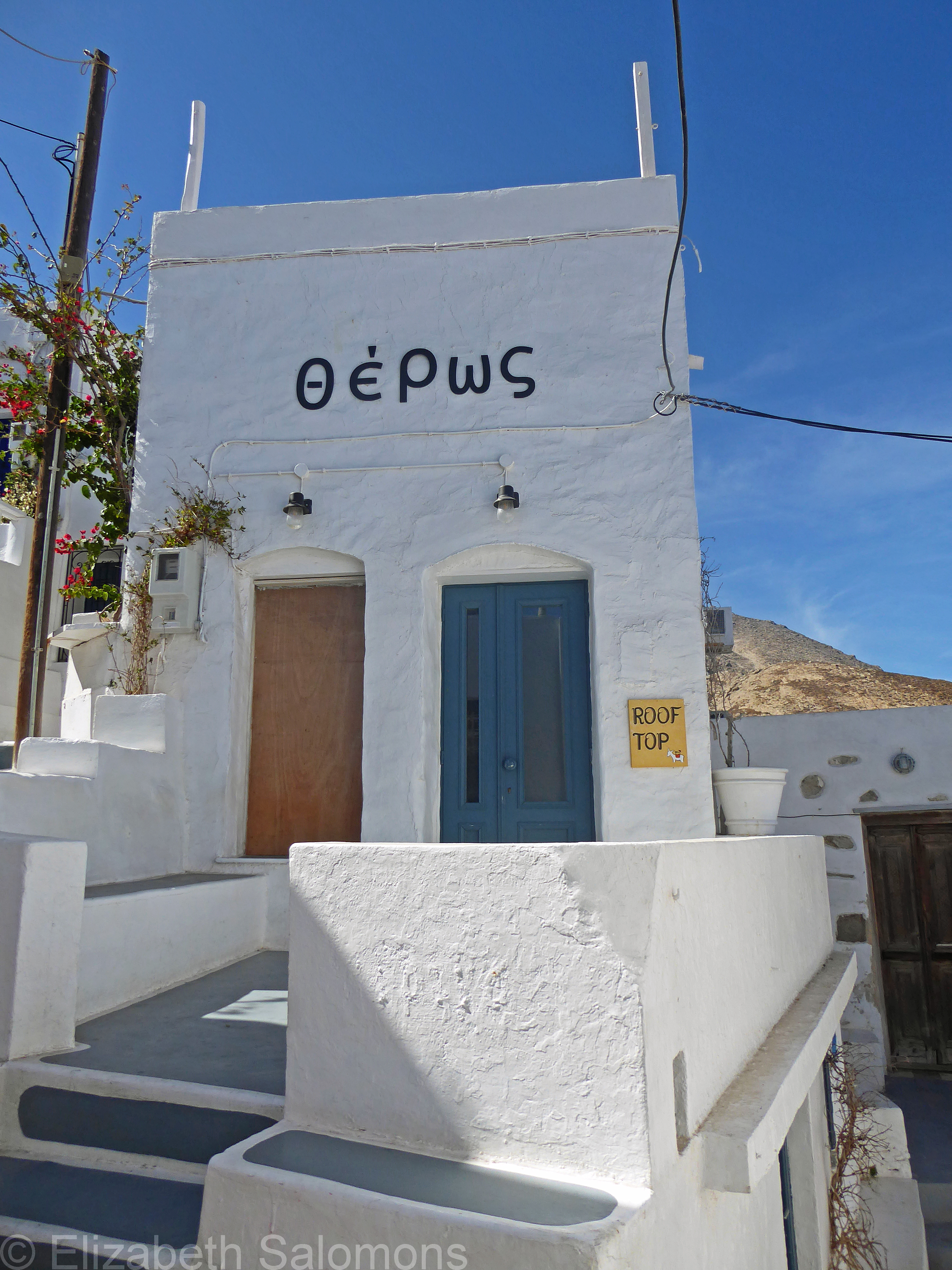
White is a practical choice, of course. Along with the thick stone walls and small windows, it helps the houses stay cool — an all-important consideration in the Mediterranean climate. But whitewash also contains limestone, a natural disinfectant, and during a cholera outbreak in 1938, it was ordered that whitewash be applied to all houses to help prevent the spread of the disease.
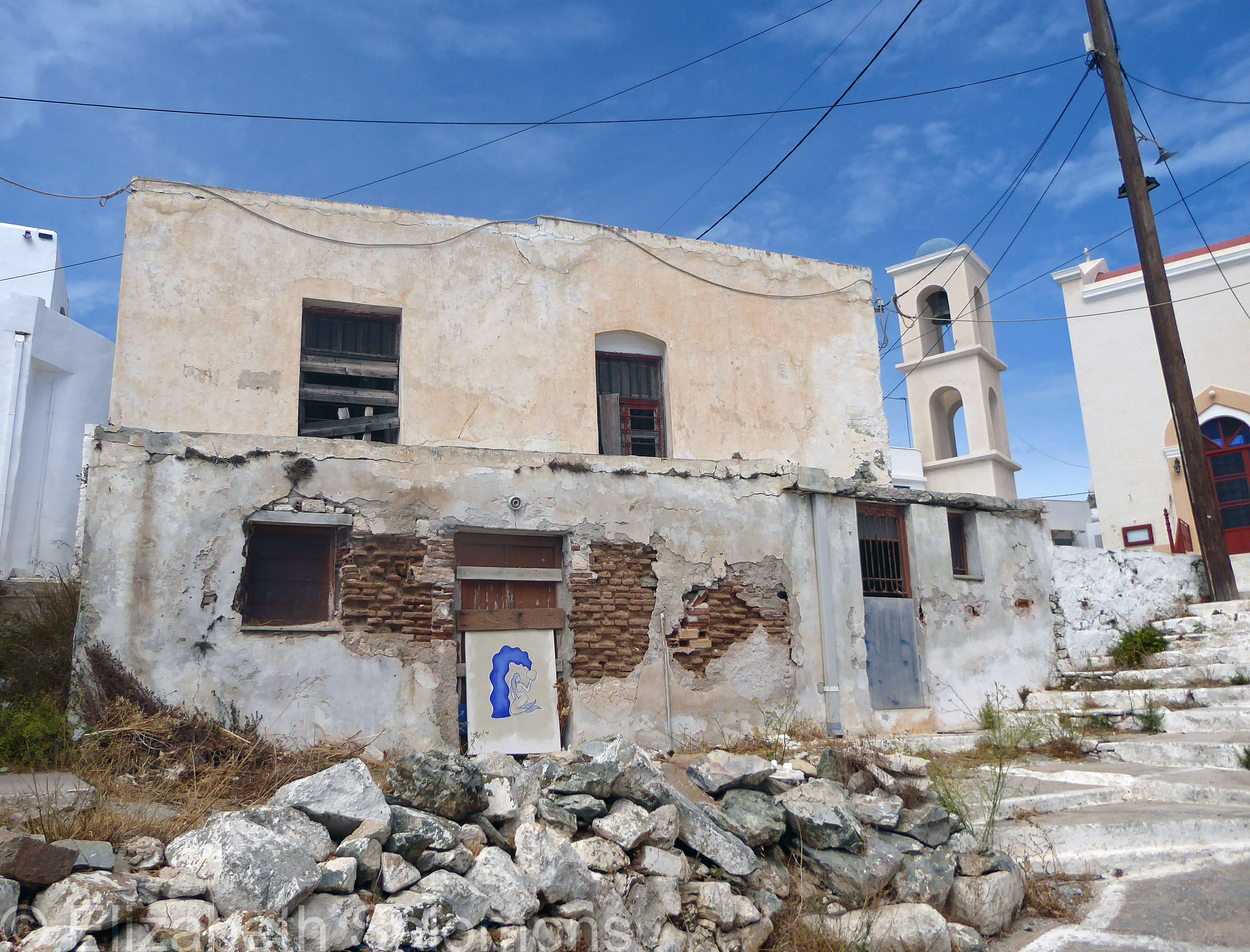
And blue? Turns out blue was the cheapest colour of paint available and after painting their boats, fishermen used any leftover paint on their houses.
Then, in 1967, the military dictatorship that ruled Greece at the time ordered all houses be painted blue and white because the colours were considered patriotic. White was linked to purity and independence (remember the uniforms of the Presidential Guard?). And, yes, blue represents the sea and the sky.
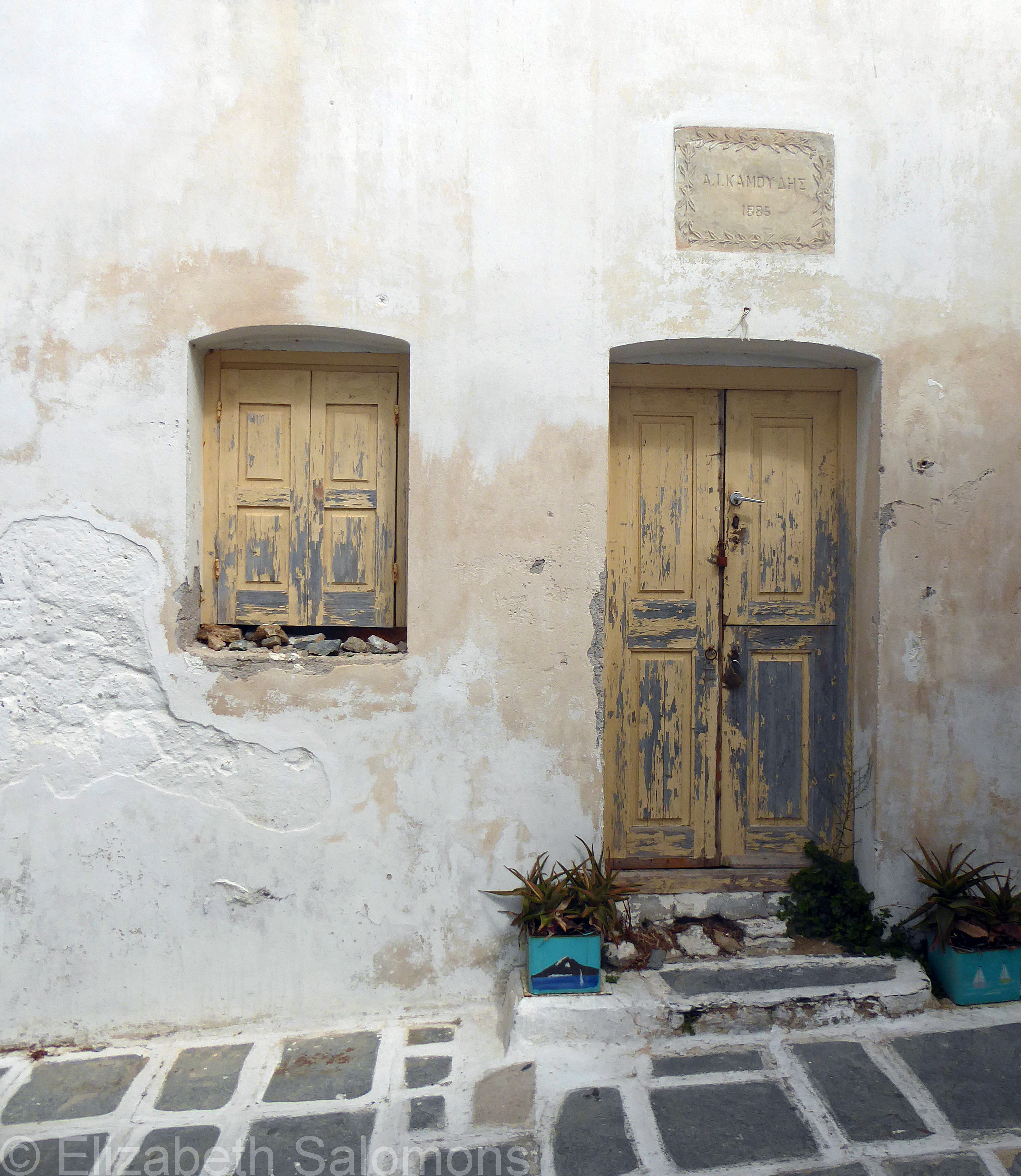
The colour scheme was made law in 1974. Those laws are no longer in place, but the blue and white colours have become so synonymous with the Greek islands that everyone keeps the traditional colours.
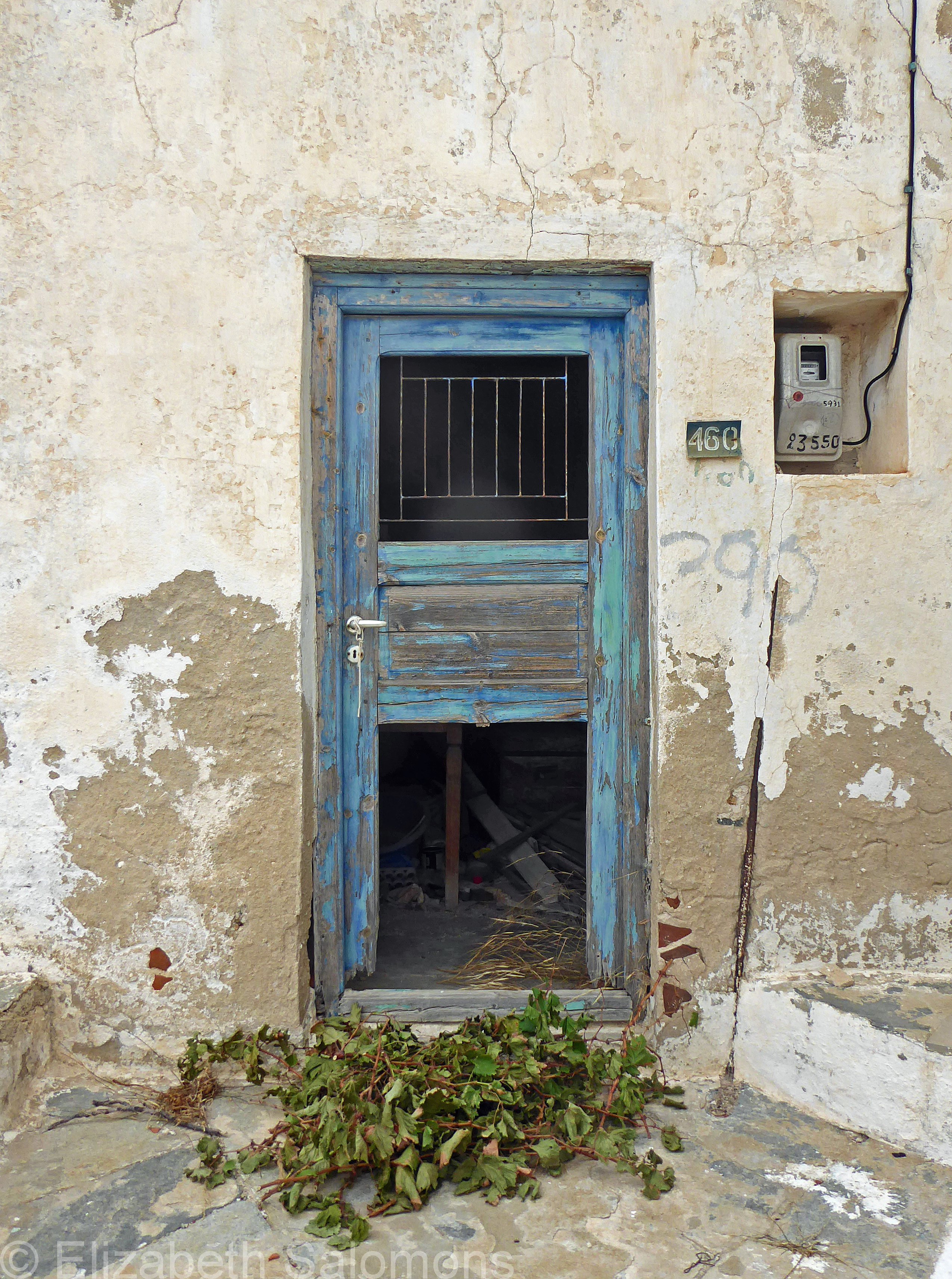
One final bit of trivia: many of the Greek islands were colonized by the Venetians and their influence can be seen in the construction of the doors and windows.


Through My Lens: Agios Konstantinos

For the Third Sunday of Lent, I’m posting a photo of the church of Agios Konstantinos. This small chapel was built almost two hundred years ago on the ruins of the castle built by Venetian traders back in the fifteenth century. Its location at the highest point of the Chora, about 250 metres above sea level, makes it the best spot for a panoramic view over Serifos.
Agios Konstantinos (Saint Constantine), also known as Constantine the Great, was Emperor of Rome from 306 to 337 CE, founder of Constantinople (now called Istanbul), and the first Roman emperor to convert to Christianity. He is credited with stopping the persecution of Christians and making the Christian faith the dominant religion of the Roman Empire.
Through My Lens: Agios Athanasios
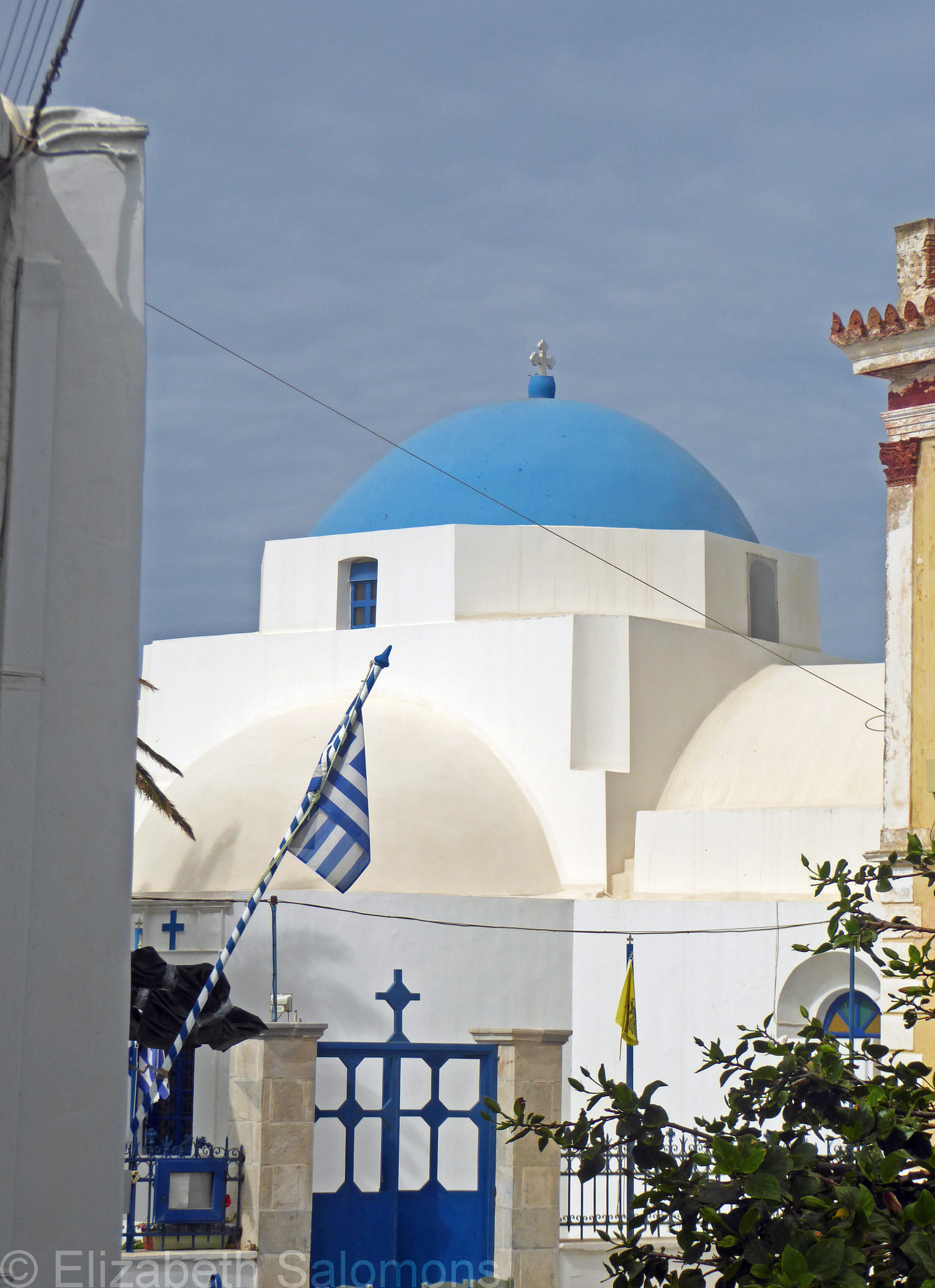
Even an island as small as Serifos has a cathedral and that would be this church, the Cathedral of Agios Athanasios. Agios Athanasios (Saint Athanasios) was the twentieth Patriarch of Alexandria and a key figure at the First Council of Nicaea held in 325.
Built in 1820, the cathedral is located in Pano Piatsa (the main square) of the Pano Chora and is my photo choice for today, the Second Sunday of Lent.


 There and Back Again