Santorini Then and Now
My first-ever visit to Santorini took place in November and the Greeks we met seemed puzzled.
“Why do you come so late in the year?” they asked. We described Canada in November. I had the distinct feeling they didn’t believe us.
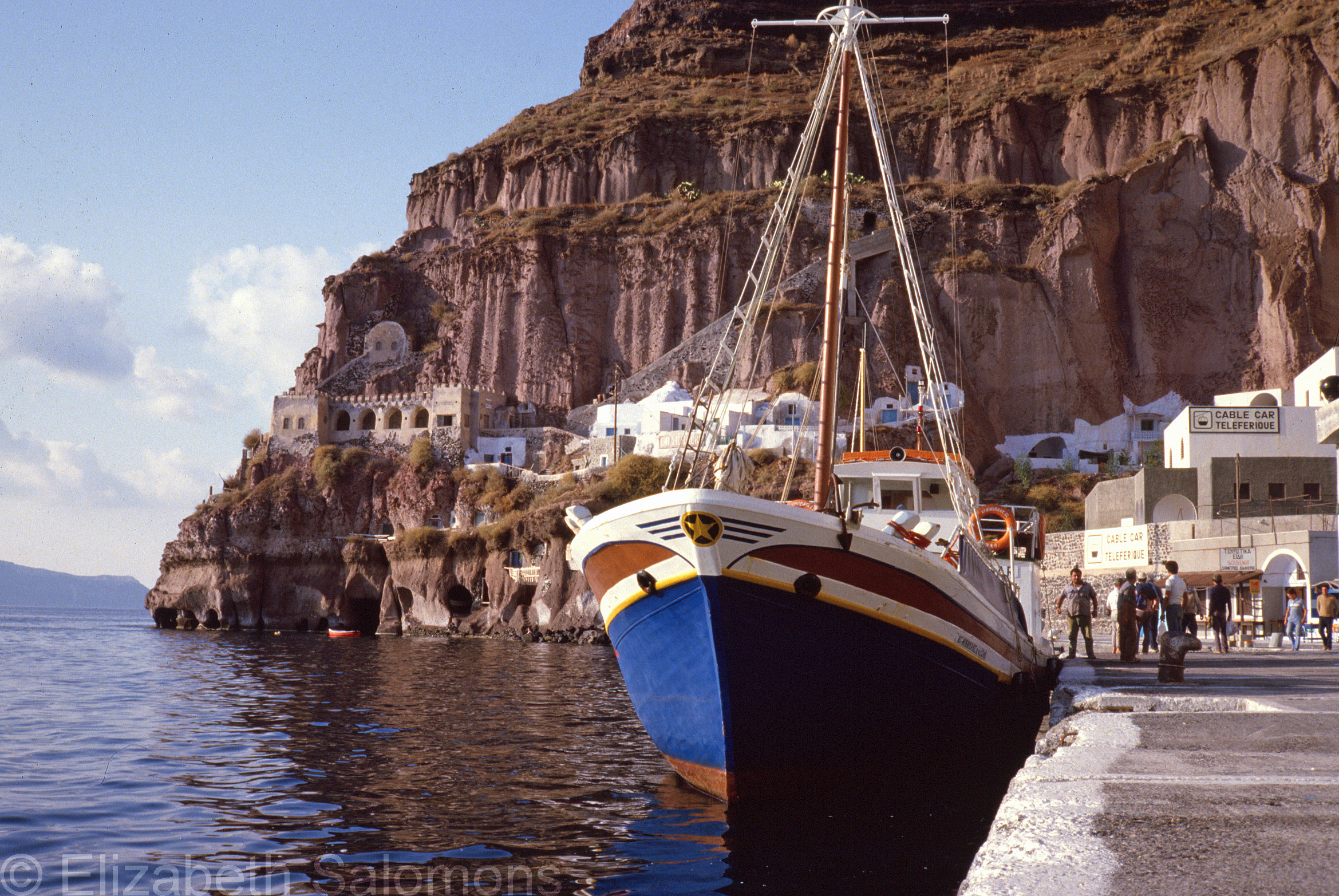
Old Port of Santorini (Then)
Back then, the Santorini airport couldn’t accommodate jets and the terminal wasn’t much more than a shack. My friend and I grabbed our backpacks off a cart on the tarmac and then looked around for the bus we’d been told would take us into town. It was parked just beyond the baggage cart, its engine door removed and most of its motor parts scattered on the ground.
Taxi, then.
Within an hour, we found ourselves a large triple room with ensuite for the astonishing price of $11 a night. After months of hostelling around Europe, it was definitely an upgrade.
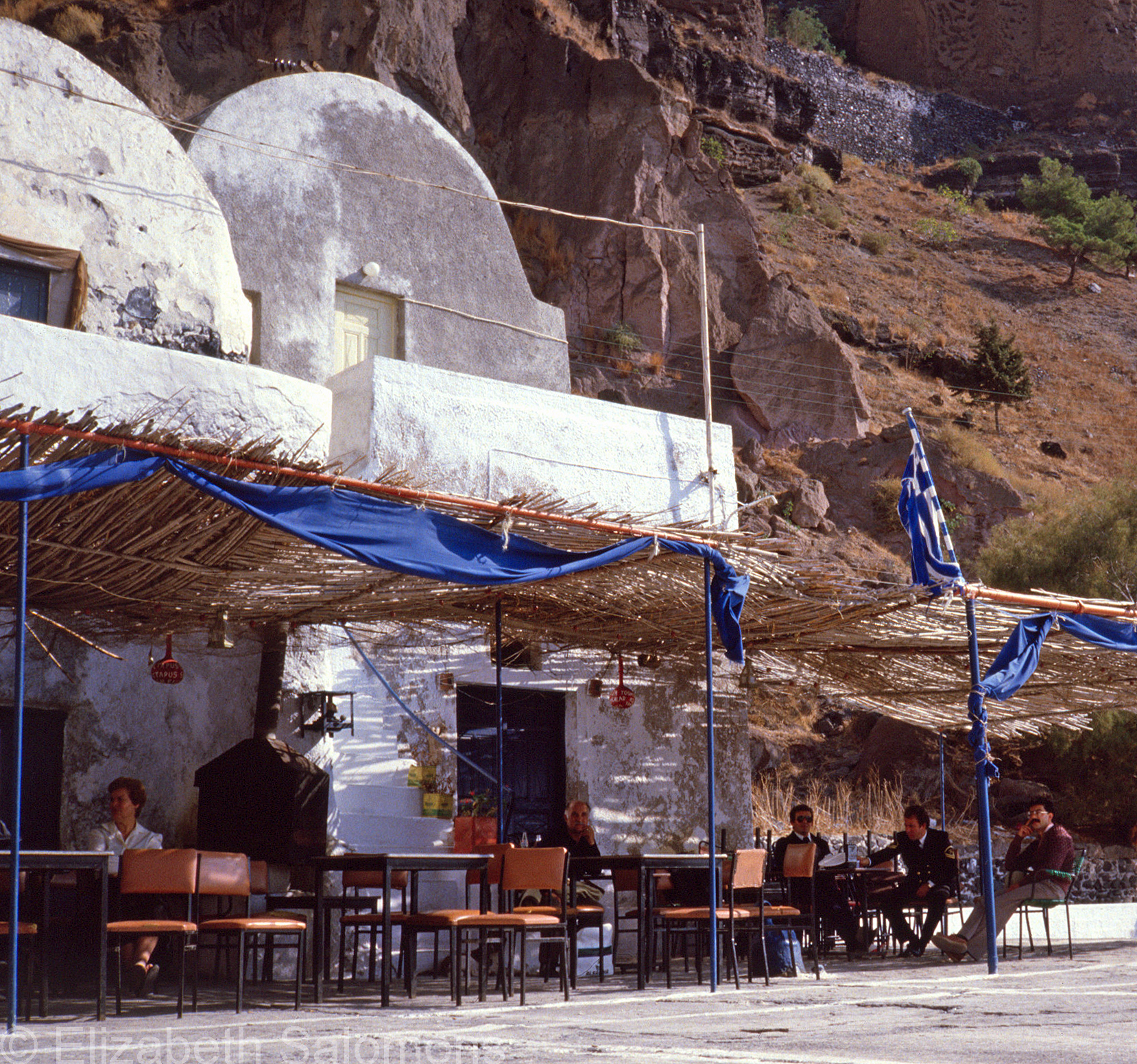
Taverna at the Old Port of Santorini (Then)
Most of the restaurants in Fira were shut up for the season and those still in operation opened late and closed when they ran out of food. There were no menus. You went to the kitchen to see what was on offer each night and then made your choice.
Our pre-dinner entertainment was to join other travellers (mostly Canadians, for some reason) on the terrace of a clifftop hotel that was closed for the season, drinking wine or ouzo and making bets as to what time the sun would set.
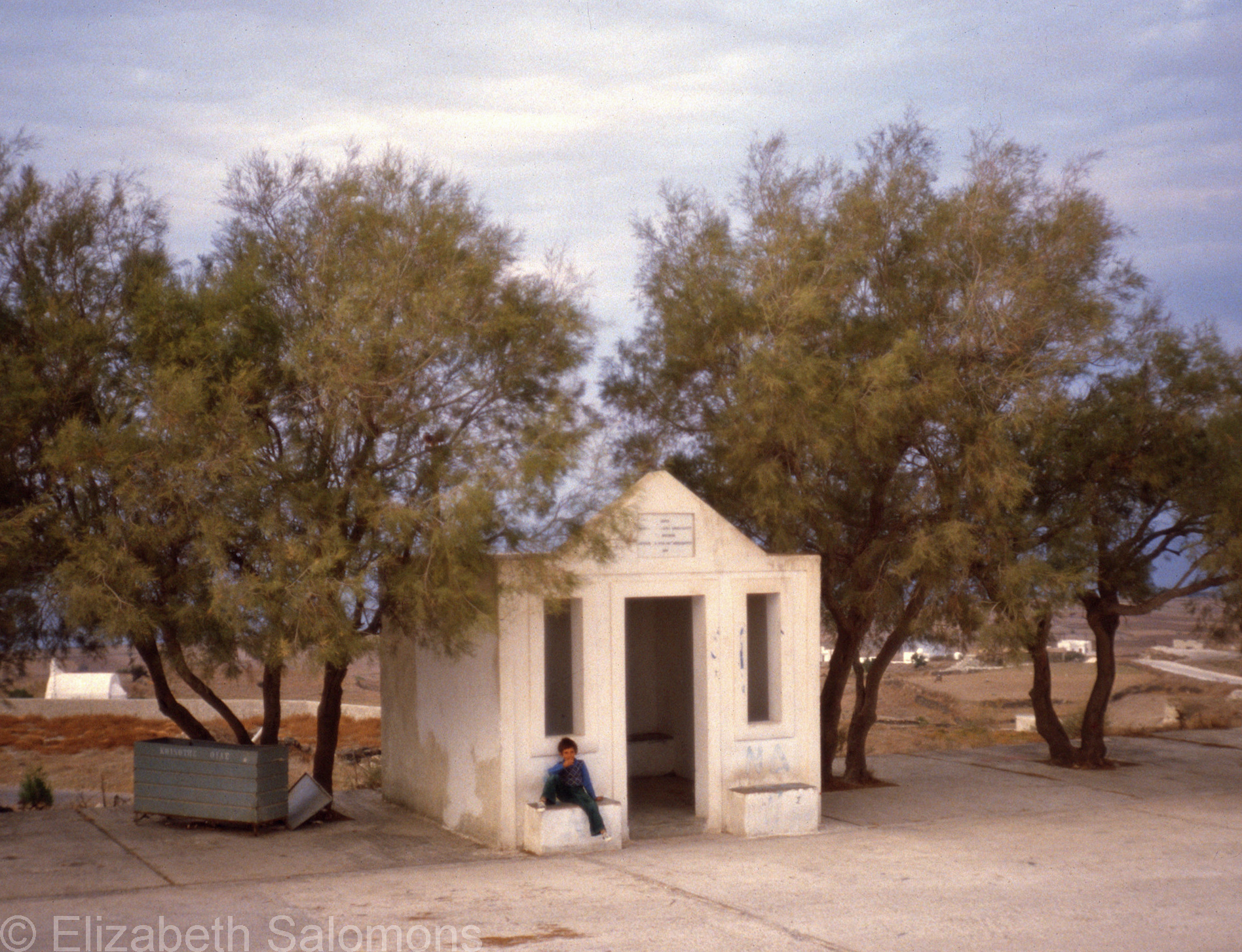
Santorini Bus Stop (Then)
On this, my second visit to Santorini, I arrived by ferry to a port spilling over with thousands of tourists. I’d had the foresight to book a hotel pick-up and so I walked past all the chaos until I saw a driver holding up a card with my name on it.
My companions in the minivan were a Brazilian couple with gold rings so shiny I assumed they were honeymooners. Thirty minutes later, we were at our hotel in Oia. The receptionist checked the Brazilians in first, explaining in detail all the ways they could spend their money: renting ATVs, horseback riding, wine-tasting, a sunset cruise, a full-day cruise, the spa…
When it was my turn, the receptionist asked if I’d been to Santorini before. She was bewildered by my answer; it was as if she couldn’t compute the math involved.
A few hours later, it was my turn to be bewildered. I couldn’t believe the crowds on the streets of Oia. I’d been warned, but sometimes you have to see it to believe it.

Night View of Santorini (Now)
Because I had stayed in Fira my first time on Santorini, I chose to say in Oia this time around. But absolutely nothing about either place looked familiar.
Fira’s central square, with its bus and taxi station, banks, and pharmacies, might have been where my friend and I waited at 3 am for the bus to take us to the port to catch a ferry, but I honestly don’t know.
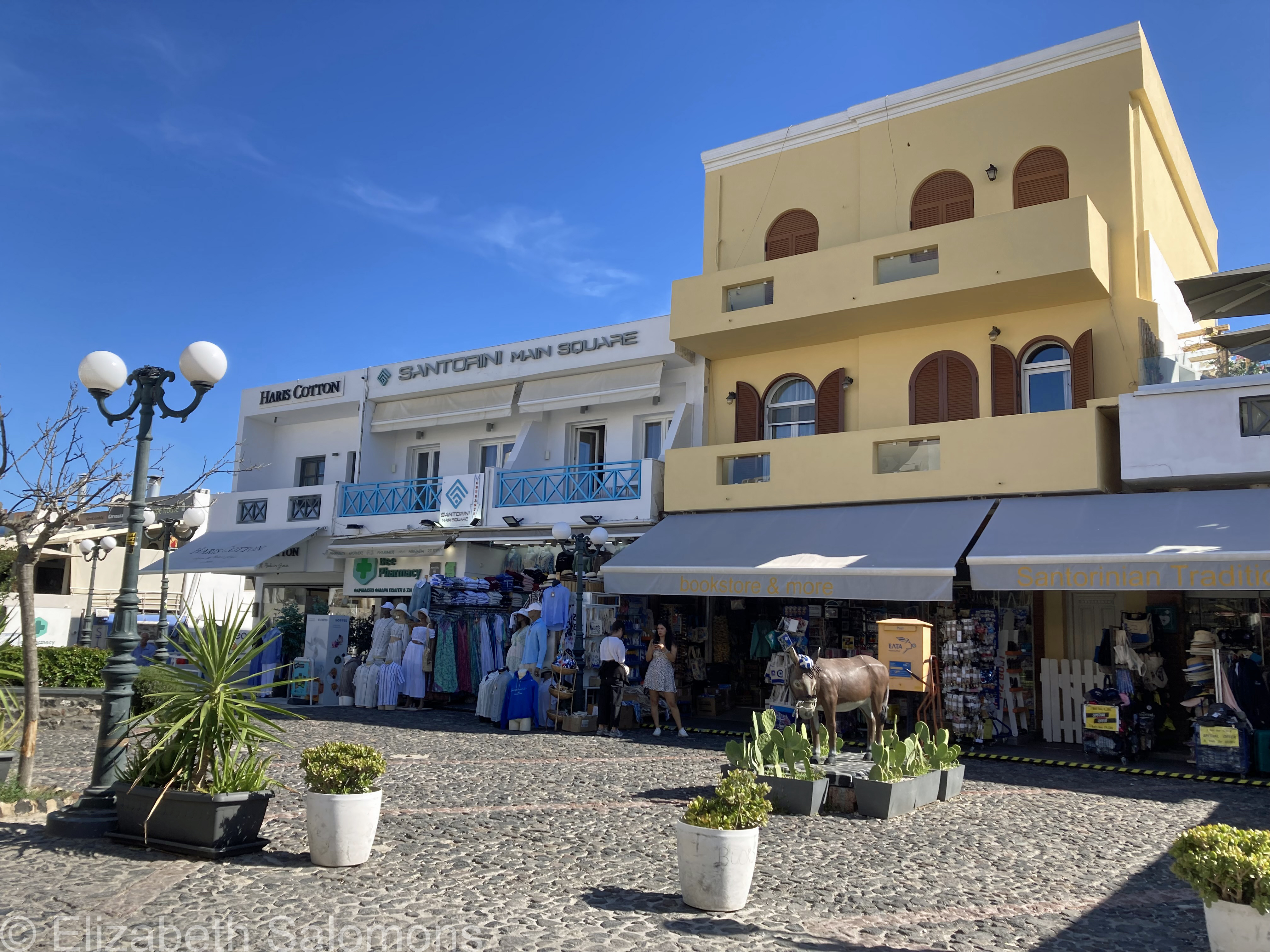
Main Square of Fira (Now)
Truth is, Santorini then was much more like Serifos is now.
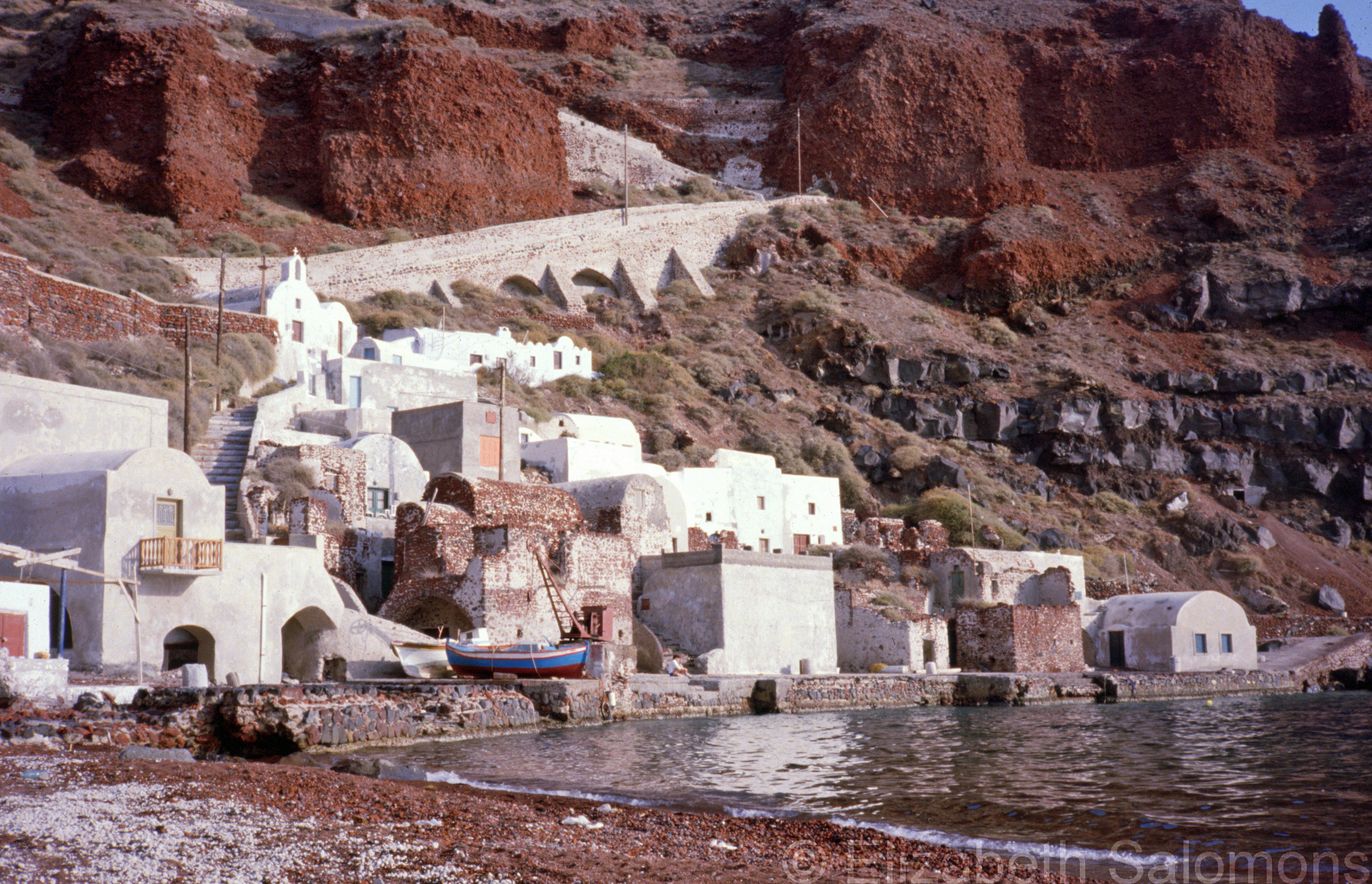
Oia (Then)
Oia had no services and was mostly in ruins.
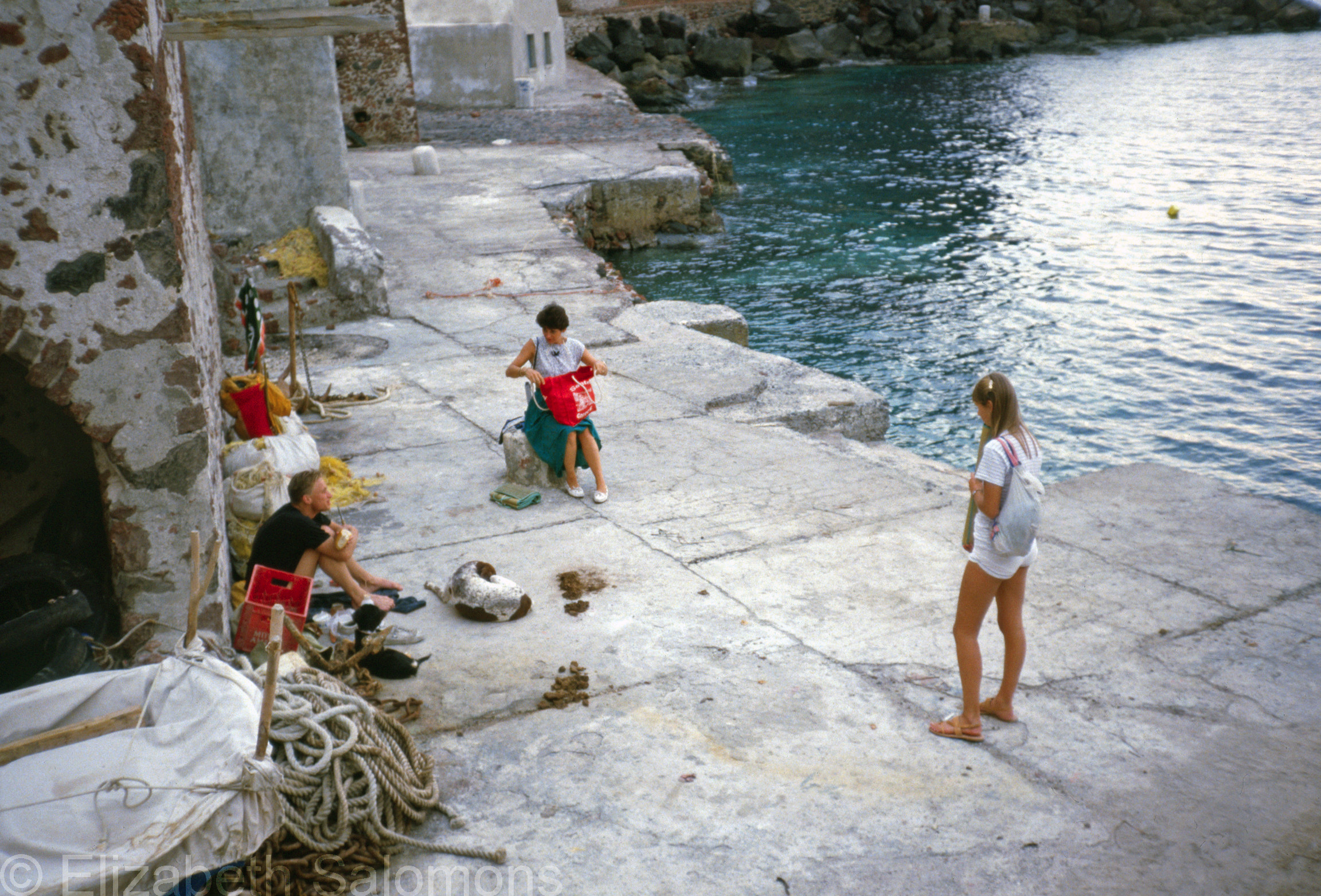
Meeting Up with Other Travellers in Oia (Then)
Forty years ago, there were no sunset cruises on a catamaran.
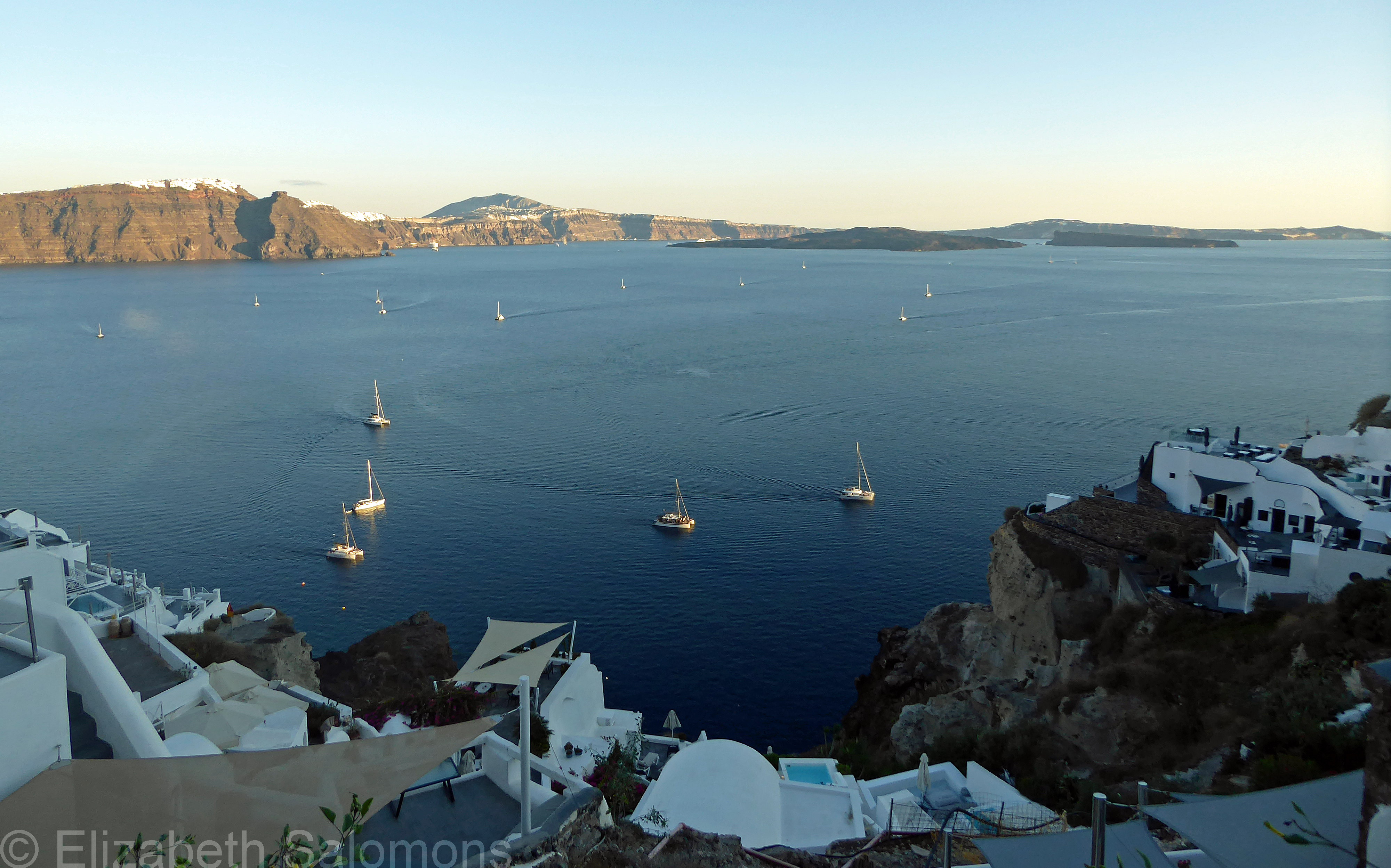
Sunset Cruise (Now)
Instead, my friend and I jumped on a boat to the uninhabited, barren island in the centre of the caldera to attend the village festival (panegyri). We were fed olives and bread and given as much wine as we wanted.
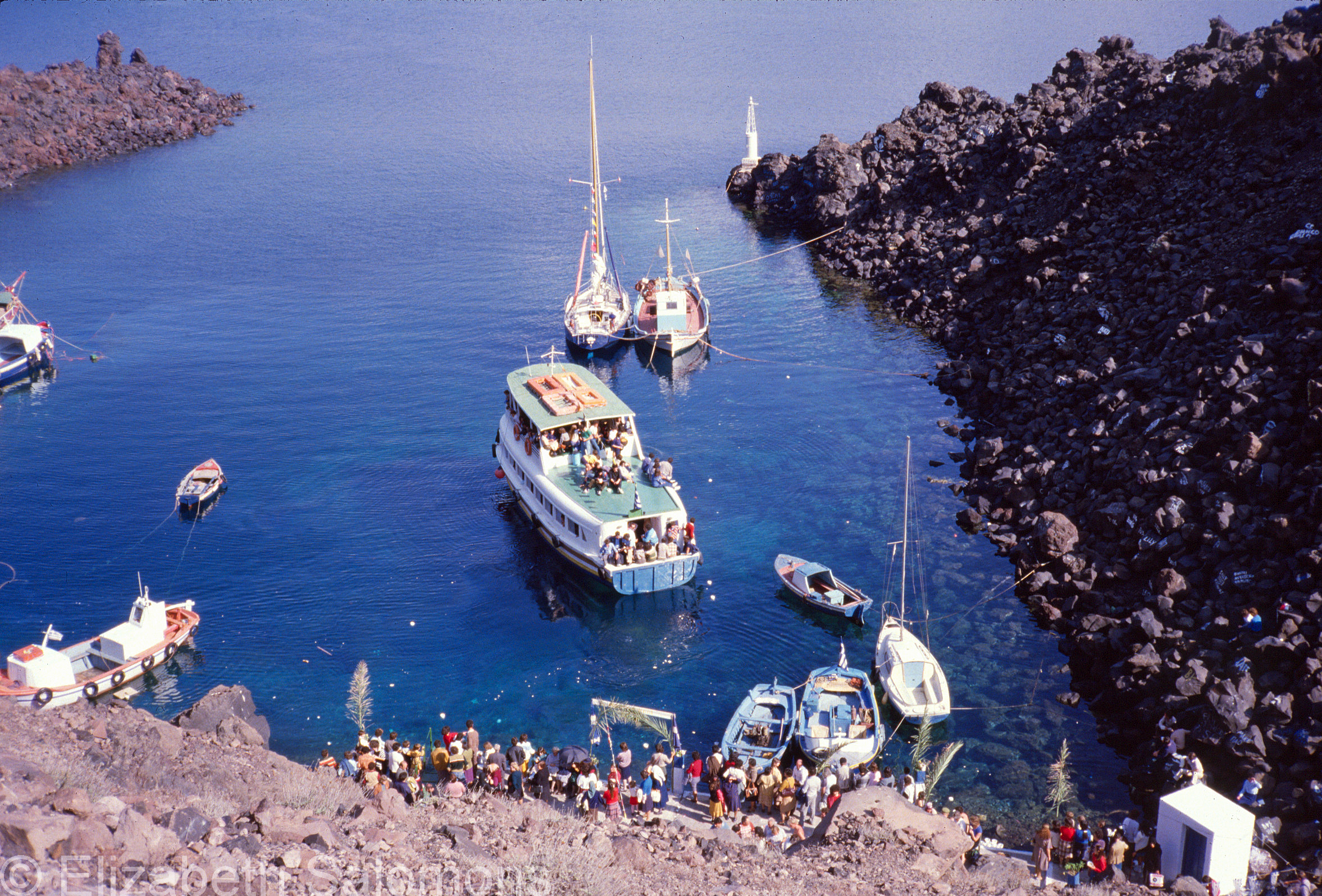
Village Boat (Then)
All the tourists on the island had been invited to the panegyri. We ended up attending two in three days and a third one took place the day after we left.
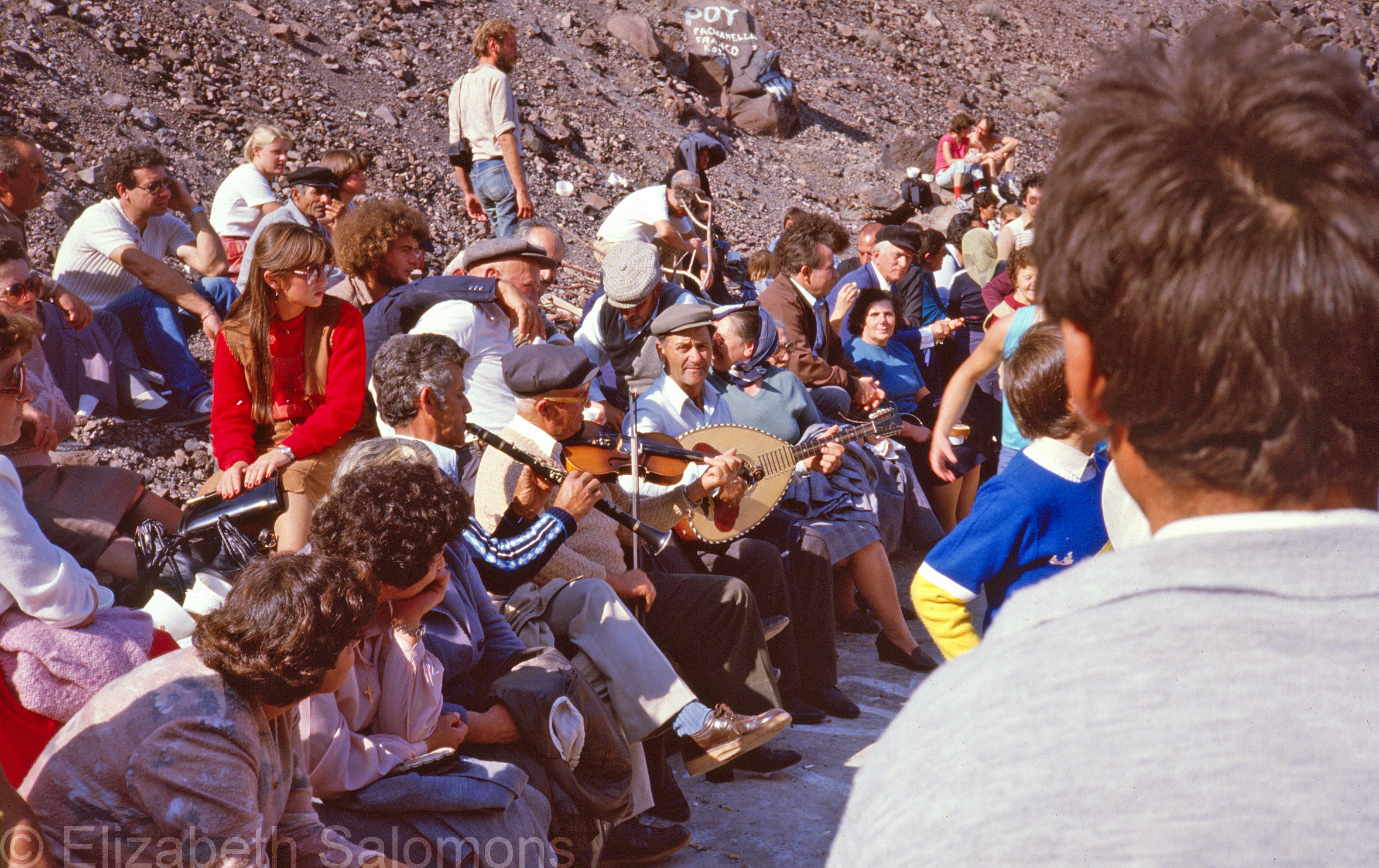
Santorini Panegyri (Then)
What hasn’t changed in forty years is that sunset viewing is still the main event of the day on Santorini. But thanks to social media, getting a photo of the sunset has become a blood sport. Everywhere in Oia were long lines of people waiting their turn at the perfect position to get that perfect photo.
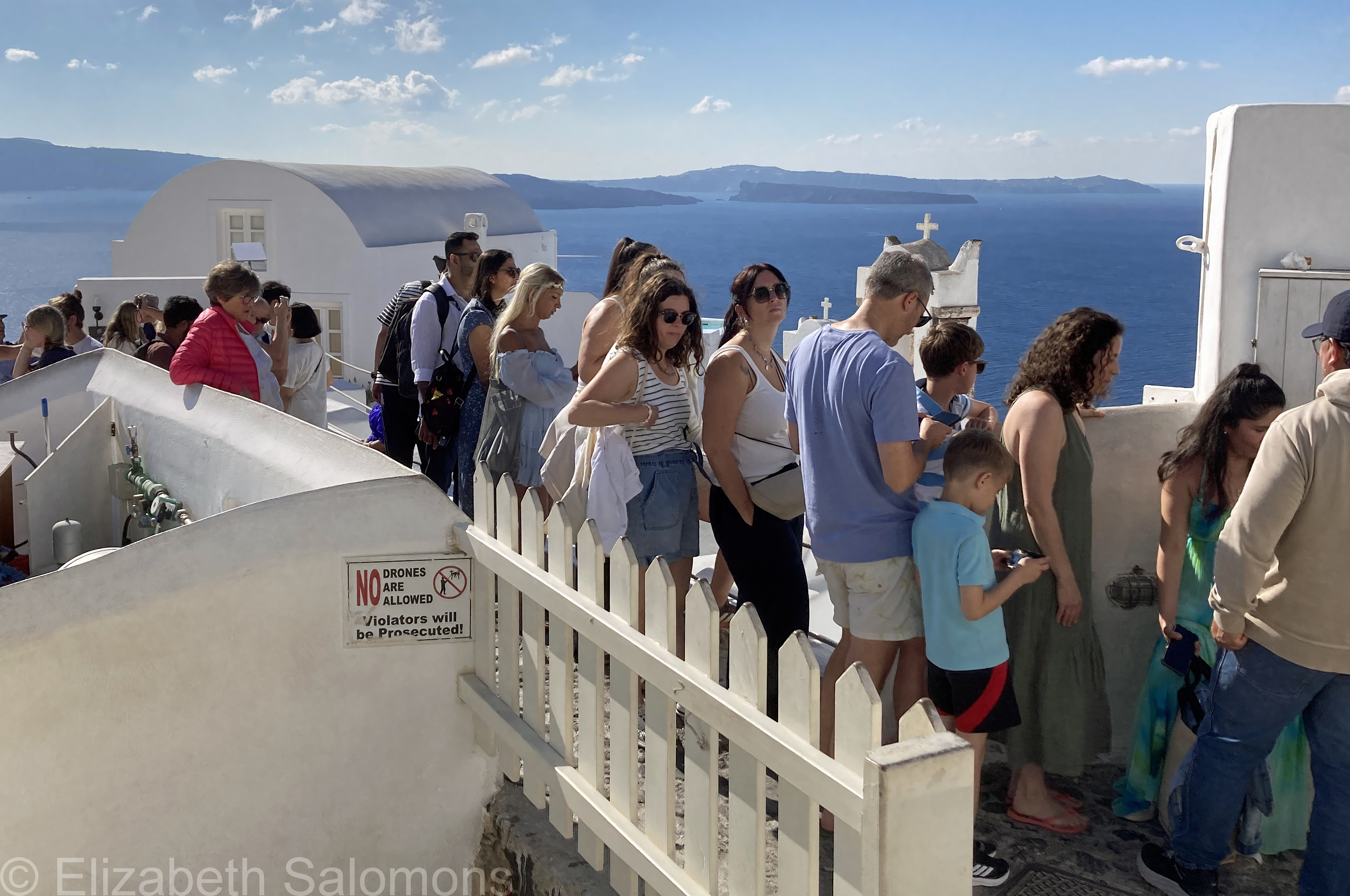
Meeting Up with Other Travellers in Oia (Now)
On my last morning on Santorini, after hiking a ways up the path to Fira to see what I had missed the day before, I turned around to take a photo of Oia. I never take just one, and after a few minutes, I stepped back to hear a man next to me snap, “Are you done yet?”
I didn’t say a word but continued looking at the view of Oia from the wide-open space we were sharing and thought, “Oh, you sweet summer child. You have no idea what’s waiting for you down there.”
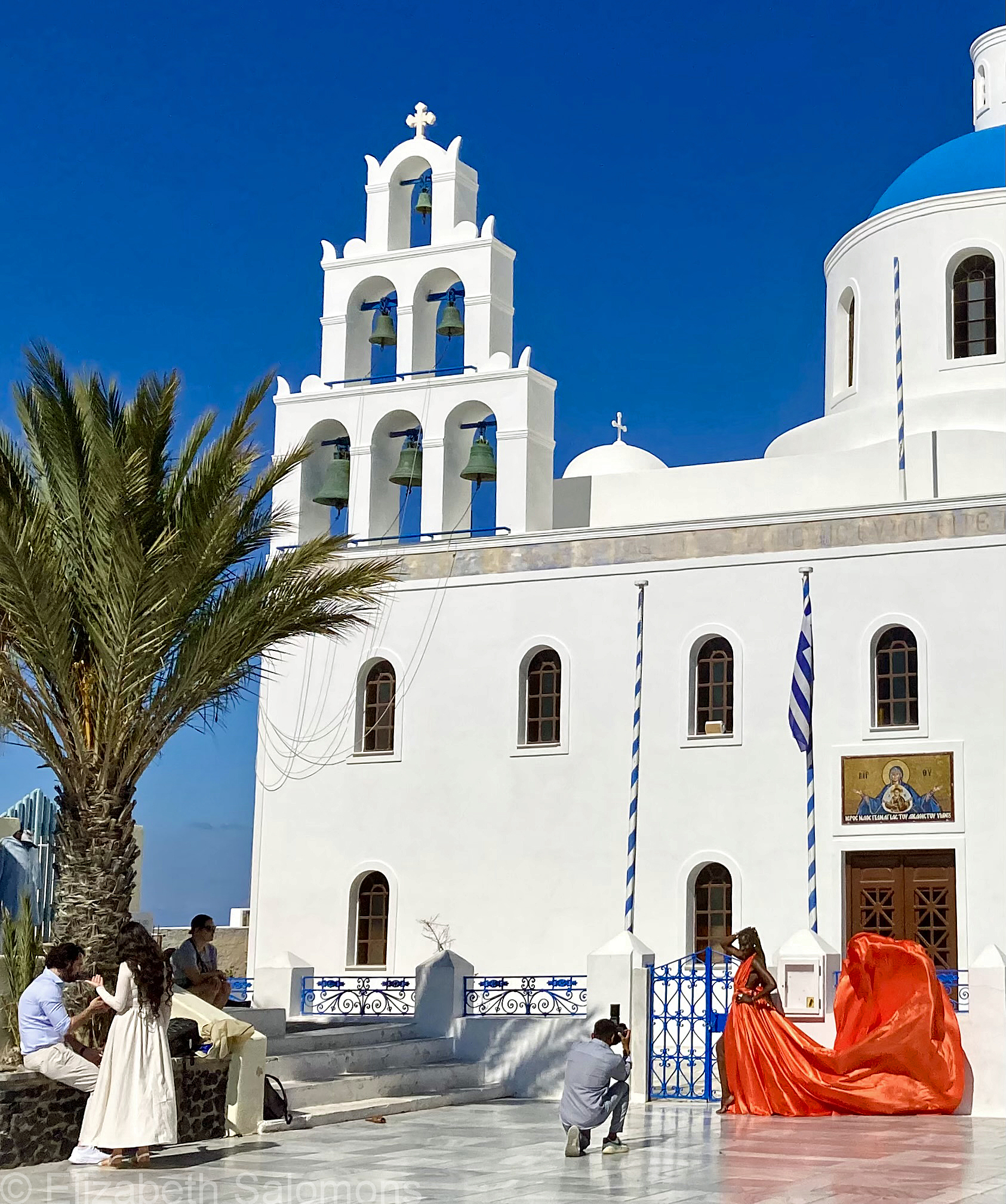
One of the myriad ways to spend your money on Santorini (now). The photographer, the dress, and the assistant (who flings the dress in the air) are all hired by the hour.
A busy port along the Russia–Egypt trade route, Oia reached its first economic peak around the turn of the last century. In 1890, it was home to 130 sailing ships that supported 2500 residents. But when steam replaced sail, the sea trade shifted to Piraeus (Athens), and people began to leave Oia — and Santorini.
A massive earthquake in 1956 destroyed a third of the island’s homes and caused significant damage to most of the rest. Parts of Oia collapsed into the sea; by 1977, its population had shrunk to 300.
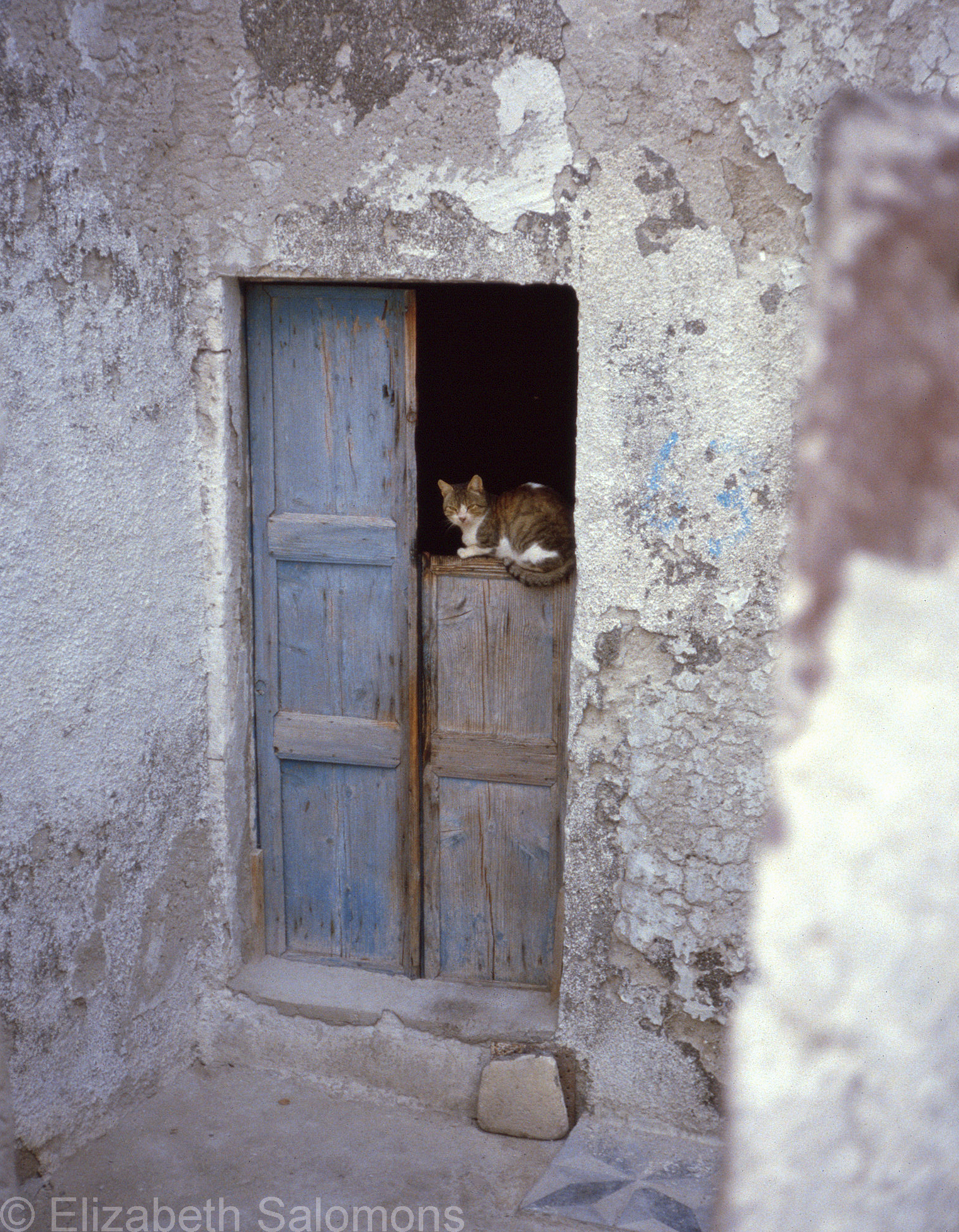
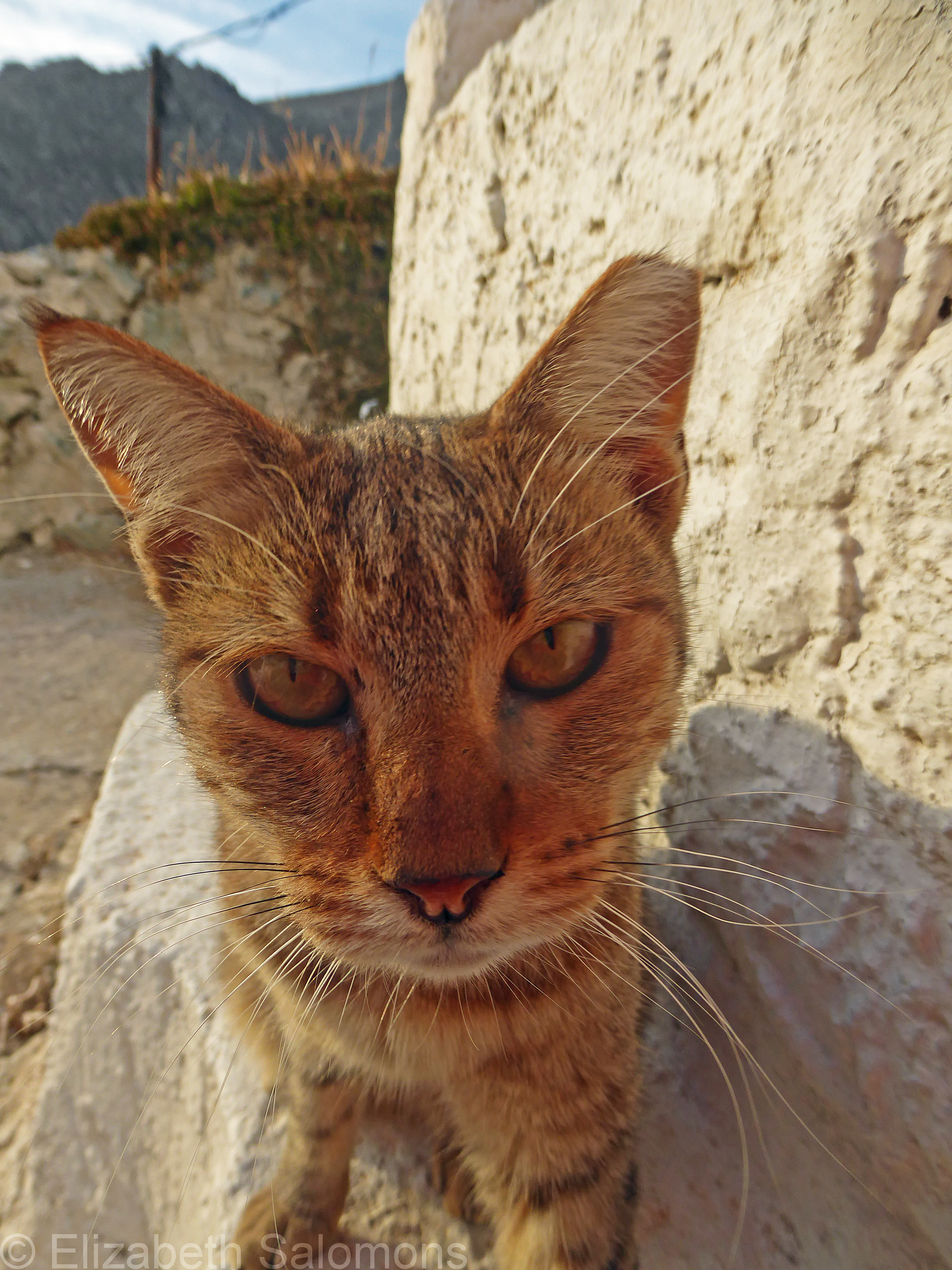
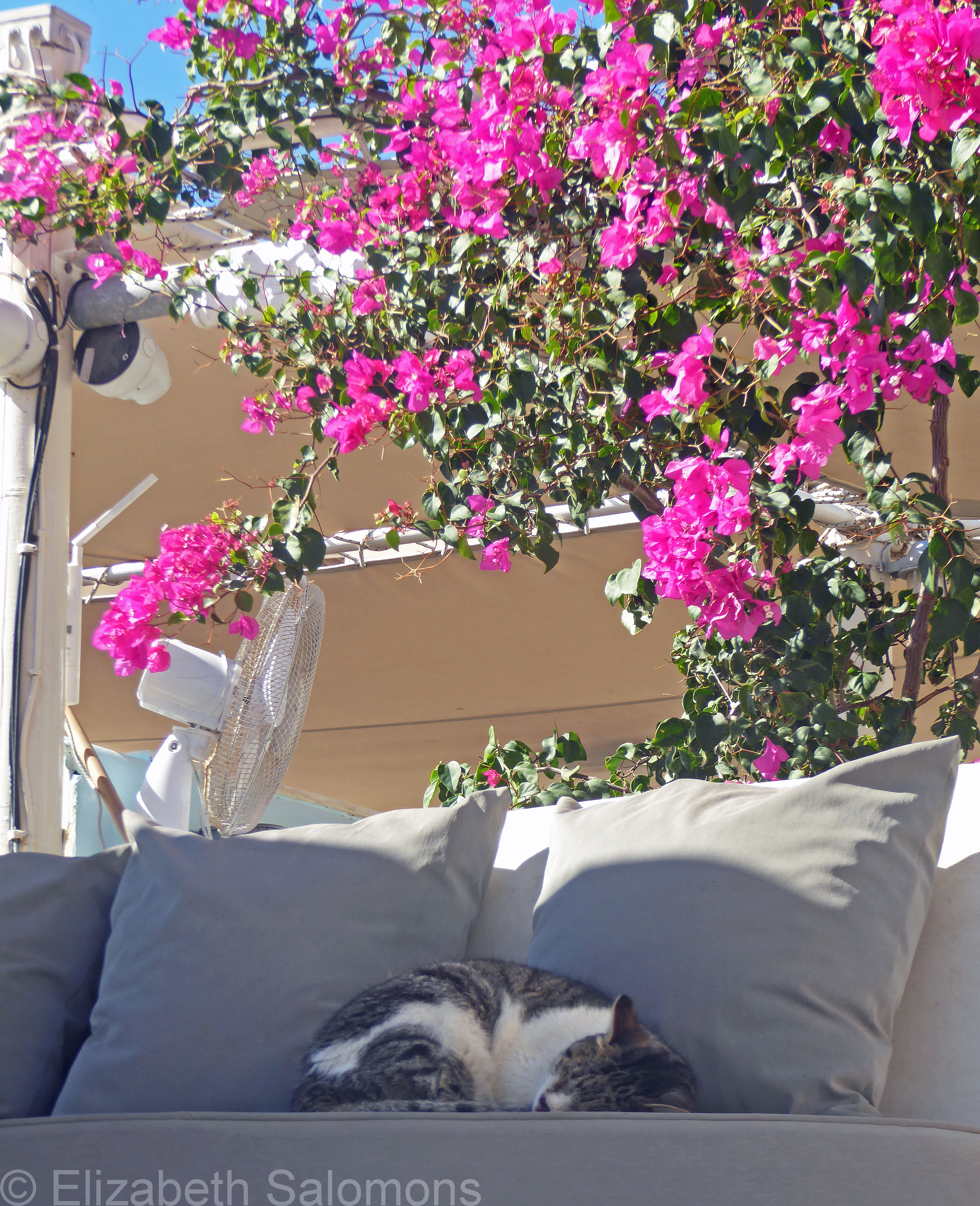
Oia Cat (Then)
Although the English Romantic poets had a thing for Greece, mass tourism didn’t take hold until the 1960s. One reason it became possible was (a) the arrival of electricity in the Cyclades and (b) a concerted effort to save traditional houses by turning them into tourist accommodations. The latter was a government initiative — and it saved Santorini.
Today, a third of Greece’s GDP is from tourism. On Santorini, the number jumps to 90 percent. Here are more numbers to boggle the mind: Santorini receives 3.4 million visitors a year and as many as 17,000 tourists from five cruise ships in a single day, yet has a resident population of only 15,000.
The number of visitors is only expected to increase in future years, pushing the island to its limit in terms of infrastructure, and, in particular, water. For that reason, a cap of 8000 cruise ship visitors per day was established in 2025.

Cruise Ship in the Caldera (Now)
If Santorini is a textbook example of what happens with overtourism, what is the solution? Should we stop travelling?
Ask anyone whose livelihood depends on tourism, and they’d say, “please don’t.” And be honest: if you were raising a family on Santorini, wouldn’t you want your children to be able to make a living without leaving home?
Each of us has to make these kinds of ethical decisions for ourselves. My choice has been to do what I call “slow travel.” As much as I can, for as long as I can, I immerse myself in a community. Home exchanges allow me to do that. I participate in the local economy when I buy my groceries and eat in family-run restaurants. I try my best to experience a new city or country as a local and come away with a newfound appreciation and understanding of a different culture.
When I do have to book hotel rooms, I look for family-run guest houses or pensions, rather than international corporate chains. And because I don’t have to worry about the timing of school vacations, I’m able to travel in the off-season. This extends the tourist season and takes some of the pressure off the high season for the more popular destinations.
When I told my home exchange partner I was going to spend a few days on Santorini, she tried to dissuade me. “There are so many other, more interesting islands,” she said.
I totally get why she said that. But I was curious to see for myself how the island had changed, and from an anthropological point of view, it was fascinating to see. Beyond our own city or country, we rarely have the opportunity to see how time changes a place.
I’m so glad I got the chance.
From Fira to Oia
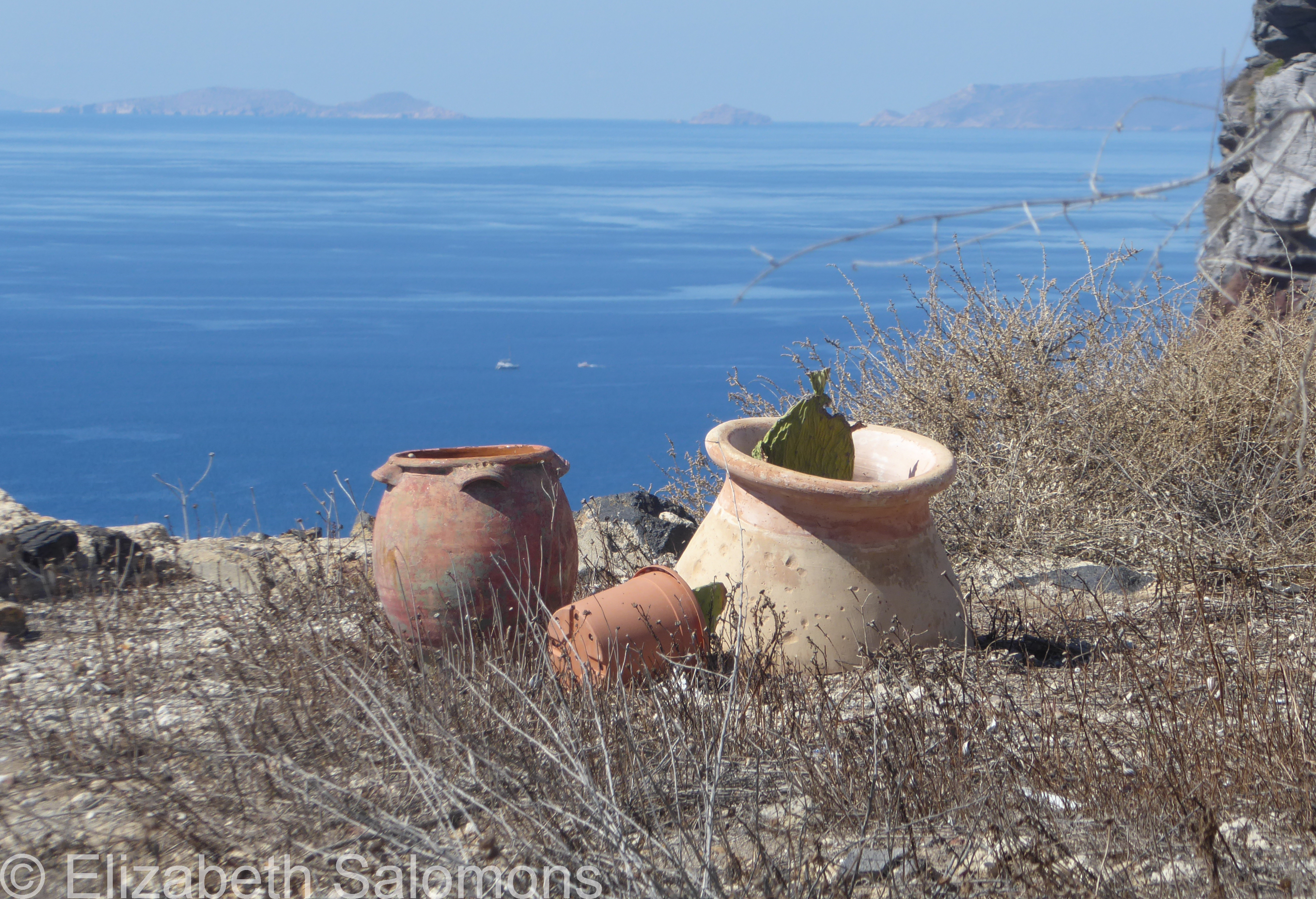
Every major trip I’ve taken has that one memorable day that stands head and shoulders above the rest. For Greece, it was my second day on Santorini, when I walked from Fira to Oia.
Some call the Fira-to-Oia walk one of the most spectacular short hikes anywhere. I spent my childhood summers in the Rockies, so I wouldn’t go that far, but it truly is beautiful. That’s because the entire route follows Santorini’s clifftop, offering stunning views of the caldera from start to finish.
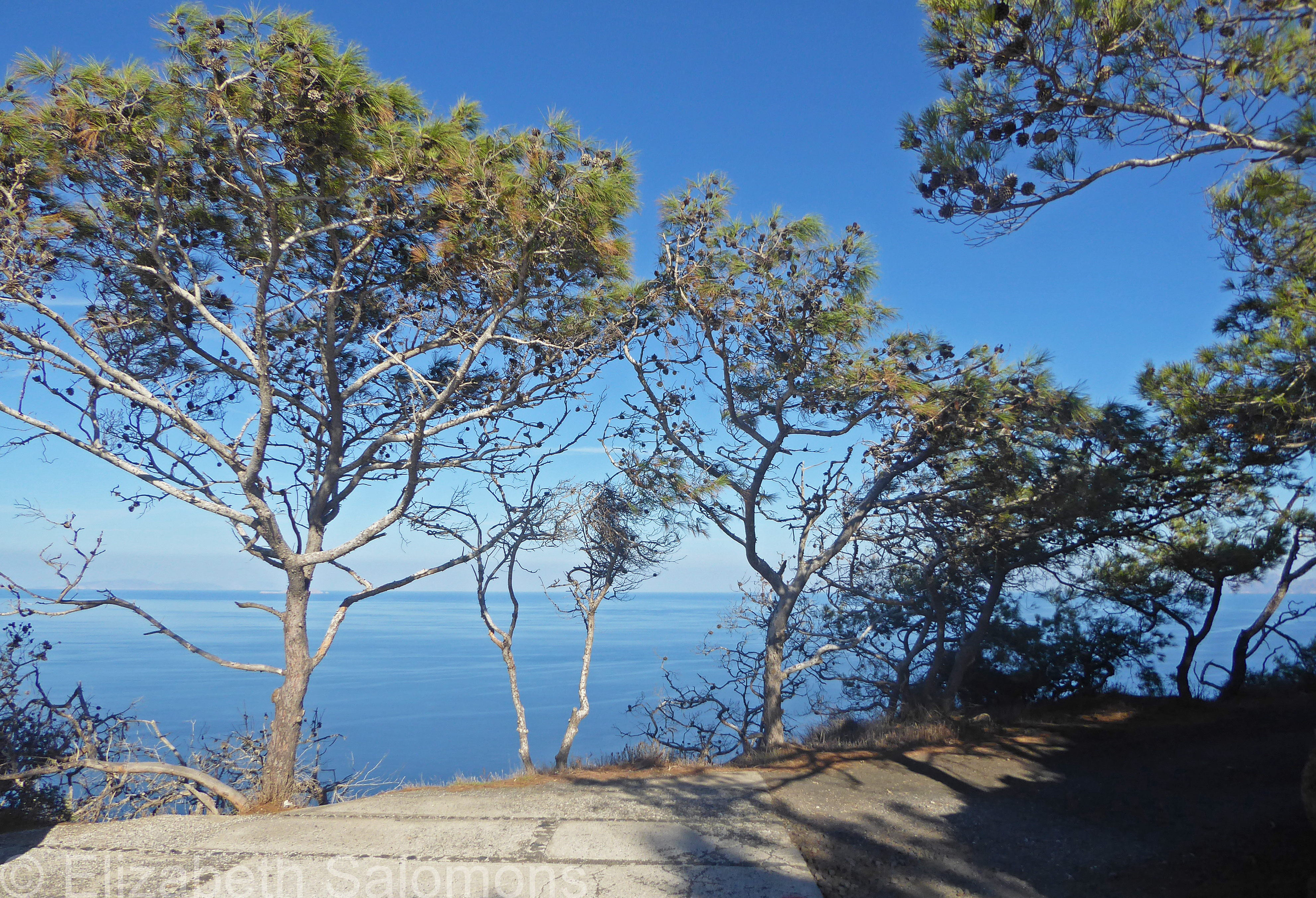
I was advised to take the bus to my starting point and walk back, rather than trying to board an overcrowded bus at the end of the day. So, since I was staying in Oia, I jumped on the bus to Fira where I spent the morning taking photos. After enjoying a leisurely lunch overlooking the caldera, I started out. It was around 2 pm — not advisable in the heat of summer, but no problem in October. With a distance of 10.5 kilometres, the walk can take anywhere from two to five hours, depending on your pace and how often you stop.
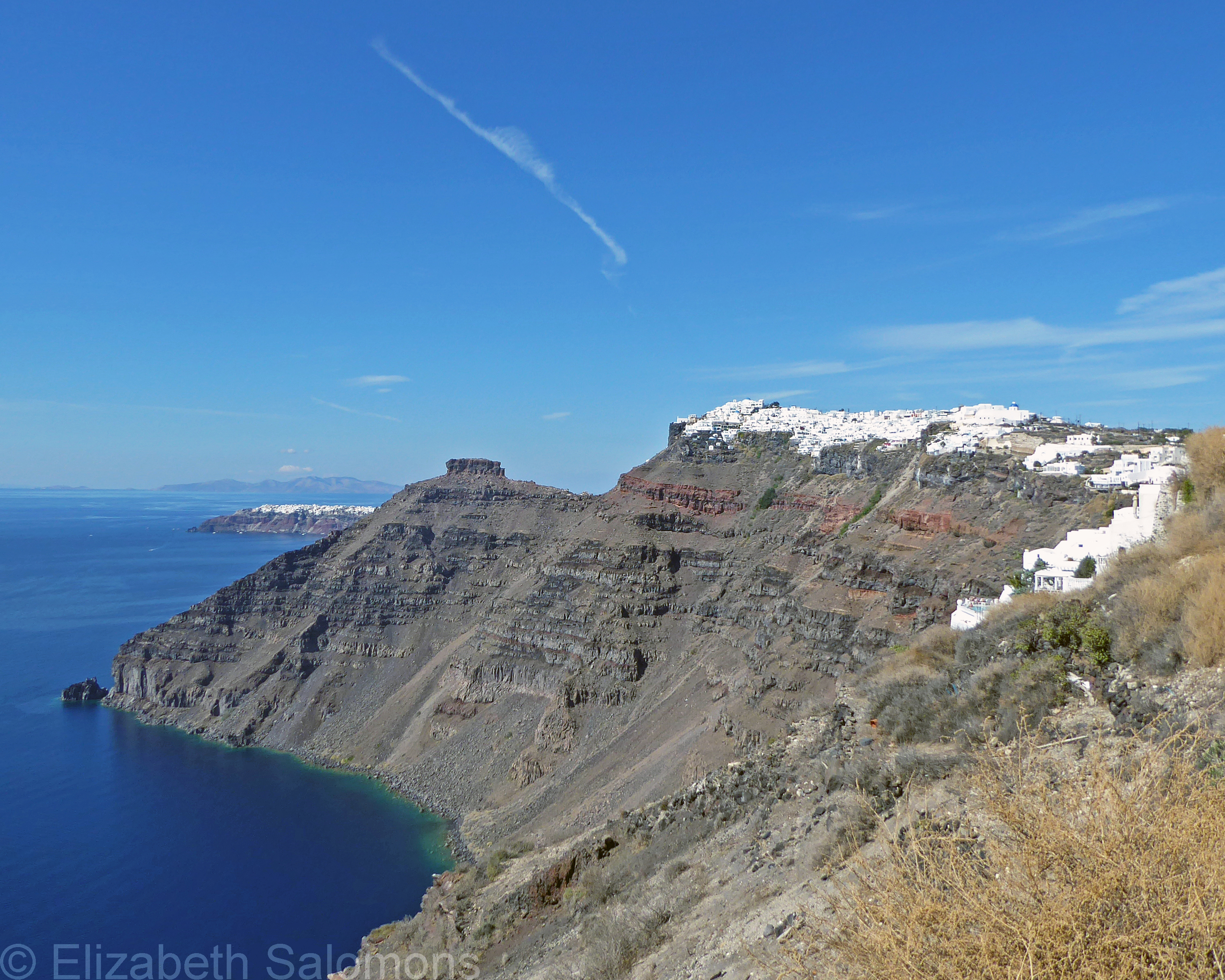
The first bit, from Fira to Firostefani to Imerovigli, is the steepest part, but it’s not long. It’s difficult to tell where one village ends and the next one starts as the path is lined with hotels, shops, and restaurants.
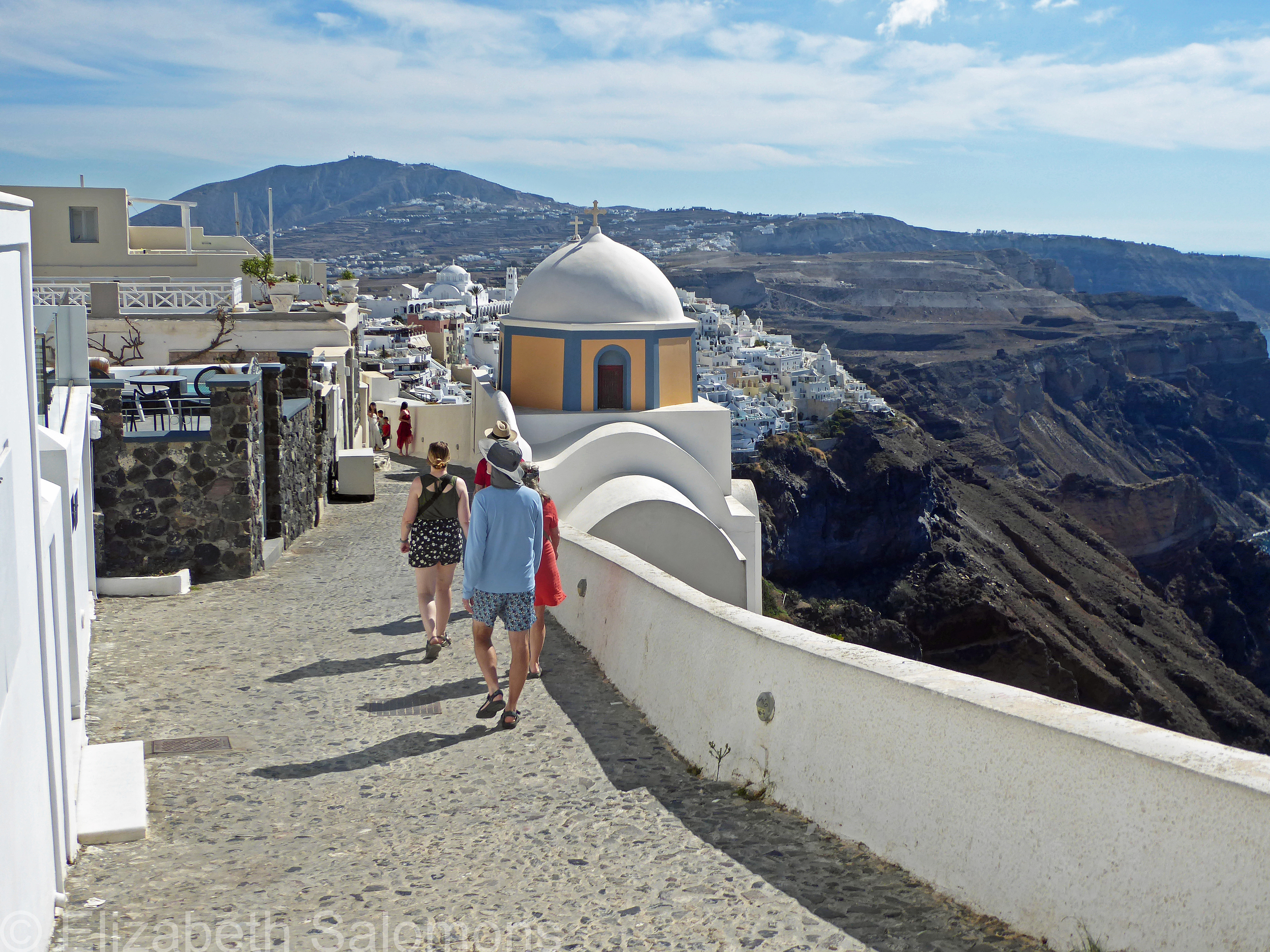
Then comes a longer, quieter stretch. On my left was the caldera, and on my right, hotel after hotel and villa after villa. Each ocean-facing suite had a private pool or hot tub and a million-dollar view.
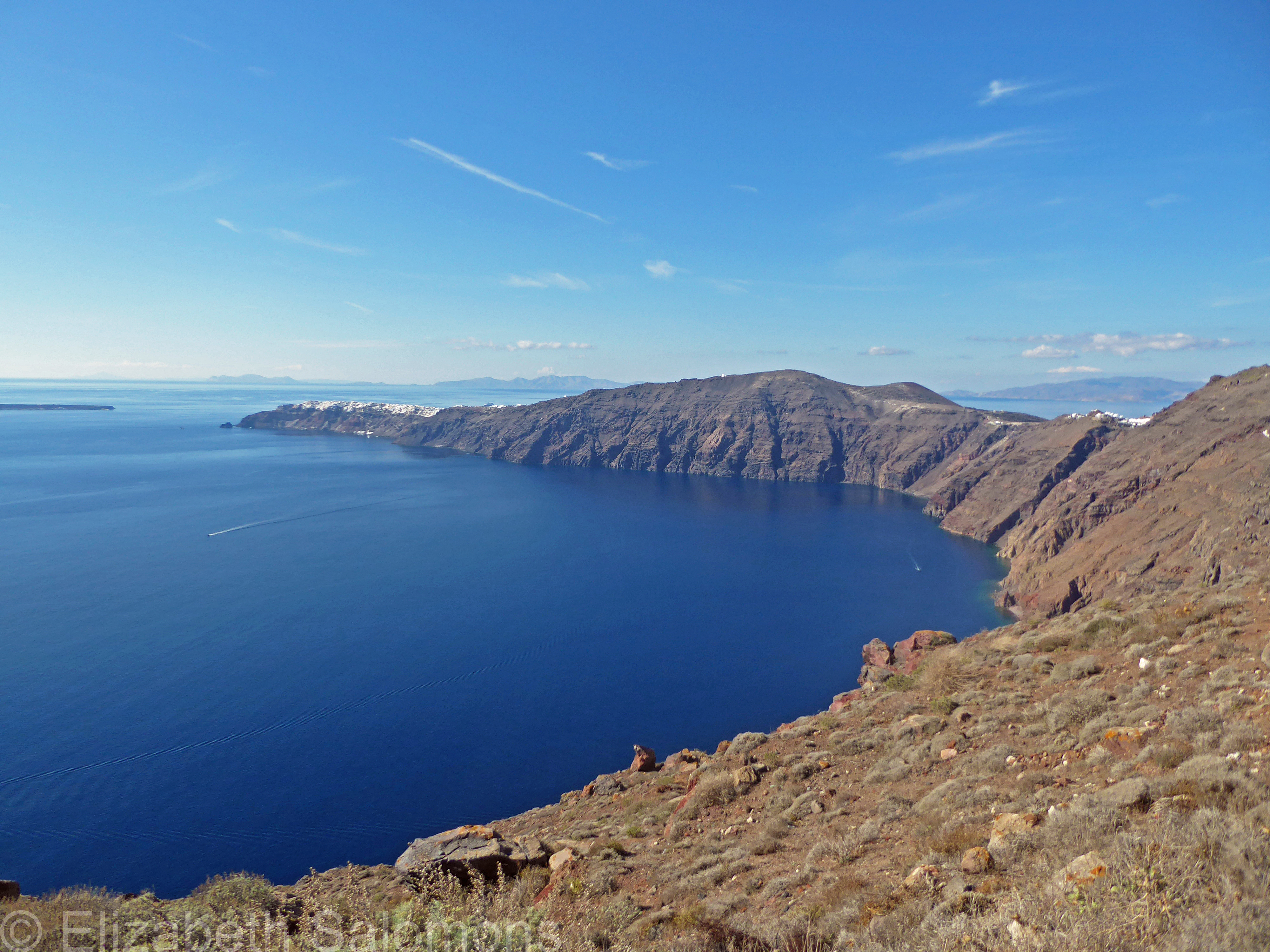
Eventually, you come to a monastery and begin a long, slow descent on a rustic, more natural path. Here, it’s best to have good walking shoes. (I was wearing runners.) My phone had run out of battery by this point, so I was guesstimating how far I had to go and carefully rationing the water I had bought in Firostefani.
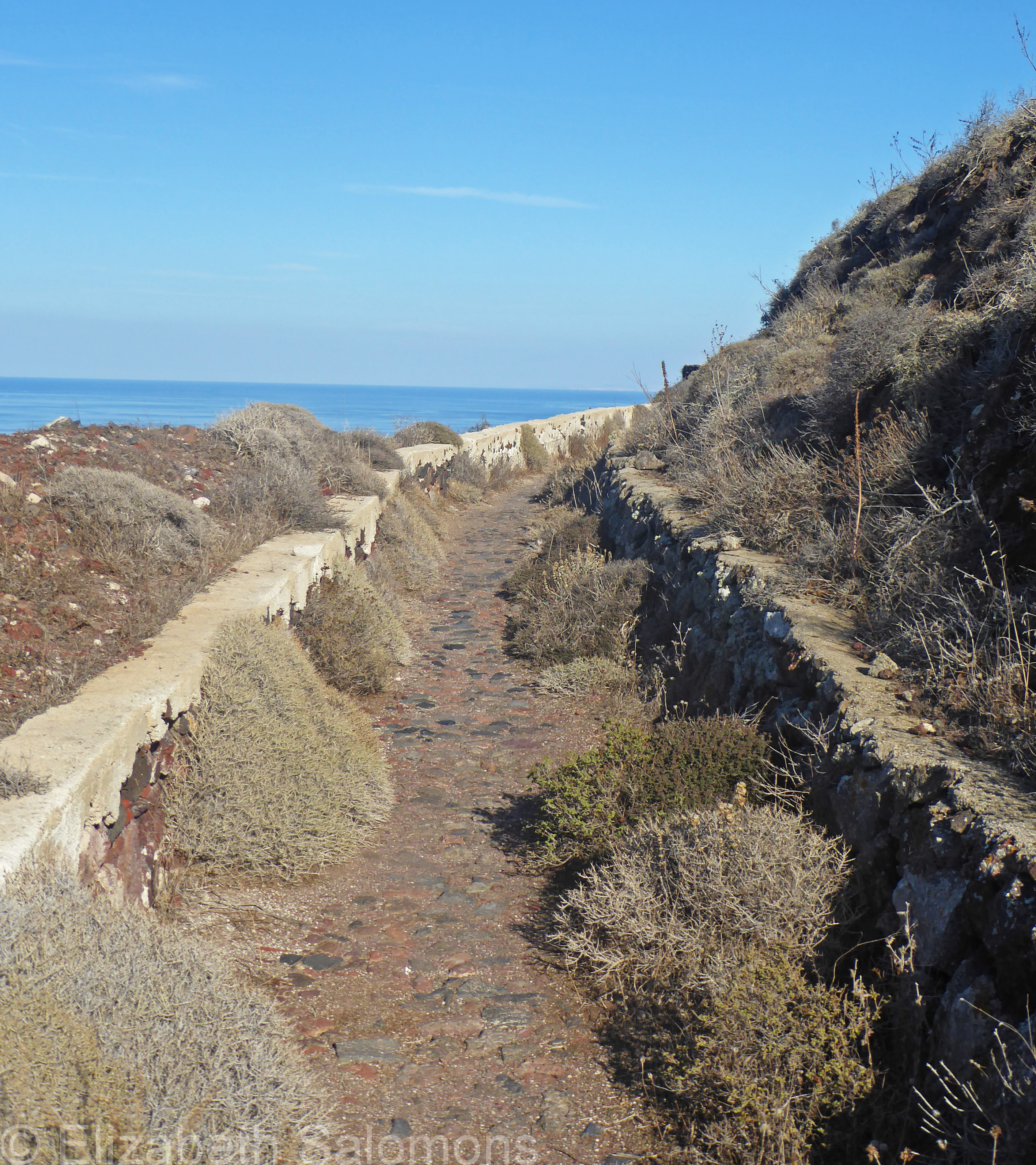
Thankfully, at the bottom of this hill I came across a shack selling cold beverages. Then came a short bit along the roadway, and a long, slow climb to another church overlooking the caldera.
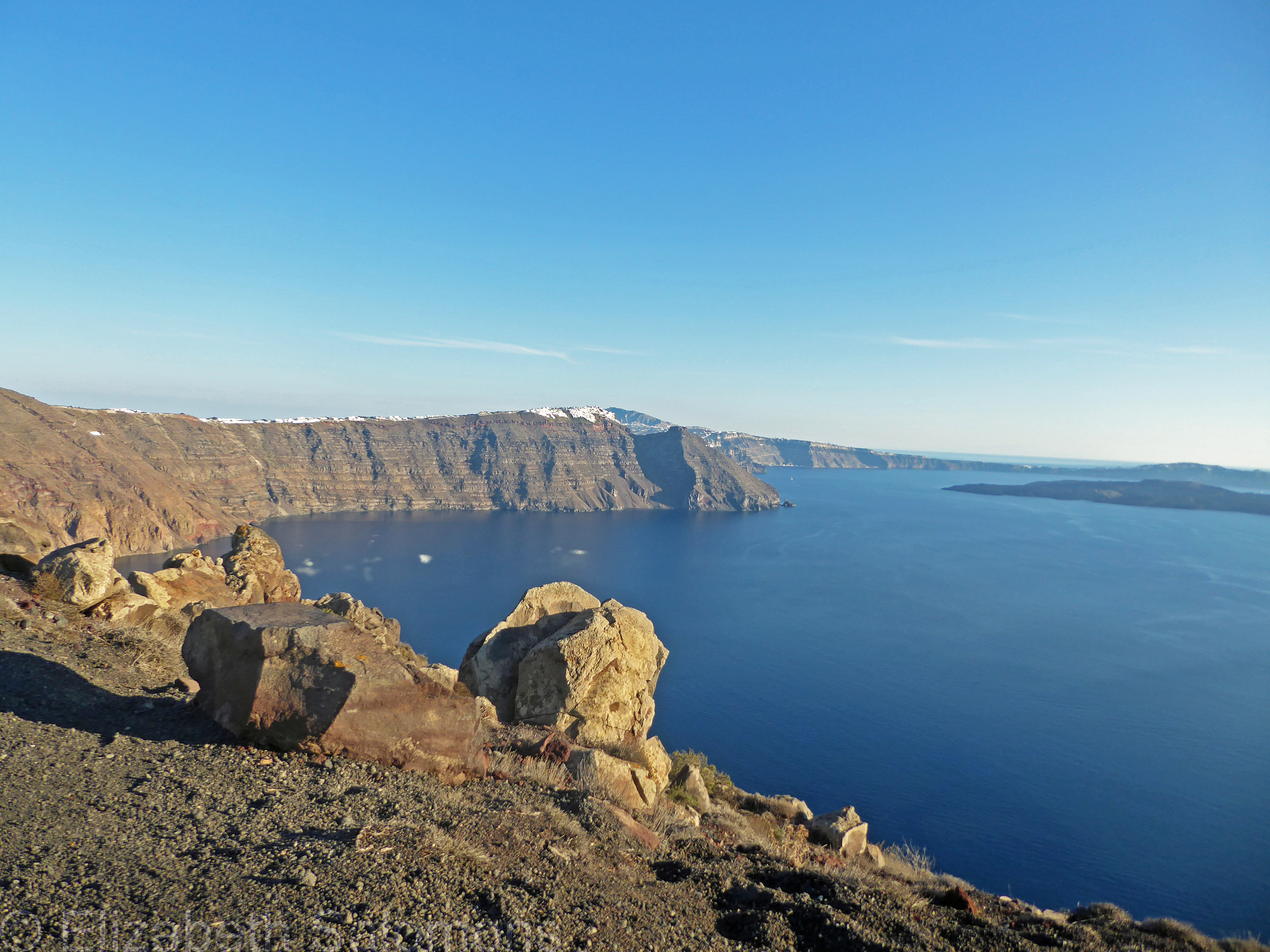
From here, I continued on a trail that I thought would be on the caldera side of the clifftop, but it took me pretty much straight down to the main road into Oia where I had a good 20-minute walk along a not-so-pretty sidewalk — an unfortunate outcome of not having a working phone at that point. But the road led me straight to my hotel, where I collapsed in my room around 6:30 pm, so it was all good.
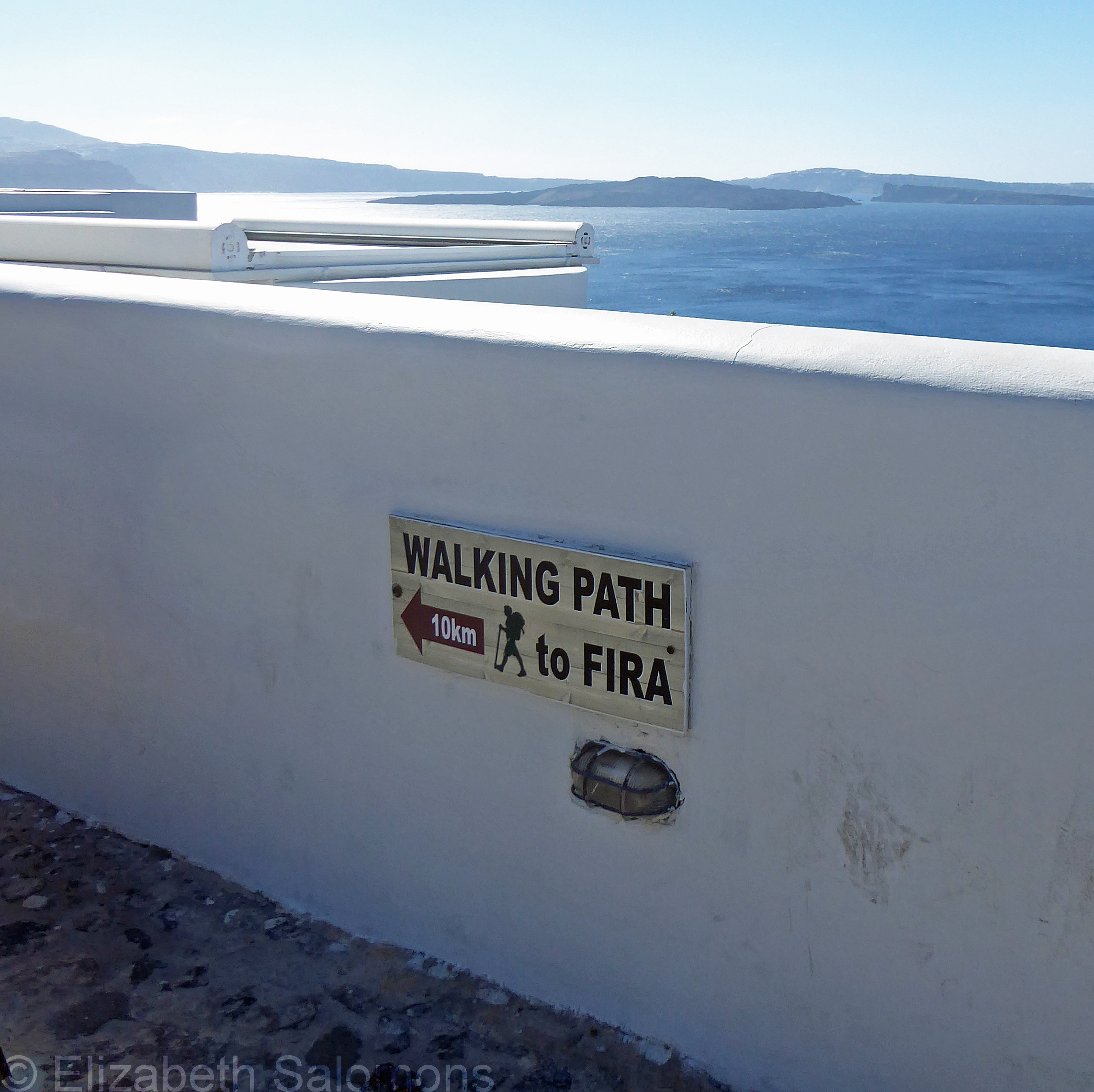
Since the trail to Fira ended directly across the road from my hotel, the next morning I walked up the trail part way to see what I had missed.
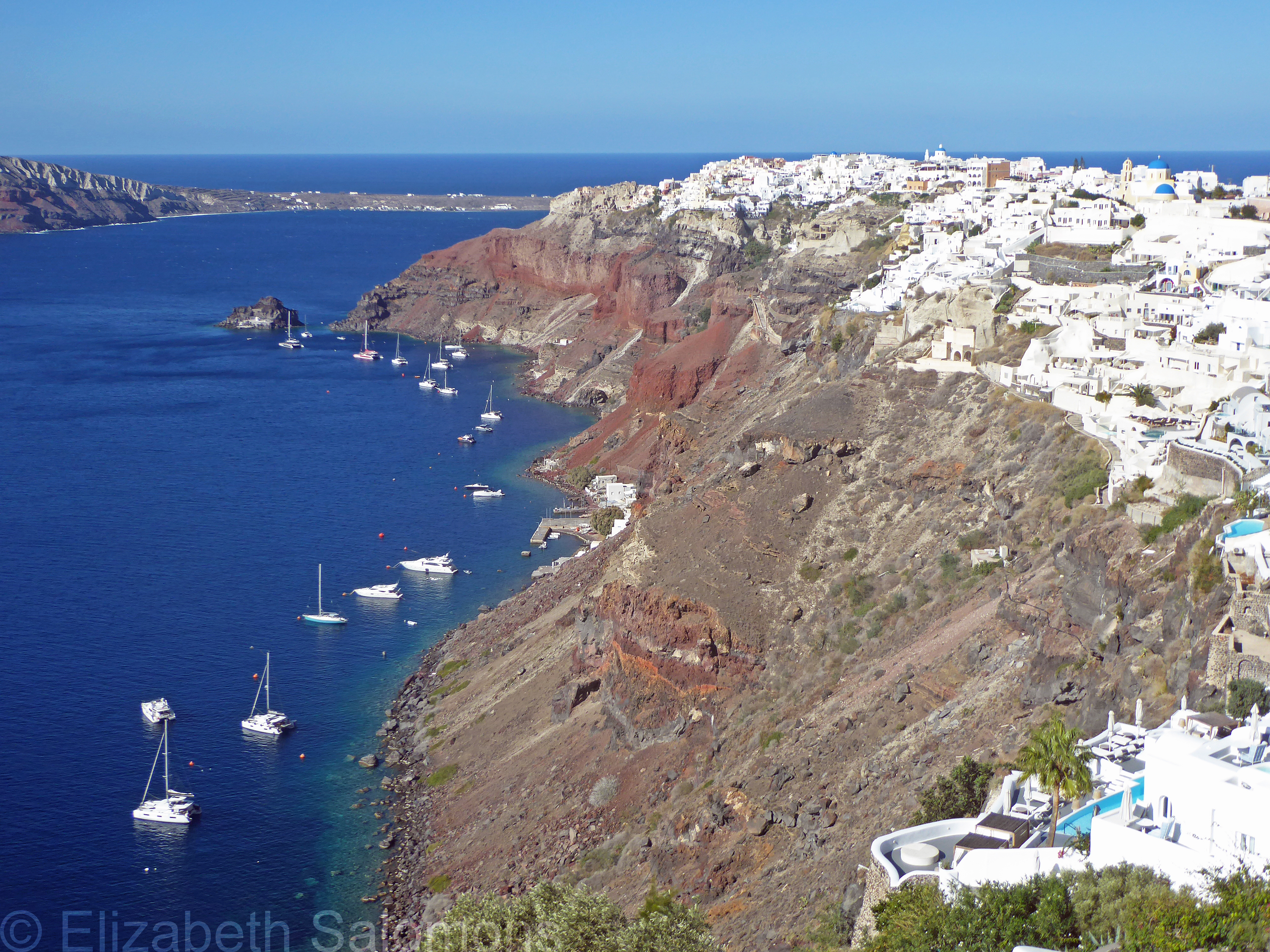
I don’t expect I’ll ever get back to Santorini, but a bit of advice if you go and decide to do the Fira-to-Oia walk: ensure you have a proper map or working phone so you don’t end up on a roadway like I did, and carry more water than you think you’ll need.
Even in October.
Oia
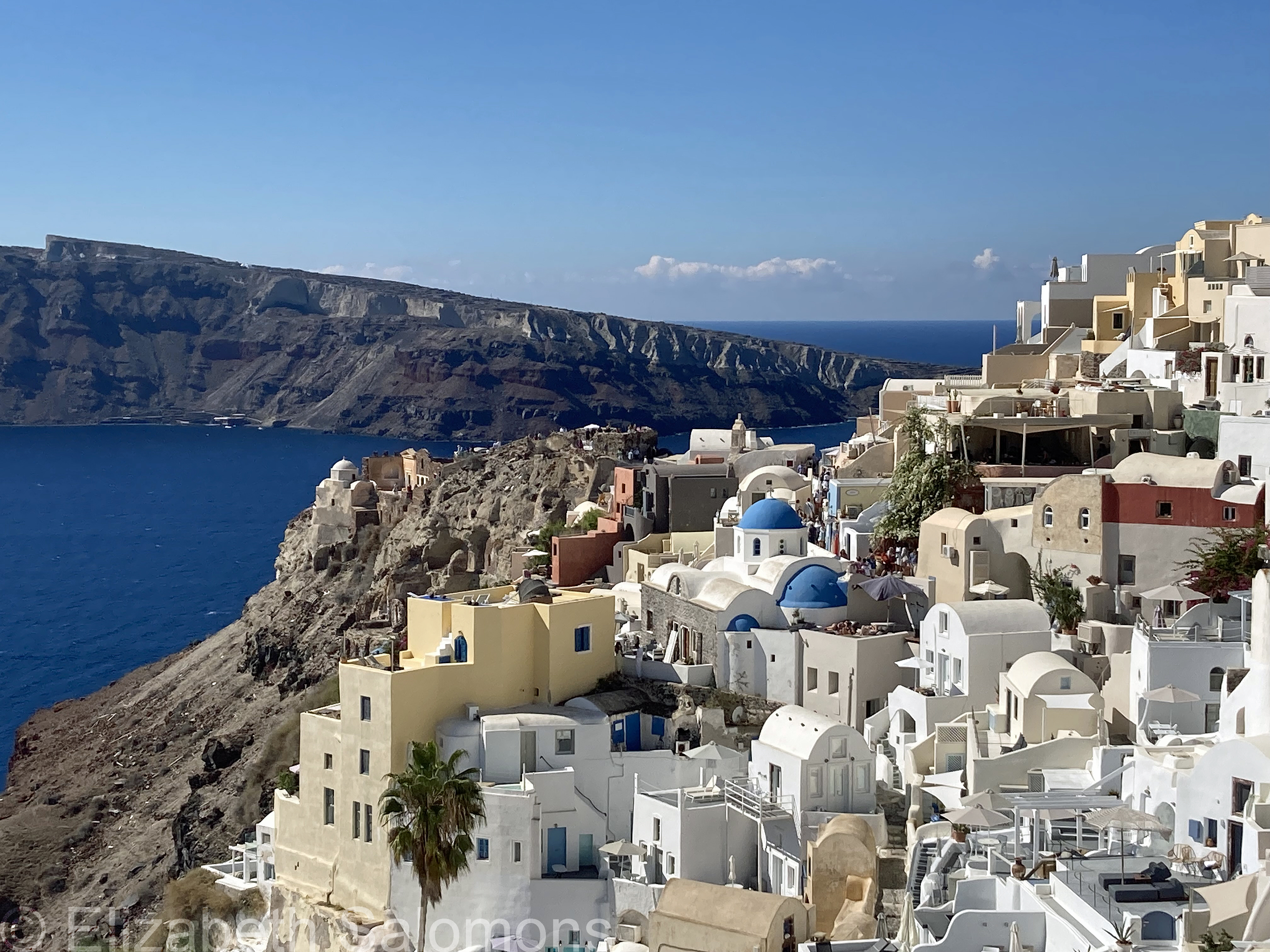
Oia (pronounced EE-ah) is Santorini’s second-largest settlement and lies at the northern tip of the island.
Like Fira, Oia has an old port that can be reached by walking 300 steps down an old donkey path.
Also like Fira, Oia’s naturally insulated houses built into the side of the caldera were once caves. Many of them started out as seafarer’s homes; now, they are luxury hotels and fine restaurants.
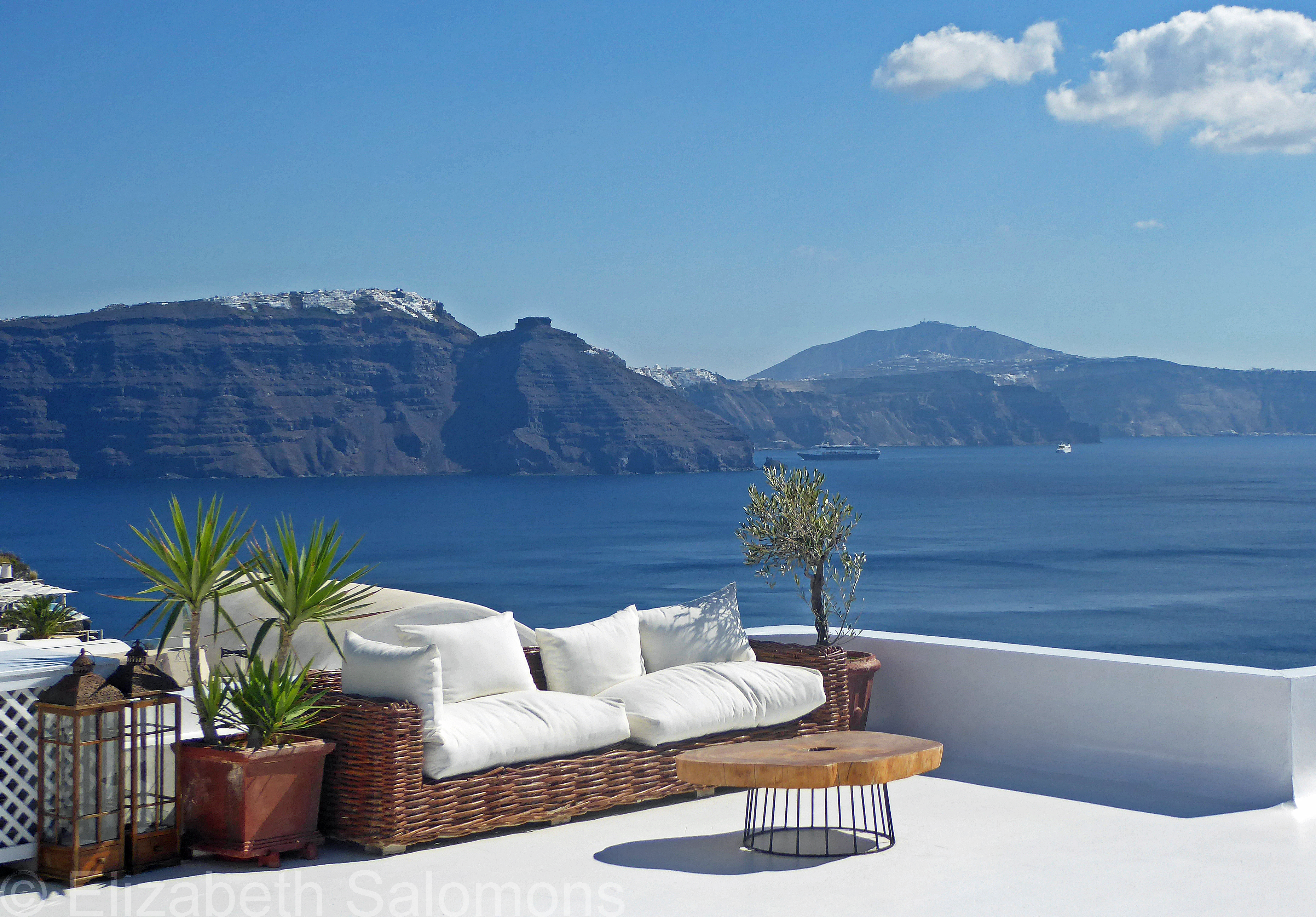
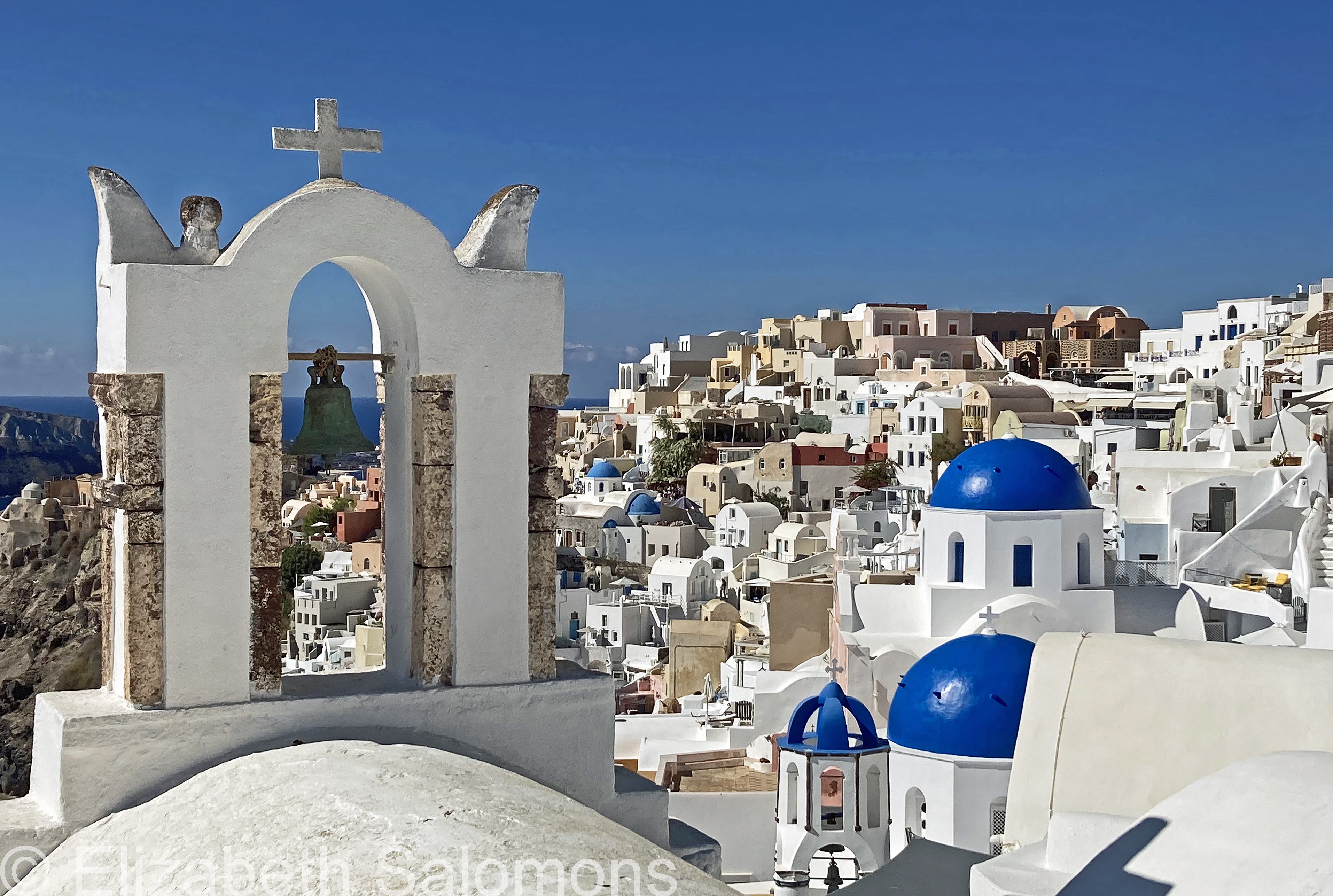
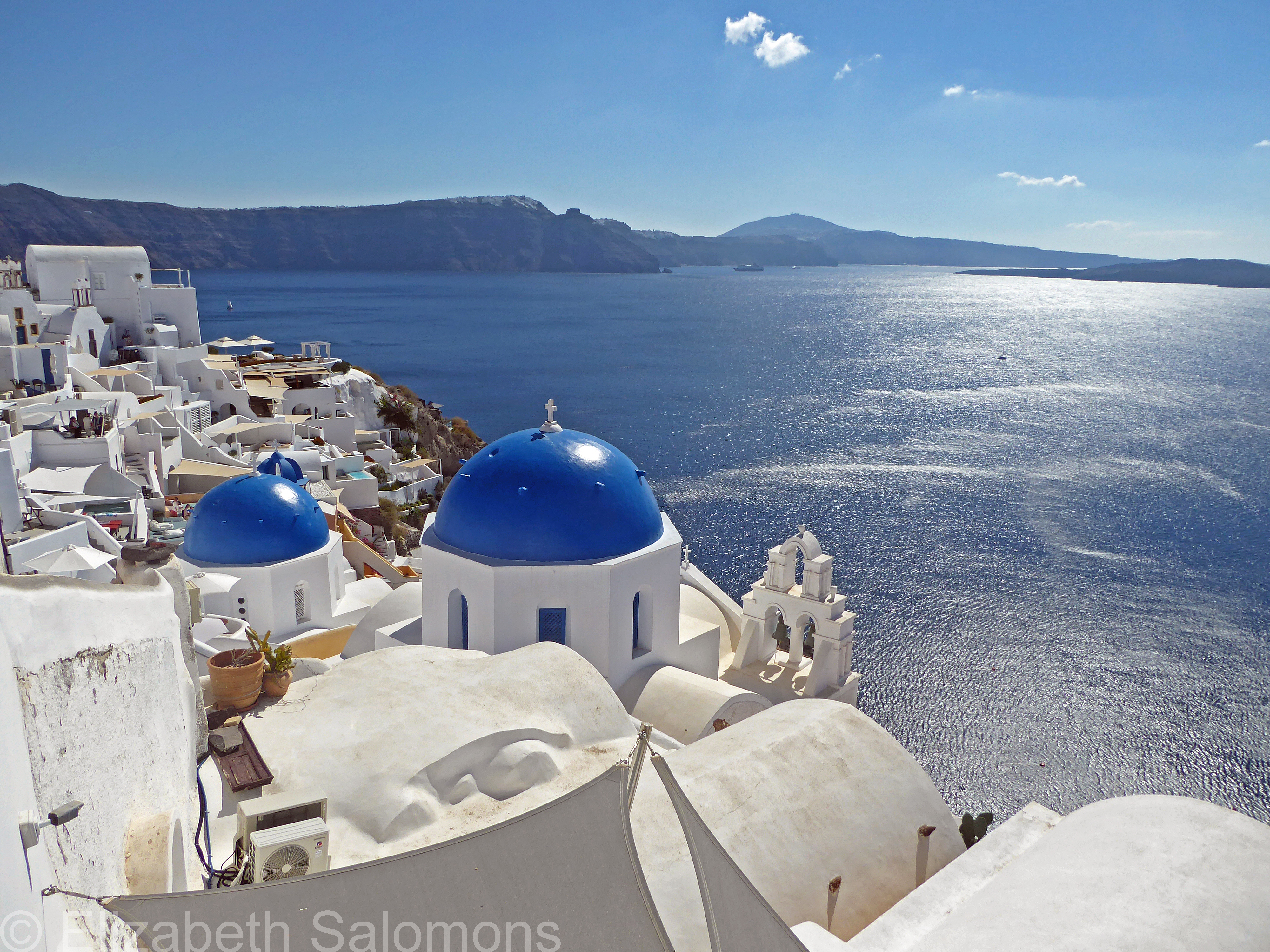
Other distinctive architectural features of Oia are its blue-domed churches.
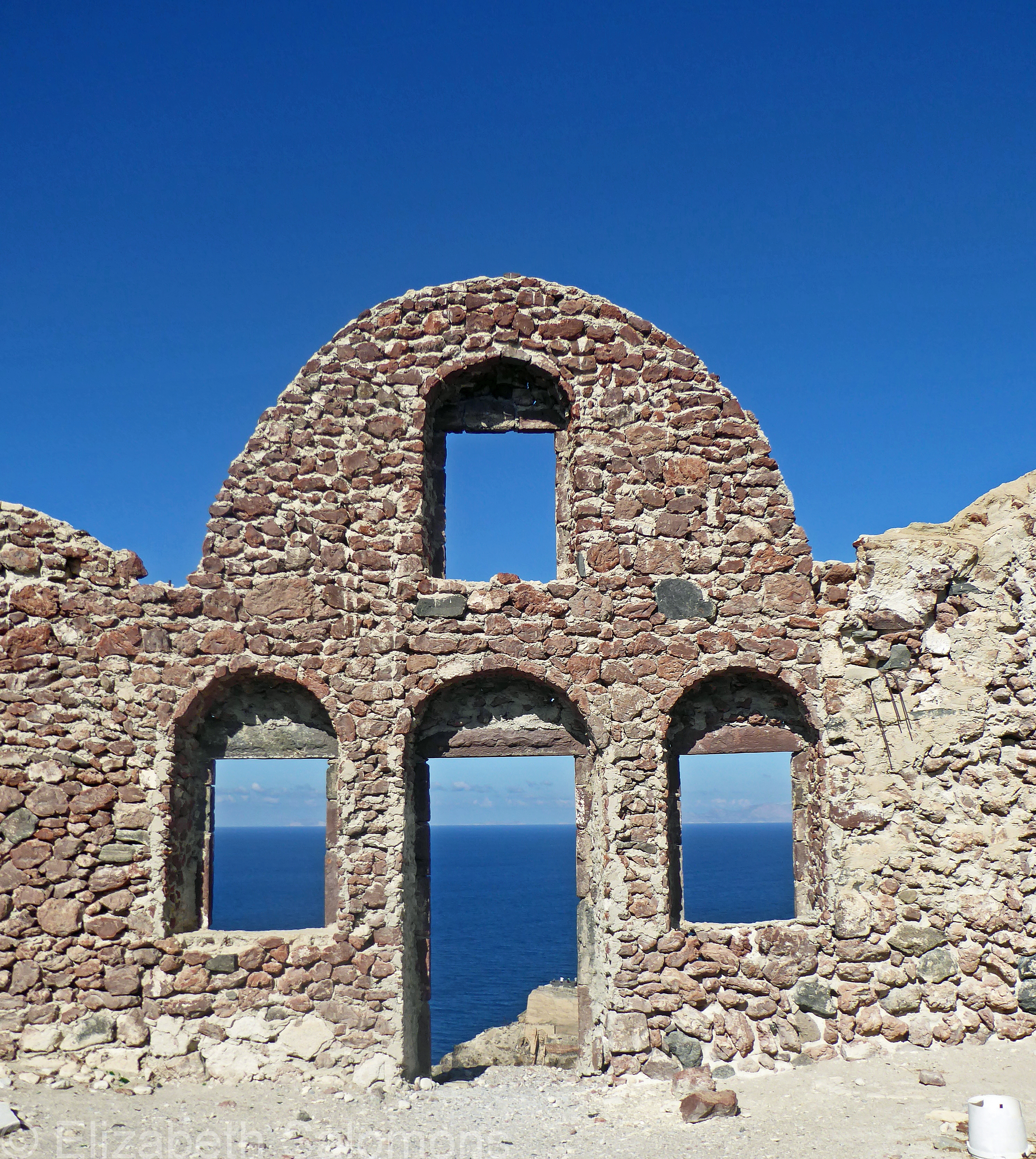
There are the ruins of a Venetian castle.
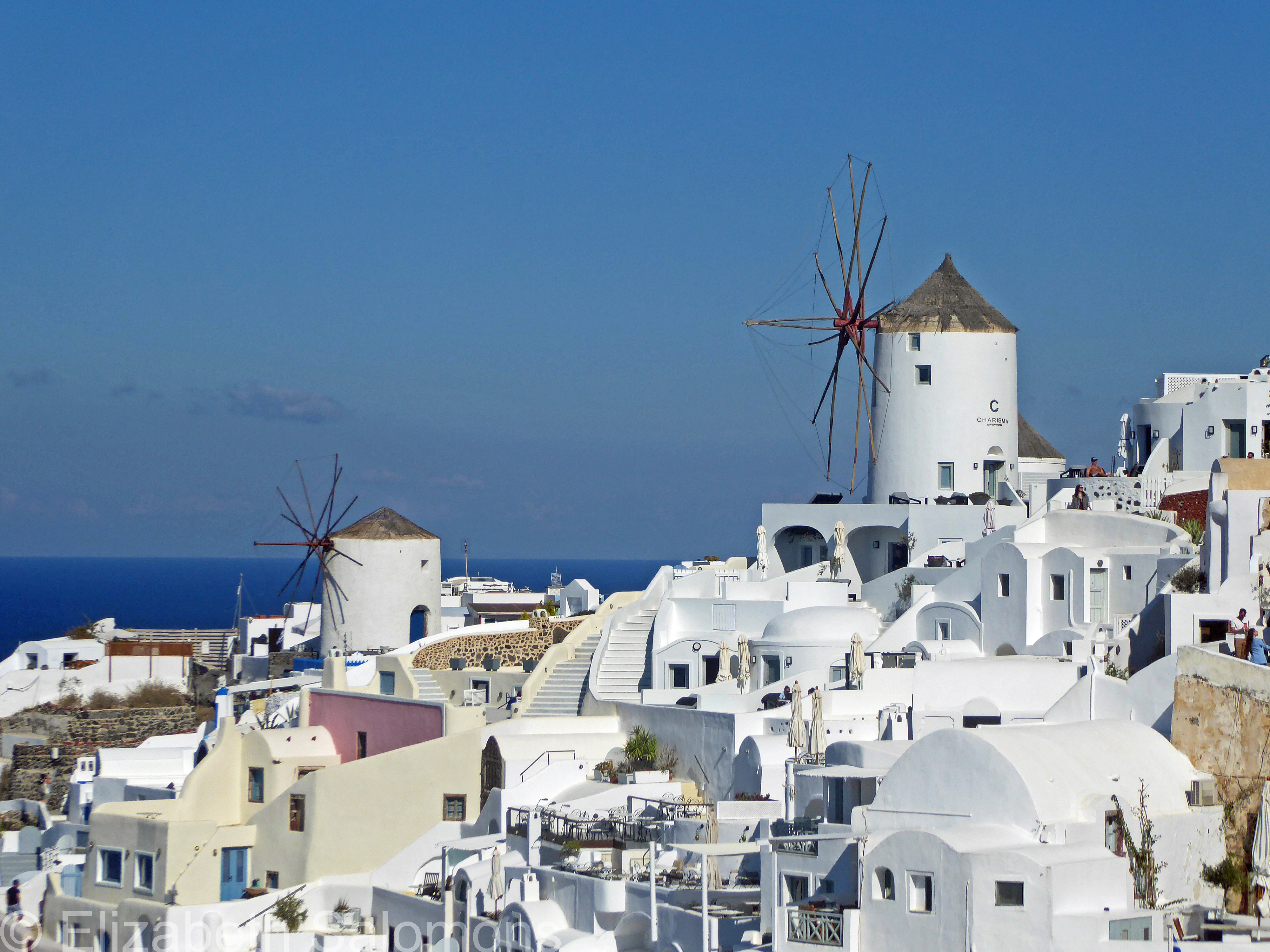
And its two windmills also date back to the Venetian era.
Oia’s narrow, winding pathways and stairs can only be explored on foot. I saw some cruise-ship tourists who were clearly defeated by the ups and downs of those stairs, but if you aren’t in a rush and don’t have any mobility challenges, you will have no problem navigating Oia. The best way to get to know the town is to wander it slowly from one end to the other.
See an alleyway you want to investigate further? Go for it. (Don’t worry, you can’t get lost. Oia is not that big and, when in doubt, just keep walking up and you’ll soon be back at the clifftop.)
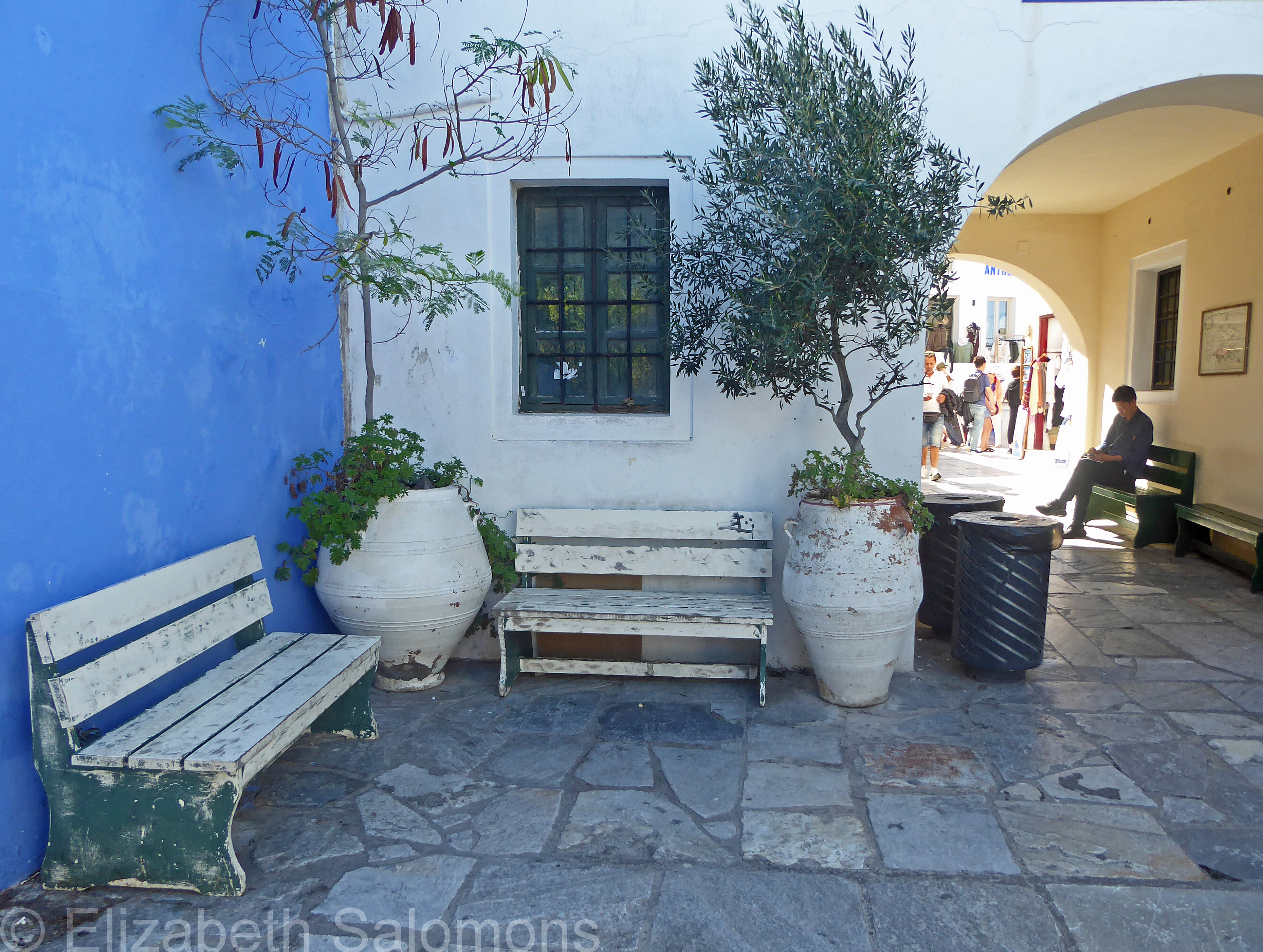
Is someone blocking your postcard-perfect photo? Wait a few minutes. They’ll move along soon enough.
Are the crowds getting to you? Go take a nap and come back later in the day.
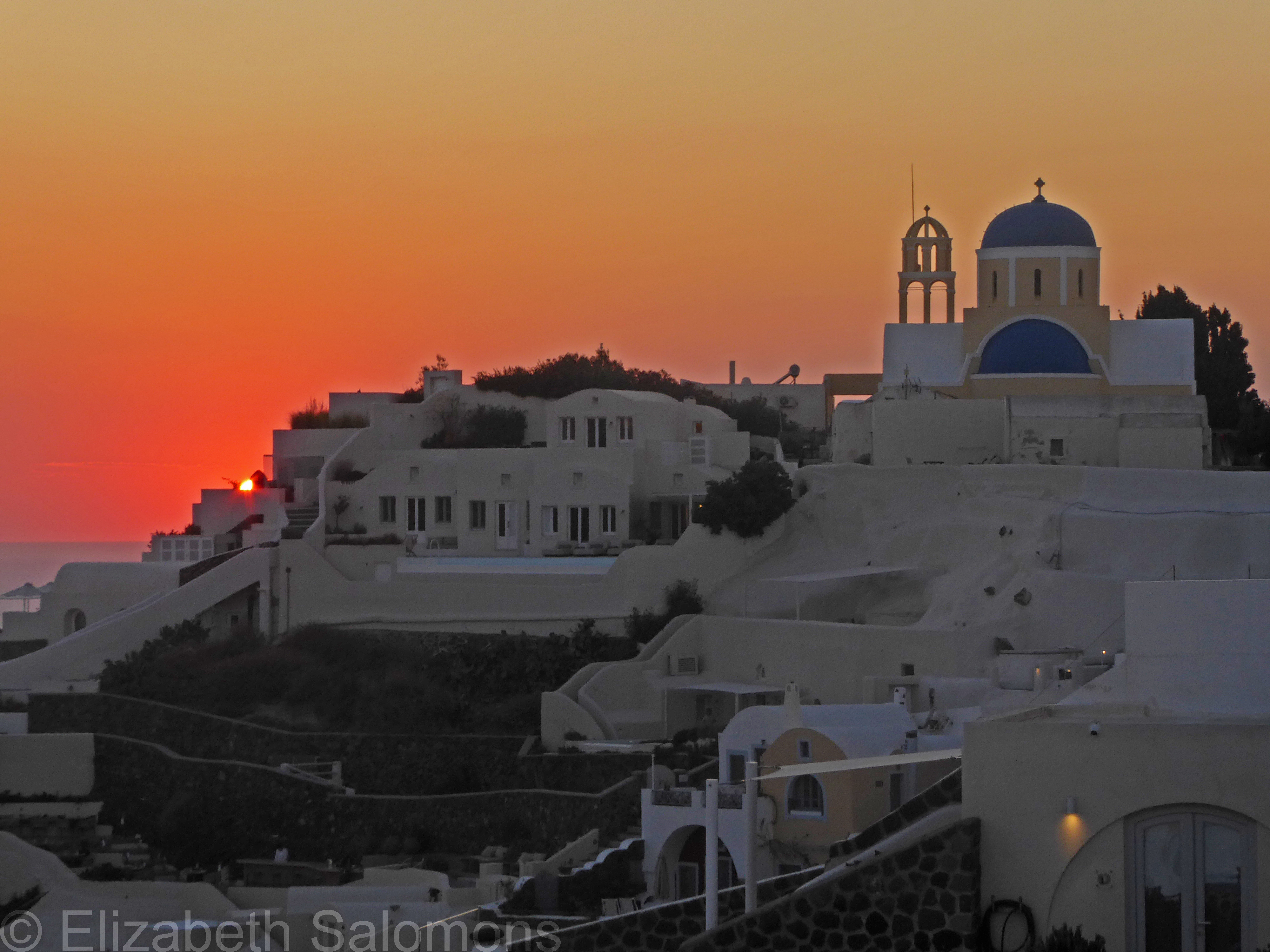
Oia is not the place to be if you are looking for solitude. But, if you have the patience, its sunset views are worth the wait.
Fira
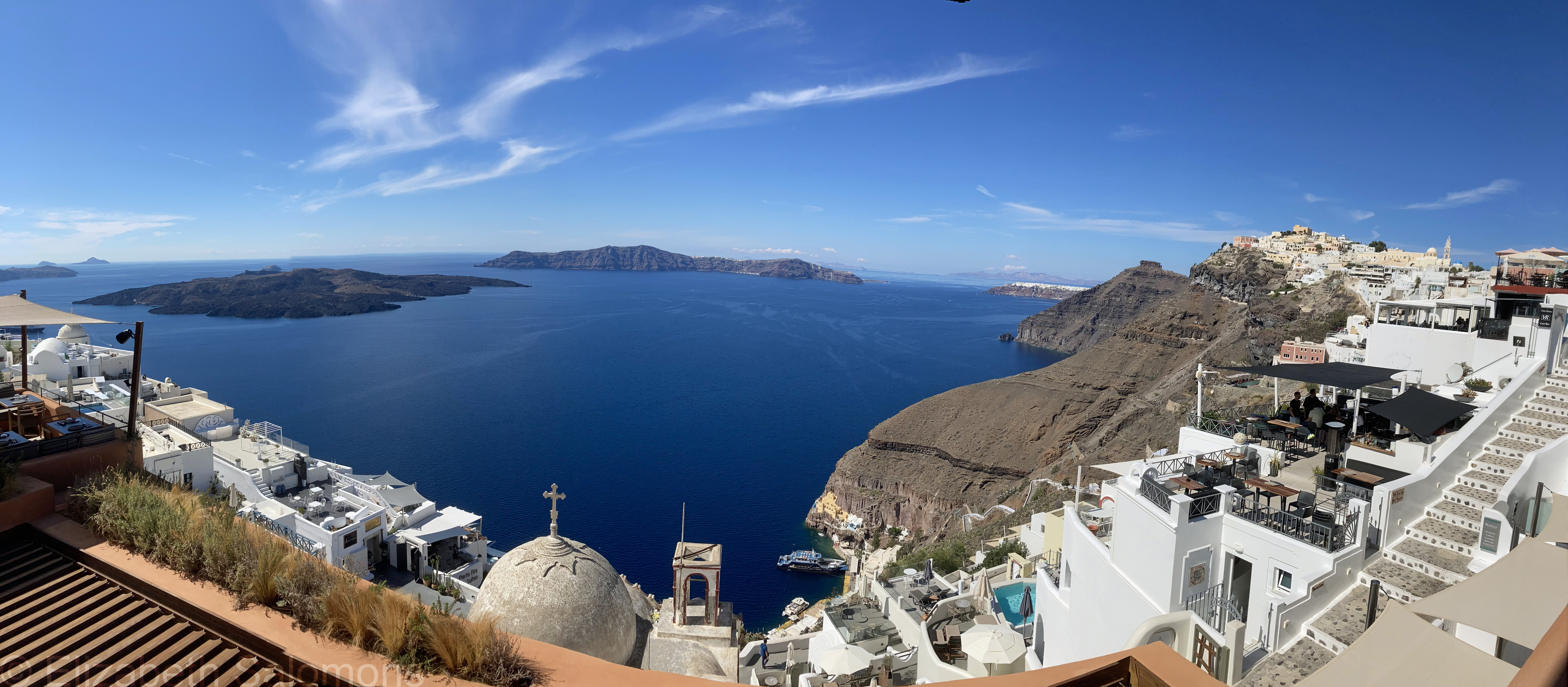
Santorini is a geologist’s dream, thanks to a volcanic eruption some 3500 years ago. It left behind a giant depression — the caldera — and a crescent-shaped island with a steep cliff face along its western side. This dramatic landscape is what draws tourists to Santorini.
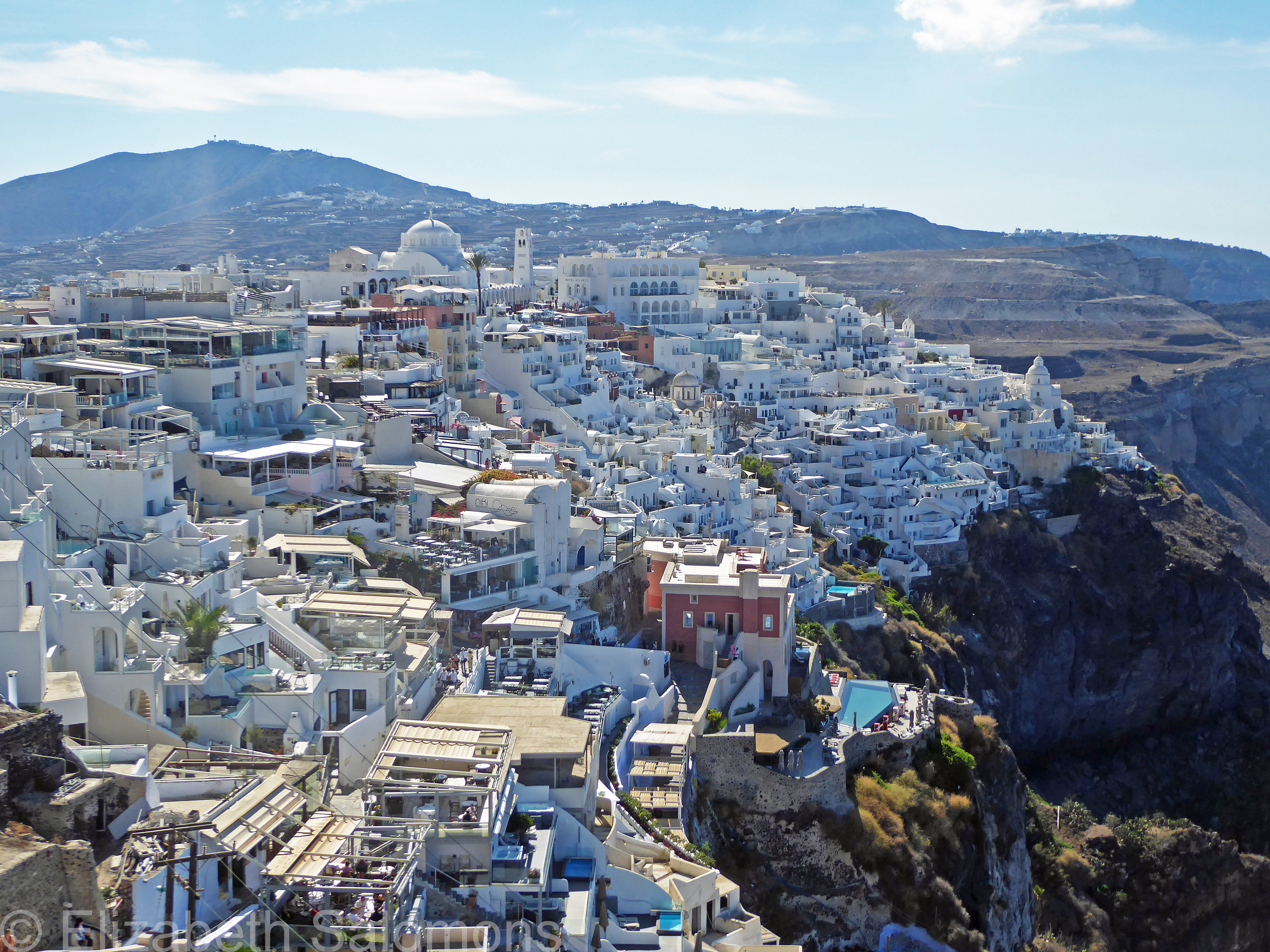
The island’s original name was Thira, named by the Spartan ruler King Thiras after himself. Much later, Venetian traders renamed it Santorini after Saint Irene, but Thira is still the official name of the island and that’s the name you will see on your ferry ticket.
Fira is the name of its largest settlement and main transportation hub. (A common misconception is that Fira is an alternate spelling of Thira, but Thira is the island and Fira is the town.)
You arrive at Fira by road from its eastern side, if coming from the airport or the new port. If you visit Santorini by cruise ship, the tender lets you off at the old port, from which you ascend to the top of the cliff by cable car (or donkey, if you prefer). You could also walk up if you wanted to get your steps in.
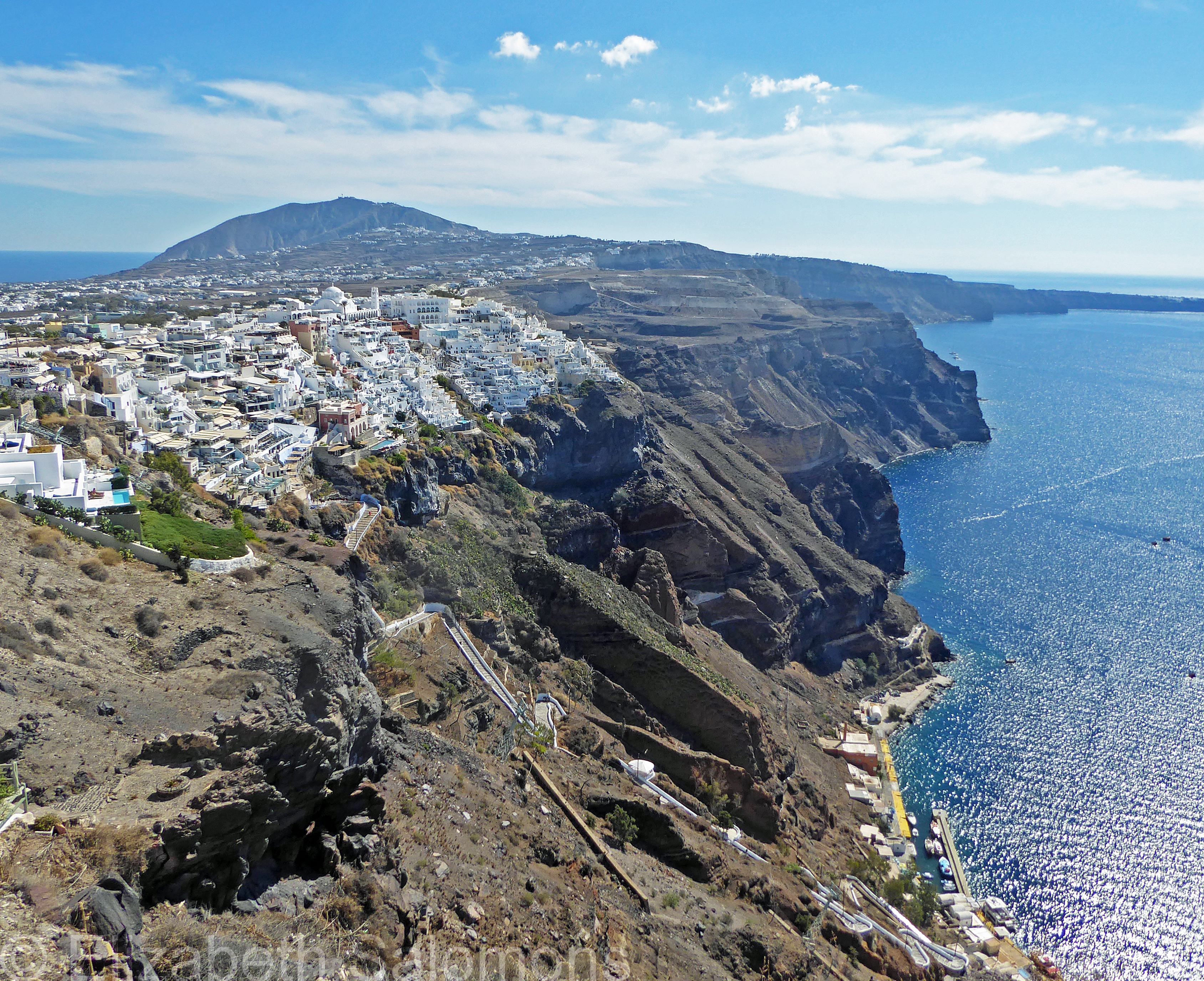
As many as four cruise ships can be anchored in the caldera in high season, which I imagine leads to gridlock in the streets of Fira. Knowing that, I timed my visit for a day when there was only the one.
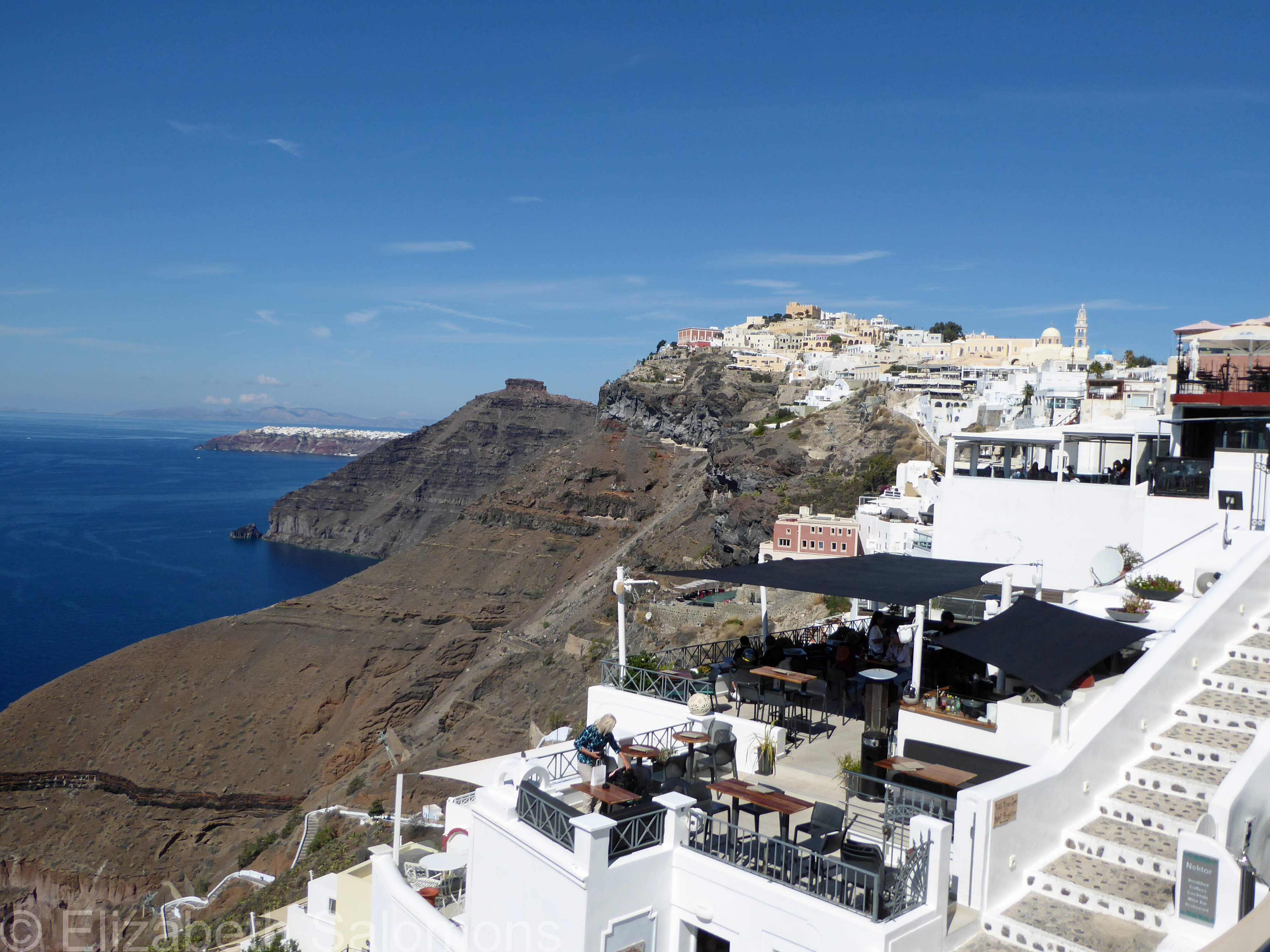
Fira’s clifftop is lined with restaurants, shops, and myriad ways to spend your money. But explore a little further inland and you will find an irresistible warren of streets and alleyways.
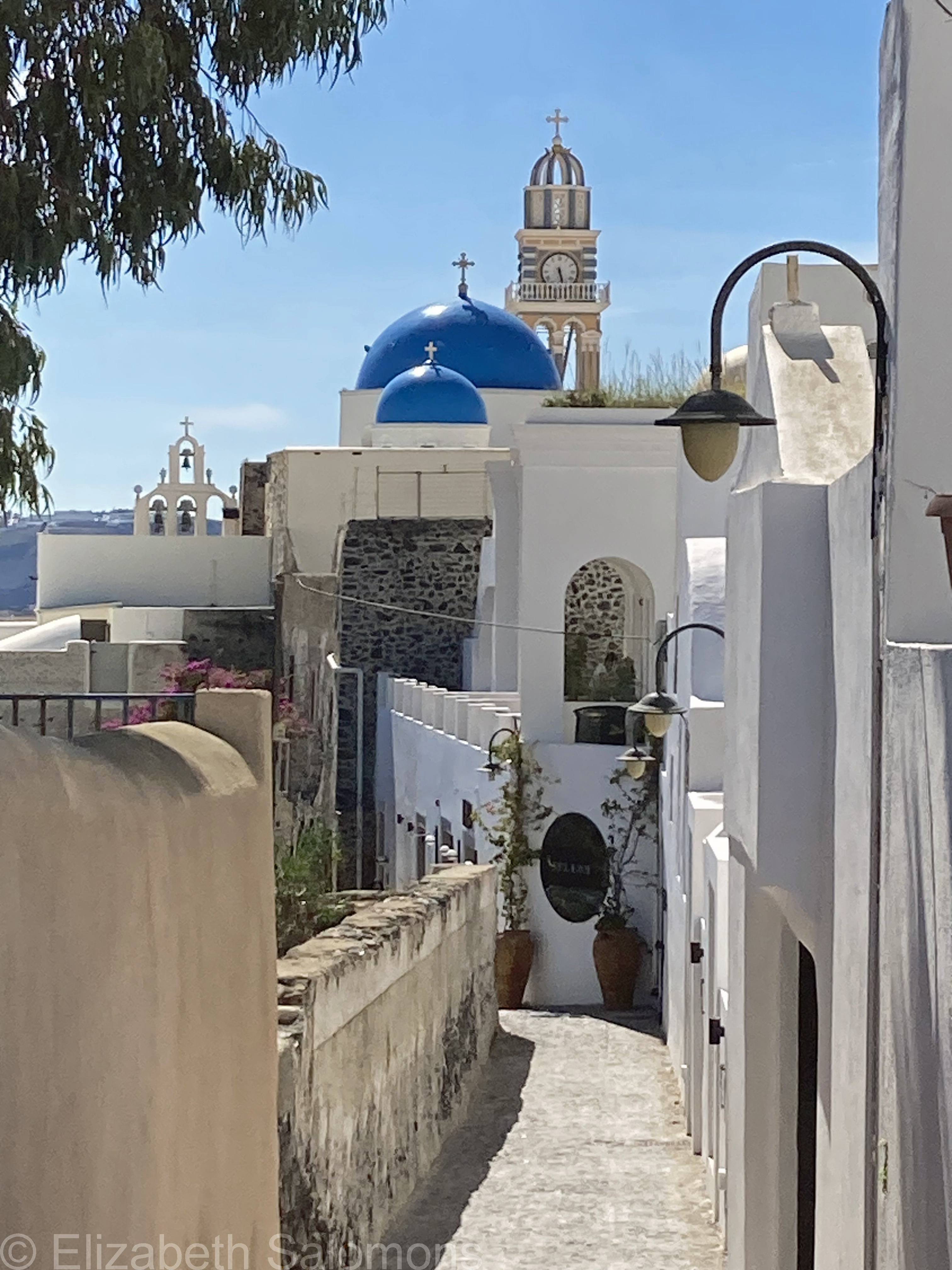
And even a bit of solitude, which is almost impossible on Santorini.
Santorini Sunset
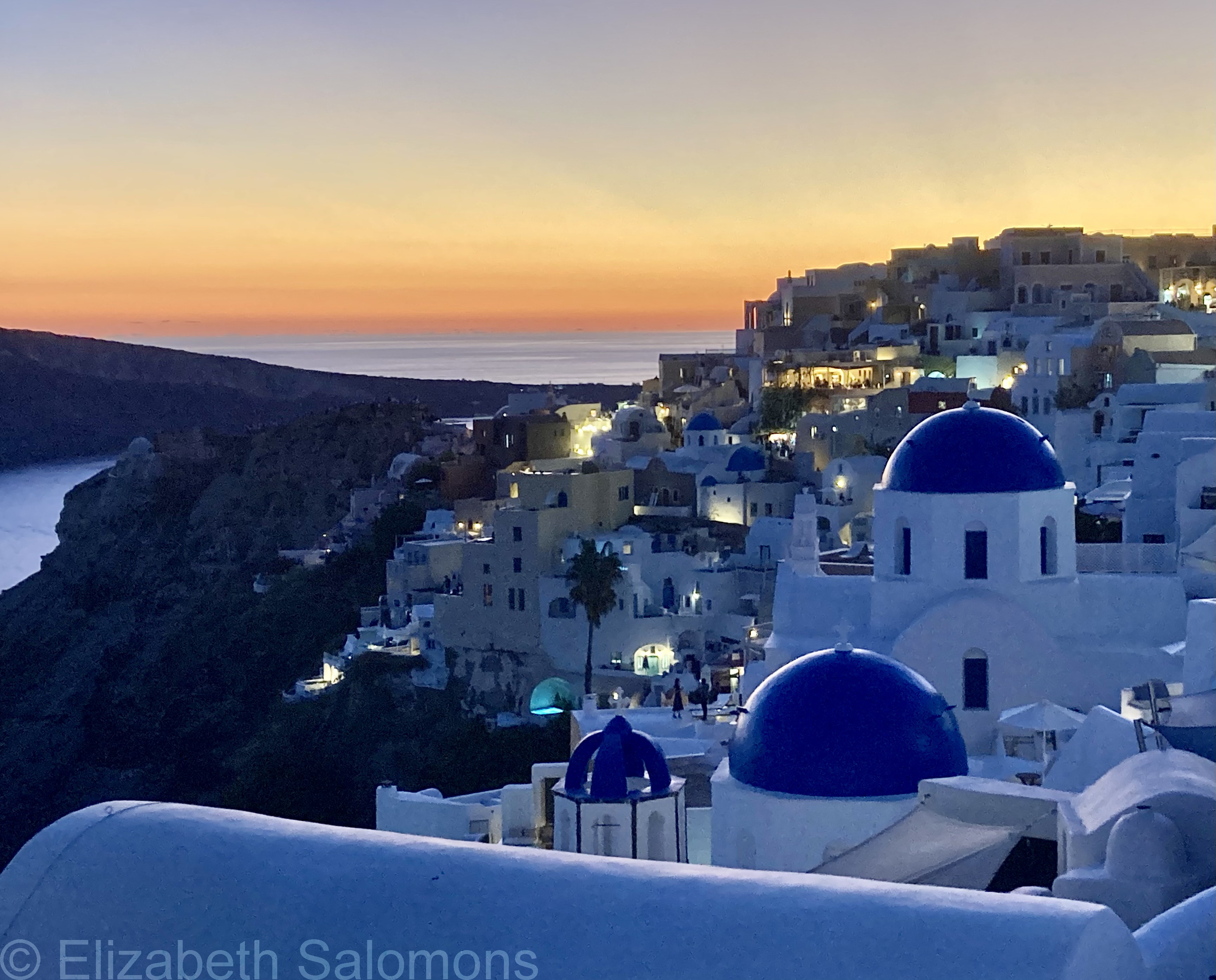
Eventually, it was time for me to leave Serifos. I said good-bye to my Grecian home exchanger, boarded the ferry boat, and disembarked with a boatload of tourists at the port of Santorini some three and a half hours later.
I had visited Santorini once before. To say that the island has changed would be one of the wildest understatements ever. More on that later.
For now, here’s a photo I took a few hours after my arrival.
Getting Around Serifos
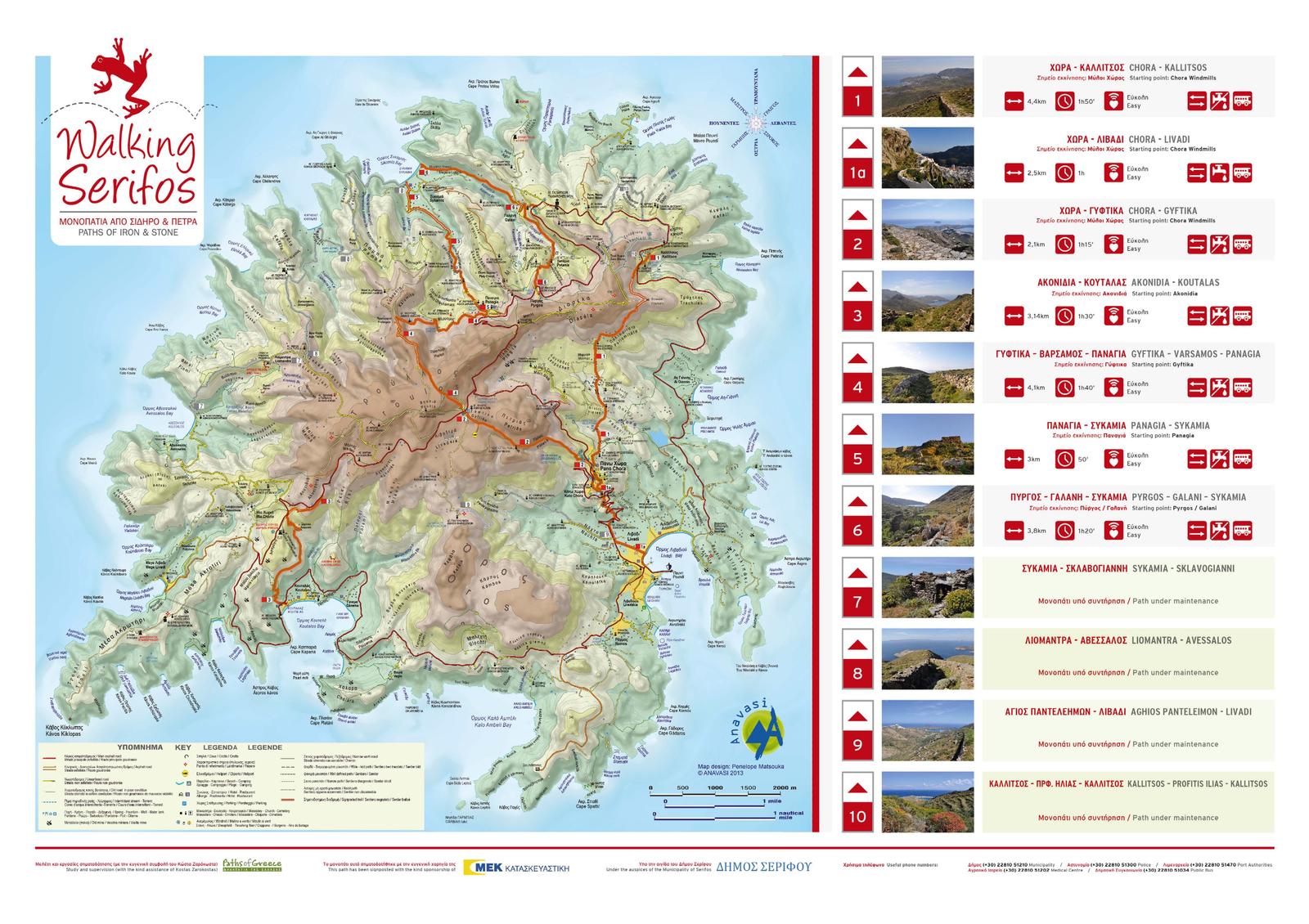
Serifos is not a large island — only 10 kilometres across at any given point — and I had a few options for getting around.
One choice was to rent either a car or scooter in Livadi. There is basically one road encircling the entire island, and your biggest decision is whether to go clockwise or counterclockwise.
When I told my home-exchanger I was going to hire a car for a day or two, she offered to loan me hers. I dubbed it the Purple Raison (for obvious reasons) and used it to get to a monastery on another side of the island, as well as some of the beaches.
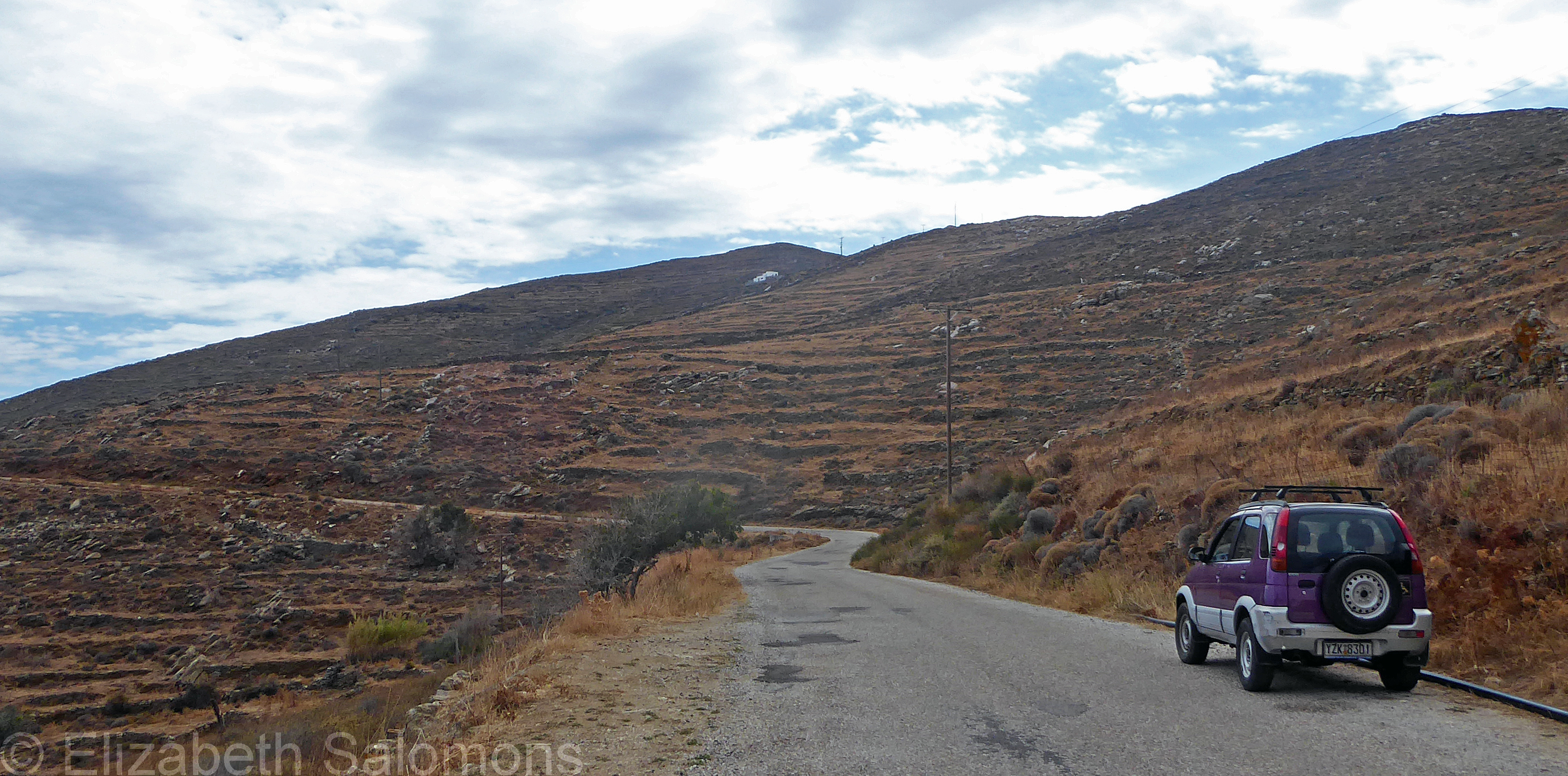
To be honest, though, I was perfectly happy to return the car and go back to my usual way of exploring: on foot or, occasionally, by boarding a bus.
The bus that runs between Livadi and the Chora goes once an hour in either direction. It was never full and you pay the driver your 2 euros when you board. There’s no way to signal your stop, however; you simply make your way to the front of the bus as it gets close to where you want to be let off.
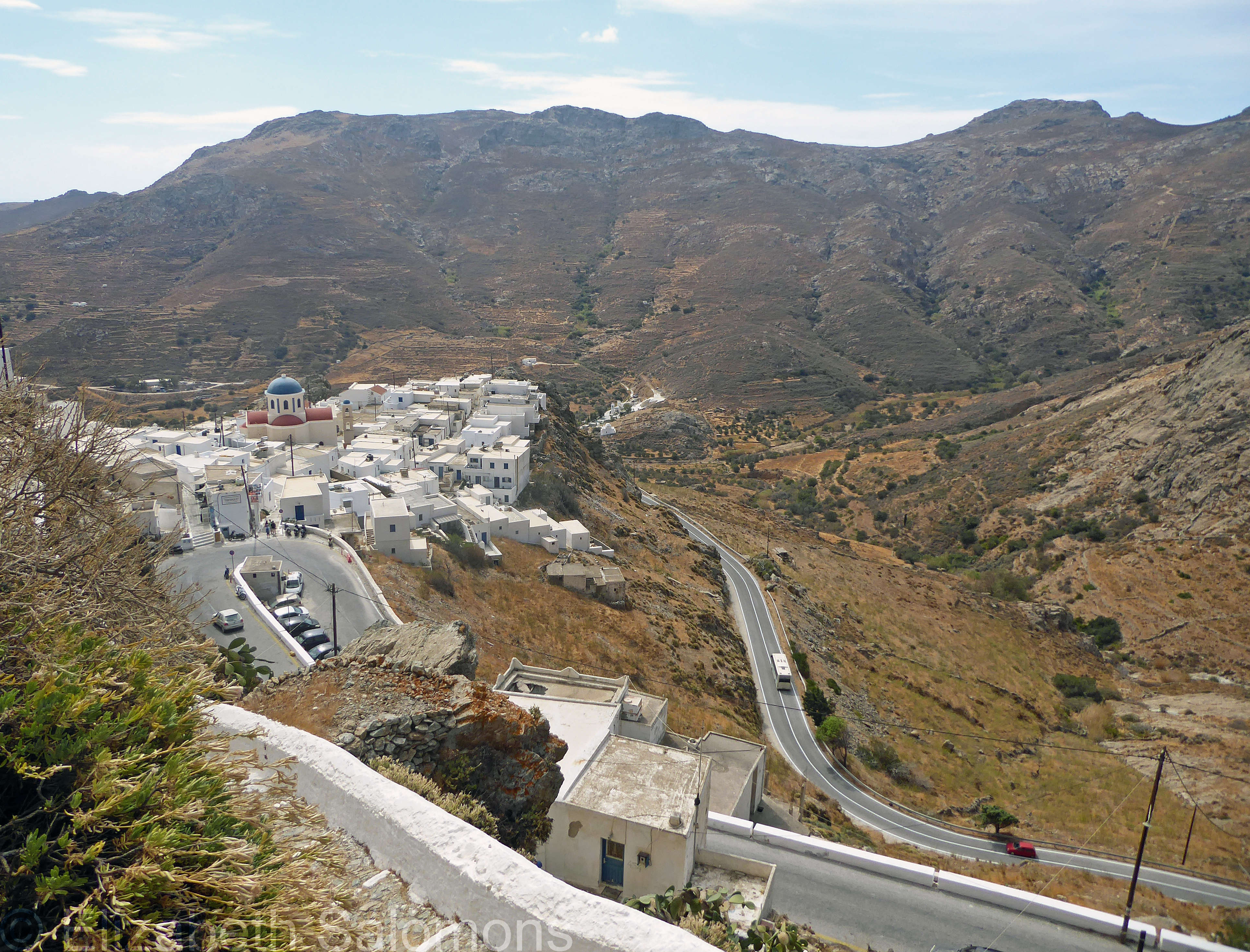
That Livadi–Chora bus switched to its winter schedule while I was on Serifos — meaning its last run up to the Chora was in the middle of the afternoon. Apparently, the winter schedule is dictated by the school run, not the tourists. My last few days on Serifos, if I happened to still be in Livadi in late afternoon, my only option was to walk up the old donkey path.
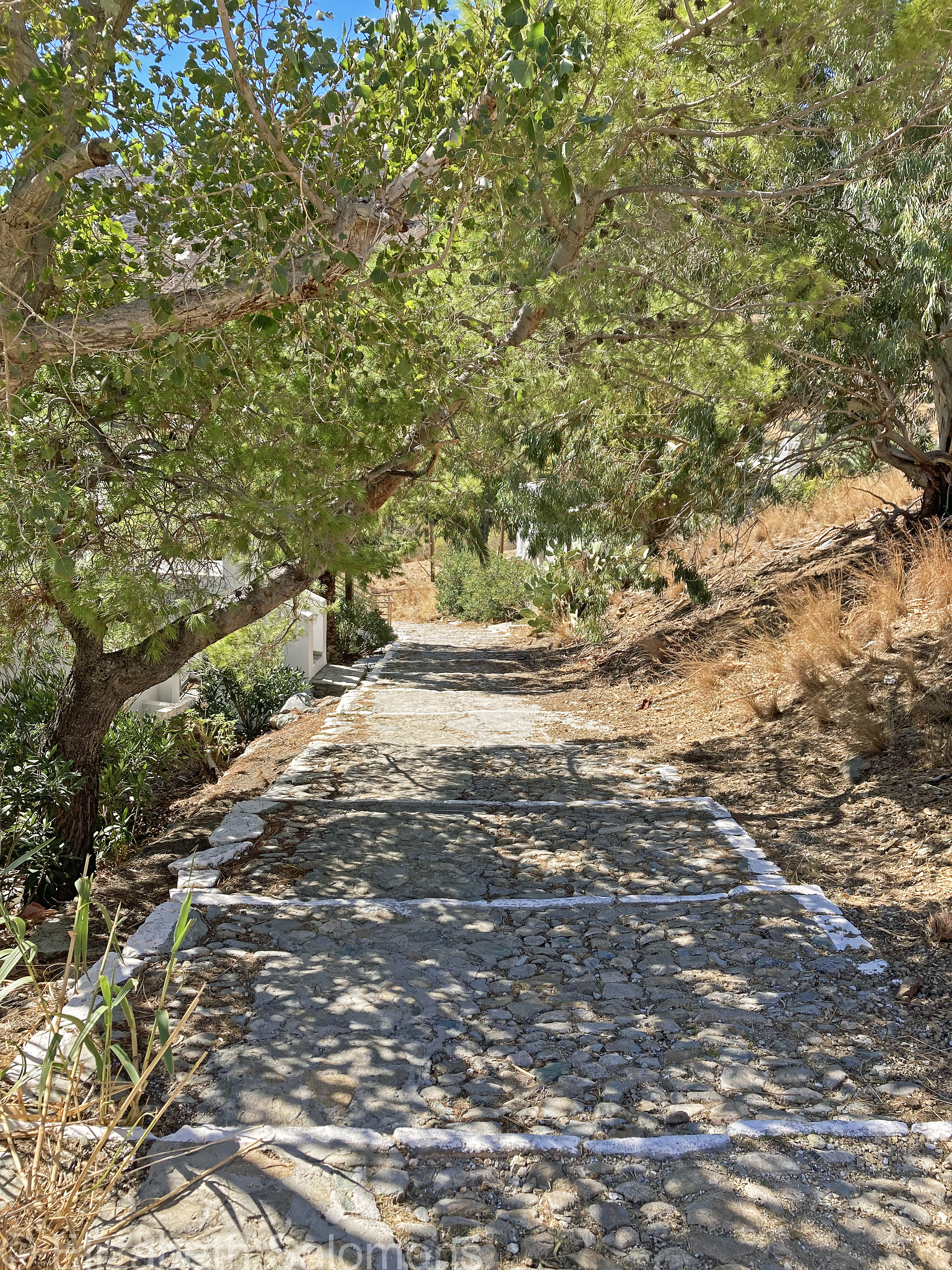
One day, I walked from my home in the Chora to Paralia Psili Ammos, and then, when I’d had my fill of the beach, over to Livadi where I caught the bus up to the Chora.
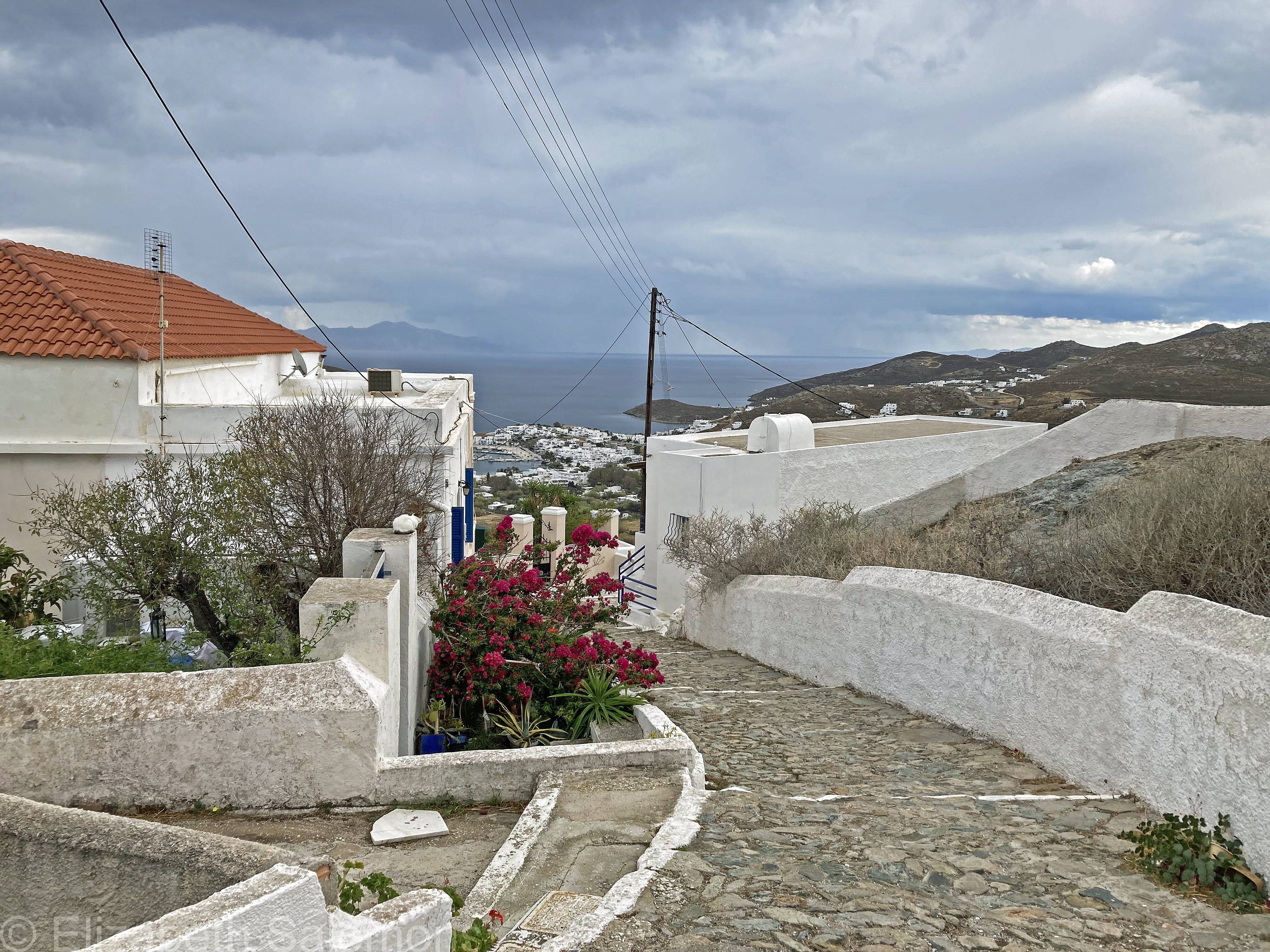
I didn’t get to every corner of the island during my two weeks on Serifos because, as I’m fond of saying, I always like to leave something to do to ensure a return visit. There are some 80 kilometres of hiking trails on Serifos, and I look forward to exploring more of them when I return to Serifos.
Happy Easter!
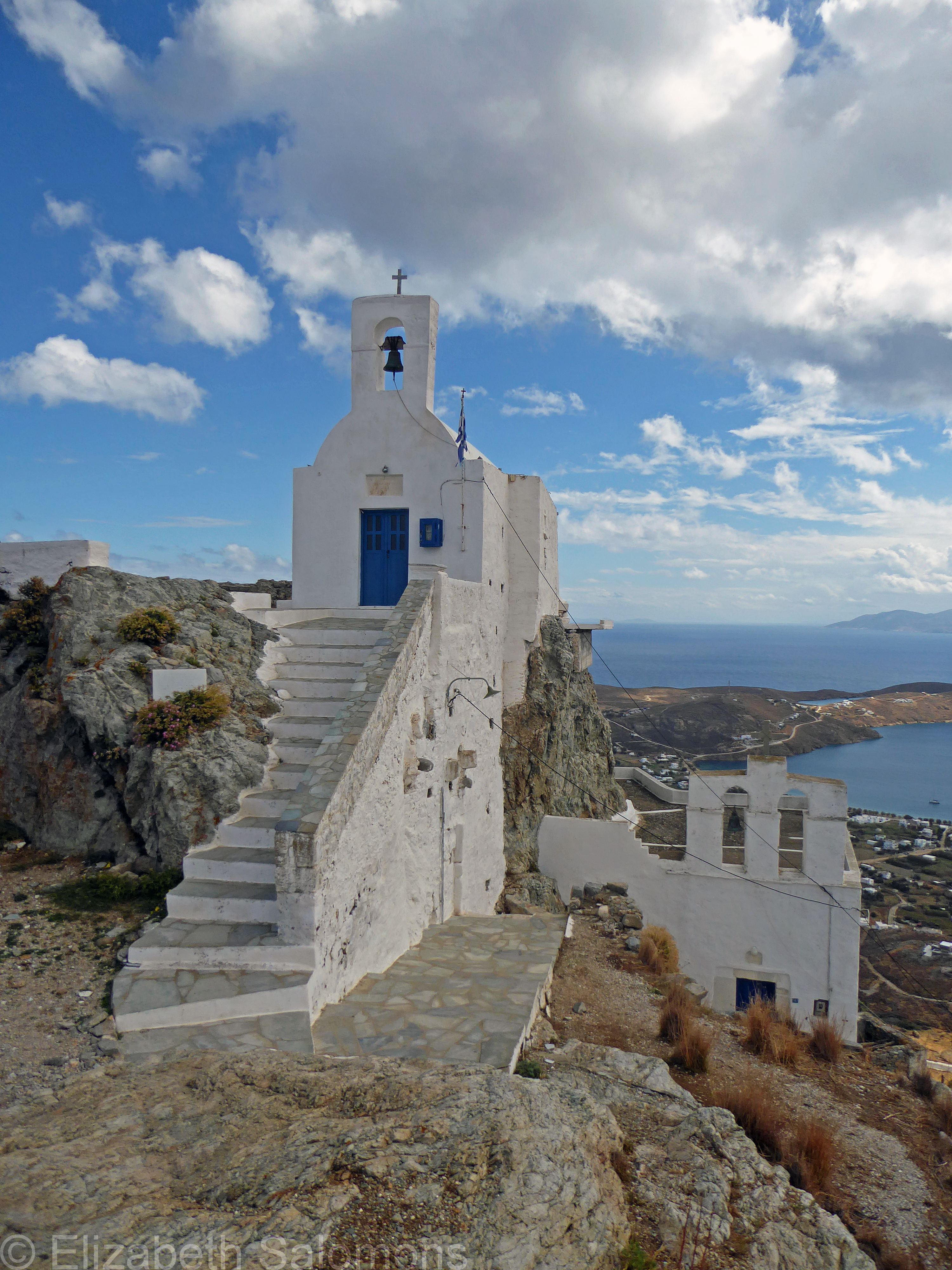
Agios Konstantinos and Agios Ioannis o Theologos, Serifos, Greece, October 2025
Donkeys of Serifos
Of course, you can’t spend any amount of time in the Cyclades without encountering one or two donkeys.
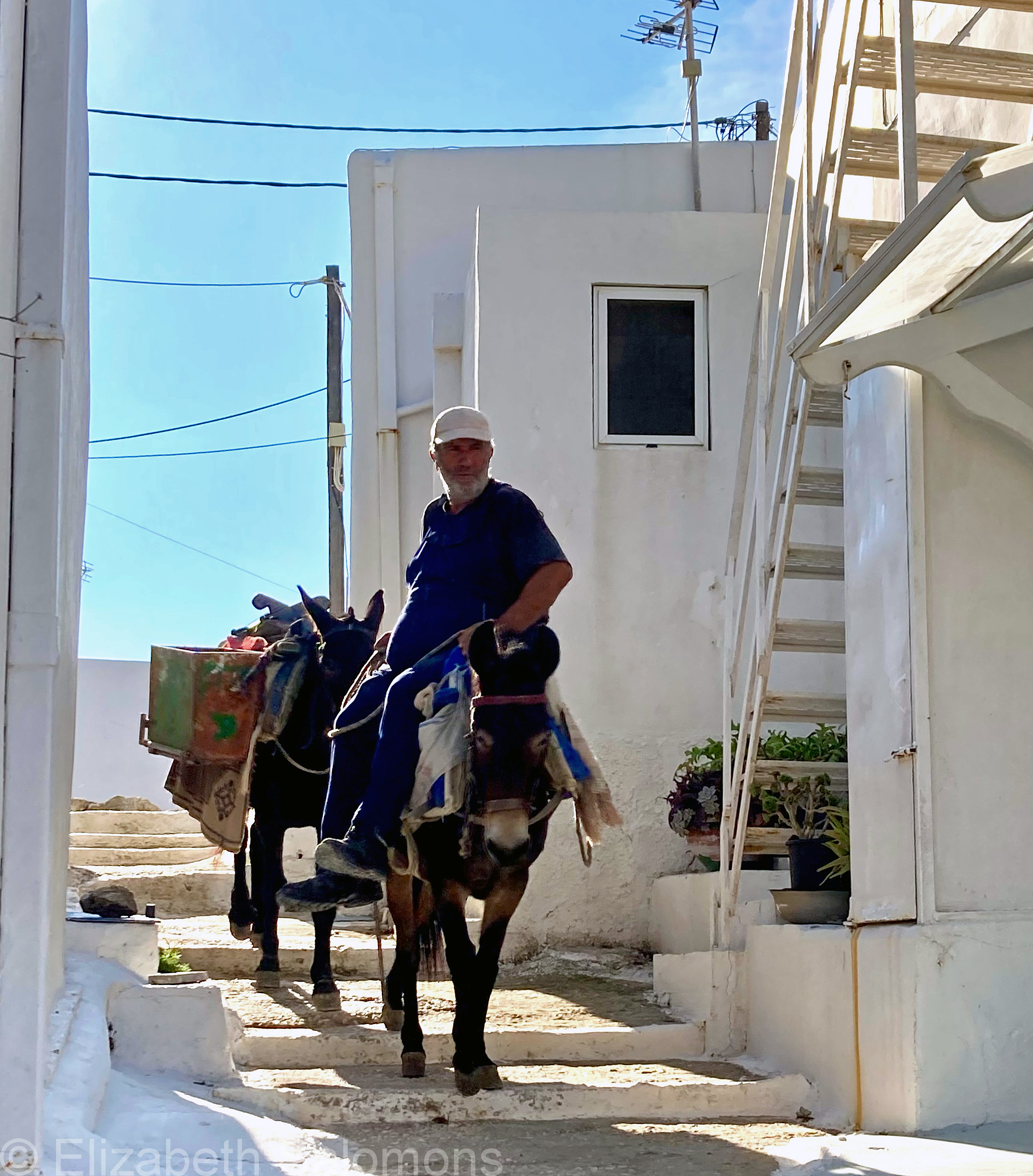
Donkeys have a long history as beasts of burden in the Mediterranean. And no wonder — they are sure-footed and able to easily navigate the narrow passageways of the Chora.
All they need for fuel are food and water. These two are drinking their fill at the tap just outside my door. I was all set to leave one morning when I realized they were blocking my way.
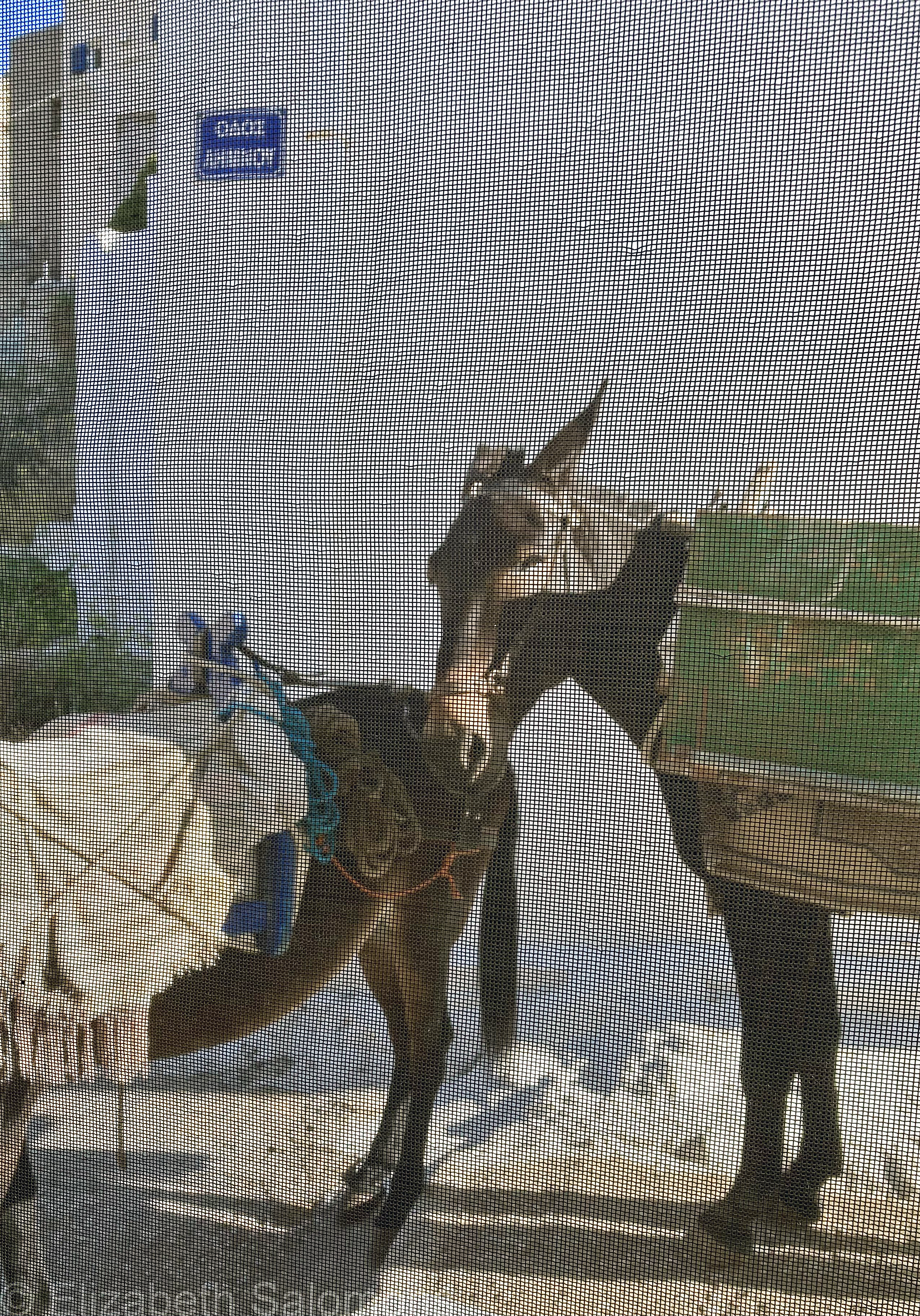
So I waited until they were sated and on their way.
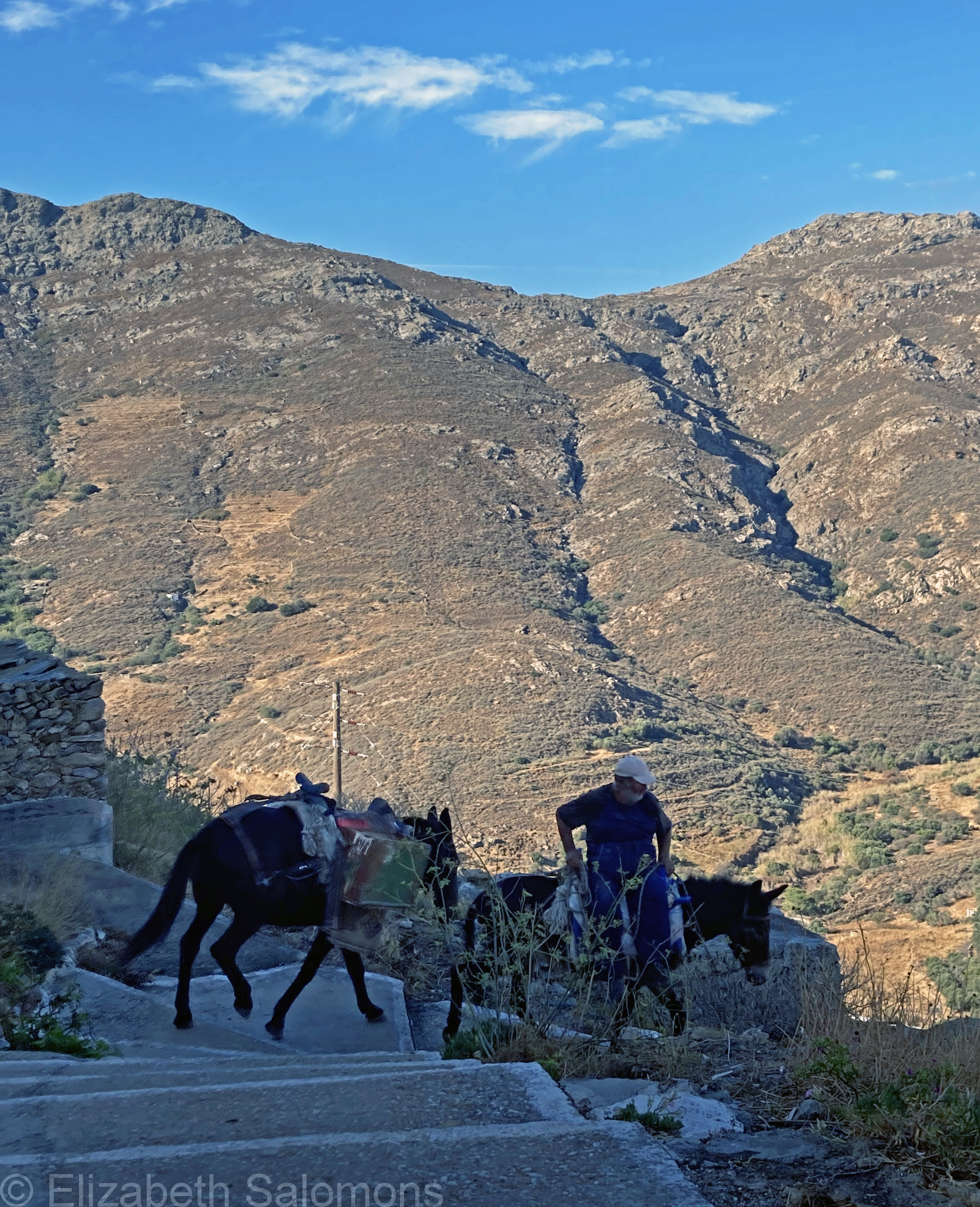
The man and his donkeys were hauling gravel from the road below my house to some unknown construction site above my house. And you know what I discovered?
There is no better way to remind yourself you are on vacation than watching others work.
Through My Lens: Ekklisia Christou
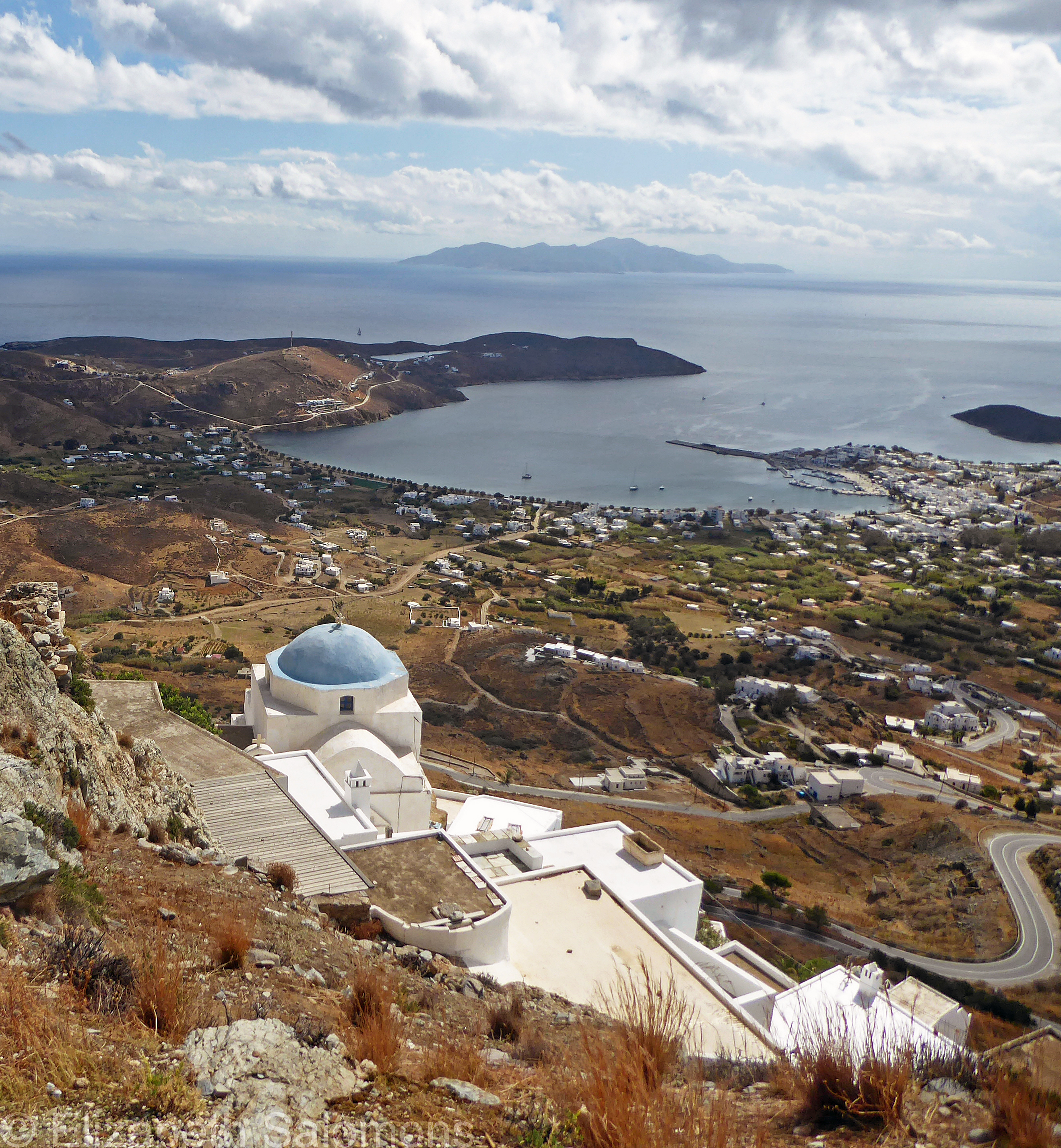
Ekklisia Christou (Church of Christ) is my photo choice for today, Palm Sunday. This small domed church is located just below Agios Konstantinos and to the right of Agia Varvara. Like all the churches at the top of the Chora, Ekklisia Christou gives you a fabulous panoramic view of Serifos and the Aegean Sea.
Cats of Serifos
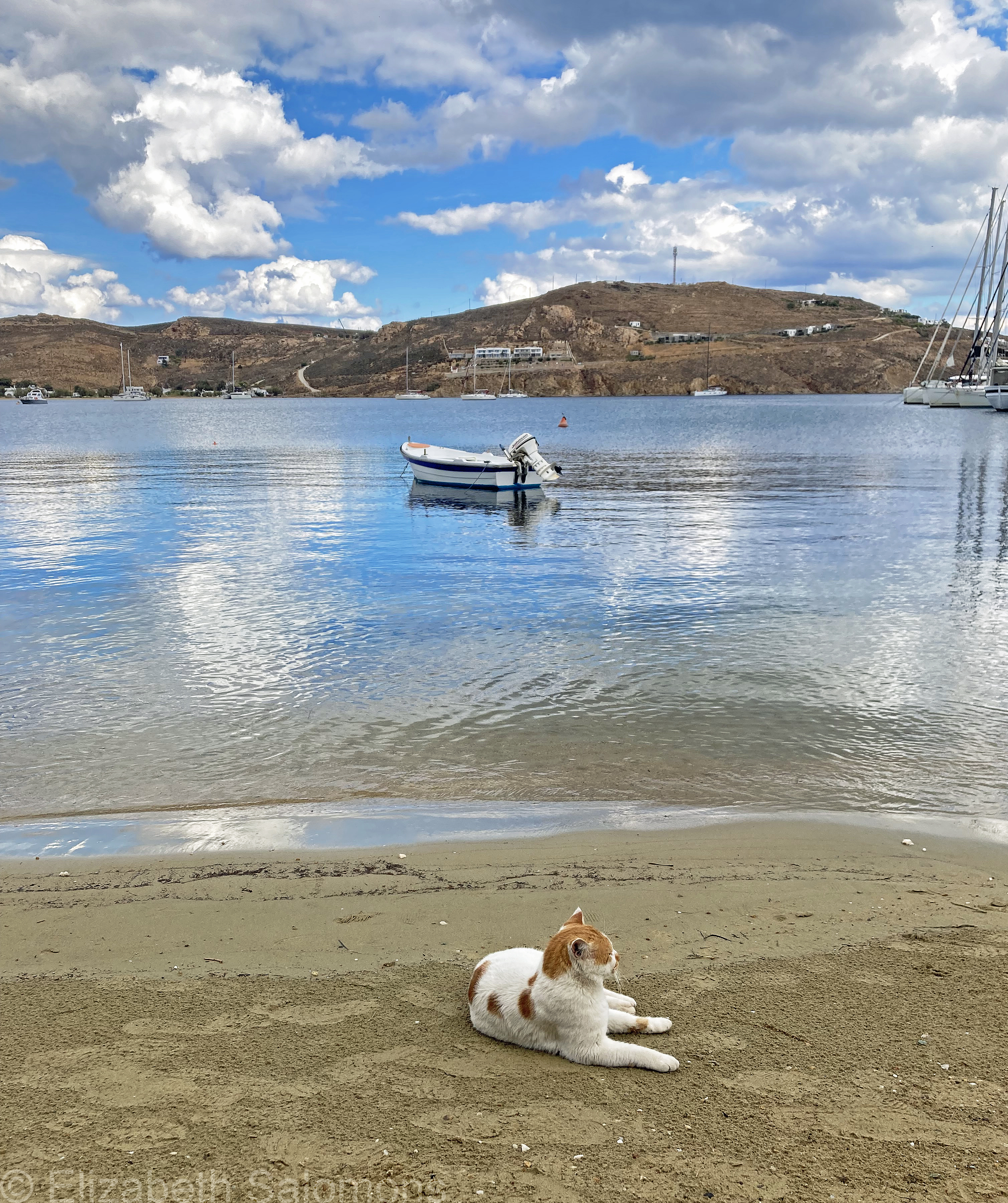
I now know why my home exchange partner did such a fabulous job taking care of my cats when she and her partner stayed in my Vancouver home.
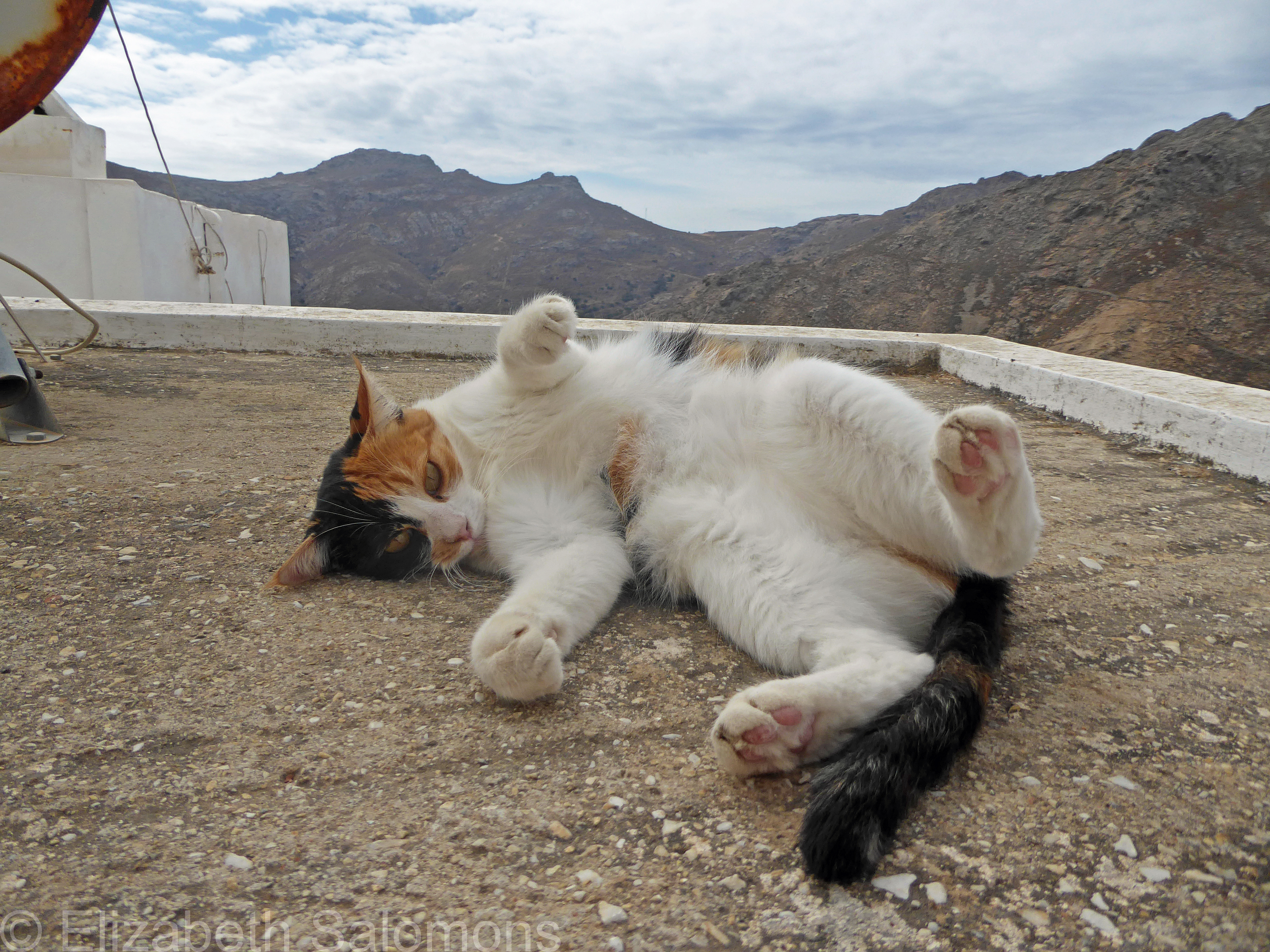
It’s because cats are as much a part of Serifos as whitewashed walls and blue domes.
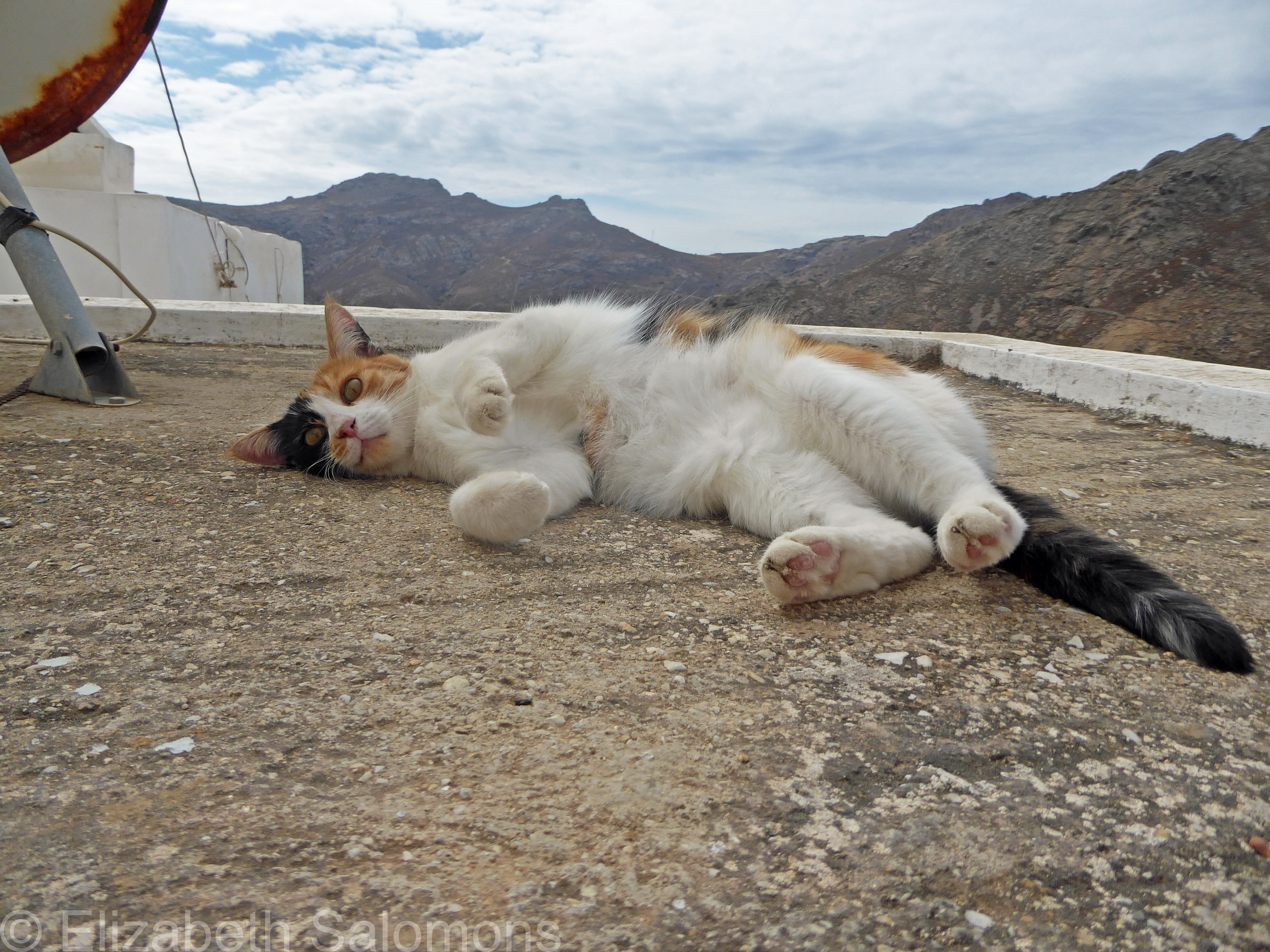
As far as I know, the cats of Serifos live completely outdoors and come and go as they please. But I wouldn’t call them feral. Or even strays.
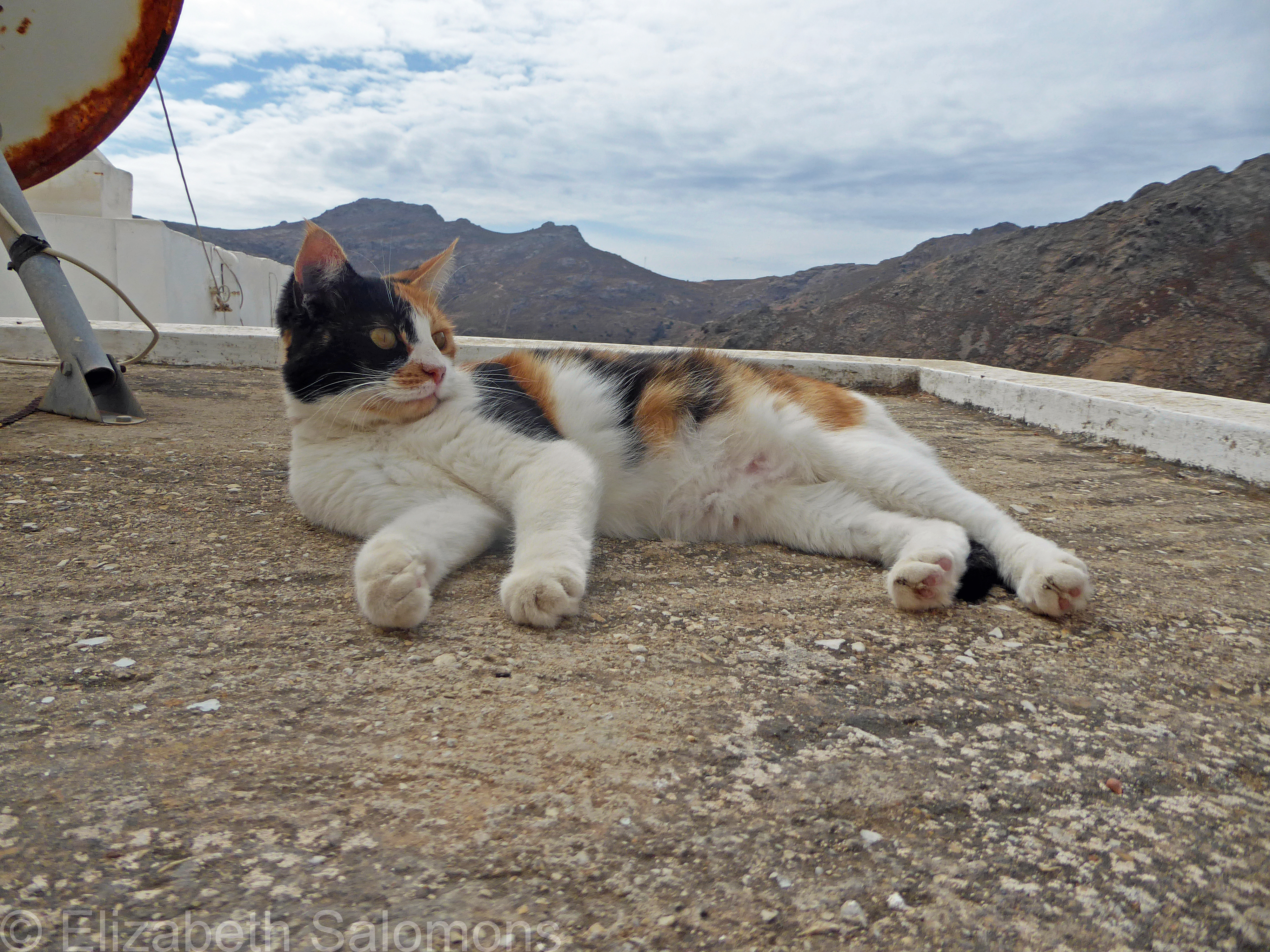
They belong to everyone and to no one. “Community cats” is probably the best way of describing them.
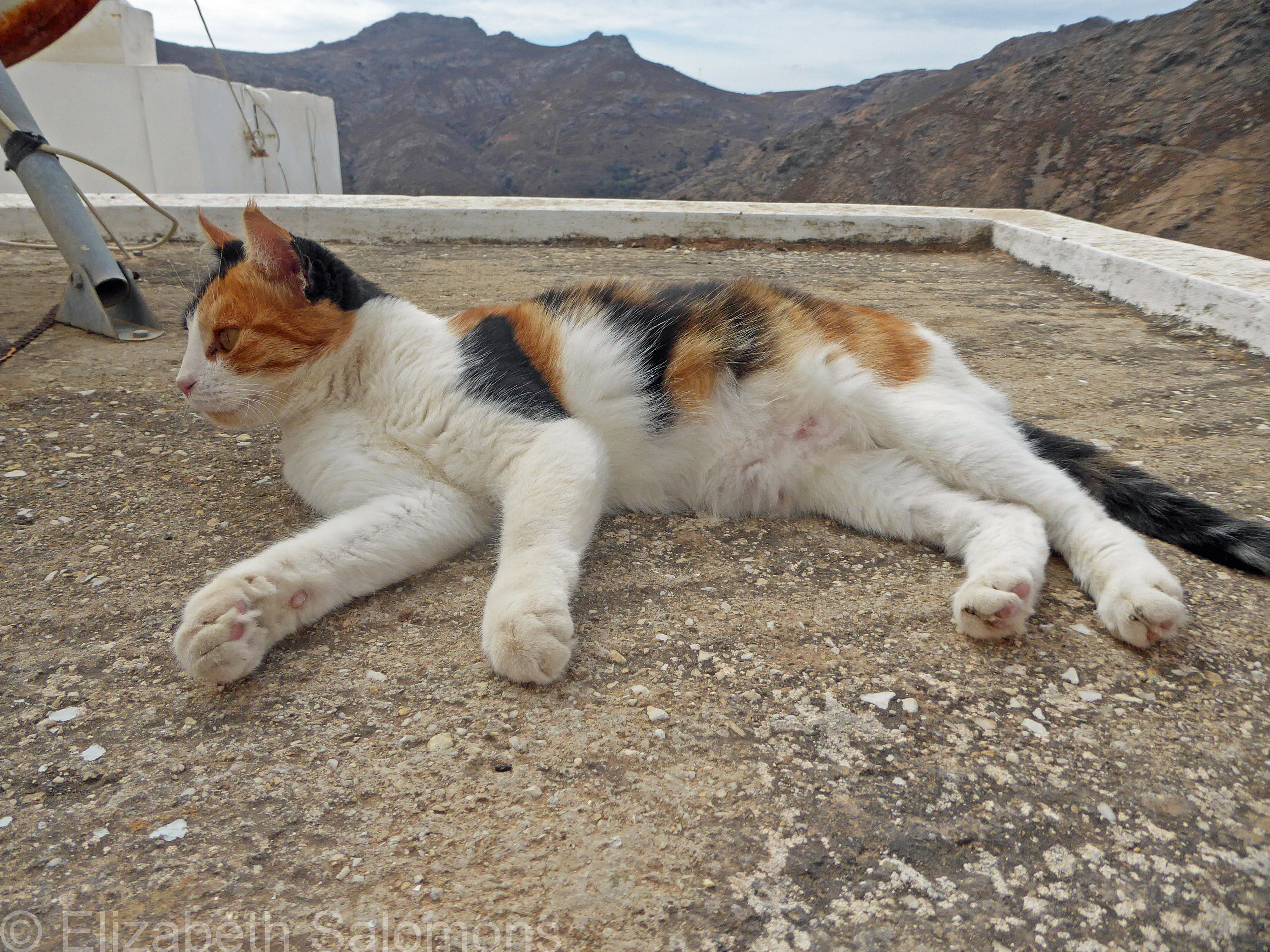
I fed my clan every morning and evening. The most I had at any one time was nine. Nine cats! (Isn’t that the name of a song?)
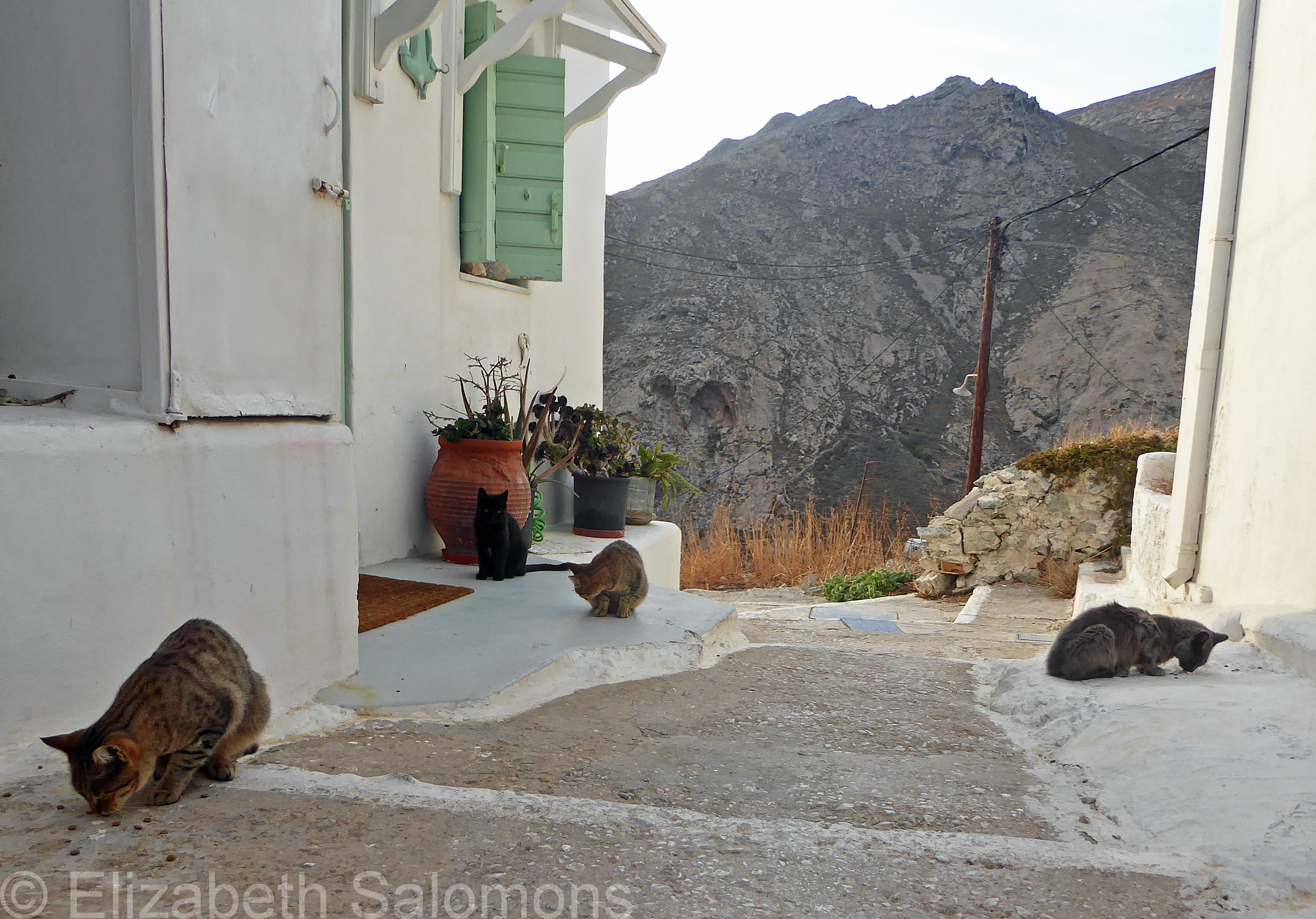
The cats of Serifos are small, but healthy and well fed (see above). I’m told the Aegean cat is a breed native to the Cyclades that developed naturally, without any human intervention.
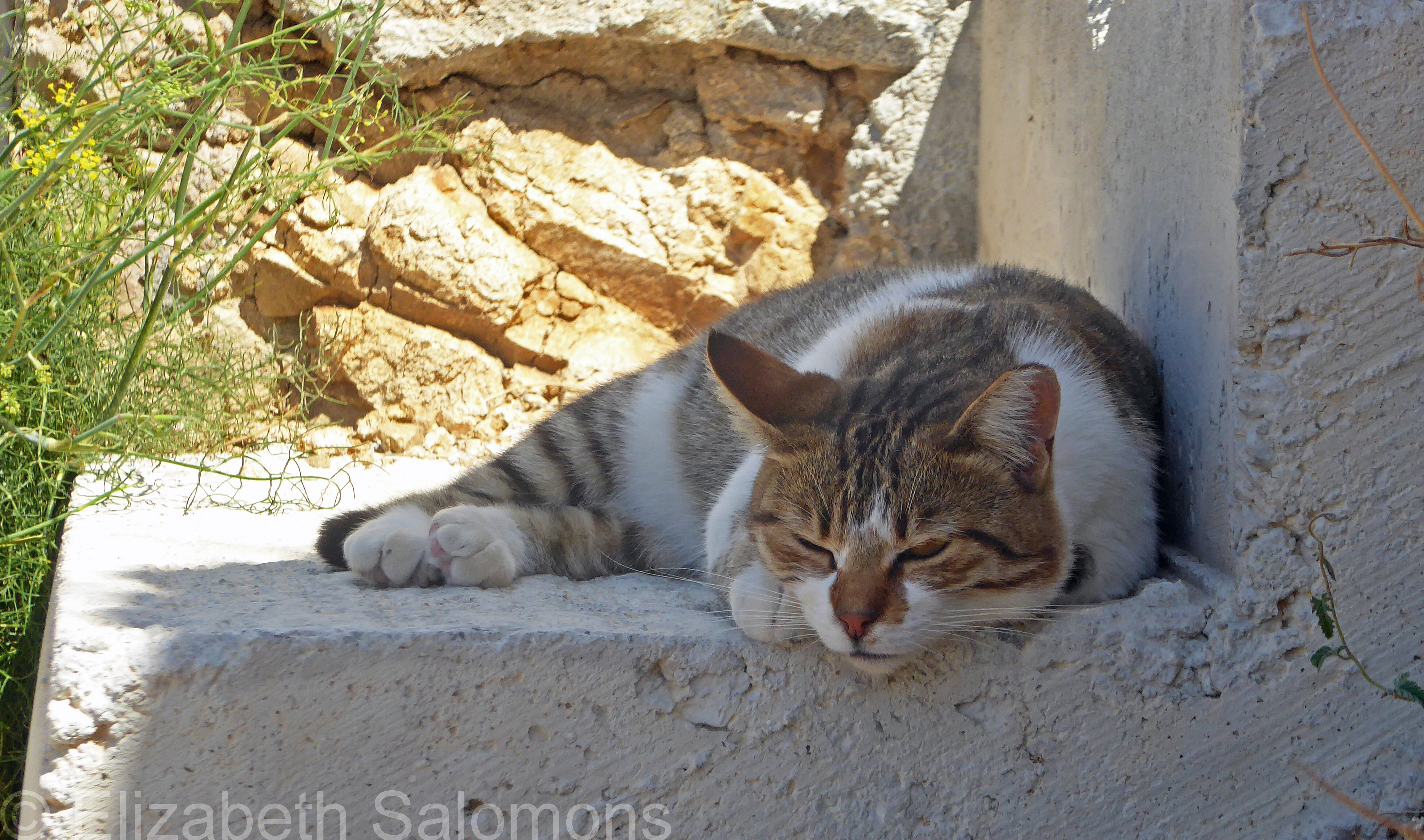
Often on my wanderings through the Chora, I’d see little piles of kibble set out for the cats — I wasn’t the only one feeding them.
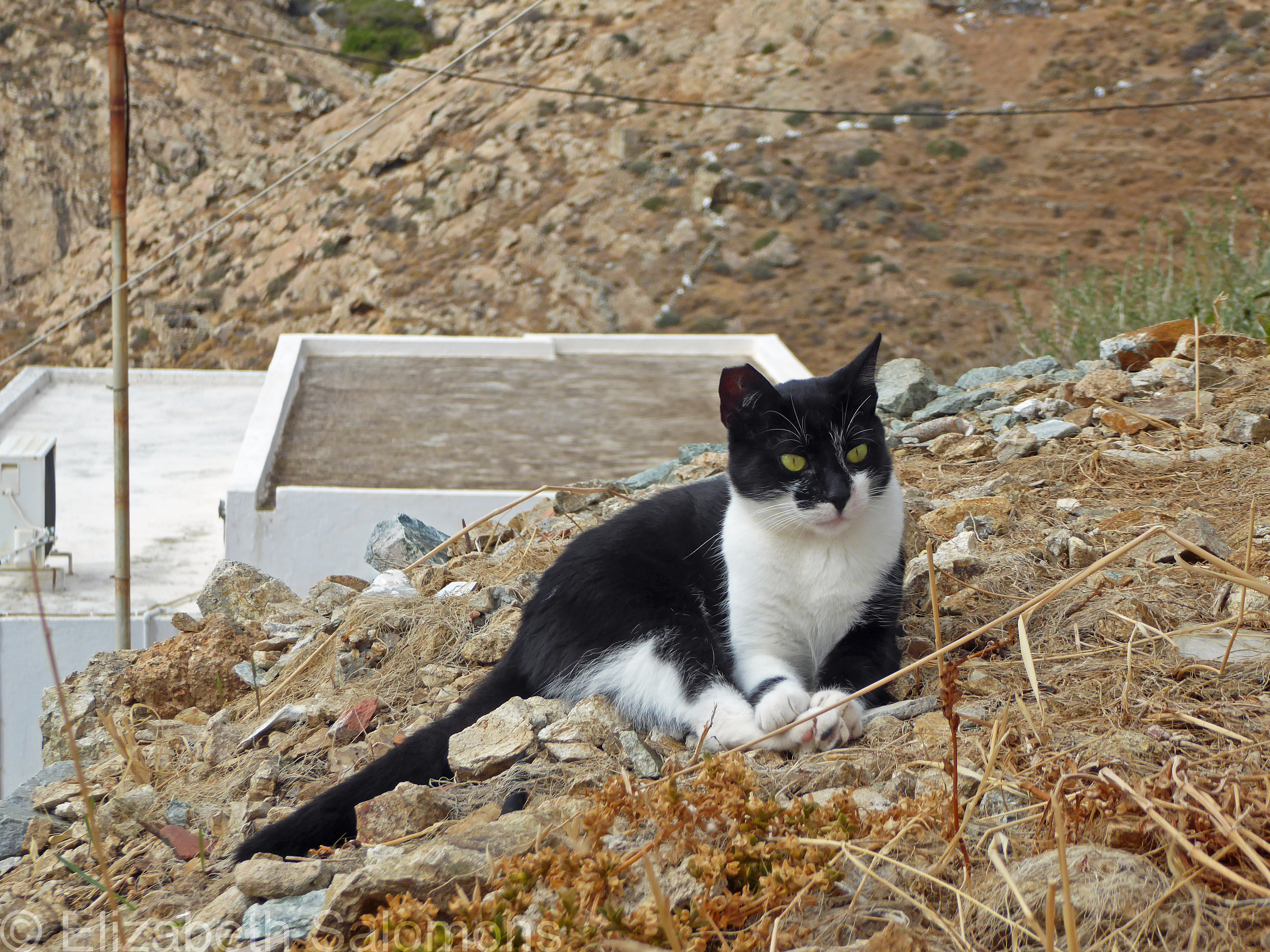
I loved how completely relaxed they looked and acted in their environment.
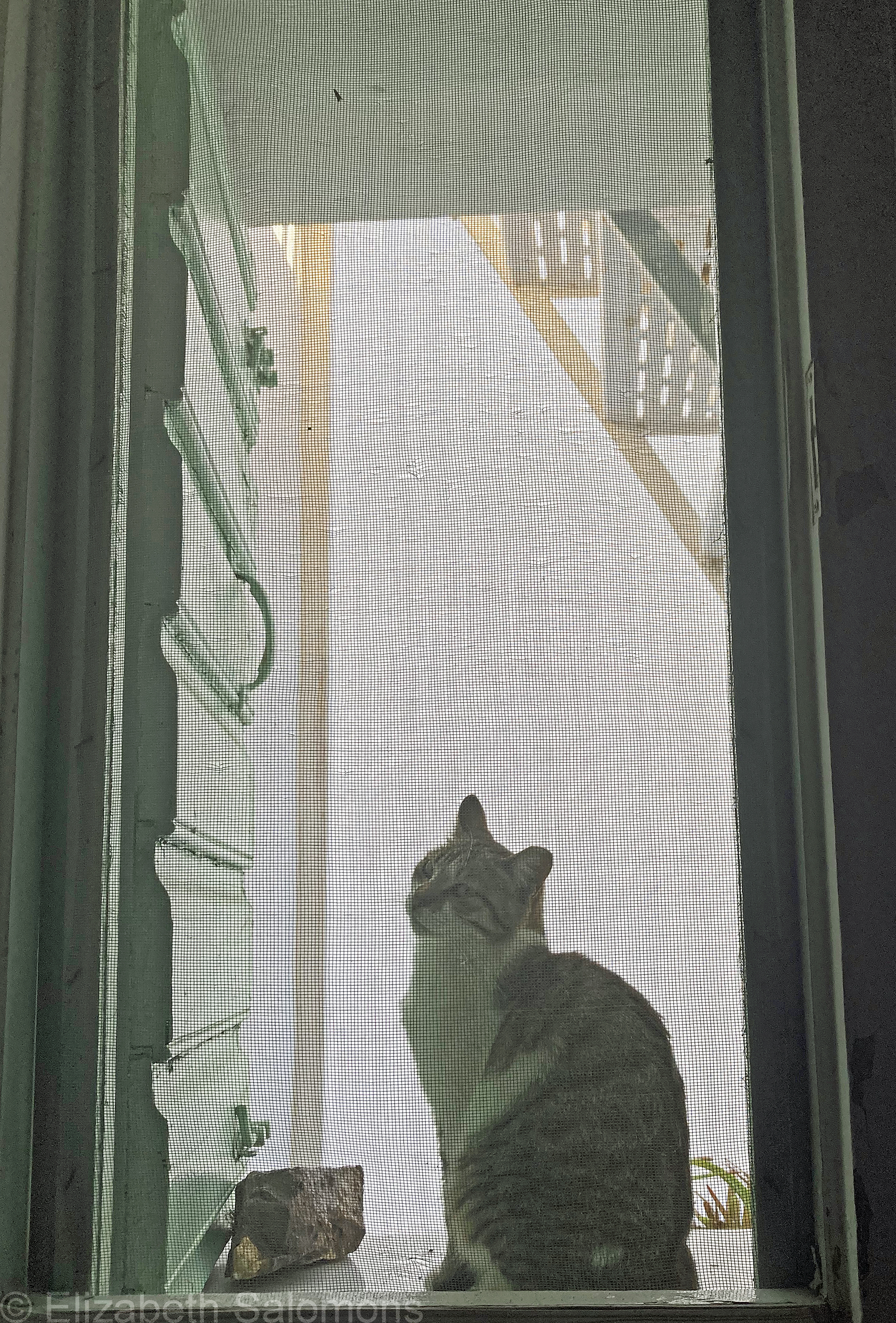
And they kept me good company while I was in my Grecian home.