
The Acropolis
Since every time I turned around in Athens, I saw the Acropolis, it was only a matter of time before I got up close and personal.
The Acropolis is a sprawling complex of ruins that sits up high on a rocky plateau overlooking the city. Its name says it all: the word comes from the Greek akron (high point) and polis (city).
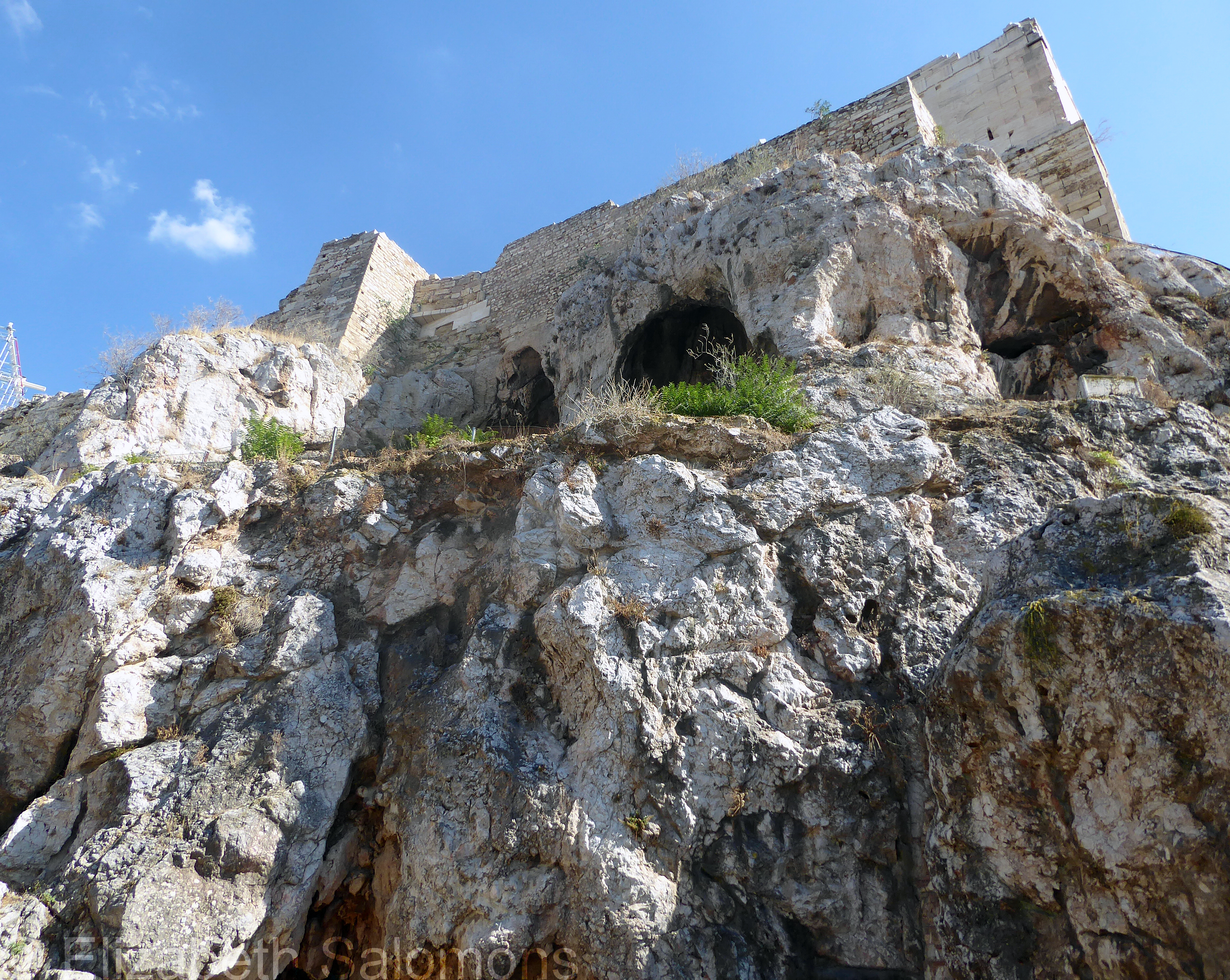
The first fortifications went up in the thirteenth century BCE and had a military purpose; around eighth century BCE, the site shifted to a religious focus dedicated to Athena, the goddess of Athens. A massive building program undertaken in the fifth century BCE resulted in the structures that have showcased ancient Greek’s architecture and art ever since.
I came in by the southeastern entrance, where a switchback trail leads you slowly up the hillside (called the “slopes”), past many ruins that serve as a teaser for the main event.


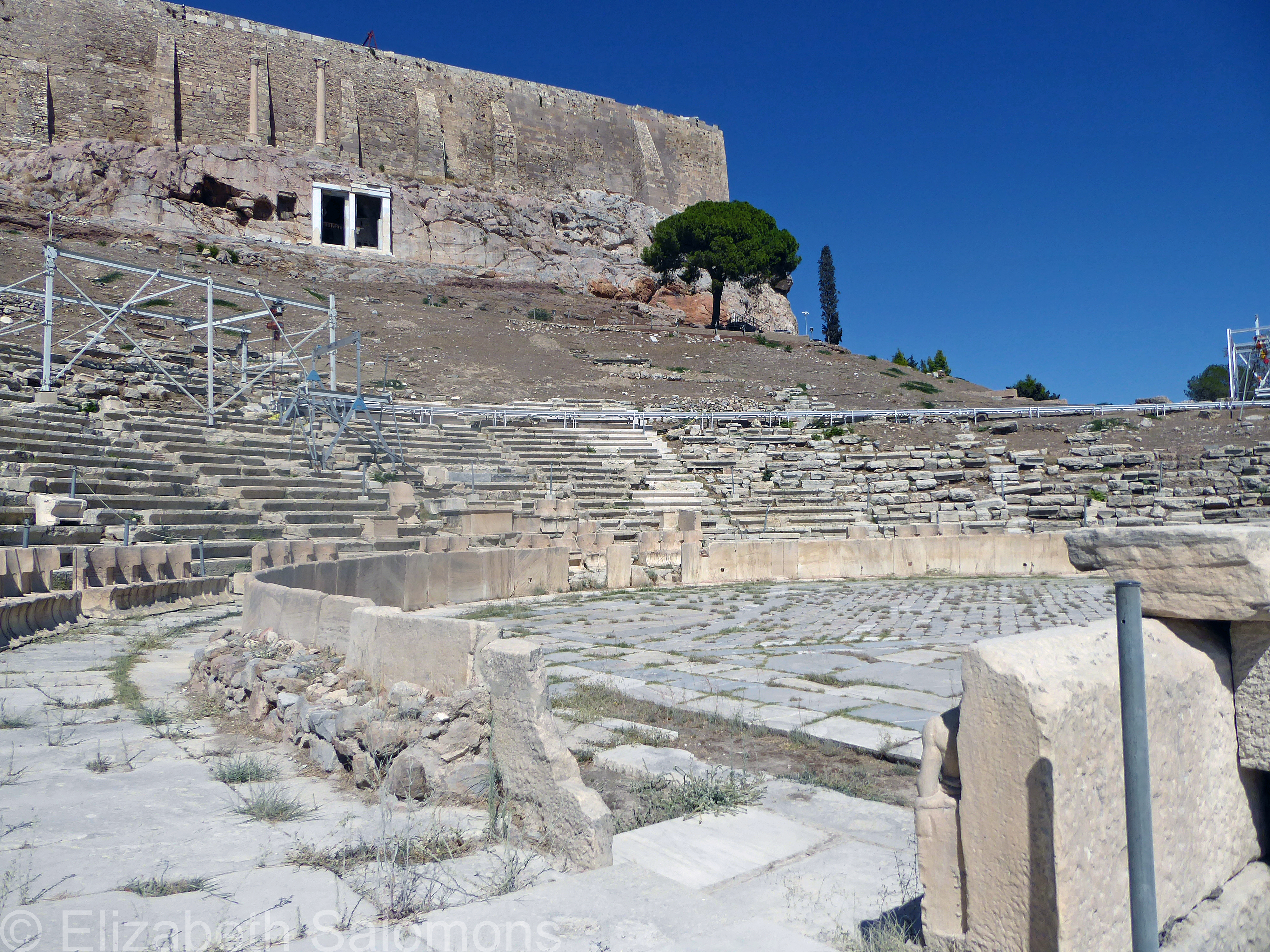
The Theatre of Dionysos is also located on the southern slopes. First built out of wood in the sixth century BCE, it was redone in stone and marble three hundred years later. It had room for 17,000 spectators seated in 64 tiers, of which 20 still survive.
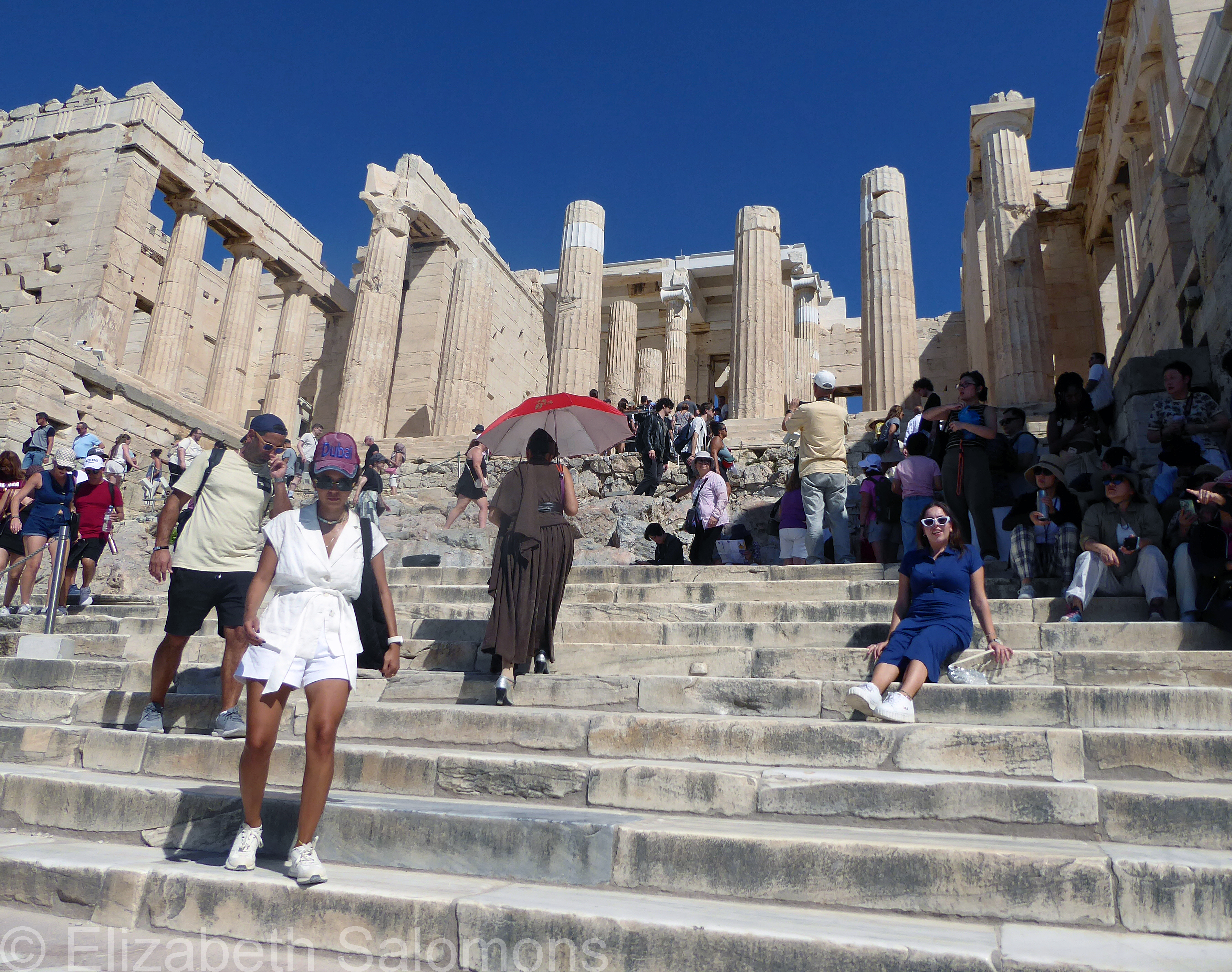
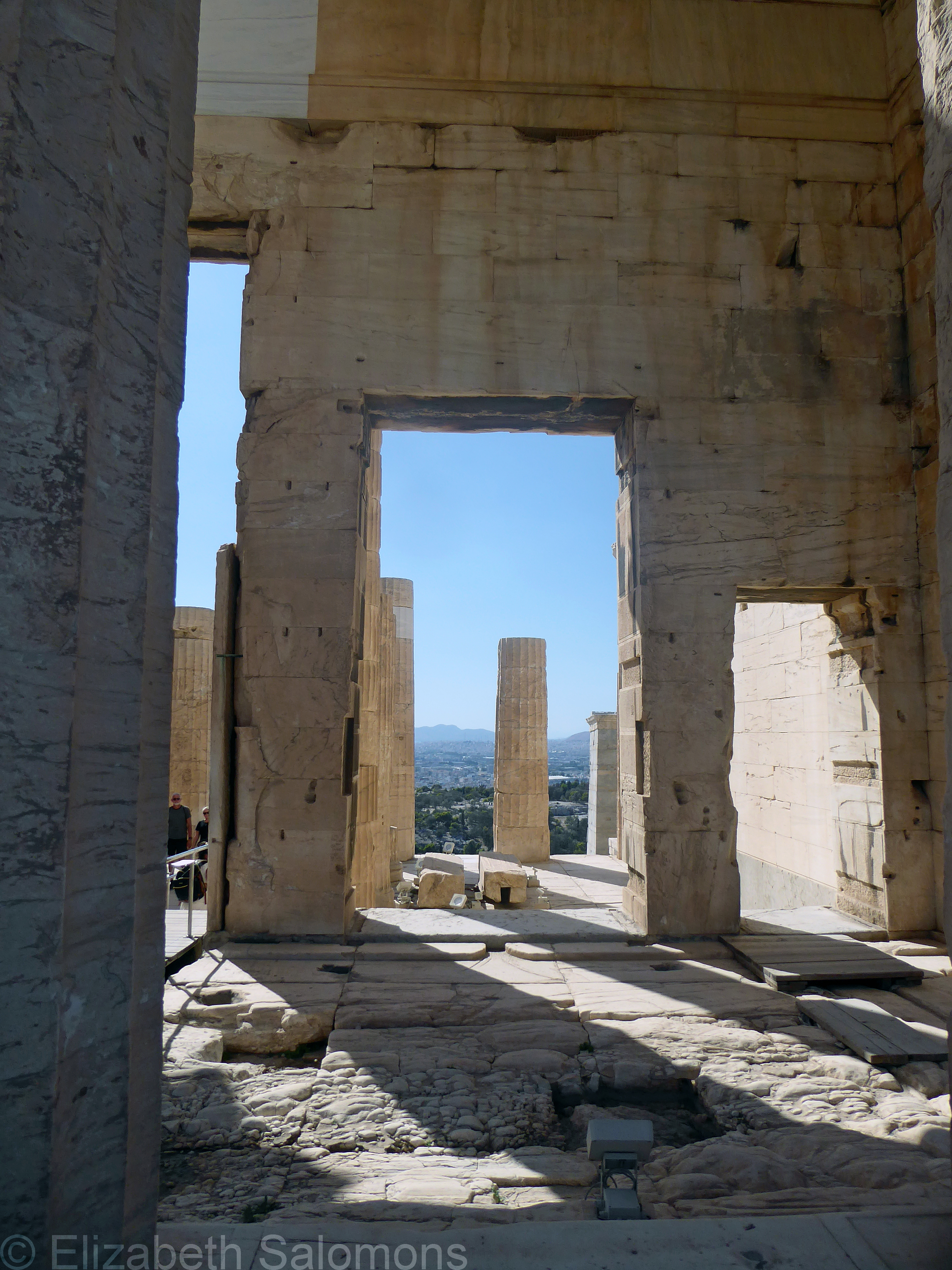
The Propylaea, built between 437 and 432 BCE, marks the entrance to the Acropolis. It was the only part of the Acropolis where I could not manage to get a photo without massive numbers of tourists.
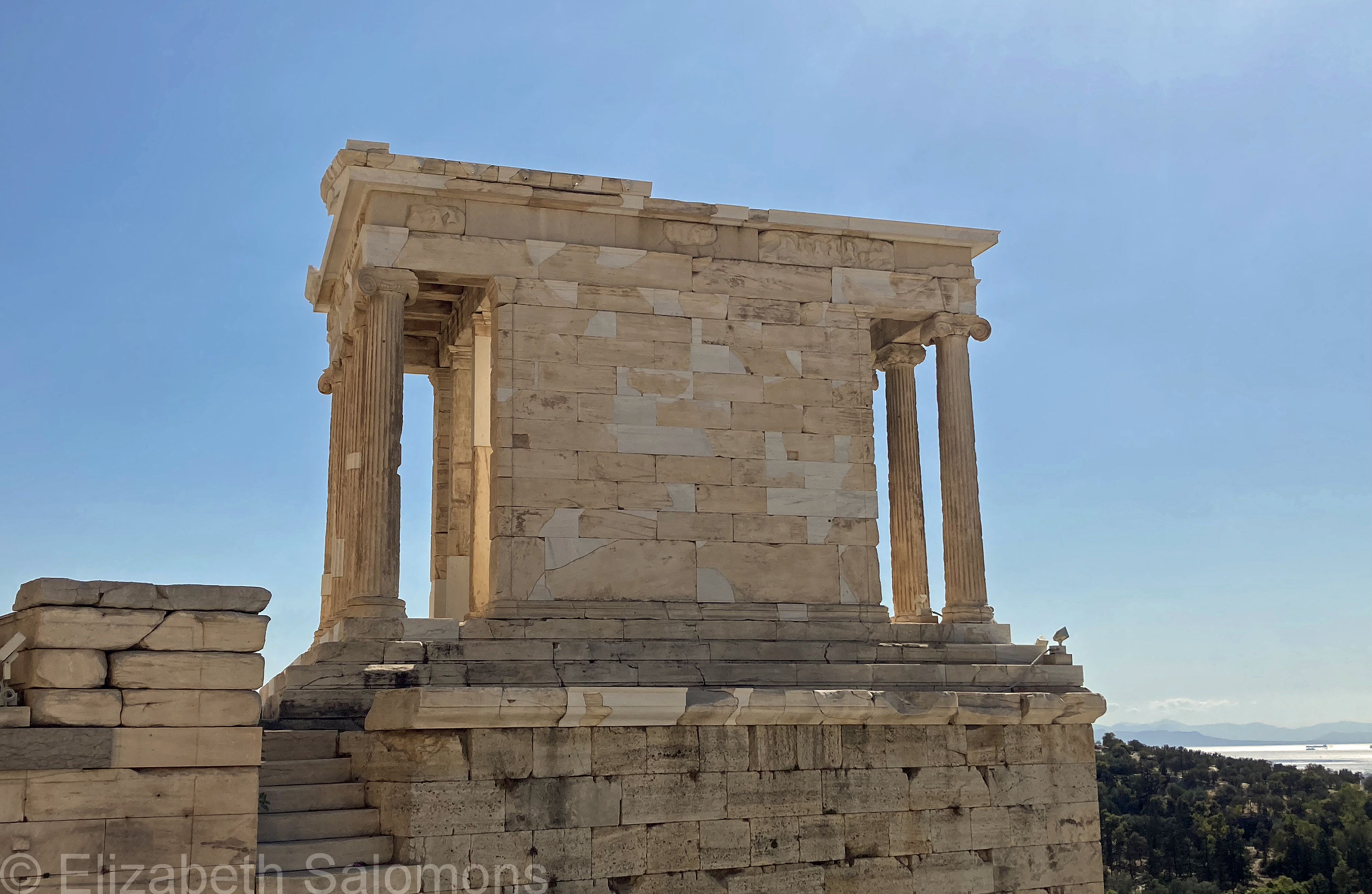
The Temple of Athena Nike (Athena as Victory) was completed in 425 BCE. It stands slightly before the Propylaea.
The Temple of Athena Polias (Athena of the City), or the Erechtheion, was finished in 406 BCE. This Ionic temple was built on the holiest part of the Acropolis, where Poseidon (god of the sea) struck the ground with his trident, creating a spring, and where Athena (goddess of wisdom) planted an olive tree.

(Quick aside: Athena and Poseidon were competing to see who would be patron of the newly founded city-state. The water in Poseidon’s spring was salty and so the citizens chose the olive tree, which would provide them with food, oil, and shade. This made Athena the winner and gave the city its name.)
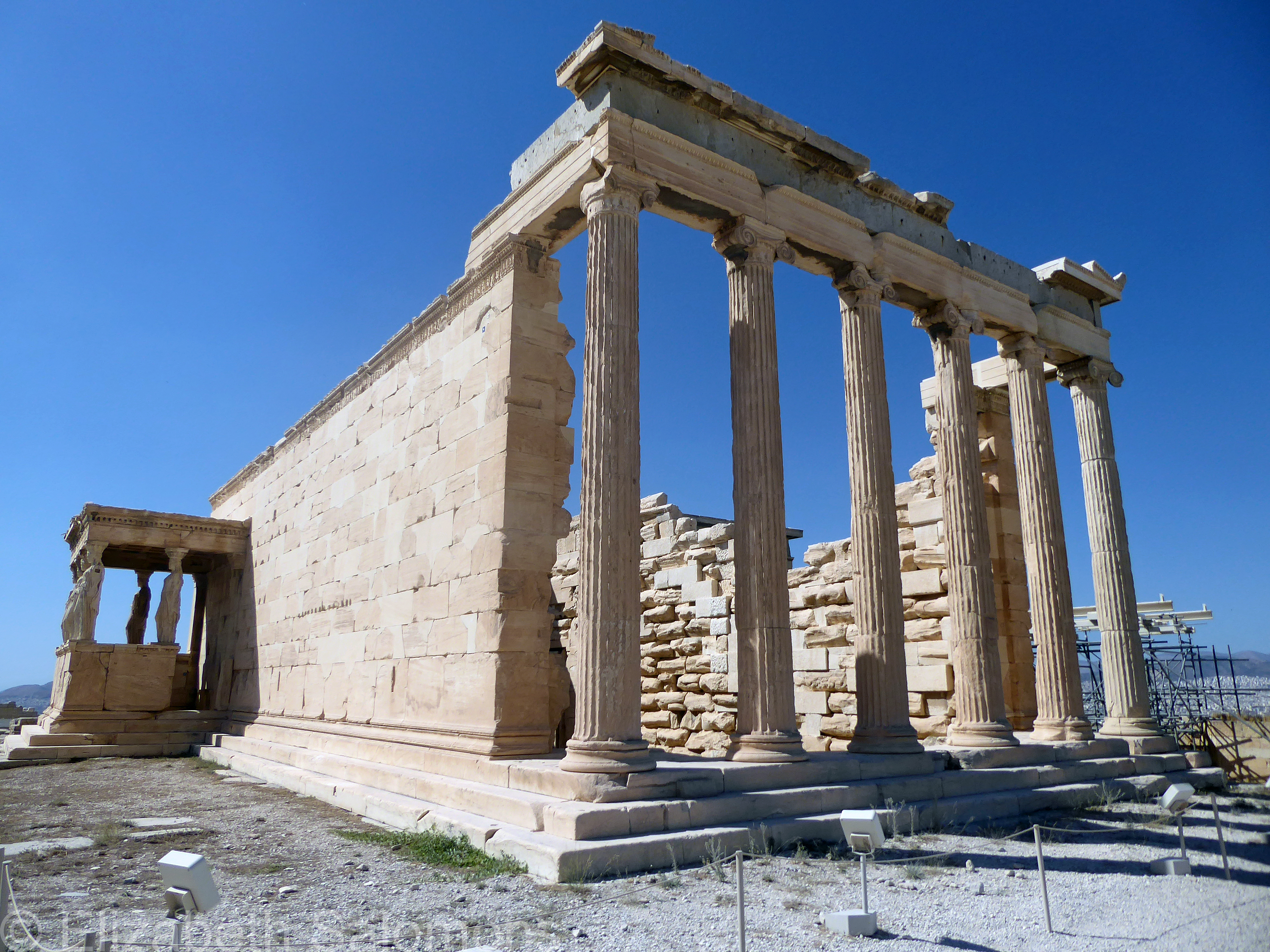
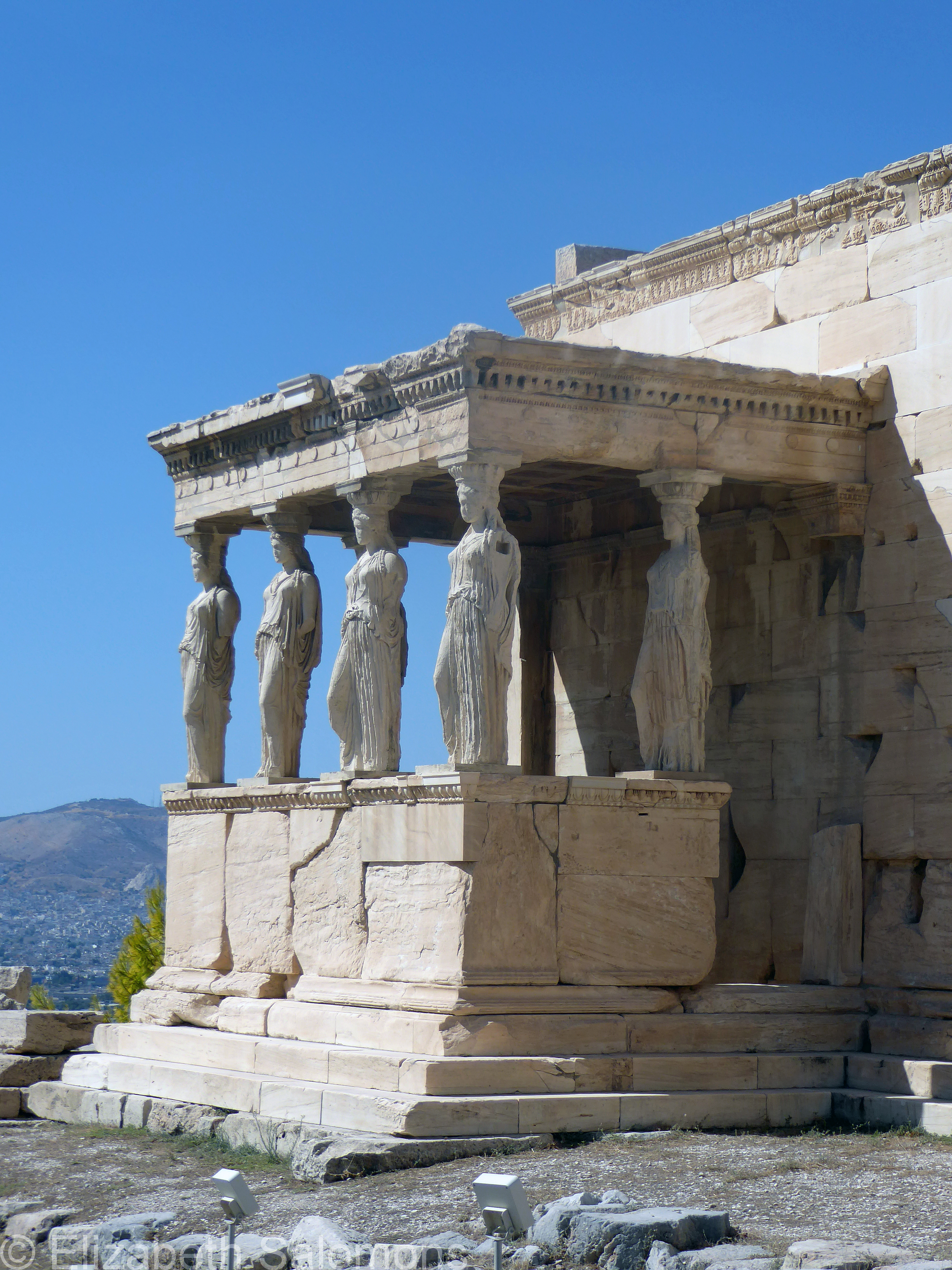
The six maiden columns of the Erechtheion, called the Caryatids, were completed in 415 BCE. The ones here are plaster replicas. Five of the originals are in the Acropolis Museum and the sixth is in the British Museum.
The largest structure on the Acropolis site is the Parthenon. This Doric temple, completed between 447 and 438 BCE, was dedicated to the goddess Athena Parthenos (Athena the Virgin). Its foundations are slightly concave and the columns slightly convex — an optical illusion that allows both to appear straight. When it was first built, its friezes were brightly painted.
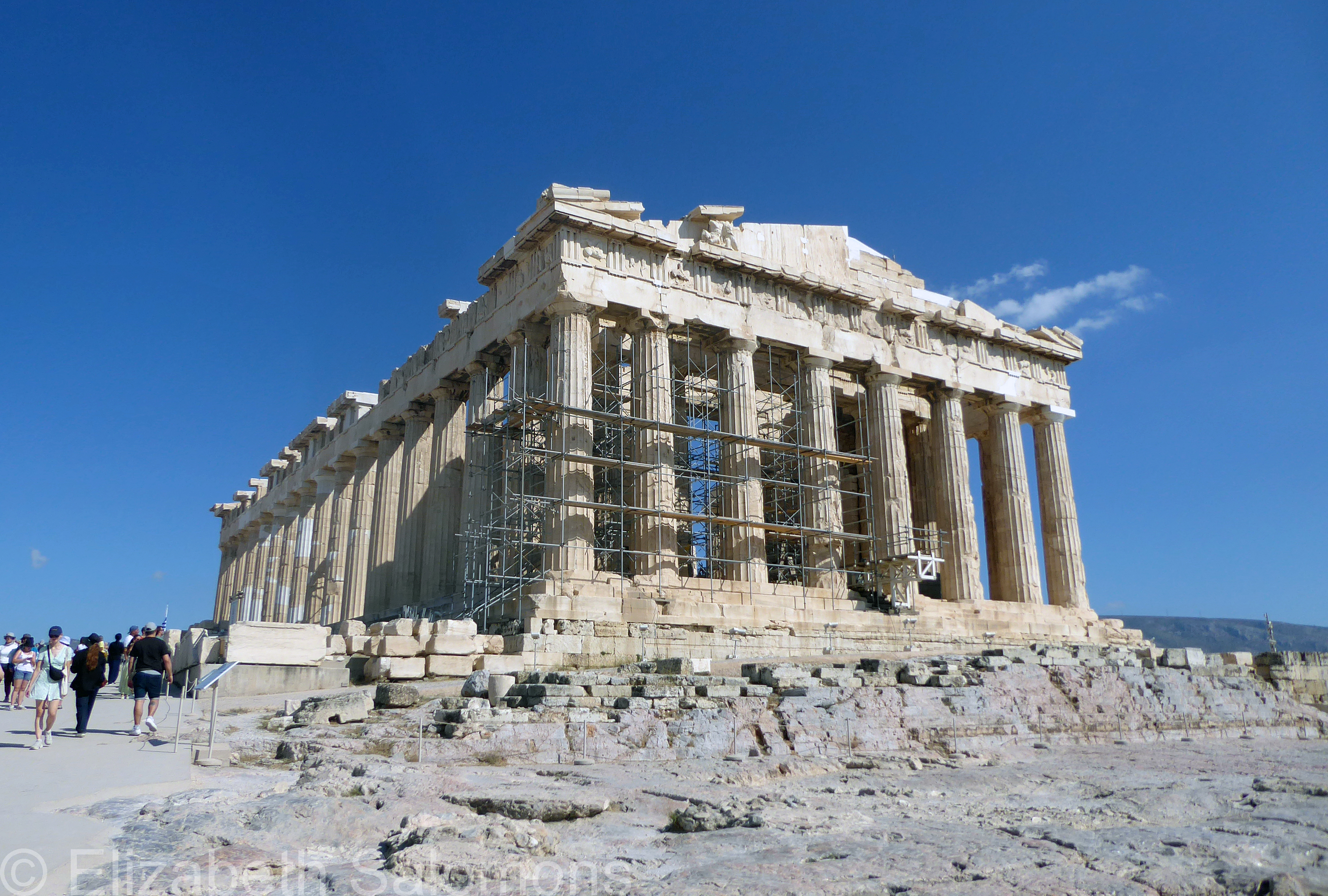
Sometime in the late third or fourth century CE, the interior of Pantheon was destroyed in a fire. In the sixth century CE, it was converted to an Orthodox church. In 1204, crusaders turned it into a Catholic church. When the Ottomans conquered Athens in 1458, it was converted to a mosque. And in 1687, when the Venetians held a siege of the Acropolis, a cannonball made a direct hit on the Parthenon. As it was being used as a powder magazine, the explosion destroyed the roof and much of its walls.
But the most severe damage to the Parthenon? That was between 1801 and 1812, when Lord Elgin carted half of its remaining sculptures off to England, along with sculptures from the Erechtheion, the Temple of Athena Nike, and the Propylaea. They remain there, displayed in the British Museum. The Greeks, naturally, want them back. The Elgin Marbles have been a source of tension between the two countries ever since.
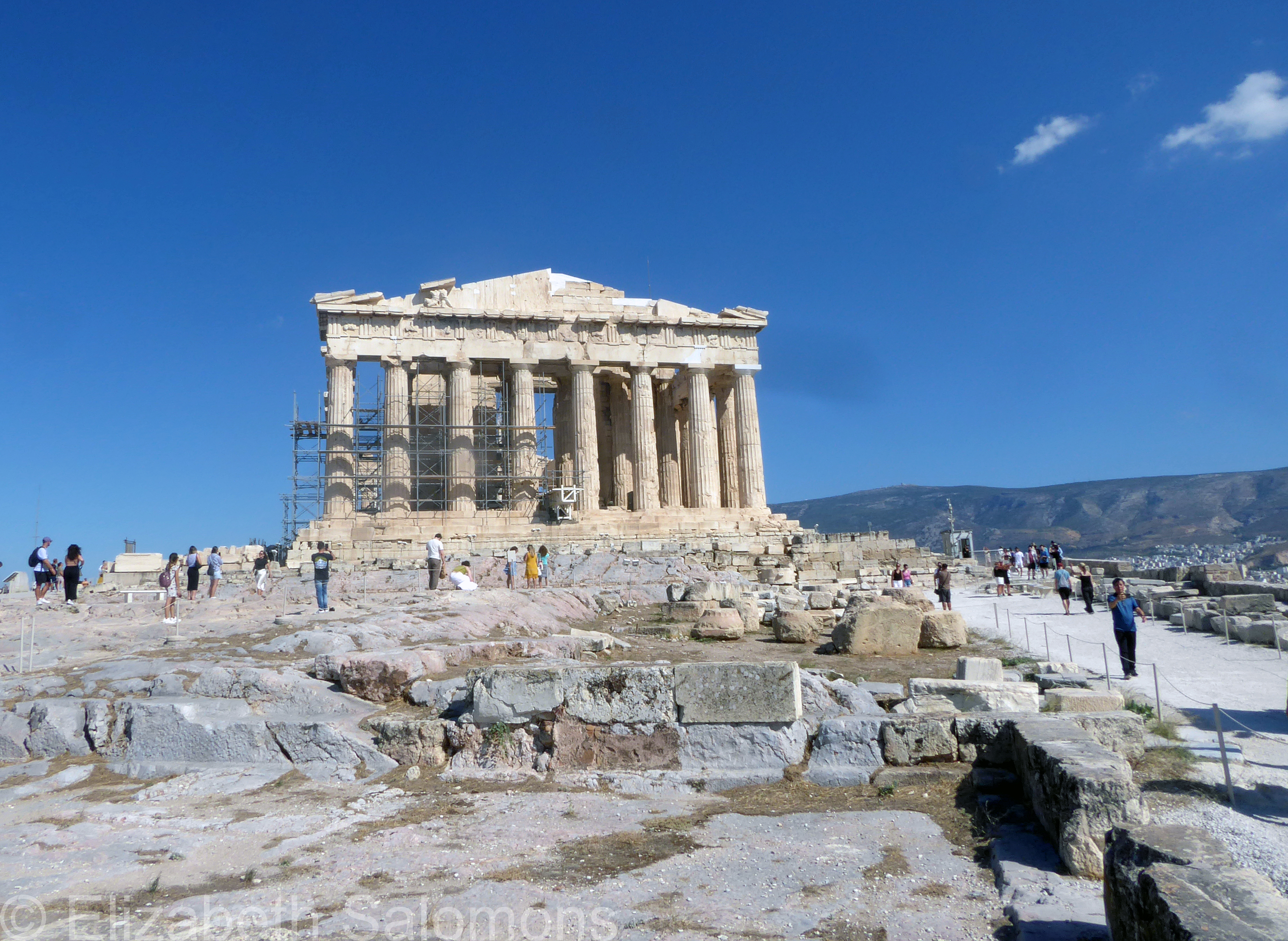
It doesn’t take long to walk through the Acropolis. I took my time, stretching my visit out to almost two hours (spent mostly waiting for people to move out of the frame as I took my photos), but you could speed through the entire complex in 30 minutes if you were in a rush. Bring plenty of water — it was hot, even in late September, and there’s no shade.
The Acropolis has been operating as an archaeological site since 1833, shortly after the establishment of the modern Greek state. It has always served as the religious and cultural centre of Athens, but it is also a symbol of the birthplace of democracy and the foundation of Western civilization. Yeah, no pressure there. Given the increasing fragility of democracies around the world (particularly noticeable this year, I might add), today seems like a good day to reflect on that legacy.


 There and Back Again
Thanks for sharing your adventure. B
>