
Through My Lens: Foggy Lost Lagoon

I took this photo about a month ago at Lost Lagoon in Stanley Park. I was there specifically to photograph ducks. That takes patience, always, and concentration, sometimes, but my focus was interrupted by the fellow beside me.
“Did you see the Pied-billed Grebe?” he said, rather excitedly. I looked in the direction he was pointing and saw the duck.
And then, as we stood there, the fog rolled in in about the same amount of time as it took me to get my camera out of my pocket. I saw the shot (his Pied-billed Grebe was flanked by two Common Mergansers), took the photo, and then, well, I couldn’t help myself. I turned to him and said, “I can’t believe I get to live here!”
He smiled.
“It’s a $10-billion dollar backyard,” he said.
That it is. But moments like those are priceless.
Reifel Bird Sanctuary

A couple of Sundays ago, I called up a friend.
“The snow geese are in town!” I said. “Let’s go check them out.”
And off we went.
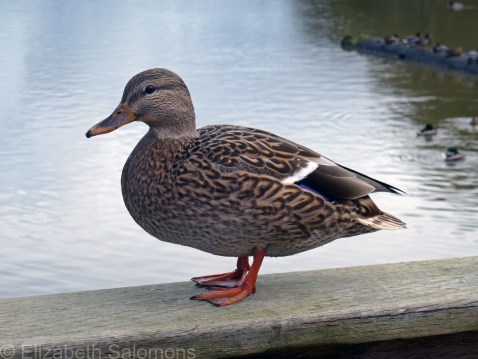
Our destination was the Reifel Bird Sanctuary on Westham Island at the mouth of the Fraser River. My friend and her daughter are frequent visitors; they came well prepared with little bags of bird seed ― one for each of us. (You can also buy seed at the entrance for a dollar a bag.)
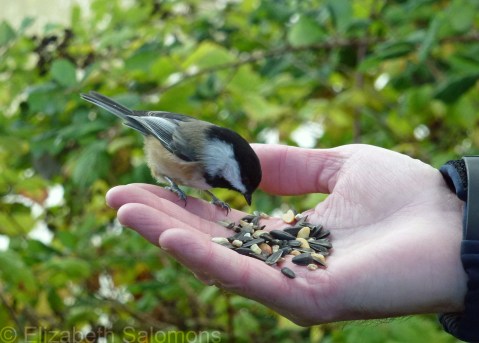
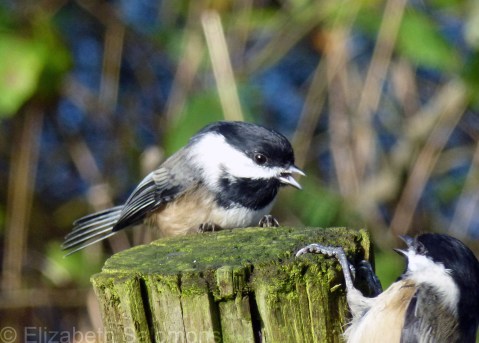
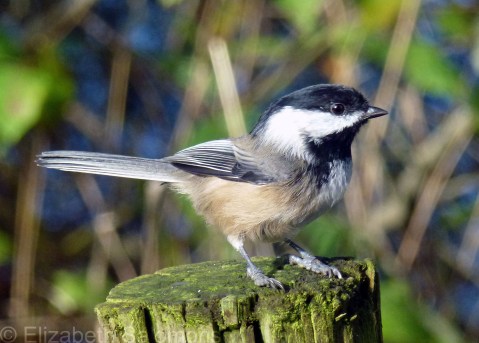
Within minutes of our arrival, we had Black-capped Chickadees eating out of our hand.
We saw a lot of waterfowl. Like these Wood Ducks.

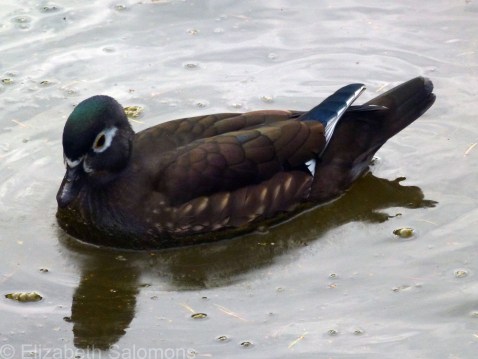
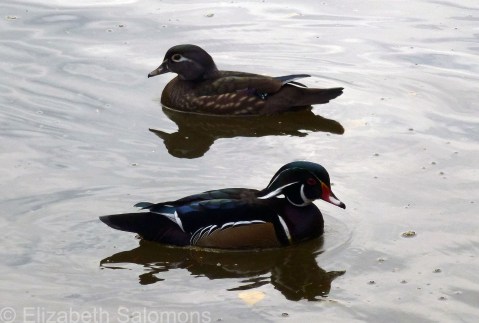
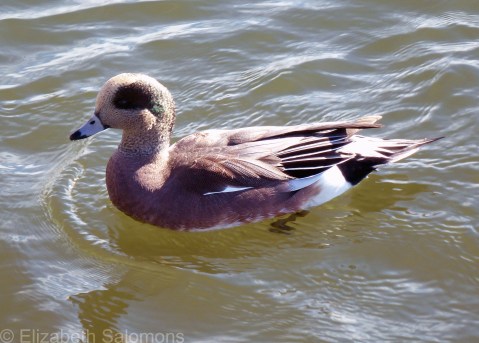
And these American Wigeons.

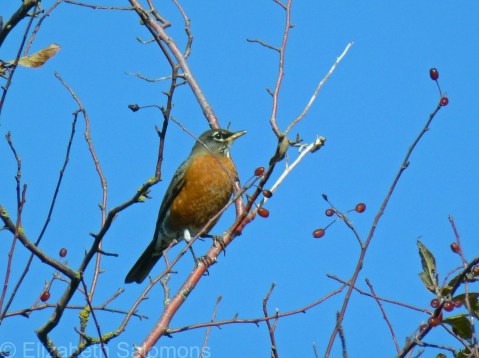
American Robins, too.
There were Sandhill Cranes.
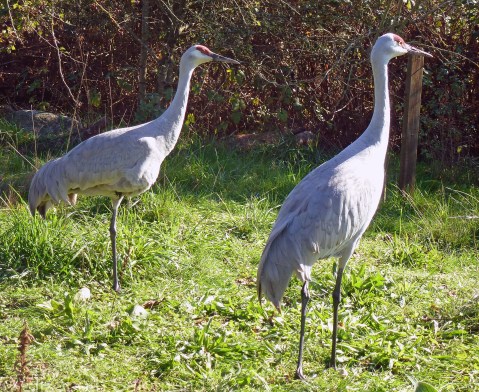
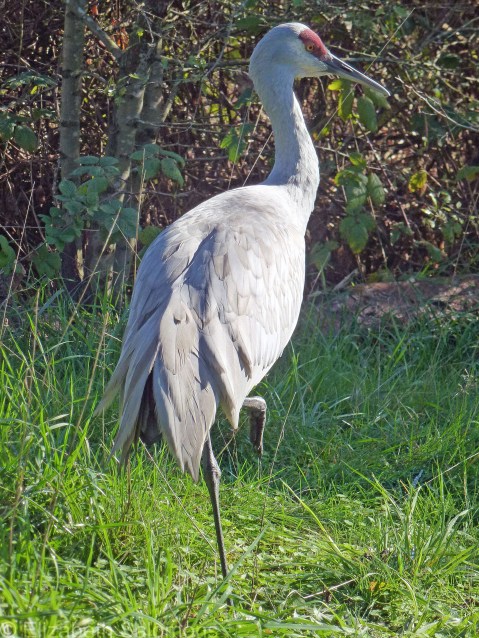
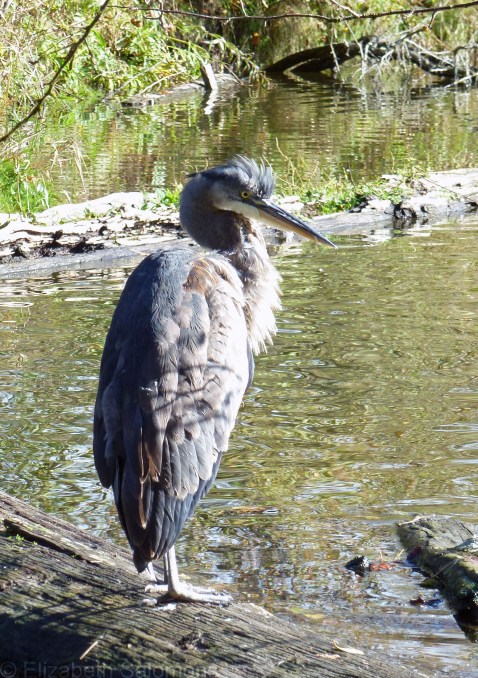
And my old friend, the Great Blue Heron, was there.
We did see our snow geese (a gaggle of them), congregated on a muddy field (as they are wont to do) just outside of the sanctuary. They attracted numerous photographers (a clique of them), all of us gathered on the road that bordered the field, cameras at the ready.
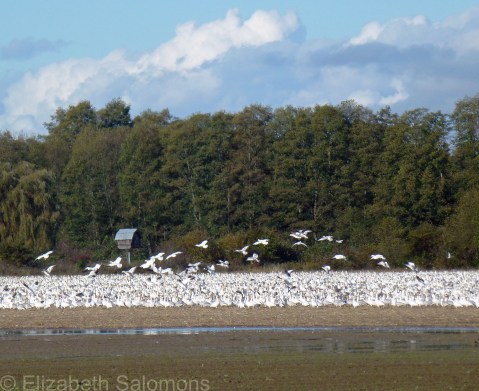
The Lesser Snow Geese spend their summers on Wrangel Island in the Russian Arctic and their winters in the Fraser and Skagit River estuaries. My friend lives just on the other side of the river from the bird sanctuary, and she told me the snow geese are frequent visitors to her daughter’s school. The kids have to be kept indoors on days when the snow geese decide they want to hang out on the school’s playing field. (Every Canadian knows what Snow Days are, but who knew there were Snow Geese Days?)
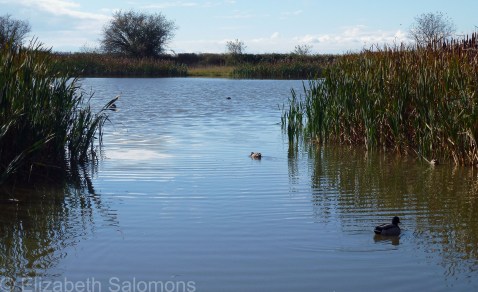
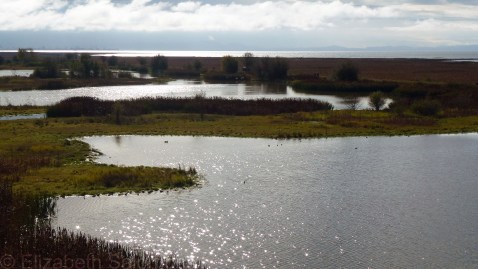
The George C. Reifel Migratory Bird Sanctuary consists of 300 hectares of marshland in the Fraser River Estuary and is a key stop for birds migrating along the Pacific Flyway. Dykes are used as walkways, giving visitors access to much of the sanctuary, including bird blinds and an observation tower. More than 250 species of birds have been spotted here; prime time viewing is during the fall and spring migration. And with an admission fee of $5 per adult and $3 per child (annual memberships also available), it’s a cheap day out.
One last tip: Pay attention to the birders with the supersize camera lenses. Chances are those lenses are pointed at something you want to see.
Spotted Towhee
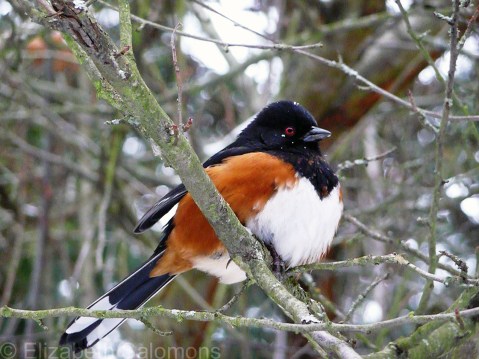
Since I now consider myself a quasi-birder, I thought I’d post a photo for World Migratory Bird Day, which this year is May 10 and 11. (Why it’s called a day when it’s actually a weekend is a puzzle to me, but there it is.)
This is a Spotted Towhee I photographed near Lost Lagoon in Stanley Park a couple of winters ago. Technically, it’s not a migratory bird for Vancouver as it lives here year round, but it is a seasonal bird in other parts of the continent.
Florida: A Birder’s Paradise
Who knew there were so many different kinds of birds in Florida?
Well, that’s a silly statement, isn’t it? I’m sure a lot of people did ― just not me. I learned a lot while I was in Florida by hanging out with some avid birders, and, with their help, I was able to spot 35 different species during my two weeks in the Sunshine State.
As I was ticked each species off my list, my photographer gene went into overdrive. And so, here are one or two photos to share with you.
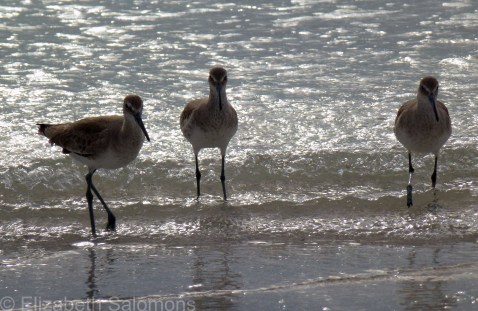
First up are the shore birds I told you last post were so much fun to play with on the beach. The first ones I met were Willets.
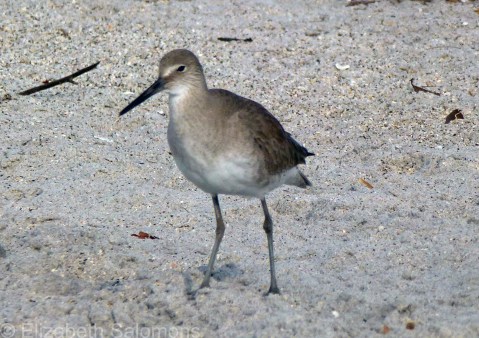
Here is a Ruddy Turnstone …

… and this one is a Sanderling. Sanderlings are tricky to photograph because they zip around at warp speed. Not to mention they blend pretty well into the background.

The Royal Terns were my favourite of the terns.

When they turn their heads, it’s pretty obvious why they’re called “royal.”

Here’s a bunch of them in formation: heads turned away from the wind and beaks tucked into their wings.

This one’s a Least Sandwich Tern, which is smaller than the Royal.

One Black Skimmer …
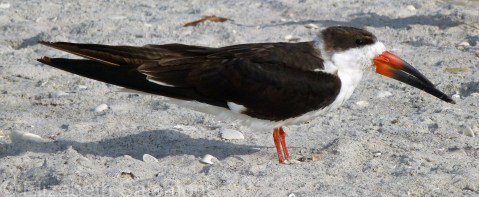
… three Black Skimmers …
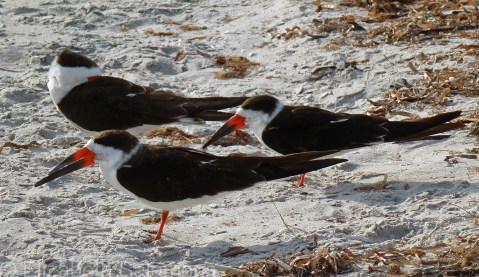
… and a whole flock of Black Skimmers.
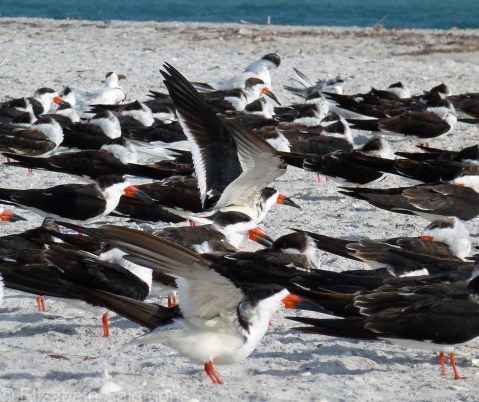
A Laughing Gull An immature Ring-billed Gull on the beach …
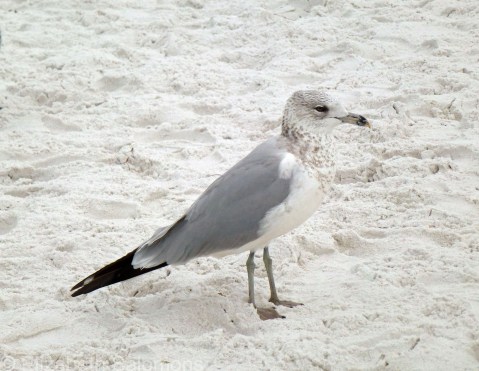
… and a whole row of Laughing Gulls preening themselves on a fence.

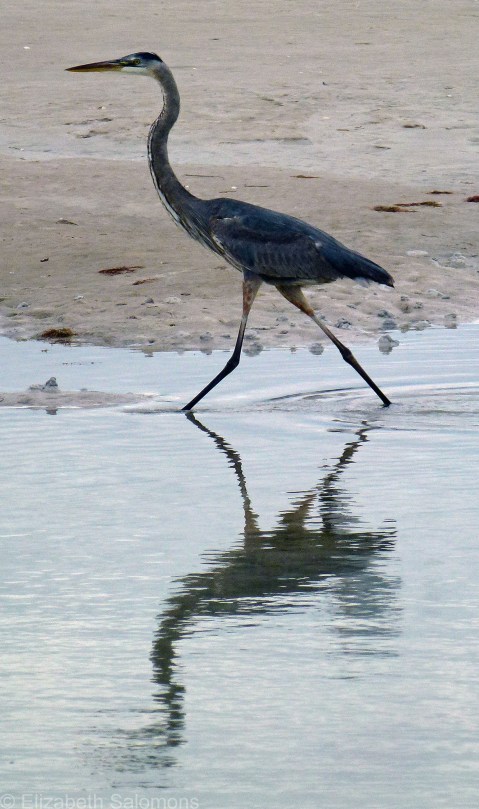
I was really happy to meet up with my friends, the Great Blue Heron. I know when they leave Vancouver every fall they go somewhere ― it never occurred to me I’d find them in Florida. Here’s a male …

… and here is a female.
This Snowy Egret was kind enough to strike a pose for me.

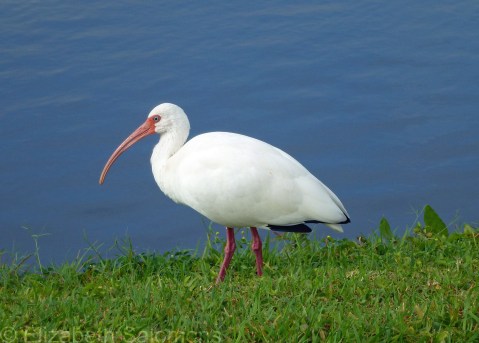
The White Ibis (left) is being stalked by a Great Egret (right).

Here’s a better photo of the White Ibis.
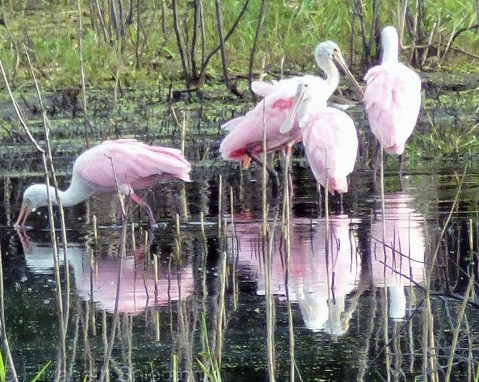
These are Roseate Spoonbills. Apparently they aren’t so common and we were lucky to see them. If you look carefully at the beak of the second bird from the right, you can make out its spoon shape.
This bald-headed fellow is a Wood Stork ― the only stork that breeds in North America.
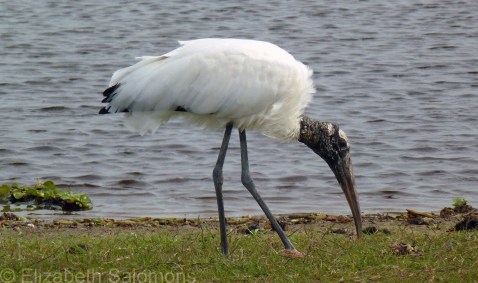
The Anhinga is quite the exhibitionist. Here’s one passing the time of day …

… and here’s one showing off. Anhingas stretch out their wings like this to dry off the feathers.

These are two juvenile Anhingas.

I don’t think a day went by during my time in Florida when we didn’t see vultures circling high above us. This Black Vulture is almost hidden by all the Spanish moss in the tree.

Another frequently sighted bird is the Brown Pelican.

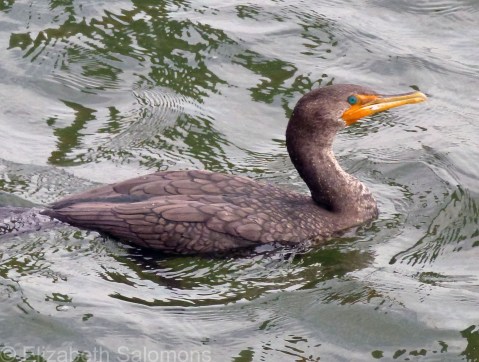
Here is a Double-crested Cormorant …
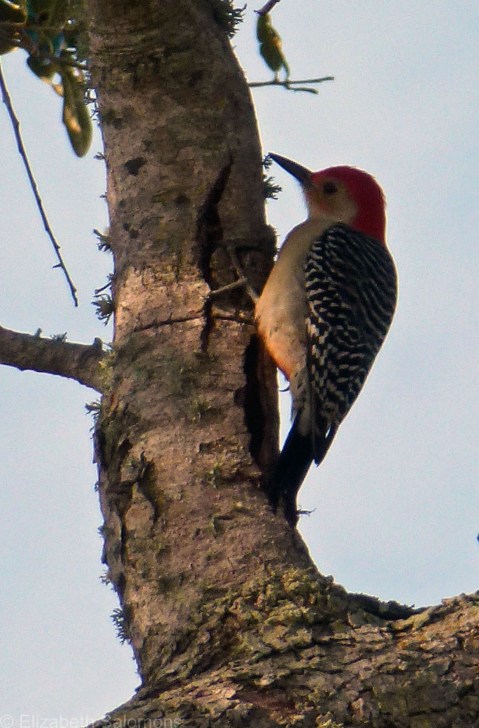
… a Red-bellied Woodpecker …
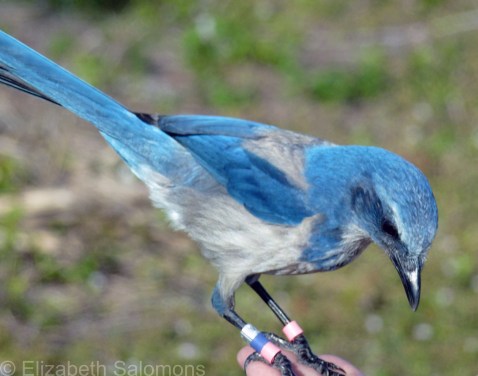
… and a Florida Scrub-Jay.
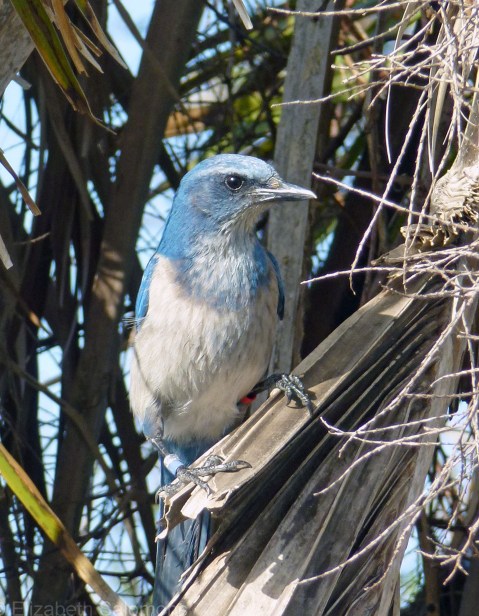
The scrub-jays will eat from your hand if you’re patient enough. (The surge of intense love I felt for this tiny creature as it stood on my hand was electric. No exaggeration.)
This Red-winged Blackbird kept me company one morning in the Keys while I ate my lunch.

And I met this handsome fellow on one of my strolls through Key West. Chickens are everywhere in that town ― and I mean everywhere.

I am sure I goofed up some of the identifications, so do let me know if I did. And, as if I need another reason to travel, I am now thinking that choosing destinations based on their potential for birdspotting is not a bad idea. Not at all.
Through My Lens: Pelicans on the Pier
I have lots of photos to post about my jaunt around the Florida peninsula, but this one here is the best shot of the entire trip. It deserves a post all of its own, I’m thinking.
If only these guys could talk.

Great Blue Herons
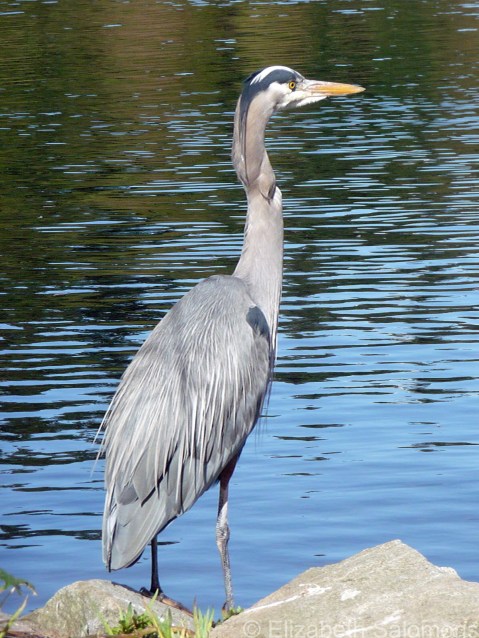
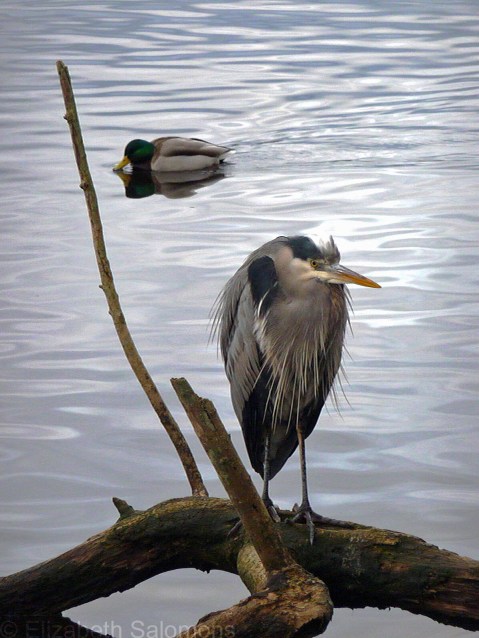
The herons are back!
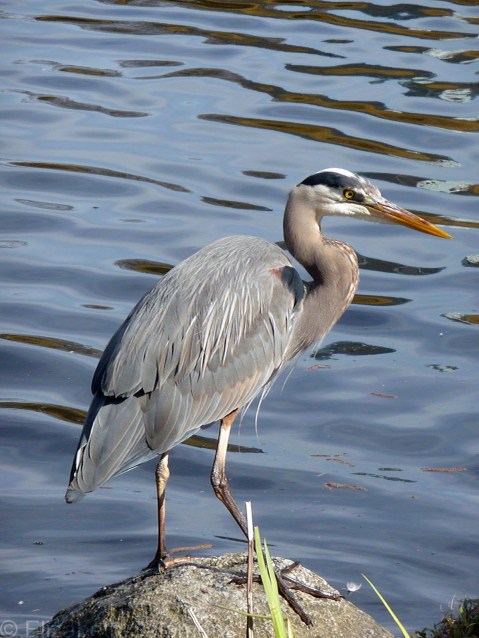
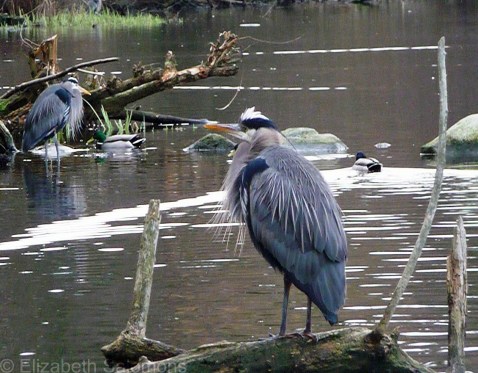
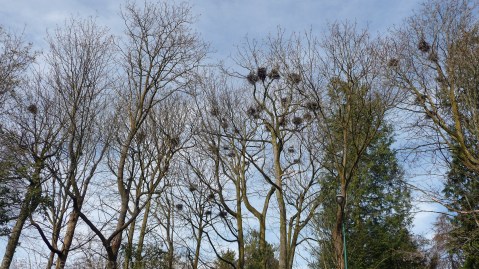
A sure sign of spring for me ― even more than crocuses or cherry blossoms in bloom ― is when the Pacific Great Blue Herons return to Stanley Park. They arrived a few weeks ago. This is the thirteenth consecutive year they’re nesting in what is one of the largest urban Great Blue Heron colonies in North America. Last year, the Stanley Park heronry hosted 86 mating pairs, which produced 169 fledglings.
The heronry is fenced off to keep people from walking beneath the nests, and metal flashing placed around the base of the trees keeps the raccoons from climbing the trees. The eggs are at risk from bald eagles, though, which also live in the park.
The Pacific Great Blue Heron is the largest heron native to North America.

Through My Lens: Feed the Birds

I love the Italian word for “child” — bambino. And I love how the Italian language makes an ordinary pigeon sound so … well … unordinary with a word like piccione (say: pee-CHOH-nay).
We’re still in Piazza San Marco. Still people-watching.
Snowy Owls at Boundary Bay
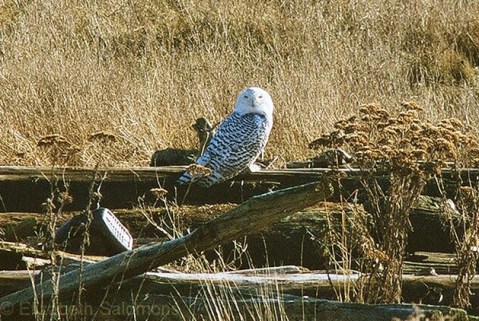
One sunny afternoon a couple of week ago, I headed down to Boundary Bay with my camera. A colony of Snowy Owls has taken up residence on the shores of the bay this winter. They got a lot of media attention when they arrived last December, and I wanted to see them for myself.
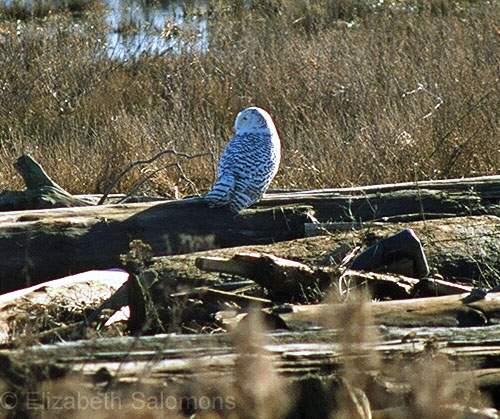
Apparently the owls make a regular appearance on the bay every four or five years. Their migration from their home north of 60° to all points south is linked to the lemming population, which makes up 90 percent of their diet. When the lemming population declines, the snowies head south.
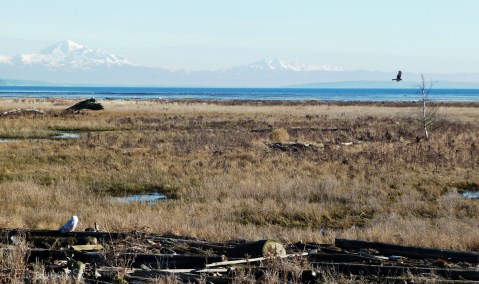
The last time they were seen at Boundary Bay was in 2007.
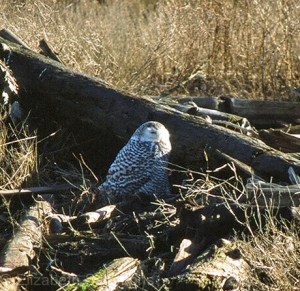 This year, however, the Snowy Owls migrated south in unprecedented numbers. Scientists think the large migration is the result of an abundance of lemmings during the last breeding season, encouraging a one-year “chick boom.” Breeding pairs raised as many as seven chicks, when normally they raise only two.
But then, come winter, there were simply too many owls and not enough lemmings. Thousands of snowies, mostly young and male, have left the north in search of food; they’ve been seen as far south as Oklahoma.
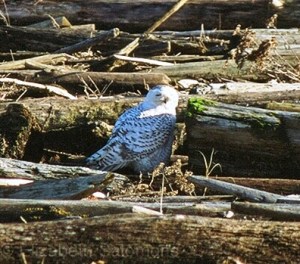 About 28 are at Boundary Bay, while many others have been spotted all over the Lower Mainland. I counted eight owls myself.
Snowy Owls are up to 70 cm tall and can have a wingspan of about 150 cm, making them one of the largest species of owls.
I haven’t been to Boundary Bay in, well, decades. I’d forgotten how beautiful it is.
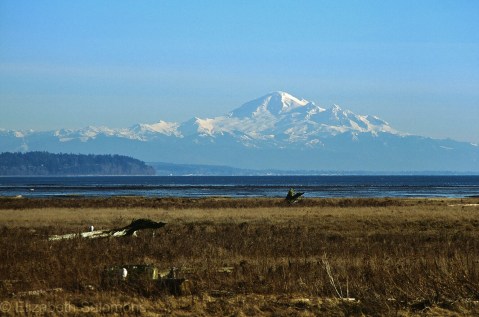
The bay is enclosed by Point Roberts, Washington, and Tsawwassen, BC, on the west; Blaine, Washington, and White Rock, BC, on the east; and Delta, BC, to the north.

It’s an important stop on the Pacific Flyway. I had no idea how serious some birders can be. There were fellows out there in full camouflage, with camera lenses as long as my arm. I wouldn’t have minded a longer lens myself, but, even so, it was a great photo opportunity and I intend to go back.


 There and Back Again