
Through My Lens: BC Ferries
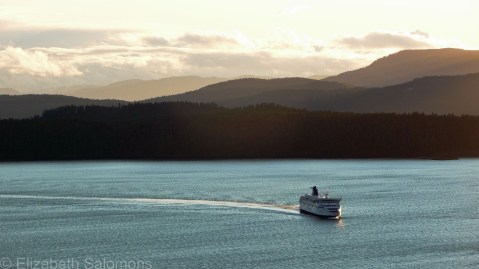
Nothing says “summer” to me like taking a ferry ride on BC Ferries. I spent last weekend island hopping as I visited friends on Salt Spring Island and Vancouver Island. This photo was taken from Galiano Island during another weekend of island hopping some months ago.
Through My Lens: Summer Sunset

Back in December, I posted a photo of a winter sunset over English Bay. At that time of year, the sun sets behind Point Grey ― that’s the land mass at the far left in this photo.
This time of year, the sun sets directly northwest of Stanley Park, behind Bowen Island. I took this photo about a week ago, one evening shortly before 9 p.m.
Engine No. 374
There is an amazing piece of Canadian history not far from where I live.
It’s Engine No. 374. Engine No. 374 is the locomotive that pulled the first transcontinental train across Canada ― from the Atlantic all the way to the Pacific ― arriving in Vancouver on May 23, 1887.
I have to admit I get a little thrill every time I walk by Engine No. 374. It’s the history geek in me.
British Columbia is a part of Canada because of the railway. The young colony joined Confederation in 1871 after Sir John A. Macdonald, our esteemed first prime minister, promised to build a railway to connect it to the rest of Canada. That was quite a promise; even more amazing was that Sir John A. said it would be done within ten years.
It took fourteen, but it got done ― an incredible engineering feat for a country not yet two decades old. There was a political scandal, which brought down the government, and there was a rebellion. But eventually, on November 7, 1885, the two ends of the railway met somewhere in the middle of BC’s Interior.
All that is now part of Canada’s national myth. Myths are great, and necessary, to a national identity. And that is why, when I walk by Engine No. 374, I get a little thrill.
I also love the romanticism of trains. Great stories begin on trains. It used to be that new Canadians began their lives in Canada by crossing the country by train. My ancestors did. And I, many years ago, travelled across Canada by train because I’d decided I needed to do it at least once in order to truly understand this vast and varied country of ours. When I finally disembarked in Quebec City after five days of coach travel from Vancouver, the conductor remarked that I had become part of the furniture.
The most surreal moment of that trip, however, was when I and the fellow who sat down across from me after boarding the train in Sudbury recognized each other, and it took us to North Bay to figure out where from. We finally put it together that we had met a couple of years earlier at the youth hostel in Baden-Baden, Germany, and then bumped into each other a few weeks later in the Venice train station, and yet again a few weeks after that in the middle of some demonstration in the centre of Athens. (Yes, the Greeks were already demonstrating back in the 1980s.) We were both criss-crossing Europe by train at the time. Great stories begin on trains.
Engine No. 374 was built by Canadian Pacific Railway in Montreal in 1886. It was completely rebuilt in 1914, and then continued in active use until 1945. After sitting at Kitsilano Beach for almost forty years, it was restored and put on display for Expo 86. Today it stands in a glass pavilion that is part of the Roundhouse Community Centre in Yaletown.
When I was taking the photos for this post, the volunteer working at the pavilion wouldn’t leave my elbow. As I knelt down to get a shot, he told me that once a year, on the Sunday closest to May 23, Engine No. 374 is taken out of its glass pavilion and moved into Turntable Plaza.
Now that’s a thrill this history geek won’t want to miss.
Dishing: ensemble
Update: ensemble closed in August 2012.
 A number of months ago, my friends took me out to celebrate my turning another year older and (this is debatable) another year wiser. I chose ensemble for the event ― it’s yet another new place on the north-east corner of Thurlow and Smithe in downtown Vancouver that has seen a high turnover of restaurants over the past few years.
  But, more than a year after its opening in May 2011, it looks like ensemble is here to stay. The executive chef is Dale MacKay, winner of Top Chef Canada Season 1, and one reason, in addition to the reviews I had read, why I chose this particular restaurant. I was curious if the judges at Top Chef Canada knew what they were doing when they gave MacKay the top prize.
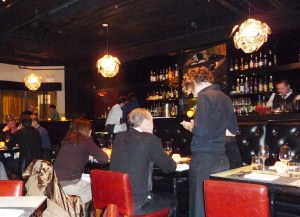
Two of my friends were waiting for me when I arrived; we ordered cocktails while we waited for our fourth companion, who finally showed up 45 minutes later. But, despite the busy room, there was absolutely no rushing us on the part of our server. The atmosphere was lively ― a perfect venue for a birthday party and for four boisterous, laughing friends who were in the mood to make a lot of noise.
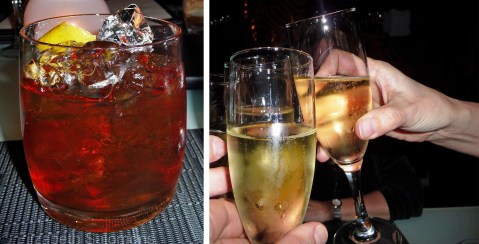
Like many of Vancouver’s fine dining establishments, ensemble characterizes its food as “Contemporary French meets West Coast.” All of the dishes are tapa-sized, and we opted for the four-course tasting menu with wine pairings.
First up was a Dungeness crab crêpe with pineapple, daikon, and avocado. This appetizer was picture-perfect, served cold, fresh, and crisp, and the pineapple gave it the smallest hint of sweetness. I absolutely loved the wine choice: a bubbly Spanish cava.

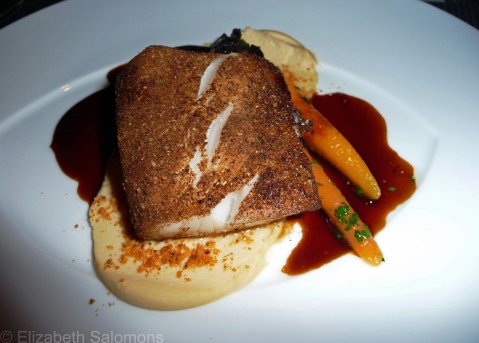
The second course was Moroccan spiced black cod, with chick peas, cashews, and black trumpet mushrooms. I’ve never had cod so delicate and light. The black trumpet mushrooms were the perfect accompaniment, as was the 2010 Pinot Gris from Penticton’s Poplar Grove winery.
The meat course was beef shin and fries, with watercress and a carrot purée, paired with the 2011 Enrique “Icque” Foster Malbec. Like the cod before it, the beef was melt-in-the-mouth quality. I’ve often eaten steak et frites in France, but have to admit that I’ve never been overly impressed with French frites. The fries that accompanied the beef shin, on the other hand, were the best any of us had had in a very long time.

To finish: chocolate fondant with hazelnut-nougatine ice cream. Chocolate fondant was a new experience for me and I loved it. Its soft pudding-like centre reminded me of a dessert a long-ago roommate used to make, with the rather ordinary name of Brownie Pudding.

In honour of my birthday, I was also presented with a cone of piping-hot sugar-dusted madeleines, which I gladly shared. For the dessert wine, we returned to the Old World with a glass of Broadbent Madeira.

By the end of the evening, both my appetite and curiosity were sated. Dale MacKay is certainly a Top Chef, and my friends and I were so impressed with our first experience at ensemble that I am sure we will be back.

Chinatown
Last week, my dad and stepmom were in town, and my stepmom told me she wanted to go for Chinese in Chinatown. That was easy enough to arrange: there are oodles of restaurants in Vancouver’s Chinatown, one of the oldest and largest Chinatowns in Canada.
Afterwards I took them past the Millennium Gate. It was built in 2002 and serves as the unofficial entrance to Vancouver’s Chinatown, which was declared a National Historic Site in 2010.
There’s an awful lot of history in Chinatown to explore and to write about. For now, I’ll leave you with this photo of the Millennium Gate, and the promise of more posts to come.
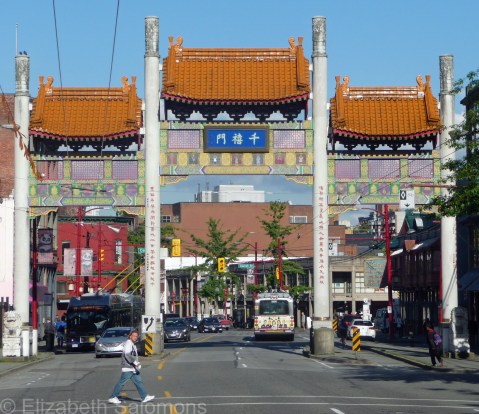
Millennium Gate, Chinatown
Through My Lens: Cherry Blossom Time
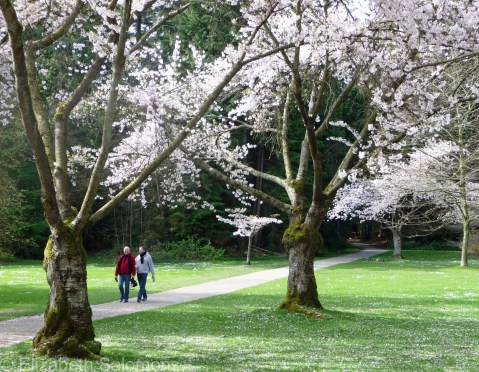 Vancouver has almost 40,000 cherry trees that burst into bloom every March and April. It’s my favourite time of year.
Spring Break in Whistler
One of my best friends, a school teacher from Toronto, decided to spend this year’s spring break with me in Vancouver. She played tourist in the city while I worked, but then, mid-week, we set off to Whistler for a mini-break.
One of the best things about living in Vancouver is how easy it is to get out of Vancouver. I often take my out-of-town guests to Whistler for the day. Lunching in Whistler, I call it.
Whistler is a beautiful two-hour drive from Vancouver along the Sea to Sky Highway ― perhaps one of the most scenic drives in Canada. A couple of years ago, one of the friends I took Lunching in Whistler was so overwhelmed by the beauty on the drive up, she was speechless. You’d recognize the scenery even if you’ve never been to British Columbia ― many a car commercial has been filmed on this highway dramatically juxtaposed between mountain and ocean.
This time, I suggested to my friend that we do some skiing and stay over. Although many of my friends drive up to the resort for a day’s skiing and return home the same night, I thought it would be nice if we were able to relax after a day on the mountain instead of driving back to Vancouver the same night.
And I’m so glad we did.
We arrived on a Tuesday afternoon in the middle of a snowstorm. We skied Wednesday, with snow lightly falling around us most of the day. A Texan we met on the gondola said it hadn’t stopped snowing since he arrived the previous Sunday. After our return to Vancouver on Thursday, we happened to catch a story on the local evening news in which another Texan (or the same one, perhaps??) told the reporter that he had come to Whistler as there was no snow at the American ski resorts this winter.
Whistler Village was a Winter Wonderland that met all our expectations. Here, take a look.


Art Talk: Fred Herzog
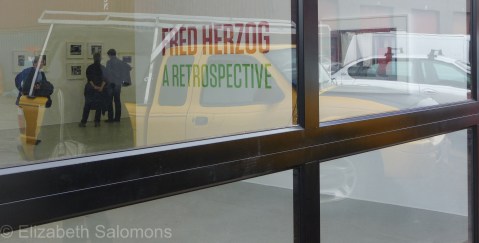
One of the most interesting photo exhibitions I’ve seen in a long, long while is the inaugural show at Vancouver’s Equinox Gallery Project Space. On display until March 31, Fred Herzog: A Retrospective showcases the work of a Vancouver-based street photographer who has become well-known only in the past five years or so.
Fred Herzog immigrated to Canada from Germany in 1952. He worked mainly with slide film (Kodachrome), which, until recently, was expensive and difficult to create prints from. He also shot in colour at a time when fine art photographers were shooting in black and white. As a result, his work wasn’t taken seriously for many years.
The first retrospective of Fred Herzog’s work was in 2007 at the Vancouver Art Gallery, which is when I first discovered his images. His body of work ― some 100,000 photos ― is an incredible photographic record of Vancouver’s social history from 1950s to the 1970s. Those of my readers who live in Vancouver: do not miss this exhibition.
Dishing: Market
My second Dine Out outing of 2012 was to Market with my Book Club. Market is a Jean Georges restaurant at the Shangri-La Hotel, Vancouver’s newest luxury hotel and, since its completion in 2009, the tallest building in the city.
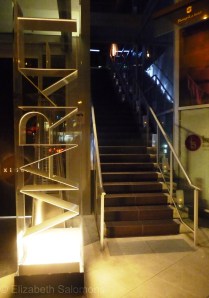
I first went to Market about a year ago with my sister. We were celebrating our birthdays and on that night enjoyed a sublime six-course tasting menu. It took us several hours to eat our way through the meal, but we enjoyed it immensely and appreciated the effort and time our server took to explain the rationale behind the wine pairing chosen to accompany each course.
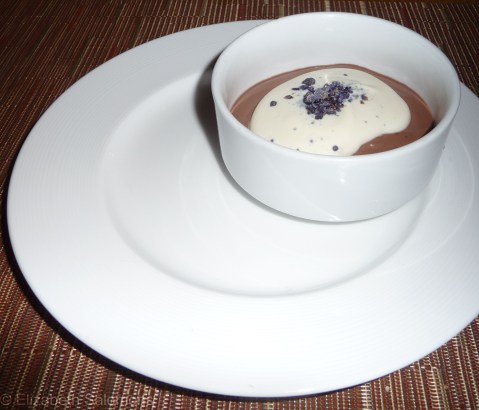
Market’s Dine Out menu offered a choice between two items for each course. I started with a roasted carrot and avocado salad with sour cream, citrus, and seeds. The carrots were slender and deliciously crunchy, cooked just long enough to not be raw. For my entrée, I choose the fish: slow-cooked snapper on a bed of sautéed spinach with a sweet garlic lemon broth. The lemongrass in the broth totally made this dish. Dessert was chocolate pudding with a light, foamy dollop of whipped cream, topped with candied violets. Can one ever go wrong with chocolate pudding? I think not.

Being Book Club, my friends and I chatted long after our coffees were gone about every topic under the sun except the book we had read. There was absolutely no rush on the part of our server to get us to leave, despite the crowded room, which was thanks to the draw of Dine Out. A most enjoyable evening; I highly recommend Market during Dine Out … or on any night of the year.

Snowy Owls at Boundary Bay
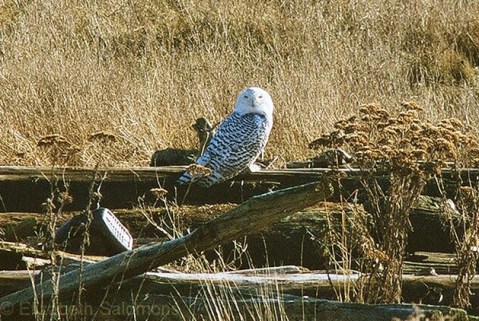
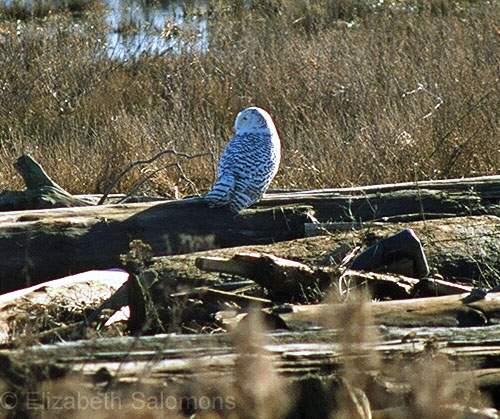
One sunny afternoon a couple of week ago, I headed down to Boundary Bay with my camera. A colony of Snowy Owls has taken up residence on the shores of the bay this winter. They got a lot of media attention when they arrived last December, and I wanted to see them for myself.
Apparently the owls make a regular appearance on the bay every four or five years. Their migration from their home north of 60° to all points south is linked to the lemming population, which makes up 90 percent of their diet. When the lemming population declines, the snowies head south.
The last time they were seen at Boundary Bay was in 2007.
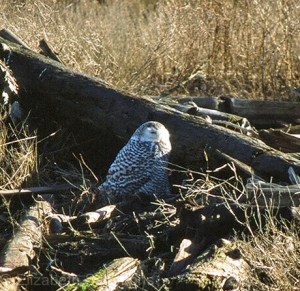 This year, however, the Snowy Owls migrated south in unprecedented numbers. Scientists think the large migration is the result of an abundance of lemmings during the last breeding season, encouraging a one-year “chick boom.” Breeding pairs raised as many as seven chicks, when normally they raise only two.
But then, come winter, there were simply too many owls and not enough lemmings. Thousands of snowies, mostly young and male, have left the north in search of food; they’ve been seen as far south as Oklahoma.
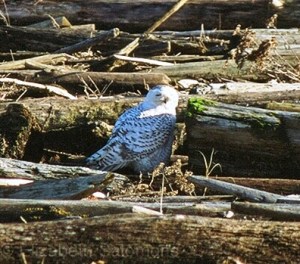 About 28 are at Boundary Bay, while many others have been spotted all over the Lower Mainland. I counted eight owls myself.
Snowy Owls are up to 70 cm tall and can have a wingspan of about 150 cm, making them one of the largest species of owls.
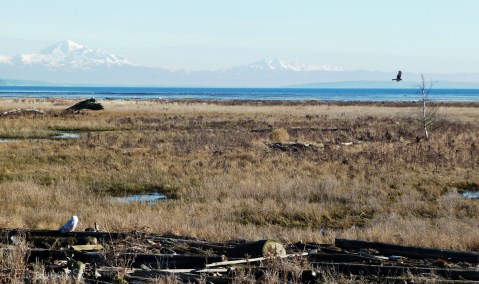
I haven’t been to Boundary Bay in, well, decades. I’d forgotten how beautiful it is.
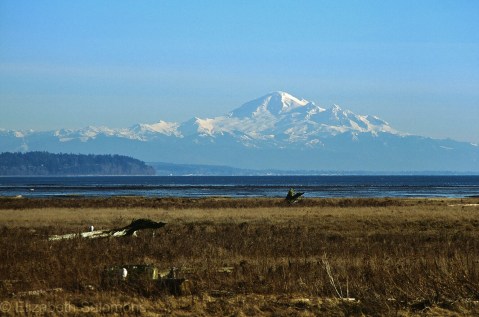
The bay is enclosed by Point Roberts, Washington, and Tsawwassen, BC, on the west; Blaine, Washington, and White Rock, BC, on the east; and Delta, BC, to the north.

It’s an important stop on the Pacific Flyway. I had no idea how serious some birders can be. There were fellows out there in full camouflage, with camera lenses as long as my arm. I wouldn’t have minded a longer lens myself, but, even so, it was a great photo opportunity and I intend to go back.


 There and Back Again