
Northern Shoveller
One bonus about summer being over is that it means there are only a few more weeks to go until the return of the winter birds. I haven’t seen any sign of them yet, but they’ll be here soon and are most welcome.
This is a Northern Shoveller, one of the dabbling ducks that like to hang out at Lost Lagoon. I myself haven’t seen them that often, but that might be because I first mistook them for the much more common Mallards. From a distance, their colouring looks quite similar. Upon closer inspection, the beaks are longer than a mallard’s and are a noticeably different colour.

Pileated Woodpecker
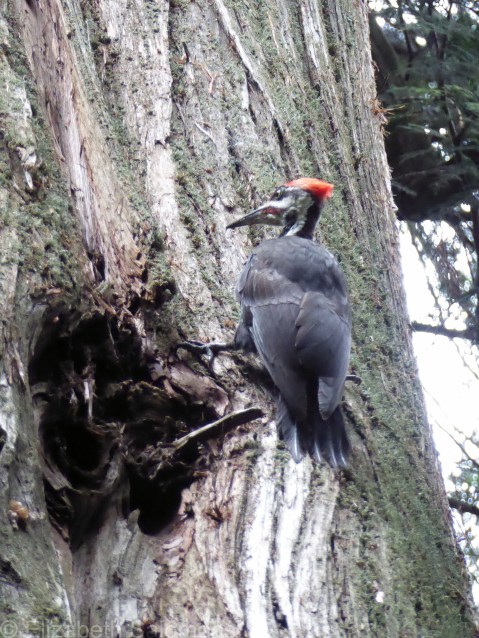
Here’s someone I met on one of my walks through Stanley Park this month.
This is a Pileated Woodpecker, the largest (about the size of a crow) of the four species of woodpeckers found in the park. This particular woodpecker loves forests and the best way to find him is to look up.
Way up.
Check out that grip.

Common Merganser
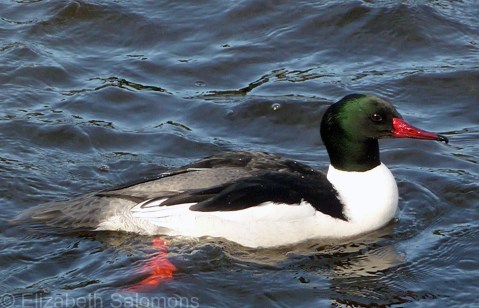
I started this month with photos of a pair of Hooded Mergansers and I’m going to finish the month with photos of Common Mergansers.
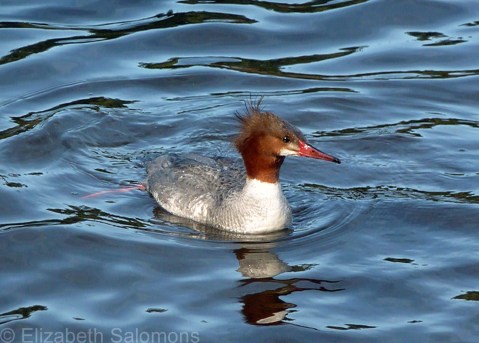
Of all the ducks that overwinter in Stanley Park, these two are what I like to call the Odd Couple. He looks so dignified with his tuxedo look, and she ― well, her crazed hair style always makes me laugh.
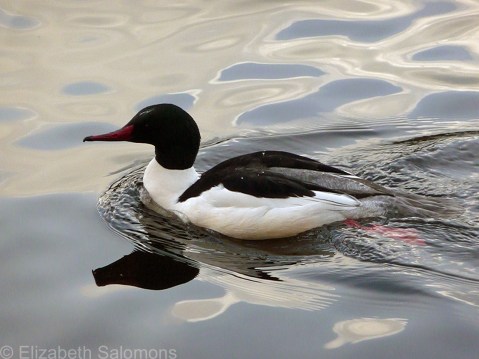
Hooded Merganser
In honour of Vancouver Bird Week (who knew we had such a week?), which started today and ends next Saturday, here are my photos of some Hooded Mergansers I found at Lost Lagoon in Stanley Park.
This is the male, much more colourful than the female, as usual.

And this is the female.

Missing Stanley

Oh, who am I kidding?
I’m no suburbanite.
Walking through Deer Lake Park while I’m hanging out in Solo is all well and fine, but I couldn’t wait to get back to my own urban park. (That would be Stanley.) I even felt a pang while crossing the Lion’s Gate Bridge the other day on my way back from snowshoeing with a friend. I looked at the wide expanse of Stanley Park from high above Burrard Inlet and said, “Ohhhh, I miss my park!”
What I like best about “my” park is how I can fit a walk through it in between errands. Like today. I returned some library books, headed over to Lost Lagoon to say hello to the ducks and to check if the river otters were out (they were), walked back along the beach, picked up a few groceries, went to the post office, and then came home.
And what did I see on that walk?
(What didn’t I see?)
Lots and lots of trees. The beach.
Ducks (including mallards, Wood Ducks, American Wigeons, American Coots, Common Mergansers, and Lesser Scaups), Canada Geese, a couple of Spotted Towhees, the above-mentioned river otters, and a raccoon.
And that was a short walk.
Oh. And, um, daffodils.
In full bloom.
American Wigeon

This handsome fellow is an American Wigeon ― another water fowl that is already settled in for the winter at Stanley Park. The male ducks are identified by their white foreheads and the patch of green behind the eyes. I see these dabbling ducks most often in Lost Lagoon, but have also noticed them foraging close to the seawall in both English Bay and Burrard Inlet.
Wood Duck

A couple of years ago when I wasn’t working much and had time to spare, I helped my brother out by taking his one-year-old daughter for the day every couple of weeks or so. My home isn’t set up for napping toddlers and so, after lunch, we’d go for a long walk in her stroller. We both got some fresh air, and she got a decent nap.
Invariably on those afternoons, I took my niece to Lost Lagoon to see the ducks. That’s when I first noticed the incredible variety of duck species in Stanley Park ― something I had never paid attention to before. At the time, I thought it was due to the spring migration.
Fast forward a couple of years to my Florida holiday, which is when I first began to think there might be something to this birding business. I mean, hey, birding involves three things I absolutely adore: the outdoors, photography, and (oh yeah, baby) lists.
After that Florida trip, I began to pay more attention to the birds in Stanley Park. I discovered that English Bay and Burrard Inlet (aka my backyard) is an IBA (Important Bird Area). I also discovered that the ducks I noticed during the long walks with my niece weren’t in the midst of their spring migration, but actually spend the entire winter in Stanley Park.
In short: the best time to go birding in Vancouver is during the winter months.
And so, another sign that fall is well and truly here is the return of our wintering water fowl to Stanley Park. I saw my first Wood Duck of the season last week when I was ambling around Beaver Lake.
Of all the ducks that spend their winters in Stanley Park, the Wood Duck is the prettiest of them all, thanks to its vibrant colours and markings. Unlike most ducks, Wood Ducks like to hang out near wooded areas, which is why the best place to spot them in the park is along the brushy perimeters of Beaver Lake and Lost Lagoon.
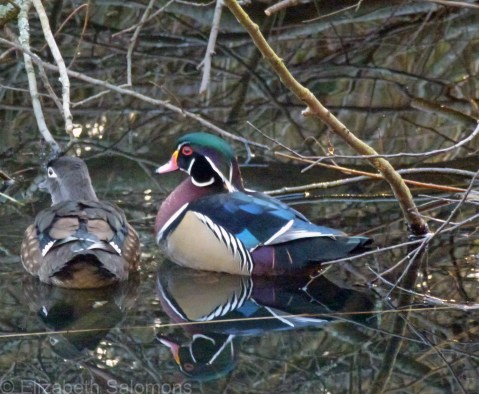
I don’t take my niece to see the ducks at Lost Lagoon anymore; she outgrew her stroller, no longer needs a nap, and now lives in another province. But here’s a pro-tip from a novice birder: if you have the chance to explore Lost Lagoon during the winter, grab it. You’ll have it all to yourself, except for, you know, the other birders.
Through My Lens: Stanley Park in Fall
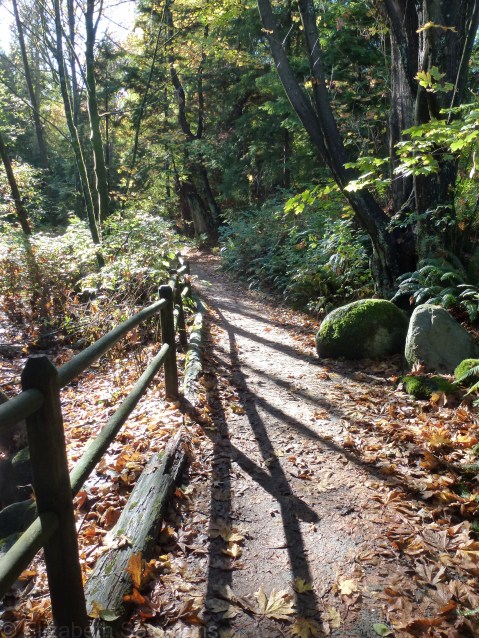
It’s well and truly fall again. Here is a photo I took this past week while walking through Stanley Park. The path is called Ravine Trail, and it gets you from the seawall by Burrard Inlet to Beaver Lake. I think it’s one of the prettiest walks in the park.
Through My Lens: Water Lily
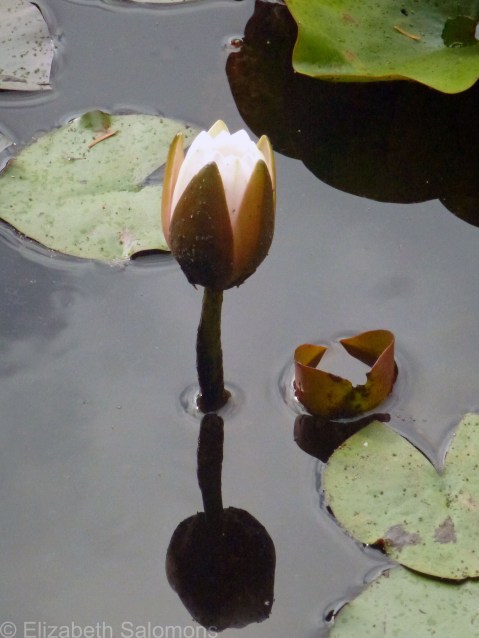
I took this photo of a water lily last weekend while walking around Stanley Park’s Beaver Lake with some friends.
As beautiful as they are, water lilies are threatening the lake’s biodiversity. Beaver Lake is slowing filling in with sediment, thanks in no small part to the fast-growing invasive species. Plans to dredge the lake are in the works.
Through My Lens: Foggy Lost Lagoon

I took this photo about a month ago at Lost Lagoon in Stanley Park. I was there specifically to photograph ducks. That takes patience, always, and concentration, sometimes, but my focus was interrupted by the fellow beside me.
“Did you see the Pied-billed Grebe?” he said, rather excitedly. I looked in the direction he was pointing and saw the duck.
And then, as we stood there, the fog rolled in in about the same amount of time as it took me to get my camera out of my pocket. I saw the shot (his Pied-billed Grebe was flanked by two Common Mergansers), took the photo, and then, well, I couldn’t help myself. I turned to him and said, “I can’t believe I get to live here!”
He smiled.
“It’s a $10-billion dollar backyard,” he said.
That it is. But moments like those are priceless.


 There and Back Again