
Through My Lens: Ekklisia Christou
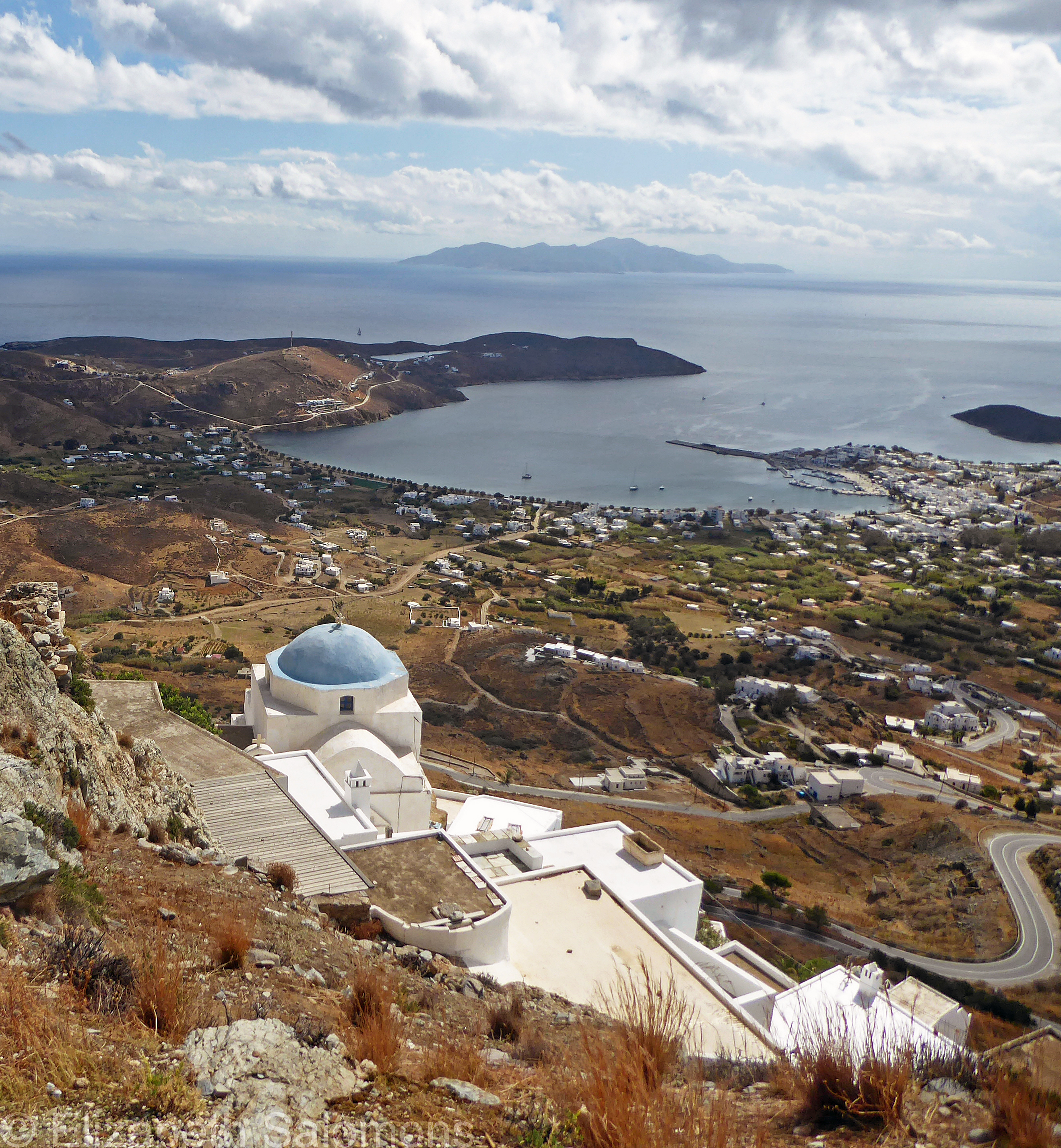
Ekklisia Christou (Church of Christ) is my photo choice for today, Palm Sunday. This small domed church is located just below Agios Konstantinos and to the right of Agia Varvara. Like all the churches at the top of the Chora, Ekklisia Christou gives you a fabulous panoramic view of Serifos and the Aegean Sea.
Through My Lens: Agia Varvara
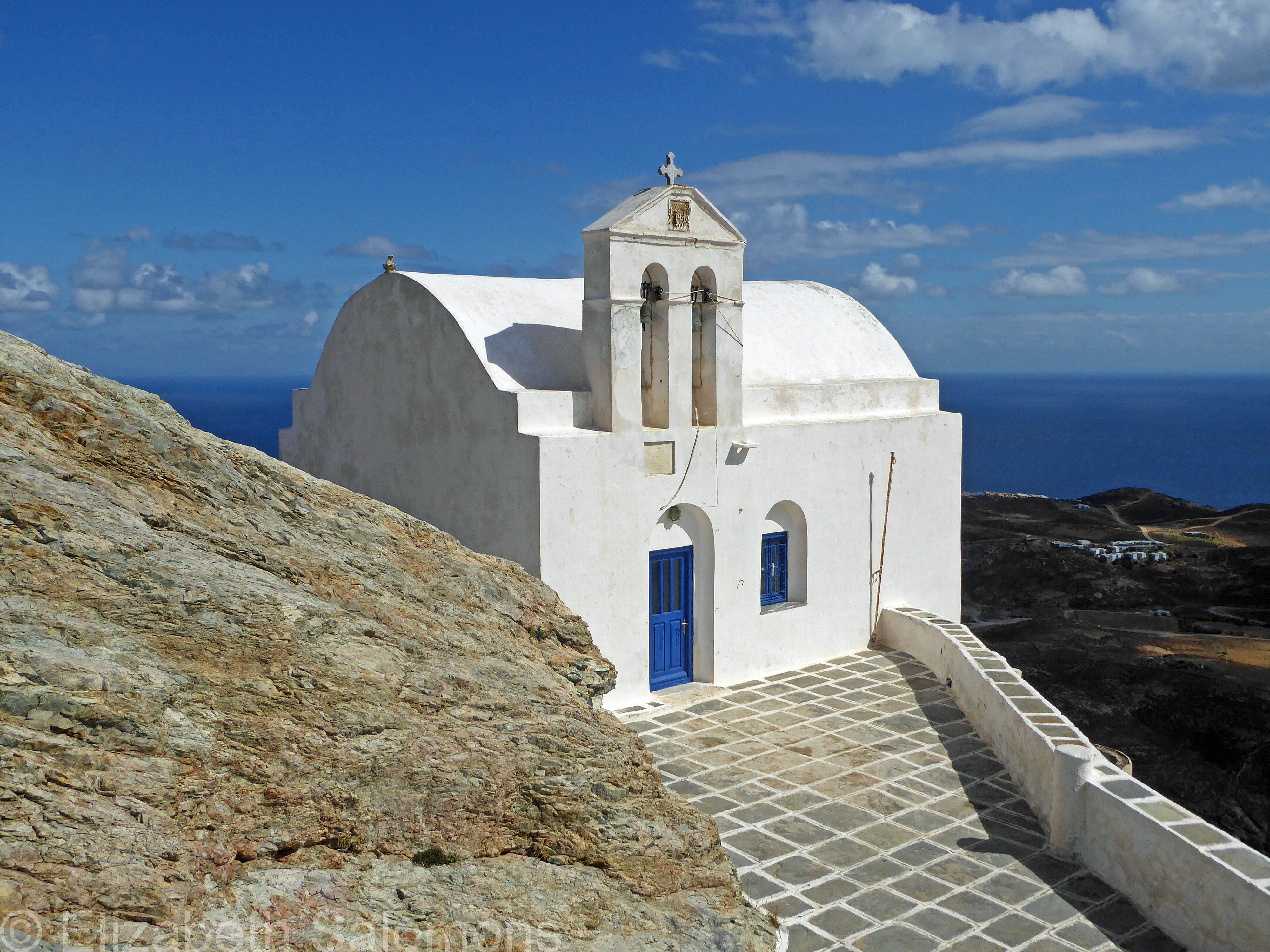
For today, the Fifth Sunday of Lent, here is a photo of the church of Agia Varvara (Saint Barbara). You come to it when you keep walking down the steps from where I took last week’s photo. It was built in the post-Byzantine era and renovated in the late nineteenth century.
Saint Barbara lived in the third century CE and is the patron saint of anyone working with explosives, including miners. For that reason, she was considered the patron saint of Serifos, which has a history of mining going back to Roman times that continued until as recently as 1965.
Through My Lens: Agios Konstantinos From the Back
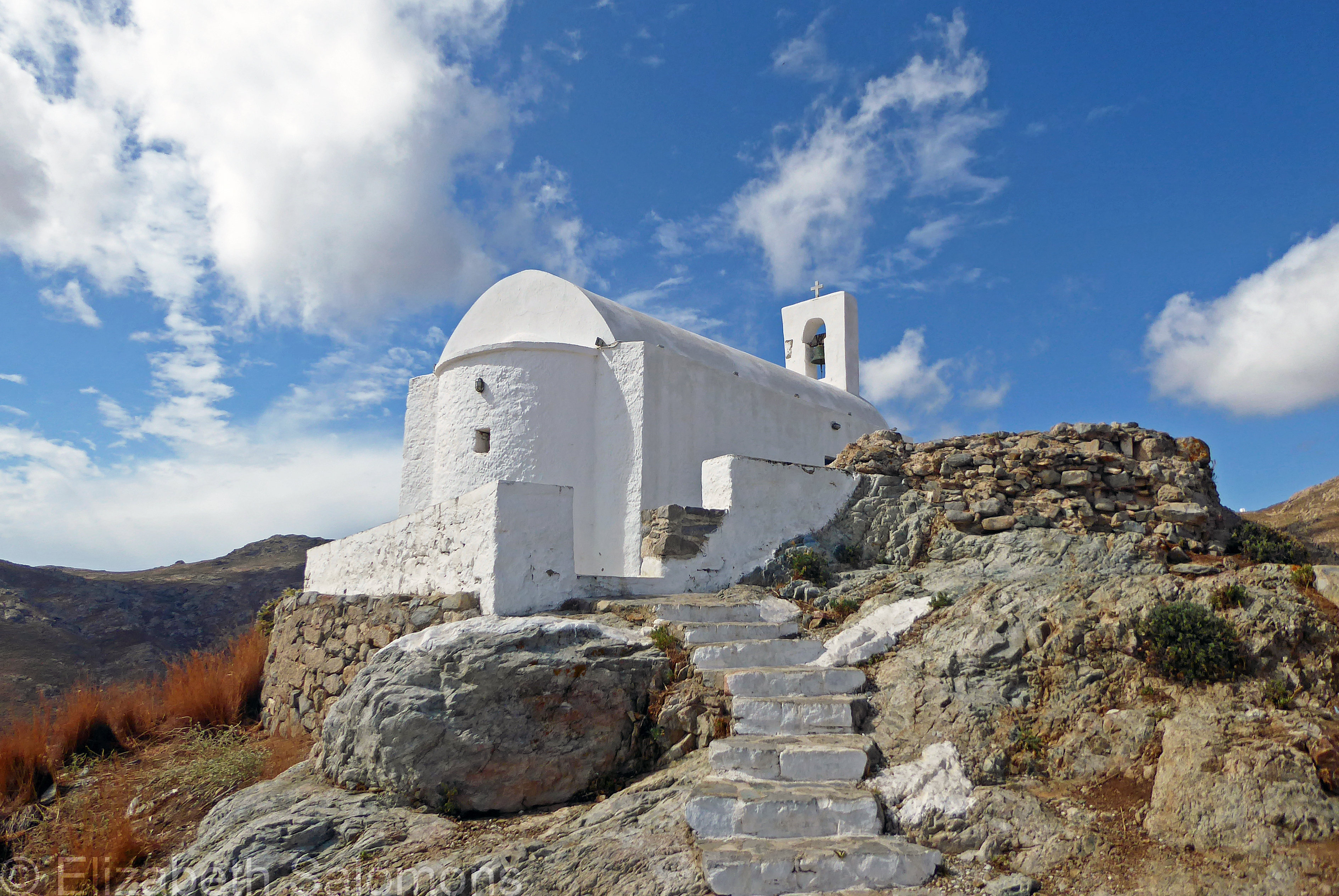
If you take a few steps from where I took last week’s photo, you have an excellent view of how the church of Agios Konstantinos was built on the ruins of the castle at the top of the Chora of Serifos. This view of Agios Konstantinos from the back is my photo choice for today, the Fourth Sunday of Lent.
Through My Lens: Agios Konstantinos

For the Third Sunday of Lent, I’m posting a photo of the church of Agios Konstantinos. This small chapel was built almost two hundred years ago on the ruins of the castle built by Venetian traders back in the fifteenth century. Its location at the highest point of the Chora, about 250 metres above sea level, makes it the best spot for a panoramic view over Serifos.
Agios Konstantinos (Saint Constantine), also known as Constantine the Great, was Emperor of Rome from 306 to 337 CE, founder of Constantinople (now called Istanbul), and the first Roman emperor to convert to Christianity. He is credited with stopping the persecution of Christians and making the Christian faith the dominant religion of the Roman Empire.
Through My Lens: Agios Athanasios
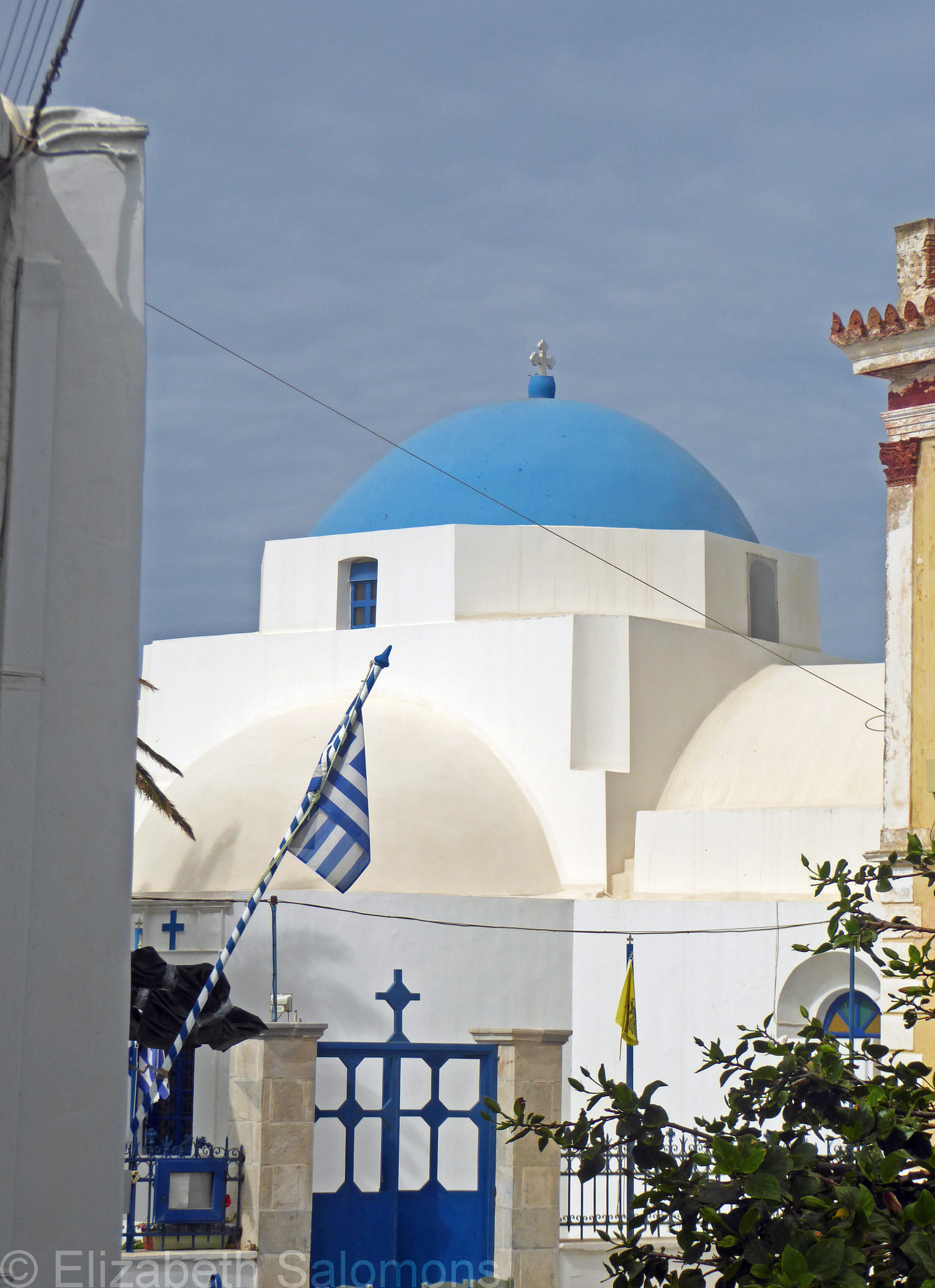
Even an island as small as Serifos has a cathedral and that would be this church, the Cathedral of Agios Athanasios. Agios Athanasios (Saint Athanasios) was the twentieth Patriarch of Alexandria and a key figure at the First Council of Nicaea held in 325.
Built in 1820, the cathedral is located in Pano Piatsa (the main square) of the Pano Chora and is my photo choice for today, the Second Sunday of Lent.
Through My Lens: Agios Sostis
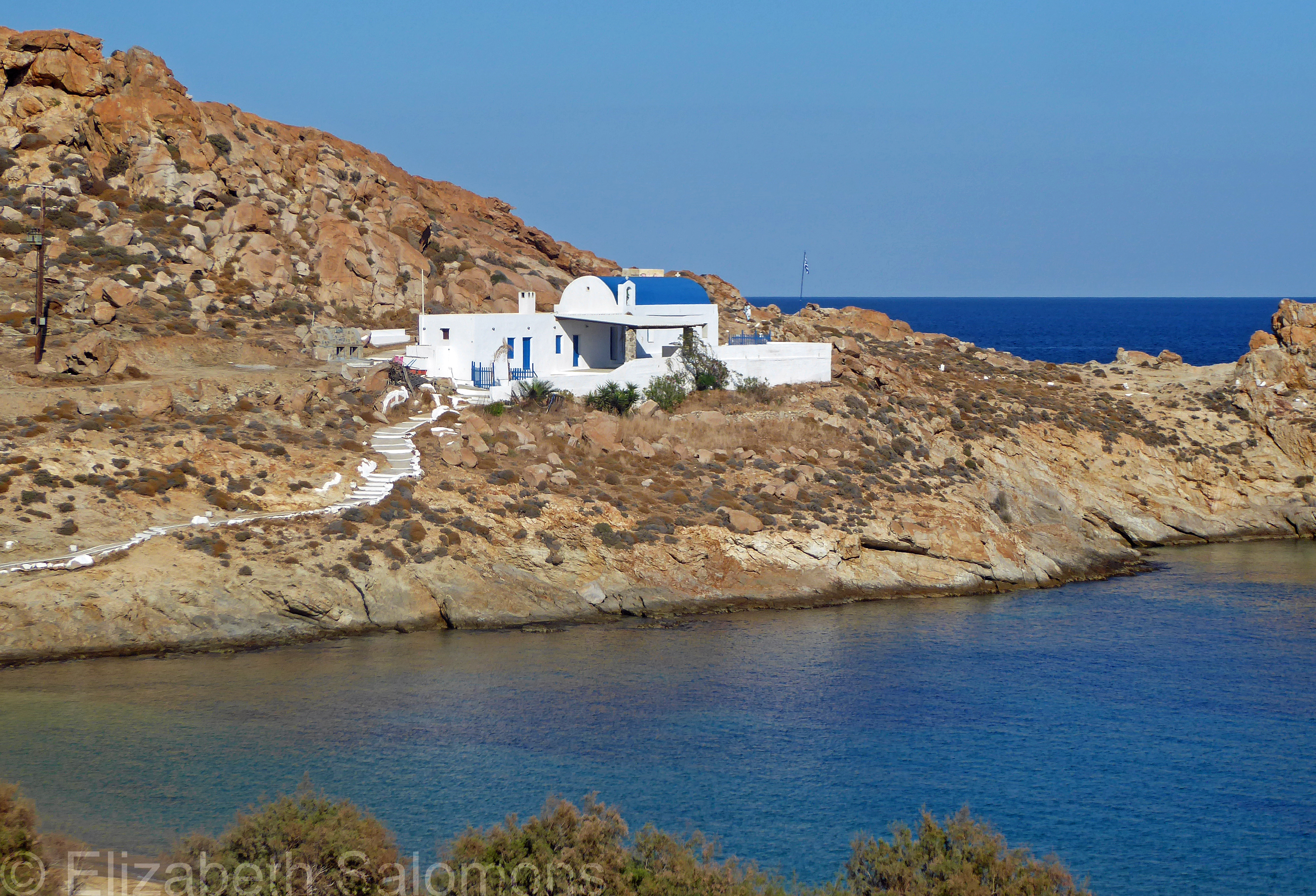
When I asked my home exchange friend if there were more beaches or churches on Serifos, she laughed.
“Oh, churches,” she said. “Definitely!”
And so, needless to say, this year’s Lenten series will be all about the churches of Serifos.
For today, the First Sunday of Lent, here is a photo of Agios Sostis, which is the name of both the church and the beach. I spent two delightful afternoons lying on this beach, looking at this church located on a headland jutting out into the Aegean Sea. My second time here, we lazily watched as a wedding party made its way up that pathway to the chapel.
Agios Sozon (Saint Sozon) is known in Greece as Sostis. Born a shepherd, he was martyred around 300 CE and is celebrated every year on September 7. He is revered as a protector of fishermen, sailors, and anyone who travels by sea.
Happy Easter!
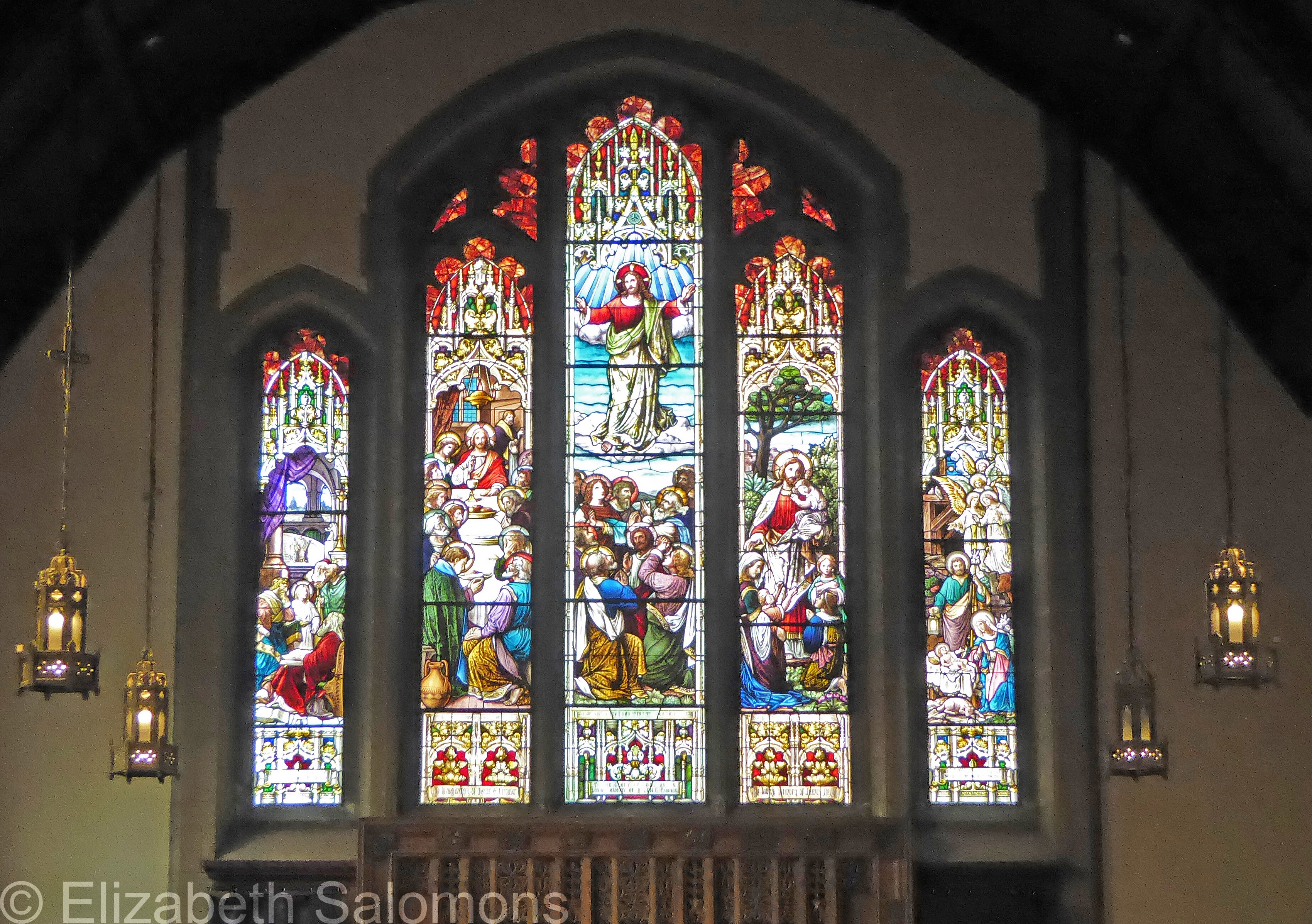
The Chancel Windows, Christ Church Cathedral, Vancouver, March 2025
Through My Lens: Christ Church Cathedral

Walk a few blocks down Burrard Street from First Baptist and St. Andrew’s-Wesley and you find yourself at the doors of Christ Church Cathedral. I’ve written about Vancouver’s Anglican cathedral before, on the occasion of its 125th birthday.
In the dozen years since, the Cathedral has put on a new roof with seismic upgrades; built a bell tower to house the four bronze bells that were cast for the Cathedral in Annecy, France; and upgraded and expanded the kitchen to better meet the needs of the Cathedral’s food ministry.
The new roof is nicely visible from this angle; the bell tower, not so much as it blends in completely with the building behind it.
Christ Church Cathedral is my photo choice for today, Palm Sunday.
Through My Lens: Central Presbyterian Church
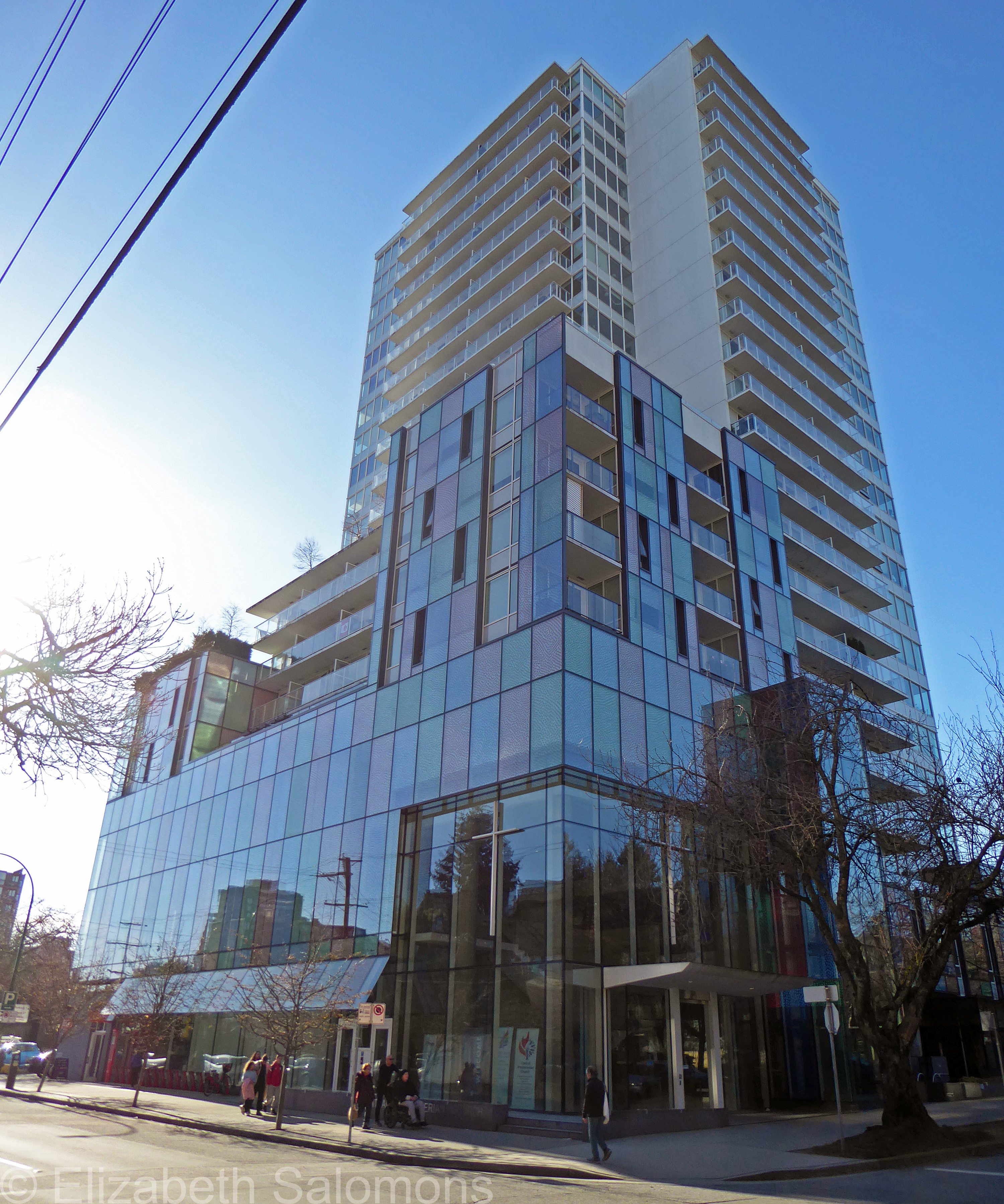
And now, for the Fifth Sunday of Lent, here’s something completely different.
This is Central Presbyterian Church. It doesn’t look like much of a church, does it? But that’s what I love about it.
The congregation has been active in the West End for more than 90 years and about a decade ago, they were coming to the realization that they were land rich, cash poor. Something had to be done with the aging building they’d been in for more than 35 years. It wasn’t by any stretch a heritage building — I would describe it as more of a concrete bunker, built in the Brutalist style that was in vogue at the time.
Central Presbyterian could have sold off their lot to a developer, but the congregation decided instead to go through the rezoning and development process themselves. This 23-storey building, completed in 2018, is the result.
There are retail and community spaces on the ground floor. Above that is a 300-seat sanctuary, a 50-seat chapel, other multi-purposes spaces, and a commercial kitchen. The tower consists of three floors of social housing and 15 floors of market rental housing. The income from those rental units funded the construction and now funds the social housing.
Several church communities in addition to Central Presbyterian worship in this building. There is also a daycare run by the YMCA.
All of that adds up to a congregation that takes its role as a community church quite literally.
Through My Lens: St. Andrew’s-Wesley United Church
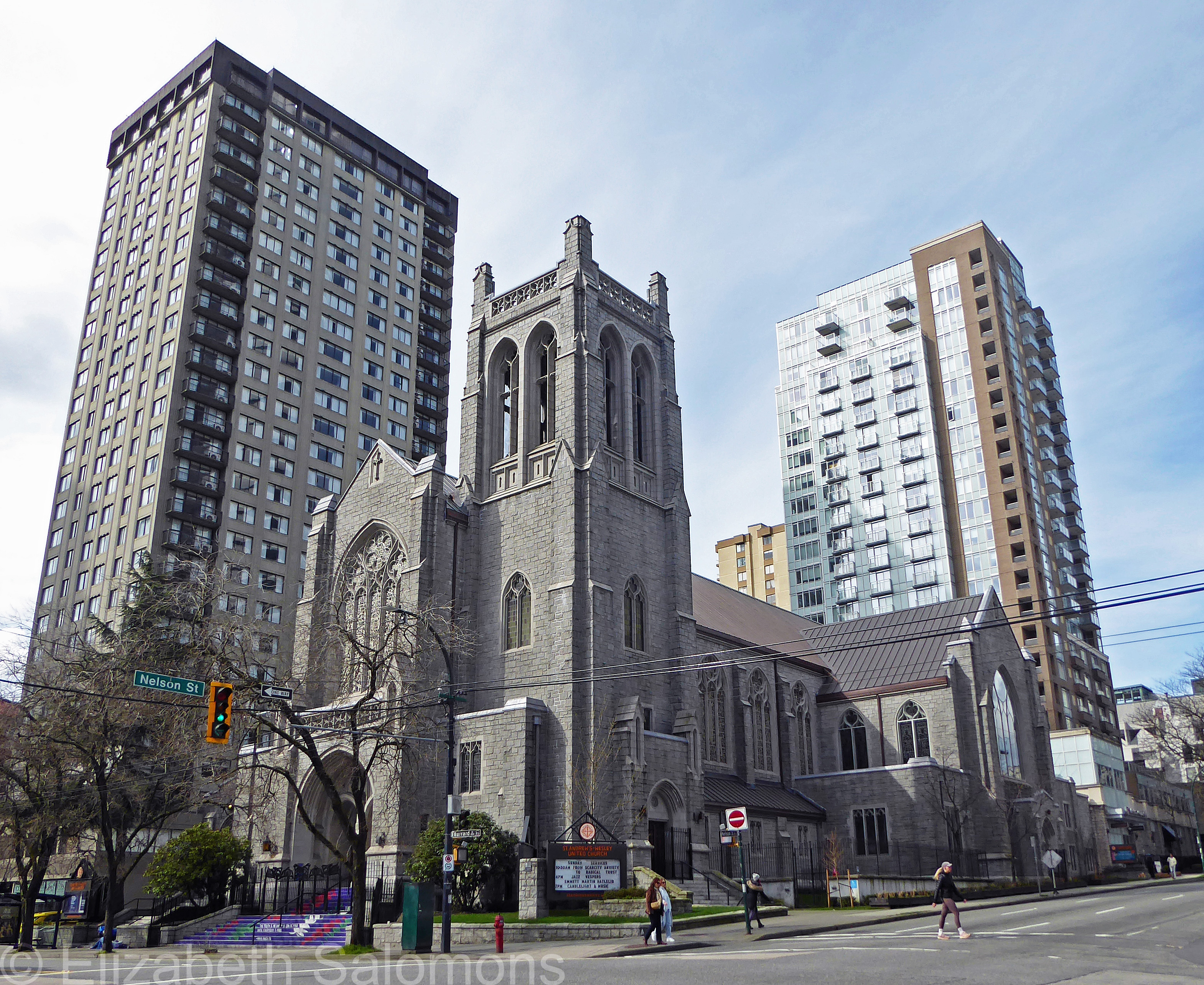
My photo choice for today, the Fourth Sunday of Lent, is St. Andrew’s-Wesley United Church. Located across the street from First Baptist Church, this building has been open for worship since 1933.
When the Methodists, the Presbyterians, and the Congregationalists came together in 1925 to form the United Church of Canada, two downtown congregations— Wesley Methodist on the southwest corner of Georgia and Burrard and St. Andrew’s Presbyterian on the northeast corner of Georgia and Richards—decided to come together as one congregation and jointly build a new church.
St. Andrew’s-Wesley is the result.
The late Gothic Revival building was built with Nelson Island granite and Haddington Island stone; inside, there is a vaulted timber ceiling. The first of the 27 Italian and French stained glass windows was commissioned by Prime Minister R. B. Bennett in memory of his sister, Evelyn Bennett Coats. Thanks to its excellent acoustics, the church is a popular venue for concerts. Jazz vespers takes place on Sunday afternoons and has done so for more than 30 years.
The 22-storey tower behind St. Andrew’s Wesley (at right in the photo) is St. Andrew’s Residence at Wesley Place. Income from the 200 rental units has funded various renovations of the main church building and provides income security for the dwindling congregation. The tower was completed in 2002 and was the largest development project ever taken on by the United Church anywhere in Canada.


 There and Back Again