
Gettysburg

As I was planning my trip around the Eastern Time Zone last summer, I knew that one of my must-sees was going to be Gettysburg. I’m a history geek, and my pre-trip research quickly led me to the conclusion that it would be worth the drive from Baltimore, where I was planning to spend the better part of a week.
And so, I booked a car rental, enlisted my sister as navigator, and off we went for a drive through the Pennsylvania countryside. Both of us came away rather impressed with what we saw and learned. Since this week was the 150th anniversary of the Battle of Gettysburg, I thought it would be a timely blog post for the Fourth of July.
There are a number of ways to tour Gettysburg National Military Park. We opted for the Self-Guiding Auto Tour, where you are supplied with a map showing the location of more than a dozen stops throughout the park, each one of which has a viewpoint and a marker explaining its significance. If you lack a capable navigator such as I had, the Visitor Center sells CDs you can pop into your car’s stereo system while you drive, or you can take a guided bus tour.
What you can’t do ― not in an afternoon, that is ― is tour the battlegrounds on foot. At 6000 acres, the park is massive and completely surrounds the town of Gettysburg.
Now, if history isn’t your thing, you should skip on to the photos at the end of this post. But if you want a little background, read on.
In June 1863, General Robert E. Lee was the commander of the Confederate Army of Northern Virginia. He’d spent most of the month moving his 93,000 soldiers north into Pennsylvania so they’d be in a position to push the Union forces out into the open and into battle. Once he decimated them (so he figured, based on his recent successes), it would bring about the end of the war.
The 75,000-strong Union Army of the Potomac shadowed Lee’s movements, but at a slower pace to make sure they were always in position to protect Washington DC from the Confederate forces. On June 28, 1863, General George G. Meade took command of the Army of the Potomac.
Both generals were angling for a favourable spot for a battle ― what is ironic about when they finally met is that the Confederate Army was moving south and the Union Army was moving north. Neither army was aiming for Gettysburg, either. But when Confederate soldiers chanced upon and were attacked by Union soldiers on July 1 ― an attack the Confederates successfully defended ― Lee realized if he acted fast he could fight the Union forces before they had finished assembling. He decided to use the chance meeting as an excuse to start a major battle.
By the morning of July 2, the Union forces had retreated from the northwest of Gettysburg, where the previous day’s fighting had occurred, to the southwest of Gettysburg. Despite their retreat, their position was good ― they occupied a series of hills and ridges in a semicircular position. The Confederate forces had no choice but to attack from below, which they did at both ends of the Union line. The Confederate forces gained a bit of ground, but losses were high and on the evening of July 2, the Union forces still occupied the high ground.
Because the Union forces had successfully repelled the Confederate attacks at either end of their line, Lee was convinced that Meade had concentrated his forces on his flanks. On July 3, Lee ordered an attack on the centre of the Union line, which he thought would be the weakest point.
The Confederate artillery fired on the Union position for several hours. The Union artillery answered back with its own volley, but eventually went quiet. Lee assumed the Union guns been knocked out. He ordered the advance of some 12,000 Confederate soldiers toward the 7000 waiting Union soldiers. This attack, which came to be known as Pickett’s Charge, required the Confederate forces to march across almost a mile of open ground. While they were in the open, Union artillery ― which had not been destroyed after all ― again took up their firing.
Union losses that day were about 1500 killed or wounded, but the Confederate casualty rate was much higher ― almost 50 percent. Total losses from both armies over the three-day battle was more than 50,000. Lee admitted defeat and began his retreat from Pennsylvania the next day. By the time Meade realized Lee was retreating all the way to Virginia, not merely heading back into the mountains, it was too late for him to catch up.
Most historians consider Gettysburg to be the turning point of the Civil War ― and the battle that saved the Union. Pickett’s Charge is called the High Water Mark of the Confederacy because it was the furthest line of advance made by the Confederate Army, but the Union victory at Gettysburg ensured that Lee’s invasion of the North was over.
If you’re still with me, all I want you to take from what I’ve written above is that it immediately becomes clear as you drive around Gettysburg Park what role the terrain this corner of Pennsylvania played in the outcome of the battle. The establishment of the park in 1895 (initially maintained by the War Department, now by the National Park Service) means that the entire battleground still looks, for the most part, as it did in 1863.
And so, you can see (just barely through the trees) the cupola of the Old Dorm of the Lutheran Theological Seminary, which provided a crucial observation post on the night of June 30 as the Union generals surveyed the landscape and chose where to place their troops. You can stand at the rocky summit of Little Round Top and imagine the fierce battle that took place on its slopes as Confederate soldiers tried to overtake it on July 2. You can survey from various viewpoints the hilly terrain that frames either side of the fields the Confederate soldiers marched across during Pickett’s Charge on the afternoon of July 3. And you can stand where the Confederate soldiers stood, and look across the same fields they looked across, and see the copse of trees where the Union soldiers were waiting for them.
And now, as promised, here is a photo tour of Gettysburg National Military Park. (Click on the first photo at top left to open the slide show.)


Central Park
I’m sure you are beginning to wonder if all I did in New York was explore its parks — and I assure you I did a whole lot more — but I have to finish this series of posts about New York parks with just one more. Then I will move on. Promise.
Central Park is the jewel of New York’s parks, and one of my favourite places in New York. Each time I visit the city, I make sure to save an afternoon to wander about the park.
At 843 acres and with a perimeter of six miles, it covers six percent of the island of Manhattan. There are 21 playgrounds, 36 bridges and arches, 9000 benches, and 24,000 trees. It opened in 1857, and is the most visited city park in the United States, with 38 million people visiting it every year. (That’s 38 million, folks. Every year.)
This year, I was one of them.
The High Line

The High Line is one of New York’s most unique parks. It’s an elevated park that runs along a former freight rail line. I missed its opening by a matter of weeks on my last visit to New York, and it was the park I was most excited to see on this visit to New York.
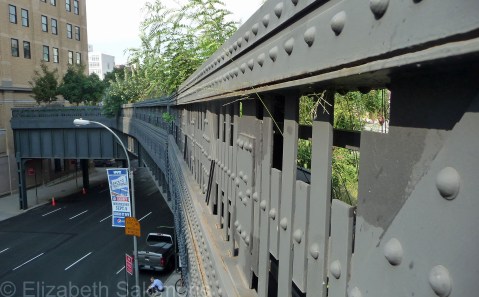
The original rail line was first built at street level, back in the 1850s, but as traffic increased, so did the number of accidents between street traffic and trains. It was made elevated in the 1930s to improve safety, and ran right through factories and warehouses to allow for easy delivery of the freight.

Rail traffic dropped after the 1950s, and stopped altogether in 1980. Part of the line was demolished.
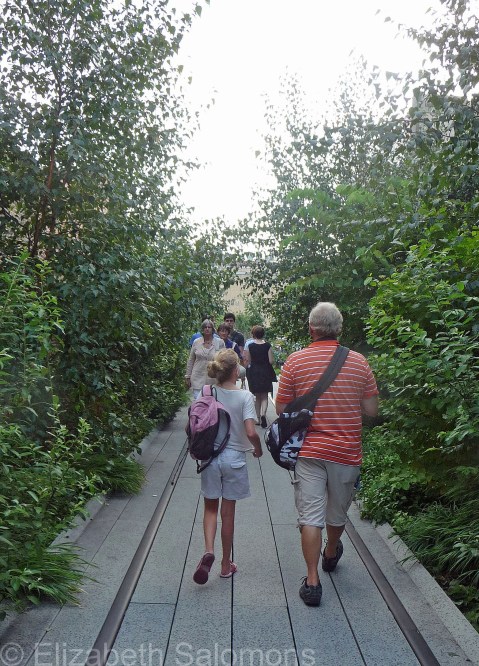
In 1999, Friends of the High Line was formed. The non-profit organization worked to prevent the demolition of the rest of the line and to turn it into a park. The first section opened in 2009.
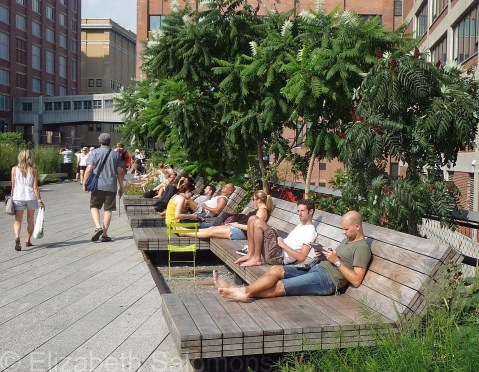
The High Line runs between 10th and 11th avenues from Gansevoort Street in the Meatpacking District, past Chelsea, up to West 30th Street, with stair and elevator access at various intervals.

There are plenty of places to sit.

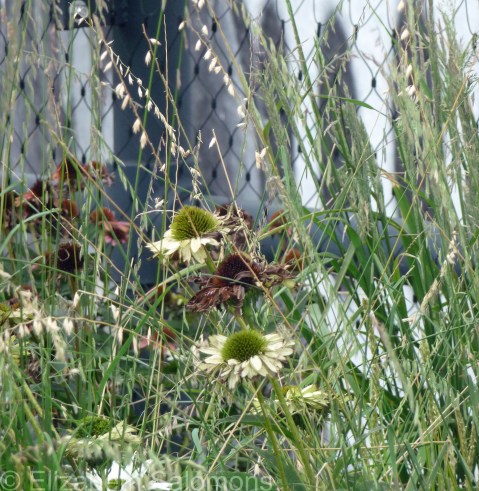
And lots of interesting vegetation, including many species that grew naturally along the rail line before its transformation into a park.
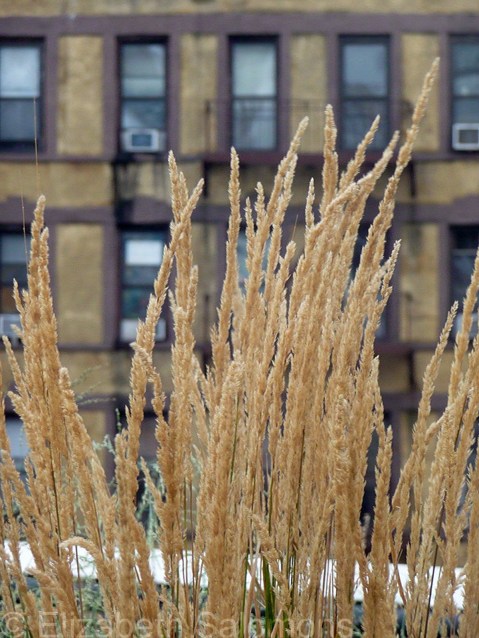
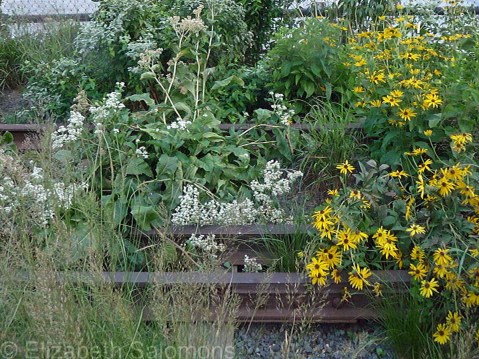
I spent two days exploring the High Line — one afternoon my friend and I met at the bottom end and worked our way north, and the second afternoon I started at the top end and walked to where we left off the previous time. And then we went back a third time to see it lit up at night. I know I will be back to visit next time I’m in New York.

Fort Tryon Park
On my third day in New York City, I discovered another of the city’s great parks: Fort Tryon Park. My friend and I went there to see The Cloisters (which I’ll write more about in another post), but also to meet up with some friends of my friend. They live near the park, which is in Washington Heights.
We enjoyed a picnic lunch and watched their children play. It was a lovely way to spend a summer afternoon in New York City.

New York dog walkers in Fort Tryon Park
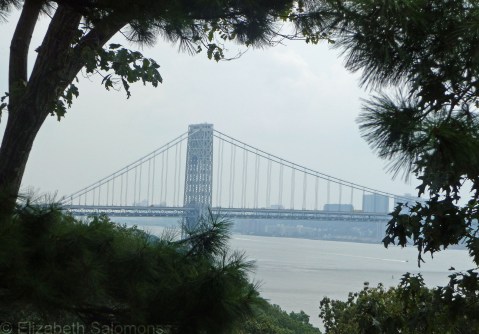
George Washington Bridge and the Hudson River from Fort Tryon Park
Battery Park
In my mind, cities have to have good parks to be livable. New York City has great parks. I’ve been here four days and have already wandered through five of them.
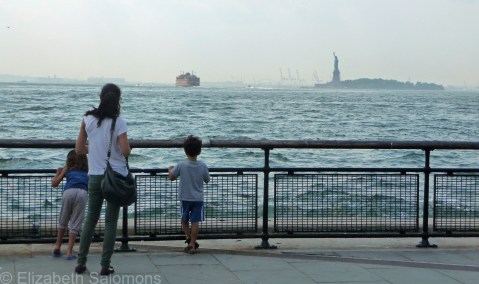
Last Thursday, I spent the morning exploring Battery Park, the 25-acre park that lies at the southern tip of Lower Manhattan. It looks west over the Hudson River towards New Jersey and south towards Liberty Island. I was facing south when I took these photos, and you can see the Statue of Liberty in the far distance.

Located in Battery Park is a poignant reminder of September 11, 2001. The Sphere is a piece of artwork by the German sculptor Fritz Koenig that used to stand at the base of the Twin Towers. Although damaged by the September 11 attacks, it remains intact and in March 2002 was temporarily placed in Battery Park, only blocks from the World Trade Center site, as a memorial.

Lower Manhattan is one giant construction site at the moment, what with the ongoing building of five skyscrapers at the World Trade Center site. But walking through Battery Park was a welcome respite from the noise and heat of the city. If done right, waterfront parks are special. Battery Park in Lower Manhattan is particularly special.
Deer Lake Park
The other day I wrote that, during my time hanging out in Solo, I’ve discovered a few of Burnaby’s treasures ― delightful treasures that redeem some of the annoying and ugly aspects of suburban living. Deer Lake Park is one such treasure.
A friend introduced me to Deer Lake Park one afternoon about a week ago. Her townhouse complex backs onto the 500-acre park, so you could say the park is right in her backyard. We walked a loop around the park and I took some photos of the lake. Here are a few of them.
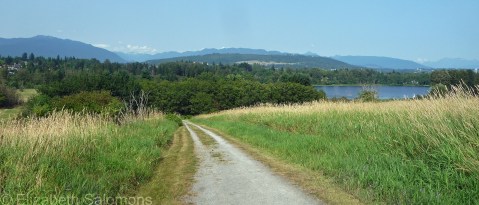
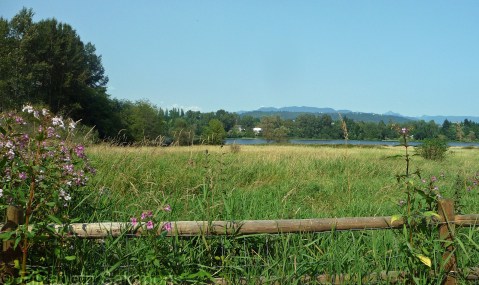

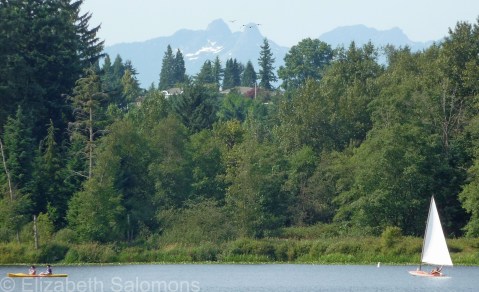
Deer Lake Park is a park for all seasons and I intend to come back to explore it some more.
Dr. Sun Yat-Sen Park
In the heart of Chinatown is one of Vancouver’s hidden gems: Dr. Sun Yat-Sen Classical Chinese Garden and Dr. Sun Yat-Sen Park. The garden was named the 2011 Best City Garden by National Geographic. The park (where these photos were taken) is an extension of the garden and has no admission fee. If you’re in the vicinity, be sure to stop in. It’s a peaceful break from the noise and bustle of Chinatown.
Through My Lens: Cherry Blossom Time
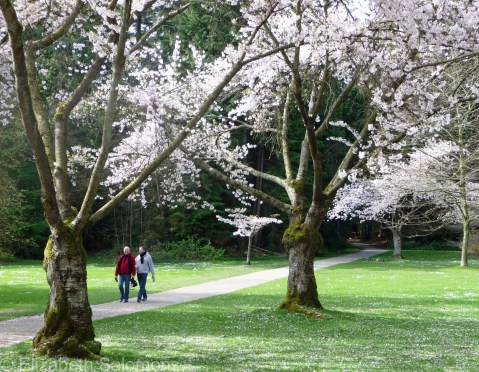 Vancouver has almost 40,000 cherry trees that burst into bloom every March and April. It’s my favourite time of year.
Through My Lens: Stanley Park in Winter
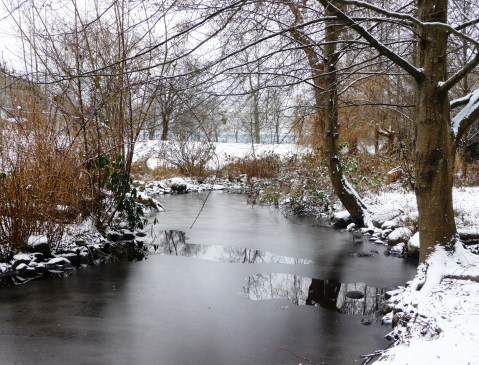
Vancouver received a blanket of snow this week. It doesn’t happen often and it never lasts long, but when it does, it’s awfully photogenic.


 There and Back Again