
Stellenbosch

If I had any doubts I was on the other side of the world when I arrived in South Africa near winter’s end almost five years ago, they were put to bed 48 hours later after a day of wine tasting. That’s when I discovered how topsy-turvy I was ― in South Africa, grape harvest takes place between February and April.

South Africa’s first vineyards were planted some 350 years ago by French Huguenots who brought vine cuttings with them from France. As of last year, the country is ranked seventh in the world by volume of wine produced. (Canada isn’t even in the top 30.)
It hasn’t been an easy ride to seventh place, however. The economic sanctions against South Africa during the apartheid regime nearly destroyed its wine industry and are still having an impact. Many producers sold their grapes to cooperatives that produced poorly blended bulk wine ― what became known as “supermarket wine.” The practice continued for several years after sanctions were lifted so that, even today, some 20 years later, the country is still trying to shed its reputation as a producer of plonk.
Like the BC winemakers after the FTA and NAFTA, South African winemakers knew they had to start over. They ripped out their vines and replanted to improve the quality of their grapes. Nowadays, these winemakers talk about their industry as having two eras: before Mandela and after.
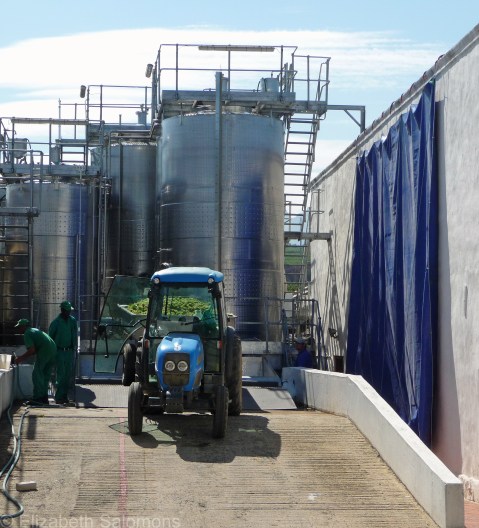
Stellenbosch is one of three wine regions in the Western Cape wine region of South Africa. Its Mediterranean-like climate, with hot dry summers and cool wet winters, is well-suited for growing grapes, the most popular of which is Chenin blanc. Evidence of how far the region has come since apartheid: at the 2014 Decanter World Wine Awards, Stellenbosch wineries earned 181 medals, of which two were international trophies, one was a regional trophy, and two were gold medals.
Immediately prior to my arrival in South Africa, I’d spent three months in France, imbibing in, well, let’s just say, a lot of French wine. Even so, I was extremely impressed by the wine I tasted in South Africa and was surprised by the number of vineyards we drove past during our day-long wine-tasting tour through Stellenbosch.

The first winery we stopped at was Meerlust. Established in 1756, it is one of South Africa’s oldest wineries and has been in the same family for eight generations. It is also of the few wineries that maintained its production of fine wine throughout the apartheid regime, despite the lack of access to world markets.
Bilton was our next stop, and we paid a little extra to pair our wine tasting with chocolate. After the tasting, we had lunch ― most of the wineries also have a restaurant on-site ― and I enjoyed my first taste of bobotie. A curried meatloaf with a custard-like topping, bobotie is to South Africa what poutine is to Canada.


Next was Warwick Estates, which dates back to 1771. In the 1970s, a South African and his Canadian wife ― a former ski instructor from Alberta ― worked hard to transform the farm into a winery of some distinction. That ski instructor, Norma Ratcliffe, is still making wine and is the only female member of the Cape Winemakers Guild. Today, Warwick Estates is considered one of the best wineries in the world, known for its Bordeaux-style blends regularly served at South African state dinners. Sadly, the wine is not available in Canada, despite the estate’s best efforts to crack the nut that is our country’s government-controlled liquor boards.


L’Avenir was our last stop of the day, its name a tribute to the French Huguenot heritage of the region. Along with Warwick, it was the prettiest winery we visited.
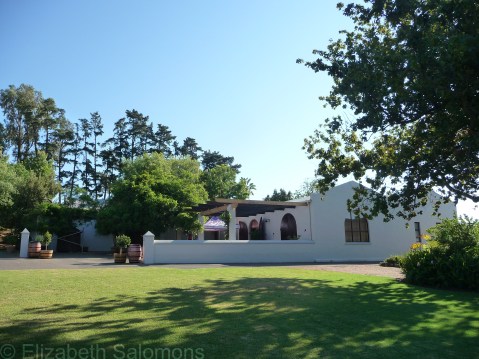
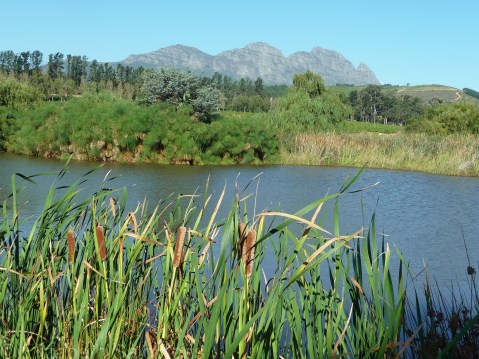
Stellenbosch is rimmed by mountains, and its landscape reminded me of BC’s Okanagan. The distinctive design of the Cape Dutch architecture, with its white, rounded gables, set the place apart from any other wine region I’ve visited, however.
After returning to Canada, I told my local wine seller that I was seriously disappointed with the selection of South African wine in Vancouver, at which point I was told, “there’s no market for it.”
And so, since then, I’ve been on a one-woman mission to create some demand for South African wine in this country.
The Day They Freed Mandela
I have fought against white domination and I have fought against black domination. I have cherished the ideal of a democratic and free society in which all persons live together in harmony and with equal opportunities. It is an ideal which I hope to live for and to achieve. But if needs be, it is an ideal for which I am prepared to die. ― Nelson Mandela, Cape Town City Hall, February 11, 1990
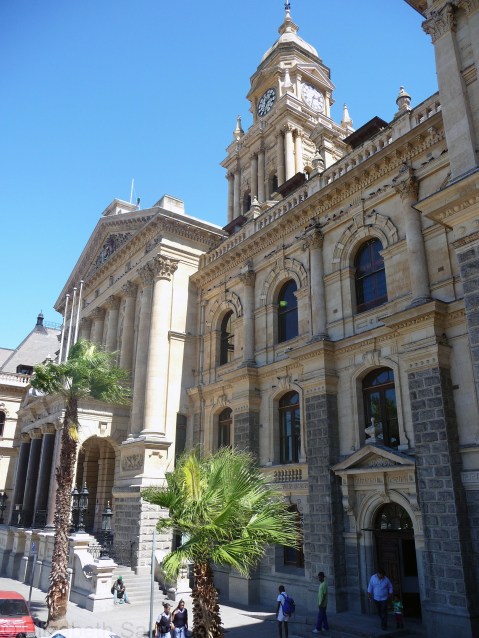
Cape Town City Hall,, February 17, 2011
World Cup Fever
World Cup Fever has hit Canada bigtime. The last (and only) time Canada had a team qualify for the FIFA World Cup was way back in 1986. Without a national team to cheer for, Canadians as a rule become hyphenated Canadians during the World Cup tournament and cheer for their country of origin.
It can get a little crazy if you live in Toronto’s Little Italy (and not only because it’s right next door to Little Portugal). I watched the 1994 World Cup final between Brazil and Italy with my Italian-Canadian friends (and 50,000 other hyphenated Canadians) at what was then called the Sky Dome where it was broadcast live on the jumbotron. What we didn’t realize until it was too late to move was that we chose to sit smack in the middle of the Portuguese-Canadians ― all of whom were cheering for the team we were not cheering for.
To celebrate the Netherlands’ glorious 5–1 victory over Spain today ― a rematch of the World Cup 2010 final ― this Dutch-Canadian is posting a photo of FNB Stadium in Johannesburg, South Africa, where that 2010 final was played. During World Cup 2010, the stadium was called Soccer City.
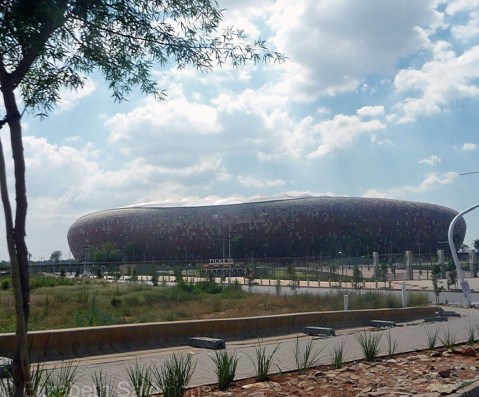
Long Walk to Freedom
“What counts in life is not the mere fact that we have lived. It is what difference we have made to the lives of others that will determine the significance of the life we lead.” — Nelson Mandela
Nelson Mandela’s long walk is over and he is forever free. South Africa ― indeed, the entire world ― is now mourning his passing and celebrating his life.
Mandela was an ordinary man who responded to an unjust world in extraordinary ways. In the plethora of this week’s news coverage coming out of South Africa and the tributes for Mandela pouring in from around the world, the words of one Canadian TV journalist stood out for me. He reminded us that it is difficult today to imagine how the very idea of a peaceful outcome to the end of South Africa’s apartheid regime seemed like pure fantasy more than 30 years ago.
Indeed.
Mandela showed remarkable grace in finding a way to forgive and demonstrated remarkable political skills that were instrumental in birthing a new South Africa. Without him, I doubt I would have ever travelled to what for me was one of the most beautiful and most complicated countries I have ever visited.
Today was a National Day of Prayer and Reflection in South Africa. South Africans gathered in churches and mosques and synagogues to reflect on and give thanks for the man they call “Tata” ― the isiXhosa word for “father.”
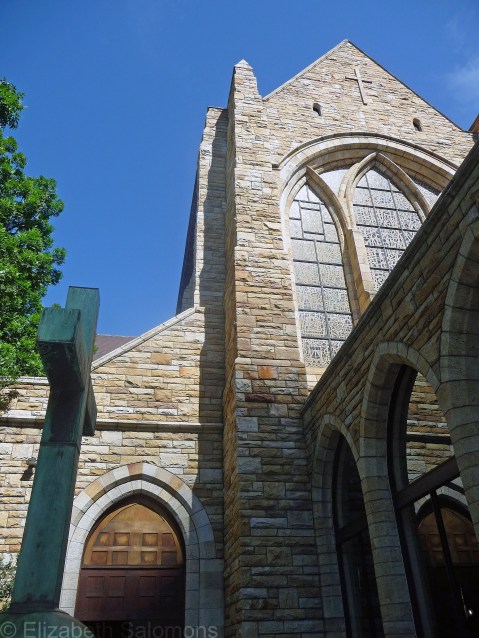
One of the places where South Africans gathered was St. George’s Cathedral in Cape Town. St. George’s is known as the People’s Cathedral for its role in the resistance against apartheid. It was one of the few places during the apartheid regime where people of all races were free to worship together and it was here in 1989 that Archbishop Desmond Tutu first referred to South Africans as the Rainbow Nation. I visited this cathedral in 2011, which is when I took this photo.
If I could have been anywhere on the planet today, I would have chosen this church, this city, this country.
Happy Birthday, Madiba!
As I walked out the door toward the gate that would lead to my freedom, I knew if I didn’t leave my bitterness and hatred behind I would still be in prison. ― Nelson Mandela
Today is Nelson Mandela’s 95th birthday. The world was worried he would not see this day, given his current state of health, but, here it is, he is here, and South Africa is celebrating.
When I visited Robben Island (the prison where Mandela spent 18 of the 27 years he served behind bars), what struck me most was how incredibly close it is to Cape Town ― and what a beautiful view of Table Mountain you have from the island. I imagine the prisoners would have been haunted by that view.
Mandela was allowed one visitor a year for 30 minutes, and could write and receive one letter every six months. The grace he has displayed since his release in 1990 is a testament to the healing power of forgiveness.

Table Mountain as seen from Robben Island


 There and Back Again