
Segovia
There are three things that, in a word, will knock your socks off when you first set foot in Segovia.
First, there’s the Roman aqueduct.

I am in awe of structures this old, built without the machinery we have today. Or mortar, for that matter. This one dates back to the first century CE.
Then there’s the Alcázar.

Situated at one end of the medieval city, like the prow of a ship, it has served Segovia as fortress, royal palace, and prison. Currently, it is a museum.
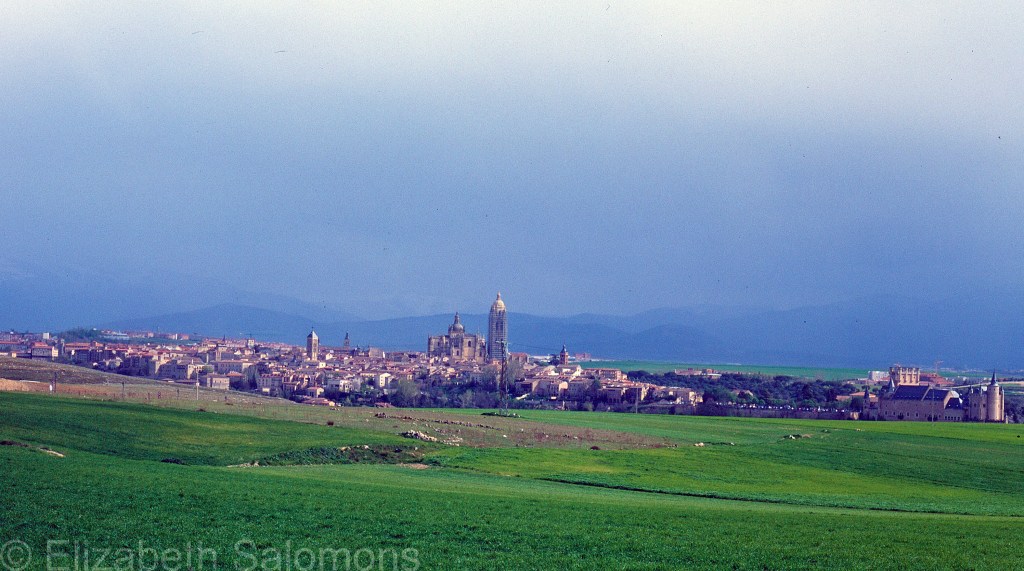
And lastly, there’s the cathedral. That’s the tall building in the centre of this photo, which I took from the Alcázar.

Built in the sixteenth century in the late Gothic style, it was undergoing restoration work when we were there — hence, the scaffolding.
Segovia is about 75 kilometres northeast of Ávila, and was the final stop of our tour through Castile La Mancha and Castile and León. What Segovia, Ávila, and Toledo have in common is they are all technically do-able as day trips from Madrid. But don’t short-change yourself. Spend at least a couple of nights in each city — you won’t regret it.
Ávila
When my sister and I were ready to move on from Toledo, we headed to Ávila. Ávila is a little farther from Madrid than Toledo, but is northwest of Spain’s capital, whereas Toledo is to the south.
Like Toledo, Ávila has an impressive cathedral and monastery, not to mention a basilica — all of which I’ve posted about in the past. But what stood out upon our arrival were the massive, stone walls, with their eight gates and 88 towers.

These walls form an irregular rectangle around the medieval centre of Ávila.

Parts of the wall have been restored so you can walk on it.

We found ourselves staying in a small hotel just inside those walls, next to the cathedral. To the best of my memory, it was just around the corner in this next photo.

Although we didn’t know it then, my sister would find herself back in Avila some years later to do historical research. Naturally I came back to visit her. This was the street where she lived for a year.

Keep walking, and you came to this gate.
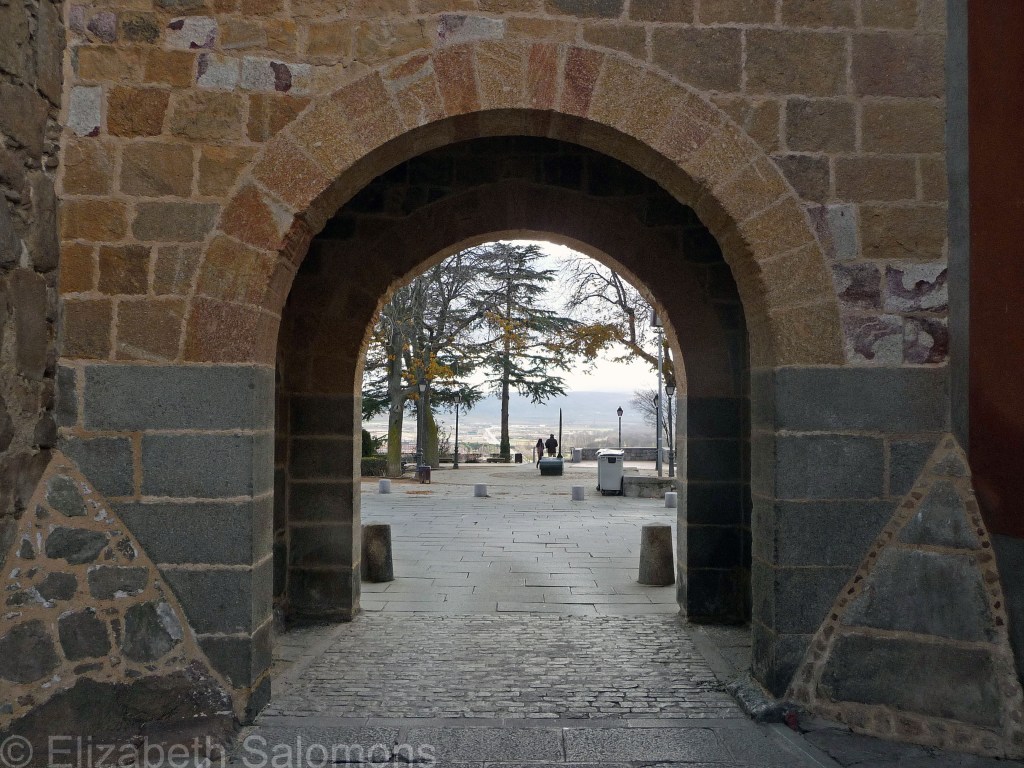
Walk through the gate, and this is your view.
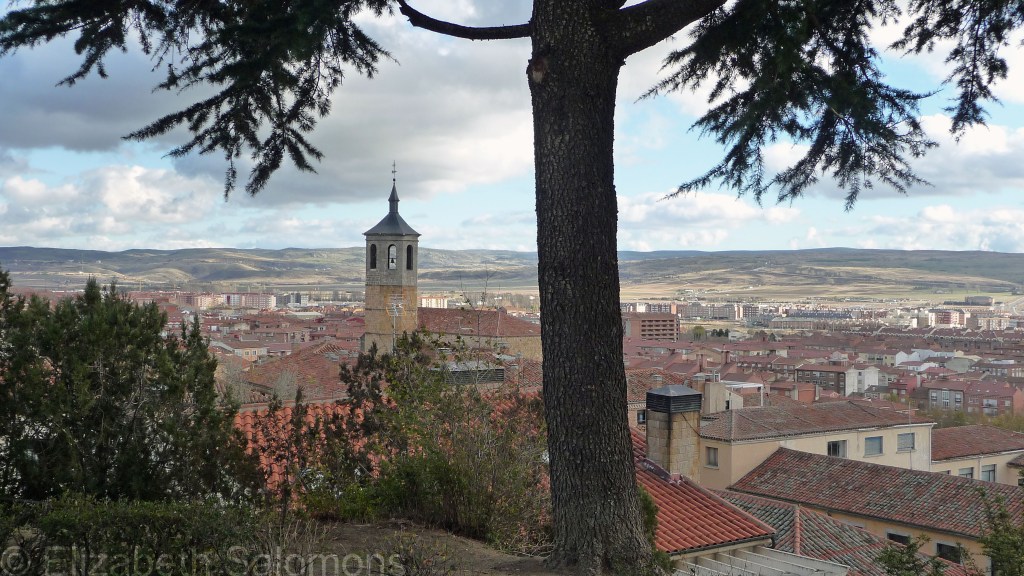
Not too shabby, eh?
I soon learned that in Ávila you can’t avoid the sixteenth-century mystic and saint, Teresa of Ávila.
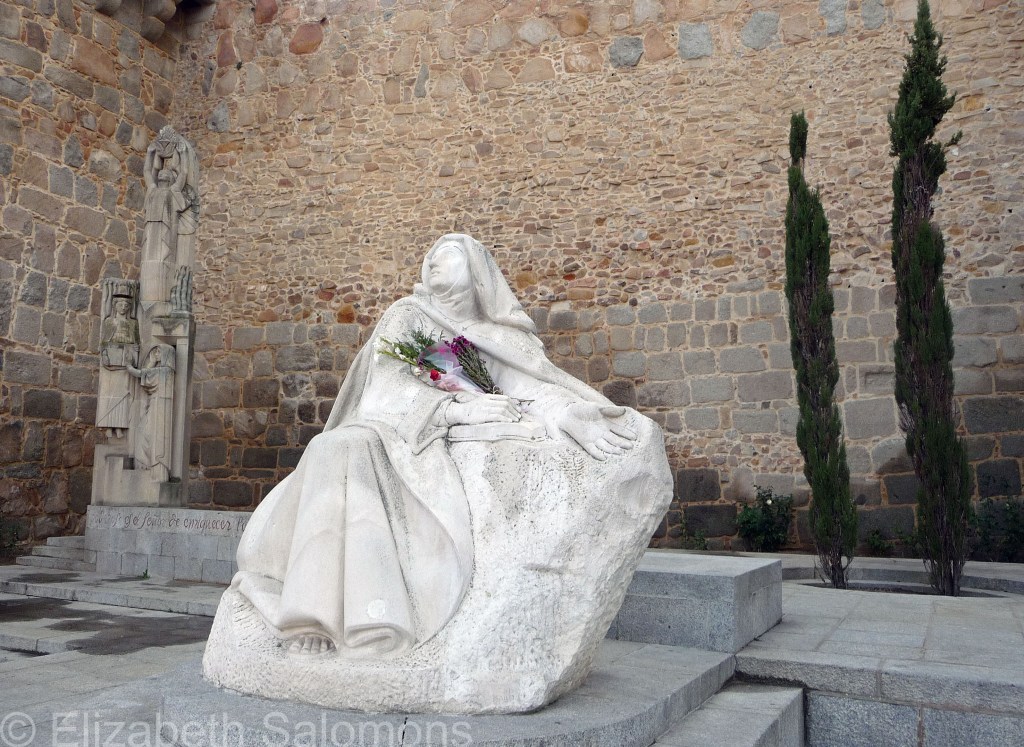
Born into nobility, Teresa joined the Carmelites at age 20. She sought a more reclusive life than was available with the Carmelites, however, so she established a reformed order of Carmelites. They made their home here, in the Convent of San José, which Teresa founded in 1562.
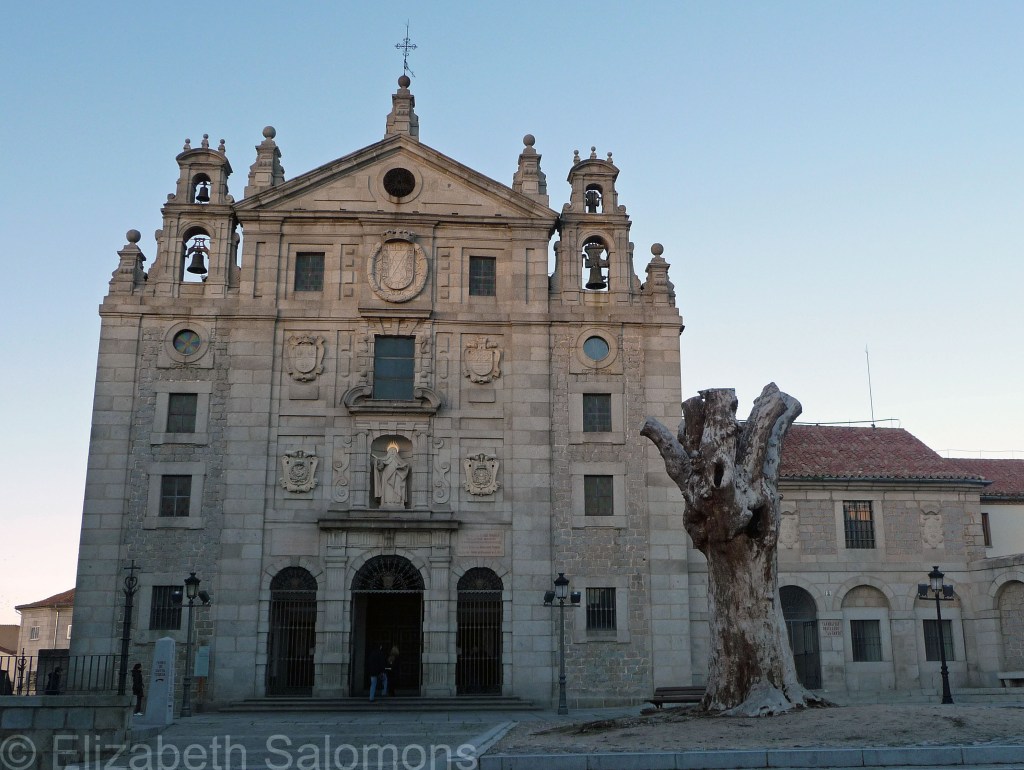
It was in Ávila where I first noticed the storks that are ubiquitous throughout Spain — this church steeple has four nests in all. And so I will leave you with this pro tip: when in Ávila, always look up.

Toledo
Where were we?
Oh, right. Spain. Ahem.
Not two years after my weekend in Barcelona, I got the chance to make another last-minute trip to Spain. This time the invite came from my sister, who was there for a month of study.
“You should come!” she said. “You’d love it here.”
And so, once again within a manner of weeks, I was on a plane, this time to Madrid. This time, however, I did a bit more upfront planning than I had managed to do for my weekend in Barcelona. Plus, I had my sister already on the ground, so to speak. We decided to do a circuit around Madrid that would take us into the two autonomous communities of Castile La Mancha and Castile and León.
The best part? We had two glorious weeks.
This was our first stop.

Toledo is an hour south of Madrid by train, and its medieval centre is a short walk from the station. As we walked across the Roman-built arched bridge (the Puente de Alcántara) and through the gates of the thick stone walls, I couldn’t help but think about all the pilgrims who had, since the Middle Ages, been arriving at the city in much the same way.
Our accommodations, I am sure, were much more luxurious. We got a room with a view — of the cathedral, no less, and a sea of ochre-coloured rooftops.
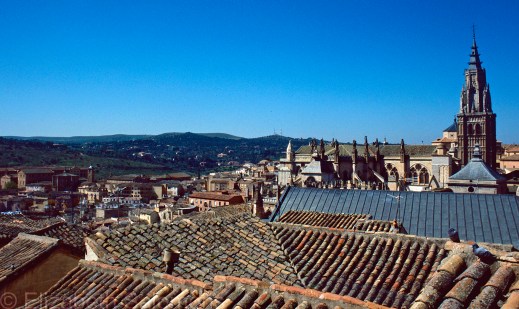
Toledo, we quickly discovered, is a maze of narrow passageways. And I soon learned that when a shop window called out to me or I caught sight of something I wanted to photograph, I had to stop because the chances of finding my way back to the same spot again were highly unlikely.
Toledo is also compact — we were never more than a 15-minute walk from our hotel — and we saw most of its highlights in a day and a half.
Namely, the Cathedral of Toledo, built between the thirteenth and fifteenth centuries …

… and the Monastery of San Juan de los Reyes, with its impressive two-storey cloister …
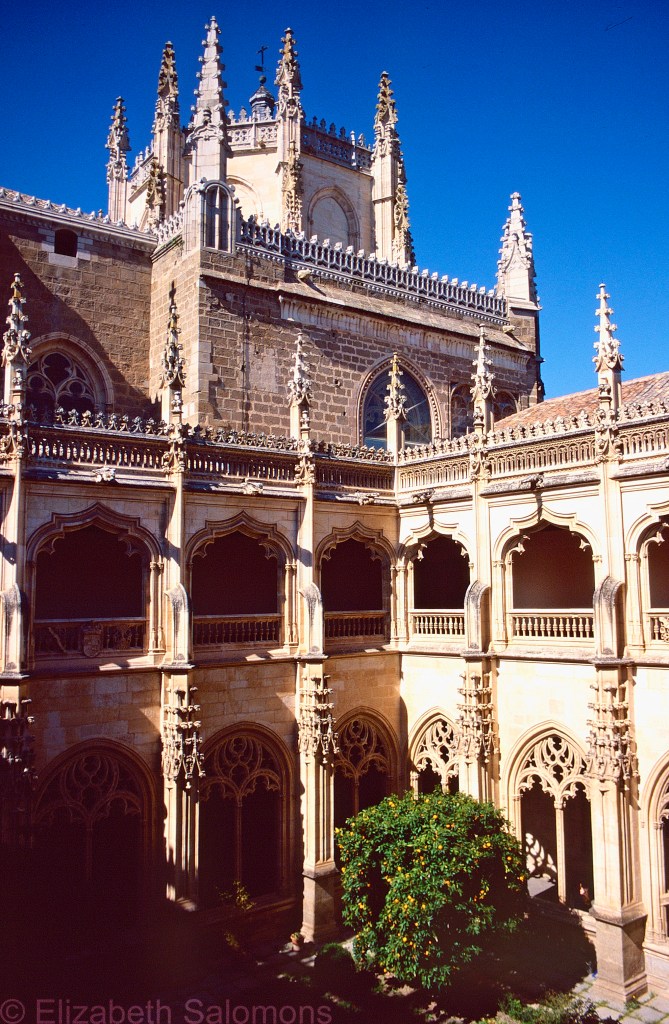
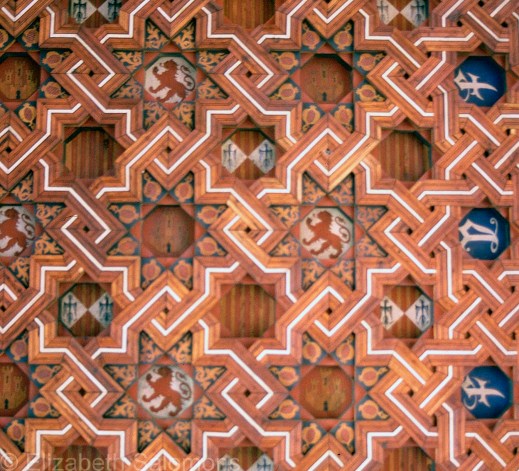
… and the Mudéjar-decorated ceilings of those cloisters, adorned with the coat of arms of Los Reyes Católicos (the Catholic Monarchs), Ferdinand II of Aragon and Isabella I of Castile, whose marriage in 1469 created a dynastic union between the kingdoms of Aragon and Castile. (Pay attention to their names. You hear them a lot when you travel through Spain.)
The monastery was intended to be the final resting place of the Catholic Monarchs, but after the reconquest of Granada in 1492, Ferdinand and Isabella decided they’d rather be buried in the city of Granada. (Stay tuned — I’ll have more to say about that in a future post.)
We also paid a visit to the Iglesia de Santo Tomé, the church where the Burial of the Count of Orgaz by El Greco is displayed, and then continued on to El Museo del Greco (a museum dedicated to the artist). El Greco spent half of his life in Toledo, hence the museum. If you’re a fan of his work, I recommend you pay the city a visit.
For some reason I don’t seem to have any photos from our visit to the Synagogue of Santa María la Blanca, but I do have this photo of a street tile marking the Jewish Quarter of Toledo.
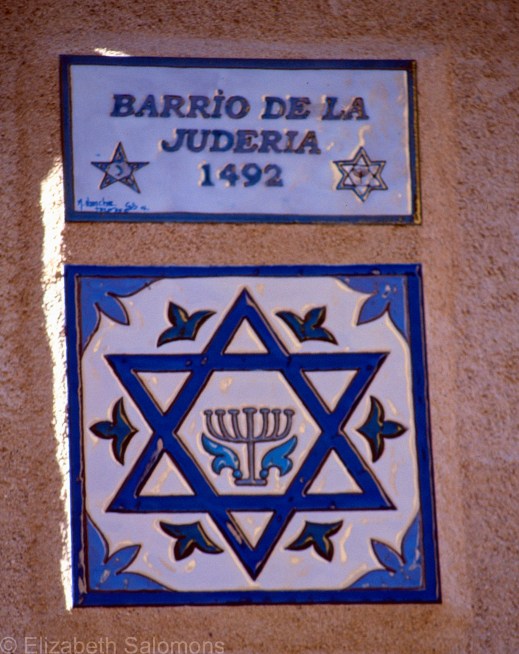
Throughout the Middle Ages, Jews, Christians, and Muslims peacefully co-existed on the Iberian Peninsula. In many ways, Spain is a living memorial to how three cultures intermingled and influenced each other (see the Mudéjar-decorated ceiling up above). It is also why Toledo is known as the Ciudad de las Tres Culturas (City of Three Cultures). But that all ended with the expulsion of the Jews by the Catholic Monarchs in 1492.
Santa María la Blanca is impressive, for sure, but also unique in that it is a Jewish house of worship built by Islamic architects in a kingdom ruled by Catholics. (The synagogue was later converted to a church, which is why it bears the name Santa María.)
When we were worn out from sightseeing, my sister and I spent a lot of time people-watching in the centrally located Plaza de Zocodover or Plaza del Ayuntamiento in front of the Cathedral. And, um, enjoying the culinary delights that Toledo had to offer. Again, stay tuned. I will have more to say on that topic in another post.
For now, know that after only two days in central Spain, I realized my sister was right.
I did love it.

Antoni Gaudí

My weekend in Barcelona was one of those rare trips where I had next-to-no time for planning. It came about because I was whining to a friend about having no idea of where to go or what to do with the vacation time I had to use or lose, to which she sweetly responded by inviting me to join her in Barcelona. Before I knew what was happening, we were soaking up the Mediterranean sun together.
And so, when my friend suggested we start off the weekend with a self-guided walking tour she’d found in the guide book I’d purchased but not yet cracked open, I was all for it.
The tour was called the Modernisme Circuit and I had absolutely no expectations. Which is probably why I was so taken aback by my first few hours in Barcelona.
See, there was this Catalan architect. Antoni Gaudí was his name and he is at the heart of what makes Barcelona so unique. I had never heard of the guy, but as my friend and I walked from one Gaudí-designed building to the next, our mouths were agape. And I couldn’t stop taking photos, of course.
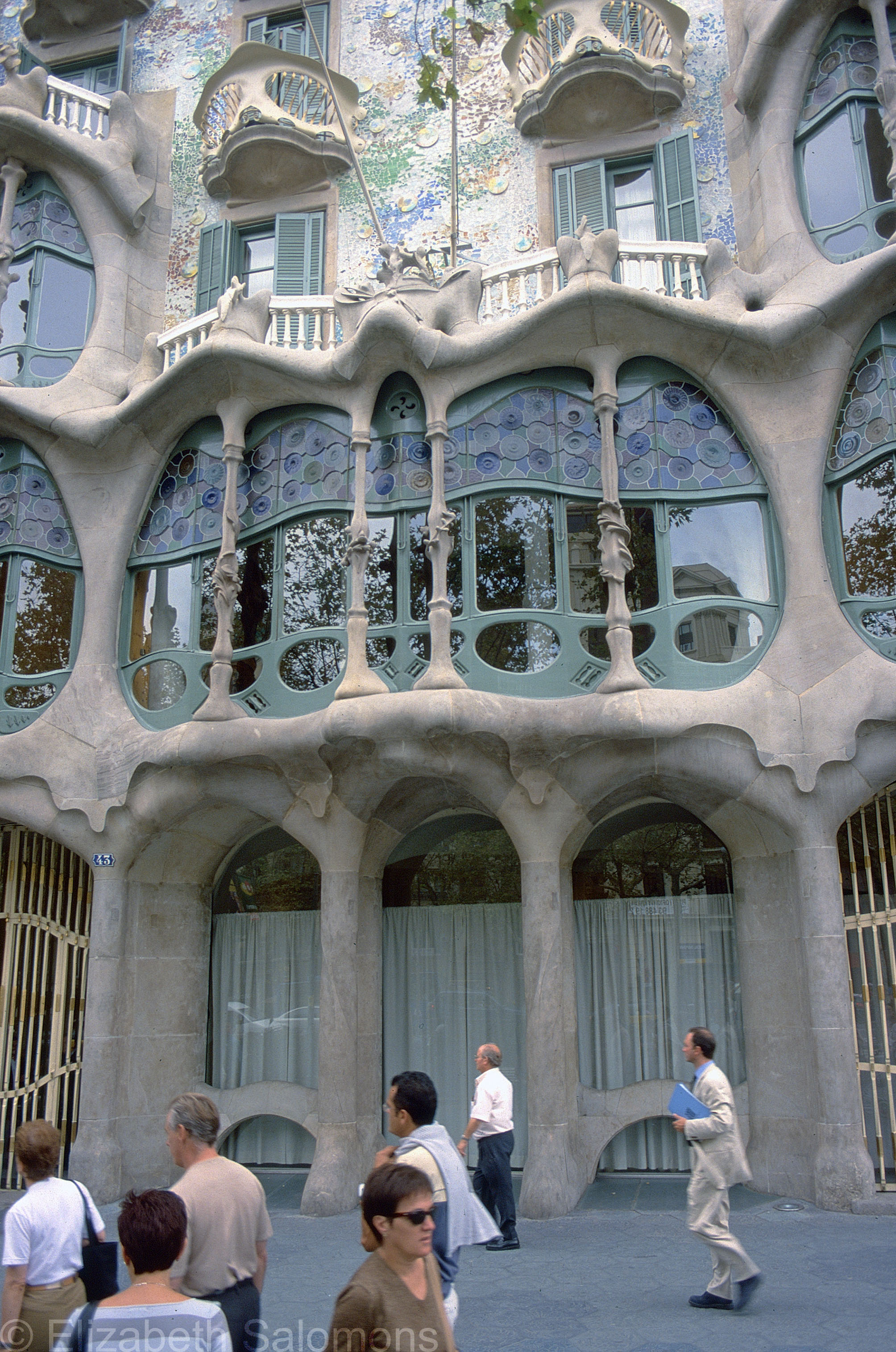
Gaudí’s designs were deeply influenced by his love of the natural world. There are no straight lines on his buildings. Like this one.

A large family home, Casa Batlló was built in 1877. In 1904, its new owner hired Gaudí to tear it down and build another, but Gaudí said no. He would remodel it instead. This is the result.
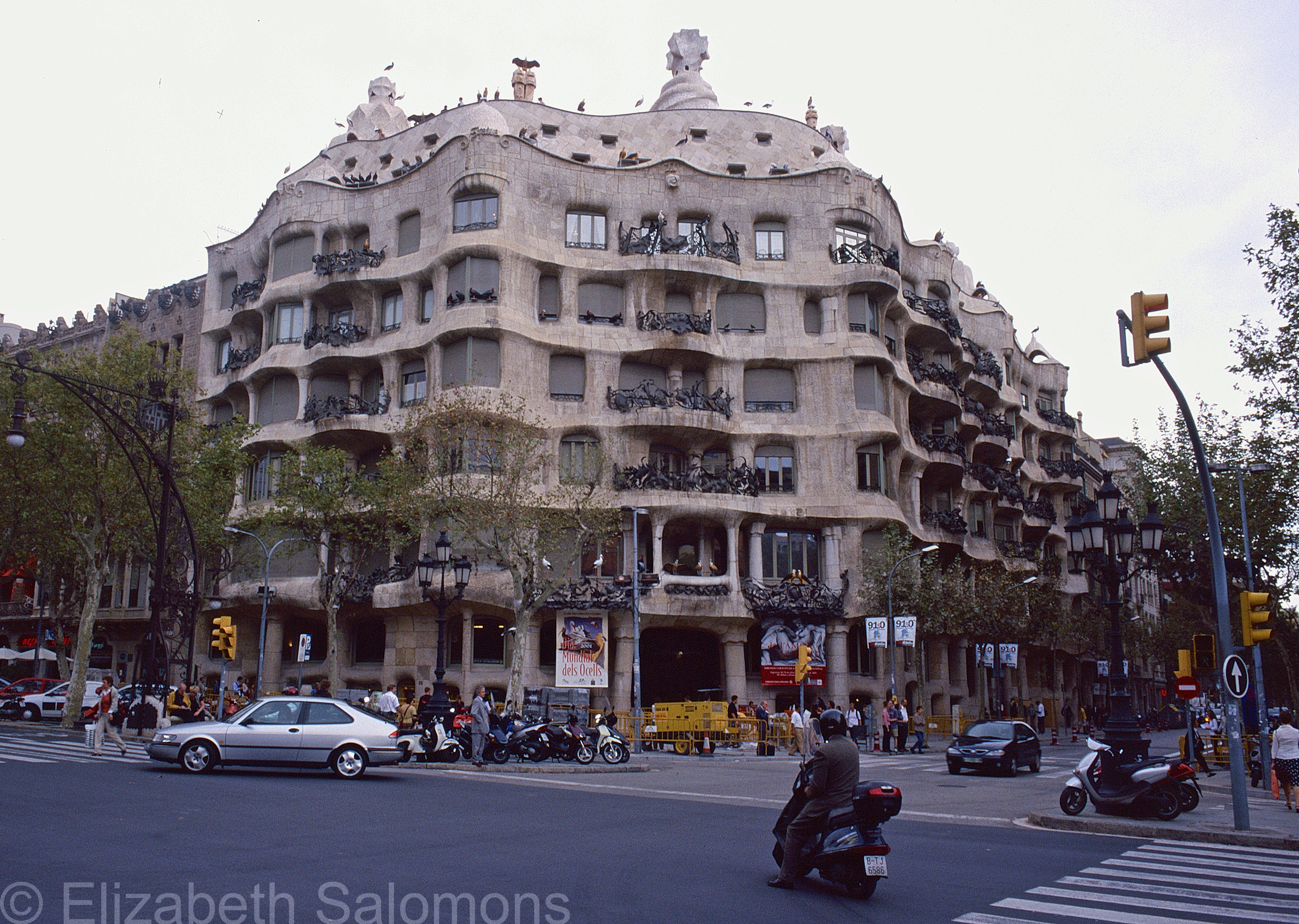
Casa Milà was another private commission. It was built between 1905 and 1910.
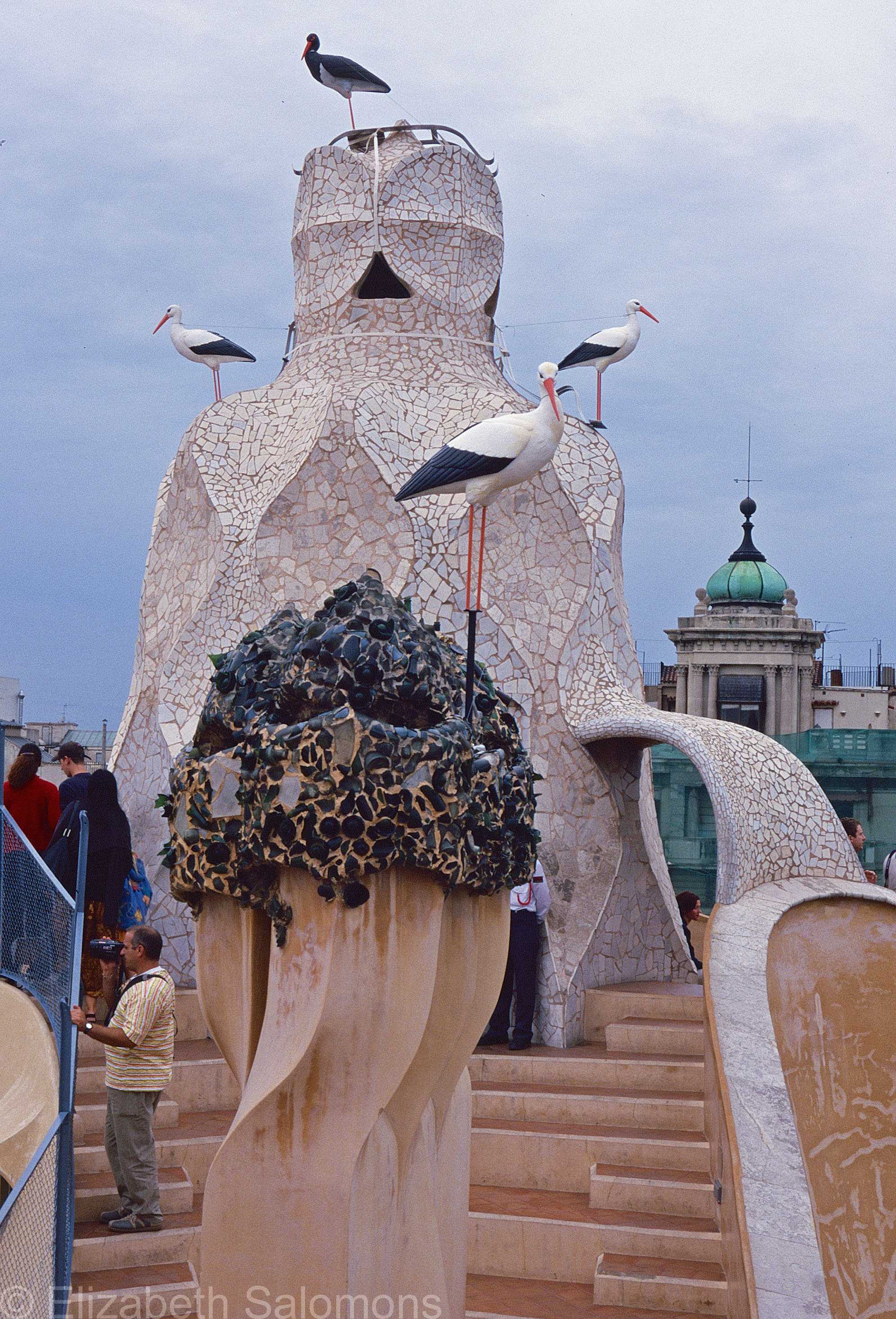
As I wrote above, Gaudí was deeply influenced by the natural world. Storks (the real ones) on rooftops are a common sight in Spain.
One of Gaudí’s best patrons was a Catalan industrialist named Eusebi Güell. He commissioned several buildings in and around Barcelona, including the elaborate Park Güell, which opened in 1926. My friend and I spent several hours wandering around this spectacular park.


Upon his graduation from architecture school, it has been said that Gaudí was told, “Who knows if we have given a diploma to a nutcase or a genius? Time will tell.”
Genius, I’m thinking.

A Weekend in Barcelona
Well, here we are. Still in the thick of the Long Winter (aka the second wave). Although the early daffodils have started blooming in Vancouver, I’m far more excited about tonight’s forecast calling for snow. Just, you know, to shake things up a bit. (It has been a snowless and very rainy winter for me so far.)
I was thinking that I also need to shake things up a bit on this blog. A travel-related topic to focus on would go a long ways to stop me from writing about the weather (ahem) or this year’s obsession (the pandemic).
And so, to that end, I’m going to concentrate on Spain for the next little while. I’ve always meant to write about this fascinating country, but somehow it kept getting pushed aside due to other, more recent, travel stories. Since none of us are going anywhere at the moment, it’s the perfect opportunity to move it to the top of my list.
My first visit to Spain was a weekend in Barcelona. Even as short as it was, my friend and I managed to fit in a lot. Lots of sightseeing, lots of great food, lots of good wine, and even lots of shopping.
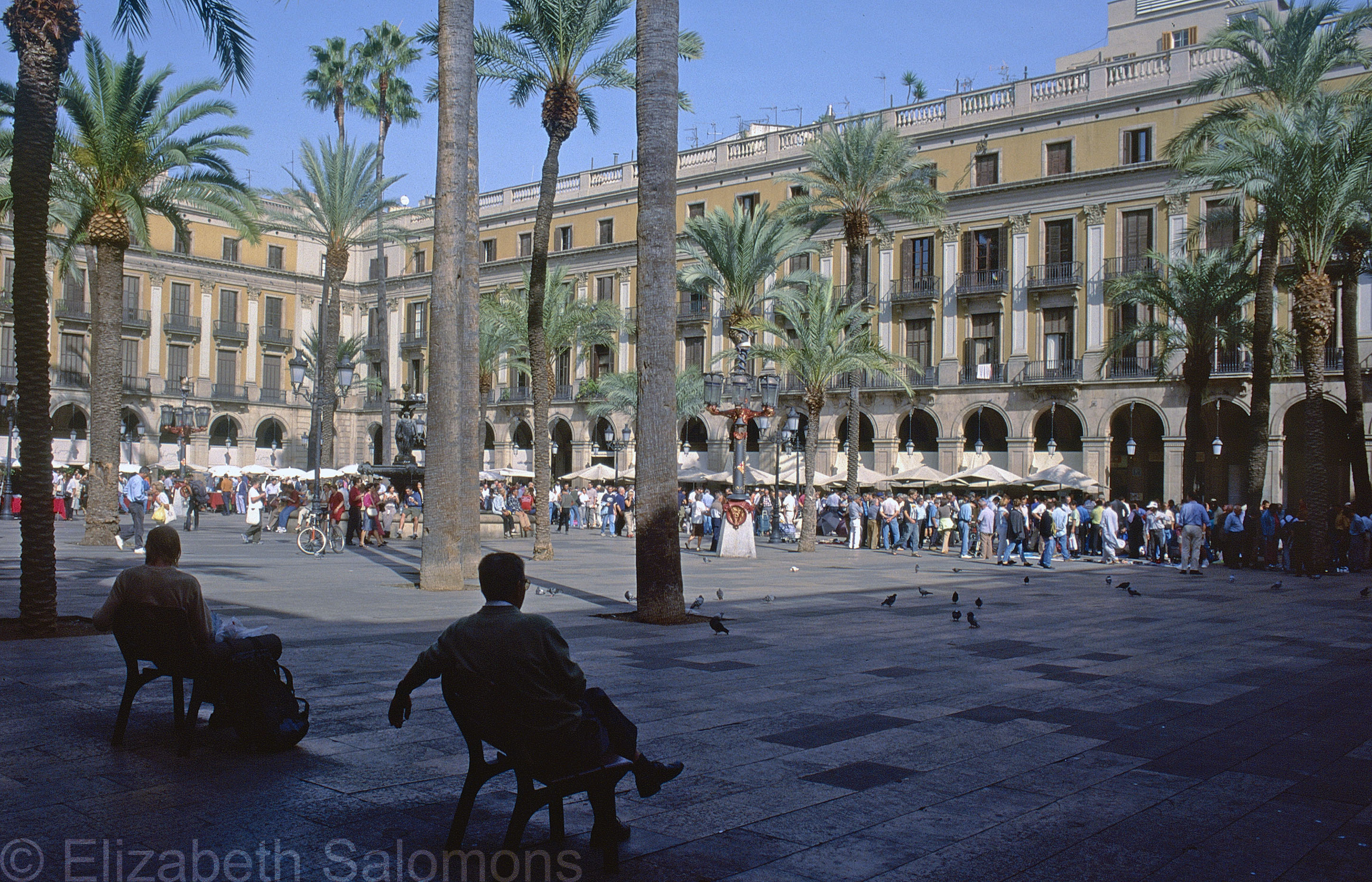
Here is the Plaça Reial (Royal Plaza), just off La Rambla in the heart of Barcelona’s Barri Gòtic (Gothic Quarter).
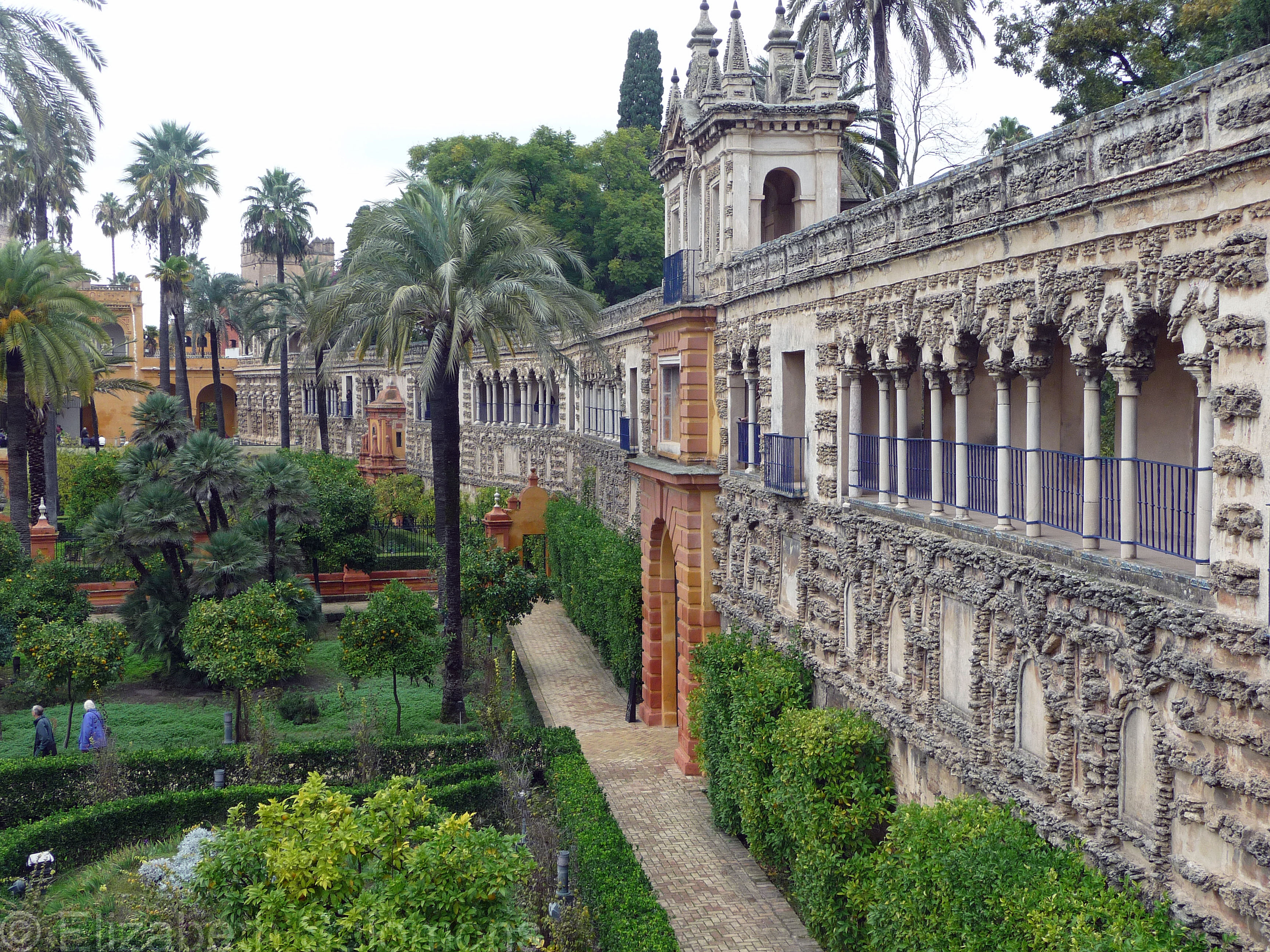
Through My Lens: The Alcázar of Seville (aka Dorne)
As per usual, I was late to the party in discovering only recently how entertaining Game of Thrones is ― years after the rest of the planet. Now that I’m a fan (better late than never!), and now that I’ve had a week to recover from last Sunday’s Season 5 finale, I thought I’d make a connection between the TV show and travel.
Because Game of Thrones has some awesome filming locations.
It’s filmed in a few places that are on my bucket list (Croatia and Iceland), and in a few places where I’ve already been (Northern Ireland and Spain).
A new location that debuted this past season was the Alcázar in Seville, Spain. It was put to good use standing in for the Water Gardens, the palace of the rulers of Dorne.
Alcázar comes from the Arabic word al-qasr, which means “the castle.”
Through My Lens: San Jeronómo Monastery Outtake
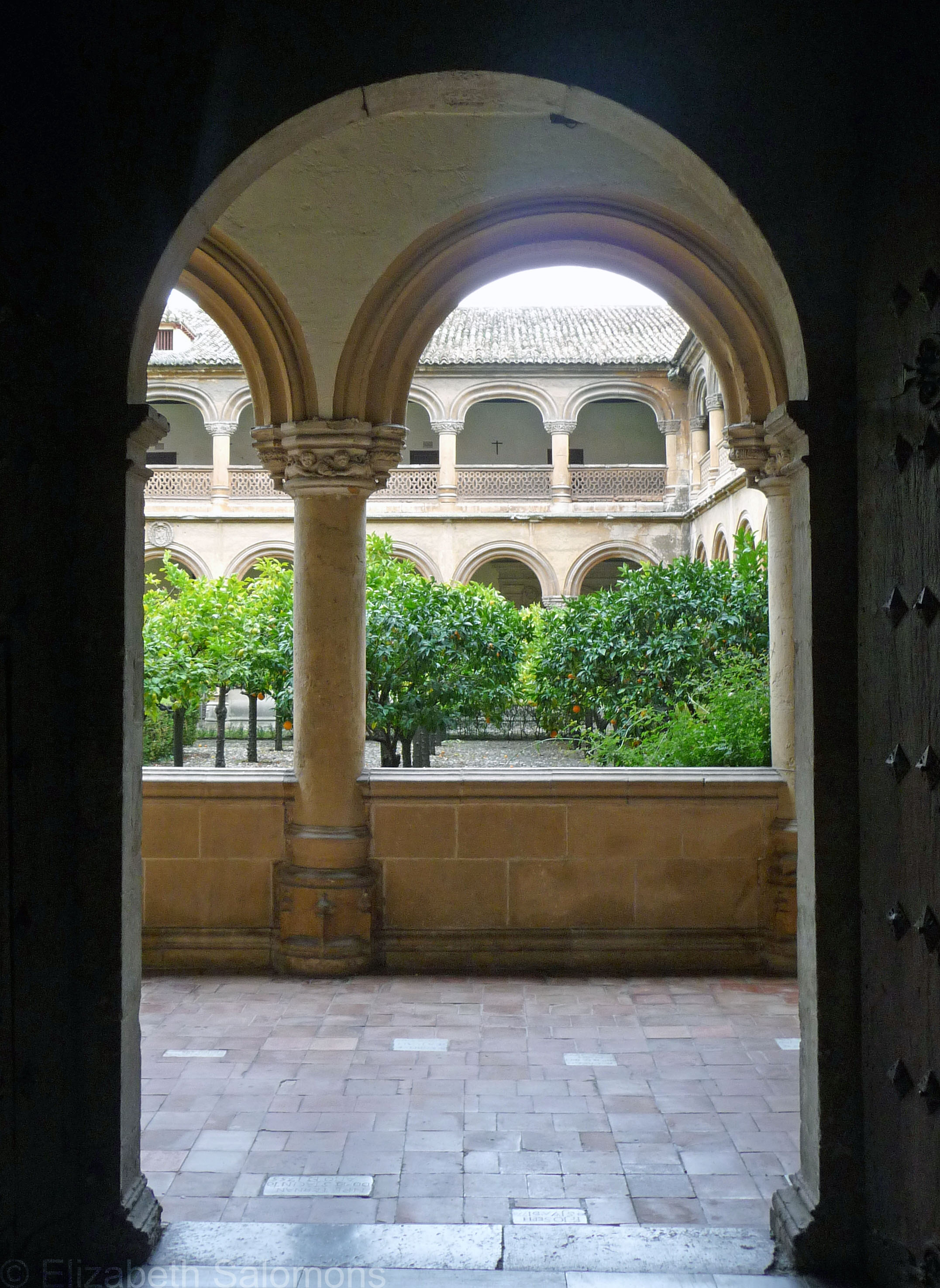
The thing is, when you troll through dozens of photos to find the ones you want to post for a Lenten series on cloisters, you’re bound to end up with more photos than you could possibly use.
Here is another look at the Cloister of the Monasterio de San Jerónimo in Granada, Spain.
Through My Lens: Cloister of the Monasterio de San Jerónimo
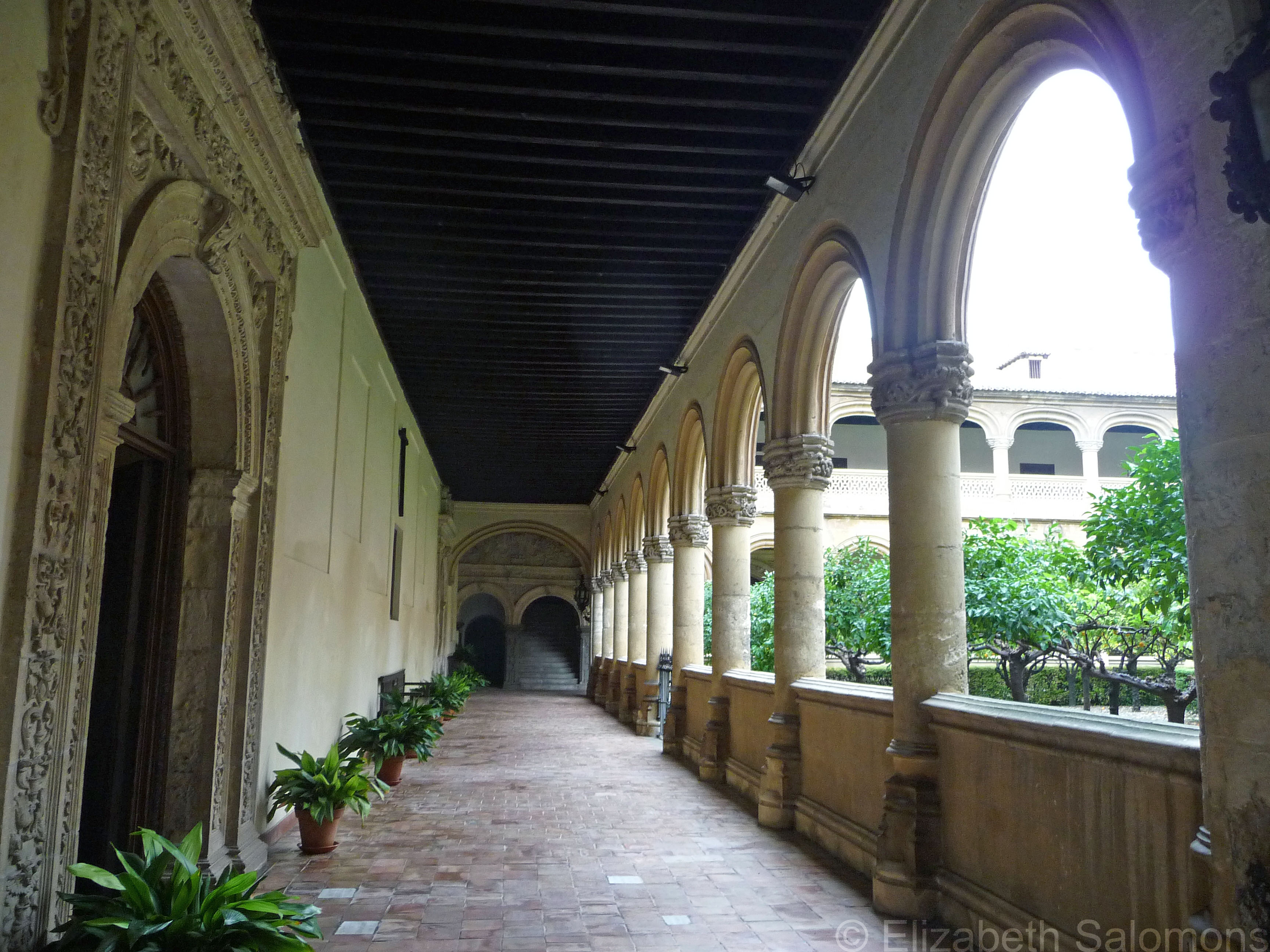
The Monasterio de San Jeronómo is in Granada, Spain. I didn’t realize this Hieronymite monastery had a cloister until I wandered inside to explore ― I was so pleased to see it. I was particularly entranced by the staircase at the end of the walkway in this photo. Carved into the stone above the two arches are the words, “Soli Deo honor et gloria.”
This cloister is my photo choice for the Fifth Sunday of Lent.
Through My Lens: Cloister of Silence of the Real Monasterio de Santo Tomás

We’re still at the Real Monasterio de Santo Tomás in Ávila for the Fourth Sunday of Lent. This is a photo of the Cloister of Silence ― the second of the three interconnected cloisters. It contains 18 arches at ground level and 38 on the upper level and is where the monks were buried.
I love this stone well. I remember the feeling I had when I walked into this cloister ― it was as if I’d passed into Narnia and was wandering through the ruins of Cair Paravel with Peter and Susan and Edmund and Lucy.
Through My Lens: Cloister of the Monarchs of the Real Monasterio de Santo Tomás

My photo choice for today, the Third Sunday of Lent, is the Cloister of the Monarchs of the Real Monasterio de Santo Tomás in Ávila, Spain.
Work on this Dominican monastery started in 1482 and was completed in 1493. Real is Spanish for “royal” ― the cloister includes a palace built for Ferdinand and Isabella, who are commonly known as the Reyes Católicos (Catholic Monarchs).
I thought I’d died and gone to cloister heaven when I walked into this monastery. There are three sets of interconnected cloisters; the Cloister of the Monarchs is the third and largest one and contains 40 arches at ground level and 56 arches on the upper level.


 There and Back Again