
Art Talk: Persuasive Visions

When my friend whispered to me that the art show we were viewing at the Seattle Art Museum put the Vancouver Art Gallery to shame, I had no idea I would have the chance to make a fair comparison within just a few weeks.
Persuasive Visions: 17th Century Dutch and Flemish Masterworks and Contemporary Reflections opened in Vancouver in June and I was quick to go see it. What an opportunity, I thought, to compare SAM’s exhibition of Dutch masters with VAG’s exhibition of Dutch masters.
Now, I should explain: I have a love–hate relationship with the Vancouver Art Gallery. I really, really want to support it, but …
For one thing, every time I step inside its doors, I always seem to have a run-in with gallery staff (no photography allowed in the atrium!! put that pen away!!) like I’m some errant school child. It gets really old really fast. When an overzealous security guard chose to skulk after me from room to room (to make sure I behaved, I’m assuming, after he caught me with my camera in the atrium), I felt violated. On that particular visit, I left the gallery only minutes after my arrival, and I didn’t go back for several years.
As for the exhibitions, I always leave the gallery thinking, “That could have been so much more.”
With Persuasive Visions, I was surprised, but also confused. I’ll get to my confusion in a minute.
I was surprised by how much seventeenth century Dutch art the exhibition did contain. When the Vancouver Art Gallery markets their exhibitions with the word “contemporary” in the title, it usually means about 90 percent of the modern stuff and 10 percent of the old (read: good) stuff. At least, this has been the case with many of its previous exhibitions. And so, with this exhibition, I was pleasantly surprised by the number of Dutch masters on display, and also by how many of them belong to the Vancouver Art Gallery.
(An aside: the Vancouver Art Gallery has a massive art collection, but, due to space limitations, can only exhibit about 3 percent of its collection at any one time. When a friend from Brooklyn, USA, visited me and I sent her off to the gallery, her first comment upon returning to my place was, “Don’t they show any of their own art? Or is it all only temporary exhibitions?” I explained to her the difficulty about the space limitations. The Vancouver Art Gallery has recently been granted a 99-year lease from the City of Vancouver and, if the fund-raising campaign goes well, will break ground sometime this century on a new building that will massively increase its exhibition space.)
Back to Persuasive Visions. Who knew the Vancouver Art Gallery had so much seventeenth century Dutch artwork? What a treat it would be to see these paintings on permanent display.
Now, on to my confusion. I was confused by the contemporary works the art gallery chose to display alongside the seventeenth century art. I’m a big fan of Jeff Wall’s photographs, but I didn’t see the connection to Dutch landscapes. I also appreciate contemporary portraits like those of Thomas Russ, but felt the juxtaposition of them alongside the portraits of Dutch sea captains and their wives a bit jarring.
So I called a friend. An artist friend, that is. “Help,” I said. “I don’t understand how this show was curated.”
My friend tells me the Art Gallery of Ontario is doing the same with its exhibitions, this mixing of old and new. “Then and Now,” she calls it. Jeff Wall is known for his use of light, as are the Dutch landscape artists, although she could understand my confusion. And the deadpan photography of Thomas Ruff is characteristic of the current school of German and Dutch photographers, so the Vancouver Art Gallery made a deliberate choice to compare seventeenth century Dutch portraiture to contemporary Dutch portraiture.
My friend’s explanation helped, and I decided to go see the show a second time and ponder her comments. The exhibition made more sense to me upon re-viewing, but, to be honest, I prefer the Seattle Art Museum’s curation to what the Vancouver Art Gallery is doing.
Persuasive Visions fills four gallery rooms, with each room focused on one type of painting: seascapes, still lifes, portraits, and landscapes. Many of the paintings from the Vancouver collection are covered in dark varnish, which requires you to step quite close to examine them in any detail. The Jeff Wall light boxes placed in the same room as the landscapes only makes the varnish-covered landscapes look even darker.
The last time the Vancouver Art Gallery showed an exhibition of Dutch Masters was back in 2009, when one Vermeer and a handful of Rembrandts on loan from the Rijksmuseum (then under renovation) went on a North American tour. That may have been the time I got chased out of the gallery by the overzealous security guard. This time? People were taking photos left, right, and centre with their iPhones, and nary a peep to be heard from any of the security guards.
Persuasive Visions: 17th Century Dutch and Flemish Masterworks and Contemporary Reflections is on display at the Vancouver Art Gallery until September 15.
Vancouver International Jazz Festival

I once had a home exchange offer from a couple in San Francisco who wanted to attend the Vancouver International Jazz Festival. The timing didn’t work for me so I had to turn down the offer, but I was so pleased to find out that our Jazz Fest attracts people all the way from California.
The festival got its start during Expo 86, and has been held every year since. It’s now Canada’s second-largest jazz festival (second only to Montreal). Some 300 performances (half are free), some 1800 performers, and almost half a million spectators enjoy some of the best music to be heard in Vancouver.
Jazz Fest is always held the last ten days of June ― just in case you want to put it on your calendar for next year.

Recipe Box: Wild BC Spot Prawns

I first discovered wild BC spot prawns a couple of years ago when I noticed them popping up on restaurant menus around town.
“Spot prawns? What are spot prawns?” I asked my friends. They didn’t know either. I ordered them, tasted them, fell in love with them …
With a little research, I discovered that the wild BC spot prawn is the largest of seven species of commercially available BC shrimp. What’s unique about them is their distinctive white spots and naturally bright orange colour.
With a little more research, I learned that the spot prawn fishery is one of BC’s most sustainable fisheries. It’s limited to trap gear only, and the prawns are hand sorted upon removal from the ocean. Prawns too small for consumption are thrown back. About 90 percent of the commercial catch is shipped to Japan and the remainder is sold locally. But here’s the kicker: the season is short ― only six weeks from mid-May to June. In other words: get them while you can. (And if you don’t live in BC or Japan, well, too bad for you.)
Last year, I got up the courage to cook spot prawns myself. I had house guests ― my brother and his family were visiting from land-locked Alberta ― and when they told me they wanted to spend the day playing tourist at Granville Island, I decided to show off. I told them, casual like (as if I did it all the time), that I would pick up some spot prawns at the market for our dinner.
I was a bit taken aback when the fishmonger scooped a handful of live spot prawns from a water tank. “I didn’t know they were sold live,” I whispered to my brother, my bravado quickly disappearing. Gamely, I accepted the plastic bag of prawns wrapped in newspaper. I told the fishmonger I was planning to sauté them with garlic in butter.
“Excellent,” he said. “That’s the best way to prepare them.”
“But … do I have to … you know … kill them first?” I asked gingerly.
“Nope,” he said. “By the time you get them home, they’ll be dead.” Phew. I’m no vegetarian, but I draw the line at killing my own food.
He was right. When I unwrapped my package a few hours later, the shrimp were still bright orange, but most definitely in a non-living state. I cooked them up, and we devoured those garlicky spot prawns in record time. Their taste reminded me of lobster, and my only regret was that I didn’t buy more.
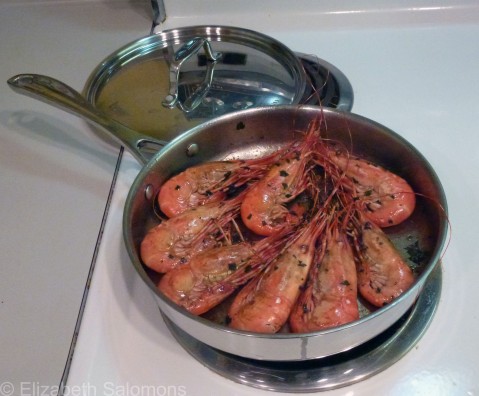
This year, I did buy more, and I cooked them the same way, relishing them as much as the first time. The very next evening, I went to my sister’s and her husband’s for a barbecue dinner, and was pleased to find out that grilled spot prawns were on the menu. But I was stunned when I saw the plate of prawns she had prepared for grilling.
“Where are the heads!?” I asked.
My sister looked at me, puzzled. “You have to take them off,” she insisted.
Lively debate ensues: do you eat spot prawns with the heads on or off? (And, while we’re at it, do you need to devein them?)
Back to Google. It turns out that deveining spot prawns is a matter of personal preference. (I have yet to taste the grittiness some claim is common if you don’t devein.) But what is critical is that you remove the heads immediately if you aren’t intending to cook the prawns the same day, because they release an enzyme after death that makes the tail meat turn mushy.
Here is the recipe I like to use (with heads on), but know that if you eat yours with heads off, they will be just as tasty.
Enjoy!
Wild BC Spot Prawns
1 pound whole spot prawns
2 tablespoons butter
2 cloves minced garlic
1 tablespoon chopped parsley
1/4 cup dry white wine
salt and pepper to taste
1. Melt butter in a large frying pan on medium high heat.
2. Add minced garlic and parsley and sauté for 1 to 2 minutes.
3. Add prawns and white wine, tossing to coat with the butter and parsley, then season with salt and pepper.
4. Cover and cook 4 to 5 minutes, no longer.
Serve with slices of crusty baguette and a chilled buttery chardonnay.

Amtrak Cascades
In my last post, I told you how my friends and I travelled to Seattle. Wanna know how we got home?
We took the train.
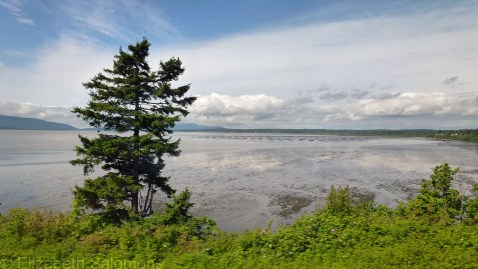
Semiahmoo Bay
I’ve been down Interstate 5 to Seattle more times than I care to count, both by car and by bus. The I-5 extends from the American–Canadian border all the way down the West Coast of the United States to Mexico. If you’re inclined to drive that far, it would be quite the road trip.
But, as efficient as they are, American interstates aren’t known for their beauty. I’ve always felt that taking the I-5 was a bit of an endurance test to get through before the prize: your final destination (in my case, usually Sea-Tac Airport). And thanks to the collapse three days ago of the Skagit River Bridge on the I-5 just north of Seattle, that will most definitely be true for many months to come until the bridge is repaired or replaced.
But the train! What a revelation that was.
The Amtrak Cascades is the name of the Amtrak route from Eugene, Oregon, to Vancouver, Canada. The northbound leg from Seattle to Vancouver hugs the Pacific shoreline for the first while, moves inland for a bit through some of Washington’s fertile farmland, and then heads back to the coast and crosses the Canadian border at White Rock, BC. Unless you’re paying close attention, you don’t even realize you’ve crossed the border. (All passengers, both northbound and southbound, go through customs in Vancouver.)
After rounding Boundary Bay, the train takes you across the municipality of Delta (named after the Fraser River delta) and east along the Fraser to New Westminster, where you cross the rail bridge beside the Pattullo Bridge. Then it’s a quick ride northwest through Burnaby to Pacific Central Station near downtown Vancouver.

Pattullo Bridge, with the Skytrain Bridge behind
If you book your tickets far enough in advance, the train costs about half of the bus fare. It’s a far prettier route than the I-5, and the wait to go through customs is far shorter. My second travel tip of the week? Take the train.

Pacific Central Station
Repositioning Cruises

Those in the know (which, believe you me, is seldom yours truly) know that “repositioning cruises” can offer some of the best deals on cruise fares. What’s a repositioning cruise, you ask?
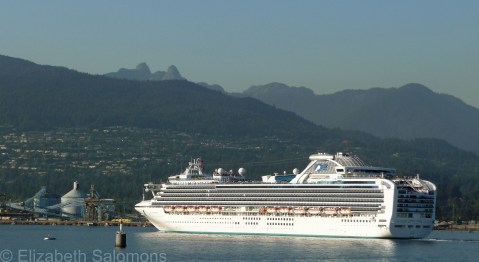
A repositioning cruise is when a ship based at one port sails to another port where it will be based for the next season. Typically, repositioning cruises take place on ships relocating from northern-hemisphere ports to southern-hemisphere ports, or vice versa, and they occur at the beginning or end of a season.
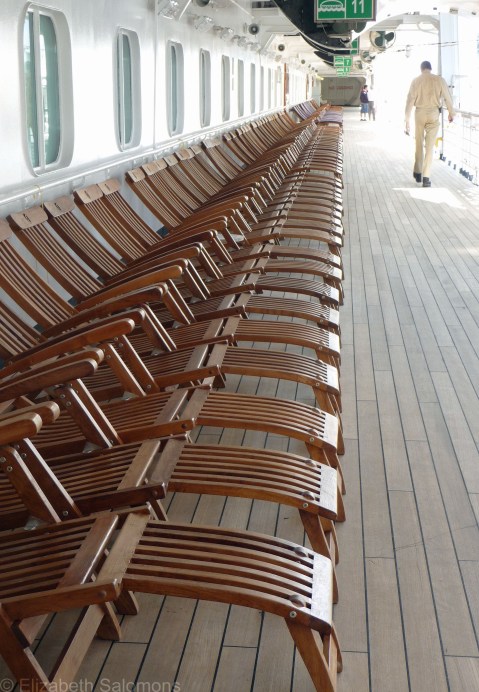
Twice a year, in May and September, there are repositioning cruises that stop to pick up passengers in Vancouver. These ships sail all the way to … Seattle. Yup, these would be the shortest of all repositioning cruises.
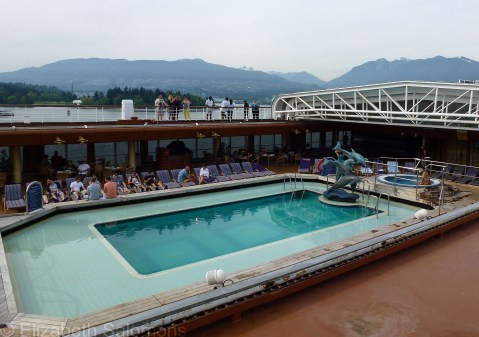
I’ve taken a couple of these cruises. One was a few years ago in the fall, when a ship was relocating from its base in Vancouver to the South Pacific after a summer of cruising up and down BC’s Inside Passage to Alaska. A friend and I boarded the ship in Vancouver. After we got off the next day in Seattle, the ship sailed on to Hong Kong and Australia.

The other was just two weekends ago, when my friends and I were on a ship that was repositioning from San Diego to Seattle, but made stops in Victoria and Vancouver along the way.
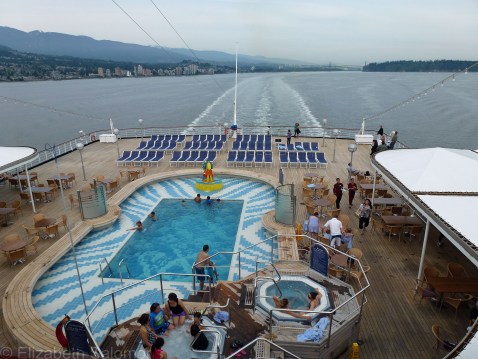
Mini-cruises are a great deal. Included in the fare are three meals, transportation from Vancouver to Seattle, and a night’s accommodation for less than you’d pay for one night in a Vancouver hotel. While on board, we saw couples, groups of couples, groups of friends, and entire multi-generation families who, like us, were enjoying all the amenities these ships have to offer.
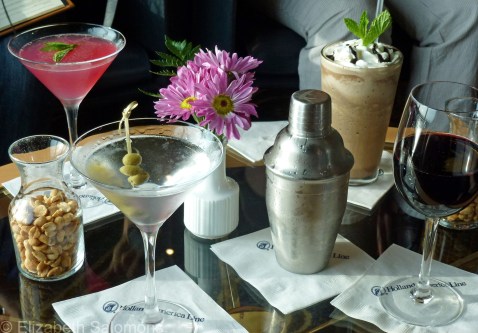
The cruises are also a great way to get a wee taste of cruising life before you commit the time and money to a longer cruise. For Vancouverites who are looking for something different to do on a weekend, but don’t have the time or inclination to go far, take a cruise to Seattle.

Through My Lens: Kits Pool
It’s summer ― though you wouldn’t know it by the temperature outside. No, I’m not talking about today’s weather, but the date.
Today is the first day of the May Long Weekend, officially known as the Victoria Day weekend. It’s the weekend when Canadians traditionally open up the cottage or go off on their first camping weekend of the summer.
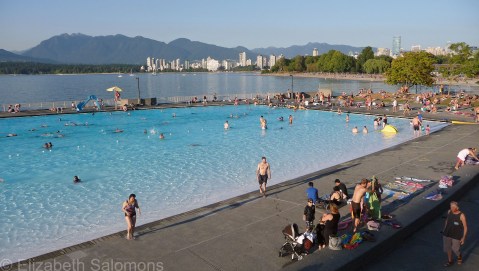
In Vancouver, it’s also opening weekend for our collection of outdoor swimming pools. Which is why I’m posting a photo of Kitsilano Pool.
Kits Pool is 137.5 m long, making it the longest pool in Canada, and is the only salt-water pool in Vancouver. It’s located alongside Kitsilano Beach.
Cruising Season
Yup, it’s that time of year. The cruising season is upon us here in Vancouver.
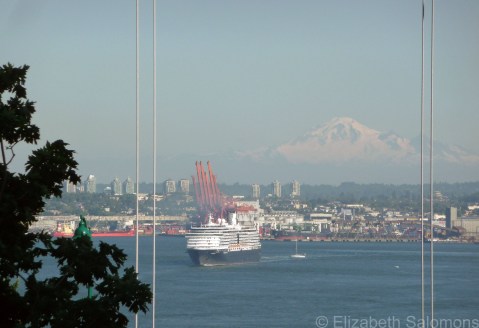
A cruise ship sails out of Vancouver’s Burrard Inlet, with Washington’s Mount Baker in the distance.
The first ship arrived on April 18, but the season didn’t really kick into high gear until this week with the arrival and departure of 13 ships in eight days. From now until the end of September, between five and seven ships will dock in Vancouver every week, with each ship staying just long enough to offload its passengers and get the next bunch safely on board.

It’s rush hour — three cruise ships leave Canada Place within an hour of each other.
A total of 17 cruise ships will be based in Vancouver this season, setting sail each week for Alaska. Their route takes them through the Inside Passage along BC’s coast. Later this afternoon, I’ll be boarding one of those ships, but my destination is nowhere near as exotic as Alaska. I’m headed south — to Seattle.

Holland America has five ships based in Vancouver this season.
Dishing: Bitter Tasting Room
 Many years ago (too many to share with you), I was backpacking around Europe with a friend. One hot, sunny afternoon in late September, we climbed 509 stairs to the top of Cologne’s beautiful cathedral. Once back on terra firma, we headed straight to McDonald’s for some lunch. (I know, I know … but what can I say? We were students on a tight budget.)
When I saw beer on the menu, I ordered one, despite the fact that I didn’t actually like beer and had never managed to swallow more than a sip or two. But hey ― it was a really hot day and I had just climbed up and down the equivalent of a 30-storey building. And yeah, I did think it was pretty cool that I could buy a beer at McDonald’s.
You know what? It was the best beer I had ever tasted. I became an instant and committed convert to the beverage. My theory is that, until that point in my (then) young life, I had simply not been introduced to the right kind of beer. It took a German beer ― in McDonald’s no less, but German nonetheless ― to get me hooked on the stuff. I’ve enjoyed many a cold one since.

Why do I have beer on the brain, you ask? It’s because this past weekend was the first of the year that we Vancouverites enjoyed summer-like temperatures. And so, I thought, what better time to introduce my readers to one of the best craft beer taprooms in the city.
Bitter Tasting Room is located near the corner of Hastings and Carroll in what is actually more Downtown Eastside than Gastown. I’ve been here a couple of times ― the first time, ironically, at the suggestion of a friend who doesn’t herself drink much beer (so I knew it must be good if she was willing to go), and the last time with my sister just last night.
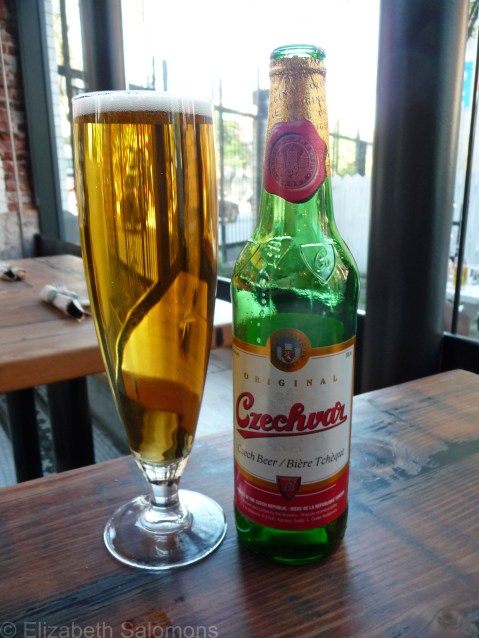
Bitter offers a selection of more than 60 bottled beers from North America or Europe, with a particularly strong selection of Belgium beers. 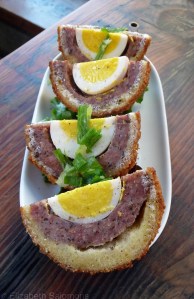 You can also order a pint of draught from a choice of about eight local craft beers. Or you can order a flight of beers, and sample three at once.
The food is typical German and English pub fare — sausages, Scotch eggs, and a killer kale Caesar salad are a few examples. In wintertime, I enjoyed a tasty dish of cassoulet, a slow-cooked stew made with duck confit, pork belly, sausage, and braised beans that comes from the Languedoc region of France.
Bitter is part of the Heather Hospitality Group and I have yet to be disappointed by an evening spent in one of their establishments.

Through My Lens: Nitobe Memorial Garden
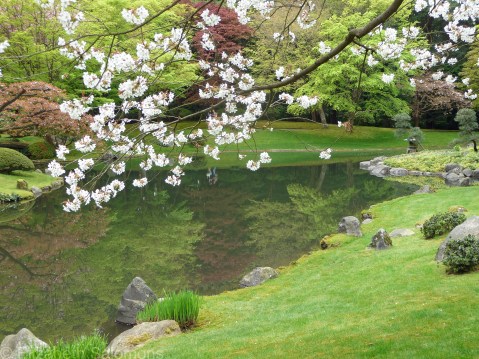
I took this photo last Friday in the beautiful Nitobe Memorial Garden. This garden is located at the opposite corner of the UBC campus from my office ― which makes for a nice walk when I’m on my lunch break. As I’ve noted before, I think UBC is a beautiful campus. The Nitobe Memorial Garden only reaffirms my belief.
Through My Lens: Bastion Square

One last look at Victoria, and then we’ll leave what a friend of mine who lives there likes to call “City of the Newlywed and Nearly Dead.”
This photo was taken in Bastion Square, a pedestrian-only street that begins at the corner of View and Government, where the North Bastion of Fort Victoria once stood, and ends at Wharf Street, overlooking the Inner Harbour.


 There and Back Again