
Through My Lens: Fishing

Summer may be waning, but there are still photos to post.
I came across this woman fishing in Burrard Inlet early one morning several weeks ago.
Through My Lens: Second Beach Pool
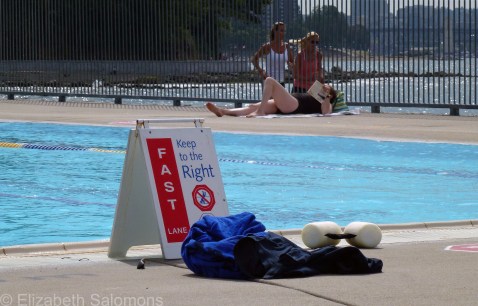
Today is the last day of summer. We might be able to fool ourselves for a few more weeks, weather permitting, but the truth is the days are getting shorter and the leaves are starting to turn.
This is Second Beach Pool in Stanley Park. It’s located at a lovely spot along the seawall overlooking English Bay. Like all of Vancouver’s outdoor pools, today was the last day of its season.
Tomorrow, it will be empty and lonely.
A Forest in the City

After I wrote my post about Cathedral Grove, I started thinking about the forest I live next door to. I’m talking about the one in Stanley Park. (You know, the wee park Tripadvisor thinks is # 1 in the world.)
What makes Stanley Park so special is it is as much forest as it is park. I can’t think of another city with a forest in its centre that equals the area of its downtown business core. (If you know of one, please tell me. I would love to visit.)
The peninsula that is Stanley Park has been logged several times, but today it is as dense with trees as it was 150 years ago. There are about half a million of them, ranging in height up to 75 metres.
Truth is, windstorms have done more damage to the trees in Stanley Park than logging. There have been three notable storms: one in 1934, another in 1962, and the one I remember ― the windstorm of December 15, 2006. Winds of 115 kilometres per hour downed over 10,000 trees (total tree area lost was 41 hectares), with most of the damage to the western side of the peninsula, particularly around Prospect Point. I took a long walk through the park on Christmas Day 2006 with my sister and my heart sank when I saw the damage. All of the trails through the park were impassable; fallen trees lay across them like pick-up sticks. Imagine if Stanley Park had been picked up by its four corners, given a good shake, and then set down again. That is what it looked like from the ground.
From the air or the water, it looked like someone had come through the park with a scythe. Many of the trees still lie where they fell. I took this photo sometime during the winter of 2011, more than five years later.
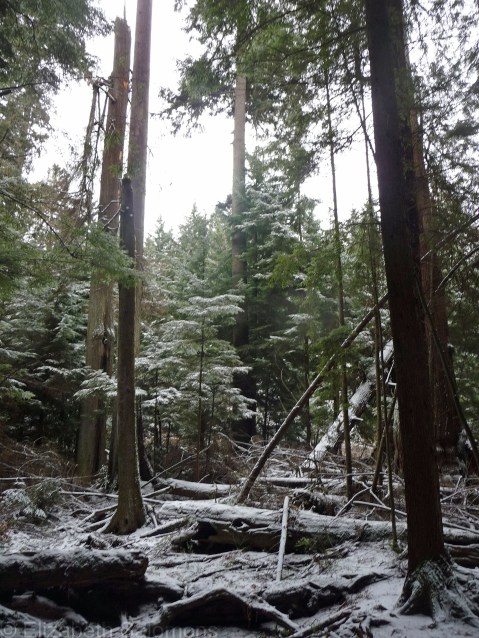
But a few good things came out of that storm. Like a new and much safer parking lot at Prospect Point. There would have been a public outcry had the Park Board decided to cut down trees to make way for a much-needed parking lot, but once the trees were down ― well, there came an opportunity.
I benefitted from that storm, too. Because the seawall was closed for 18 months (so that it could be repaired and the cliffs above the seawall on the western edge of the park stabilized), I spent the summer of 2007 exploring the interior of the park ― something I had never bothered to do until then. Stanley Park’s seawall is so accessible ― and so beautiful ― that visitors to Vancouver (and one local blogger) rarely take the time to explore the interior trails. There are some 27 kilometres of them criss-crossing the park, most of which have their origins as skid roads used to skid out the cut logs. They all have names; one of them is called Cathedral Trail. (Which is why I started thinking of the forest in the city after writing my post about Cathedral Grove.)
A couple of years ago, Vancouver City Council enacted a smoking ban in the city’s parks. For good reason. It has been said that if a fire were to ever get out on control in Stanley Park during one of our hot, dry summers, the forest would be gone in less than an hour.
What a shame that would be.

Through My Lens: Siwash Rock
Big news this week: Tripadvisor named Stanley Park the # 1 park in the world. The world! We beat out both New York’s Central Park and the Luxembourg Gardens of Paris. Not bad, eh?
To celebrate, here’s a photo of Siwash Rock, one of the park’s most photographed attractions. Its Squamish name is Slhx̱i7lsh.

Spotted Towhee
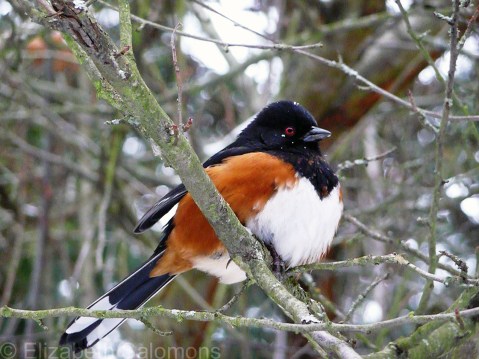
Since I now consider myself a quasi-birder, I thought I’d post a photo for World Migratory Bird Day, which this year is May 10 and 11. (Why it’s called a day when it’s actually a weekend is a puzzle to me, but there it is.)
This is a Spotted Towhee I photographed near Lost Lagoon in Stanley Park a couple of winters ago. Technically, it’s not a migratory bird for Vancouver as it lives here year round, but it is a seasonal bird in other parts of the continent.
Happy Birthday, Stanley Park!
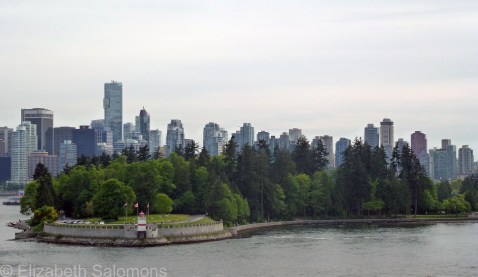
Stanley Park turns 125 today. The city threw a big party in the park last August to celebrate the occasion, but its actual birthday is today, as it was on September 27, 1888, that the park was first officially opened to the public.
At 1000 acres, Stanley Park is the largest of Vancouver’s parks, and also its most popular. It contains an estimated 500,000 fir, hemlock, and cedar trees, and has three beaches, a lake, a lagoon, an 8.8-km seawall, and many more kilometres of walking trails that meander through its interior.
It’s named after Lord Stanley of Preston, Governor General of Canada from 1888 to 1893.
Great Blue Herons
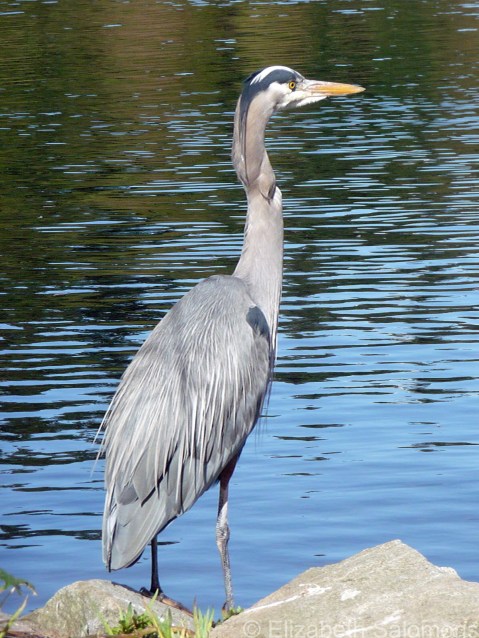
The herons are back!
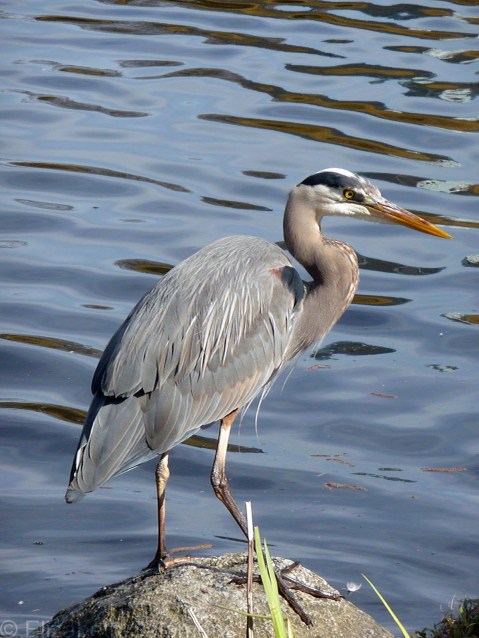
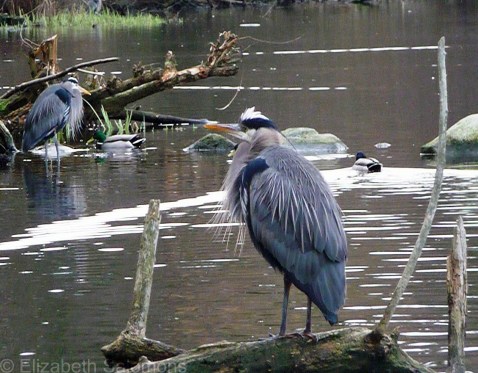
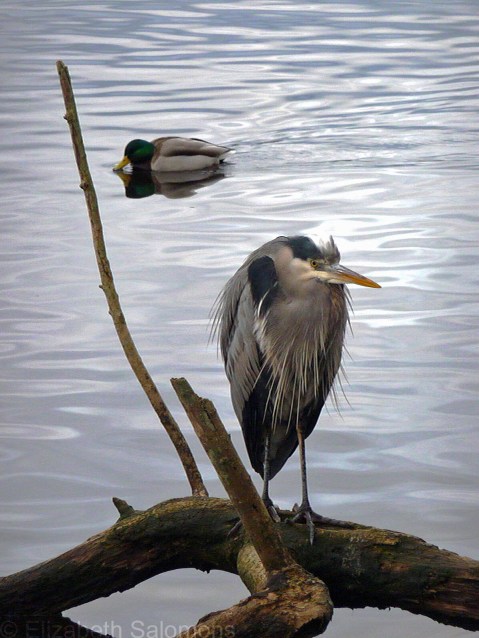
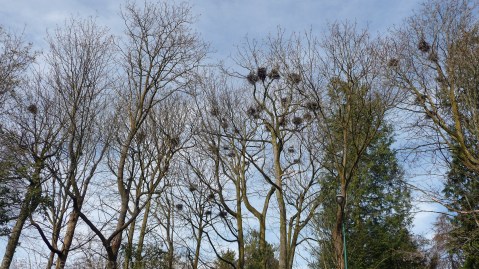
A sure sign of spring for me ― even more than crocuses or cherry blossoms in bloom ― is when the Pacific Great Blue Herons return to Stanley Park. They arrived a few weeks ago. This is the thirteenth consecutive year they’re nesting in what is one of the largest urban Great Blue Heron colonies in North America. Last year, the Stanley Park heronry hosted 86 mating pairs, which produced 169 fledglings.
The heronry is fenced off to keep people from walking beneath the nests, and metal flashing placed around the base of the trees keeps the raccoons from climbing the trees. The eggs are at risk from bald eagles, though, which also live in the park.
The Pacific Great Blue Heron is the largest heron native to North America.

Through My Lens: Cherry Blossom Time
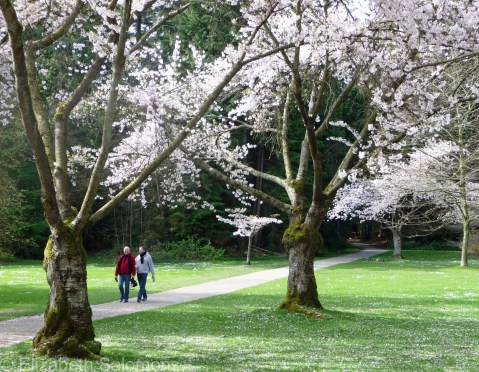 Vancouver has almost 40,000 cherry trees that burst into bloom every March and April. It’s my favourite time of year.
Through My Lens: Stanley Park in Winter
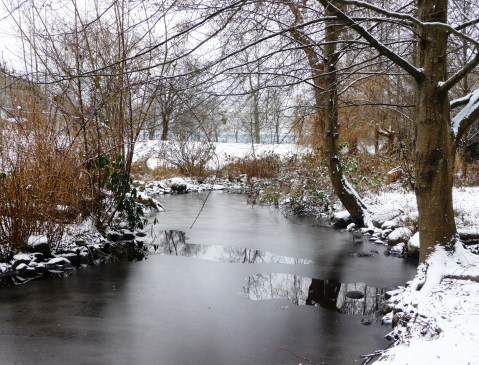
Vancouver received a blanket of snow this week. It doesn’t happen often and it never lasts long, but when it does, it’s awfully photogenic.


 There and Back Again