
Santorini Then and Now
My first-ever visit to Santorini took place in November and the Greeks we met seemed puzzled.
“Why do you come so late in the year?” they asked. We described Canada in November. I had the distinct feeling they didn’t believe us.
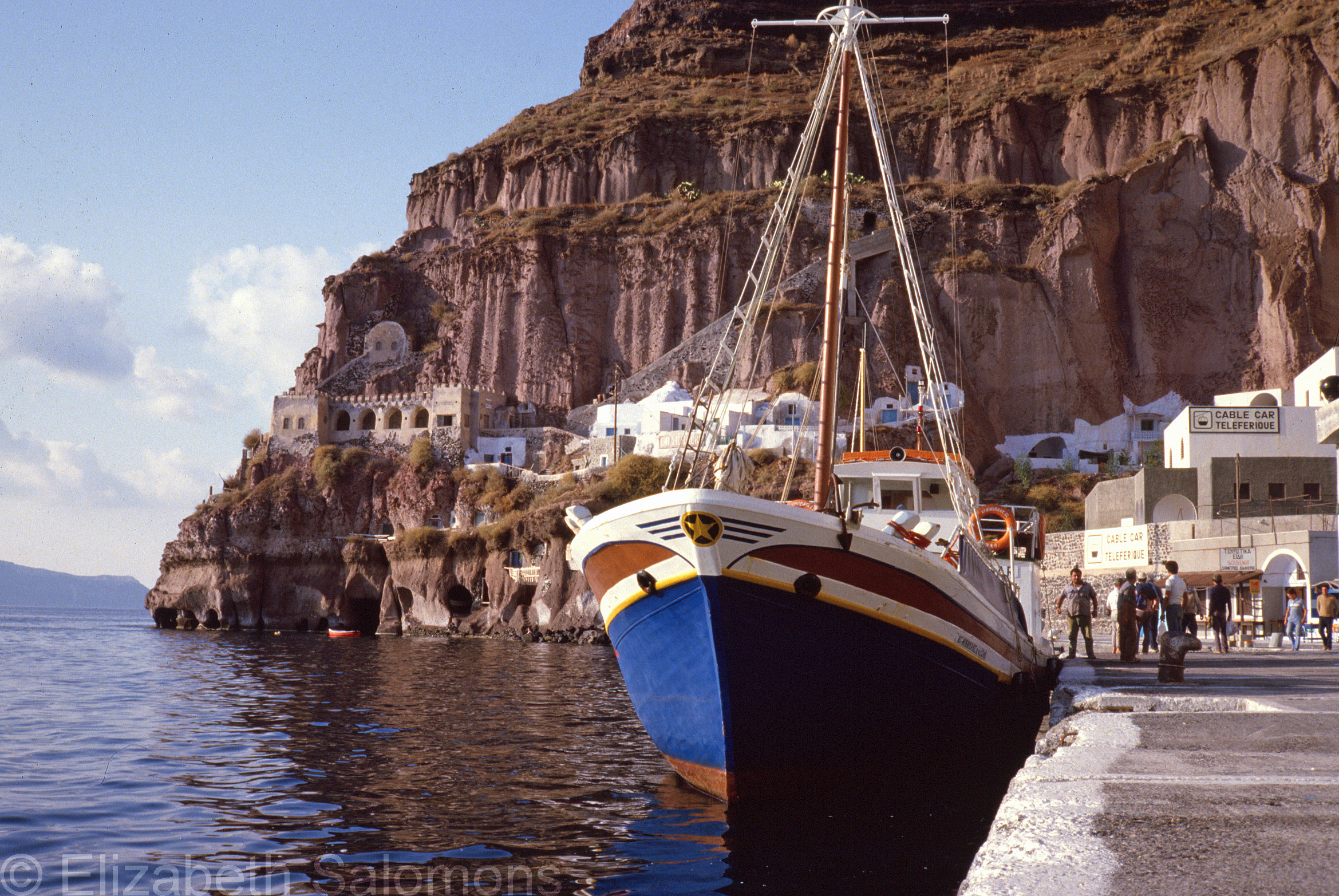
Old Port of Santorini (Then)
Back then, the Santorini airport couldn’t accommodate jets and the terminal wasn’t much more than a shack. My friend and I grabbed our backpacks off a cart on the tarmac and then looked around for the bus we’d been told would take us into town. It was parked just beyond the baggage cart, its engine door removed and most of its motor parts scattered on the ground.
Taxi, then.
Within an hour, we found ourselves a large triple room with ensuite for the astonishing price of $11 a night. After months of hostelling around Europe, it was definitely an upgrade.
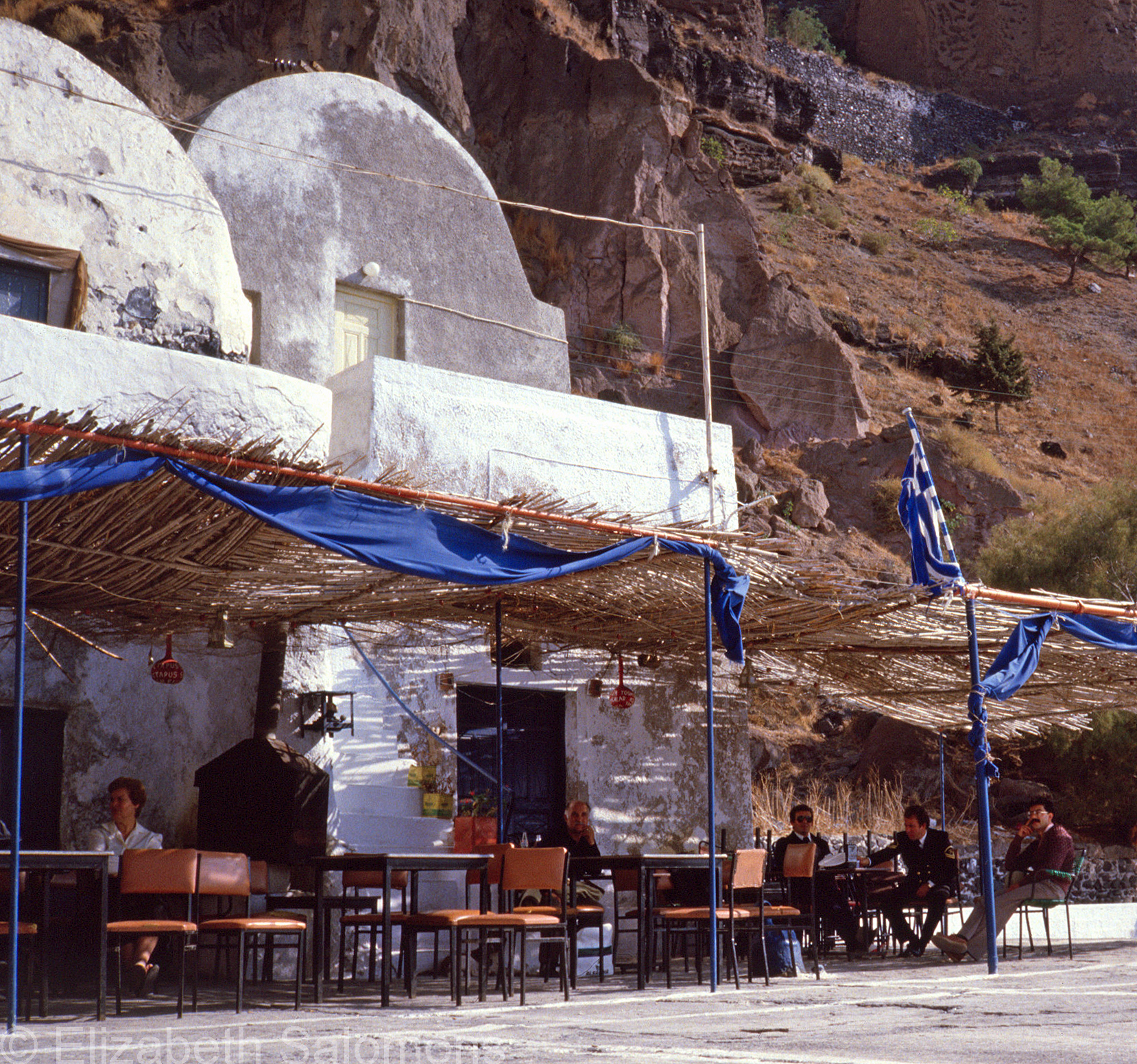
Taverna at the Old Port of Santorini (Then)
Most of the restaurants in Fira were shut up for the season and those still in operation opened late and closed when they ran out of food. There were no menus. You went to the kitchen to see what was on offer each night and then made your choice.
Our pre-dinner entertainment was to join other travellers (mostly Canadians, for some reason) on the terrace of a clifftop hotel that was closed for the season, drinking wine or ouzo and making bets as to what time the sun would set.
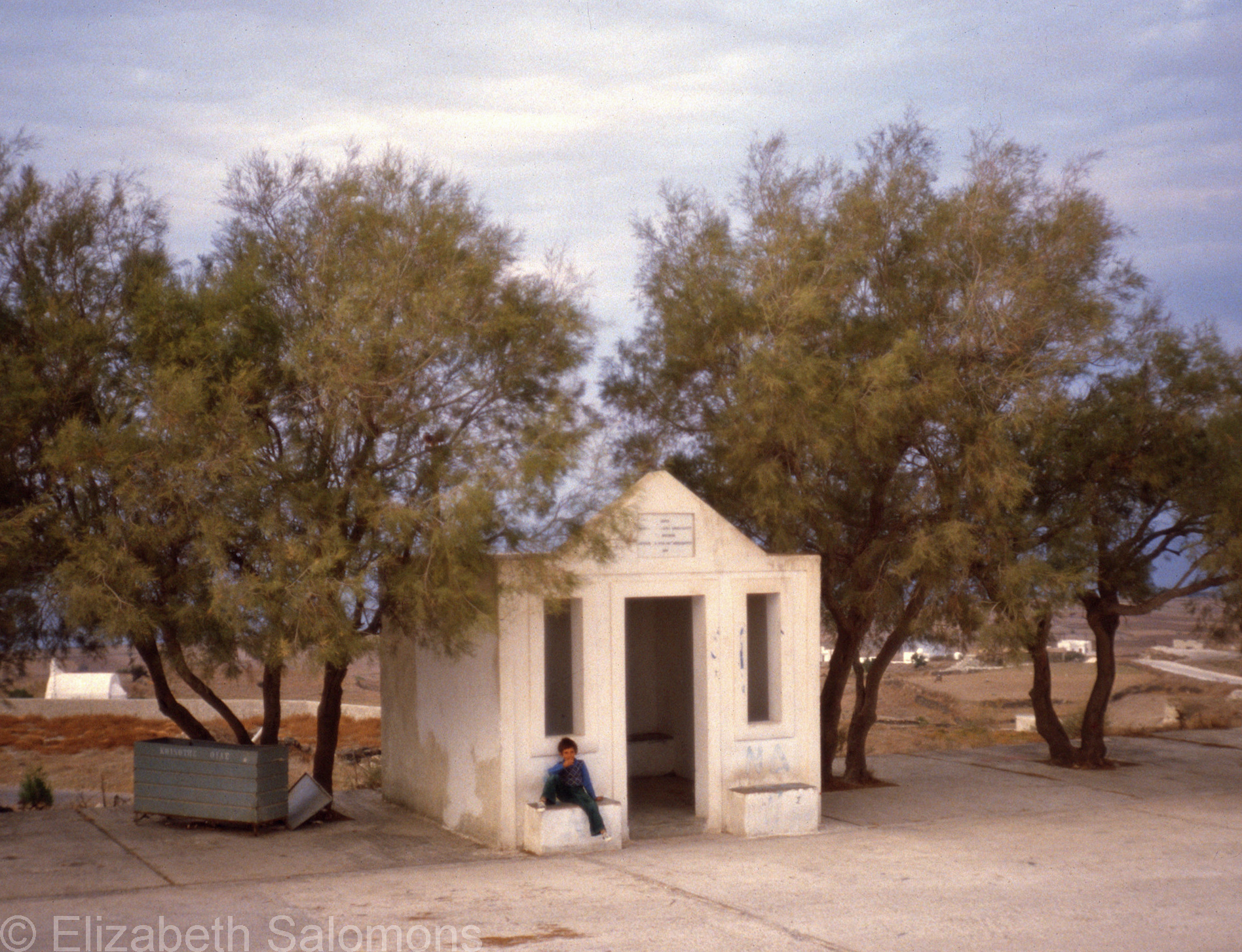
Santorini Bus Stop (Then)
On this, my second visit to Santorini, I arrived by ferry to a port spilling over with thousands of tourists. I’d had the foresight to book a hotel pick-up and so I walked past all the chaos until I saw a driver holding up a card with my name on it.
My companions in the minivan were a Brazilian couple with gold rings so shiny I assumed they were honeymooners. Thirty minutes later, we were at our hotel in Oia. The receptionist checked the Brazilians in first, explaining in detail all the ways they could spend their money: renting ATVs, horseback riding, wine-tasting, a sunset cruise, a full-day cruise, the spa…
When it was my turn, the receptionist asked if I’d been to Santorini before. She was bewildered by my answer; it was as if she couldn’t compute the math involved.
A few hours later, it was my turn to be bewildered. I couldn’t believe the crowds on the streets of Oia. I’d been warned, but sometimes you have to see it to believe it.

Night View of Santorini (Now)
Because I had stayed in Fira my first time on Santorini, I chose to say in Oia this time around. But absolutely nothing about either place looked familiar.
Fira’s central square, with its bus and taxi station, banks, and pharmacies, might have been where my friend and I waited at 3 am for the bus to take us to the port to catch a ferry, but I honestly don’t know.
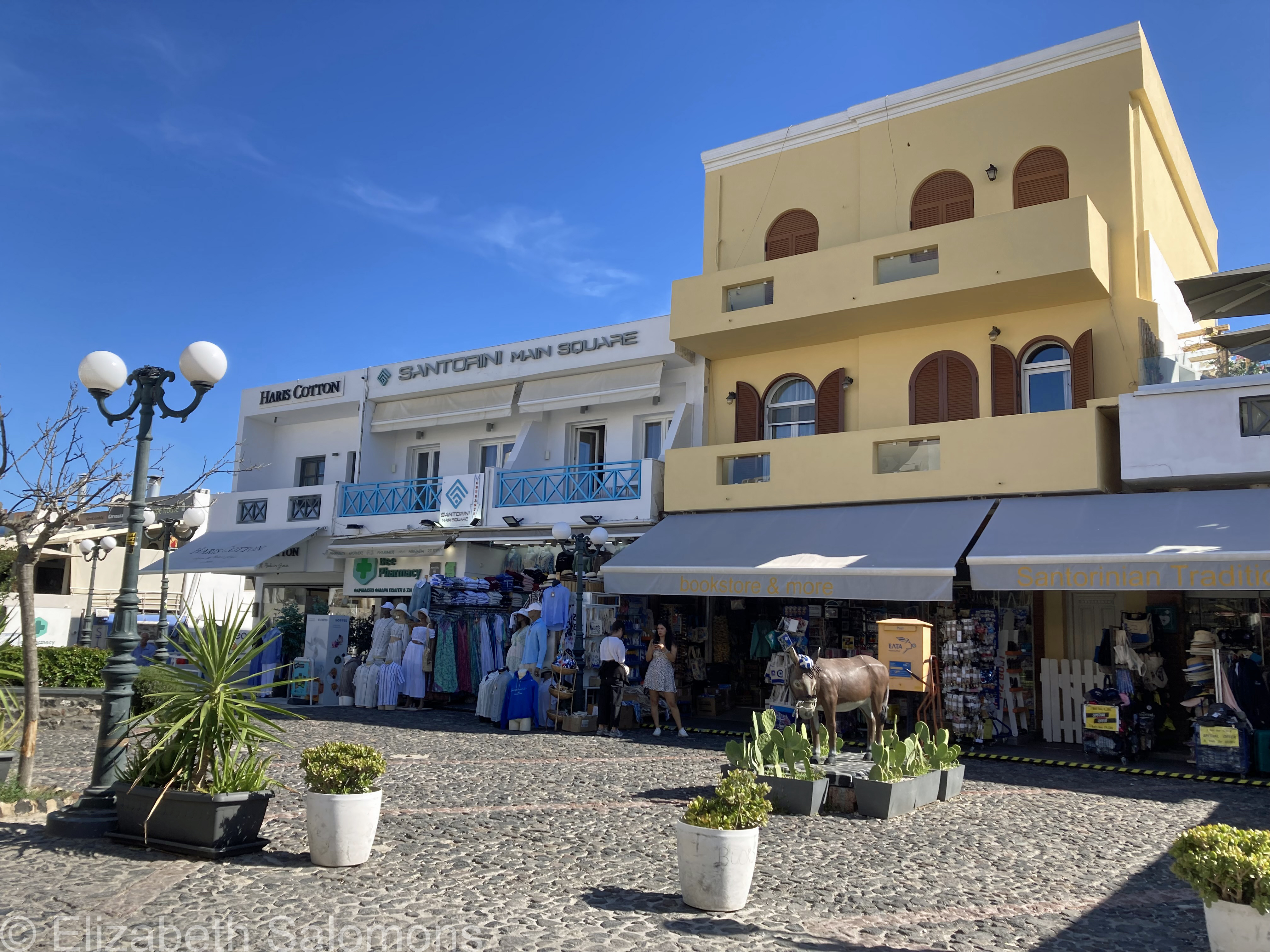
Main Square of Fira (Now)
Truth is, Santorini then was much more like Serifos is now.
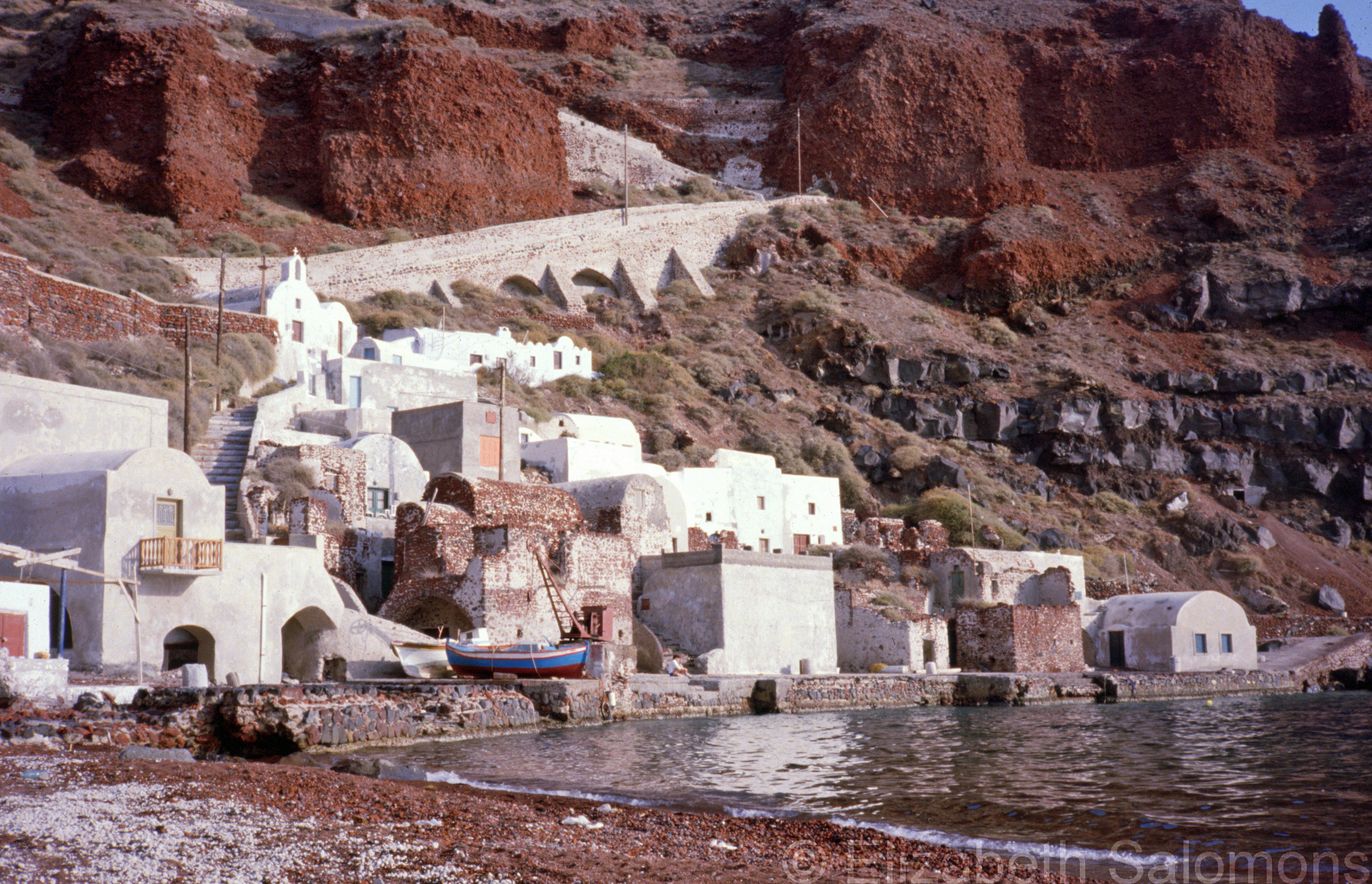
Oia (Then)
Oia had no services and was mostly in ruins.
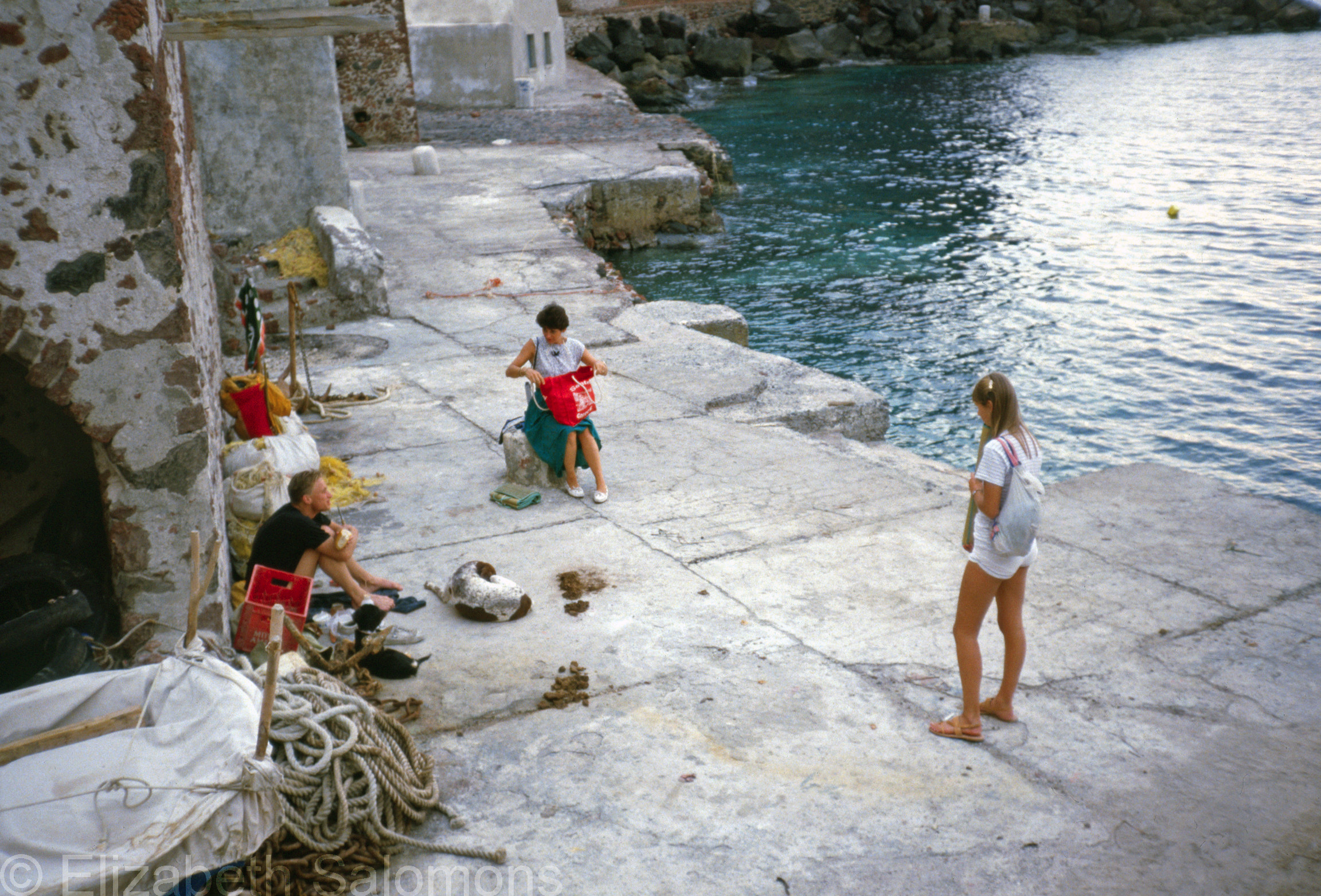
Meeting Up with Other Travellers in Oia (Then)
Forty years ago, there were no sunset cruises on a catamaran.
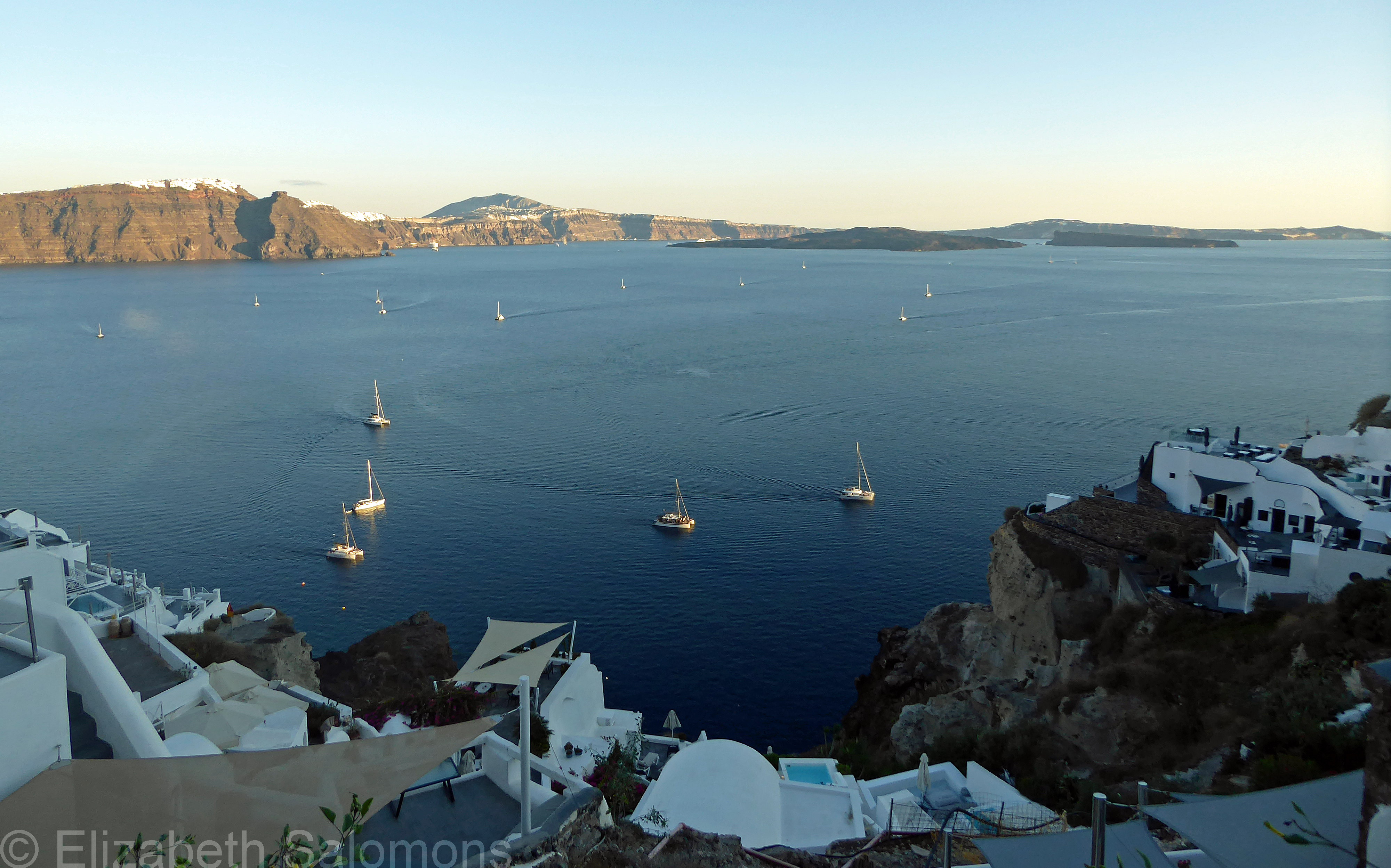
Sunset Cruise (Now)
Instead, my friend and I jumped on a boat to the uninhabited, barren island in the centre of the caldera to attend the village festival (panegyri). We were fed olives and bread and given as much wine as we wanted.
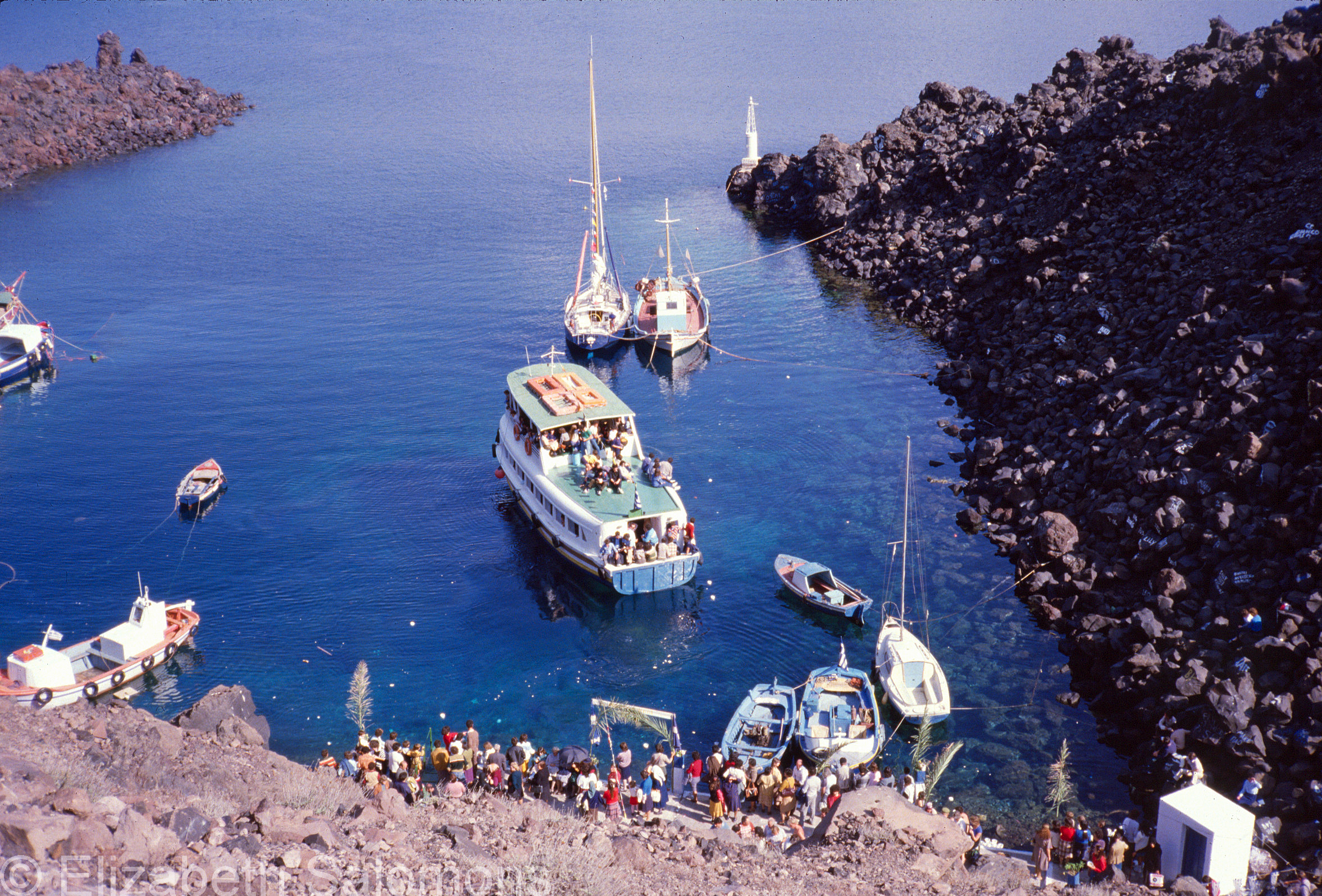
Village Boat (Then)
All the tourists on the island had been invited to the panegyri. We ended up attending two in three days and a third one took place the day after we left.
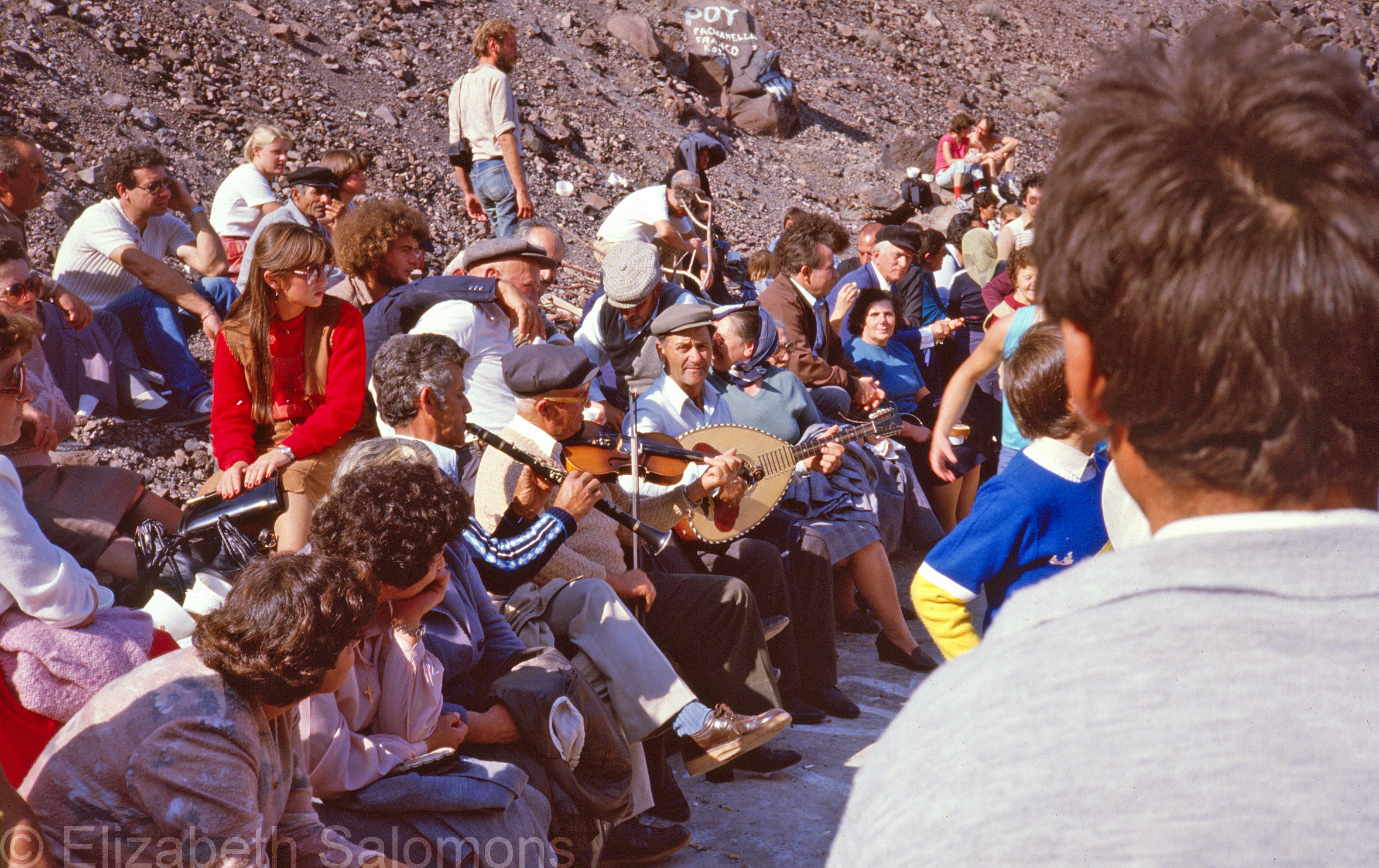
Santorini Panegyri (Then)
What hasn’t changed in forty years is that sunset viewing is still the main event of the day on Santorini. But thanks to social media, getting a photo of the sunset has become a blood sport. Everywhere in Oia were long lines of people waiting their turn at the perfect position to get that perfect photo.
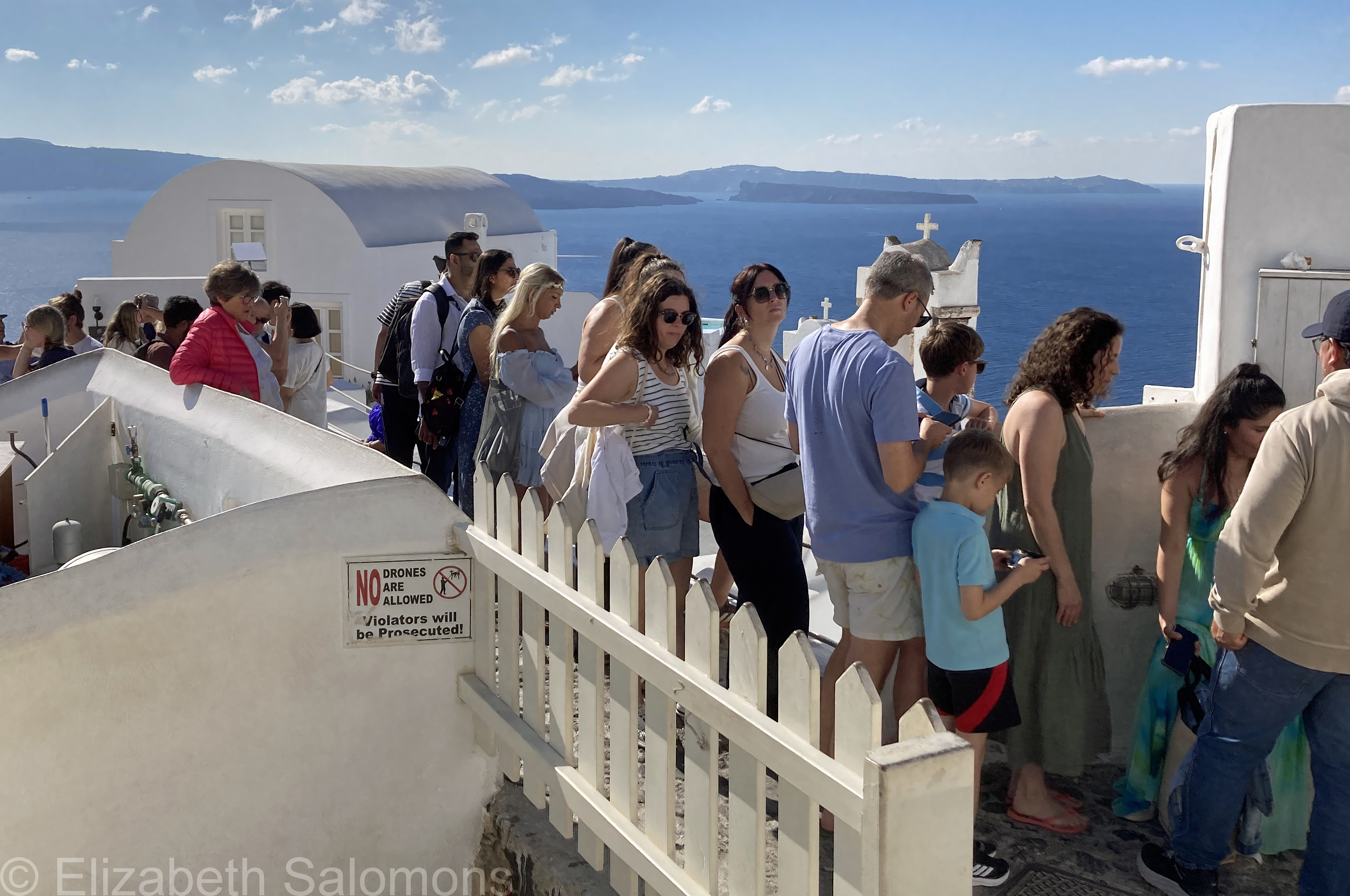
Meeting Up with Other Travellers in Oia (Now)
On my last morning on Santorini, after hiking a ways up the path to Fira to see what I had missed the day before, I turned around to take a photo of Oia. I never take just one, and after a few minutes, I stepped back to hear a man next to me snap, “Are you done yet?”
I didn’t say a word but continued looking at the view of Oia from the wide-open space we were sharing and thought, “Oh, you sweet summer child. You have no idea what’s waiting for you down there.”
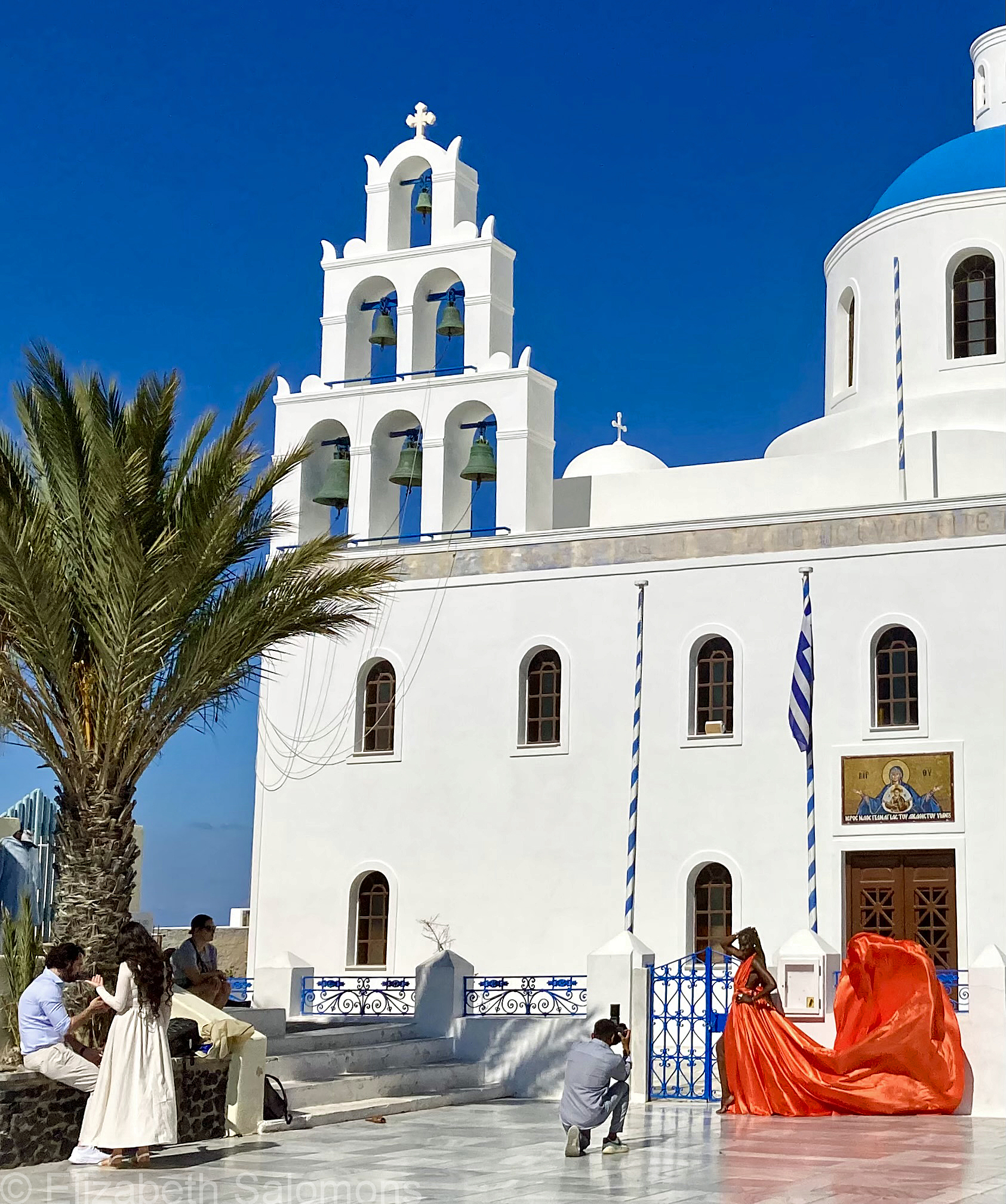
One of the myriad ways to spend your money on Santorini (now). The photographer, the dress, and the assistant (who flings the dress in the air) are all hired by the hour.
A busy port along the Russia–Egypt trade route, Oia reached its first economic peak around the turn of the last century. In 1890, it was home to 130 sailing ships that supported 2500 residents. But when steam replaced sail, the sea trade shifted to Piraeus (Athens), and people began to leave Oia — and Santorini.
A massive earthquake in 1956 destroyed a third of the island’s homes and caused significant damage to most of the rest. Parts of Oia collapsed into the sea; by 1977, its population had shrunk to 300.
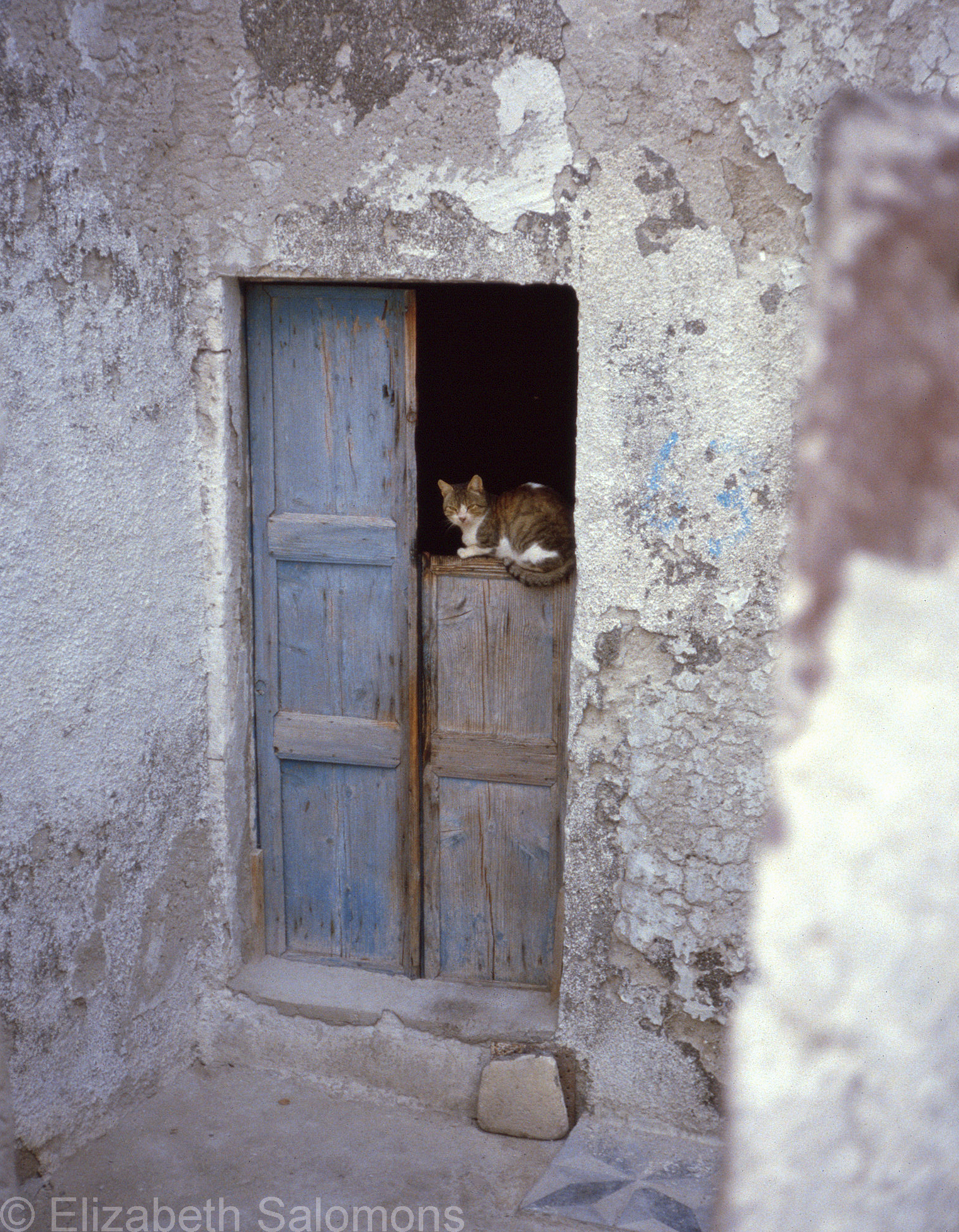
Oia Cat (Then)
Although the English Romantic poets had a thing for Greece, mass tourism didn’t take hold until the 1960s. One reason it became possible was (a) the arrival of electricity in the Cyclades and (b) a concerted effort to save traditional houses by turning them into tourist accommodations. The latter was a government initiative — and it saved Santorini.
Today, a third of Greece’s GDP is from tourism. On Santorini, the number jumps to 90 percent. Here are more numbers to boggle the mind: Santorini receives 3.4 million visitors a year and as many as 17,000 tourists from five cruise ships in a single day, yet has a resident population of only 15,000.
The number of visitors is only expected to increase in future years, pushing the island to its limit in terms of infrastructure, and, in particular, water. For that reason, a cap of 8000 cruise ship visitors per day was established in 2025.

Cruise Ship in the Caldera (Now)
If Santorini is a textbook example of what happens with overtourism, what is the solution? Should we stop travelling?
Ask anyone whose livelihood depends on tourism, and they’d say, “please don’t.” And be honest: if you were raising a family on Santorini, wouldn’t you want your children to be able to make a living without leaving home?
Each of us has to make these kinds of ethical decisions for ourselves. My choice has been to do what I call “slow travel.” As much as I can, for as long as I can, I immerse myself in a community. Home exchanges allow me to do that. I participate in the local economy when I buy my groceries and eat in family-run restaurants. I try my best to experience a new city or country as a local and come away with a newfound appreciation and understanding of a different culture.
When I do have to book hotel rooms, I look for family-run guest houses or pensions, rather than international corporate chains. And because I don’t have to worry about the timing of school vacations, I’m able to travel in the off-season. This extends the tourist season and takes some of the pressure off the high season for the more popular destinations.
When I told my home exchange partner I was going to spend a few days on Santorini, she tried to dissuade me. “There are so many other, more interesting islands,” she said.
I totally get why she said that. But I was curious to see for myself how the island had changed, and from an anthropological point of view, it was fascinating to see. Beyond our own city or country, we rarely have the opportunity to see how time changes a place.
I’m so glad I got the chance.


