
Panegyri on Serifos
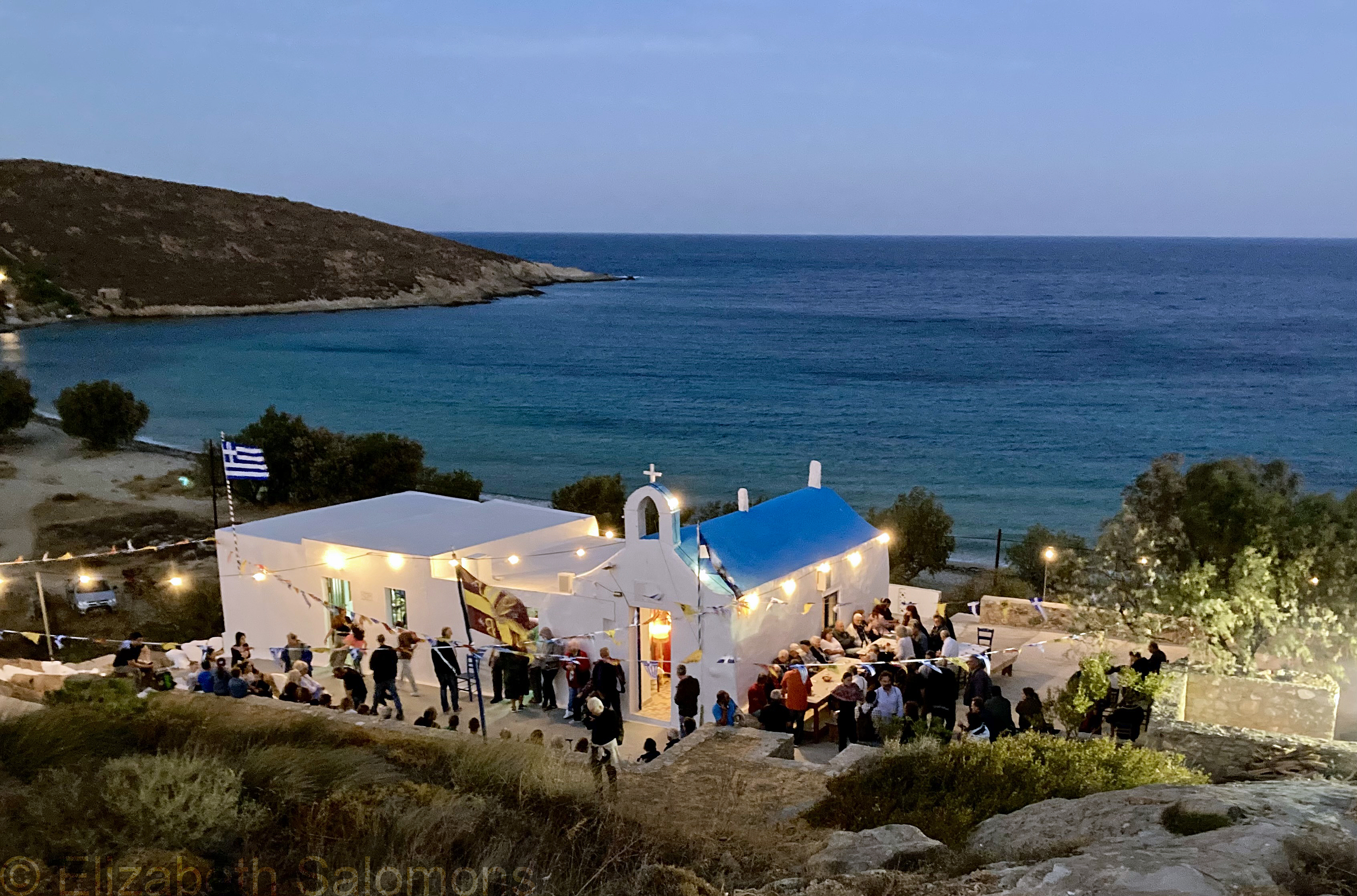
It hadn’t even been 24 hours since my arrival on Serifos and I was already on my way to a party. My home exchange partner had invited me to a panegyri.
Truth be told, I dithered about whether to go. Who would I talk to? How would I get home? That was the introvert in me talking. But the traveller in me was desperate to go. And in the end I went because I could hear in my head the voice of my dearest friend, saying, “What do you mean you didn’t go?”
Panegyria are a centuries-old tradition in Greece. The word comes from the Greek word pan (meaning all) + ageiro (meaning to gather). Originally, they were large gatherings dedicated to the worship of a deity, but, over time, they have shifted to celebrating Christian Orthodox saints.
Panegyria are especially common in rural communities and on the islands where local families take on the responsibility of maintaining and caring for the many small churches. As each saint’s day is celebrated, the family responsible for the church dedicated to that particular saint hosts a community feast, complete with live music and dancing.
Tourists are always welcome. On my first visit to a Greek island (decades ago, when I was travelling the European continent on a train pass), my friend and I ended up at three such festivals within four days.
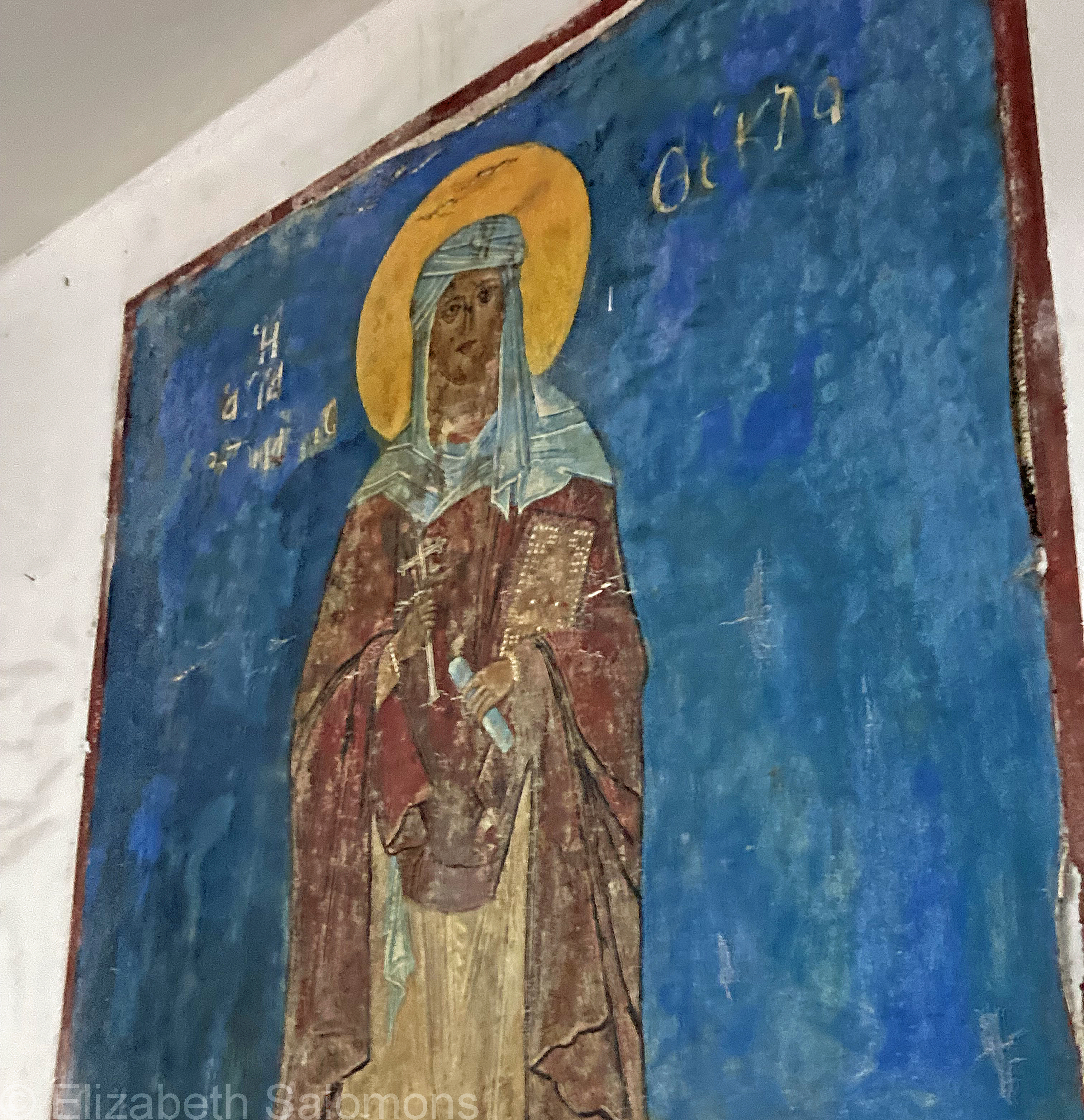
The panegyri I attended on Serifos was at the church of Agios Ioannis (Saint John the Apostle). We were too late for the religious service, but made our way into the chapel anyways, just for a moment, where we left a donation and my home exchange partner lit a candle.
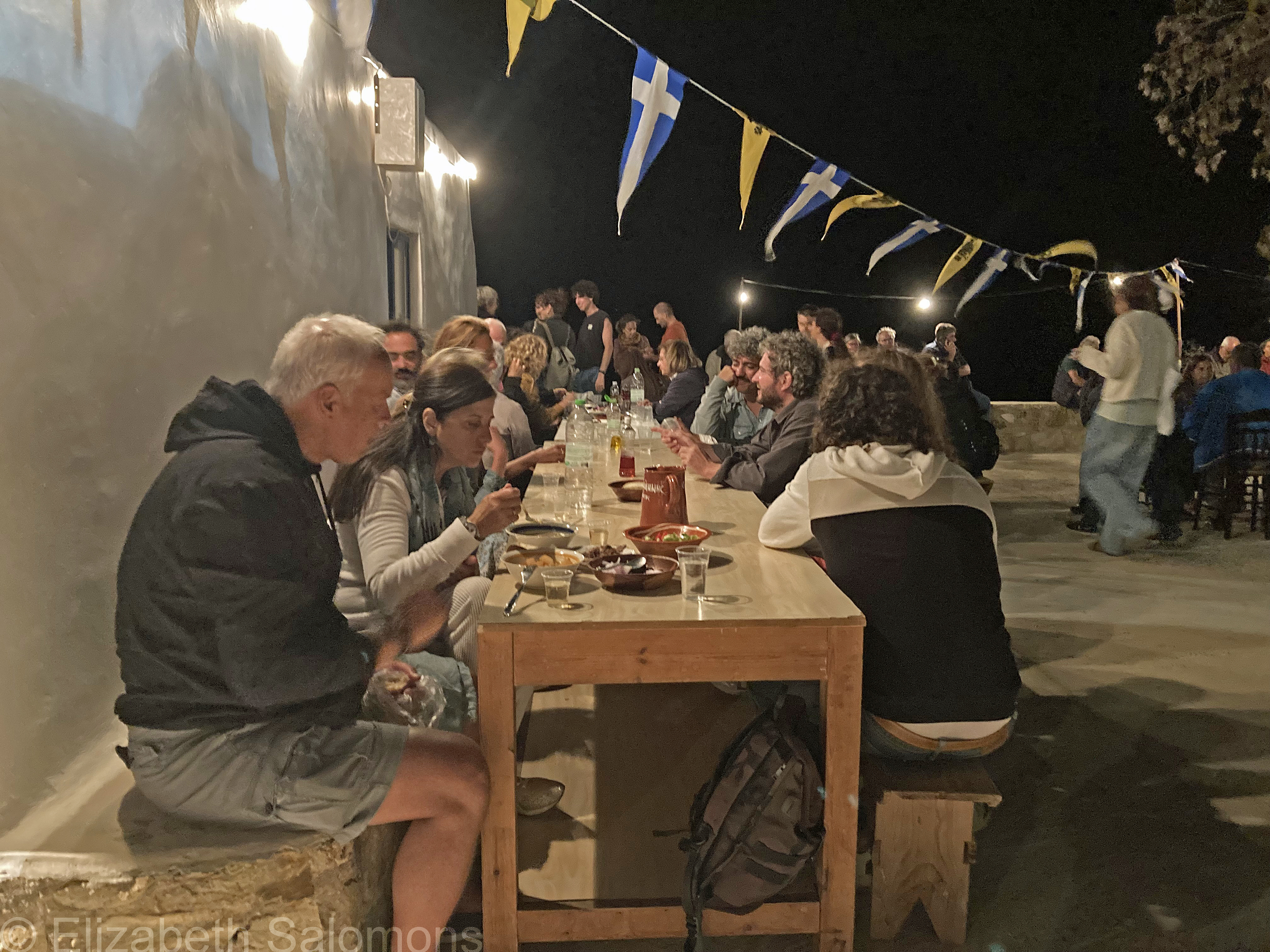
Outside was a table where everyone ate in shifts; my home exchange partner introduced me to her friends and we stood and chatted until it was our turn to eat. There was wine, potatoes, some kind of grilled meat, fava bean soup, and lots of bread. It was clearly a family affair with the men grilling the meat, the women running the kitchen, and the children serving the food.
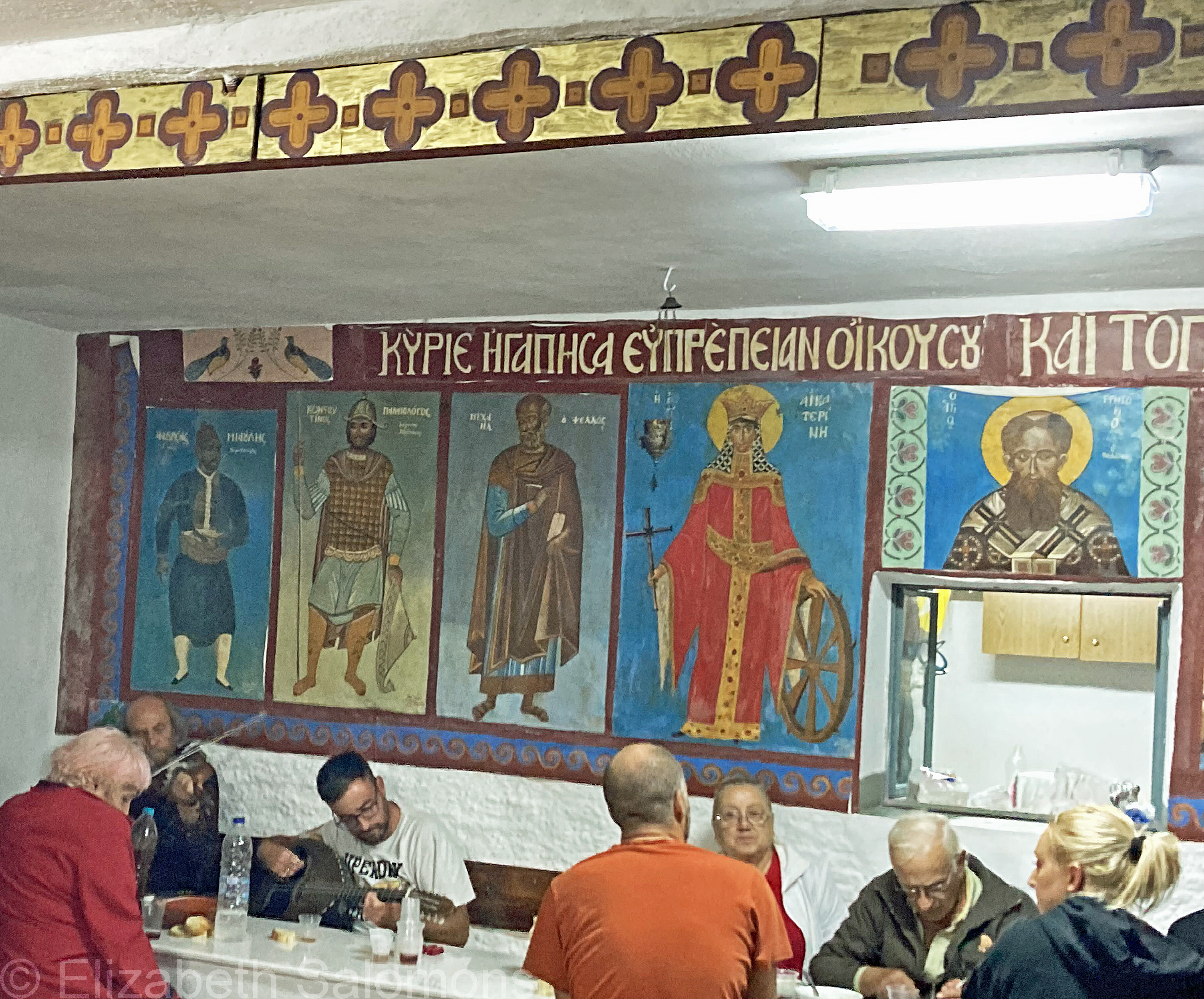
Eventually the music started up in the portion of the building next to the kitchen and we moved indoors to listen. Someone played a violin, another a bouzouki. The songs were long and when they ended, there was lots of applause. The musicians would rest for a bit, then the bouzouki player started picking out another tune and it would all start up again.
It was quite late when my home exchange partner turned to me and laughed at the fatigue she could clearly see on my face. She jumped up and said she would find me a ride home. And a few minutes later, as I walked up the hill to the main road with the Serbian couple who were willing to give me a lift (they were also staying in the Chora), a group of young women, clearly tourists, passed us on their way down. They thought they had missed the panegyri. I assured them they hadn’t, but they were alarmed that they couldn’t hear any music.
“The music is indoors,” I said. “Go on down, you can’t miss it.”
Nor had I — and I was so glad I hadn’t.
The End of the Eras Tour
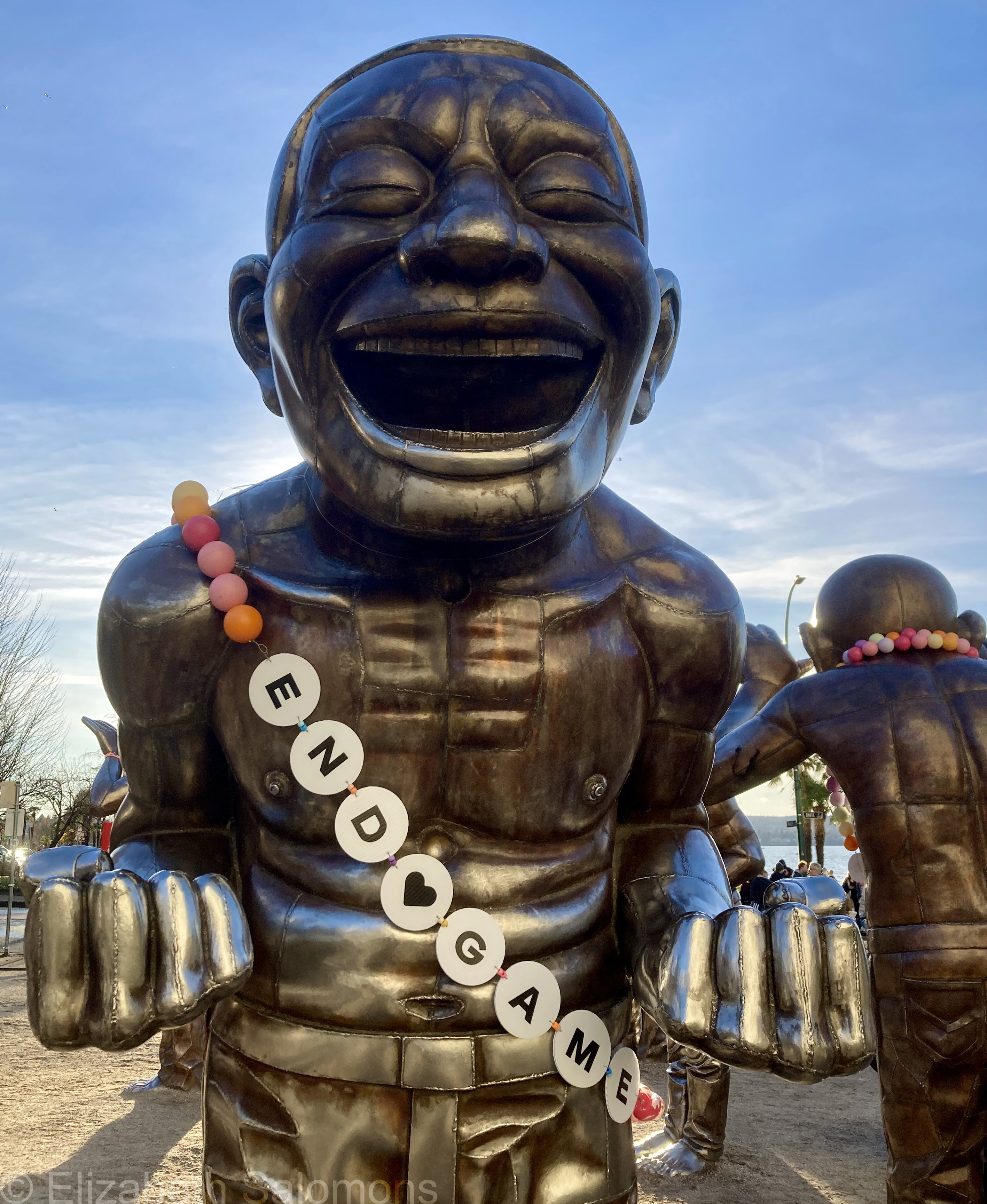
The hype is real, folks.
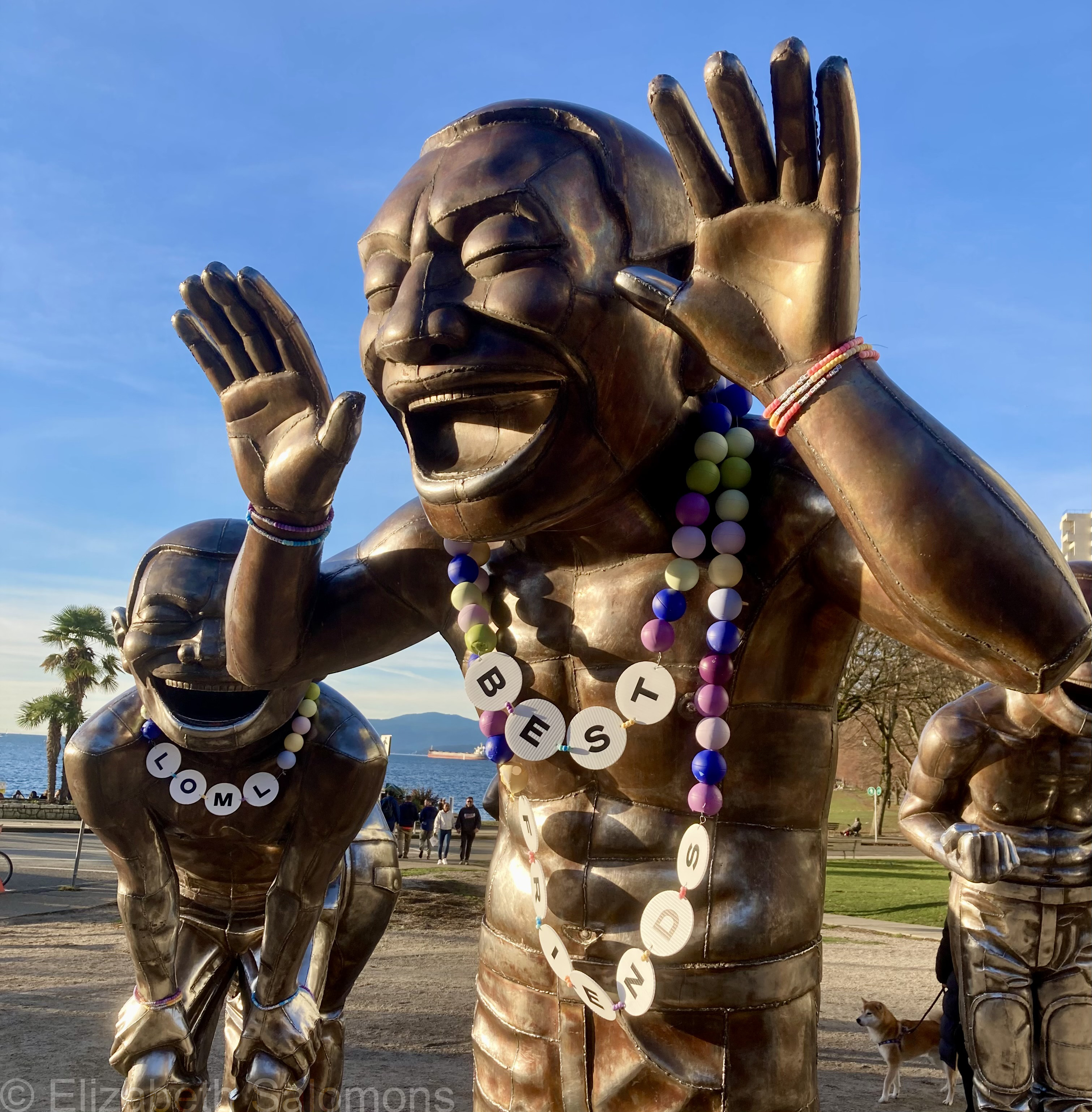
Honestly, I don’t think I have ever seen as much anticipation over a bunch of concerts. Yes, it’s Taylor Swift. Yes, she is a megastar. Yes, it’s the end of her tour. But this city has lost its mind.
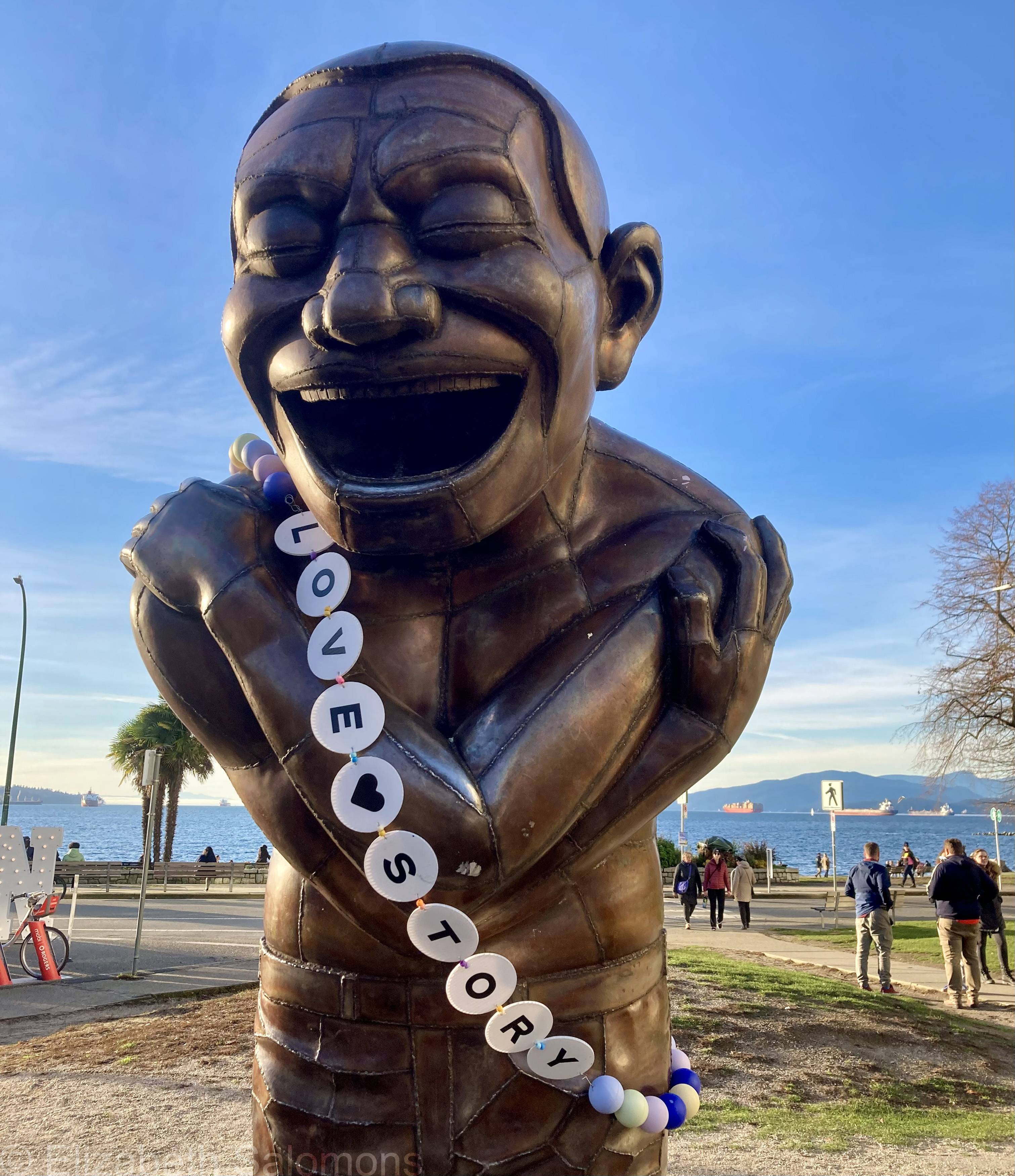
And I love it.
It’s been a long time since we all came together over a cultural event of this magnitude. It reminds me a lot of when we hosted the Olympics.
For weeks now, we’ve been warned about the upcoming traffic chaos. Three concert nights, two Canucks’ home games, and, oh yeah, Cirque du Soleil is in town. These venues are all within spitting distance of each.
But hey, we’re among friends, right? It should all be fine.
Through My Lens: La Madeleine

Today is Palm Sunday, and I’m posting a photo of Église Sainte-Marie-Madeleine, commonly known as La Madeleine. You’re right, it doesn’t look much like a Christian church. That’s because the building was originally intended to be a temple to celebrate Napoleon’s army. After the fall of Napoleon, King Louis XVIII decided that it would instead become a church dedicated to Mary Magdalene. It was eventually consecrated in 1842. La Madeleine is located in the centre of Paris in the 8e arrondissement.
One interesting bit of trivia about La Madeleine: Frédéric Chopin’s funeral was held here in 1849, and he had requested that Mozart’s Requiem be sung. The Requiem has parts for female voices, but La Madeleine did not allow female members in its choir. Eventually, the church decided it would allow a mixed choir to sing at the service, but only if the women stood behind a black velvet curtain.
Happy Birthday, Ludwig van Beethoven!
Sometime this week, probably today, is the 250th birthday of one of the world’s greatest composers, Ludwig van Beethoven. (I say probably today because there is no record of his birth. All we know for sure is that Beethoven was baptized in Bonn, Germany, on December 17, 1770, and the tradition back then was to baptize babies the day after they were born.)
Happy birthday, Ludwig!
A lifetime ago, I had tickets for concerts on consecutive nights to hear the Vancouver Symphony Orchestra. The pair of concerts was advertised as “The Beethoven Experience: A Most Remarkable Night, Part 1 and Part 2.” Two nights of Beethoven. I was so looking forward to it.
Then came along this little thing called a pandemic, and the concerts, scheduled for March 13 and 14, were cancelled. The VSO generously played part of their planned repertoire on March 15 to an empty auditorium and I listened to the live stream online.
It wasn’t the same.
Fast forward to October when I bought a subscription to the VSO’s digital 2020–2021 season. I’ve listened to the concerts when they are posted, and they are delightful. But, alas, also not the same as being there in person.
Who knew I’d miss live music this much?

The glass mural in the above photo is a facsimile of Beethoven’s original score for the chorale Ode to Joy. The mural is on the façade of the Vancouver Symphony Orchestra’s School of Music, located next door to the Orpheum, the VSO’s concert hall.
Knowing I was going to be writing this post, I’ve been thinking a lot this week about that chorale. It’s from the final movement of Beethoven’s Ninth (and last) Symphony. Set to words by the German poet Friedrich Schiller, it is probably one of the best-known anthems in the world.
Ode to Joy is all emotion and power. In 1973, Chilean women sang a Spanish version of Ode to Joy while marching in the streets outside Augusto Pinochet’s prisons to let the prisoners inside know they were not alone. In 1989, the students at Tiananmen Square played the chorale over loudspeakers to drown out the speeches by the Chinese Communist Party. And on Christmas Day of that same year, six weeks after the fall of the Berlin Wall, Leonard Bernstein conducted a performance of Beethoven’s Ninth Symphony with an orchestra and choir made up of both East and West Germans.
It’s too early to say where 2020 will fall in the annals of history, but I think we can all agree that it has been life-changing for everyone living through it. And so I think it’s a happy coincidence that of all the composers we might be celebrating this year, it is Beethoven.
For one, Beethoven lived in turbulent times. So many revolutions. The American one and the French one. Also the Industrial Revolution. And then there was that little man, Napoleon Bonaparte, wreaking havoc across the European continent. The arts reflected the changing times as musicians (including Beethoven), writers, and artists all began to move away from creative works that emphasized elegance and order, hallmarks of the Classical period, to ones that evoked the full range of human emotion, a characteristic of the Romantic period.
For another, Beethoven is the embodiment of the tortured artist. Look up any picture of him — his hair is wildly unkempt and there’s always a scowl on his face. Much of this is likely conjecture, but we do know that Beethoven had a difficult life. He was in his late twenties when he first started having hearing problems. Only a decade later, he had lost the ability to hear speech and music. Although he was able to hear low tones and loud noises until his death at the age of 56, his hearing impairment affected him greatly both professionally and personally.
But back to that chorale. Here’s a line from the lyrics by Schiller: Alle Menschen warden Brüder.
“All people will be brothers. “
If there’s anything we learned this year, it’s that humanity can rally together in times of crisis. That’s particularly evident this week as, defying all expectations, vaccinations to protect against Covid-19 are starting to roll out a mere 11 months after the virus was first identified.
I don’t know if I’ll ever get to hear those concerts I missed out on last March, but you can be sure that as soon as the Vancouver Symphony Orchestra is allowed to perform for the public again, I will be in the audience. Most likely weeping with joy.
Through My Lens: Notre-Dame Basilica Organ
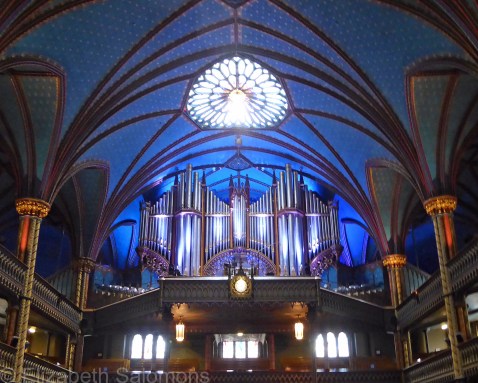
I have a thing for pipe organs — I may have mentioned this before. The preeminent organ builders in Canada are the Casavant Frères (Casavant Brothers). They learned their trade in Europe and have been building pipe organs for Canadians since 1879. I’ve played a few of their instruments in my time.
In 1891, they built the organ at Notre-Dame Basilica. That work sealed their reputation as world-class organ builders. This magnificent instrument has 7000 pipes and four keyboards and is my photo choice for today, the Third Sunday of Lent.
The Chanteur of Montreal
Some say that no one ever leaves Montreal, for that city, like Canada itself, is designed to preserve the past, a past that happened somewhere else.
— The Favourite Game, Leonard Cohen
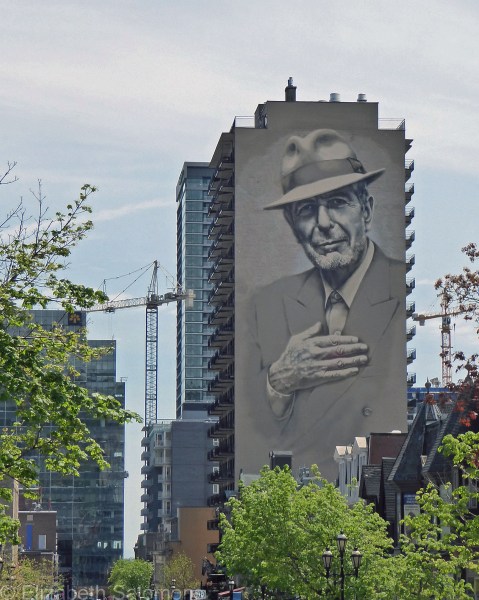
I can’t leave Montreal behind without writing a word about Leonard Cohen. Because, even though the man spent much of his life living elsewhere, Leonard Cohen is Montreal.
You can’t avoid him when you are there. Stand on any street corner in the city centre and his face stares down at you. When the news broke of Leonard Cohen’s death in November 2016, an impromptu memorial sprang up on the doorstep of his Montreal home. Vigils took place in the square just opposite. Like a pilgrim, I visited both.
I also read The Favourite Game, his first novel, to prepare for my visit to Montreal last spring. The members of my book club were not happy — none of them enjoyed the thinly disguised autobiography. I thought it was laugh-out-loud hilarious.
I’m still making it up to them.
This was a rough year, on so many levels. Almost everyone I know is counting the hours until 2019 is over. All are hopeful that 2020 will be better. I myself had a pretty good year, more or less. But I find it tough to feel joy and gratitude when everyone around me is hurting and weary and sick. Some people call that empathy.
I call it exhausting.
And that’s before we even bring up the news cycle.
In times like these, some of us turn to prayer, some of us turn to poetry, and some of us turn to music. Leonard Cohen — poet, novelist, songwriter, chanteur — gives us all three.
To close out 2019 as well as my series of posts on Montreal, I’m going to finish with these words:
Ring the bells that still can ring
Forget your perfect offering
There is a crack in everything
That’s how the light gets in.
May we all see more of the light in 2020.

Through My Lens: Inside the Bovenkerk of Kampen

Today is the Fourth Sunday of Lent. I’m posting this photo from inside Kampen’s Bovenkerk for a couple of reasons.
Reason # 1 is because it was inside this church, listening to this organ, where I first fell in love with the music of Johann Sebastian Bach.
And Reason # 2? Because today is one of Bach’s birthdays. I say “one of” because apparently the man had two depending on whether you are looking at a calendar in the Old (Julian) Style or the New (Gregorian) Style.
This organ is one of three in the Bovenkerk. It has four manuals and 3200 pipes, the oldest of which date back to the early seventeenth century.
There was a music lesson was going on just before I took this photo. The student was up above at the console behind the pipes, while the teacher was down below, chowing down on a sandwich as he hollered out his feedback. I felt sorry for the student, but was so happy I got to hear the music.
Happy Birthday, Vancouver Symphony Orchestra!
I went to a birthday party today. And oh, what a party. The Vancouver Symphony Orchestra hosted 100 free musical performances to mark 100 years since its first-ever concert on January 26, 1919. For 12 hours today, 1000 musicians performed across 10 stages, including several at the Orpheum Theatre, the symphony’s home since 1977.

Vancouver Symphony Orchestra dress rehearsal, January 26, 2019
That’s where my friend and I headed early this morning. We wanted to catch the orchestra during its last rehearsal before tonight’s concert. I was thrilled — despite the occasional flashback to my sometimes tedious high-school band practices — to watch the symphony’s new (as of July 2018) Music Director Otto Tausk lead his musicians through a dress rehearsal of Mussorgsky’s Pictures at an Exhibition and Grieg’s Peer Gynt.
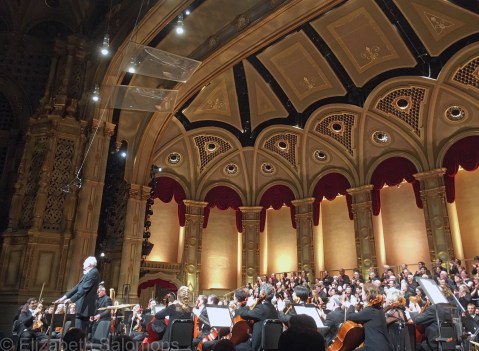
Maestro Bramwell Tovey’s last performance as Music Director of the Vancouver Symphony Orchestra, June 18, 2018
After a leisurely lunch, my friend and I returned for the afternoon and I was taken aback by how the crowds had grown since the morning. The lobby and auditorium were now filled to capacity. The most heart-warming sight were the dozens of strollers parked outside the box office; scores of parents had brought their toddlers to the Orpheum to introduce them to symphonic music. (Although we didn’t check out it out, there was also an Instrument Petting Zoo for the children.)
Vancouver is world famous for its natural beauty — which is a good enough reason to visit, no doubt. But culture? Not so much. That’s not what attracts the millions of tourists who visit Vancouver every year.
Even so, I personally think that the Vancouver Symphony Orchestra is the cultural jewel of this city and it is the arts organization I frequent the most.
Happy birthday, VSO!
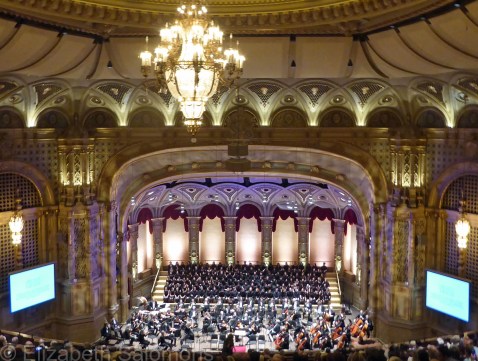
Vancouver Symphony Orchestra performs Verdi’s Requiem, November 12, 2016
Through My Lens: Music Under the Sun
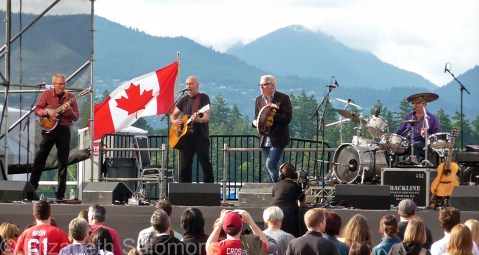
It’s the first day of summer! Finally!!
This week also marks the start of Vancouver’s outdoor music festival season. The big ones are the Vancouver International Jazz Festival, which starts this weekend, and the Vancouver Folk Music Festival at Jericho Beach in July.
Vancouver is not that different from other Canadian cities in having great outdoor music festivals, but what we do have that is uniquely West Coast are some pretty spectacular settings.
Like the stage at Jack Poole Plaza with the North Shore Mountains as its backdrop. This photo is of Spirit of the West performing on Canada Day a few years ago.
Canada 150: Edmonton
Canadians are known for playing hard in the summers. We like to spend as much time outdoors as we can, which is easy, because the days are long, and necessary, because the season is short.
Also, for the most part, the weather is awesome. Not too hot, not too humid.
One of the ways we play hard is by going to outdoor festivals. We’ve got a few, ranging from the traditional fairs and exhibitions and rodeos to theatre (from Shakespeare to fringe) to music of all sorts, including jazz, blues, and folk.
One of the best festival cities in the country, in my opinion, is Edmonton. And one of the best outdoor music festivals in the country, in my opinion, is the four-day Edmonton Folk Music Festival held every August at Gallagher Park. The park is a ski club in the winter, but in the summer, its hill serves as a natural amphitheatre with spectacular views of the city’s skyline.
The Edmonton Folk Fest is one of the largest and best-attended folk music festivals in North America, and attracts musicians from around the world who, once they’ve played the Folk Fest, are always eager to come back. Celtic, country, blues, gospel, soul, and world music — you name it, they’ve got it. It sells out every year, typically within minutes.
If you’ve never been, you don’t know what you’re missing. Seriously.


 There and Back Again