
Through My Lens: September Flowers

It’s raining today. And I can’t believe I’m saying this, but after a long, hot summer, it’s a relief to have some cooler temperatures again.
The flowers planted along English Bay are looking rather autumnal as well.
Through My Lens: Ruckle Park Sunrise

I was hoping for a weekend of sunrises like this one at Ruckle Park on Salt Spring Island. Alas, our planned weekend of camping by the sea had to be cancelled when one of our party came down with Covid. Five years on, it’s still safety first.
And I, for one, am OK with that.
Through My Lens: Ships and Foliage at Sunset

I’ve been a bit neglectful about posting lately. Because summer. (Who wants to be sitting at their computer when you can be outdoors?)
This is a favourite photo of mine; I took it as I walked along the seawall one warm August evening some years ago.
Wapiti
My camping mini-break at the end of August with my brother and his kids got me thinking about camping when I was a kid. Back then, everyone I knew went camping in the summer. It was the only kind of vacation most parents with a carful of kids could afford.
Most of our school friends went to the Okanagan every summer, but my parents’ preference was to camp in the middle of the forest, so we headed to the mountains. A fully-treed campground was always the destination — I suspect my parents would have not cared for Ruckle Park because of how exposed the campsites are.
The “mountains” was what we called Banff and Jasper. We would do a circuit, spending some time in Jasper, then head south to Lake Louse and Banff, and then, when we were badly in need of showers and clean laundry, Dad would point the car towards Lacombe. There, we would spend time with our grandmother and all the aunts, uncles, and cousins who lived in the area.
When the news broke last July that the entire town of Jasper, along with some 20,000 park visitors, was being evacuated because of encroaching wildfires, my co-worker (who had also spent her childhood camping in the mountains) and I spent a horrified morning looking at video on social media. We were both relieved to learn that only (only?!) a third of the structures in Jasper townsite had been destroyed.
At first, there was no word about the rest of the park — it would take some months before the wildfires were under control. In fact, it wasn’t until last week that the news showed images of some of the campgrounds. Given the scale of the wildfires, I knew it would be bad. And it is. The forest is just … gone.
Forests rebound, I know that. But until they do, camping in the forests of Jasper National Park will be much different.
One of the campgrounds we used to camp at is named Wapiti. Wapiti, or elk, are commonly seen throughout Jasper — I took this photograph of an elk cow just as we were leaving our campsite for a day of hiking the last time I was in Jasper. Wapiti is a Shawnee word for “white rump.”

Ruckle Park
When I first visited Ruckle Park on Salt Spring Island, I made a promise to myself that one day I would return with my camping gear and spend some time here.
Who knew it would take several decades for me to fulfill that promise?
Located on the southeast tip of Salt Spring Island, Ruckle Park is one of the largest parks in the Gulf Islands. Its seven kilometres of shoreline give you oodles of tidal pools to explore at low tide, but there are also numerous walking trails throughout the coastal forest.
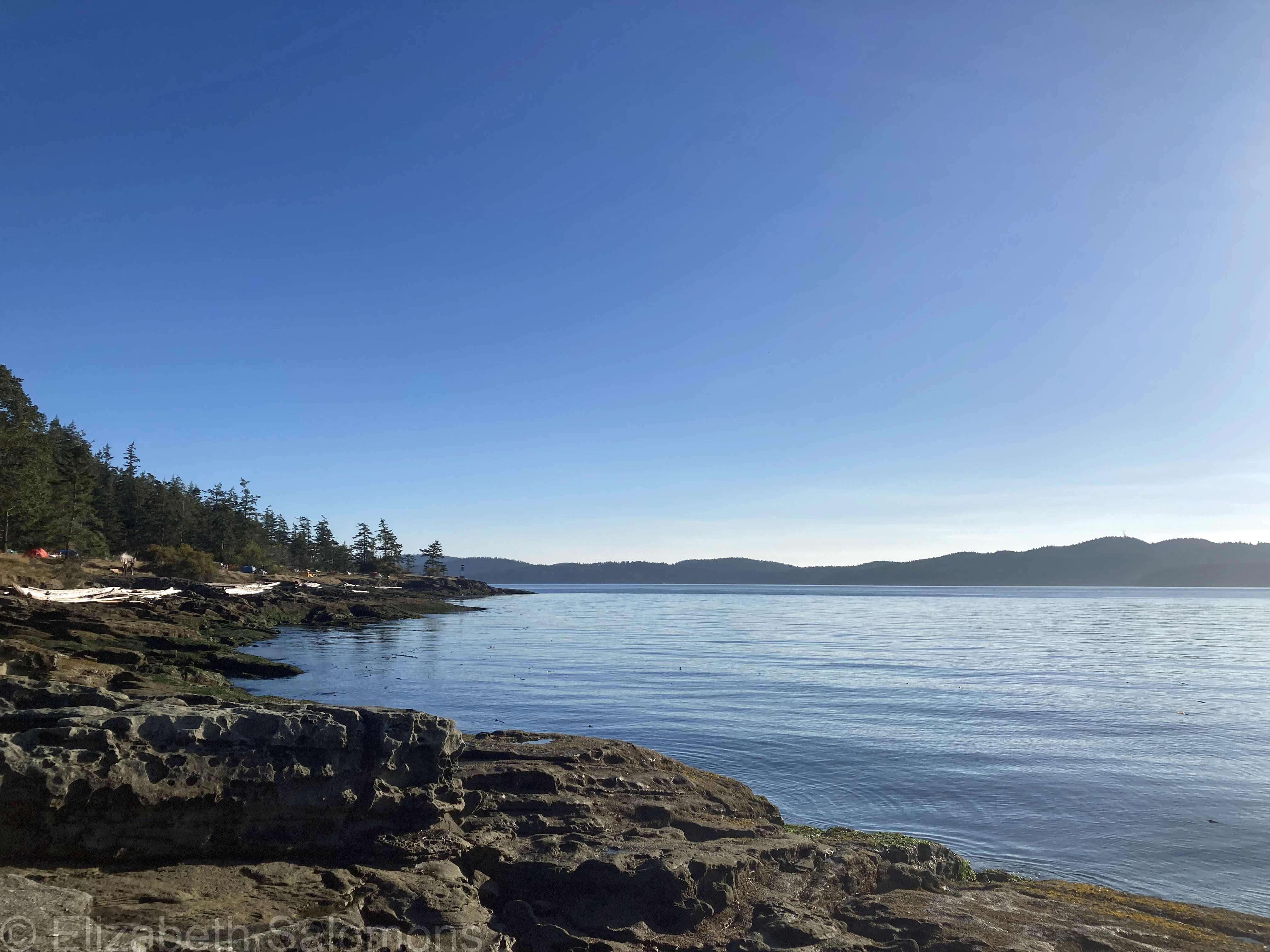
Most of the campsites are walk-in (first come, first served), but the bonus of that is you get to pitch your tent right by the water.
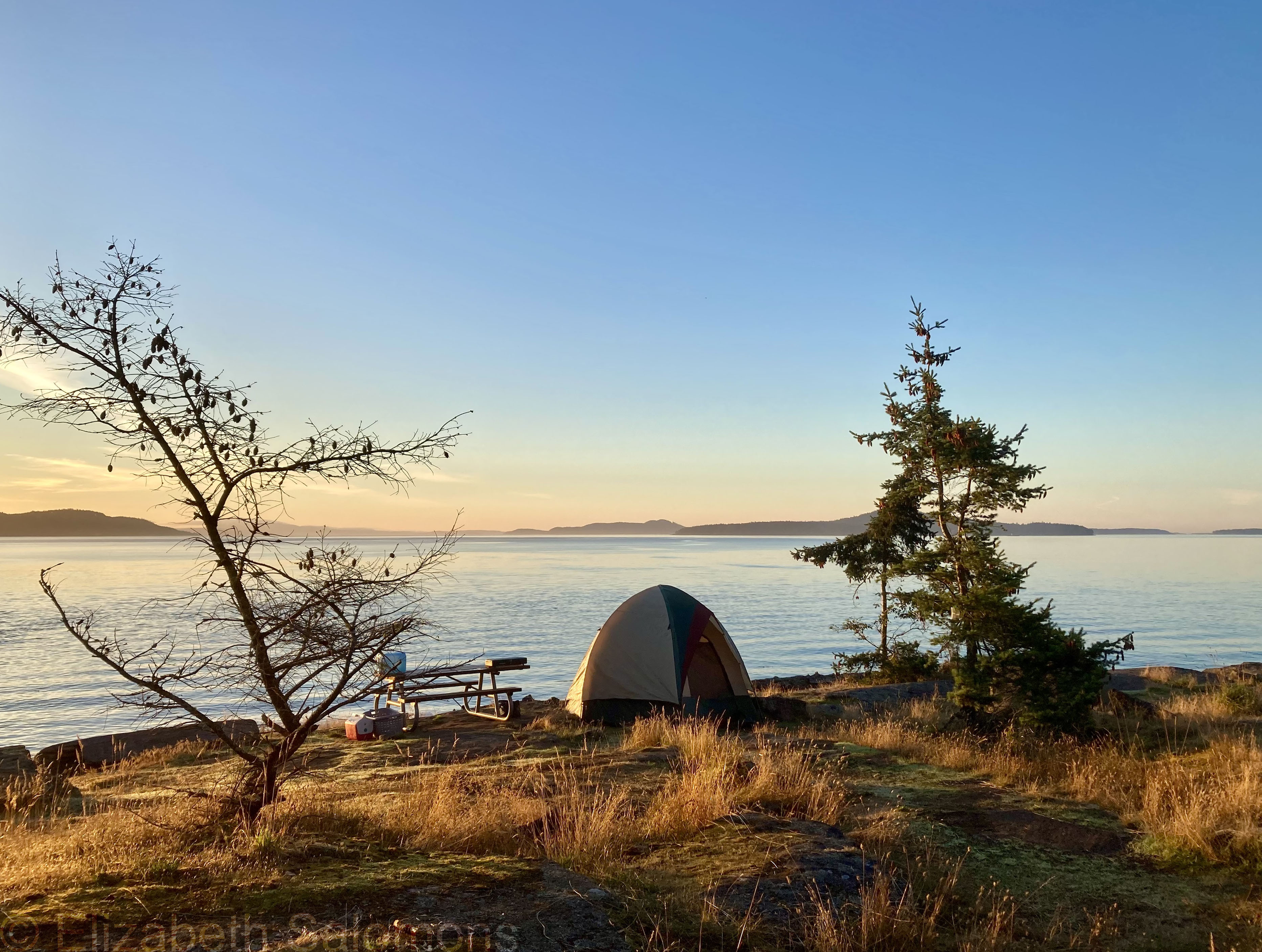
The sunrises? They are spectacular.

Once the sun is up, the morning’s entertainment starts with a round of musical campsites. Campers who spent the previous night in the overflow area come around to ask when those of us camped beside the water are intending to leave. The morning we left, there were four separate parties interested in our spot. The mornings we weren’t going anywhere, we got to watch people move gear and tents from one site to another, and then watch someone else move into the just-vacated spot.
The summer’s campfire ban was lifted the afternoon we arrived (talk about timing!) and the communal firepit makes it easy to get to know your neighbours.
Ruckle Park also has a working heritage farm.

My three days of camping at Ruckle last week with my brother and his kids was the absolute perfect way to finish off my BC summer. And I made another promise to myself: it won’t be several decades again before I return.
I’m already making plans to return next summer.
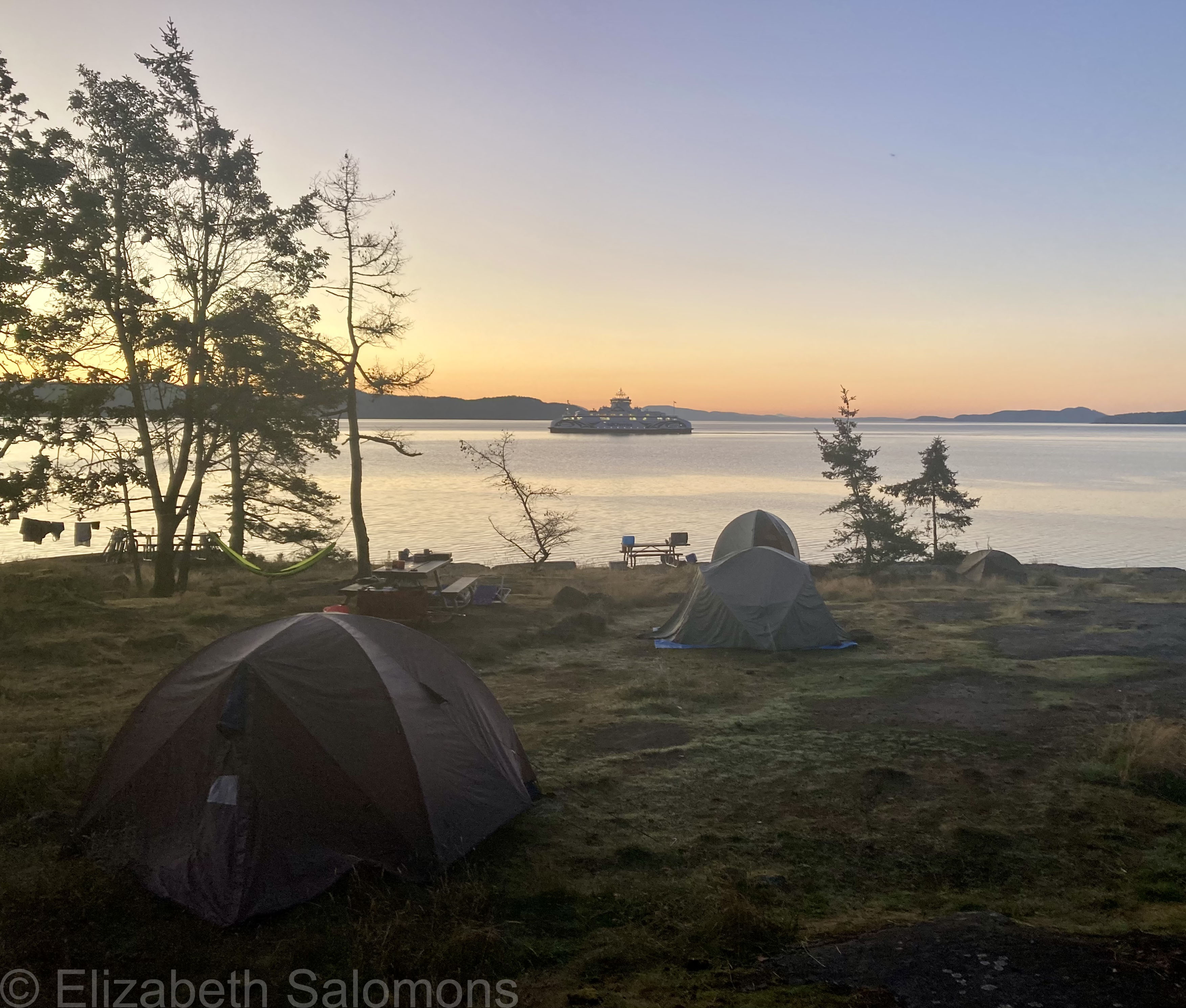
Salish Heron
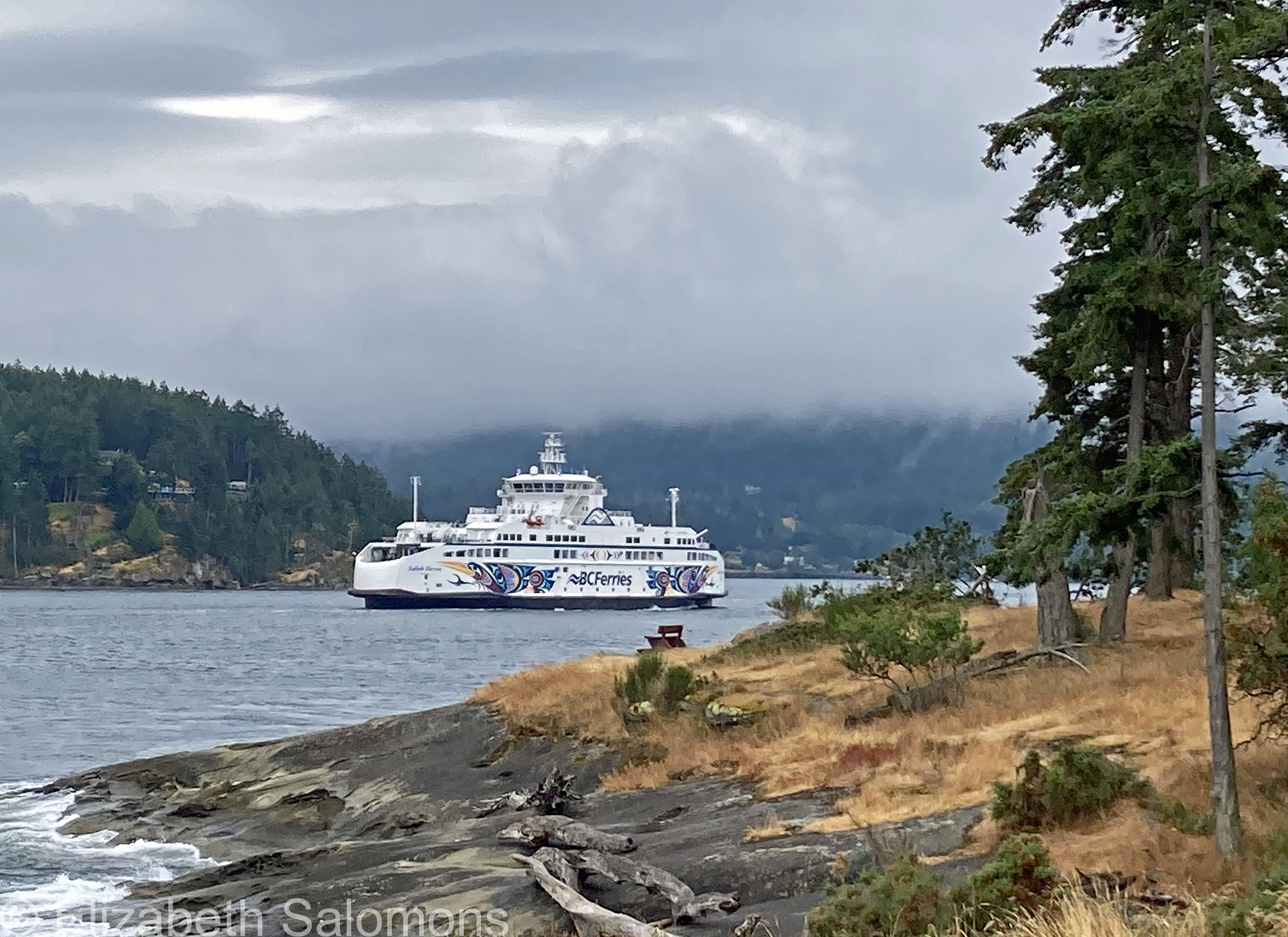
Time for my obligatory summer post about touring the Salish Sea on a BC ferry. I took this photo last month from the southern tip of Galiano Island. That’s the Salish Heron entering Active Pass.
Like the other Salish-Class vessels, the ferry is covered in original Coast Salish artwork inside and out. Penelakut First Nation artist Maynard Johnny Jr. was the artist for the Salish Heron.
Through My Lens: Tree Bathing

In what seems to have become an annual event, I was once again camping at Little Qualicum Falls with my extended family a couple of weeks ago. A good time was had by all as we enjoyed all the rituals of a weekend in the Canadian forest: hiking, swimming, s’mores around the campfire …
Also tree bathing. The Douglas firs do take your breath away.
Through My Lens: English Bay Paddlers

When you live by English Bay, you never know what you’ll see on the water. Thanks to the power of my camera’s zoom lens, I was able to get this shot early yesterday morning.
Salish Eagle

My latest BC Ferry ride — and my third of the summer — was on this boat, the Salish Eagle, which took me to and from Galiano Island just over a month ago.
Three of these Salish-Class vessels came into service in 2017 and a fourth one last year. Built in Gdańsk, Poland, they are the first ships in BC Ferries’ fleet to run on liquefied natural gas, thereby reducing their emissions. Compact compared to the bigger boats that sail between Vancouver and Vancouver Island, the Salish-Class vessels go to and from the Southern Gulf Islands and between the Sunshine Coast and Vancouver Island. They carry up to 600 passengers and crew and 138 cars, and I absolutely love sailing on them.
Each Salish-Class vessel has original Coast Salish artwork adorning its interiors and exteriors. John Marston of the Stz’uminus First Nation is the one who designed the artwork you see on the Salish Eagle.
Little Qualicum Falls

There’s a gem of a campground on Vancouver Island I’ve been going to since forever. It’s called Little Qualicum Falls, and a family weekend there at the beginning of June was my second BC ferry trip of the summer.
Qualicum, or Quallchum, means “where the dog salmon run.” Dog salmon (also known as chum) is one of the five major species of the BC salmon fishery.
We lucked out with absolute picture-perfect weather for our Qualicum weekend, which we were all incredibly grateful for. A year ago, we were in the thick of a more typical Juneuary and our plans to go to Qualicum were scuttled before we even got into the car.
The provincial park sits alongside the Little Qualicum River and around Cameron Lake. It’s a great family campground with lots of trails to explore, lots of swimming holes to jump into, and then, of course, there are the falls.

As we often do, we took a quick side trip to Cathedral Grove on our last day before turning around to head to the ferry. Driving along Highway 4, we noticed a helicopter with a heli-bucket scooping water up from Cameron Lake. We rounded a bend in the road, and then we saw it — the wildfire on top of one of the mountains along the highway.

It was a small one, but it grew, as wildfires do, and a day or two later, that same highway we had driven on was closed for two weeks, completely shutting off the coastal communities of western Vancouver Island from the rest of the province. A detour over logging roads was put in place, but it was a rough route and not recommended for tourist traffic.
The highway reopened once the wildfire was no longer burning, but assessments of the mountain slopes above the highway have deemed them unstable. And so, beginning Monday, Highway 4 will be closed for most of the day between 9 and 5 to allow crews to do rock scaling above the highway. They figure the work will take at least a month, which is really going to mess up the tourist season for Tofino and Ucluelet.
I’m glad we got our Island weekend, but I feel for all those whose summer plans are being thwarted by a wildfire that has long been put out.


 There and Back Again