
Where the Streets Have Names
Here we are, finally. Last month of the year, last post on Hawaii.
One thing you notice as soon as you start moving around Oahu are the unique street names. Unique to English speakers, that is. For the most part, they are all in Hawaiian. I absolutely love it.
There are plenty of places in Canada with Indigenous names. Kitsilano is a Vancouver neighbourhood that takes its name from the Squamish Chief Jack Khatsahlano. Chilliwack, Kamloops, and Saanich are BC cities with names that have Indigenous origins. And Canada is from the Haudenosaunee word “kanata,” which means village.
And yet … Vancouver streets are predominately named for dead white guys. True fact: there are more streets in Vancouver named after golf courses than women or people of colour combined. My own street is the anglicized name of a chief of the Okanagan people, something I found out only while researching this post. Wouldn’t it be much more interesting if the nsyilxcən spelling was used instead of English?
In Canada, land acknowledgements before public events are routinely recited to recognize those who have lived here since time immemorial. Here’s the one I use on my work email signature:
I acknowledge that I am privileged to live and work on the unceded traditional territories of the Coast Salish Nations, including the xwməθkwəy̓əm (Musqueam), Skwxwú7mesh (Squamish), and səl̓ilwətaɁɬ (Tsleil-Waututh) Nations.
Land acknowledgements are all well and good, but maybe it is far past time that we begin replacing the names of some of the many, many streets currently named after insignificant European men with Indigenous names. The Hawaiians have done it. Why can’t we?
Just a thought.

Royal Hawaiian Mai Tai
Speaking of historical Hawaii, one of the places I insisted we go while on Oahu was the Royal Hawaiian Hotel. This illustrious hotel, now part of the Marriott chain, has stood on Waikiki Beach since 1927. It’s one of those hotels you can only dream about ever staying at. Happily, though, the dining options were within our budget and we enjoyed mai tais and poke at the outdoor Mai Tai Bar overlooking the beach.
Full disclosure: I don’t even like rum, but I lost count of how many mai tais I enjoyed during our week in Hawaii.
(What can I say? When in Rome … )

Historical Hawaii
Remember James Michener? Author of super long books with super short titles that were on all the bestseller lists? Many years ago, I got about a third of the way through one of his books, Hawaii. It was a valiant effort, but ultimately I was defeated by its 1130 pages.
My mom finished the book, though. I have a distinct memory of her rant about the some of the characters in Michener’s novel — the American missionaries, to be precise. How stupid, she said, that they insisted on wearing fashions more suited to New England than the hot, tropical climate of Hawaii.
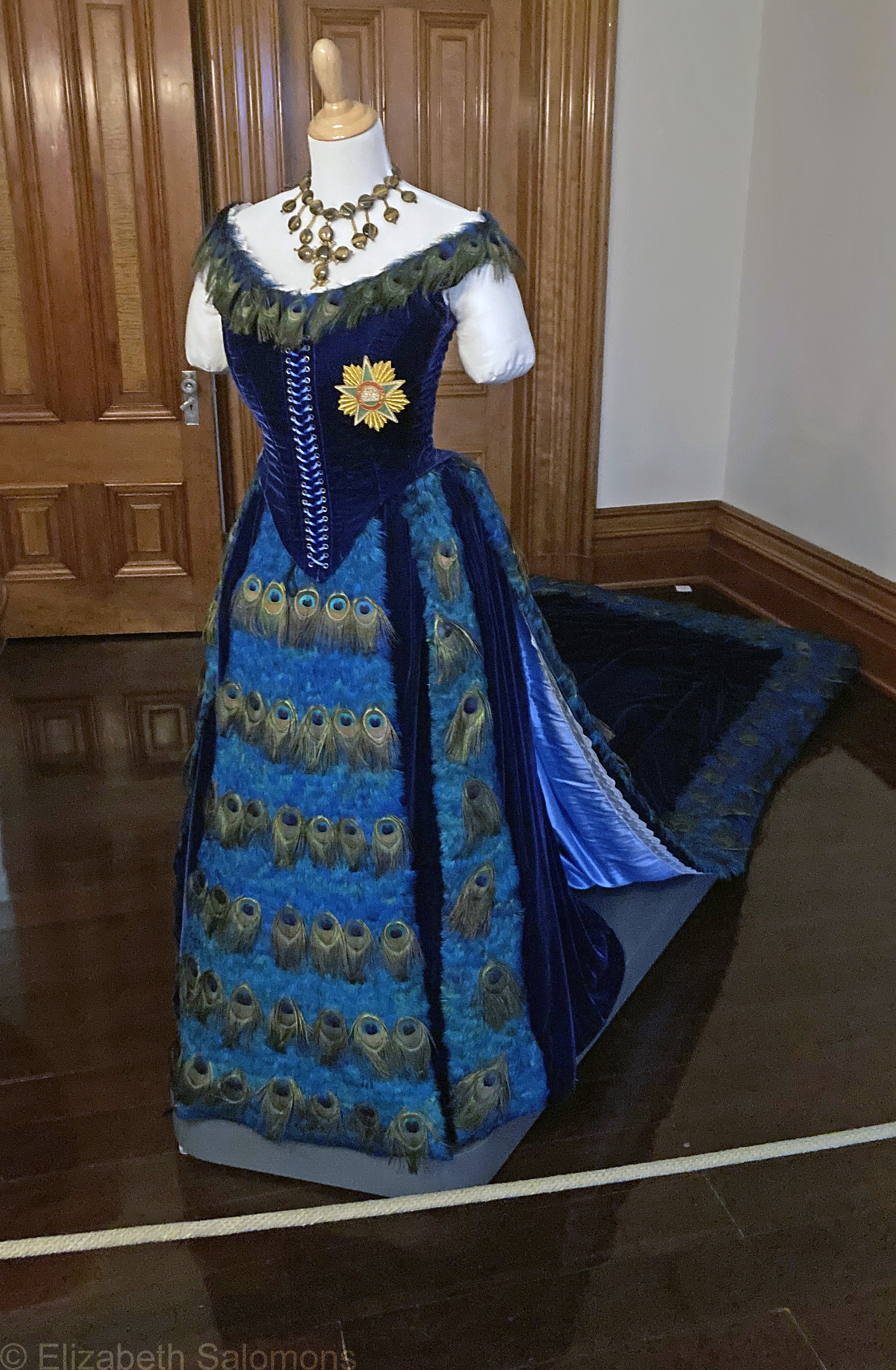
So imagine my surprise, as I took a deep dive into Hawaii’s colonial history last winter, when I learned that the Hawaiian royals also preferred Victorian fashion. This dress, for example. It’s a replica of the Peacock Gown that Queen Kapi‘olani wore to Queen Victoria’s Golden Jubilee in 1887.
I was also surprised to learn that Hawaii came this close to becoming a part of the British Empire. The first European to sail to the islands was the English explorer James Cook — he arrived in 1778. We’ll skip over the part where he was killed by the Hawaiians and jump ahead to George Vancouver, a member of Cook’s crew who returned with his own expedition in 1792, and again in 1793 and 1794. Vancouver became good friends with King Kamehameha I, and Hawaii became the base for British trade in the Pacific. It was Kamehameha who wanted the Union Jack as part of the Hawaiian flag that was adopted in 1816.
However, around this time, an assortment of missionaries was making advances in the Pacific. Amongst themselves, the British and American missionaries divided the Pacific between them: the British would restrict their evangelistic efforts to the south of the Equator, and the Americans went north. The Hawaiians would have preferred the reverse arrangement; Kamehameha II even went to England to arrange for a formal agreement with the King.
But as time went on, Hawaiian trade was increasingly linked to the US economy. Hawaiian independence suffered a fatal blow when a group of white planters and businessmen overthrew the last Hawaiian monarch, Queen Lili’uokalani, in January of 1893. She was held prisoner in her own palace for eight months. Formal annexation with the US took place in 1898 when the Spanish–American War made Hawaii a critical base for the American military while they were fighting in the Philippines, and the islands attained statehood in 1959.
About that deep dive into Hawaii’s colonial history: it took place here, at Honolulu’s Bishop Museum.

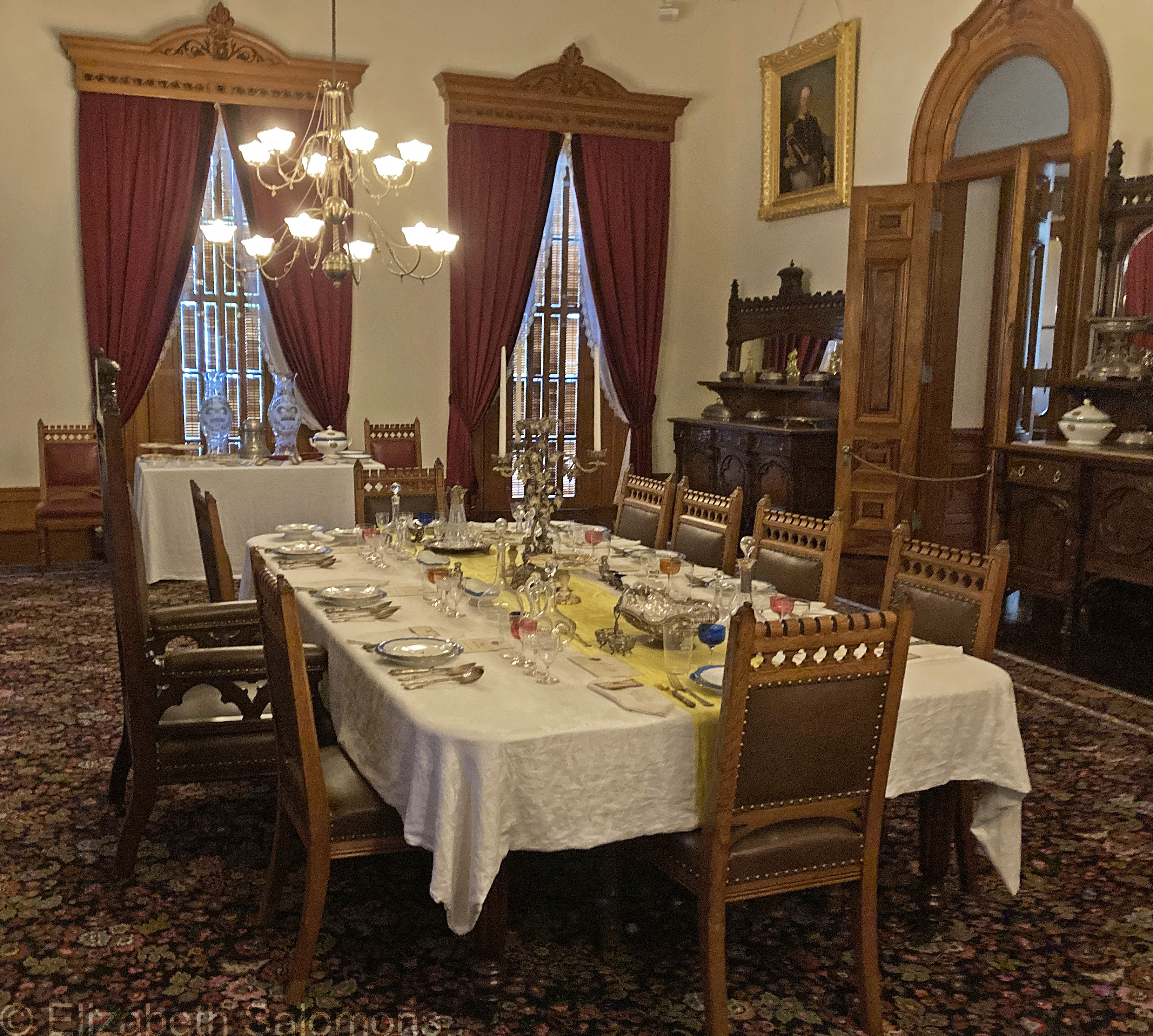
And also here, at Iolani Palace.

Bishop Museum was established in 1889 by Charles Reed Bishop to house objects and heirlooms of his wife, Princess Bernice Pauahi Bishop, last heir of the royal Kamehameha family. It is now considered the best collection of natural and cultural history in the Pacific, and it’s a great way to get a crash course in Hawaiian history in just a few hours.
Iolani Palace, located in downtown Honolulu, served as the State Capital until 1969. When it was built in the 1880s, it was fitted out with electric lights, indoor plumbing, and telephones — all modern conveniences far ahead of their time. It is the only official residence of royalty in the United States.
I still have my mother’s copy of Hawaii. And one of these days, I will finish the novel, now that I have a better and more complete understanding of the history of Hawaii.
Trees of Oahu

As remarkable as the flowers of Oahu are, I find the trees almost more so.

Why is that? Simply because they are so different from the trees you see in Canada.
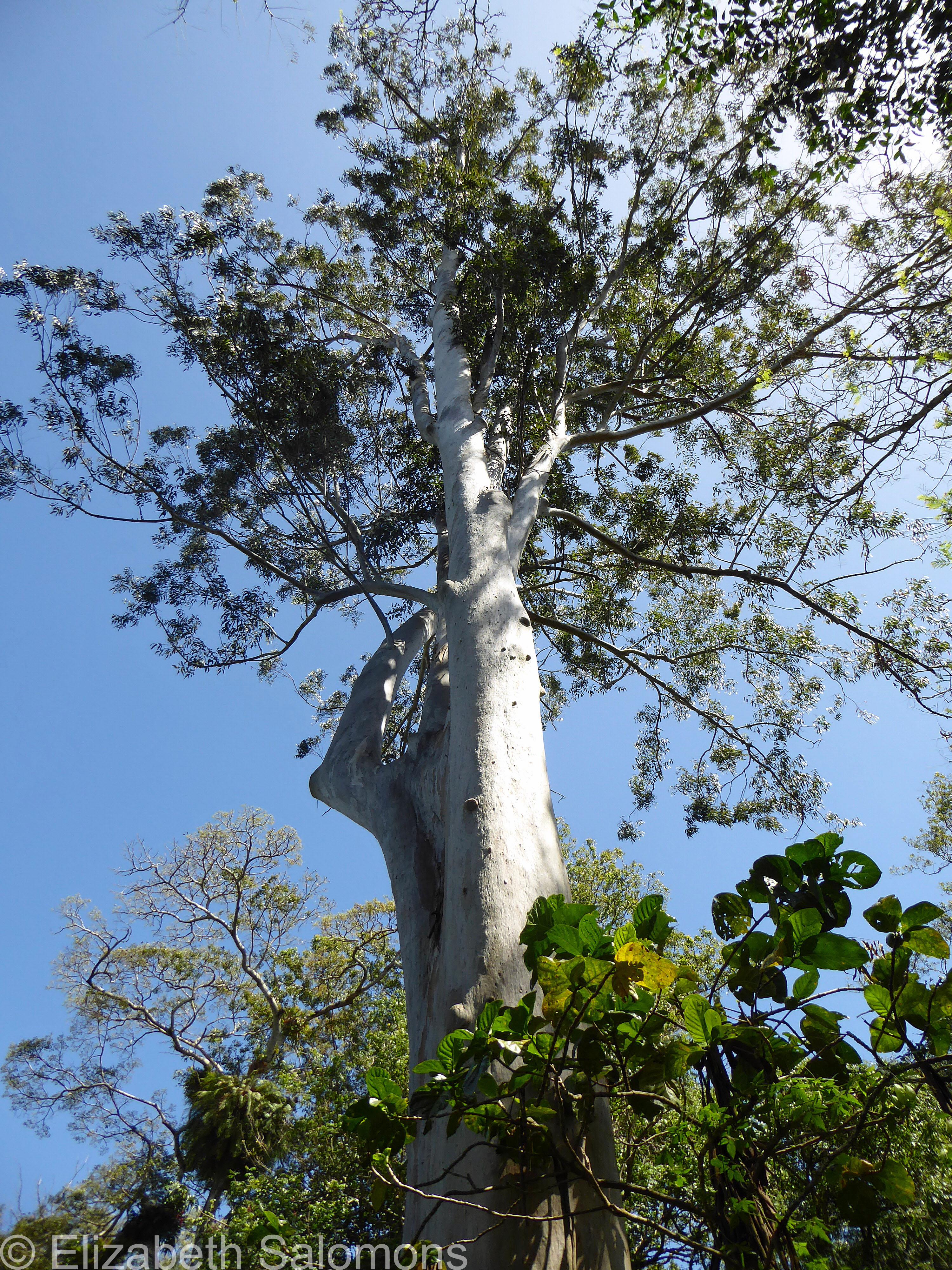
I don’t know all the names of the ones I’m showing you here, but I do know the name of this flowering tree.

The ʻōhiʻa lehua is the most widespread of Hawaii’s native trees. It’s an evergreen in the myrtle family, comes in both shrub and tree form, and is one of the first plants to grow over lava flows. As such, it’s an important plant for rebuilding the ecosystem after a volcanic eruption. The most common type has bright red flowers, but there are also varieties with orange or yellow flowers.

There is a legend associated with this tree’s name. ʻŌhiʻa and Lehua were lovers, but Pele, the goddess of fire and volcanoes, demanded that ʻŌhiʻa abandon Lehua and declare his love for her instead. ʻŌhiʻa refused. Furious at his rejection, Pele turned herself into a column of fire and ʻŌhiʻa into a twisted ugly tree. Lehua burst into tears in front of the tree that used to be Ōhiʻa and begged Pele to turn her into a tree as well. Pele ignored her, but the other gods took pity on Lehua and transformed the sparks of fire in her hair into bright red flowers, which they placed on the tree. It is said that if you pick the flowers of the ōhiʻa lehua tree, it will rain. The raindrops are Lehua’s tears, because she cannot bear to be separated from Ōhiʻa.
Flowers of Oahu

You’ve seen it, I’m sure, in old movies. The traditional Hawaiian greeting upon arrival, where a garland of flowers, called a lei, is placed around the neck of the person arriving. The practice dates back to the early Polynesians who came by boat from Tahiti to Hawaii.
A lei can be made from any object — leaves, shells, feathers — but the one we all think of is made with flowers. The lei is a symbol of love and friendship and aloha. Although used as a casual greeting in the Hawaiian Islands, aloha has a much more spiritual meaning for native Hawaiians.
The flowers of Hawaii are everywhere. Here, have a look. I have no idea if all of these are native to Hawaii, but they sure do make it beautiful.


Scenic Drives Around Oahu
Ahem. About that geology.
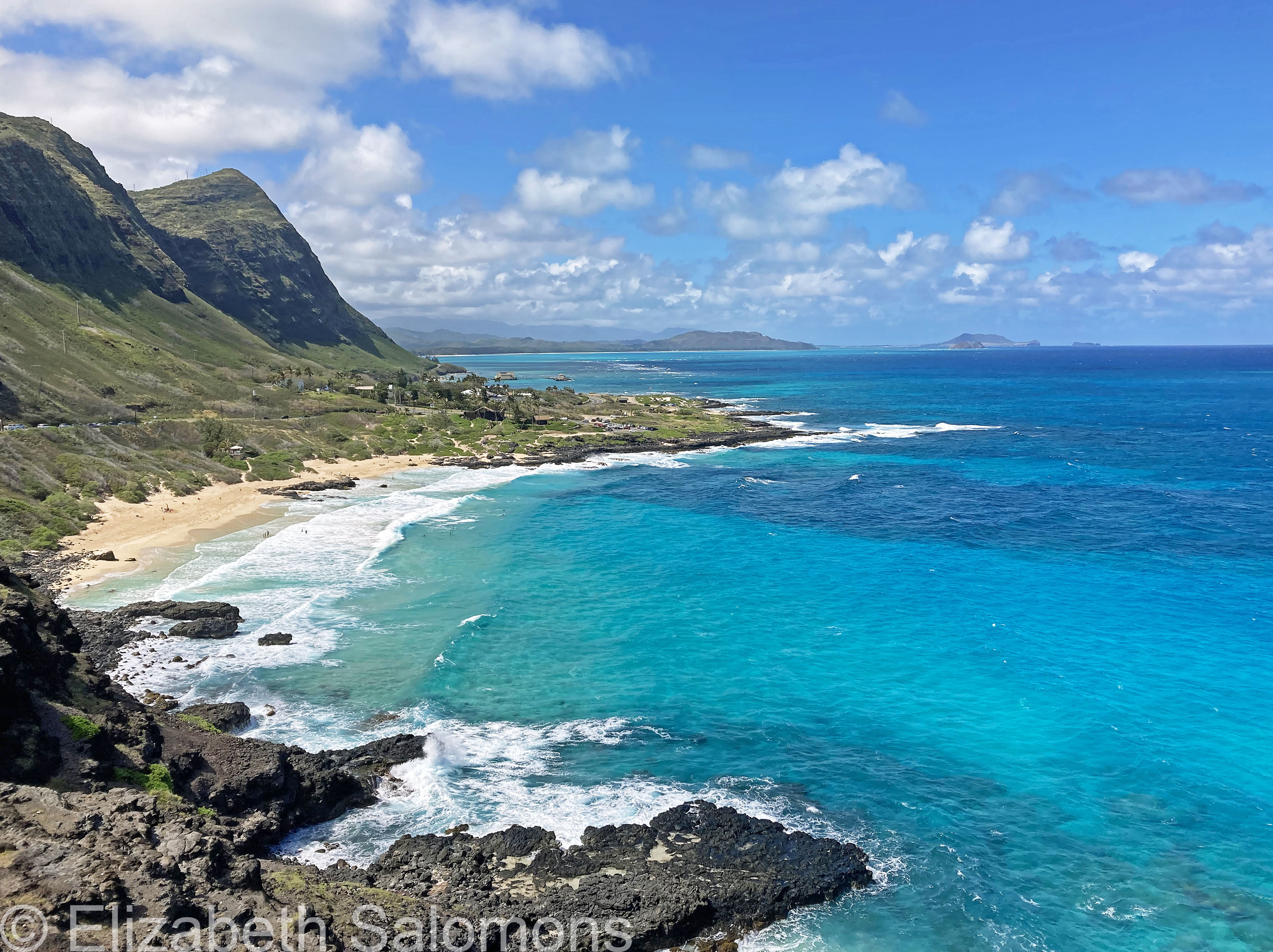
When you start exploring Oahu by car, the volcanic origins of Hawaii become very apparent. It makes for some stunning vistas.

Here is a close-up of that volcanic rock.

There are a total of eight islands in the Hawaiian archipelago — Oahu is the third largest. Our first glimpse of the island’s geology was along the Pali (paa-lee) Highway, which we took from the airport in Honolulu, through the twin Nu‘uana Pali Tunnels that pass beneath the Ko‘olau Range, to the windward side of Oahu and our home exchange in Lanikai. Directly above those tunnels is the Nu‘uana Pali Lookout. Pali is Hawaiian for “steep cliff.” If you look to the left, this is what you see.
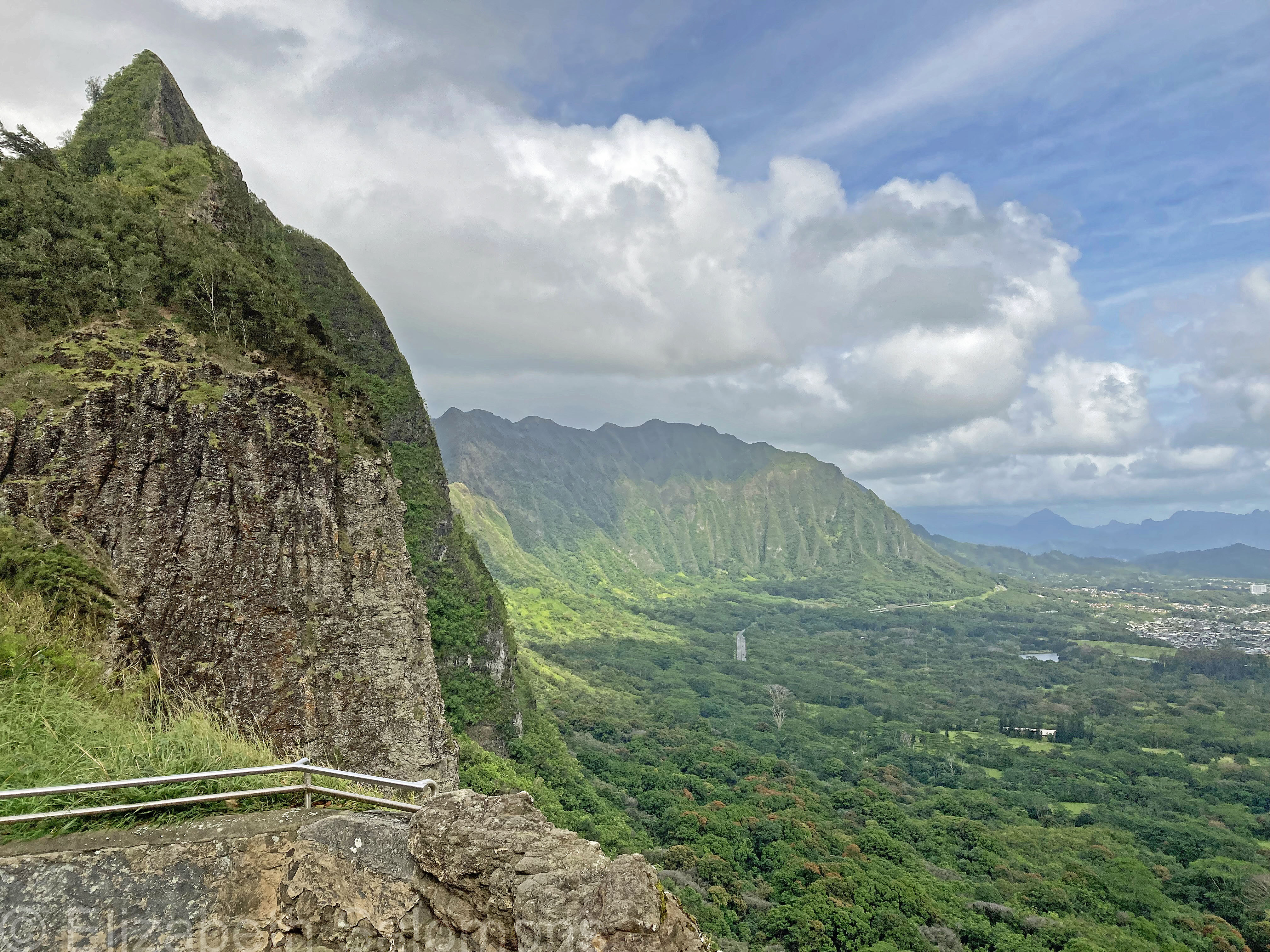
And if you look to the right, this is your view over the windward coast of Oahu.
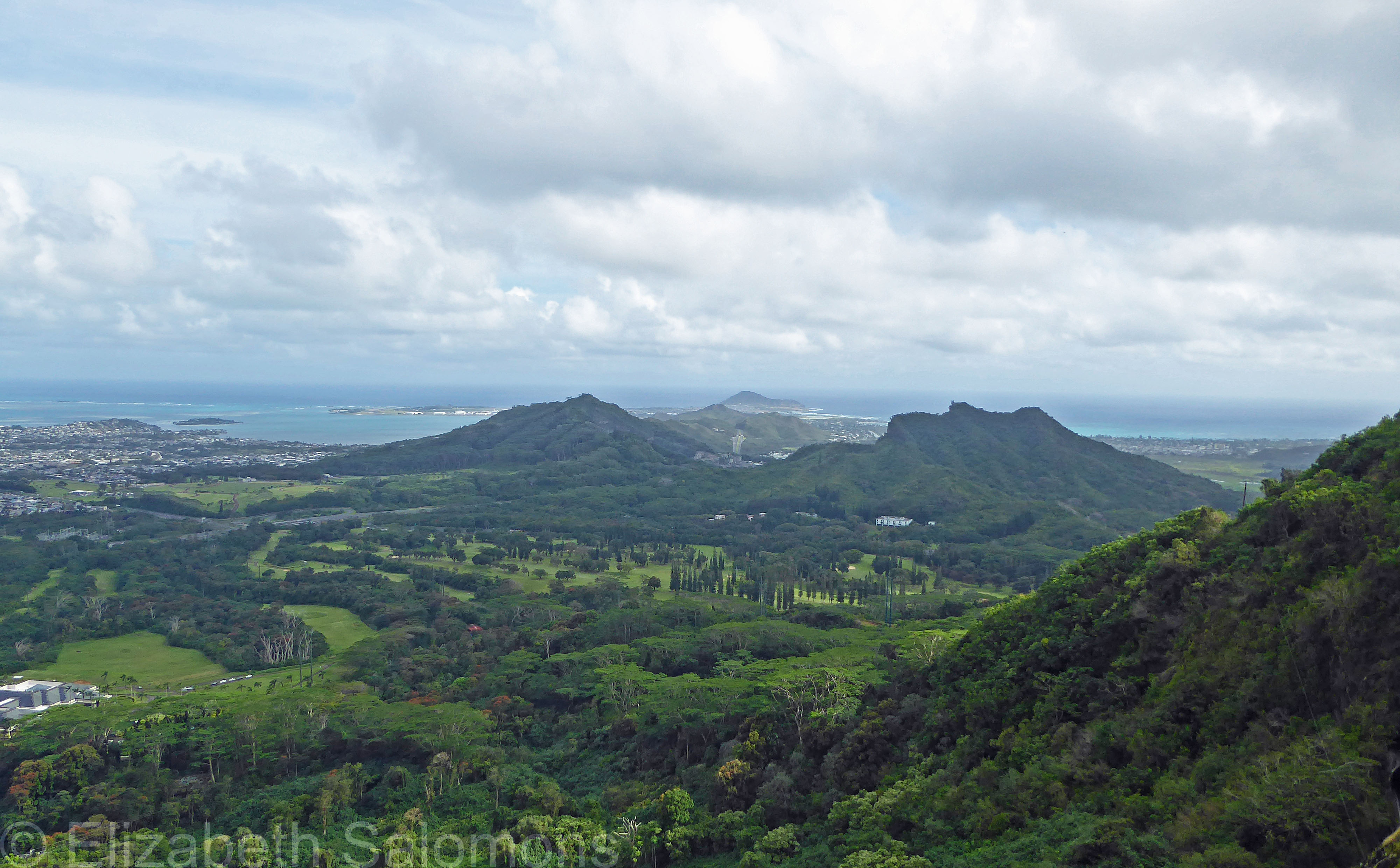
Much of the Pali Highway was built along traditional foot paths over the Pali pass. The tunnels were built in 1958; the highway that was used before then is the Old Pali Road, now a popular hiking route.
An alternative to the Pali is the Likelike (lee-kay-lee-kay) Highway, whose delightful name comes from the Hawaiian Princess Miriam Likelike. This trip, however, we always ended up taking the Pali Highway.
We also wanted to explore the coast, as much as we could by road, and take a peek at the famous surf of Oahu’s North Shore. This route took us along the Kamehameha (ka-may-huh-may-uh) Highway, named after King Kamehameha I.

Perhaps somewhat foolishly, my sister and I went for a dip in this surf. It’s invigorating, I’ll give you that.
After we rounded the northern tip of Oahu, the highway then took us down the middle of the island, between the pineapple fields, all the way back to Honolulu.
The last highway we drove along was the Kalaniana‘ole (ka-la-nee-ah-na-oh-lay) Highway, named for Prince Jonah Kūhiō Kalanaina‘ole. This drive took us from Lanikai to the backside of Diamond Head. That’s it, there, in the next photo.
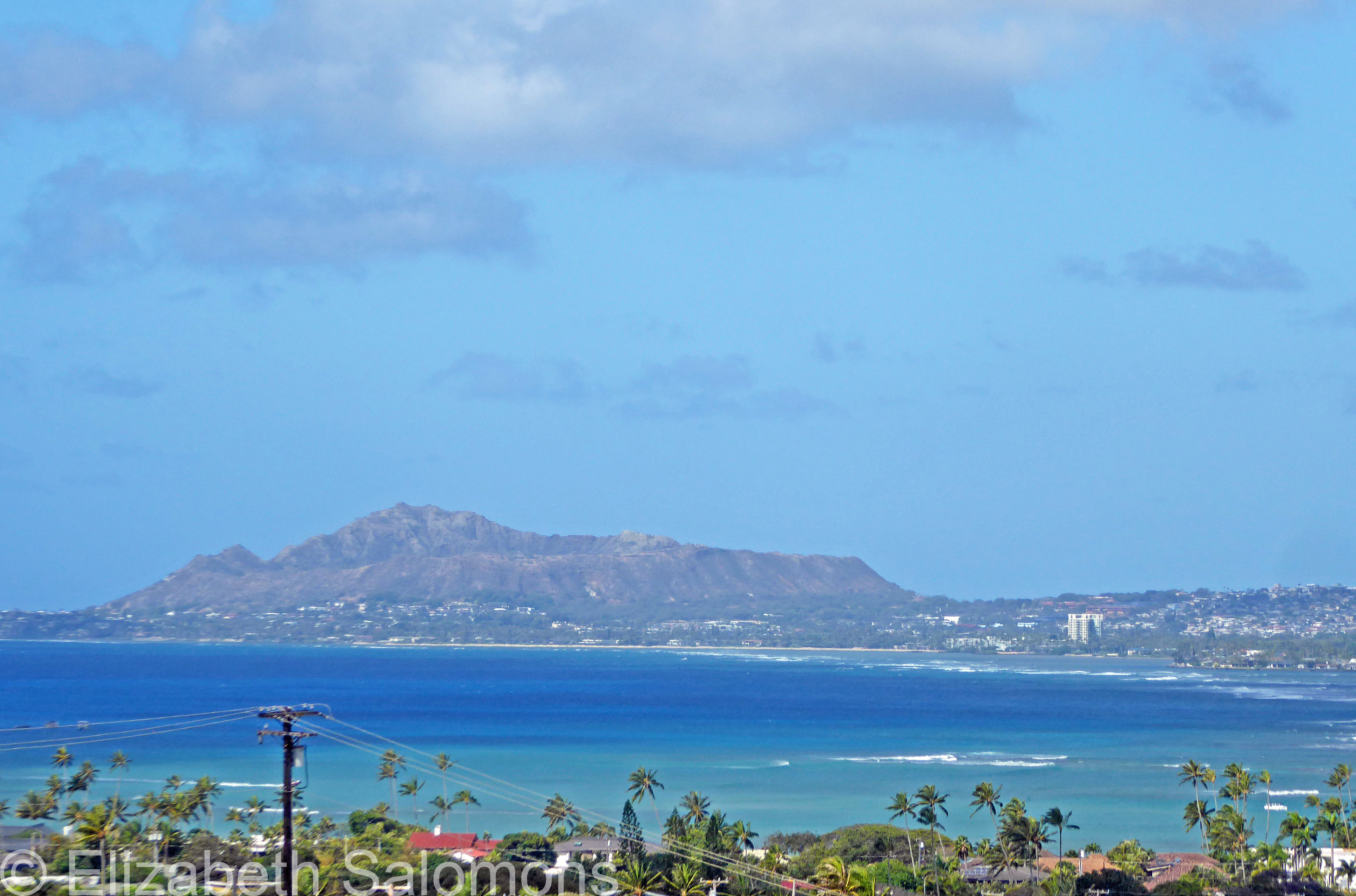
Some of our most spectacular views of the Oahu coast were seen on this last drive.
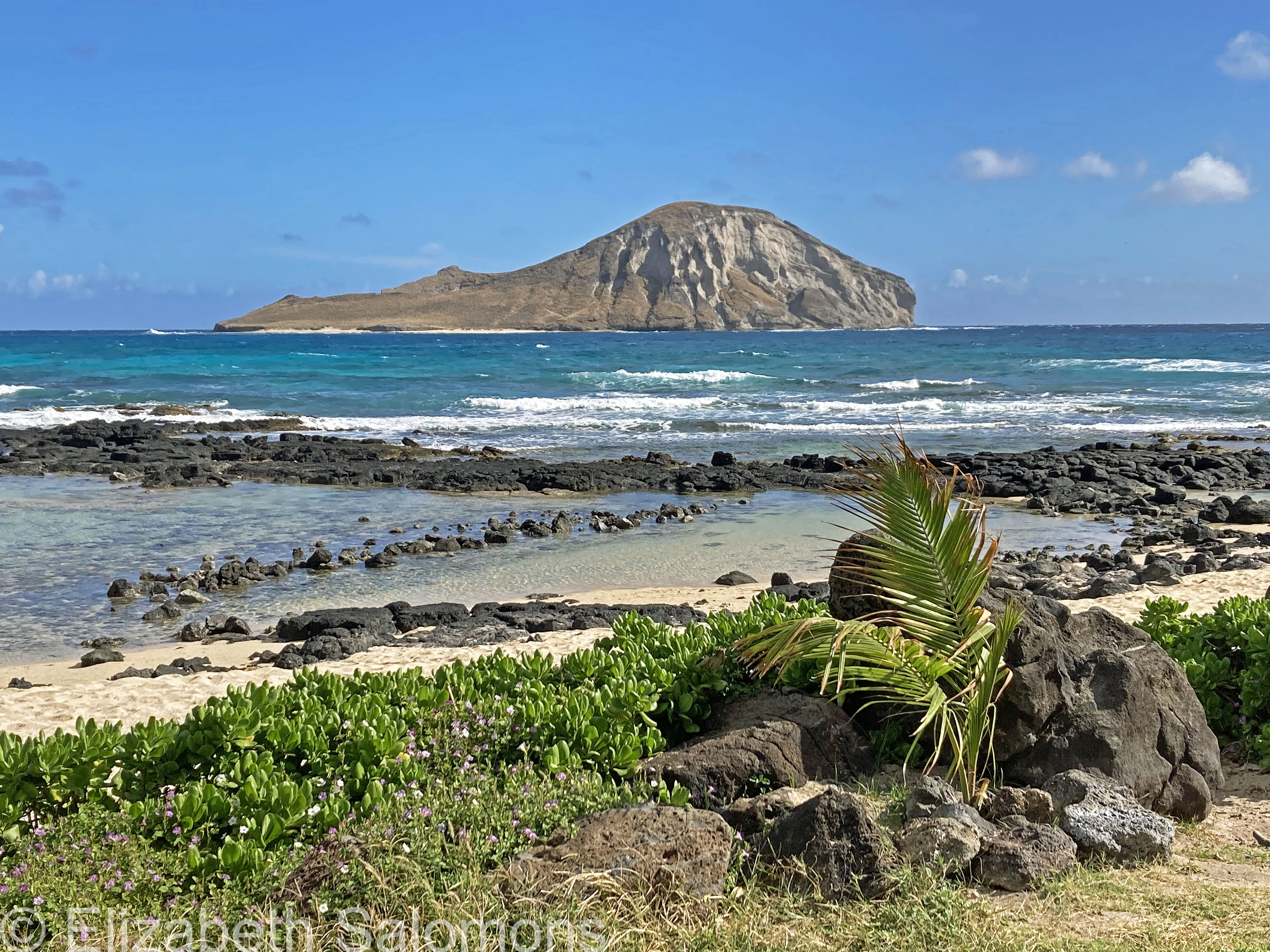
I rarely take driving holidays; my preference is to get out and explore on foot.
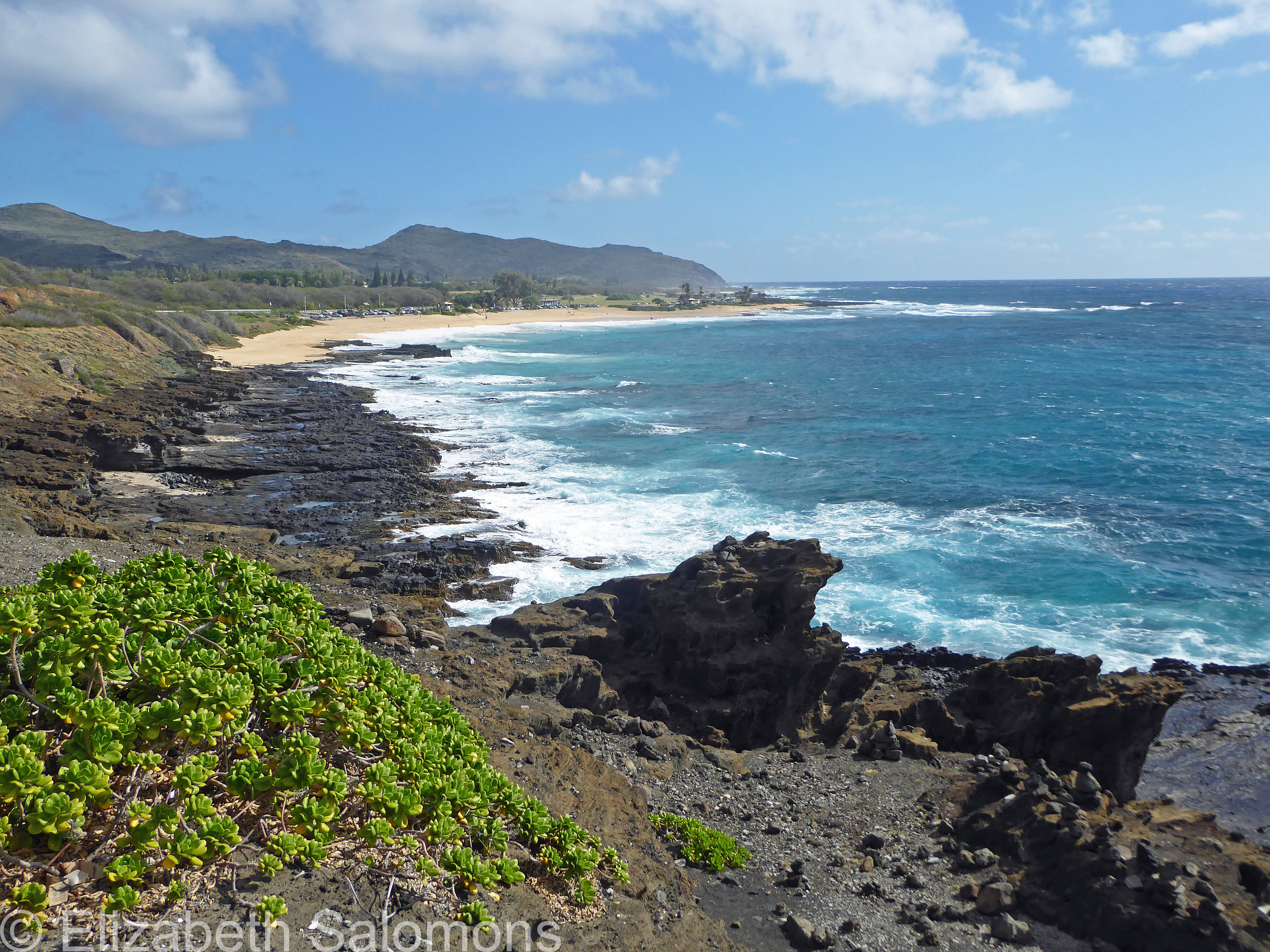
But there are some places you simply cannot get to without a car and some of those places are so worth visiting.
Like Oahu.
Happy Birthday, Arthur Erickson!
Architecture, as I see it, is the art of composing spaces in response to existing environmental and urbanistic conditions to answer a client’s needs. In this way the building becomes the resolution between its inner being and the outer conditions imposed upon it. It is never solitary but is part of its setting and thus must blend in a timeless way with its surroundings yet show its own fresh presence.
— Arthur Erickson
Google “world’s top architects” and he doesn’t merit so much as a mention, but Arthur Erickson is arguably Canada’s best internationally known architect. He was born in Vancouver 100 years ago today.
After serving in the Canadian Army during and after World War II, Erickson had plans to become a diplomat, but his interests turned to architecture upon seeing the work of Frank Lloyd Wright. He completed his studies at UBC, went on to McGill, and also studied in the Middle East, Greece, Italy, and Japan. In 1962, after a decade spent teaching and designing, he opened his Vancouver-based architecture firm in partnership with Geoffrey Massey. After they won the competition to design Simon Fraser University, there was no stopping him.
Some say that Erickson’s architecture should be as well known as Margaret Atwood’s novels or Emily Carr’s paintings. Certainly his buildings have shaped the look of Vancouver. Erickson also shaped architects — many moved to Vancouver to work under his mentorship.
Centenary events are happening throughout Vancouver this summer. My own commemoration will consist of a series of blog posts about some of his most important Vancouver projects.
But, to begin, today I’m posting about the only building of his that I’ve photographed outside of Canada. That would be the Canadian Embassy in Washington, DC.

I don’t usually make a point of checking out Canadian embassies during my travels (unless required to, as happened during an unfortunate episode while in London on route to Paris — that’s a story I keep meaning to tell but haven’t gotten around to yet). However, I can attest that the Canadian Embassy in Washington is magnificent, and definitely worth a look-see.
If you’ve ever visited Washington, you know it’s a sea of Neoclassicist buildings. Erickson had to work under a series of restrictions so that the building he designed did not stand out too much from its surroundings.
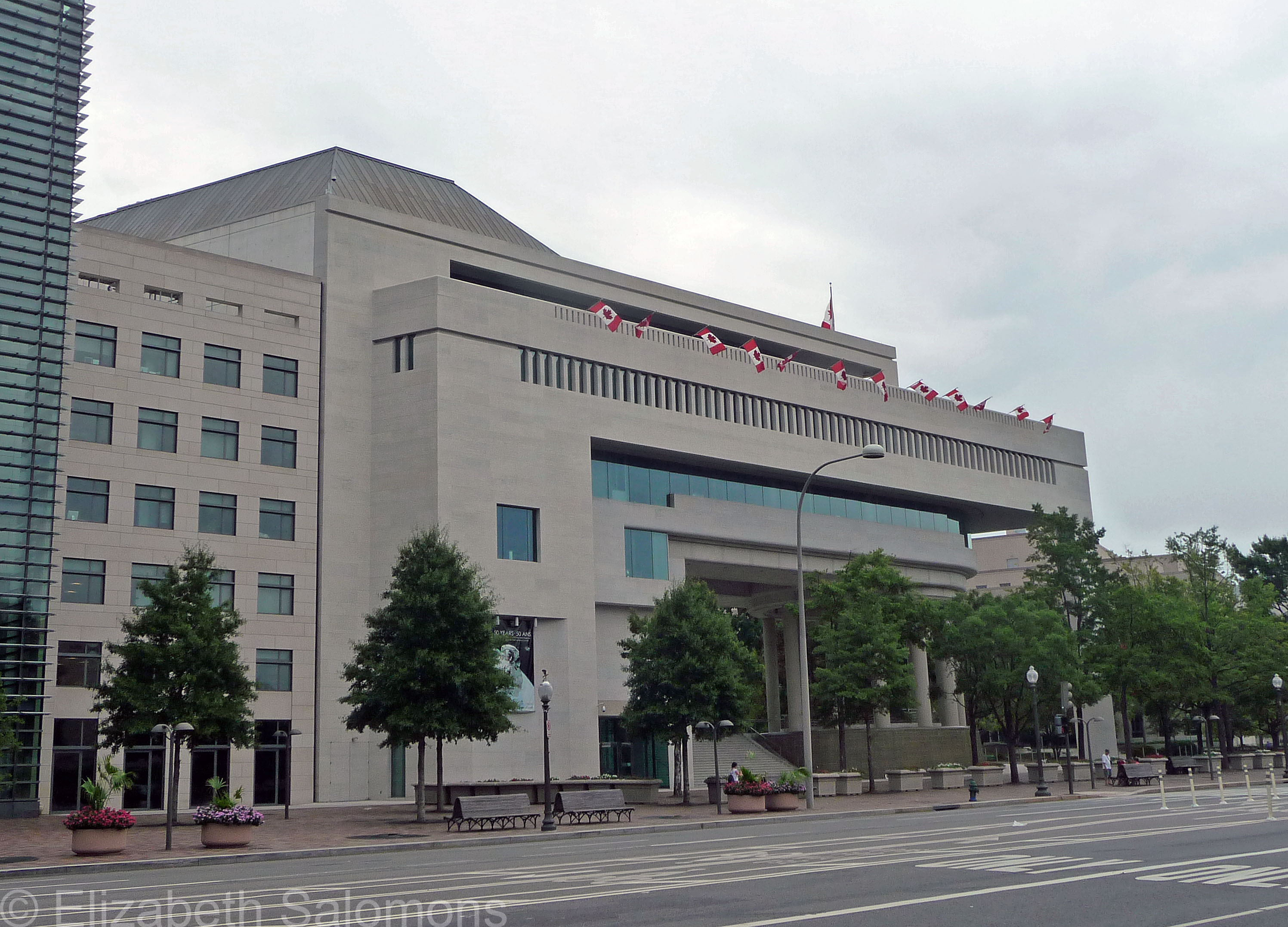
As you approach the embassy, its façade is imposing, but not severely so. The Rotunda of the Provinces and Territories consists of 12 pillars, representing 10 provinces and two territories. (Nunavut was not yet in existence when the embassy was built.)

The waterfall that surrounds the rotunda is meant to represent Niagara Falls, the world-famous waterfall that straddles the Canada–US border.
In the courtyard, resting in a pool of water, is the bronze statue Spirit of Haida Gwaii, the Black Canoe by Bill Reid. (A second casting of the same sculpture, Spirit of Haida Gwaii, the Green Canoe, is in the International Terminal at YVR Airport.)


The embassy opened in 1989 and is located on Pennsylvania Avenue between the United States Capital and the White House.


Manoa Falls
In spite of the beauty of Lanikai Beach just down the street from us, my sister and I were determined to thoroughly explore Oahu and not spend all our time on the beach.
First up? Hiking Manoa Falls.
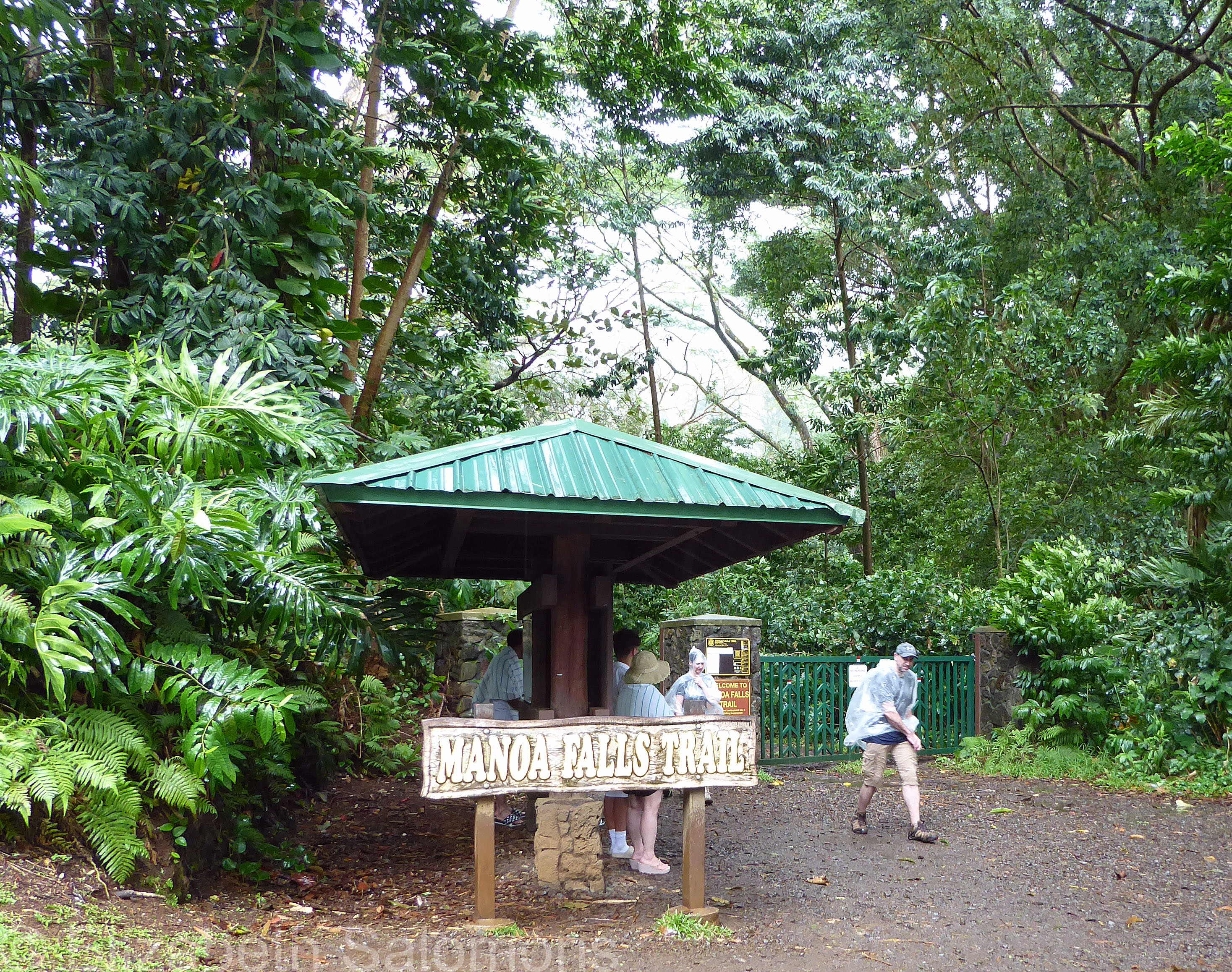
And this is where we realized that visiting Hawaii during the rainy season means … it’s gonna rain. (In other words, the top on our Mustang convertible was up far more than it was down.)
No matter. What’s a little moisture for two Vancouverites?
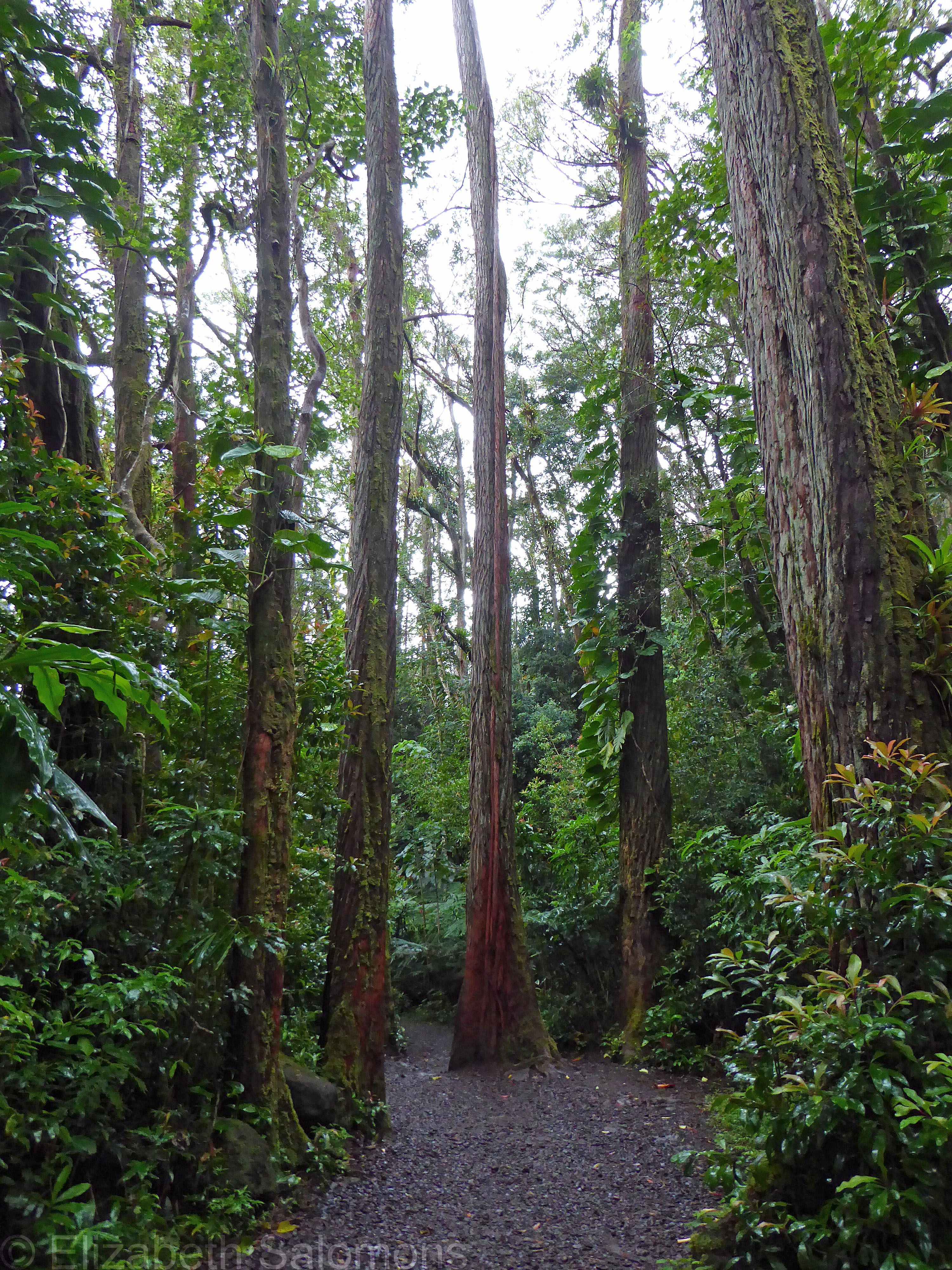
The trailhead of Manoa Falls Trail is reached by driving uphill through the suburbs of Honolulu. From the parking lot, it’s a short hike to the 45-metre-high falls.
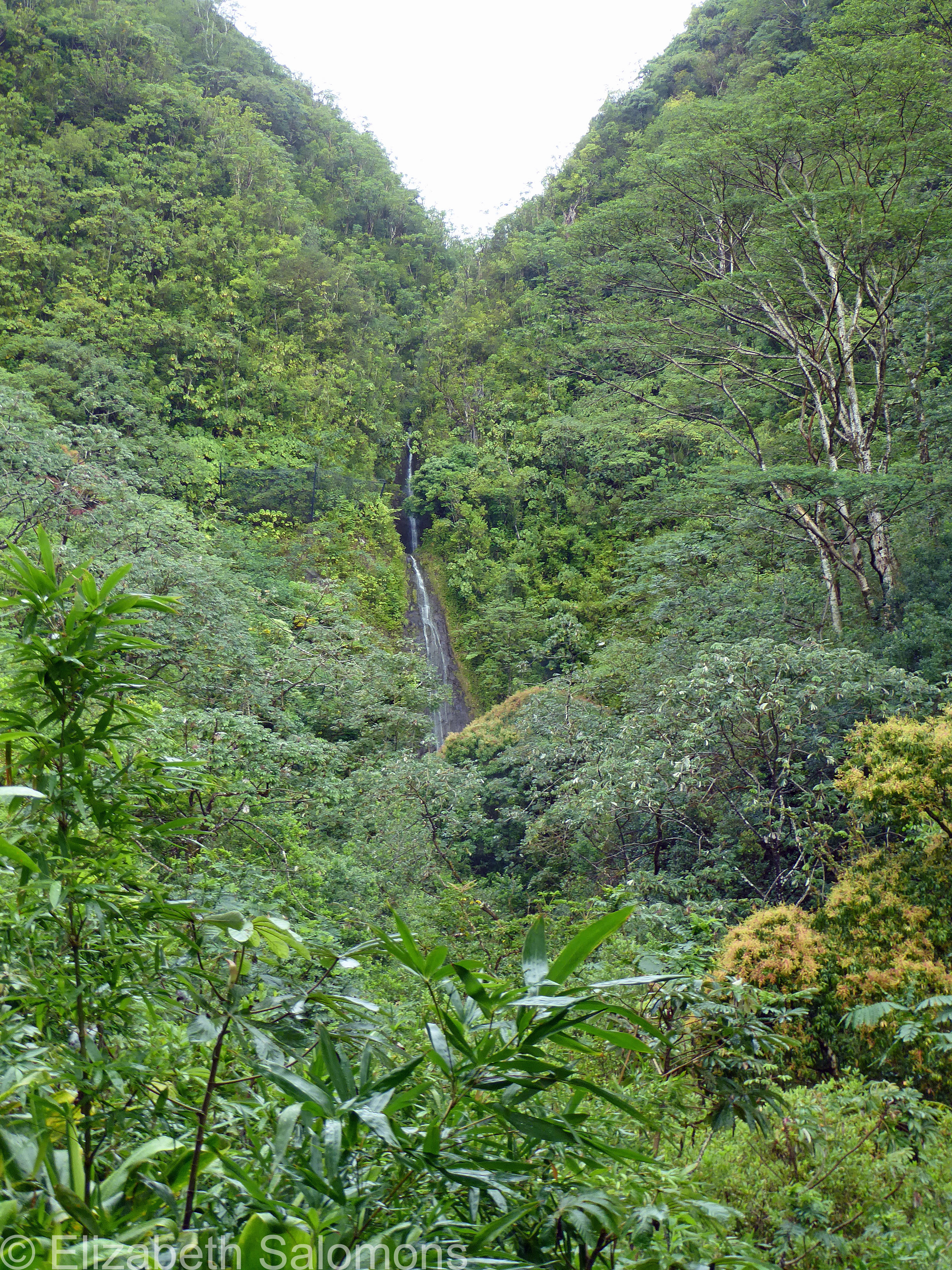
The trail is rocky and damp, but not at all difficult if you are sure-footed and wearing proper footwear. It doesn’t take long to reach the falls themselves.

Along the way, we got our first good look at the tropical rainforest that makes up Oahu. Think Jurassic Park — parts of which were filmed in this valley.

As you will see in my subsequent posts, the geology and botany of the Hawaiian Islands are stunning. It impressed me on my first ever visit to Oahu, and it was just as amazing to me on my most recent visit.
Lanikai Beach
So. We had arrived. We had wheels. Oahu was our oyster. What to do first?
Naturally, we went to the beach.

Hawaii is about so much more than its beaches, but, even so, it was a real treat to have a quiet, uncrowded beach walking distance from where we were staying. Lanikai Beach is not only one of the best beaches in Hawaii, but, some say, one of the best in the world. The colour of the water has to be seen to be believed.
The beach is backed by private residences and access from the street is through several public access walkways. There is no parking or facilities and it definitely has the vibe of a private beach in an upper-class neighbourhood.
The twin islands are called Na Mokulua (the two islands) or, simply, “the Mokes.” They are a popular destination for kayakers and we could see people sunbathing on the beach of the northern (left) island. The other island is a bird sanctuary and off-limits to the public.

Writing this post on a dreary, rainy day in Vancouver, it all seems like a dream, now. My sister and I checked out a number of beaches during our time on Oahu, but Lanikai was, by far, the best. My only regret is we didn’t spend more time here.
Arrival
It doesn’t matter where you go or how long it takes to get there. That feeling of “we’re here!” is always such a welcome sensation.
Having been to Oahu once before, I had some expectations about our arrival: the tropical temperatures as soon as you step out of the plane, the long arrivals hall at the airport sans walls (unheard of in Canadian airports), the ubiquitous palm trees …
Collecting a rental car at the airport is not typical for me, and we were both surprised at the long queue ahead of us. But once we were inside our Mustang convertible, we were up and on our way.
Arriving at a home exchange always involves one surprise or another. You read the description of the home and your hosts’ instructions carefully, but not everything completely registers until you see it in person. Hotel rooms are generic and pretty much all the same; a home is personal. It can be quirky and not quite what you expected. It can wildly exceed your expectations. Or, it can be both.
This home exchange was in Lanikai, which is a suburb of the town of Kailua on the windward side of Oahu, about a half hour drive from Honolulu. Kailua means “two currents” and is so named because of the two currents that run through Kailua Bay.
From the deck on the upper floor of the hill house where we stayed, we had a view of that bay. Here’s the first photo I took, within minutes after our arrival.
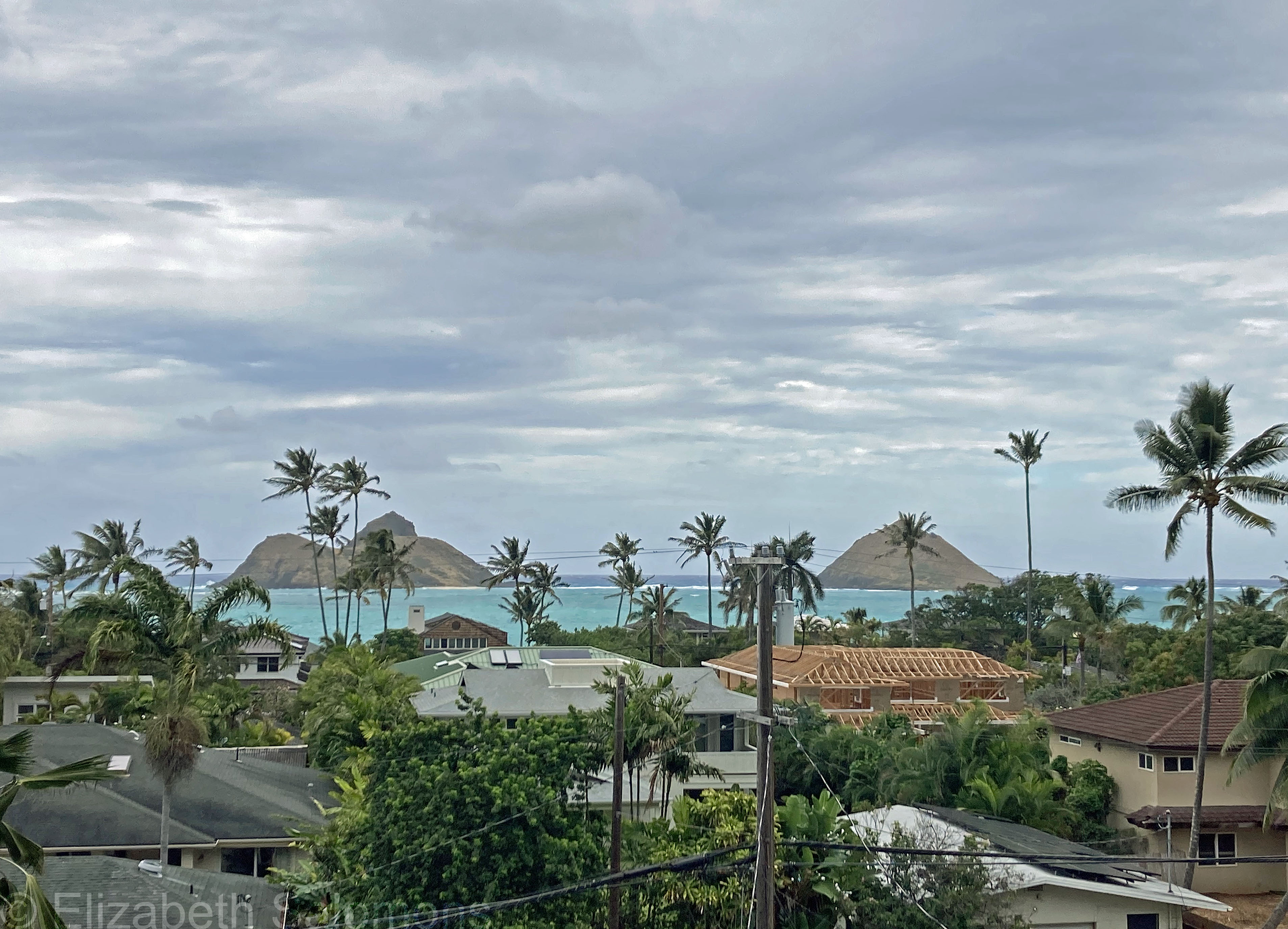
And here is the photo of our first sunrise the next morning.
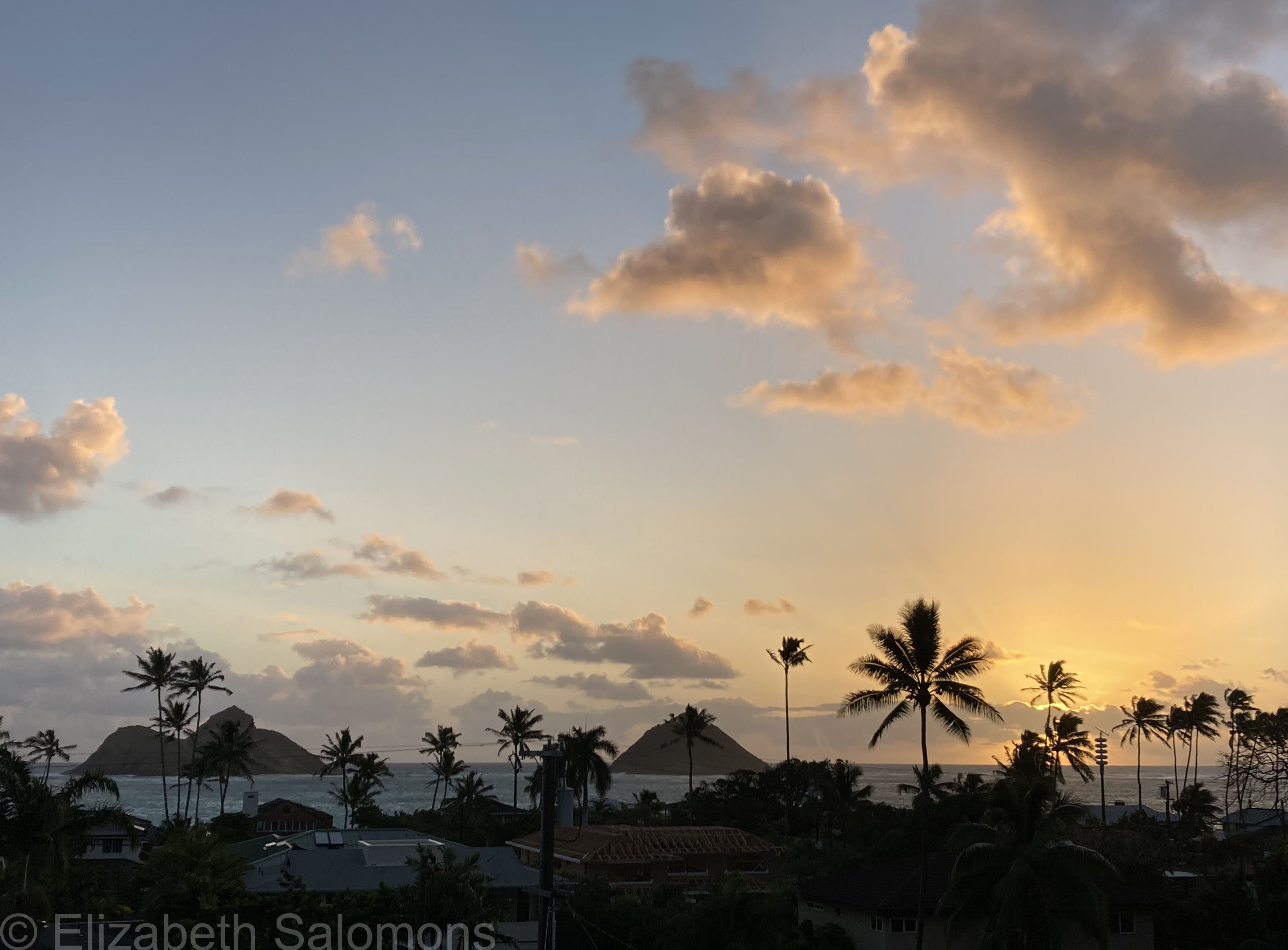
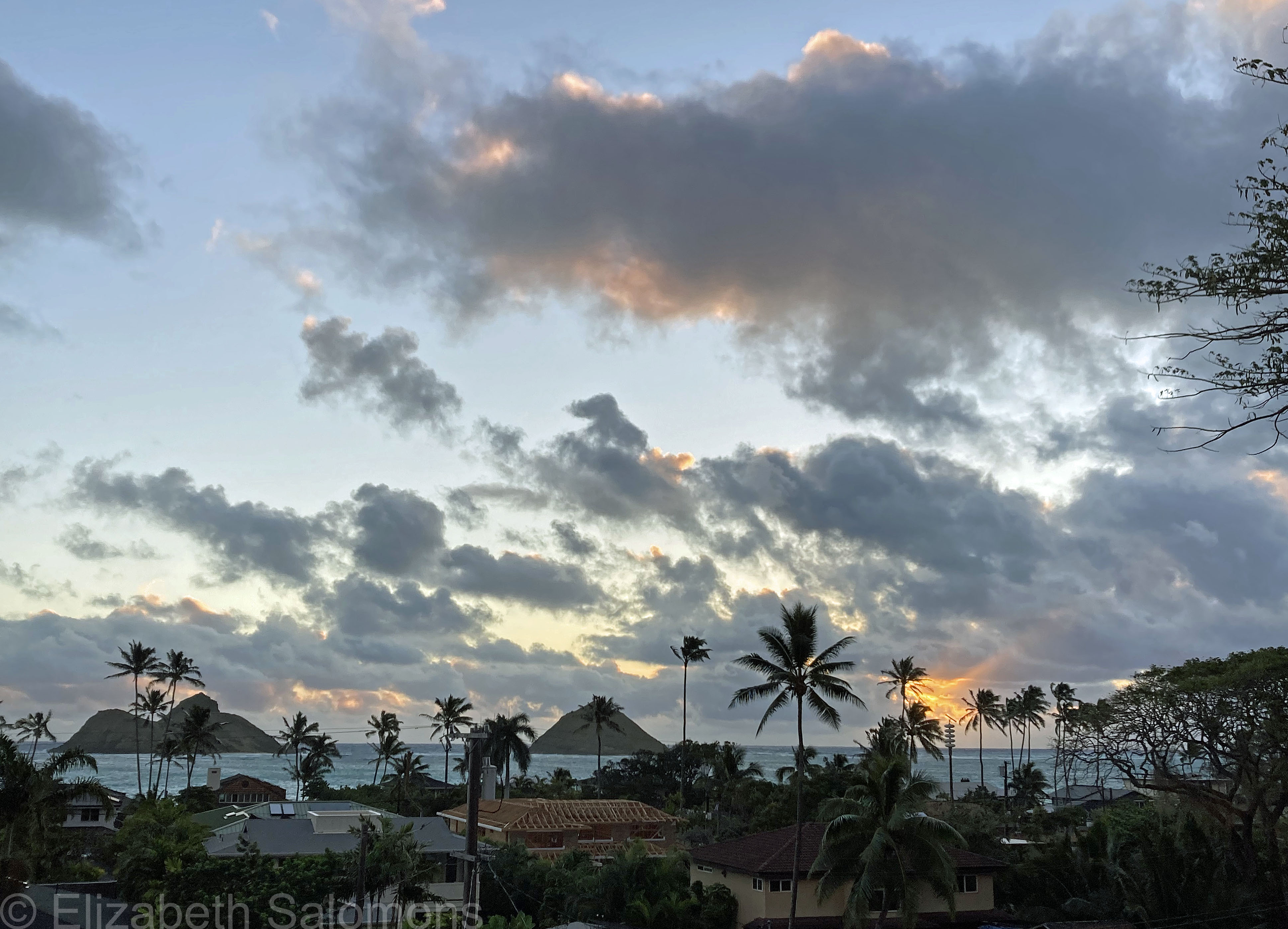
More or less by fluke, we ended up living on Vancouver time the entire week we were in Hawaii, which maximized our daylight hours, but also made it easy to get up every morning in time to see the rising sun peeking over the palm trees. The glorious thing about sunrises (or sunsets) is they are never the same.
Here’s another one.


 There and Back Again