
Fira
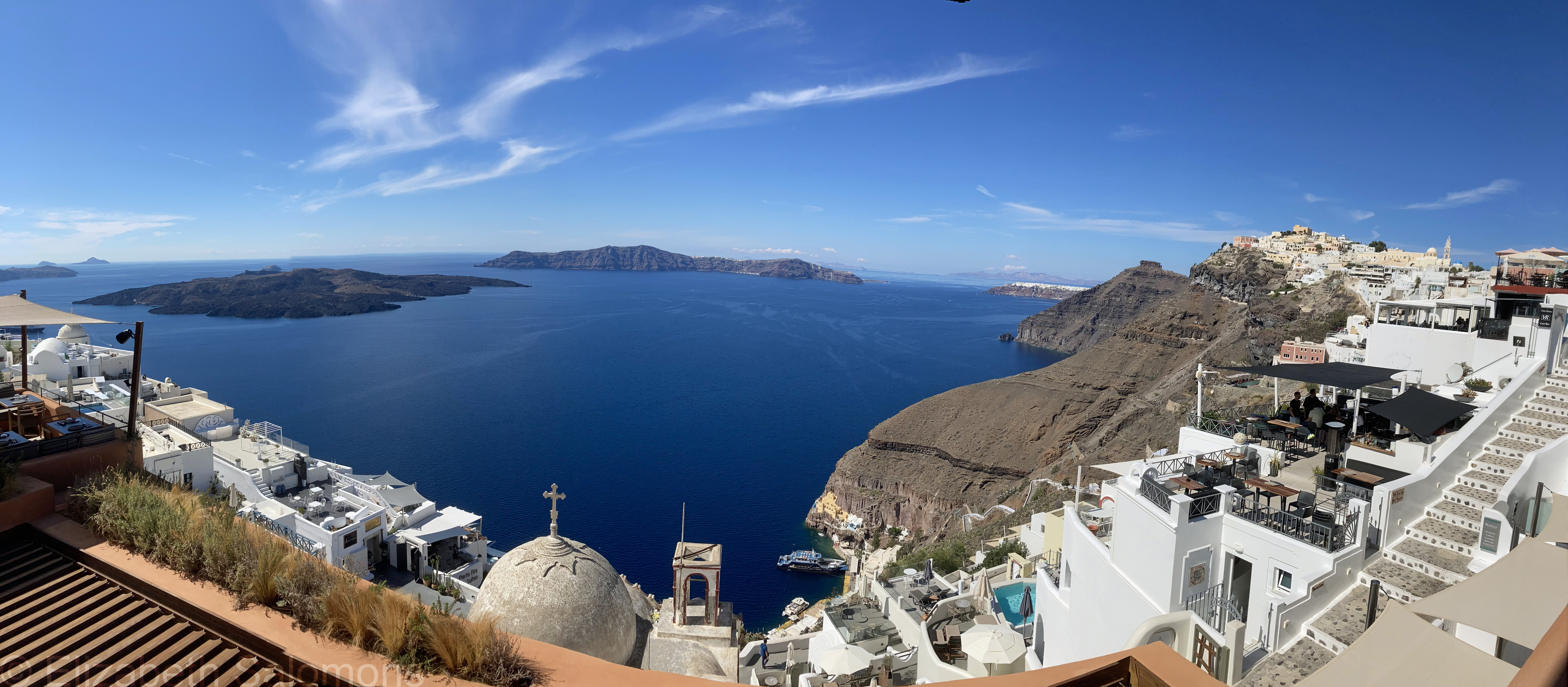
Santorini is a geologist’s dream, thanks to a volcanic eruption some 3500 years ago. It left behind a giant depression — the caldera — and a crescent-shaped island with a steep cliff face along its western side. This dramatic landscape is what draws tourists to Santorini.
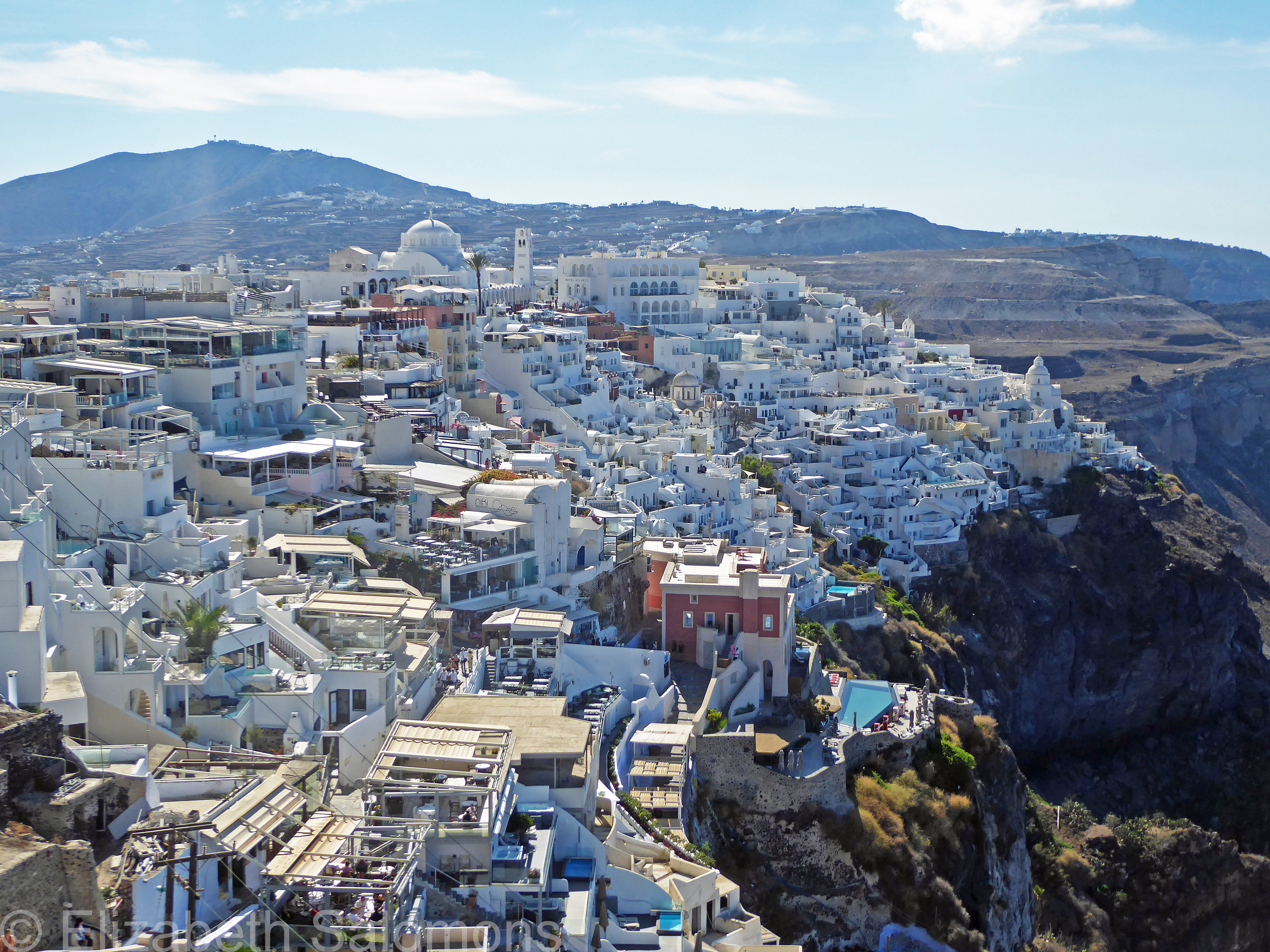
The island’s original name was Thira, named by the Spartan ruler King Thiras after himself. Much later, Venetian traders renamed it Santorini after Saint Irene, but Thira is still the official name of the island and that’s the name you will see on your ferry ticket.
Fira is the name of its largest settlement and main transportation hub. (A common misconception is that Fira is an alternate spelling of Thira, but Thira is the island and Fira is the town.)
You arrive at Fira by road from its eastern side, if coming from the airport or the new port. If you visit Santorini by cruise ship, the tender lets you off at the old port, from which you ascend to the top of the cliff by cable car (or donkey, if you prefer). You could also walk up if you wanted to get your steps in.
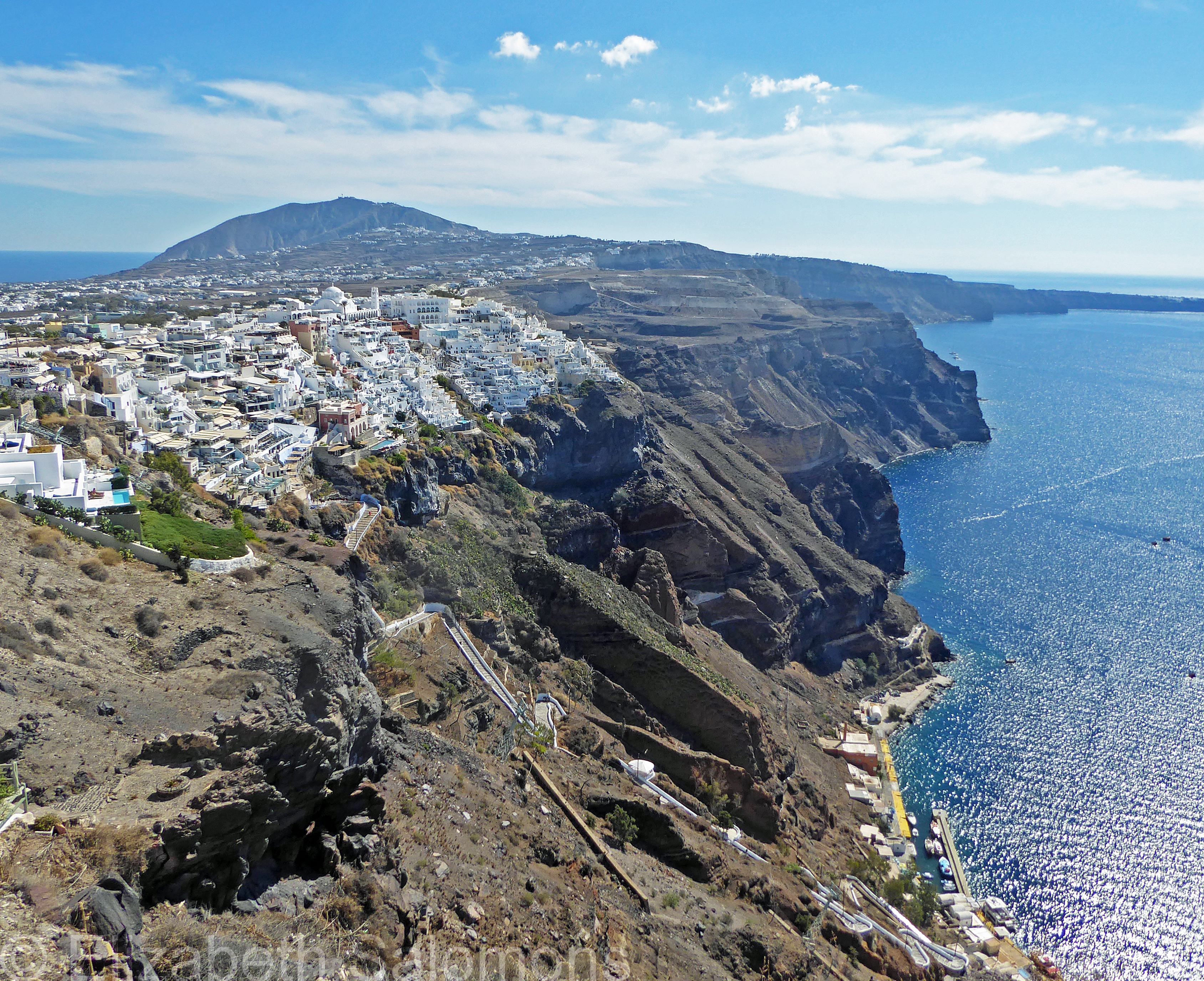
As many as four cruise ships can be anchored in the caldera in high season, which I imagine leads to gridlock in the streets of Fira. Knowing that, I timed my visit for a day when there was only the one.
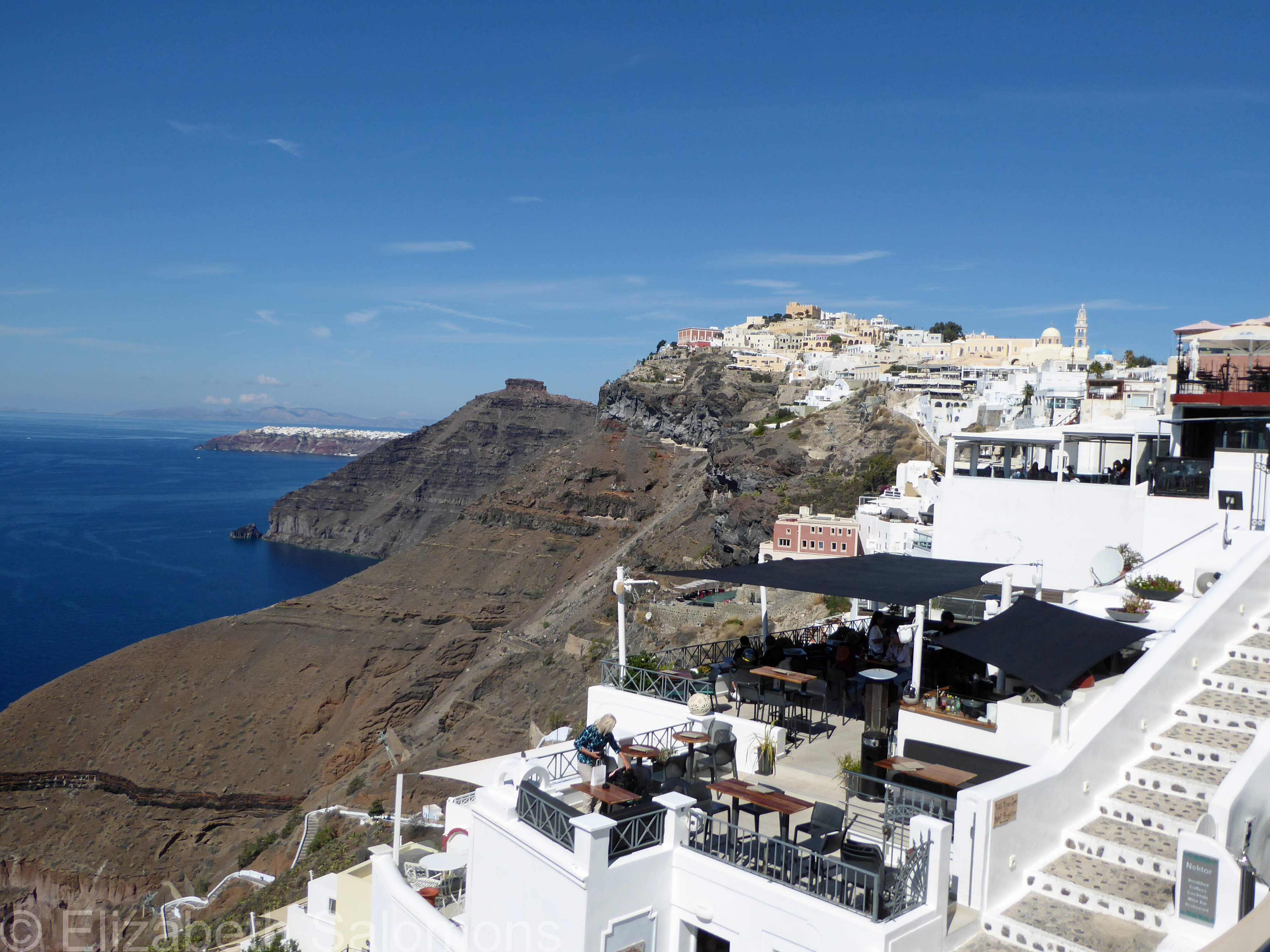
Fira’s clifftop is lined with restaurants, shops, and myriad ways to spend your money. But explore a little further inland and you will find an irresistible warren of streets and alleyways.
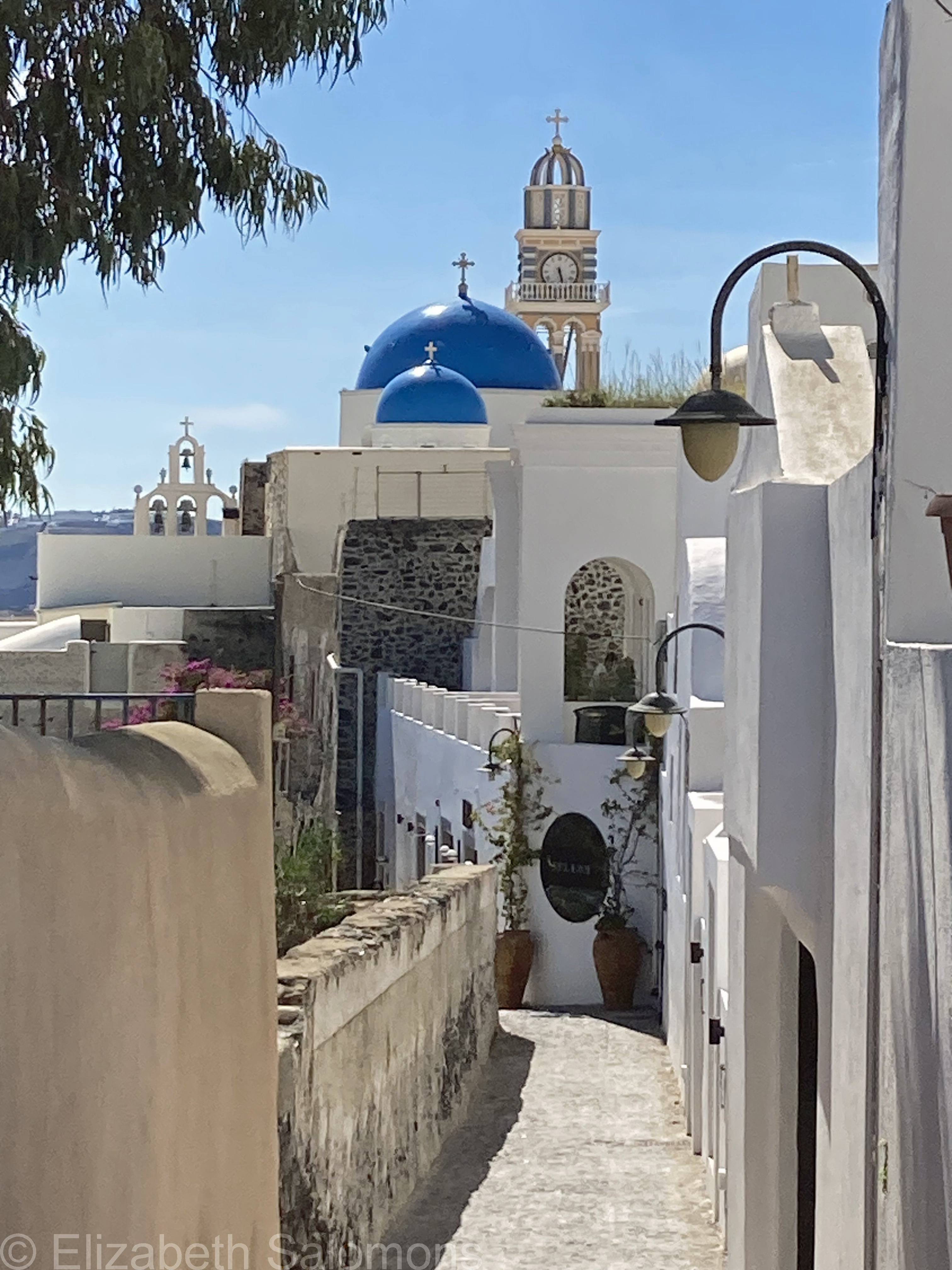
And even a bit of solitude, which is almost impossible on Santorini.


Trackbacks / Pingbacks