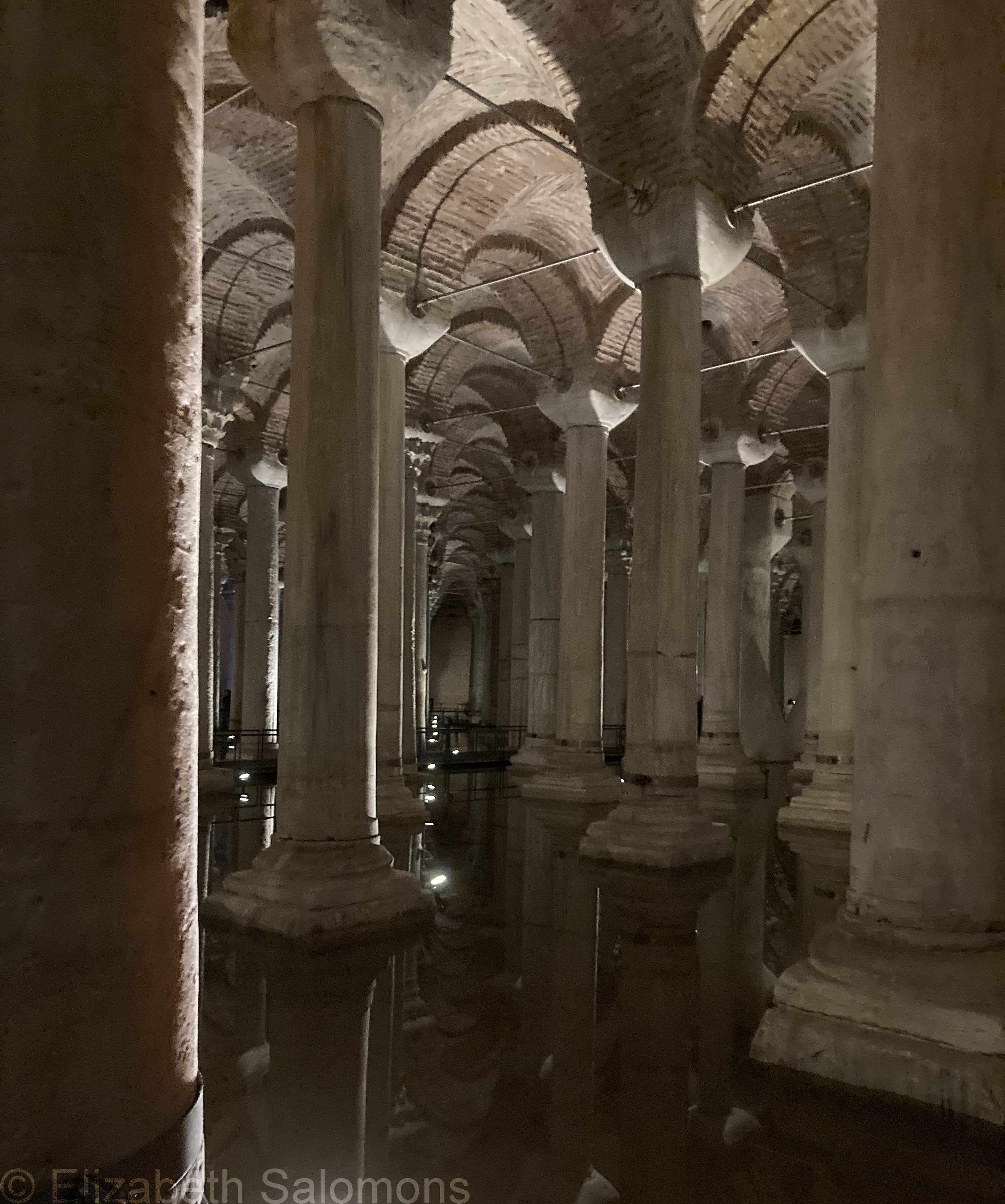
Basilica Cistern
The Greeks were the first to build a permanent settlement at what we now call Istanbul, way back in 650 BCE. It was known then as Byzantium. In 324 CE, the Roman emperor Constantine the Great founded a city on the same site, naming it Constantinople. Istanbul wasn’t officially adopted as the city’s name until the 1930s and is thought to have come from eis ten Polin, which is Ancient Greek for “in the city.”
The name changes reflect the different empires that ruled the city in turn: the Byzantine empire lasted from 330 CE to 1453, the Ottomans ruled from 1453 to 1922, and the Republic of Turkey (now Türkiye) was established in 1923.
Why the history lesson? I want to give you a sense of the influences on the architecture I’ll be posting about over the next few weeks.
The oldest structure my friend and I saw was the Basilica Cistern. Built in the sixth century by another Roman emperor, Justinian I, it was one of hundreds of cisterns constructed beneath Istanbul. (Bear in mind that the Romans were masters of water — think of all those aqueducts still standing all over Europe.) Above it stood a Byzantine basilica, which no longer exists, but the name stuck.
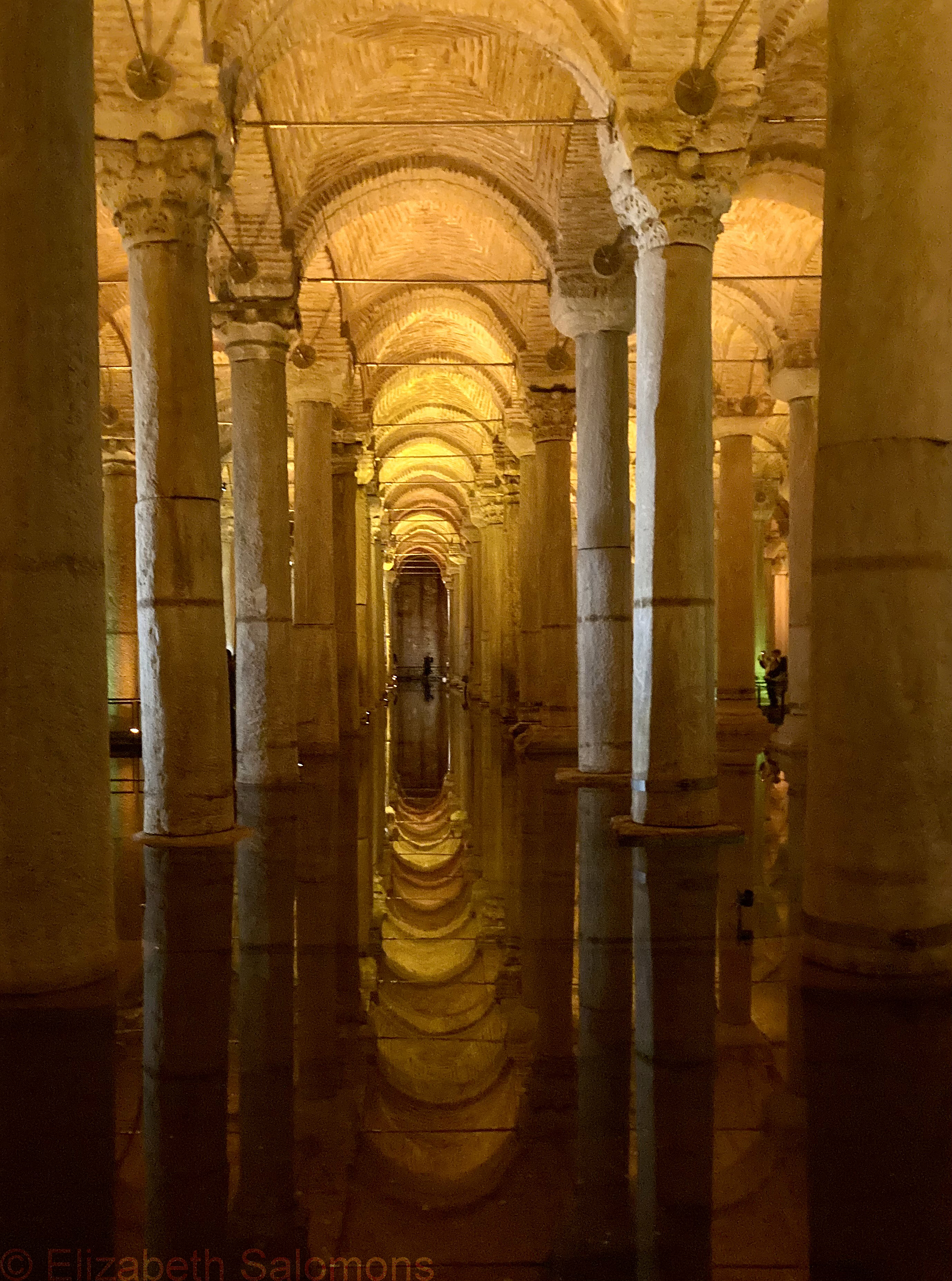
I’ve never seen anything quite like the Basilica Cistern. Largely forgotten after the Ottomans conquered Constantinople in 1453, a scholar researching Byzantine antiquities a hundred years later was told by residents that they could get water by lowering a bucket beneath the floors of their homes. He investigated and discovered the vast cistern.
Even so, not much attention was paid to it until the 1980s restoration when centuries of silt was removed. It was declared a UNESCO World Heritage Site in 1985 and opened to the public in 1987. Additional restoration work done between 2020 and 2022 revealed the original Byzantine brick floor.
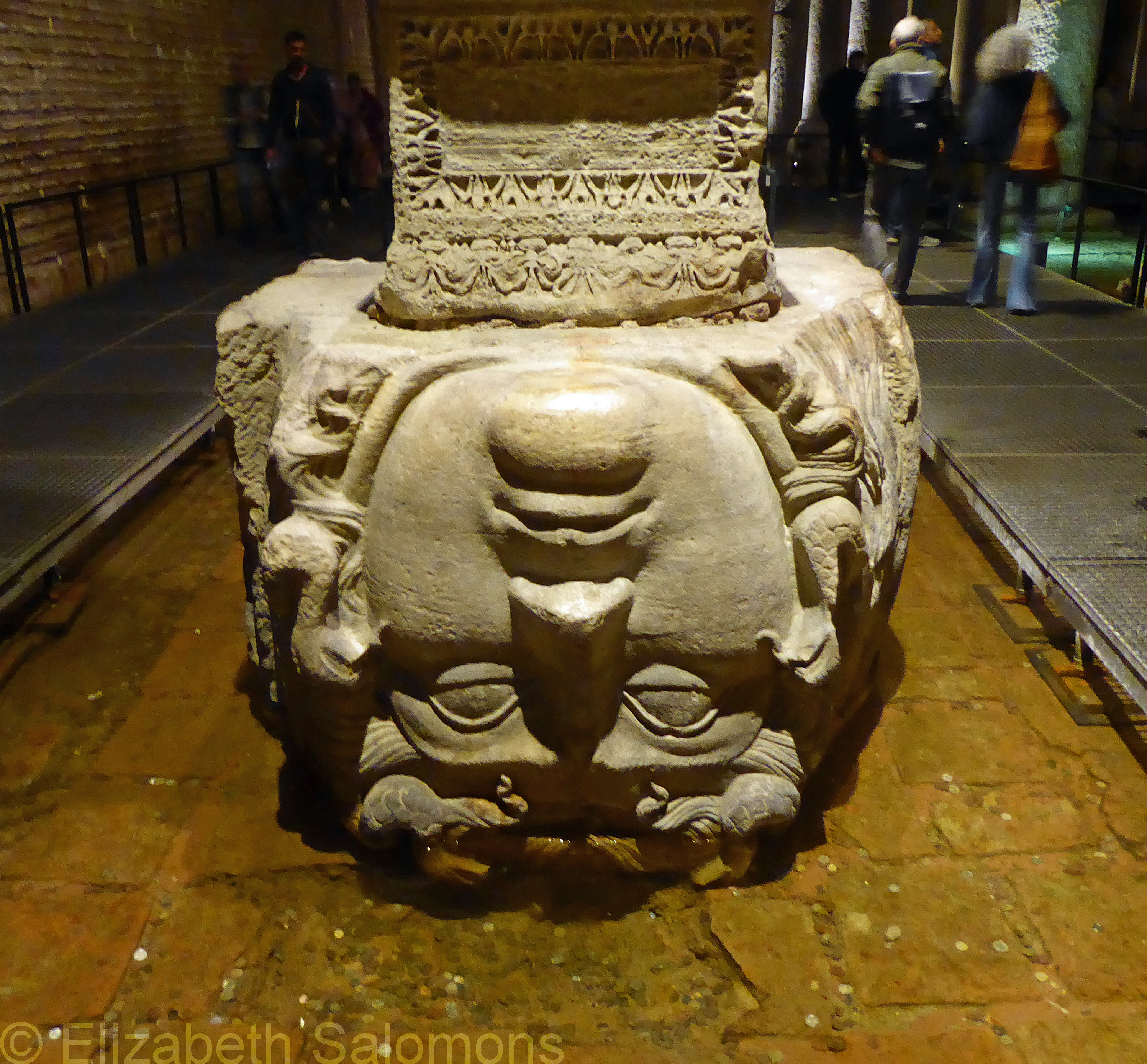
The Basilica Cistern measures 9800 square metres and can hold 80 million litres of water, which travelled along aqueducts from the Belgrad Forest, some 20 kilometres away. Many of its 336 columns were salvaged from temple ruins elsewhere in the empire.
My friend and I walked past the entrance late one afternoon and decided the relatively short line was a sign we should pop in for a quick look. An audio tour is included for an extra fee, but I simply couldn’t absorb any more information so late in the day, so I skipped it.
But that meant my time beneath the streets of Istanbul was one of those late-in-the-day magical hours where I simply soaked in the atmosphere and let my mind wander to the distant past.