
Hagia Sophia Grand Mosque
In addition to building cisterns, Justinian I also occupied himself with this building’s construction.
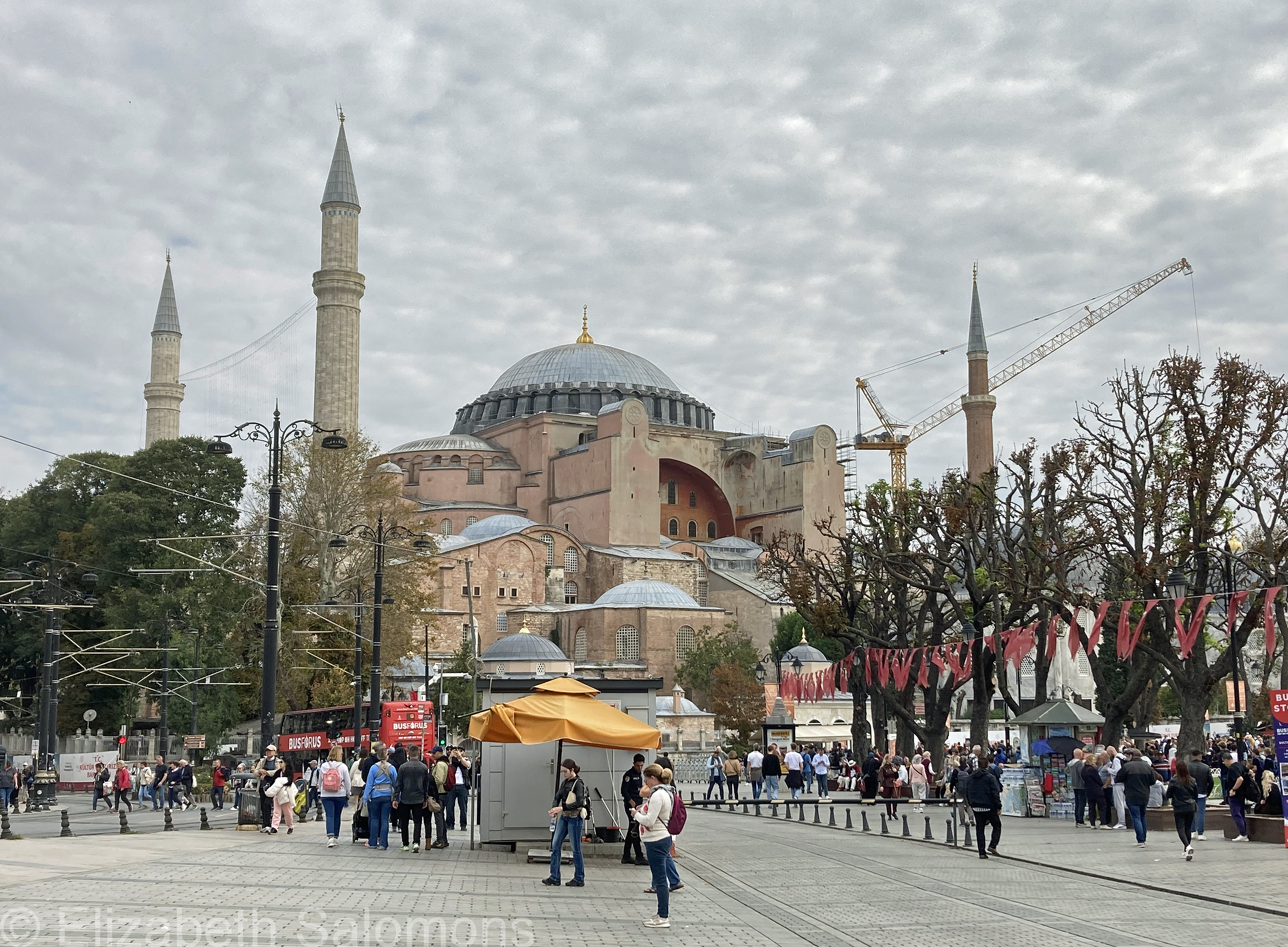
That would be the Hagia Sophia Grand Mosque, commonly referred to as Hagia Sophia, or by its Turkish name, Ayasofya. Completed in 537 CE, it was the oldest Christian cathedral in the world and, until the construction of the Cathedral of Seville in the fifteenth century, the largest. It was the coronation cathedral for the Byzantine Empire.
Hagia Sophia (which means Holy Wisdom) has had a complicated history that mirrors the history of Türkiye. (Buckle up, people!) It was an Eastern Orthodox church until 1204, a Roman Catholic church from 1204 to 1261, and then reverted to Eastern Orthodoxy. After the fall of Constantinople in 1453, it was converted to a mosque. From 1935, when the Republic of Türkiye was established, until 2020, it was a secular museum. Now, it is a mosque.
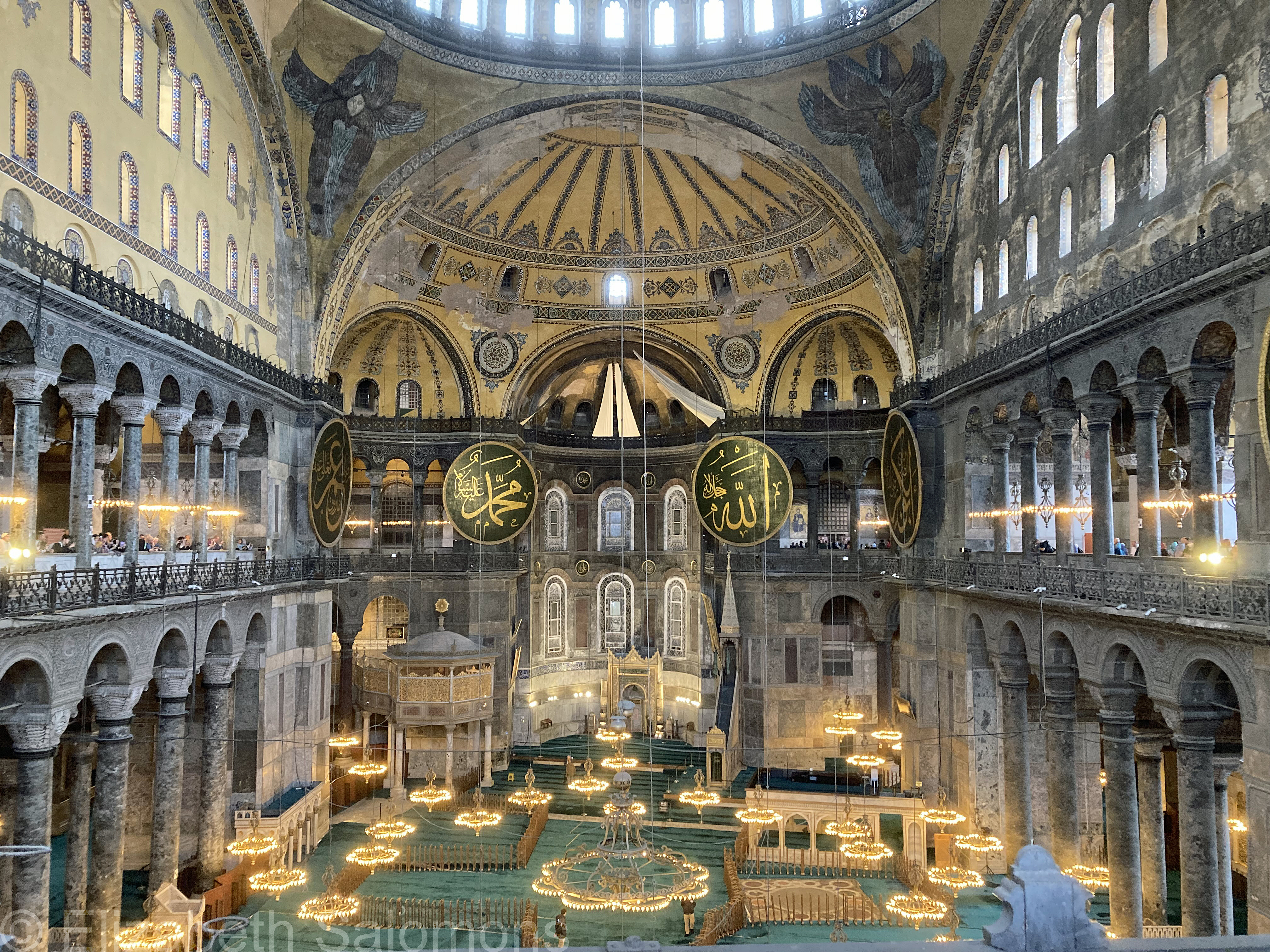
Hagia Sophia was the sight I was most interested in seeing while in Istanbul and the main reason I wanted to visit the city. Truth is, it’s been on my bucket list ever since I took a Byzantine history course many decades ago. But I’m sad to say that I was ever so disappointed.
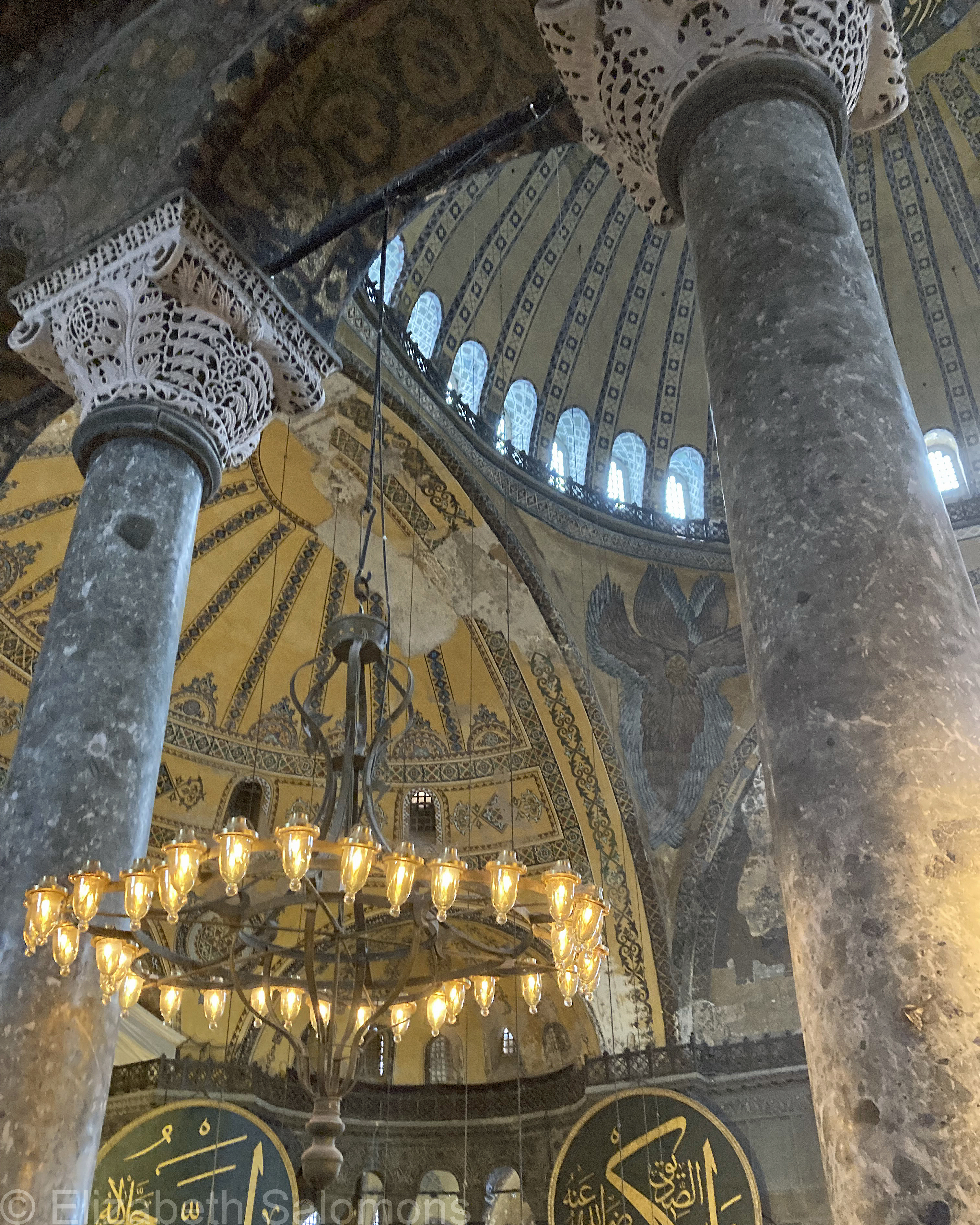
Only Turk nationals and foreign Muslims are permitted free entry and allowed access to the lower floor. The rest of us paid an exorbitant entrance fee ($80 Canadian) and were sent to an upper gallery via a sloped walkway.
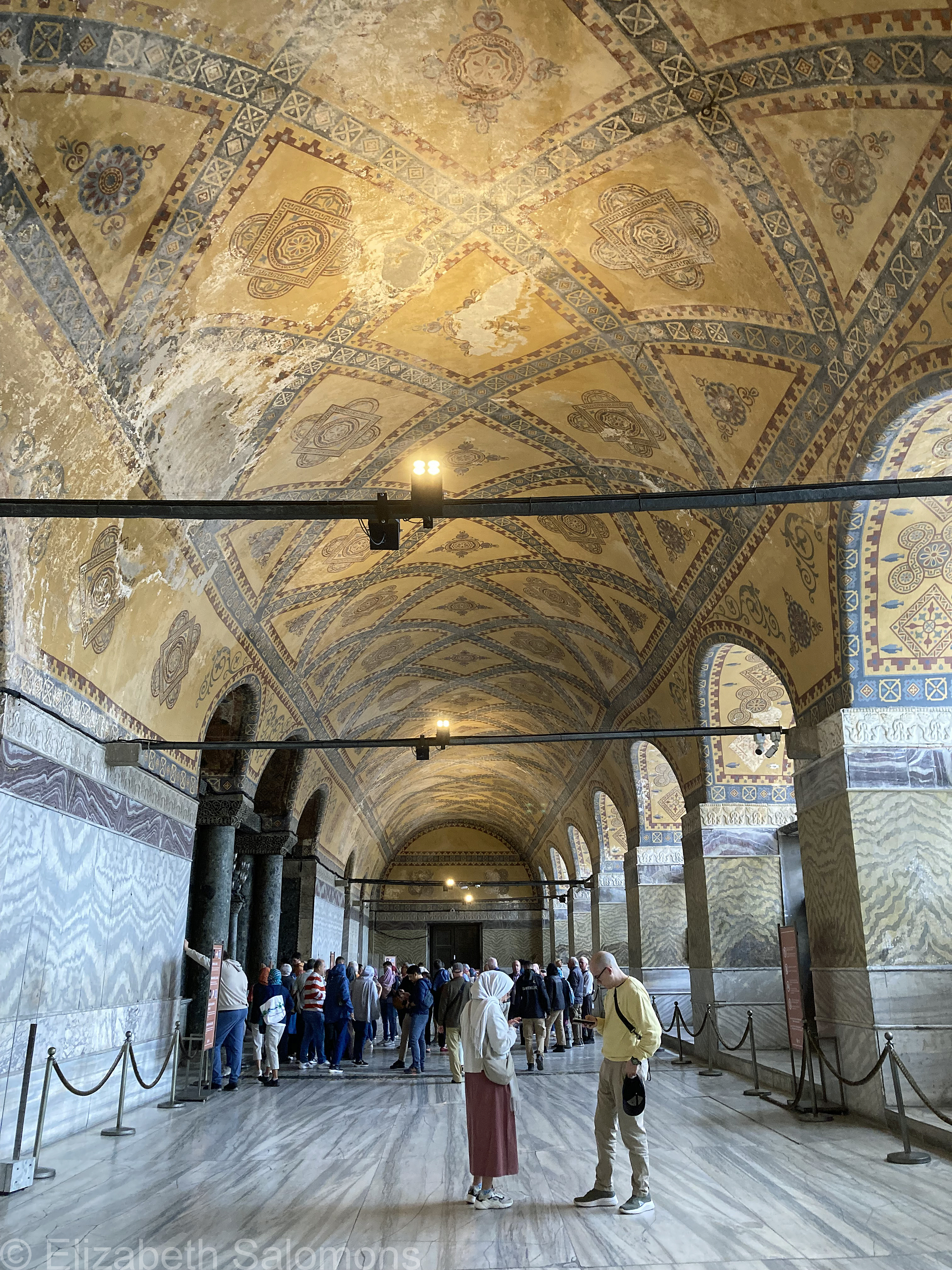
From there, we could look out over the mosque, but the effect was definitely that of spectator rather than participant. That overwhelming feeling you get when you enter a grand building, particularly a place of worship, and look up? It was nowhere to be found.
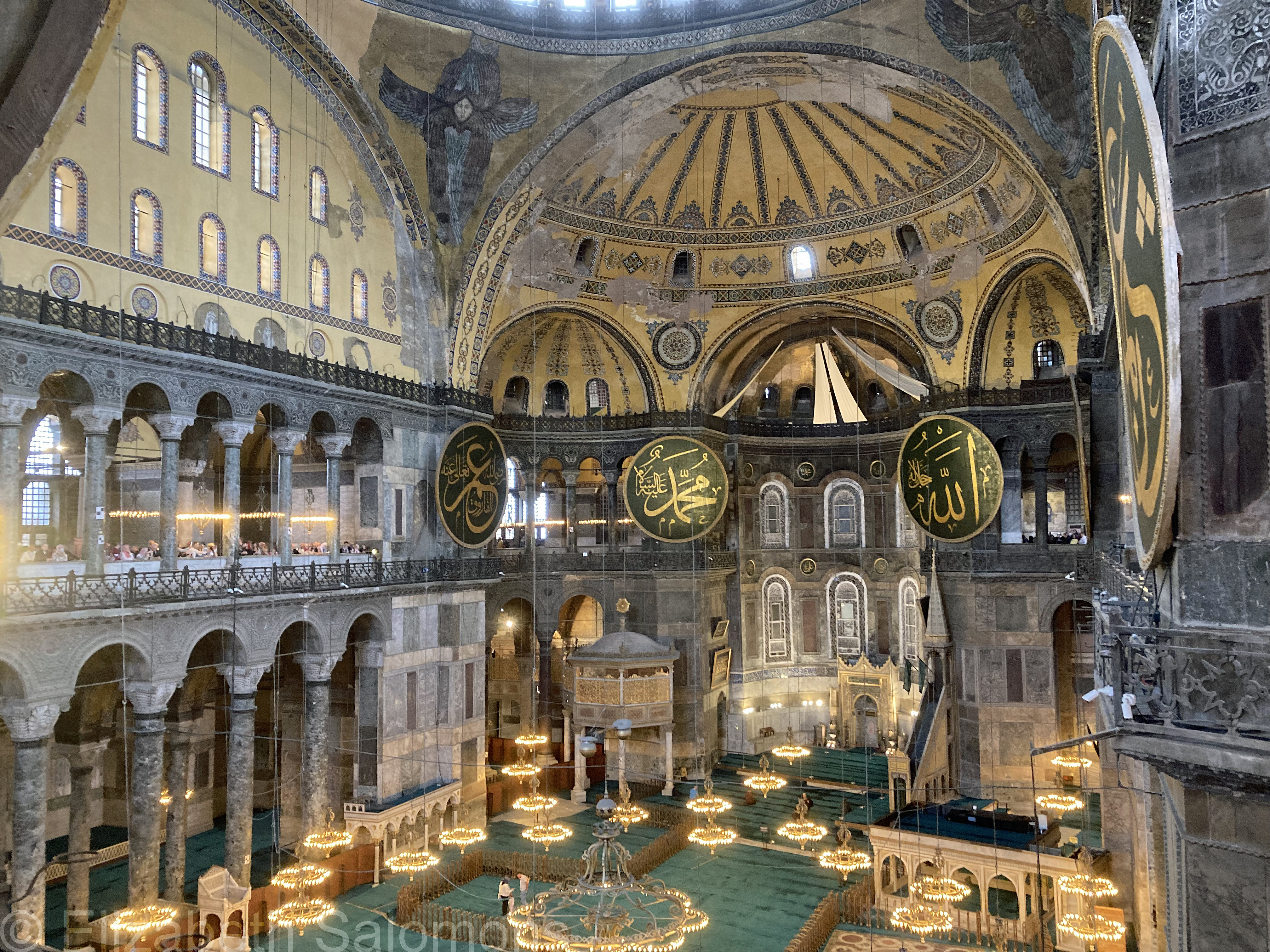
Instead of awe and grandeur, I felt shame. Like I wasn’t supposed to be there and how presumptuous of me for wanting to visit. I don’t know if non-Christians feel the same when they visit the Gothic cathedrals of Europe — I sure hope not.
There were banners hiding a mosaic in the apse and we shuffled along to get a peek-a-boo look. My friend and I were both shocked and horrified to realize the mosaic was of Mary holding the Infant Jesus.
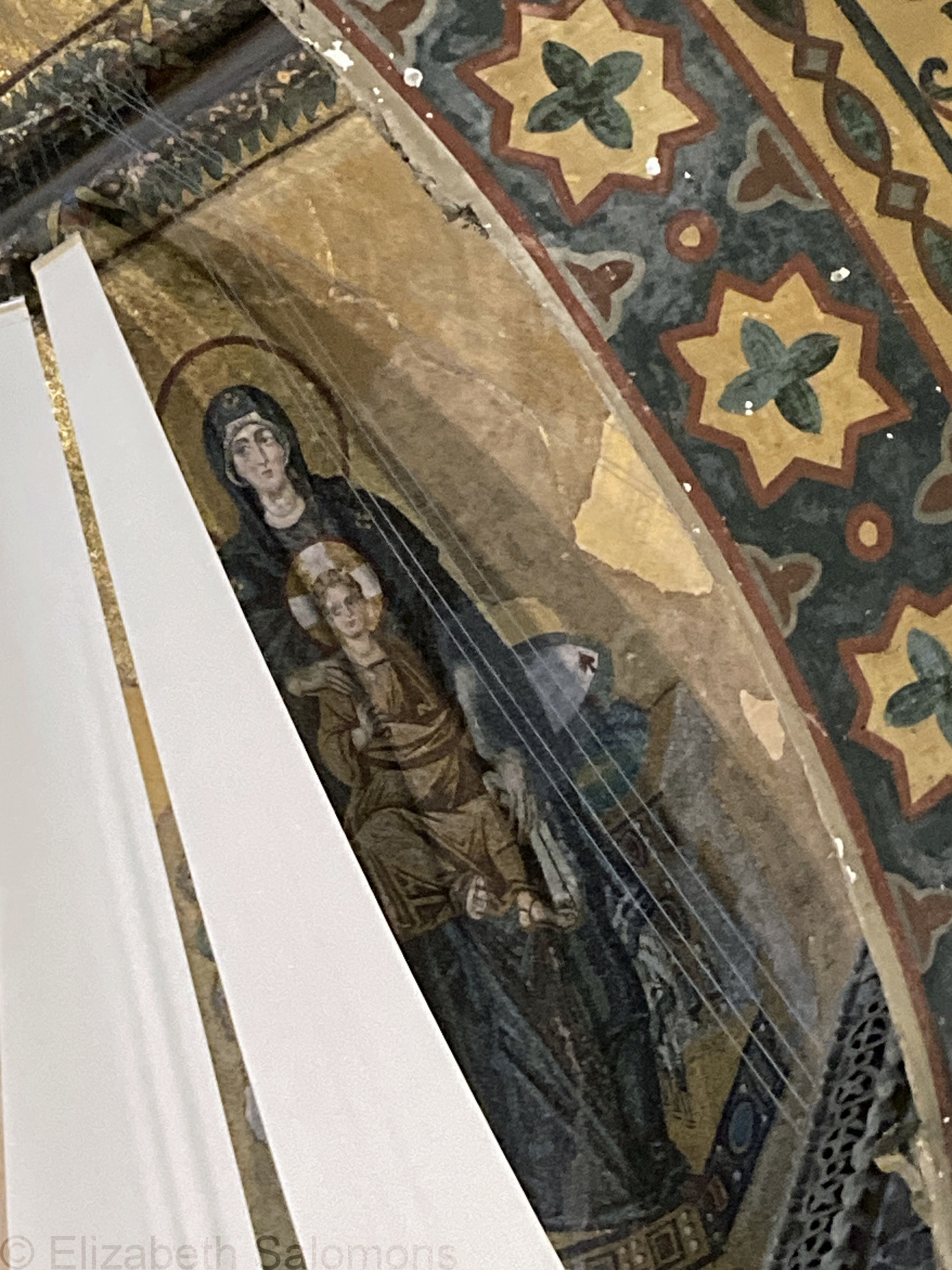
Known as the Theotokos Mosaic, it’s hidden from view because the Islamic faith prohibits images of people. (Which is why their art consists of geometric patterns and intricate calligraphy.)
The upper gallery did give us great access to the other Byzantine mosaics, which were not covered up. They are made with thousands of small cubes of glass, stone, and ceramic; the gold leaf between the layers of glass creates the shimmering effect.
Here, take a look.


From what I have read, turning Hagia Sophia back into a mosque has not been without controversy, as it appears to have been a purely political move. I can only hope that some day it will feel more welcoming to everyone, no matter their faith or country of origin.
Basilica Cistern
The Greeks were the first to build a permanent settlement at what we now call Istanbul, way back in 650 BCE. It was known then as Byzantium. In 324 CE, the Roman emperor Constantine the Great founded a city on the same site, naming it Constantinople. Istanbul wasn’t officially adopted as the city’s name until the 1930s and is thought to have come from eis ten Polin, which is Ancient Greek for “in the city.”
The name changes reflect the different empires that ruled the city in turn: the Byzantine empire lasted from 330 CE to 1453, the Ottomans ruled from 1453 to 1922, and the Republic of Turkey (now Türkiye) was established in 1923.
Why the history lesson? I want to give you a sense of the influences on the architecture I’ll be posting about over the next few weeks.
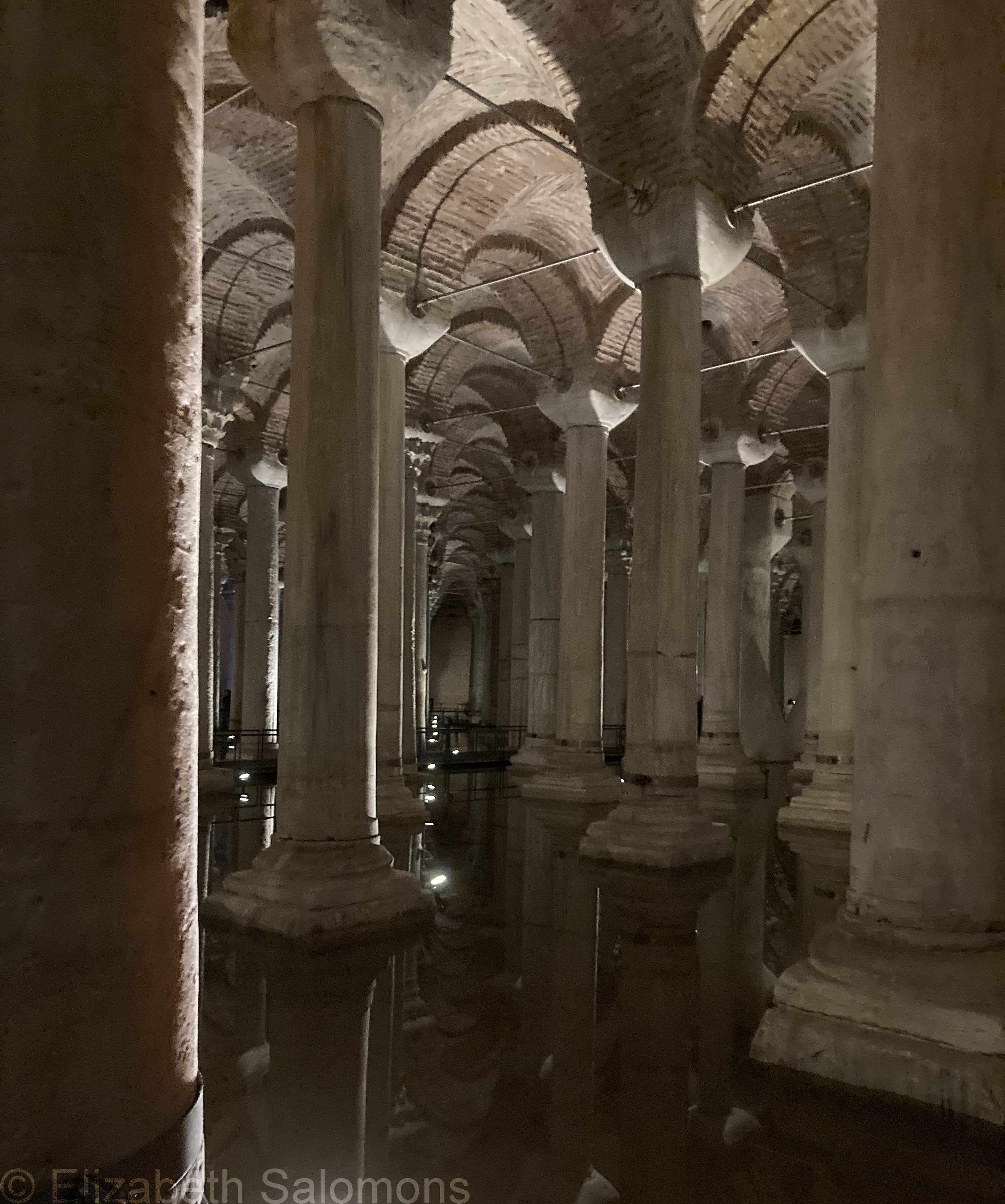
The oldest structure my friend and I saw was the Basilica Cistern. Built in the sixth century by another Roman emperor, Justinian I, it was one of hundreds of cisterns constructed beneath Istanbul. (Bear in mind that the Romans were masters of water — think of all those aqueducts still standing all over Europe.) Above it stood a Byzantine basilica, which no longer exists, but the name stuck.
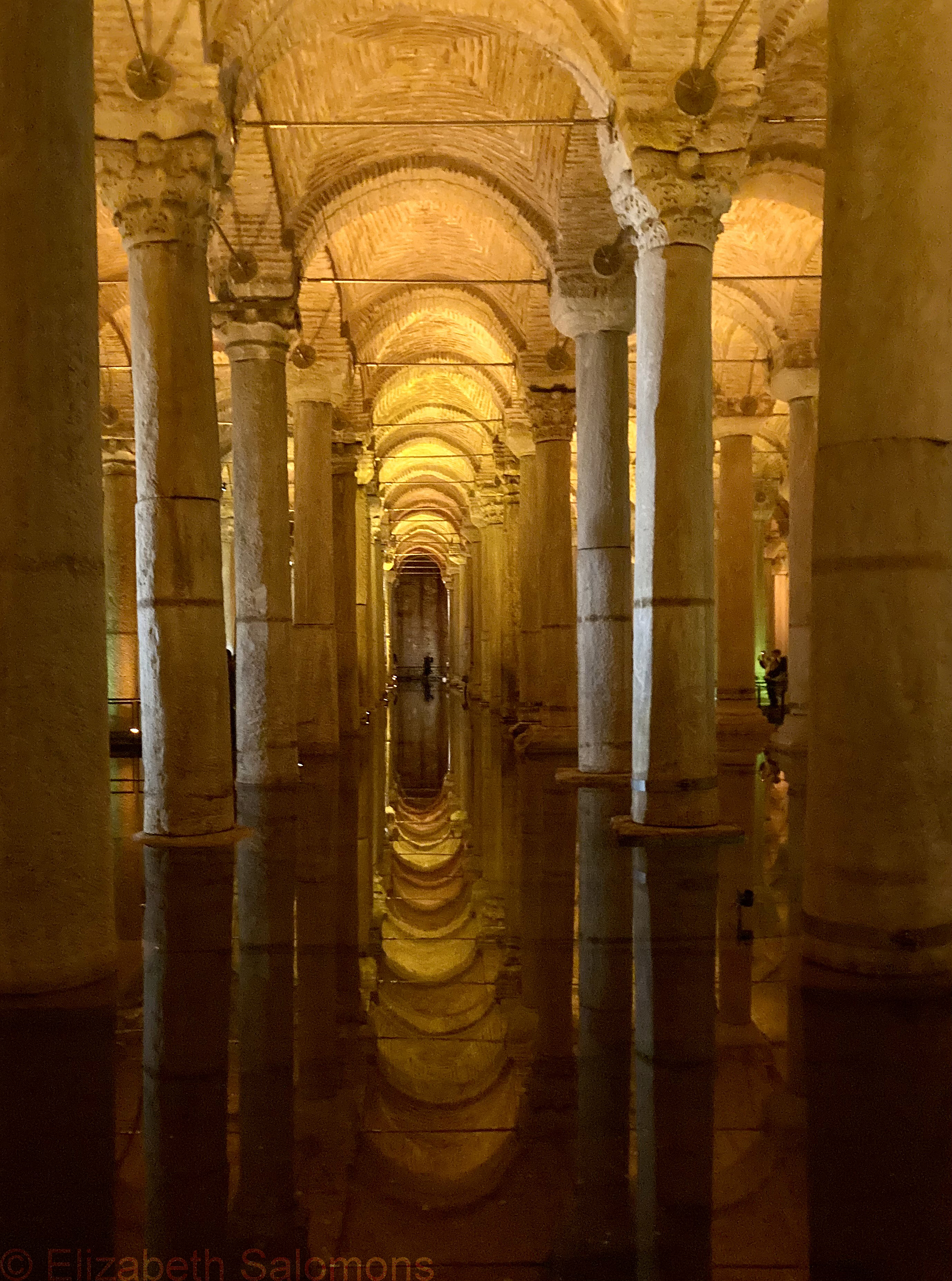
I’ve never seen anything quite like the Basilica Cistern. Largely forgotten after the Ottomans conquered Constantinople in 1453, a scholar researching Byzantine antiquities a hundred years later was told by residents that they could get water by lowering a bucket beneath the floors of their homes. He investigated and discovered the vast cistern.
Even so, not much attention was paid to it until the 1980s restoration when centuries of silt was removed. It was declared a UNESCO World Heritage Site in 1985 and opened to the public in 1987. Additional restoration work done between 2020 and 2022 revealed the original Byzantine brick floor.
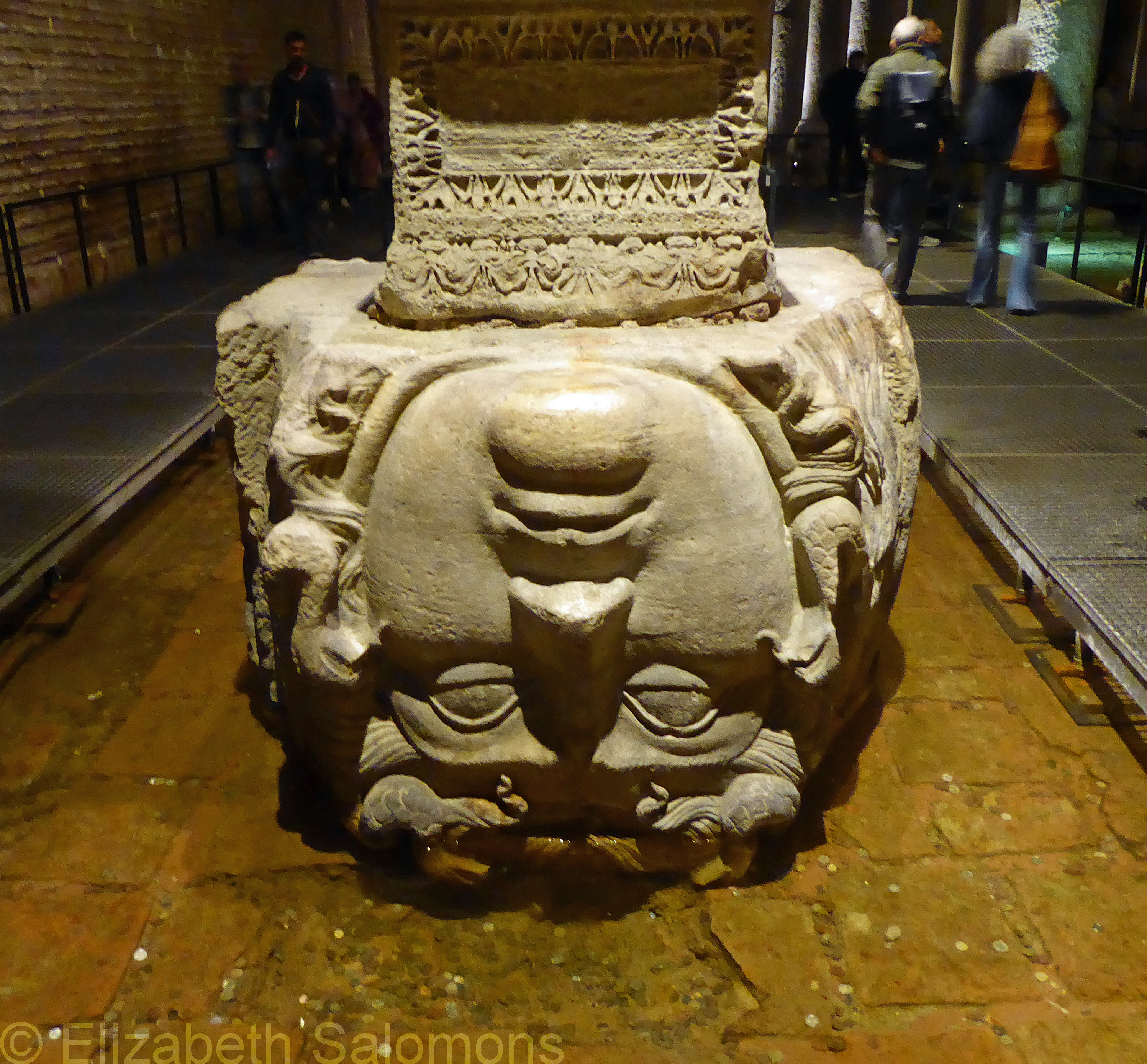
The Basilica Cistern measures 9800 square metres and can hold 80 million litres of water, which travelled along aqueducts from the Belgrad Forest, some 20 kilometres away. Many of its 336 columns were salvaged from temple ruins elsewhere in the empire.
My friend and I walked past the entrance late one afternoon and decided the relatively short line was a sign we should pop in for a quick look. An audio tour is included for an extra fee, but I simply couldn’t absorb any more information so late in the day, so I skipped it.
But that meant my time beneath the streets of Istanbul was one of those late-in-the-day magical hours where I simply soaked in the atmosphere and let my mind wander to the distant past.
New City, New Country, New Continent
Eventually it was time for me to move on from Greece. Next up: Istanbul.
When I began planning last year’s trip to Serifos, I thought about where else I could go that was easy to access from Athens. Istanbul was the obvious choice. I’ve wanted to visit the city ever since I took a course in Byzantine history a lifetime ago.
Once there, though, I was pretty overwhelmed. For starters, I thought I had transited through some of the world’s largest airports. (London’s Heathrow come to mind.) Turns out the Istanbul Airport dwarfs them all. It’s the largest terminal building in the world, with five concourses all under one roof. I had arranged to meet my friend at Passport Control and realized I had grossly underestimated the country when she messaged me: “Which Passport Control are you at?”
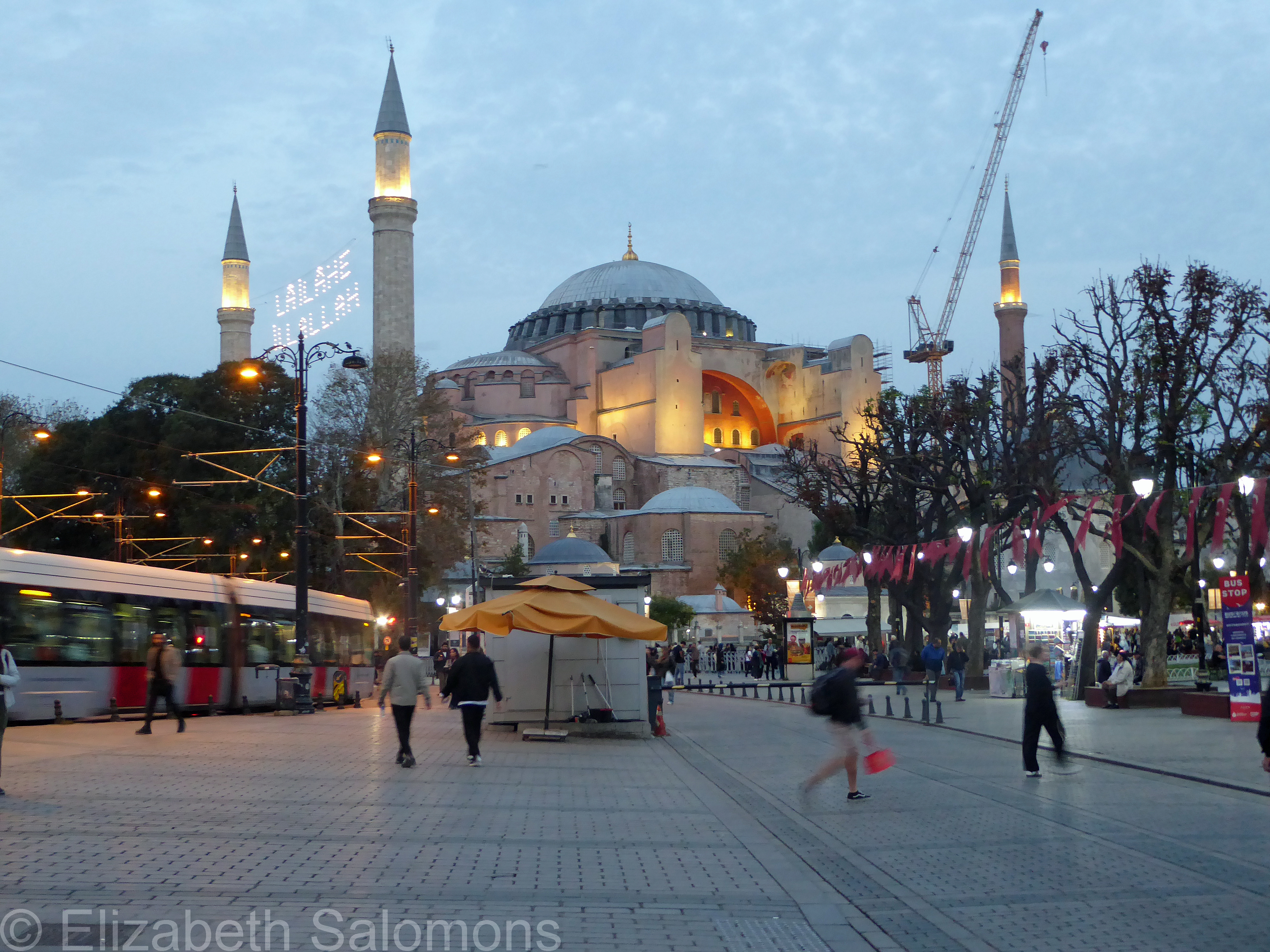
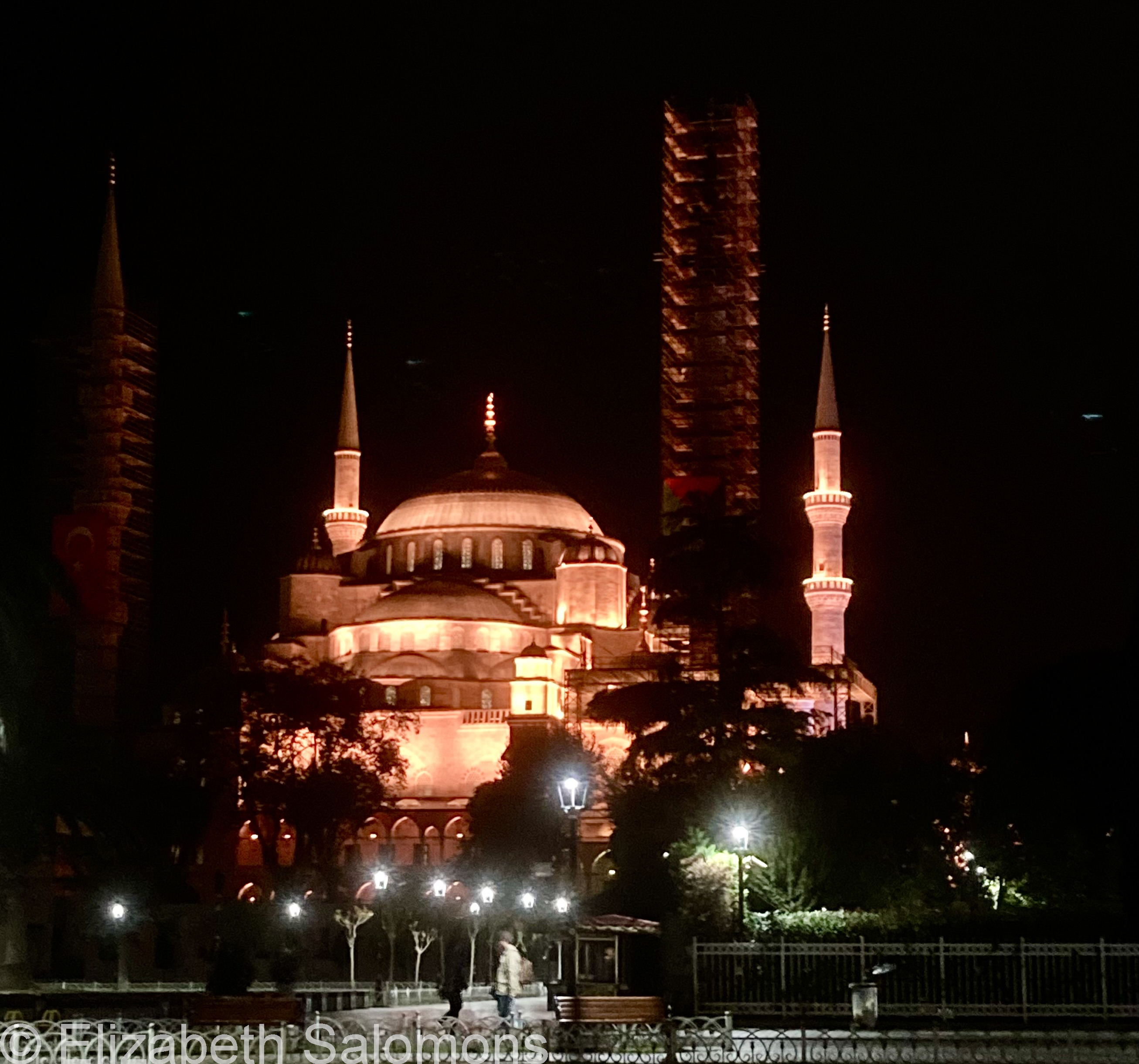
Thankfully, we soon found each other and once they let us into the country, we were ready to conquer Istanbul together. I took the above photo a few hours later.
Now, a year later to the day, I look at it and think, I was there? It looked like that? Our first glimpse of Sultanahmet Square was after dark and we had little sense of the scale of the mosques we were walking past. And when I was woken at 6 am the next morning by the amplified call to prayer, I rolled over and went back to sleep, thinking, “That’s different.”
I had five days in Istanbul, three of them with my friend. We jammed as much as we could into the time we had and yet we barely scratched the surface of this amazing city.
Stay tuned to see what I mean.


