
Canada 150: Banff National Park
My Canada 150 series would not be complete without a post about Canada’s oldest national park. But since every single one of my previous posts on Banff consists of a photo of a mountain, I’d thought I’d mix it up this time. (Otherwise you might get the idea that the only thing to see in Banff National Park are mountains.)
There’s wildlife, too!
Of course, say “wildlife” and “Banff” in the same sentence and most people will start listing off which of the Big Five — deer, elk, moose, bear, and wolf — they’ve seen. The big animals do deserve the attention they get, but it is often the little animals, which are far easier to get up close and personal with, that lead to the best photo ops.
Like this Columbian Ground Squirrel.
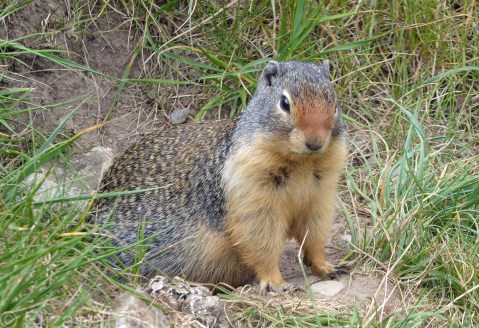
We Albertans call these gophers. They live in underground burrows and spend much of the year hibernating. As far as rodents go, they’re kinda big — typically about a foot in length.
I took this photo last summer.
Canada 150: Cavell Glacier
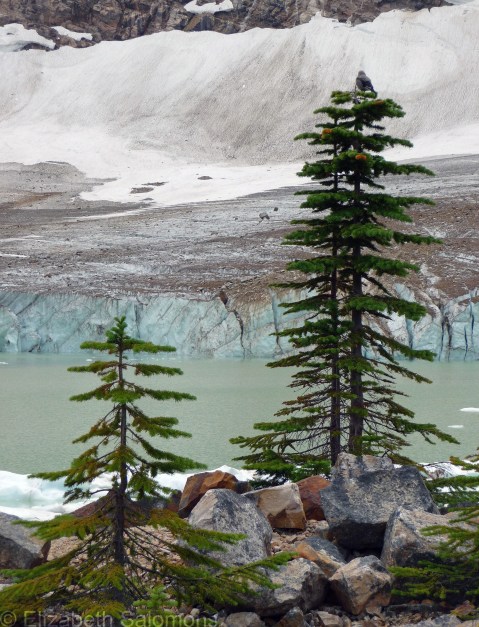
Cavell Glacier in Jasper National Park is one of the most easily accessed glaciers in all of Canada. It lies at the bottom of Mount Edith Cavell and can be reached by a short (less than 1 km) hike. Cavell Pond was formed from the glacier’s meltwater. It’s turquoise because of all the glacial silt suspended in the water.
I spent every summer of my childhood exploring the Rocky Mountains with my family. The mountains are a pretty spectacular playground for kids, but I don’t think I truly appreciated them until I returned on my own as an adult. Now, I don’t take them for granted. Ever.
If you’ve been to Banff or Jasper, you know what I’m talking about. If you haven’t, put the parks on your bucket list. You won’t regret it.
Through My Lens: Cascade Mountain From Johnson Lake

Here’s another mountain. Just because.
This one is called Cascade Mountain. It’s the largest mountain abutting the townsite of Banff. I took this photo from Johnson Lake as well.
Through My Lens: Mount Rundle From Johnson Lake

I posted my postcard shot of Mount Rundle last summer. That’s the view most people see of Mount Rundle as they drive past it when travelling along the Trans-Canada Highway.
This view ― not the postcard shot ― was taken from the other side of the mountain. The lake is Johnson Lake.
Through My Lens: Top of Sulphur Mountain

This view is from the top of Sulphur Mountain in Banff National Park. Take a deep breath: those are the Rocky Mountains you’re looking at.
There are two ways to get to the top of Sulphur Mountain: you can hike up or you can ride up. The hike up isn’t a long one (5.5 km), but it is all uphill (elevation gain of 650 m). The Banff Gondola is a lot easier and a lot quicker. It runs year round and takes you from the Banff Upper Hot Springs to the top of the mountain in just eight minutes. (Those hot springs, incidentally, are how Sulphur Mountain got its name.)
Once you’re at the top of Sulphur Mountain, you have a 360-degree view of the Rocky Mountains.
Dizzying, isn’t it?
I don’t want to overwhelm you, so I’m posting only a photo of the view to the east. That’s the town of Banff nestled around the diminutive Tunnel Mountain in the centre of the photo. Behind Tunnel Mountain is Cascade Mountain, and to the far right of the photo is Rundle Mountain.
Calgary Stampede
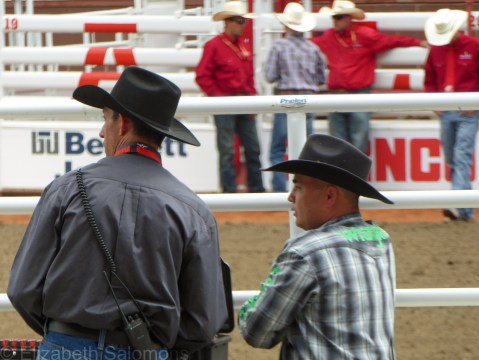
It first dawned on me that people from outside our country had some wildly out-of-date notions about Canada on my first ever trip to Europe. It happened when one of my Dutch cousins began asking questions about what life in Canada was like.
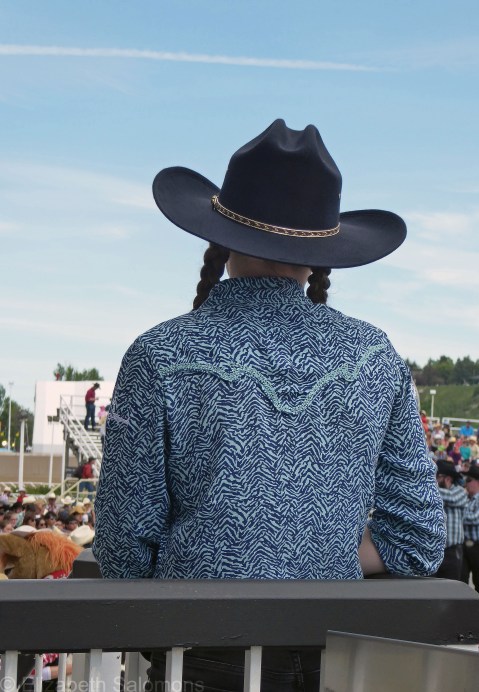
“And the cowboys,” she said. “You have lots of cowboys, right?”

I hesitated. I was acutely aware that I was about to burst her fantasy bubble.
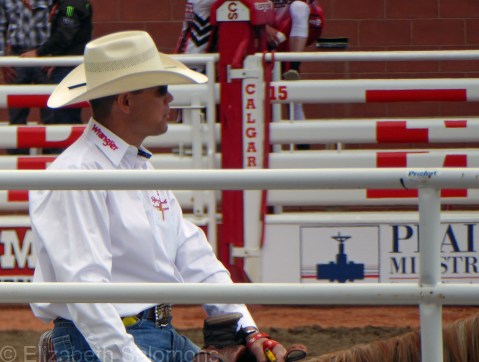
“Uh, some,” I said. “You mostly see them at the rodeos.” I think an awkward attempt to explain what happens at rodeos followed ― awkward because I had never actually been to a rodeo. I quickly changed the subject.

Then again, if you are a couple of Italian tourists visiting Calgary during Stampede Week ― like the ones I met standing beside me at the parade ― it’s easy to go home and think Canada is all about the cowboys.

I suppose there are worse stereotypes out there.

The Calgary Stampede (also known as The Greatest Outdoor Show on Earth) finished up just a week ago. I went this year for my first time ever ― and had a blast.
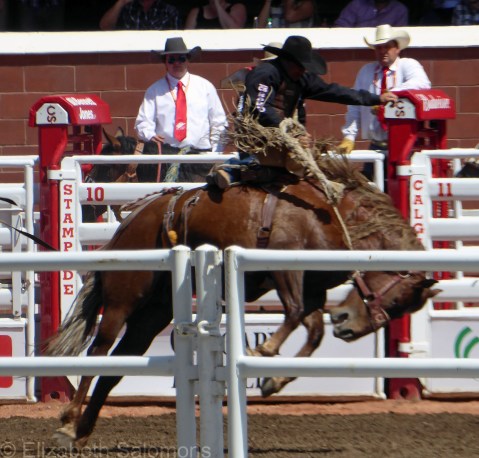
First held in 1912, the Stampede became an annual event in 1923. These days, the rodeo attracts competitors from all over North and South America.

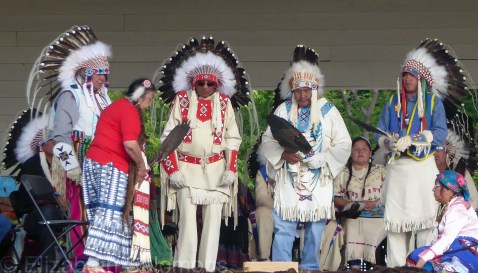
The Treaty 7 First Nations have been an integral part of the Stampede since its beginnings.
In addition to the parade (which starts the Stampede off with a bang), the rodeo, and the chuckwagon races, there are lots of animals to see.

There’s also a midway, and lots and lots of live music. And pancakes.
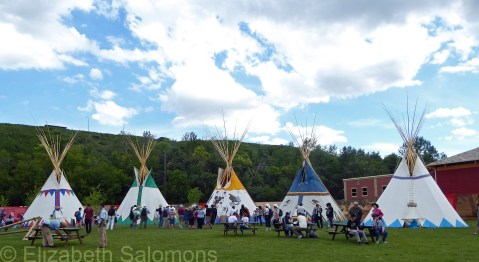
And, every year, the Indian Village.
If you’re feeling underdressed, don’t worry. There are plenty of places where you can get your proper Stampede attire. For a price.

The Calgary Stampede celebrates Alberta’s history, but also its present. Ranching is big business in Alberta ― half of the country’s beef is raised here.

I’ve lost touch with those Dutch cousins of mine, so I don’t know if they ever made it to Canada. But if they did, I sure hope they got to see a cowboy or three.
Through My Lens: 4th Street SW
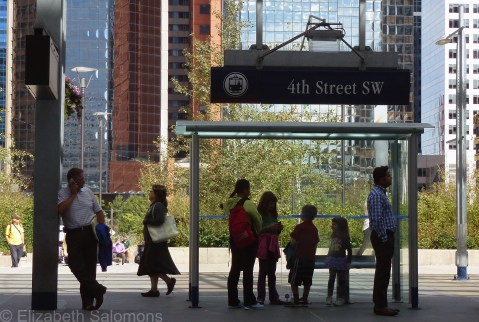
I’ve been hanging out in Alberta for the past ten days, which means I have a whole whack of photos to go through. That will take me a while because, well … you know. It’s summer.
And so, to keep this blog rolling, here’s a photo I took last summer. This is downtown Calgary. Which is exactly where I was two days ago.
Road Trip: Crowsnest Highway
I’ve written before how my road trips are few and far between, but that every once in a while I do switch it up and get behind the wheel of a rental car to admire the scenery through a windshield. Such was the case last summer when I chose to drive from Vancouver to Alberta and back. There were a number of reasons why I decided to drive, but not the least of which was that I’ve never driven the Crowsnest Highway. I was eager to explore a new corner of my home province.
And you know what? The Crowsnest Highway is unbelievably beautiful. Totally. Blew. My. Mind.
When I have an experience like that in my own backyard, I always have to ask myself: why ever do I travel outside of Canada when there is so much beauty right here?
Rhetorical question, people. Moving right along …
The Crowsnest Highway takes its name from the Crowsnest Pass, which is a valley that crosses the Rockies just north of the US–Canada border. The pass got its name from Crowsnest Mountain, which the Plains Cree named after the many large black birds nesting in the area. They were likely ravens, though, not crows.
The Crowsnest Highway is also known as Highway 3. Back in the nineteenth century, there was a gold rush trail through the Kootenay Mountains and a highway ― the Crowsnest ― was built along the remnants of that trail in 1932.
I got on the Crowsnest Highway near Pincher Creek, Alberta, after my visit to Head-Smashed-In Buffalo Jump, and I followed it, mouth agape in a state of constant awe, all the way west to Osoyoos, British Columbia. Here is a quick photo tour. (Click on the first photo at top left to open the slide show.)


Most folks, including myself, usually take the Trans-Canada Highway from Calgary to Vancouver. It, too, is a scenic drive ― one of the best on the planet, in my humble opinion. But if you have the time and the inclination to go slow,* check out the Crowsnest Highway. It’s well worth a look.
*The Crowsnest is about 250 km longer than the Trans-Canada, and, unlike the Trans-Canada, is not twinned, so it is a longer and slower route.
Head-Smashed-In Buffalo Jump
After Calgary, I had one last stop to make before I turned my rental car west towards home.
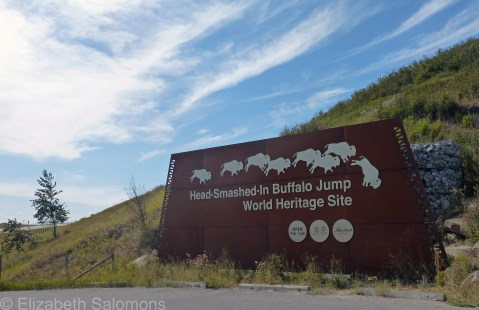
Located west of Fort MacLeod (which is south of Calgary), Head-Smashed-In Buffalo Jump is one of the world’s largest and best preserved buffalo jumps. It was declared a UNESCO World Heritage Site in 1981. That’s kind of a big deal ― being on the list puts Head-Smashed-In Buffalo Jump on par with the Egyptian pyramids and the Galapagos Islands. There are only 17 World Heritage Sites in all of Canada.
Essentially, Head-Smashed-In Buffalo Jump is a vast archeological site. The research that has been done on the site gives us modern-day folks evidence of how the Plains People hunted the buffalo in centuries past. We now know that Head-Smashed-In Buffalo Jump was in use for about 6000 years up until the mid-1800s.
What’s a buffalo jump, you ask? It’s a cliff over which the buffalo were, well, let’s say, encouraged to jump off. The hunters would disguise themselves with wolf skins and start a stampede of the buffalo herd, driving them towards the cliff.
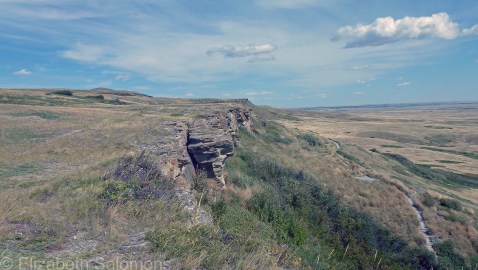
After the buffalo ran over the cliff, the hunters were then able to go below and butcher the dead buffalo.
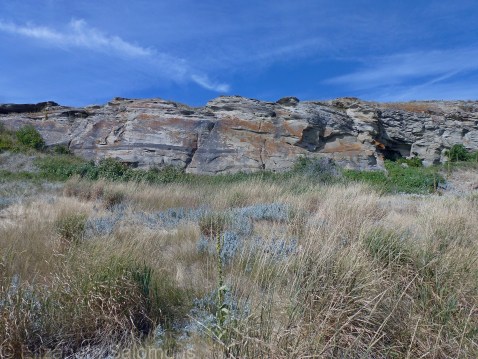
Archaeologists think that at least ten metres of buffalo bones still lie buried below the surface of the prairie at Head-Smashed-In Buffalo Jump.

There is an impressive five-level interpretive centre built into the side of the cliff at Head-Smashed-In Buffalo Jump. The exhibits will answer your every question about buffalo jumps.

In addition to the interpretive centre and the well-fenced view point above the buffalo jump, there is a short trail below the jump that provides you with some magnificent views over the prairie.
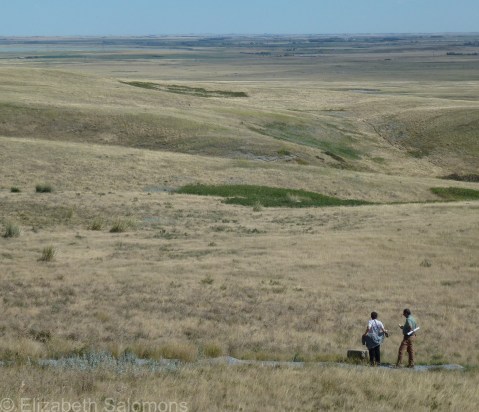
The wind is keen ― I was impressed by its power and by how much noise it makes. If you look carefully at this next photo, you can see a row of wind turbines in the upper left corner ― these are ubiquitous in this part of the province.

I’m so in love with this flat horizon.
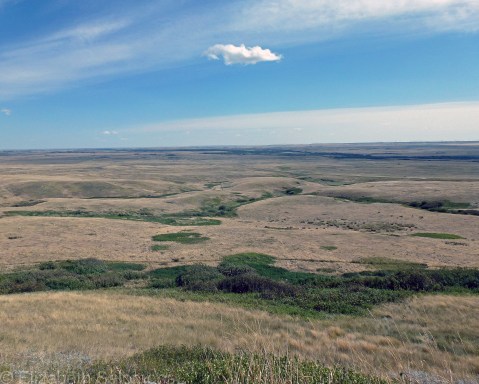
Oh ― and the name? It’s not about smashed buffalo heads. It was the name given to a small boy who wanted to see the buffalo jump over the cliff, but who got way too close. He was crushed by the falling animals.
Black-billed Magpie

I’ve been trying to photograph this bird for a while, but hadn’t any luck until my most recent visit to Alberta. This is a Black-billed Magpie ― almost never seen in Vancouver, but common to Alberta.
I’m in a definite minority in thinking that magpies are beautiful because any Albertan will pull up their nose and say (as some have done to me), “Why are you taking a picture of a magpie? Don’t you know they’re scavengers?”
Apparently magpies are from the same family as crows. I have strong feelings about crows because they typically like to dive-bomb me as I walk through my neighbourhood. So maybe I should have more empathy for my Alberta relatives and their strong feelings about magpies ― apparently magpies are also known to be dive-bombers.


 There and Back Again