
Through My Lens: Sansum Narrows
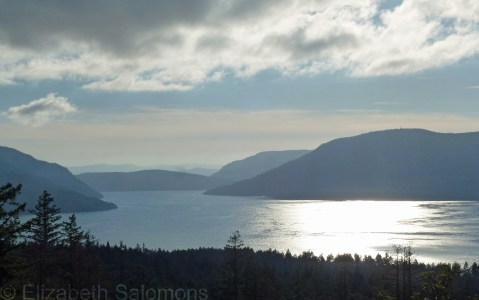
Naturally, a mini-break on Salt Spring Island means photos were taken.
This view from Salt Spring’s Channel Ridge is of Sansum Narrows. The land mass to the far left is still part of Salt Spring Island, but straight ahead and to the right are Vancouver Island.
The Okanagan

When I was growing up in Edmonton, I knew the Okanagan as the place where Albertans headed to every summer in droves. It was considered the perfect family vacation destination by the parents of my school friends, who went there every summer and came back with stories of long days spent swimming and boating in lakes. (My family went to the mountains instead ― a choice my parents made that I personally had no issues with.)
Nowadays, the Okanagan is still a popular summer lake district, but that dry, sunny, Mediterranean-like climate that makes it so popular with boaters and swimmers is also what makes the region perfectly suited to growing grapes.
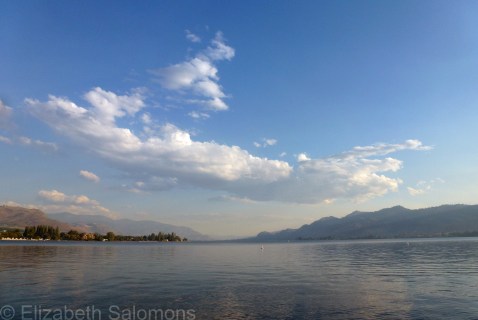
Those grapes get harvested in the fall, and this year the Okanagan had a bumper crop. While setting a record for the earliest start of harvest ever (August 12) ― thanks to a hot and dry spring and summer ― this year’s grapes were smaller than usual. That’s not necessarily a bad thing. Smaller grapes mean less product, but it can also mean a higher quality wine because the flavour and colour is concentrated.
Fall is also wine festival time. If you happened to be in the Okanagan earlier this month, you could have participated in some of the 125 events that make up the Fall Okanagan Wine Festival with 20,000 of your closest wine-loving friends. This year was the festival’s 35th anniversary.
Yup. That’s 35 years of wine festivalling. But it might surprise you to learn that the tradition of winemaking in the Okanagan goes back to before the birth of Canada. The first person to plant grapes in the Okanagan was Father Charles Pandosy, a Catholic missionary who came to the area in 1859. He needed wine, as all priests do, to be able to administer Mass, and so he planted himself a vineyard.
The first commercial winery ― Calona Vineyards ― was established in Kelowna in 1932 and is still in business. In 1968, Nk’Mip (in-ka-meep) Cellars was established in Osoyoos. Fourteen years later, there were 14 wineries operating in the Okanagan.
And the quality of Okanagan wine back in the 1980s? Well, let’s be generous and call it plonk.
Then along came free trade. It turns out that the Free Trade Agreement of 1988 was the best thing to happen to BC’s wine industry. After losing their preferred status in BC liquor stores, Okanagan winemakers knew they had to improve their product ― fast ― if they were going to complete on the world stage of vintners. So what did they do? They pulled up two-thirds of their vines and replanted with vines that produced better quality grapes suitable for making premium quality wine.

And here’s the amazing thing: the BC winemaking industry exploded. There were 17 wineries in 1990; by 1994, that number had doubled. It doubled again by 2000 and again by 2008. As of last year, there were 254 wineries in operation in the Okanagan with 10,259 acres of vines planted. (To be honest, the rapid expansion of vineyards is beginning to threaten BC’s fruit industry because long-time fruit growers are pulling up their orchards to plant vines. They know they can earn far more from growing grapes than they can from growing peaches and cherries.)
The awards started pouring in early on. The first big one was the 1994 Avery Trophy for Best Chardonnay in the World at London’s International Wine and Spirit Competition, awarded to Kelowna’s Mission Hill Winery. At the 2014 Decanter World Wine Awards (the world’s biggest competition with over 15,000 wines entered in 2014), Okanagan wineries took home 105 medals, including three regional trophies and four gold medals. (By comparison, Californian wineries took home 83 medals that year, none of which were trophies or gold medals.)
Okanagan wines are rather pricey ― some would argue overpriced ― for what you get. But here’s what I’ve learned: those high prices are due to the cost of labour and land. BC vineyard land is the most expensive in the world after Europe. And so, here’s a pro-tip: if you are on a budget, stick to the older Okanagan wineries for more affordable wines. They aren’t cheaper because the wines are lower quality ― they’re cheaper because those wineries bought land back in the 1990s before it got crazy expensive. Their overhead is much lower.
The Okanagan is divided into five subregions: Kelowna, Naramata Bench, Okanagan Falls, Golden Mile, and Black Sage Bench/Osoyoos. I made it to four of these subregions last summer on my way home from Alberta. Here’s a look at some of the wineries I got to. (Click on the first photo at top left to open up the slide show.)


In all, I visited nine wineries and did seven tastings over two days, starting in Osoyoos and finishing 120 km to the north in West Kelowna. I didn’t bother doing a tasting at either Quail’s Gate or Mission Hill ― their wines are readily available in Vancouver, and both tasting rooms, though impressive, were a bit of a zoo. I expected that, because the larger wineries attract the largest crowds, but I stopped at them anyways because I’d been told both were impressive operations and worth a look-see.
But here’s another pro-tip: the best wine-tasting experiences are to be had at the smallest of wineries. Serendipity, for example, is a place that holds up to its name. The tasting room is simple and unpretentious ― a cordoned-off end of a storage shed ― but I had the complete and undivided attention of the wine seller. That experience was wine-buying at its most fun.
Another winery worth a stop is Pentâge Winery on the Naramata Bench. I stopped here on the recommendation of my brother, who claimed it made the best Cabernet Franc he’d ever tasted. A stop at this winery involves a long, windy drive up the side of the mountain, and then a long, steep, windy ride down the side of the mountain that probably scares off timid and cautious drivers. In fact, the winemaker admitted that some visitors won’t even attempt the driveway and instead park their car up top and walk down. I found the tasting room at Pentâge a most pleasant oasis and, knowing it was going to be my last stop of the day, I took my time and chatted with the winemaker for a long while. That stop was the highlight of my two days of wine tasting. (Sadly, my camera was acting up and all my photos are out of focus.)
I won’t have the ways and means to do an Okanagan trip every summer, but I do know this: my wine-buying trip of this past summer has certainly opened my eyes to the best way to buy wine.
American Wigeon

This handsome fellow is an American Wigeon ― another water fowl that is already settled in for the winter at Stanley Park. The male ducks are identified by their white foreheads and the patch of green behind the eyes. I see these dabbling ducks most often in Lost Lagoon, but have also noticed them foraging close to the seawall in both English Bay and Burrard Inlet.
Wood Duck

A couple of years ago when I wasn’t working much and had time to spare, I helped my brother out by taking his one-year-old daughter for the day every couple of weeks or so. My home isn’t set up for napping toddlers and so, after lunch, we’d go for a long walk in her stroller. We both got some fresh air, and she got a decent nap.
Invariably on those afternoons, I took my niece to Lost Lagoon to see the ducks. That’s when I first noticed the incredible variety of duck species in Stanley Park ― something I had never paid attention to before. At the time, I thought it was due to the spring migration.
Fast forward a couple of years to my Florida holiday, which is when I first began to think there might be something to this birding business. I mean, hey, birding involves three things I absolutely adore: the outdoors, photography, and (oh yeah, baby) lists.
After that Florida trip, I began to pay more attention to the birds in Stanley Park. I discovered that English Bay and Burrard Inlet (aka my backyard) is an IBA (Important Bird Area). I also discovered that the ducks I noticed during the long walks with my niece weren’t in the midst of their spring migration, but actually spend the entire winter in Stanley Park.
In short: the best time to go birding in Vancouver is during the winter months.
And so, another sign that fall is well and truly here is the return of our wintering water fowl to Stanley Park. I saw my first Wood Duck of the season last week when I was ambling around Beaver Lake.
Of all the ducks that spend their winters in Stanley Park, the Wood Duck is the prettiest of them all, thanks to its vibrant colours and markings. Unlike most ducks, Wood Ducks like to hang out near wooded areas, which is why the best place to spot them in the park is along the brushy perimeters of Beaver Lake and Lost Lagoon.
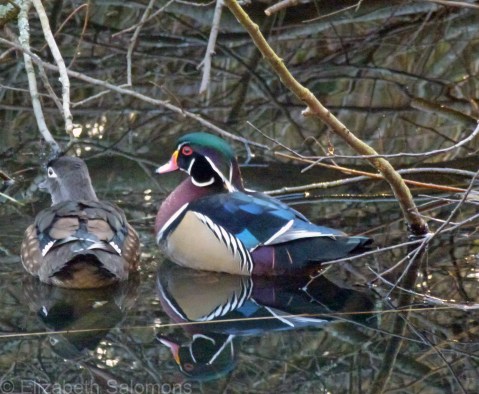
I don’t take my niece to see the ducks at Lost Lagoon anymore; she outgrew her stroller, no longer needs a nap, and now lives in another province. But here’s a pro-tip from a novice birder: if you have the chance to explore Lost Lagoon during the winter, grab it. You’ll have it all to yourself, except for, you know, the other birders.
Through My Lens: Stanley Park in Fall
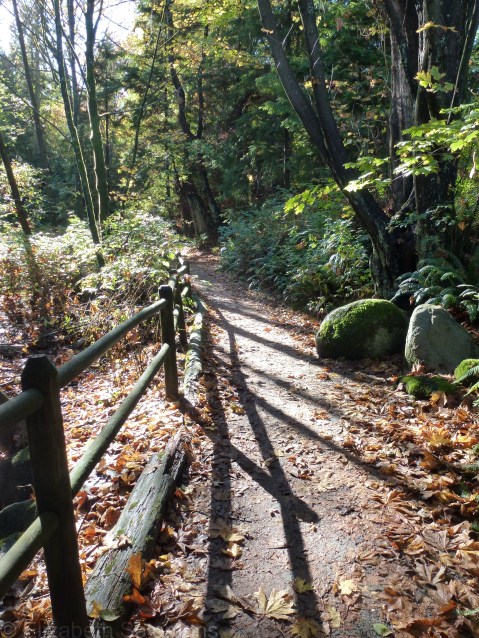
It’s well and truly fall again. Here is a photo I took this past week while walking through Stanley Park. The path is called Ravine Trail, and it gets you from the seawall by Burrard Inlet to Beaver Lake. I think it’s one of the prettiest walks in the park.
Road Trip: Crowsnest Highway
I’ve written before how my road trips are few and far between, but that every once in a while I do switch it up and get behind the wheel of a rental car to admire the scenery through a windshield. Such was the case last summer when I chose to drive from Vancouver to Alberta and back. There were a number of reasons why I decided to drive, but not the least of which was that I’ve never driven the Crowsnest Highway. I was eager to explore a new corner of my home province.
And you know what? The Crowsnest Highway is unbelievably beautiful. Totally. Blew. My. Mind.
When I have an experience like that in my own backyard, I always have to ask myself: why ever do I travel outside of Canada when there is so much beauty right here?
Rhetorical question, people. Moving right along …
The Crowsnest Highway takes its name from the Crowsnest Pass, which is a valley that crosses the Rockies just north of the US–Canada border. The pass got its name from Crowsnest Mountain, which the Plains Cree named after the many large black birds nesting in the area. They were likely ravens, though, not crows.
The Crowsnest Highway is also known as Highway 3. Back in the nineteenth century, there was a gold rush trail through the Kootenay Mountains and a highway ― the Crowsnest ― was built along the remnants of that trail in 1932.
I got on the Crowsnest Highway near Pincher Creek, Alberta, after my visit to Head-Smashed-In Buffalo Jump, and I followed it, mouth agape in a state of constant awe, all the way west to Osoyoos, British Columbia. Here is a quick photo tour. (Click on the first photo at top left to open the slide show.)


Most folks, including myself, usually take the Trans-Canada Highway from Calgary to Vancouver. It, too, is a scenic drive ― one of the best on the planet, in my humble opinion. But if you have the time and the inclination to go slow,* check out the Crowsnest Highway. It’s well worth a look.
*The Crowsnest is about 250 km longer than the Trans-Canada, and, unlike the Trans-Canada, is not twinned, so it is a longer and slower route.
Head-Smashed-In Buffalo Jump
After Calgary, I had one last stop to make before I turned my rental car west towards home.
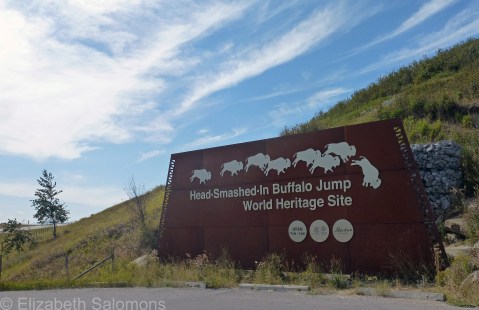
Located west of Fort MacLeod (which is south of Calgary), Head-Smashed-In Buffalo Jump is one of the world’s largest and best preserved buffalo jumps. It was declared a UNESCO World Heritage Site in 1981. That’s kind of a big deal ― being on the list puts Head-Smashed-In Buffalo Jump on par with the Egyptian pyramids and the Galapagos Islands. There are only 17 World Heritage Sites in all of Canada.
Essentially, Head-Smashed-In Buffalo Jump is a vast archeological site. The research that has been done on the site gives us modern-day folks evidence of how the Plains People hunted the buffalo in centuries past. We now know that Head-Smashed-In Buffalo Jump was in use for about 6000 years up until the mid-1800s.
What’s a buffalo jump, you ask? It’s a cliff over which the buffalo were, well, let’s say, encouraged to jump off. The hunters would disguise themselves with wolf skins and start a stampede of the buffalo herd, driving them towards the cliff.
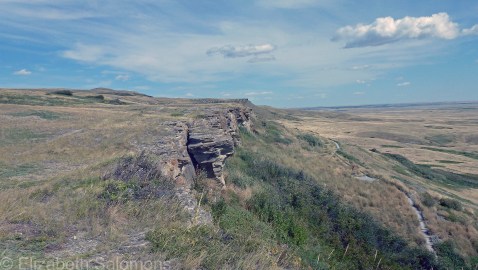
After the buffalo ran over the cliff, the hunters were then able to go below and butcher the dead buffalo.
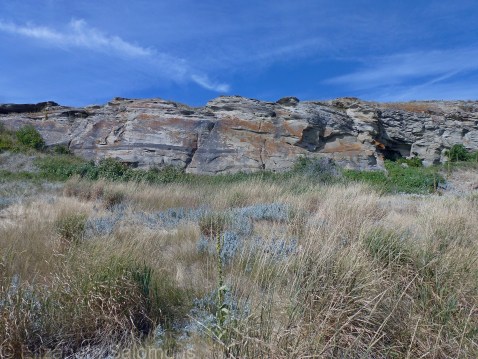
Archaeologists think that at least ten metres of buffalo bones still lie buried below the surface of the prairie at Head-Smashed-In Buffalo Jump.

There is an impressive five-level interpretive centre built into the side of the cliff at Head-Smashed-In Buffalo Jump. The exhibits will answer your every question about buffalo jumps.

In addition to the interpretive centre and the well-fenced view point above the buffalo jump, there is a short trail below the jump that provides you with some magnificent views over the prairie.
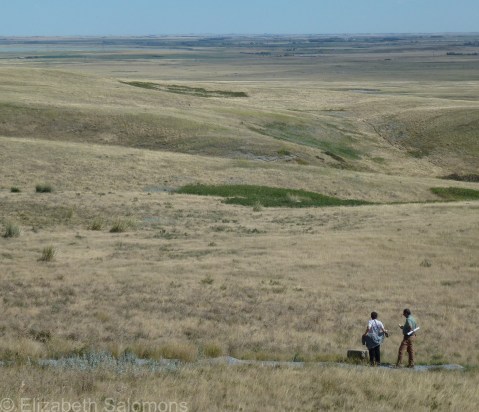
The wind is keen ― I was impressed by its power and by how much noise it makes. If you look carefully at this next photo, you can see a row of wind turbines in the upper left corner ― these are ubiquitous in this part of the province.

I’m so in love with this flat horizon.
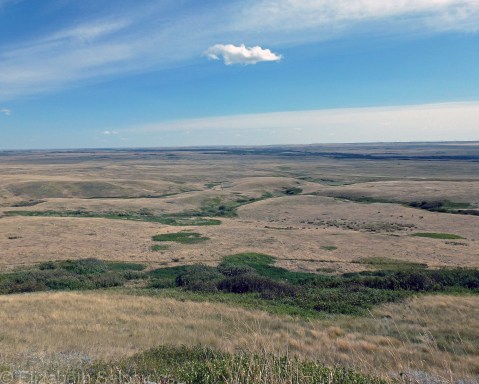
Oh ― and the name? It’s not about smashed buffalo heads. It was the name given to a small boy who wanted to see the buffalo jump over the cliff, but who got way too close. He was crushed by the falling animals.
Black-billed Magpie

I’ve been trying to photograph this bird for a while, but hadn’t any luck until my most recent visit to Alberta. This is a Black-billed Magpie ― almost never seen in Vancouver, but common to Alberta.
I’m in a definite minority in thinking that magpies are beautiful because any Albertan will pull up their nose and say (as some have done to me), “Why are you taking a picture of a magpie? Don’t you know they’re scavengers?”
Apparently magpies are from the same family as crows. I have strong feelings about crows because they typically like to dive-bomb me as I walk through my neighbourhood. So maybe I should have more empathy for my Alberta relatives and their strong feelings about magpies ― apparently magpies are also known to be dive-bombers.
The Glenbow
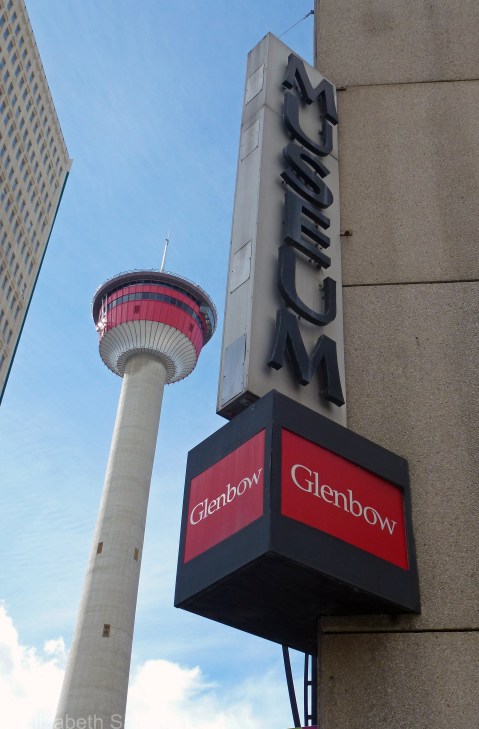
Calgary’s got yet another thing going for it, and that’s the Glenbow. The Glenbow is an art and history museum I’ve long heard about because it’s not just a museum, it’s also a library and archive. Archives are like crack for historians, and the Glenbow is Canada’s largest non-governmental archive.

Those archives contain unpublished diaries, letters, and minute books of thousands of Alberta families, organizations, and businesses. Its library has more than 100,000 books, pamphlets, journals, newspapers, and government documents related to the history of Western Canada. And its image collection includes photographs, posters, and cartoons that tell the story of the Canadian West from the 1870s to the 1990s.
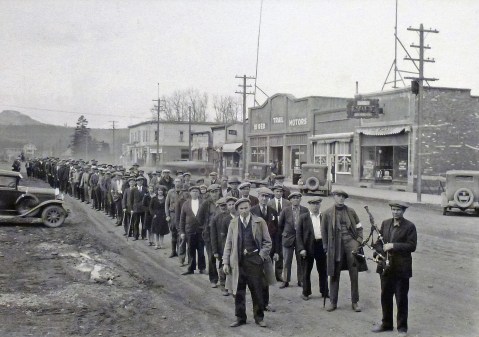
Whew! Makes me want to go research a book!
What the Glenbow Museum does particularly well is tell the story of southern Alberta, including its first peoples.

It also has a permanent exhibit with the unlikely title of Mavericks: An Incorrigible History of Alberta. It’s about some of the famous (and infamous) Albertans who shaped the province’s history over the past 150 years. Did you know the fellow who discovered oil in Leduc in 1947 ― that would be Ted Link who worked for Imperial Oil ― was told by his head office in Toronto to stop drilling? Head office had given up on the search for oil. Mr. Link, convinced that the entire province was lying on a bed of sedimentary rock (a possible source of hydrocarbons), pretended he hadn’t received the order. Two days later, Leduc No. 2 blew in and changed the course of the province’s history.
Want to learn about more stories like this? Be sure to stop in at the Glenbow the next time you’re in Calgary.
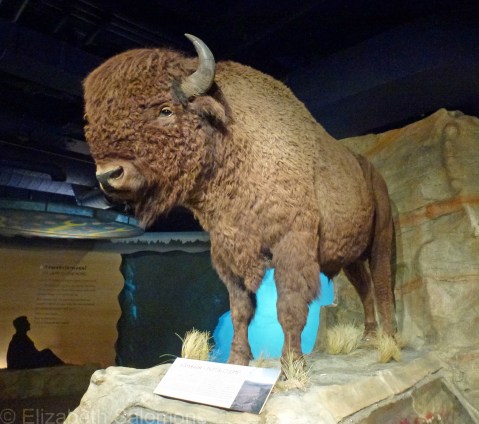
The Famous Five

Calgary has one more impressive feature that I want to post about, and that is its monument to the Famous Five.
No, I’m not talking about the child sleuths made famous by English children’s author, Enid Blyton. I’m talking about the five Alberta women who took the Canadian government to court when they were told their gender made them ineligible to sit as senators.
It all started when Emily Murphy, the first female magistrate in the British Empire, was recommended for a Senate seat in 1917. Prime Minister Robert Borden refused to appoint her, saying that he was prevented from doing so by the constitution. He was referring to Section 24 of the British North American Act, 1867, which states the following:
The Governor General shall … summon qualified Persons to the Senate; and, subject to the Provisions of this Act, every Person so summoned shall become and be a Member of the Senate and a Senator.”

“Qualified persons,” said the prime minster, referred only to men. He had a problem, though. Emily Murphy had popular support ― a lot of support. Half a million Canadians signed petitions and wrote letters. And Prime Minister Borden needed the vote of Canadian women to stay in office. So, over the next decade, four consecutive federal governments declared their support for Emily Murphy, but each insisted it was prevented from appointing her to the Senate because of the constitution.
After ten years of no progress, Murphy tried another tactic. The Supreme Court allowed any five citizens acting together to appeal for clarification on any point of the constitution. And so, in 1927, the following question was put to the Supreme Court of Canada:
Does the word ‘Persons’ in Section 24 of the British North American Act, 1867, include female persons?”
The court ruled no, after which the case became known as the Persons Case. The Famous Five then appealed to the British Privy Council (at that time the court of final appeal for Canadians) and the ruling was overturned on October 18, 1929. Canadian women were declared persons and declared eligible to sit as members of the Senate of Canada.
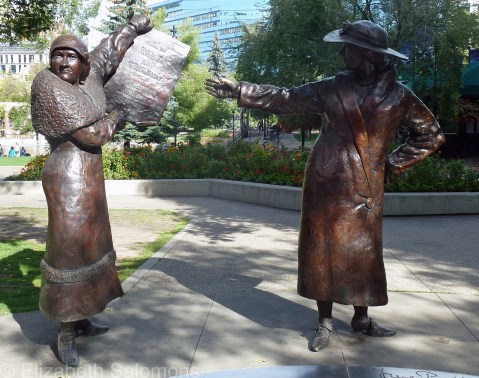
History geek that I am, I was so pleased to come across the monument to the Famous Five in Calgary’s Olympic Park. The statues were dedicated on October 18, 1999 ― seventy years after the Famous Five won their case ― and a duplicate of the monument stands on Parliament Hill in Ottawa.
Why was it such a big deal that women be able to sit as senators, you ask (other than, you know, the obvious issue of equal rights)?
It’s because until 1968 there was no divorce law in either Quebec or Newfoundland. Residents of those two provinces had to request a private Act of Parliament to dissolve their marriages, a procedure that was usually handed off to the Senate. If the Senate was going to decide family law, women needed representation to ensure equal treatment with men.
Incidentally, I also learned through my research for this post that people were complaining already back in the 1920s about how useless the Senate was and arguing that its members should be elected, not appointed. And, yes, there were federal political parties calling for its abolition.
Plus ça change, plus c’est la même chose, n’est-ce pas?


 There and Back Again
