
Through My Lens: St. Andrew’s-Wesley United Church
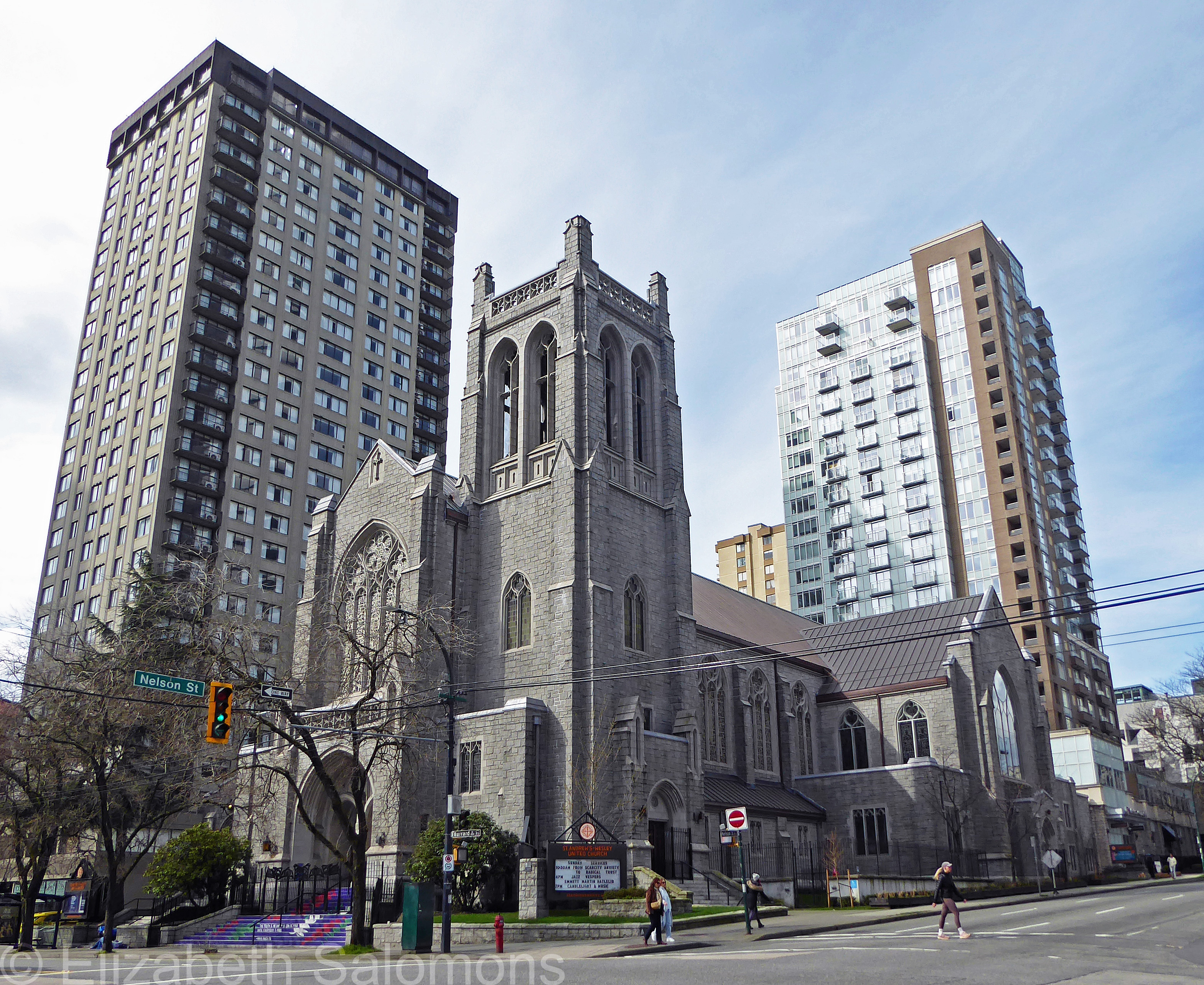
My photo choice for today, the Fourth Sunday of Lent, is St. Andrew’s-Wesley United Church. Located across the street from First Baptist Church, this building has been open for worship since 1933.
When the Methodists, the Presbyterians, and the Congregationalists came together in 1925 to form the United Church of Canada, two downtown congregations— Wesley Methodist on the southwest corner of Georgia and Burrard and St. Andrew’s Presbyterian on the northeast corner of Georgia and Richards—decided to come together as one congregation and jointly build a new church.
St. Andrew’s-Wesley is the result.
The late Gothic Revival building was built with Nelson Island granite and Haddington Island stone; inside, there is a vaulted timber ceiling. The first of the 27 Italian and French stained glass windows was commissioned by Prime Minister R. B. Bennett in memory of his sister, Evelyn Bennett Coats. Thanks to its excellent acoustics, the church is a popular venue for concerts. Jazz vespers takes place on Sunday afternoons and has done so for more than 30 years.
The 22-storey tower behind St. Andrew’s Wesley (at right in the photo) is St. Andrew’s Residence at Wesley Place. Income from the 200 rental units has funded various renovations of the main church building and provides income security for the dwindling congregation. The tower was completed in 2002 and was the largest development project ever taken on by the United Church anywhere in Canada.
Through My Lens: First Baptist Church

The origins of what became the First Baptist Church of Vancouver began with a Sunday School class of 30 children gathered at Blair’s Saloon on June 6, 1886. Exactly a week later, the saloon — and most of Vancouver — was destroyed in what became known as the Great Vancouver Fire.
The group picked itself up and built its first church on two lots purchased from the Canadian Pacific Railway. It soon outgrew that building, as well as the next, and so, in 1904, the congregation bought a lot at the corner of Burrard and Nelson for $4000.
This is where they built its current building, out of stone, in the Gothic Revival style. (The Toronto-based architects of Burke, Horwood, and White also designed the Hudson’s Bay buildings in Vancouver, Victoria, and Calgary.) The building was dedicated on June 9, 1911.
These days, Burrard Street is one of the busiest streets in downtown Vancouver, and condos abut the 114-year-old church. Until a few months ago, the building was surrounded by plywood construction fences due to restoration work of the main church building and construction of the 57-storey tower just behind it. The joint project between First Baptist and the developer provides market housing as well as a daycare, church office space, and a separate seven-storey building dedicated to social housing.
Joint projects between developers and old downtown churches have become something of a pattern in Vancouver — stay tuned to learn more.
First Baptist Church is my photo choice for today, the Third Sunday of Lent.
Through My Lens: St. Paul’s Anglican Church

For today, the Second Sunday of Lent, here is a photo of St. Paul’s Anglican Church, a small neighbourhood church in the heart of Vancouver’s West End. This parish first held services in 1889 in a building in what is now Yaletown. In 1898, that building was moved on skids to its current location to be much closer to where its parishioners lived. In 1905, a new, larger church was built in the Gothic Revival style, but out of wood instead of stone.
In 1973, the parish built an apartment high-rise for seniors on land they owned next door to the church. The income earned from this building, the Pendrellis, has become instrumental to funding the various ministries of St. Paul’s.
I love walking past this little wooden church in the heart of my neighbourhood. The building on the outside looks pretty much as it did in 1905. Standing on the church steps amidst those close-set trees, you could shut your eyes and imagine yourself in a rural country setting, but instead, you are in the heart of one of Canada’s densest neighbourhoods, surrounded by condo towers and apartment buildings, one block off the main commercial strip of Davie Village.
Just imagine being a witness to the transformation of that neighourhood, from home to Vancouver’s elite living in large mansions, to the bustling, diverse community it is today.
If only the walls of St. Paul’s could talk.
Through My Lens: Holy Rosary Cathedral
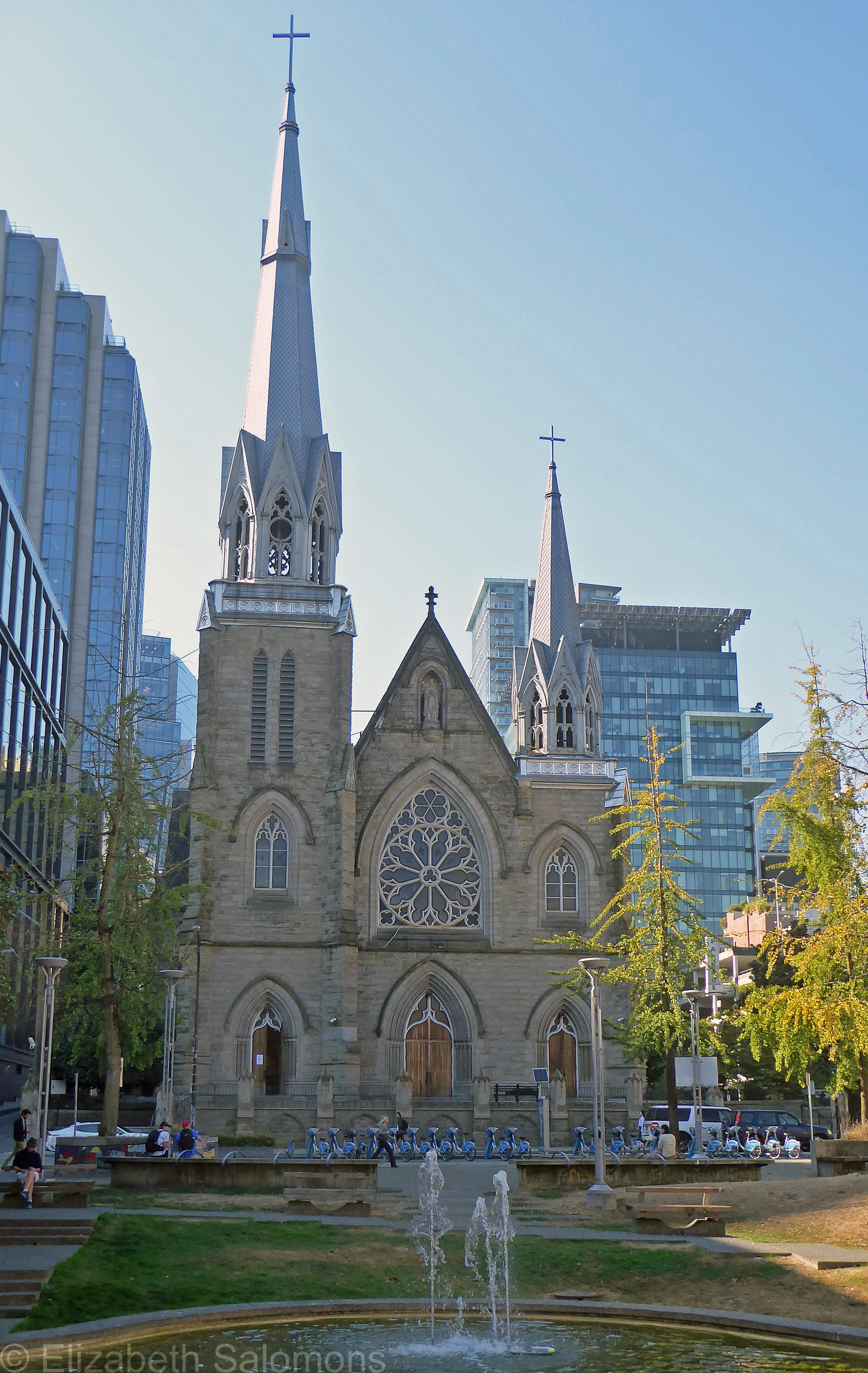
It seems like five minutes ago we were facing the start of winter and now, here we are, already back in the Season of Lent. For this year’s Lenten series, I’m going to take you on a tour of the churches of downtown Vancouver. My photo choice for today, the First Sunday of Lent, is Holy Rosary Cathedral. Its full name is the Metropolitan Cathedral of Our Lady of the Holy Rosary, and it serves as the cathedral for the Roman Catholic Archdiocese of Vancouver.
A church has stood on the site since 1885; construction on this building began in 1899 and was completed in just over a year. The architecture is late nineteenth-century French Gothic revival, a style common throughout Canada during the time period. Its walls are built from Gabriola Island sandstone.
These days, large building projects seem to take years to complete. What amazes me about the speed at which this church was built is that the population of Vancouver at the time was a mere 26,000 people.
Notre-Dame Restored
Five and a half years ago, the world watched as Notre-Dame burned. Two days later, Emmanuel Macron, president of France, promised that the Cathedral would reopen in time for the 2024 Olympics. Many doubted him.
Last weekend, as Macron stood in front of Notre-Dame welcoming world leaders for a special service of thanksgiving, I’m sure he was feeling pretty pleased with himself. The Paris Olympics may have come and gone, but his prediction was only six months off.
Which is incredible, considering how much has happened in our world since 2019.
Last weekend’s special services got a lot of media coverage, but what impressed me was how Notre-Dame held what it called an Octave of Reopening, which concluded today, eight days after Macron welcomed the world to Notre-Dame. Every day this week, a special mass was celebrated.
The first was last Sunday for heads of state and invited dignitaries. On Monday, the priests and deacons of the Diocese of Paris were welcomed. Member of religious orders were invited to Tuesday’s mass. Patrons and donors of the Cathedral were invited to the mass celebrated on Wednesday, charitable associations on Thursday, employees and volunteers of the Diocesan House on Friday, and schoolchildren on Saturday. Today, the final day of the Octave of Reopening, a mass was held for the Parisian firefighters, artisans, and all those who worked on the reopening of the Cathedral.
Going forward, visiting Notre-Dame will remain free of charge (as it always has been per French government policy), but a ticketing system will be put in place. This is because capacity will be limited to half of what it was before the fire as the restoration work continues. It won’t be completed until 2026.
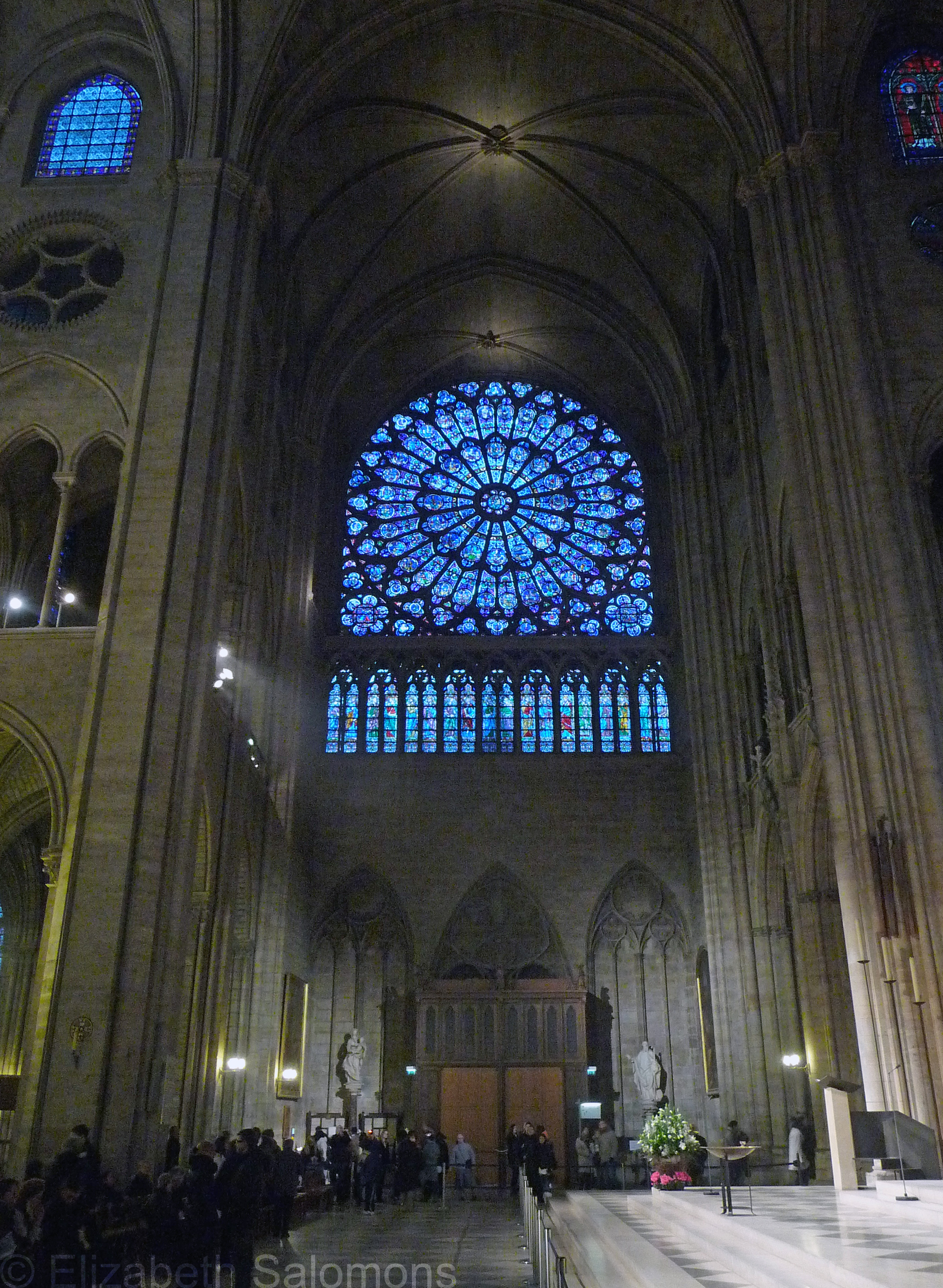
As I read about the opening of Notre-Dame last weekend, I was stunned by the photos of the Cathedral’s interior. It’s unrecognizable to me. By way of comparison, here is a photo I took of the Blue Rose window in January 2011, the last time I was inside Notre-Dame. The walls were covered in soot, and seemed weighed down by years of history. Now, those same walls are luminous and full of life.
At my office Christmas party this past week, a co-worker mentioned that her daughter wanted to spend Christmas in Paris, but they decided not to because she wasn’t keen on spending the holidays in a hotel.
“Well,” I said. “I’ve spent Christmas in Paris and I highly recommend it.”
Because it was Christmas Eve and we were in Paris, it seemed inevitable that we would make our way to Notre-Dame. We were able to walk right in, but the crowds inside, and the fact that none of us would understand a mass said in French, made us leave. Here is the grainy photo I took while we stood at the back trying to make up our minds whether to stay or go.
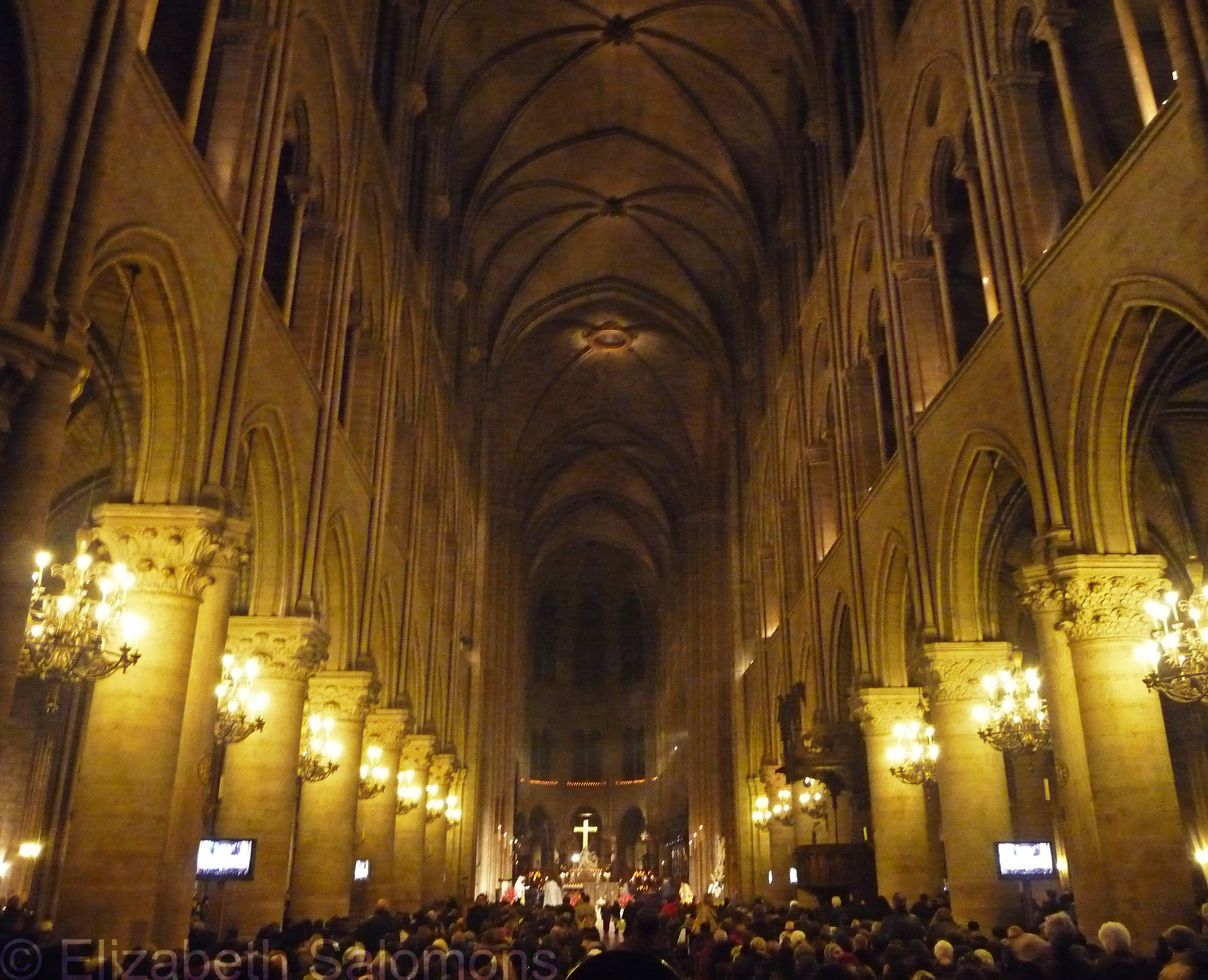
Notre-Dame will hold Christmas services this year for the first time since 2019. Prior to the fire, it had not missed a Christmas mass since the French Revolution, when the Cathedral was converted to a wine warehouse and renamed Temple of Reason.
I don’t regret that we skipped the Christmas Eve mass at Notre-Dame; it was the right decision for us at the time. But I do hope one day I will again experience the magic of Christmas in Paris, and that maybe, with better planning, I will witness a Christmas Eve mass at Notre-Dame.
Happy Easter!
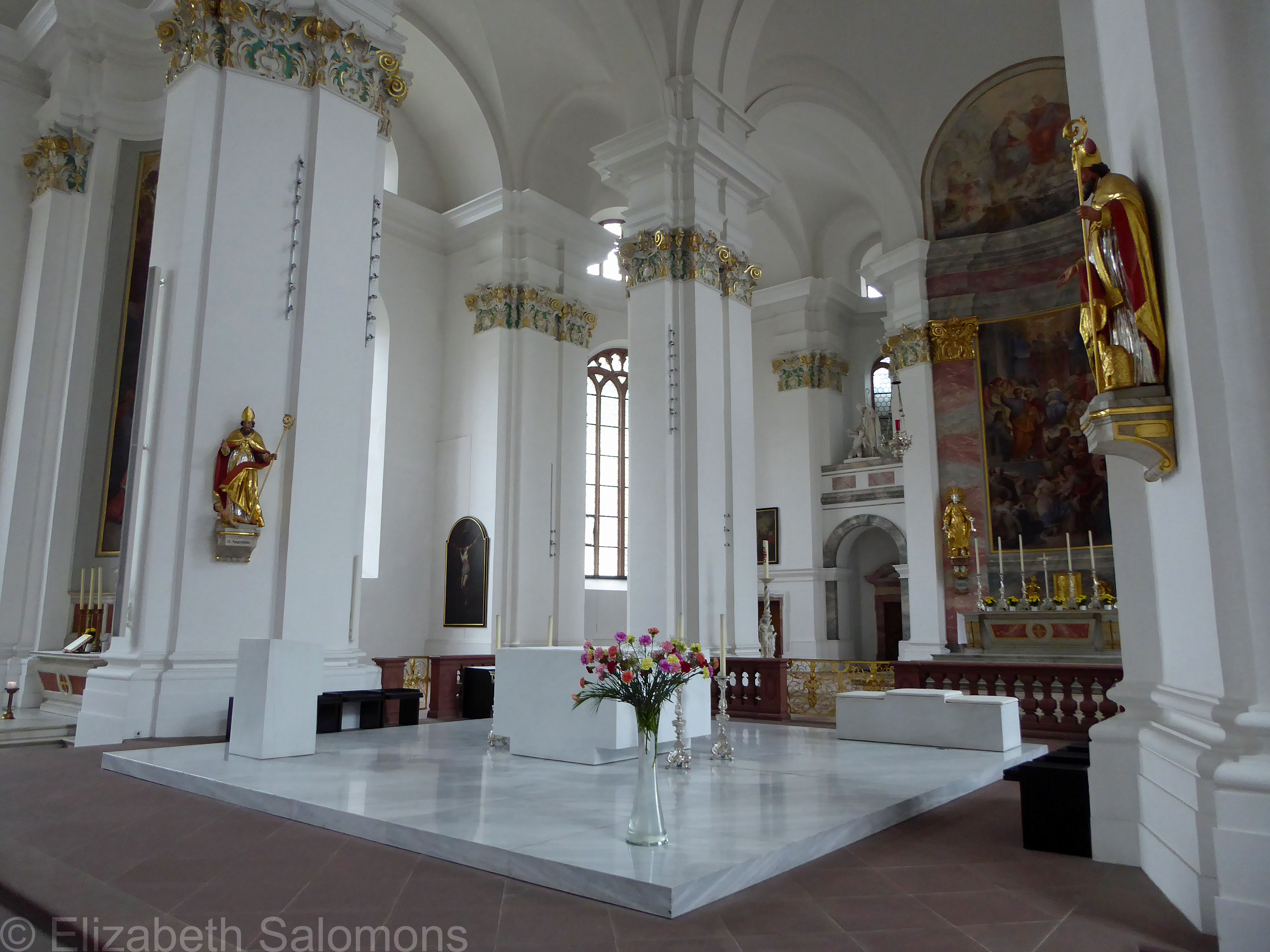
Jesuitenkirche, Heidelberg, September 2017
Through My Lens: Jesuitenkirche

For the past two Sundays, I posted photos of the Protestant Church that stands over the Old Town of Heidelberg. For today, Palm Sunday, I’m posting a photo of the Catholic Church that stands in the centre of Heidelberg’s Old Town. That would be the Jesuitenkirche (Jesuit Church).
This church, built in the Baroque style, was constructed in fits and starts throughout the eighteenth century. The Jesuits began the process in 1712, with the Elector Palatine at the time, Johann Wilhelm II, donating the land. The stone came from the Heidelberg Castle and the lumber from nearby forests. A bell tower (not seen in this photo) was added at the end of the nineteenth century.
After the Jesuit order was abolished in 1773, the church was taken over by the Lazarists. It later served as a hospital before eventually becoming the parish church of the local Catholic community in 1809.
Through My Lens: Inside the Heiliggeistkirche
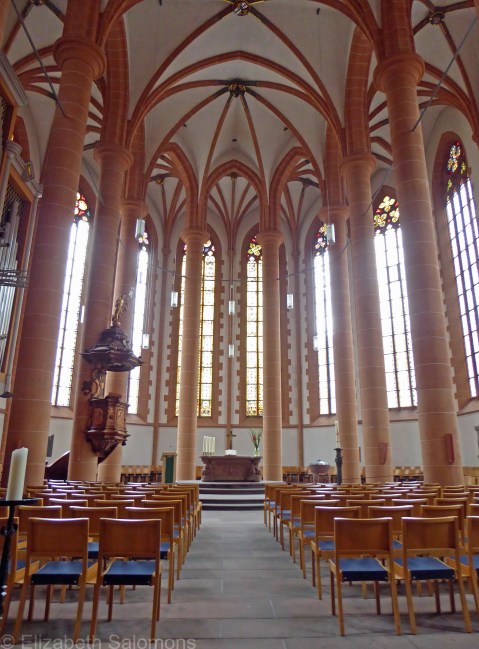
Last week I posted a photo of the Heiliggeistkirche in Heidelberg and today, for the Fifth Sunday of Lent, I’m posting a photo of what it looks like on the inside. That pink sandstone you see is from the Neckar Valley; it was used to build much of Heidelberg’s Old Town.
Like many churches in northern Europe, the Heiliggeistkirche was originally Roman Catholic. Today it is Protestant, but for much of its history, a wall divided the nave from the chancel and a second altar was built in the centre of the church. That way, the church could accommodate both Catholic and Protestant worshippers. The wall was not removed until 1936.
Through My Lens: Heiliggeistkirche

It’s the Fourth Sunday of Lent, and we’re moving on to Heidelberg. The skyline of this city in the Neckar Valley would not be the same without the Heiliggeistkirche (Church of the Holy Spirit). Built in the fifteenth century, this Romanesque and Gothic church is the largest in Heidelberg and stands high above the Old Town. It is one of the most-visited churches in Germany.
Through My Lens: Schlosskirche

For the Third Sunday of Lent, I’m posting a photo from inside the Schlosskirche (Castle Church) in Wittenberg. I’ve written about this church before, in connection with that revolutionary–reformer, Martin Luther.
A chapel has stood on this site since 1340. Between 1490 and 1511, a church in the Late Gothic style was built, attached to the castle just beside it. (Hence, the name.) That castle was the home of Frederick III, Elector of Saxony at the time. Both Frederick (also known as Frederick the Wise) and Martin Luther are buried in the church.
The Schlosskirche was destroyed during the Seven Years’ War in 1760, but later rebuilt. The doors that memorialize Martin Luther’s 95 theses were dedicated in 1858 and the church has been on the UNESCO World Heritage List since 1996.


 There and Back Again