
Notre-Dame Restored
Five and a half years ago, the world watched as Notre-Dame burned. Two days later, Emmanuel Macron, president of France, promised that the Cathedral would reopen in time for the 2024 Olympics. Many doubted him.
Last weekend, as Macron stood in front of Notre-Dame welcoming world leaders for a special service of thanksgiving, I’m sure he was feeling pretty pleased with himself. The Paris Olympics may have come and gone, but his prediction was only six months off.
Which is incredible, considering how much has happened in our world since 2019.
Last weekend’s special services got a lot of media coverage, but what impressed me was how Notre-Dame held what it called an Octave of Reopening, which concluded today, eight days after Macron welcomed the world to Notre-Dame. Every day this week, a special mass was celebrated.
The first was last Sunday for heads of state and invited dignitaries. On Monday, the priests and deacons of the Diocese of Paris were welcomed. Member of religious orders were invited to Tuesday’s mass. Patrons and donors of the Cathedral were invited to the mass celebrated on Wednesday, charitable associations on Thursday, employees and volunteers of the Diocesan House on Friday, and schoolchildren on Saturday. Today, the final day of the Octave of Reopening, a mass was held for the Parisian firefighters, artisans, and all those who worked on the reopening of the Cathedral.
Going forward, visiting Notre-Dame will remain free of charge (as it always has been per French government policy), but a ticketing system will be put in place. This is because capacity will be limited to half of what it was before the fire as the restoration work continues. It won’t be completed until 2026.
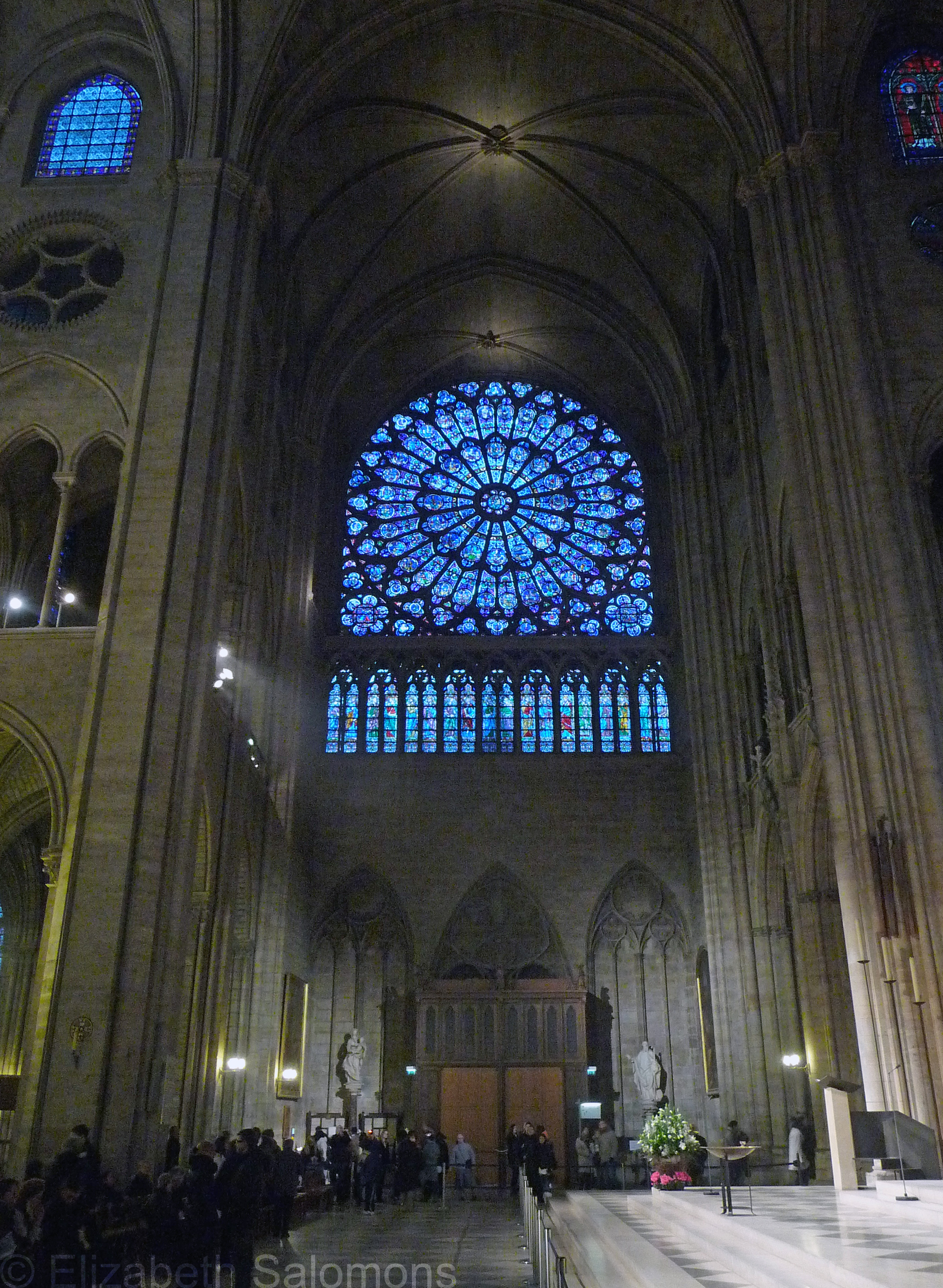
As I read about the opening of Notre-Dame last weekend, I was stunned by the photos of the Cathedral’s interior. It’s unrecognizable to me. By way of comparison, here is a photo I took of the Blue Rose window in January 2011, the last time I was inside Notre-Dame. The walls were covered in soot, and seemed weighed down by years of history. Now, those same walls are luminous and full of life.
At my office Christmas party this past week, a co-worker mentioned that her daughter wanted to spend Christmas in Paris, but they decided not to because she wasn’t keen on spending the holidays in a hotel.
“Well,” I said. “I’ve spent Christmas in Paris and I highly recommend it.”
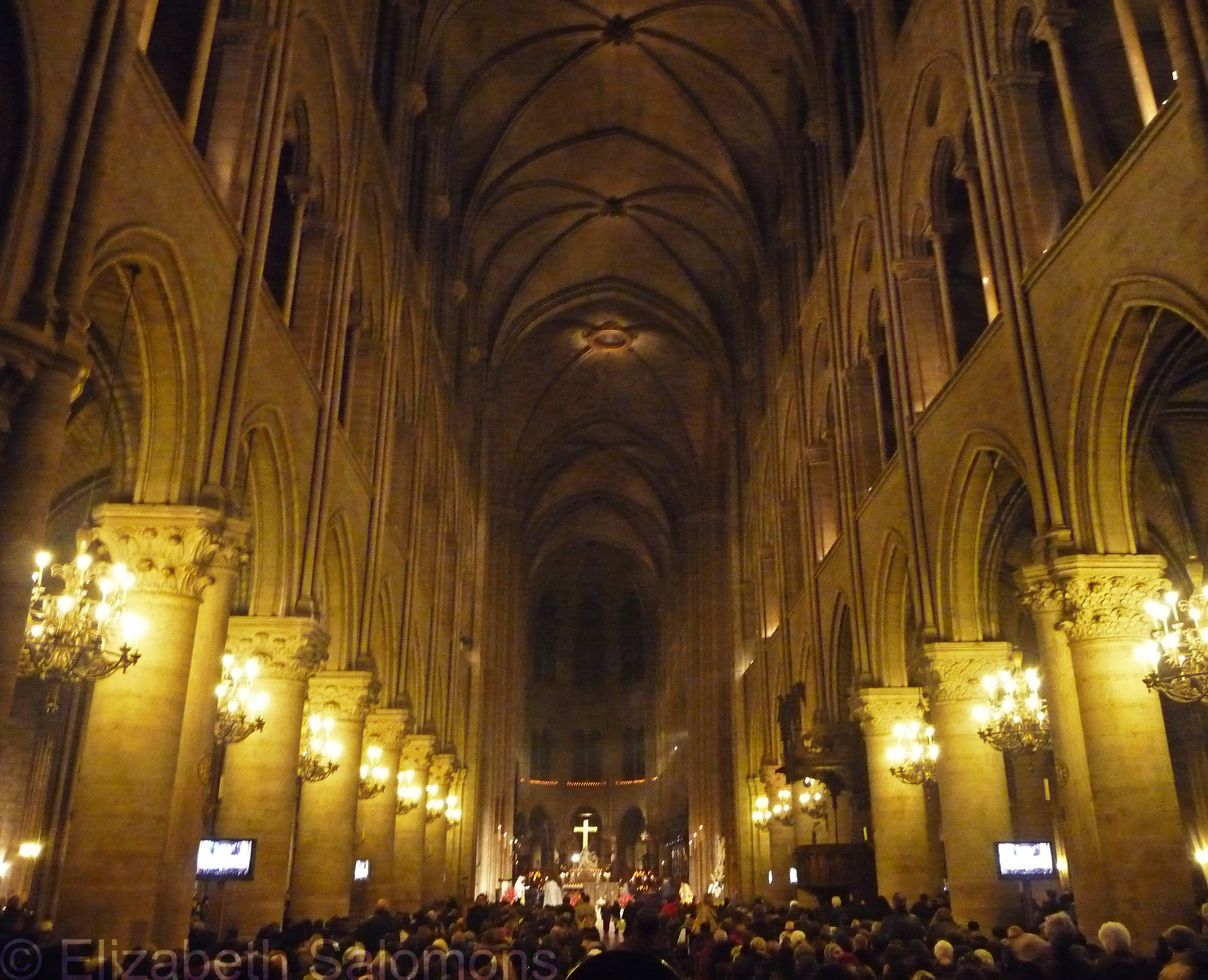
Because it was Christmas Eve and we were in Paris, it seemed inevitable that we would make our way to Notre-Dame. We were able to walk right in, but the crowds inside, and the fact that none of us would understand a mass said in French, made us leave. Here is the grainy photo I took while we stood at the back trying to make up our minds whether to stay or go.
Notre-Dame will hold Christmas services this year for the first time since 2019. Prior to the fire, it had not missed a Christmas mass since the French Revolution, when the Cathedral was converted to a wine warehouse and renamed Temple of Reason.
I don’t regret that we skipped the Christmas Eve mass at Notre-Dame; it was the right decision for us at the time. But I do hope one day I will again experience the magic of Christmas in Paris, and that maybe, with better planning, I will witness a Christmas Eve mass at Notre-Dame.
Paris 2024
I cannot lie. Paris 2024 hit all the right notes for me.
I love the spectacle of the Olympics. The biggest sporting event on the planet bringing together thousands of athletes from more than 200 countries to compete in dozens of sports never fails to catch my attention, whether it’s in my own city or in one far away.
I especially loved the historical setting of these Olympics, which were hosted by my second-favourite city in the world. The iconic competition venues with magnificent backdrops like the Eiffel Tower or Château de Versailles never let any of us forget where these games were taking place.
The Opening Ceremonies (yes, yes, I know, but les Français, they’re just so … French) weren’t held in some generic sports stadium, but in the centre of Paris itself, putting the City of Light on display. The Olympic Cauldron (like Vancouver’s Olympic Cauldron) was accessible to Parisian residents and visitors alike from its location in the Jardin des Tuileries, where it aligned with key landmarks: the Louvre, Place de la Concorde, and the Arc de Triomphe. In a nod to history, the fuel-free cauldron was built in the shape of a hot air balloon to commemorate the first-ever flight by humans, which took place over Paris in 1783.
Even the medals are historical: each one contains a piece of the Eiffel Tower. (The fragments of iron were left over from renovation work done over the years.)
And if you doubt that the City of Love has special powers, remember this record set by athletes during Paris 2024: the most number of marriage proposals ever at an Olympic games (seven).
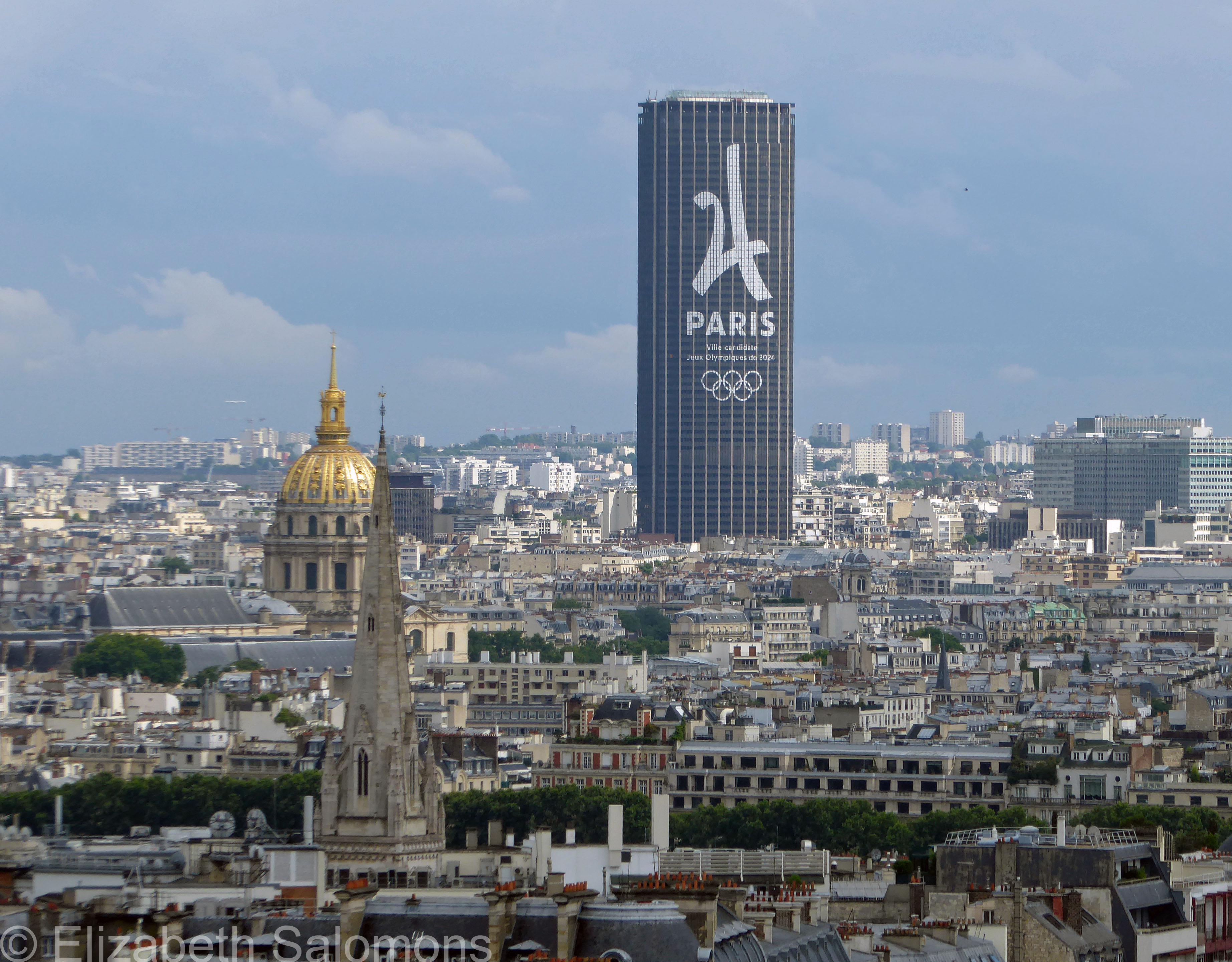
It’s always difficult for me to choose just one photo when I write about Paris, but then I found this and knew it was the one. That’s the Tour Montparnasse as seen from the Arc de Triomphe. I took this photo in the summer of 2017, mere weeks before Paris was announced as the host city for the XXXIII Olympiad.
Dishing: Paul
After the upheaval of the past few years, I am still marvelling at what a treat it is to be able to meet up with friends in restaurants again. Such a little thing, really. And yet such a big thing.
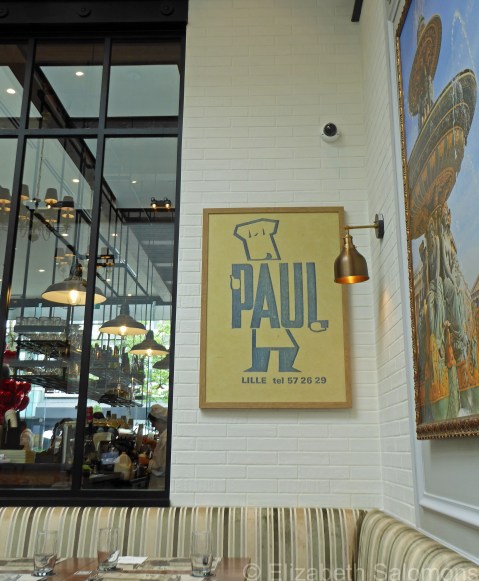
And so it was that I found myself on Robson Street for a lunch date yesterday. Paul is as ubiquitous in Paris as Starbucks is in Vancouver and I was thrilled when I heard that a location of this longtime French institution was coming to my home city.
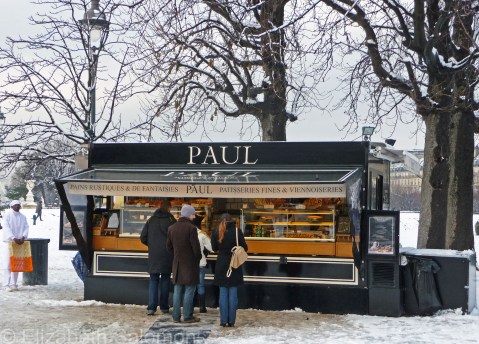
Paul in the Jardin des Tuileries
The bakery and café’s Vancouver location — the only one in all of Canada — has been open since 2021, but yesterday was my first visit (because, you know, pandemic).

Paul on Robson Street
You have to suspend disbelief to think you are in Paris, though. Although my crêpe aux champignons et aux épinards (mushroom and spinach crepe) was excellent, the size of the pastries we perused in the display case on our way out were supersized, not small and delicate the way they are in French bakeries. And the seating area was light and airy with tables quite far apart, not squished together as they are in Parisian cafés.
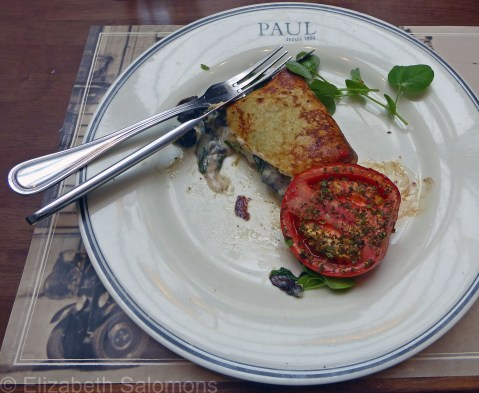
But the service was very Canadian and it was a wonderful way to while away a couple of hours with a friend. I will be back.
Travels With My Friend
I was supposed to be travelling back from Nova Scotia today.
But I’m not. Instead, I went in early August. And instead of going to say good-bye to a close friend in person, I went to celebrate her life after she was gone, along with her family and friends.
These are hard words to write. You always think you’ll have more time. My friend thought she had more time — it was her suggestion I come see her in September, when all the tourists would be gone but the weather still like summer. She herself had a busy summer planned — travel, time with family, time with other visitors — and so I took the early-September slot.
I knew it wouldn’t be a normal visit. I knew she was much weaker than I’d ever seen her. I knew it would likely be the last time I could see and talk to her in person.
You always think you’ll have more time.
This is my travel blog. So why am I writing about the loss of my friend?
Because she was the best travel companion I’ve ever had.
I suppose that’s not a surprise. When you travel with your best friend, a person with whom you share so many of the interests that make travel so memorable — art, architecture, music, literature, good food — it makes travelling together so easy. Maybe it worked so well for us because we lived on opposite ends of the country, and so our periods of travel became our time to reconnect and to nurture our friendship.
After she was gone, I counted up how much of my travelling involved her.
Seventeen. Seventeen trips. Some of them as long as two weeks, others as short as a weekend.
It all started with a road trip. At that point, we were casual acquaintances, part of a crowd of thirtysomethings who hung out together in Toronto. One of my roommates was dating one of her roommates. We went to the same parties, had brunch together on Sunday mornings after church.
She told me about her upcoming trip to New Orleans. A mutual friend was driving her down for a job interview she had lined up with the New Orleans school board (she was a newly accredited teacher at the time, eager for a full-time teaching position when those were hard to come by). The two of them were also planning to go to the New Orleans Jazz Fest.
“I’ve always wanted to go to New Orleans,” I said.
“Why don’t you come with us?” she replied. It wasn’t an idle invitation — I could see she meant it. I had lots of flexibility with my time that year as I was finishing off a master’s degree while launching my freelance editing career. I was making slow progress on both at the time, so it wasn’t much of a decision for me.
“OK,” I said. “I’m in.”
I learned a lot about her on that trip. We enjoyed a memorable evening of live blues on Beale Street, saw Graceland, and had a bizarre three-hour tour of a Mississippi plantation where our tour guide looked old enough to have fought in the Civil War himself and we were the only tourists in sight.
What impressed me most about that trip was watching how my friend faced her fears. She was terrified of snakes, yet insisted we go for a long walk along creaky boardwalks through a Louisiana swamp. As we tramped along, she jumped at least a foot in the air at every little noise, convinced she would step on a snake before the walk was over. But she refused to turn back.
That road trip was the beginning of a friendship that lasted a quarter century. She introduced me to New York, a city she loved, and we went back several more times. The winter I spent in Paris, she joined me for Christmas and New Year’s. She couldn’t believe I had never tasted coq au vin, and so she insisted on teaching me how to make it. Chicken stewed in wine? Yes, please.
Another year she invited me to join her family in Florida for New Year’s. There were weeks in London and San Francisco, and a ski weekend in Whistler. We kayaked the Broken Group Islands (twice!) and Desolation Sound.
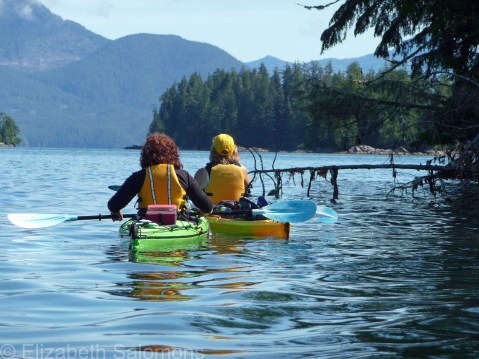
Kayaking in the Broken Group Islands, British Columbia
The summer she spent in Siena studying Italian art, I was in Prague on a writing course. We decided to meet up afterwards — or rather, I invited myself to stay in her dorm room for a few days before I had to travel on to Amsterdam to meet up with my father.
I tagged along when their entire class went to Padua to look at frescoes. We booked ourselves into a hotel room for two nights, along with some of the friends she had made on the course, intending to spend the next day in Venice. Being summer in Italy, it was hot, so we got an early start. By late afternoon, we were all knackered. There were five of us in total, and we decided to take a gondola ride. That led to beer and pasta with our gondolier. And that led to some of us sneaking out to smoke a joint along the canal with said gondolier. (You all know where this is going, right?)
To keep it short: we missed the last train to Padua. Five Canadian women looking for hotel rooms in Venice, at midnight in the height of tourist season. It wasn’t pretty.
But that mishap led to a lovely bonus day in Venice, and three of us decided to go to Murano, one of the islands adjacent to Venice, for lunch. My friend urged me to order the Caprese salad as I had never had it before. I was converted.
In addition to all of our, ahem, travel adventures, there were the numerous times she opened up her home to me whenever I was in Toronto. I would do my rounds of networking, as I called it, with clients, but I always had lots of catching up to do with my friends from when I lived there. She told me I was the perfect guest because I was never home, but, in truth, she was the perfect host.
Because of that hospitality, I always gave her first dibs whenever I lined up a home exchange, and she never said no. She joined me for 10 days the summer I was in Amsterdam — scheduling her time with me in between the chemo treatments for the disease that would eventually claim her life. I marvelled at how well she was doing. I could not keep up with her as we walked through the city’s streets. One day we cycled 20 kilometres to Haarlem and back. It was her idea to bike and that was the only day I could see she wasn’t 100 percent. She was close to collapsing when we pulled up to a café alongside a canal.
“You go sit,” I said, pointing to an empty table outside the café. “I’ll lock up the bikes.”
We spent another day in Delft, one of my favourite Dutch cities. It also happens to be where my friend’s father was born. She told me stories of childhood visits and we went looking for the house where he had lived. I’d met her father only once or twice, which is maybe why I could easily picture him as a small school boy running at top speed alongside the canals.
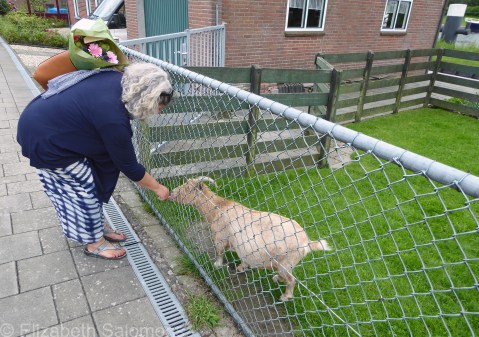
Interacting with the Dutch wildlife
In 2018, we spent a week together in San Francisco. We cycled across the Golden Gate Bridge to Sausalito — that time it was my turn to almost collapse at the end of our ride. And she joined me for a weekend in Montreal where I had another home exchange arranged. That was 2019. I had no idea at the time that it would be the last time I would see her. How could I? The pandemic kept us apart after that.
My friend was a high school photography teacher and she showed me the best places to catch that unique photo. Like the Eiffel Tower from a side street I would have never found on my own. We both loved taking photographs in old cemeteries, and so, on one of my visits to Toronto, she showed me the Necropolis, which has some of the city’s oldest graves. It was a warm summer evening, and we soon lost track of the time. Or maybe we didn’t know that the gates would be locked at 8 p.m.
Ever struggle to climb over a wrought iron fence in a short skirt? She had a good laugh that time — at my expense.
She never said a word about my photography skills until I asked her for feedback. “Well,” she said slowly. “Your horizons aren’t always level. And check your corners. You want to edit out any distractions.”
Needless to say, every time I edit my photos, I’m checking my corners. And thinking of her.

Photographing Gertrude Stein’s grave in Père Lachaise Cemetery, Paris
She was a far better friend to me than I was to her. There was one travel dream I had, a trip I haven’t yet taken and likely won’t, and years ago, when I first brought up the idea, she had mixed feelings about whether she wanted to join me. But later she told me about a conversation she had had with her mother. “You know,” she told her mom, “I really have no burning desire to make that trip. But it’s important to Elizabeth, so that’s enough of a reason to go.”
Who does that? Not me — that’s for sure.
I’m shattered I didn’t get one last visit with my friend and a chance to say good-bye in person. But I am so incredibly grateful she was able to spend her last years in Nova Scotia, surrounded by her family and by so much love. And I’m so grateful they shared her with me for so many years.
I will miss her more than I can say.
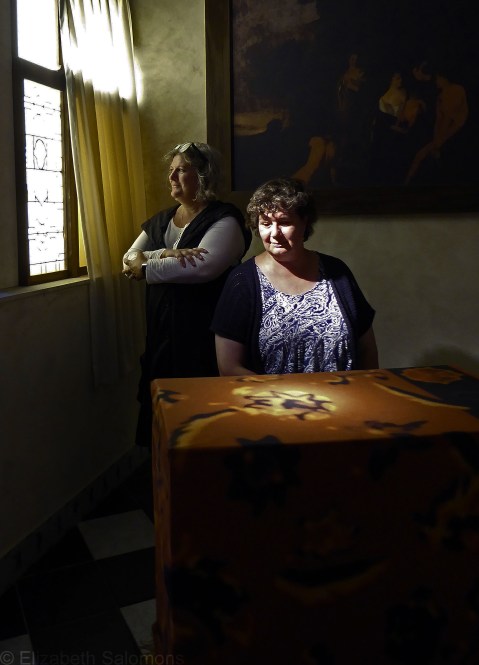
Having a bit of fun at the Vermeer Centrum Delft
Through My Lens: Portico of La Madeleine
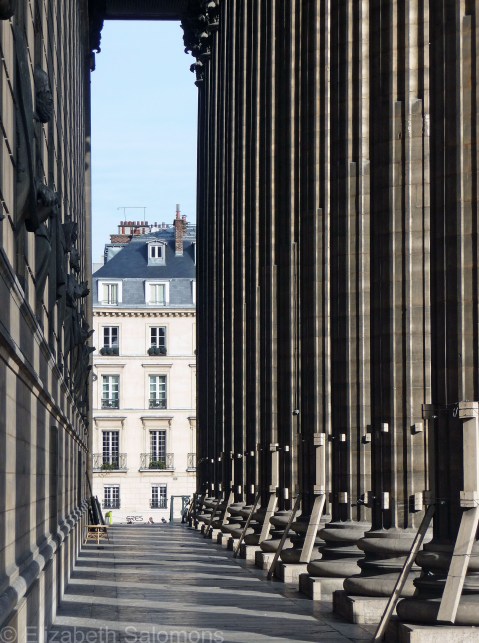
When I’m photographing my European churches, I’m always on the lookout for an unusual angle. Here’s one: from the portico at La Madeleine.
Happy Easter!

Église Sainte-Marie-Madeleine, Paris, January 2011
Through My Lens: La Madeleine

Today is Palm Sunday, and I’m posting a photo of Église Sainte-Marie-Madeleine, commonly known as La Madeleine. You’re right, it doesn’t look much like a Christian church. That’s because the building was originally intended to be a temple to celebrate Napoleon’s army. After the fall of Napoleon, King Louis XVIII decided that it would instead become a church dedicated to Mary Magdalene. It was eventually consecrated in 1842. La Madeleine is located in the centre of Paris in the 8e arrondissement.
One interesting bit of trivia about La Madeleine: Frédéric Chopin’s funeral was held here in 1849, and he had requested that Mozart’s Requiem be sung. The Requiem has parts for female voices, but La Madeleine did not allow female members in its choir. Eventually, the church decided it would allow a mixed choir to sing at the service, but only if the women stood behind a black velvet curtain.
Through My Lens: Inside Saint-Gervais and Saint-Protais

Last Sunday, I posted a photo of Église Saint-Gervais and Saint-Protais. For today, the Fifth Sunday of Lent, here’s a photo of its interior. I quite like the look of the wooden stools, though I don’t imagine they’re too comfortable to sit on for an entire church service.
Through My Lens: Église Saint-Gervais and Saint-Protais

Église Saint-Gervais and Saint-Protais is located in the 4e arrondissement of Paris, just steps away from Notre-Dame. The church is named after Saint Gervasius and Saint Protasius, twin brothers from Milan who lived and died, it is believed, during the reign of Marcus Aurelius, last emperor of the Pax Romana. The present building dates back to the fifteenth century. Although its interior is Gothic, the façade (not pictured) is in the French Baroque style.
I took this photo of the back of Église Saint-Gervais and Saint-Protais from Rue des Barres, and it is my photo choice for today, the Fourth Sunday of Lent.
Through My Lens: Église Saint-Germain de Charonne

For the Third Sunday of Lent, here is a photo of Église Saint-Germain de Charonne, located in the former village of Charonne, which was annexed by Paris in 1860 and is now part of the 20e arrondissement.
It is believed that the first church on this site was built to commemorate a meeting that took place in 429 between Saint Germain, Bishop of Auxerre, and Saint Geneviève, the patron saint of Paris. Parts of the present structure date back to the twelfth century. The bell tower was added in the fifteenth century. What is most unusual for a church within Paris is that the parish cemetery remains intact, and was still in use as recently as fifty years ago.


 There and Back Again