
Through My Lens: Chihuly in Vancouver
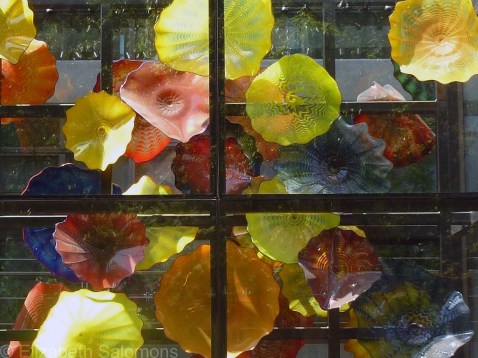
Remember Chihuly in Seattle? After I got back from my two days in Seattle, I was telling a friend here in Vancouver about Chihuly’s remarkable art work. And that friend then informed me one of Chihuly’s glass works is permanently on display at Bute and Alberni.
“Bute and Alberni?” I looked at him, puzzled. “I used to work at Bute and Alberni. Where ―?”
And then the penny dropped. The glass flowers in the glass box! I would stare at them from my seventh-floor office window whenever I was stuck editing a page, a paragraph, a sentence, … basically anything with words in it. It happened ― a lot.
This photo isn’t the best because, well, there was this massive, not very clean, glass box between my camera lens and the art work. But, there you have it, Vancouver readers. Know that we have our very own Chihuly glass work.
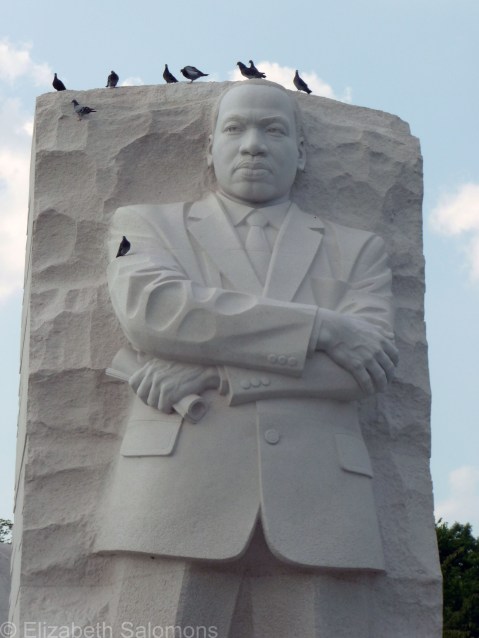
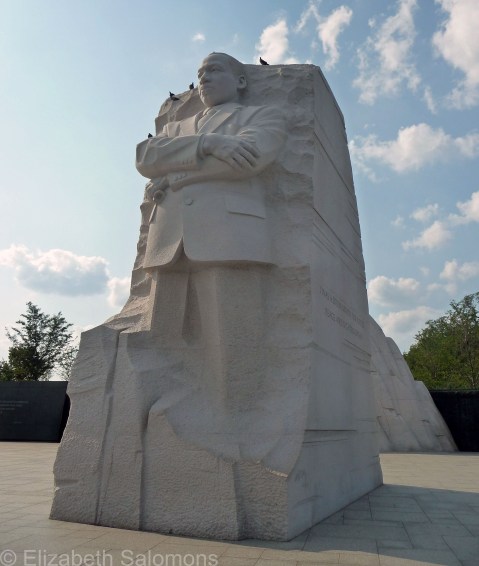
Martin Luther King Jr. Memorial
I have a dream that one day this nation will rise up and live out the true meaning of its creed: ‘We hold these truths to be self-evident, that all men are created equal.’
I have a dream that one day on the red hills of Georgia the sons of former slaves and the sons of former slave-owners will be able to sit down together at a table of brotherhood.
I have a dream that one day even the state of Mississippi, a state sweltering with the heat of injustice, sweltering with the heat of oppression, will be transformed into an oasis of freedom and justice.
I have a dream that my four little children will one day live in a nation where they will not be judged by the color of their skin but by the content of their character.
I have a dream today.
I have a dream that one day down in Alabama, with its vicious racists, with its governor having his lips dripping with the words of “interposition” and “nullification” ― one day right there in Alabama, little black boys and black girls will be able to join hands with little white boys and white girls as sisters and brothers.
I have a dream today.
I have a dream that one day every valley shall be exalted, every hill and mountain shall be made low, the rough places will be made plain, and the crooked places will be made straight, and the glory of the Lord shall be revealed, and all flesh shall see it together.
This is our hope.
This is the faith that I will go back to the South with.
With this faith we will be able to hew out of the mountain of despair a stone of hope.
With this faith, we will be able to transform the jangling discords of our nation into a beautiful symphony of brotherhood.
With this faith, we will be able to work together, to pray together, to struggle together, to go to jail together, to stand up for freedom together, knowing that we will be free one day. — Martin Luther King Jr.


Art Talk: Rembrandt, Van Dyk, Gainsborough
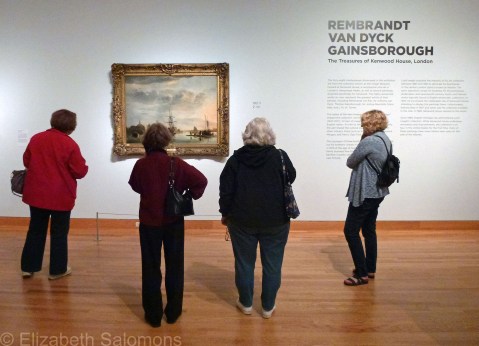
Kenwood House is one of those grand estate houses popular with tourists who want to see Downton Abbey–style houses. It’s currently closed while undergoing renovations. I’m sure that’s a huge disappointment for any tourists travelling to England this summer who were hoping to pay it a visit.
For me, not so much, because its closure gave Kenwood House a reason to send its artwork on tour to the United States. And ― talk about timing ― my friends and I got to see that artwork during our two days in Seattle, only days before the exhibition was due to close.
Rembrandt, Van Dyk, Gainsborough: The Treasures of the Kenwood House, London consists of 48 remarkable works of art. In addition to the Dutch masters and the paintings by Thomas Gainsborough, the exhibition also includes works by Joshua Reynolds and J.M.W. Turner.
“This show puts the Vancouver Art Gallery to shame,” one of my friends whispered to me as we bumped into each other in one of the gallery rooms. I nodded in agreement, awestruck. I don’t often get to see art of this calibre.
The Kenwood House exhibition was paired with a second exhibition entitled European Masters: The Treasures of Seattle, which included works by Eugène Delacroix, Frans Hals, and others, all borrowed from local private collections. I thought the two companion exhibitions complemented each other well.
Rembrandt, Van Dyk, Gainsborough: The Treasures of the Kenwood House, London has moved on to the Arkansas Art Center, my readers in Little Rock will be happy to hear. As for me, I’ve added Kenwood House to my list of art galleries to visit the next time in London. The collection is worth a second look.
Ulysses S. Grant Memorial
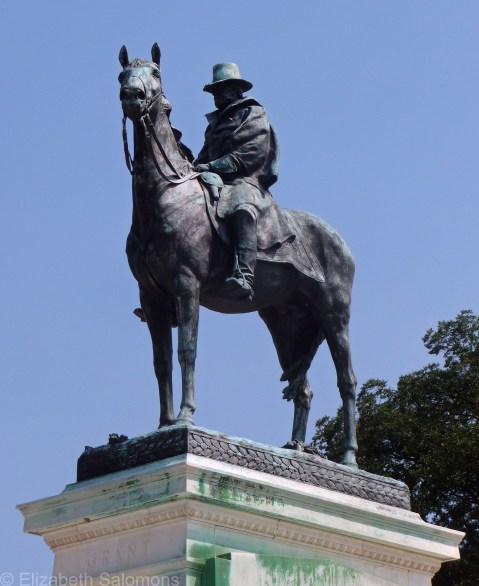
When I was going through my Gettysburg photos the other week, I came across these shots of the Ulysses S. Grant Memorial and realized my series on the National Mall monuments to American presidents was incomplete.
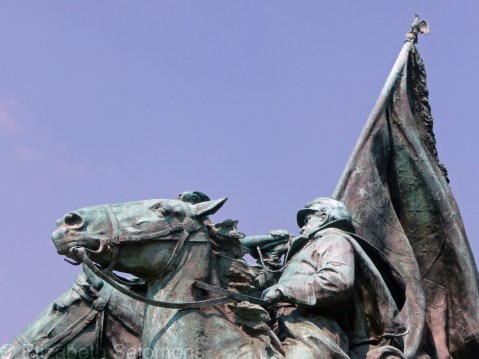
Ulysses S. Grant, 18th President of the United States, was in office from 1869 to 1877. He was also the Commanding General of the United States Army during the American Civil War. I guess Grant is considered a “minor” president since his memorial isn’t nearly as noticeable or as impressive as the monuments to the “major” presidents scattered around the Mall. But, it is one of the largest equestrian statues in the world.

Located at the base of the West Front of the Capital, the memorial was sculpted by Henry Merwin Shrady over a period of 20 years and was dedicated in 1922, the centenary year of Grant’s birth. The sculpture consists of three parts: Grant is seated on his favourite horse, Cincinnati, and faces the Lincoln Memorial ― so designed in order that “the general who fought for the Union could forever sit facing the president who saved the Union.”

On either side of Grant are sculptures of Union soldiers: artillery soldiers to his left and cavalry soldiers to his right. Grant’s face is hard to see; it was the faces of the soldiers that grabbed the attention of my camera lens.

Reel Life: Gettysburg
 One last post about Gettysburg, and then I’ll stop. Promise.
If you’re keen to see the battlefields of Gettysburg, but can’t make it to Pennsylvania in person, you might consider watching the 1993 film Gettysburg. I recommend the film only because it was shot on location at Gettysburg, so it gives you an accurate look at the landscape and physical layout of the two battle scenes featured in the film: the defense of Little Round Top and Pickett’s Charge.
The film was made pre-CGI, using real cannons to reenact the artillery barrage that took place on the morning of July 3, 1863. Even when using only quarter rounds, the cannons in that scene are far more impressive than any blow-’em-up scene I’ve seen in recent years.
Other than the principal actors, the cast consists entirely of Civil War reenactors ― some 13,000 of them. These guys take their roles pretty seriously, living and sleeping as Civil War soldiers did, wearing the same type of wool uniforms, and carrying the same type of weapons.
I saw the film Gettysburg in the theatre the year it was released and it motivated me to one day visit Gettysburg for myself. However, I recommend the film only if you’re really, really interested in the story of the battle. At four and a half hours, it taxes the attention span of most casual viewers.
Armchair Traveller: Hallowed Ground
But, in a larger sense, we can not dedicate — we can not consecrate — we can not hallow — this ground. The brave men, living and dead, who struggled here, have consecrated it, far above our power to add or detract. — President Abraham Lincoln
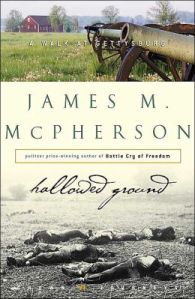 Last post I wrote that you couldn’t tour the Gettysburg battlefields on foot ― not in an afternoon, that is. But should you be motivated to attempt it, I highly recommend taking along James M. McPherson’s book, Hallowed Ground: A Walk at Gettysburg.
Professor emeritus of Princeton University and author of the Pulitzer Prize–winning book Battle Cry of Freedom, McPherson is considered the finest Civil War historian in the world (according to his book’s flap copy). Hallowed Ground takes its title from the words Abraham Lincoln spoke in his Gettysburg Address (quoted at the top of this blog post).
As a guidebook on its own, Hallowed Ground lacks maps and precise details about how to navigate the park. But as a means of providing context, I found Hallowed Ground invaluable reading prior to my tour of Gettysburg. McPherson explains in simple lay language how the battle changed the course of the Civil War, and its significance in American history. The book includes anecdotes of the author’s walks around key positions of the battle, such as Seminary Ridge, the Peach Orchard, and Little Round Top, as well as stories about the various monuments and statues.
McPherson has led countless tours for students and others at Gettysburg; with a little imagination, reading his book is like being on one of his tours.
Gettysburg

As I was planning my trip around the Eastern Time Zone last summer, I knew that one of my must-sees was going to be Gettysburg. I’m a history geek, and my pre-trip research quickly led me to the conclusion that it would be worth the drive from Baltimore, where I was planning to spend the better part of a week.
And so, I booked a car rental, enlisted my sister as navigator, and off we went for a drive through the Pennsylvania countryside. Both of us came away rather impressed with what we saw and learned. Since this week was the 150th anniversary of the Battle of Gettysburg, I thought it would be a timely blog post for the Fourth of July.
There are a number of ways to tour Gettysburg National Military Park. We opted for the Self-Guiding Auto Tour, where you are supplied with a map showing the location of more than a dozen stops throughout the park, each one of which has a viewpoint and a marker explaining its significance. If you lack a capable navigator such as I had, the Visitor Center sells CDs you can pop into your car’s stereo system while you drive, or you can take a guided bus tour.
What you can’t do ― not in an afternoon, that is ― is tour the battlegrounds on foot. At 6000 acres, the park is massive and completely surrounds the town of Gettysburg.
Now, if history isn’t your thing, you should skip on to the photos at the end of this post. But if you want a little background, read on.
In June 1863, General Robert E. Lee was the commander of the Confederate Army of Northern Virginia. He’d spent most of the month moving his 93,000 soldiers north into Pennsylvania so they’d be in a position to push the Union forces out into the open and into battle. Once he decimated them (so he figured, based on his recent successes), it would bring about the end of the war.
The 75,000-strong Union Army of the Potomac shadowed Lee’s movements, but at a slower pace to make sure they were always in position to protect Washington DC from the Confederate forces. On June 28, 1863, General George G. Meade took command of the Army of the Potomac.
Both generals were angling for a favourable spot for a battle ― what is ironic about when they finally met is that the Confederate Army was moving south and the Union Army was moving north. Neither army was aiming for Gettysburg, either. But when Confederate soldiers chanced upon and were attacked by Union soldiers on July 1 ― an attack the Confederates successfully defended ― Lee realized if he acted fast he could fight the Union forces before they had finished assembling. He decided to use the chance meeting as an excuse to start a major battle.
By the morning of July 2, the Union forces had retreated from the northwest of Gettysburg, where the previous day’s fighting had occurred, to the southwest of Gettysburg. Despite their retreat, their position was good ― they occupied a series of hills and ridges in a semicircular position. The Confederate forces had no choice but to attack from below, which they did at both ends of the Union line. The Confederate forces gained a bit of ground, but losses were high and on the evening of July 2, the Union forces still occupied the high ground.
Because the Union forces had successfully repelled the Confederate attacks at either end of their line, Lee was convinced that Meade had concentrated his forces on his flanks. On July 3, Lee ordered an attack on the centre of the Union line, which he thought would be the weakest point.
The Confederate artillery fired on the Union position for several hours. The Union artillery answered back with its own volley, but eventually went quiet. Lee assumed the Union guns been knocked out. He ordered the advance of some 12,000 Confederate soldiers toward the 7000 waiting Union soldiers. This attack, which came to be known as Pickett’s Charge, required the Confederate forces to march across almost a mile of open ground. While they were in the open, Union artillery ― which had not been destroyed after all ― again took up their firing.
Union losses that day were about 1500 killed or wounded, but the Confederate casualty rate was much higher ― almost 50 percent. Total losses from both armies over the three-day battle was more than 50,000. Lee admitted defeat and began his retreat from Pennsylvania the next day. By the time Meade realized Lee was retreating all the way to Virginia, not merely heading back into the mountains, it was too late for him to catch up.
Most historians consider Gettysburg to be the turning point of the Civil War ― and the battle that saved the Union. Pickett’s Charge is called the High Water Mark of the Confederacy because it was the furthest line of advance made by the Confederate Army, but the Union victory at Gettysburg ensured that Lee’s invasion of the North was over.
If you’re still with me, all I want you to take from what I’ve written above is that it immediately becomes clear as you drive around Gettysburg Park what role the terrain this corner of Pennsylvania played in the outcome of the battle. The establishment of the park in 1895 (initially maintained by the War Department, now by the National Park Service) means that the entire battleground still looks, for the most part, as it did in 1863.
And so, you can see (just barely through the trees) the cupola of the Old Dorm of the Lutheran Theological Seminary, which provided a crucial observation post on the night of June 30 as the Union generals surveyed the landscape and chose where to place their troops. You can stand at the rocky summit of Little Round Top and imagine the fierce battle that took place on its slopes as Confederate soldiers tried to overtake it on July 2. You can survey from various viewpoints the hilly terrain that frames either side of the fields the Confederate soldiers marched across during Pickett’s Charge on the afternoon of July 3. And you can stand where the Confederate soldiers stood, and look across the same fields they looked across, and see the copse of trees where the Union soldiers were waiting for them.
And now, as promised, here is a photo tour of Gettysburg National Military Park. (Click on the first photo at top left to open the slide show.)


Chihuly Garden and Glass
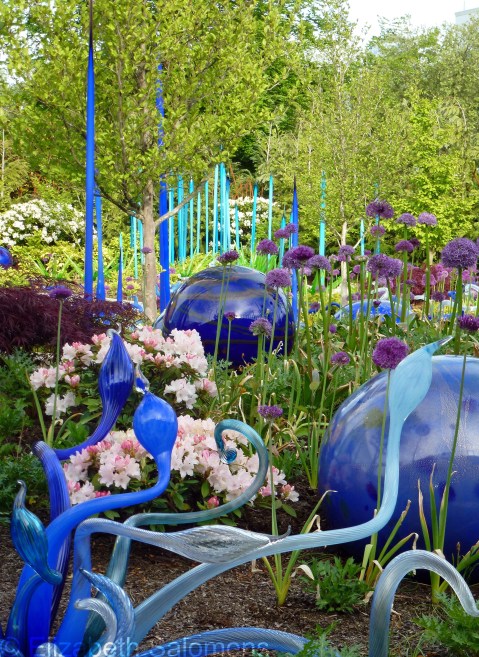
A couple of posts ago, I mentioned that the Chihuly Garden and Glass alone was worth a visit to Seattle. I did not exaggerate: it is one of the most distinctive art installations I have ever seen.
The artist, Dale Chihuly, was born in Tacoma, Washington, in 1941. He studied at the universities of Washington and Wisconsin and at the Rhode Island School of Design, and in Venice, Italy, on a Fulbright. His work is exhibited in more than 200 collections all over the world.
If you ever get to Seattle, do not miss this unique gallery.
And, if you are still not convinced, here are a few more photos. (Just a few.)
Hotel Five
Remember when I wrote that I don’t blog about the hotels I stay in, because they’re nothing to write home about?
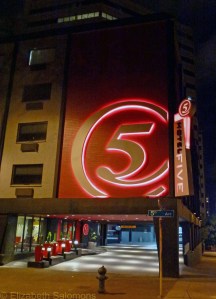 Well, I’m going to have to eat my words, because this is another post about a hotel ― which makes for two posts in as many months.
The hotel I am recommending is Hotel Five, a boutique hotel in central Seattle.
It’s got location: it’s in Belltown, an area just next to Seattle’s downtown core, which makes it walking distance to the major tourist attractions, as well as a good selection of restaurants, bars, and shops.
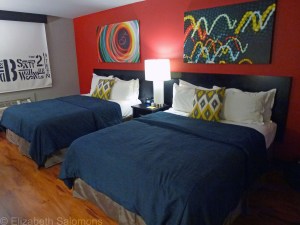 It’s got service: our room was ready when we arrived (post–cruise ship disembarkment) at 7:30 a.m. We were fully expecting to be dropping off our bags and not having access to our room until much later in the day, so we were pleasantly surprised to be given room key cards upon our arrival. And shortly after we checked in, the front desk called our room to make sure we were happy with our accommodation and to ask if there was anything we needed. I’ve never experienced that kind of service anywhere I’ve stayed. (Maybe I’m staying in the wrong hotels!?)
And it’s got style: the rooms were cleverly decorated, and the bathrooms new and modern.
I didn’t book this hotel; one of my travelling companions did. Note to self: get my friends to book my hotel accommodation more often.

Two Days in Seattle
 Now that I’ve told you how we got to Seattle, and how we got back from Seattle, you might be wondering what there is to do and see while in Seattle. The city, I was pleased to discover, is the perfect size for a weekend visit. It’s large enough that there’s something for everyone, but small enough that you don’t feel overwhelmed by all the choices.
Let’s start off with the architecture. Upon arrival, you can’t help but notice the Space Needle, a prominent landmark of Seattle’s skyline that was built for the 1962 World’s Fair. It’s impressive when you stand beneath it, but … well … not so impressive I wanted to pay money to go up it.

Never mind. At the base of the Space Needle is a building that did impress me enough to want to pay the admission fee. That would be the EMP Museum, designed by Toronto-born architect Frank Gehry. The building’s deconstructivist style is just so fun to look at, and so shiny and colourful and fluid that you can’t resist reaching out your hand to touch the building as you walk by.

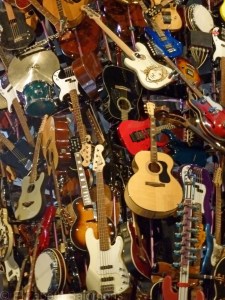 Inside the museum is even more fun, with exhibits more entertaining than I thought possible. Want to learn everything there is to know about Nirvana? It’s here. Jimi Hendrix? Him too.
The museum also has also some really cool artifacts from the world of fantasy and science fiction TV and film. As in: the Cowardly Lion’s costume, Susan Pevensie’s bow and quiver of arrows, Yoda’s staff, Darth Vader’s light sabre, Data’s uniform … they’re all here. Geekdom heaven, wouldn’t you say?
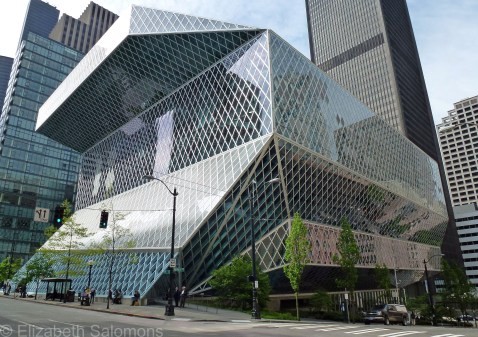
Seattle scored a second “starchitect”-designed building with the Seattle Central Library, designed by Dutch architect Rem Koolhaas. Don’t just walk around its exterior, though. Have a quick look inside too, taking the time to go all the way up to the top floor for a remarkable view over the atrium.
Once you’ve seen Seattle’s architectural highlights, I recommend checking out one of the most unique art installations I’ve seen anywhere: the Chihuly Garden and Glass. (It alone is worth a visit to Seattle.) The museum opened a year ago, so it’s rather new, and it’s rather extraordinary. Dale Chihuly is an American glass sculptor who creates exquisite works of blown glass. Photos don’t do his work justice, but, forgive me, I’ll post one anyways.
 A Seattle institution you shouldn’t miss is Pike Place Market, located near the downtown waterfront. In operation since 1907, it’s one of the oldest farmer’s market in the United States. Fresh local produce, seafood, and flowers are at street level, while the lower levels are filled with shops of all sorts, including bakeries, restaurants, clothing, and local crafts. Be sure to see the fishmongers in action as they throw the fish to each other before wrapping them up for the customer. Oh, and there’s a coffee shop in the market you may have heard of: Starbucks.
  Not just any Starbucks, though ― it’s the first ever one, which opened for business in 1971.
We stayed in Belltown, which turned out to be a great neighbourhood full of funky coffee shops, trendy restaurants, and lively bars. It is also conveniently located halfway between the downtown waterfront and Seattle Center (where the Space Needle, the EMP, and the Chihuly Garden and Glass are located).

One thing we didn’t have time for: a ferry ride across Elliott Bay. And there are dozens of other Seattle neighbourhoods I’m told are worth checking out. In other words? I plan to return for another weekend visit soon, because there’s lots more of Seattle to see.


 There and Back Again