
Solitude
I’ve been thinking a lot lately about the winter I spent in Paris. Although I was on my own, ironically for being in a city so far from home, I had way more face-to-face contact with friends and family than I’ve had this winter. That is not something I ever thought I would say.
Pandemics, eh?
Not everyone enjoys travelling on their own. I really enjoy the trips I take with other people, even when they require a lot of compromise. On the other hand, if I limited my travel to the trips that suit the interests and schedules of my friends or family — well, I’d be giving up a lot of opportunities.
And so, I do a lot of solo travel. I’ve learned a few tricks over the years to help me be comfortable (and safe) when on my own in a foreign country.
But if there’s one thing I’ve learned this year, it is this: if you can handle the solitude of living alone during a pandemic, you will thrive at solo travel.
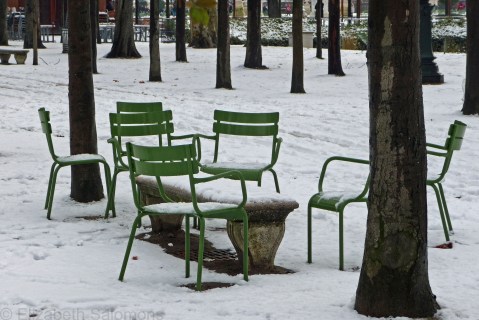
Jardin des Tuileries
Boats in a Storm
So. Here we are. The last day of the wildest, craziest year I’ve personally ever experienced.
You know what were the last words I wrote on this blog in 2019?
“May we all see more of the light in 2020.”
Ha. What a sweet, summer child I was a year ago.
So many strange words are part of our vernacular now. Physical distancing. Lockdown. Bend the curve. Quarantine. Bubble. Circuit breaker. Phase 2. Red zone. Tier 4.
One word I never want to hear again?
Unprecedented.
This is a travel blog, but, like everyone else, I’ve stayed still this year. But here’s something I’ve learned while bird-watching: it is only when you stay still that you really hear the bird song.
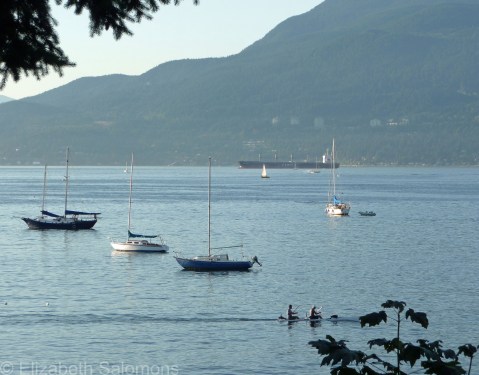
This assortment of boats on English Bay is my photo choice for my last post of 2020 because it illustrates something that British Columbia’s Provincial Health Officer, Dr. Bonnie Henry, said at a press conference a lifetime ago way back in May.
We’re in the same storm, but we’re not in the same boat. For some people, it’s been a luxury yacht, and for others we’re really an open skiff adrift without a working engine.”
Despite my naive wish a year ago that we put a miserable 2019 well behind us and all my hopes for a much better 2020, I will still, in faith and in hope, wish all of us a happy new year and all the best for 2021, whatever that may bring. May your seas remain calm, may your boat stay afloat, and may we all hear the bird song.
Merry Christmas!

Lost Lagoon, Stanley Park, Vancouver
Through My Lens: Eugenia
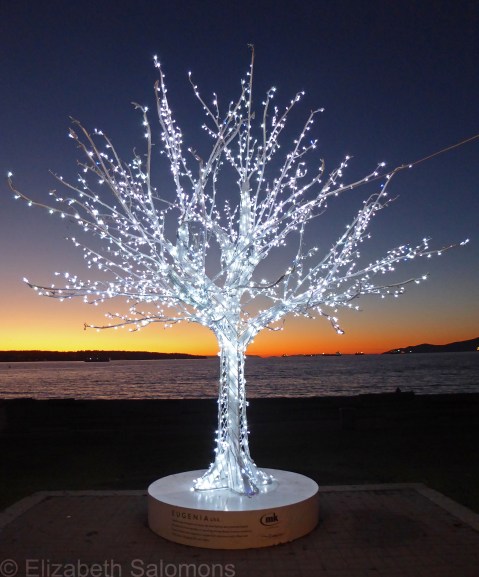
This is Eugenia, another of the sculptures that light up English Bay this time of year. She’s named for Eugenia Place, an iconic condo building along Beach Avenue that stands out because of the oak tree that stands tall on its roof deck.
This Eugenia changes colour from white to green to blue to pink to white again, but I think she looks most spectacular dressed in white.
Through My Lens: Stanley
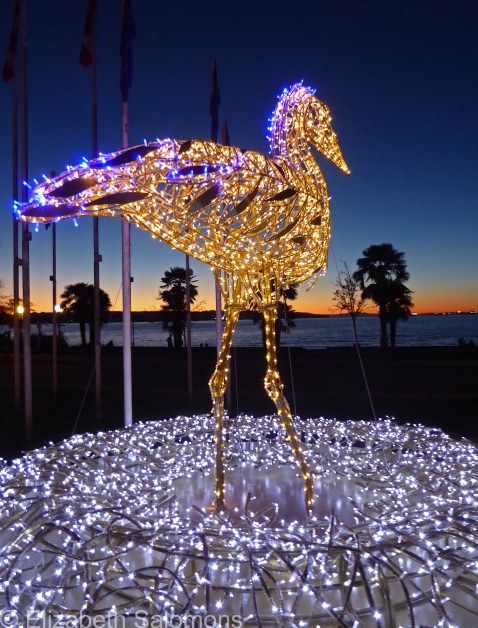
Hey everybody! Meet Stanley!
Every year around this time, Stanley lights up English Bay. He is part of the Lumière Festival, which, since it’s easily possible to physically distance while looking at the displays, is one of the few holiday festivals that still took place in Vancouver this year.
Stanley is named after Stanley Park, home to one of the largest urban Great Blue Heron colonies in North America. He stands four metres tall and is made of more than 10,000 lights.
Happy Birthday, Ludwig van Beethoven!
Sometime this week, probably today, is the 250th birthday of one of the world’s greatest composers, Ludwig van Beethoven. (I say probably today because there is no record of his birth. All we know for sure is that Beethoven was baptized in Bonn, Germany, on December 17, 1770, and the tradition back then was to baptize babies the day after they were born.)
Happy birthday, Ludwig!
A lifetime ago, I had tickets for concerts on consecutive nights to hear the Vancouver Symphony Orchestra. The pair of concerts was advertised as “The Beethoven Experience: A Most Remarkable Night, Part 1 and Part 2.” Two nights of Beethoven. I was so looking forward to it.
Then came along this little thing called a pandemic, and the concerts, scheduled for March 13 and 14, were cancelled. The VSO generously played part of their planned repertoire on March 15 to an empty auditorium and I listened to the live stream online.
It wasn’t the same.
Fast forward to October when I bought a subscription to the VSO’s digital 2020–2021 season. I’ve listened to the concerts when they are posted, and they are delightful. But, alas, also not the same as being there in person.
Who knew I’d miss live music this much?

The glass mural in the above photo is a facsimile of Beethoven’s original score for the chorale Ode to Joy. The mural is on the façade of the Vancouver Symphony Orchestra’s School of Music, located next door to the Orpheum, the VSO’s concert hall.
Knowing I was going to be writing this post, I’ve been thinking a lot this week about that chorale. It’s from the final movement of Beethoven’s Ninth (and last) Symphony. Set to words by the German poet Friedrich Schiller, it is probably one of the best-known anthems in the world.
Ode to Joy is all emotion and power. In 1973, Chilean women sang a Spanish version of Ode to Joy while marching in the streets outside Augusto Pinochet’s prisons to let the prisoners inside know they were not alone. In 1989, the students at Tiananmen Square played the chorale over loudspeakers to drown out the speeches by the Chinese Communist Party. And on Christmas Day of that same year, six weeks after the fall of the Berlin Wall, Leonard Bernstein conducted a performance of Beethoven’s Ninth Symphony with an orchestra and choir made up of both East and West Germans.
It’s too early to say where 2020 will fall in the annals of history, but I think we can all agree that it has been life-changing for everyone living through it. And so I think it’s a happy coincidence that of all the composers we might be celebrating this year, it is Beethoven.
For one, Beethoven lived in turbulent times. So many revolutions. The American one and the French one. Also the Industrial Revolution. And then there was that little man, Napoleon Bonaparte, wreaking havoc across the European continent. The arts reflected the changing times as musicians (including Beethoven), writers, and artists all began to move away from creative works that emphasized elegance and order, hallmarks of the Classical period, to ones that evoked the full range of human emotion, a characteristic of the Romantic period.
For another, Beethoven is the embodiment of the tortured artist. Look up any picture of him — his hair is wildly unkempt and there’s always a scowl on his face. Much of this is likely conjecture, but we do know that Beethoven had a difficult life. He was in his late twenties when he first started having hearing problems. Only a decade later, he had lost the ability to hear speech and music. Although he was able to hear low tones and loud noises until his death at the age of 56, his hearing impairment affected him greatly both professionally and personally.
But back to that chorale. Here’s a line from the lyrics by Schiller: Alle Menschen warden Brüder.
“All people will be brothers. “
If there’s anything we learned this year, it’s that humanity can rally together in times of crisis. That’s particularly evident this week as, defying all expectations, vaccinations to protect against Covid-19 are starting to roll out a mere 11 months after the virus was first identified.
I don’t know if I’ll ever get to hear those concerts I missed out on last March, but you can be sure that as soon as the Vancouver Symphony Orchestra is allowed to perform for the public again, I will be in the audience. Most likely weeping with joy.
Through My Lens: Golden Hour on Beach Avenue
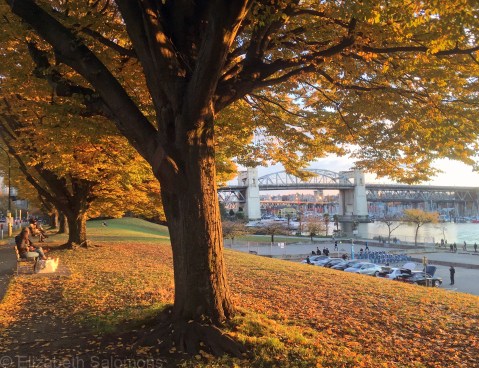
Golden hour. Magic hour.
No matter what you call it, end-of-day light is enchanting.
Through My Lens: Autumn Ride

I like to think of this photo as a companion piece to a photo I took a year ago in almost the exact same spot. This is along the north side of False Creek.
Love these colours.
Through My Lens: Four Trees
Something shifted for me last week. It started on Thursday when the provincial health orders announced on November 7 for Metro Vancouver were extended to the entire province and until December 7. (And I have no illusions they won’t be extended again.)
And then, on Friday morning, our prime minister reverted to work-at-home and did his media appearance from the stoop of his home in Ottawa.
It feels like we’re right back where we were last March.
The second wave (or, as I like to call it, the Long Winter) that we’ve been talking about since last summer is starting to feel very, very real.
What does this mean for me personally? Pretty much the same as the last eight months: I will hunker down and do everything I can to stay healthy, both physically and mentally.
I’ll start by posting a series of photos from my recent daily walks. Because they make me happy. Maybe they’ll cheer you up too.
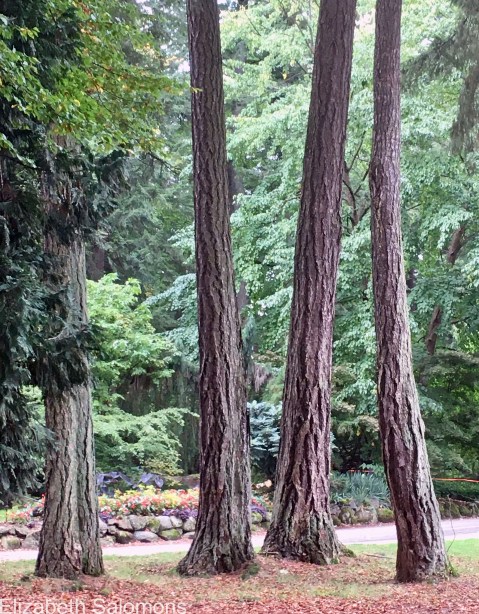
Here, then, are four trees I took notice of one Saturday afternoon about a month ago. I think they’re Douglas fir, but I could be wrong.
Enjoy.
Through My Lens: Windward Oahu

In a parallel universe, my sister and I would be getting on a plane today, headed for two weeks of sun and surf. But alas, no winter beach time for us this year.
Because it’s 2020.
Not to worry. I will instead wallow in my memories of the last time I was in the Aloha State. I took the above photo somewhere along the Windward side of Oahu, which is where my sister and I had planned to stay.
If all goes well, maybe next year.
If all goes well.


 There and Back Again