
Dishing: Bouillon Chartier
So, the all-important question is: when you have less than a week in Paris to impress your nieces with all you know about the City of Light, where do you take them to eat?
In my case, I took them to Bouillon Chartier, which was recommended to me by my Parisian friend. He described it as “an authentic French brasserie” that offered cheap but tasty food and had servers that were rude as … well, I can’t repeat what he wrote on a family blog such as this, but when I read his text to my niece, she raised her eyebrows and said, “Um …”
Needless to say, by this point in her European travels, she was more than a little homesick for polite Canadians.
But we went to Bouillon Chartier anyways. And when we arrived, I recognized the entrance from a travel article I had read some time ago. Bouillon Chartier was a Parisian restaurant I had always wanted to try.
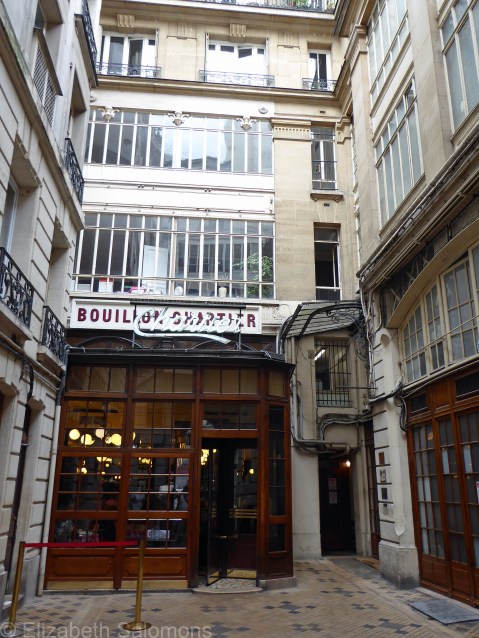
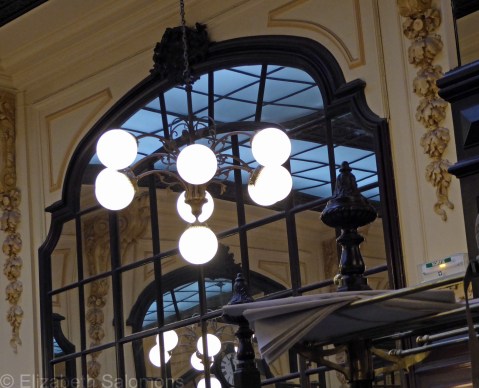
We walked in through the revolving doors and were quickly seated. The décor looked like something out of a Belle Époque movie set, with coat racks set high above a cavernous room lined with mirrored walls and filled with endless rows of tables lit by giant globe light fixtures.

Soon our black-vested, white-aproned waiter came to take our order, which he scribbled down on the paper tablecloth. He was polite, friendly, and extremely patient as I gave him our order in my poorly enunciated French. As soon as he walked away, my nieces turned to me in shock.
“He wasn’t rude!” they exclaimed.
So far, so good. I was hopeful.
But then our food arrived within minutes. “Uh oh,” I thought. “What’s going on here?” We wolfed down every bit of it, however — we were hungry — and some of it was very good, and some of it, well, was not so good.

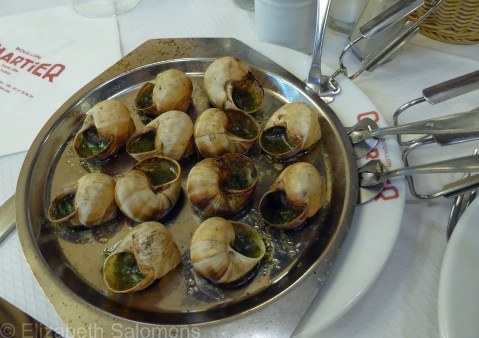
The girls were keen to try the escargot — they were in France, after all — which were served à la Bourguignonne (in the Burgundy style) with heaps of parsley and garlic butter. They went fast, and we used the most excellent bread to mop up every last bit of butter that remained.
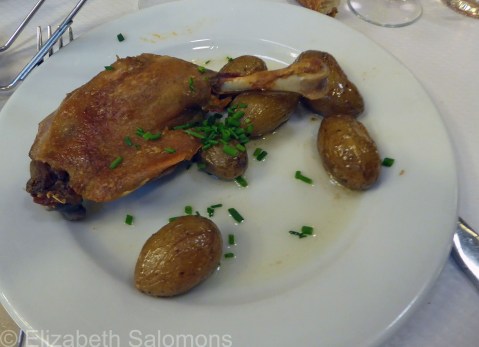
I had confit de canard (duck), which I have to say was a bit tough. My pasta-loving niece ordered spaghetti bolognaise, which she told me later had been cold, and my oldest niece ordered poulet fermier rôti avec frites (roasted chicken with fries), which apparently was unseasoned.
So much for impressing my nieces with excellent French cuisine. However, as I already said, we all of us cleaned our plates and you can never go wrong with French bread and wine. We decided not to have dessert as our next destination was a pâtisserie. Our waiter added up our bill on the paper tablecloth, and that was that.
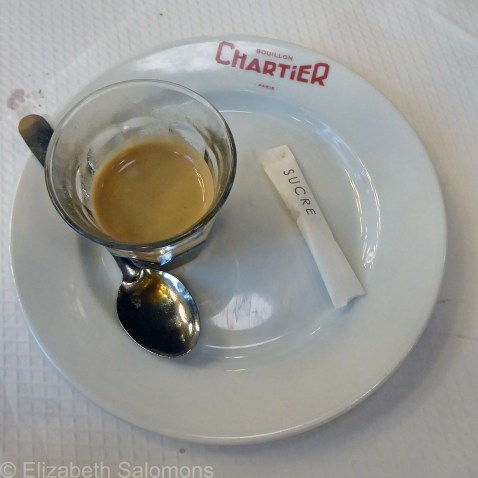
Bouillon Chartier, I’ve learned, is indeed a Parisian institution, as my Parisian friend promised me it was. Parisians and tourists alike flock here, and when we left, there was a line leading out of the courtyard all the way to the boulevard. I’m told the line moves fast, and given how quickly we were served, I believe it.
Bouillon means “broth” and was first served in 1855 by a butcher who wanted to provide cheap food for the workers at Les Halles, the original French fresh food market that was moved to the suburbs in the 1970s. The word came to mean the establishment serving the broth, and by 1900, there were more than 250 of these types of restaurants. Only a handful remain today. One of those is Bouillon Chartier, which was opened in 1896 by two brothers named Frédéric and Camille Chartier. Over its lifetime, it has had only a handful of owners. The food hasn’t changed in a hundred years and it is still cheap — the three of us ate for much less than we would have at our neighbourhood brasserie.
I expect I will give Bouillon Chartier another try the next time I am in Paris. My nieces have a lifetime of travelling ahead of them, and I have no doubt one day they will taste French cuisine as only the French can prepare it.
But I also know they will never forget their lunch at Bouillon Chartier in Paris.
Through My Lens: Jardin du Luxembourg
It’s been more than six years since I was in Paris and although it felt like I had never been away, one of the hardest things for me to get my head around this time was the weather.
On my last visit, I struggled to keep warm during a snowy winter that felt far too cold for my thin Vancouver blood.
This time, we were immersed in heat and humidity. Although we were spared the experience of one of Paris’s infamous heat waves, I did wonder which is worse when travelling: being too hot or too cold? I don’t know the answer, but the question is a reminder that weather always plays a factor when forming an impression of a place.
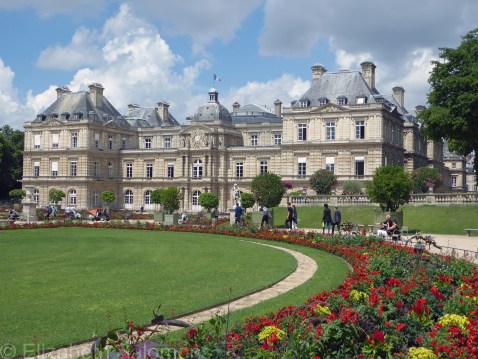
However, this I do know: a definite bonus about visiting Paris in the summertime is being able to see the gardens in full bloom. One of my favourites is the Jardin du Luxembourg, or Luxembourg Gardens. Located in the 6e arrondissement, they were built for Marie de’ Medici, widow of King Henry IV, to go with her new palace, called, appropriately, the Luxembourg Palace. That’s it in the photo. These days, it’s where the French Senate meets.
Through My Lens: Paris Beaubourg

The problem with spending a week in Paris is this: how do you choose which photos to post to your blog?
I mean, seriously.
Remembering Jane Austen
I could not let today’s date go by without acknowledging the bicentennial of Jane Austen’s death. She died 200 years ago today at the age of 41. Bibliophiles around the world are celebrating her legacy and the new British £10 note featuring her image will come into circulation later this year.
Jane Austen lived in Bath between 1801 and 1806 — which is where I took this photo — and two of her novels are set there. I went to Bath because I’m a Jane Austen fan, but the city is well worth a visit regardless of your reading preferences.

Through My Lens: La Tour Eiffel
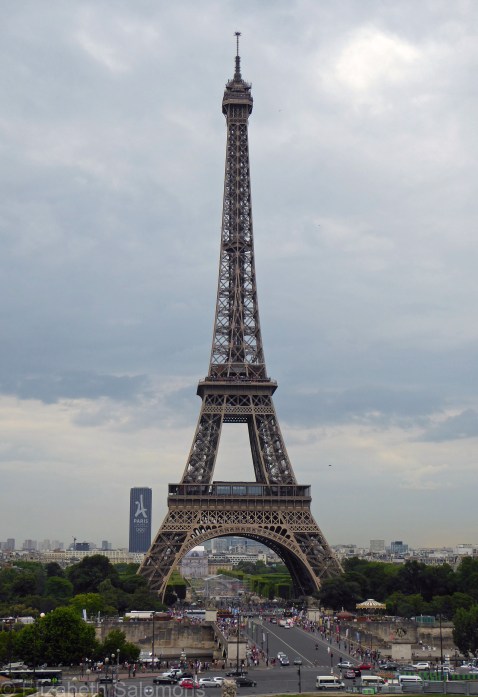
I’ve been in Europe for almost two weeks, and you can be sure I have a few photos to post. But until I get myself organized, this one will have to do.
A week ago today, I left Amsterdam with my two nieces by train and three hours later we were in Paris. But until they were standing next to the Eiffel Tower, they didn’t quite believe where they were.
I took this photo the night of our arrival.
Through My Lens: Bloemgracht

I’ve arrived in Amsterdam, where I am going to be hanging out for a couple of months thanks to my latest home exchange. Here is a taste of what I’ve seen in the past few days. This is Bloemgracht, a small canal in the centre of Amsterdam, very close to where I’m living. Bloem is Dutch for “flower” and gracht means “canal.”
Happy Canada Day!
Here we are, finally. It’s Canada’s 150th birthday.
Except it’s not.
But you all know that, right?
This land we call Canada has been inhabited for tens of thousands of years by the Indigenous peoples, and then by European settlers who came long before 1867. So 1867 wasn’t the start of anything, really, because Canada is much, much older than 150.
What did happen on July 1, 1867, was simply that a piece of legislation came into effect. A piece of legislation passed by the British government and given royal assent by Queen Victoria.
Known as the British North America Act of 1867, that legislation united three British colonies (the Province of Canada and the colonies of Nova Scotia and New Brunswick) into the dominion of Canada, and created four provinces: Ontario, Quebec, Nova Scotia, and New Brunswick.
Sir John A. Macdonald — or Sir John A., as I like to call him — became our first prime minister. That’s him below.
The name “Canada” comes from the Indigenous word kanata, which means “village.” As we celebrate Canada today, let’s make sure we celebrate all of our origins.

Canada 150: Thunder Bay
After Neepawa, the next bit of excitement for my sister and me while on leg one of my cross-Canada road trip was reaching the Manitoba–Ontario border. Our destination was Toronto and so, after passing the “Welcome to Ontario” sign, I turned to my sister and said, “Almost there!”
Ha. Not so much. I had no idea. Turns out it takes just as long to drive across the province of Ontario as it does to drive across the three Prairie provinces. (Funny how it takes actual travel to make distances seem real.)
The first major centre you come to in Ontario is Thunder Bay. And on the other side of Thunder Bay is the Terry Fox Monument. The bronze statue commemorates where Terry Fox had to stop his cross-Canada run after 143 days and 5373 kilometres due to the recurrence of his cancer. That was on September 1, 1980.
Terry Fox died on June 28, 1981. He was 22.

Through My Lens: Sunset at Sunset Beach

And … boom.
No sooner is it officially summer and we’re in the middle of our first heat wave. Heat waves in Vancouver are rare, which means few homes have air conditioning.
Which means I’m awfully warm.
Some friends surprised me with a picnic at Sunset Beach this evening, and instantly I was able to cool down. There’s often a breeze that comes in off the bay, but it also helped that the clouds moved in to block the sun’s heat from us as we enjoyed our meal.
Which means I didn’t take this photo tonight.
But you get the idea. There’s nothing like a picnic on the beach while watching the sun set.
Through My Lens: Music Under the Sun
It’s the first day of summer! Finally!!
This week also marks the start of Vancouver’s outdoor music festival season. The big ones are the Vancouver International Jazz Festival, which starts this weekend, and the Vancouver Folk Music Festival at Jericho Beach in July.
Vancouver is not that different from other Canadian cities in having great outdoor music festivals, but what we do have that is uniquely West Coast are some pretty spectacular settings.
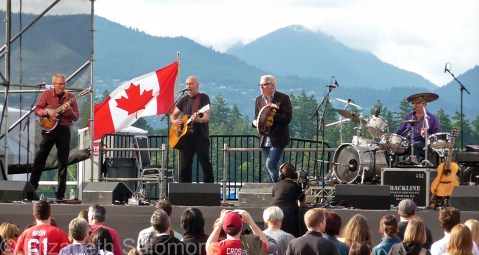
Like the stage at Jack Poole Plaza with the North Shore Mountains as its backdrop. This photo is of Spirit of the West performing on Canada Day a few years ago.


 There and Back Again