
Through My Lens: Église Saint-Eustache
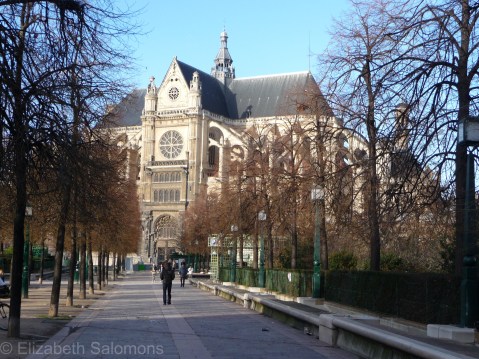
This being the Season of Lent, I think it’s appropriate that I troll through my collection of photos of European churches. For today, the First Sunday of Lent, I’m posting a photo of Saint-Eustache in Paris.
My sister and I discovered this church almost by accident in December 2010 when we set out for shopping and lunch in the 1er arrondissement. We were walking along Rue Montorgueil, somehow ended up on a tiny side street, which turned into an alley of sorts, saw a door, opened it, and suddenly were inside this immense church. Only upon leaving through another exit did we realize how massive it is. This photo was taken from Forum des Halles.
Snowy Owls at Boundary Bay
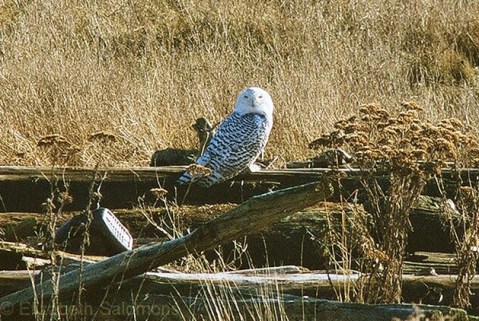
One sunny afternoon a couple of week ago, I headed down to Boundary Bay with my camera. A colony of Snowy Owls has taken up residence on the shores of the bay this winter. They got a lot of media attention when they arrived last December, and I wanted to see them for myself.
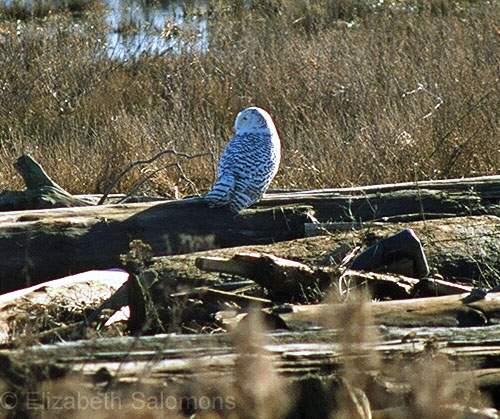
Apparently the owls make a regular appearance on the bay every four or five years. Their migration from their home north of 60° to all points south is linked to the lemming population, which makes up 90 percent of their diet. When the lemming population declines, the snowies head south.
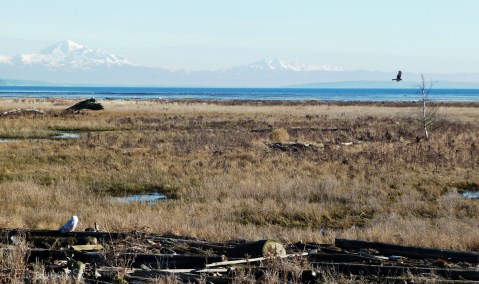
The last time they were seen at Boundary Bay was in 2007.
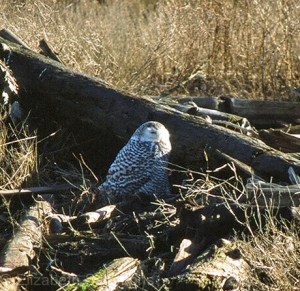 This year, however, the Snowy Owls migrated south in unprecedented numbers. Scientists think the large migration is the result of an abundance of lemmings during the last breeding season, encouraging a one-year “chick boom.” Breeding pairs raised as many as seven chicks, when normally they raise only two.
But then, come winter, there were simply too many owls and not enough lemmings. Thousands of snowies, mostly young and male, have left the north in search of food; they’ve been seen as far south as Oklahoma.
 About 28 are at Boundary Bay, while many others have been spotted all over the Lower Mainland. I counted eight owls myself.
Snowy Owls are up to 70 cm tall and can have a wingspan of about 150 cm, making them one of the largest species of owls.
I haven’t been to Boundary Bay in, well, decades. I’d forgotten how beautiful it is.
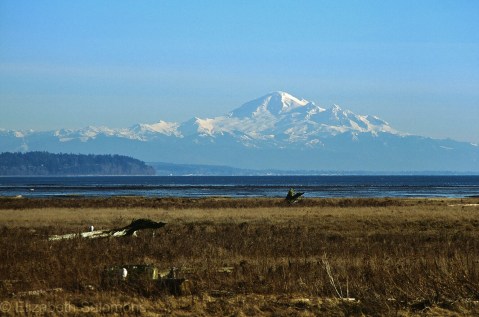
The bay is enclosed by Point Roberts, Washington, and Tsawwassen, BC, on the west; Blaine, Washington, and White Rock, BC, on the east; and Delta, BC, to the north.

It’s an important stop on the Pacific Flyway. I had no idea how serious some birders can be. There were fellows out there in full camouflage, with camera lenses as long as my arm. I wouldn’t have minded a longer lens myself, but, even so, it was a great photo opportunity and I intend to go back.
Through My Lens: Vancouver in Spring
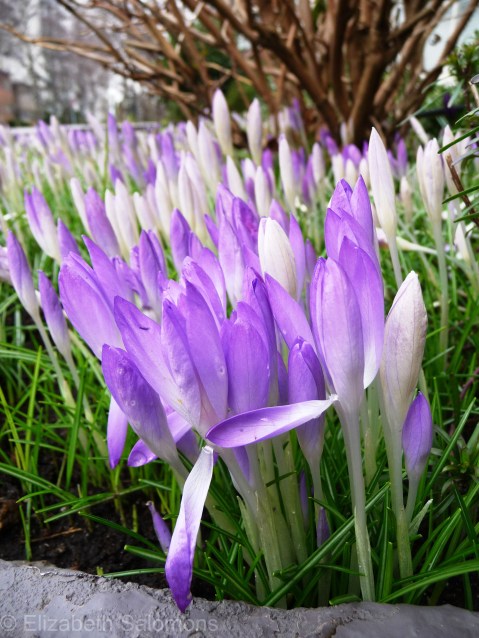
Spring is Vancouver’s longest season. It’s always a bit of a shock to me when I see the first crocuses (I took this photo yesterday), but summer temperatures rarely arrive before the end of June.
Dishing: L’Abattoir

Dine Out Vancouver, which just finished its tenth year, is an annual culinary celebration when Vancouverites get to, well, dine out. The deal is: you order from a three-course set menu for a set price. It’s incredibly good value and lets you try out higher-priced restaurants you might not get to otherwise. And the restaurants that participate benefit as well: they are booked solid for 17 days in the dead of winter.
This year, my friend and I decided to head down to L’Abattoir, rated by enRoute magazine as Canada’s third-best new restaurant of 2011.
L’Abattoir’s French name means “slaughterhouse.” The name is not in reference to its menu, however, but to Vancouver’s original meat-packing district. The restaurant is located in Gastown, just around the corner from Blood Alley, and the building itself stands on the site of Vancouver’s first jail.

The setting is more bistro than fine dining, but don’t let the decor fool you ― there is nothing casual about the food at L’Abattoir. Chef Lee Cooper’s menu is French-influenced West Coast ― a description heard frequently about Vancouver’s best restaurants.
I ordered a starter of poached egg over potato gnocchi with a leek, mushroom, and pecorino sabayan. The combination of egg and gnocchi was unique and a nice surprise upon first bite, although I would have preferred it if the yolk had been slightly softer. The sabayan was light and airy and not too cheesy. I really enjoyed the dish. To be honest, the country-style pork patê on toast ordered by my friend looked a bit dull in comparison.
Next was a spicy chorizo–crusted Pacific cod over white beans cooked in red wine. The cod was perfectly moist and the texture and flavor of the chorizo crust added a nice kick to the fish. My friend enjoyed her roast tenderloin with ravioli stuffed with braised lamb shoulder; the combination of red meats worked really well.

Each course was paired with an Okanagan wine ― a crisp cold Tantalus Riesling for the starter and the 2008 “Adieu,” a pinot noir from Le Vieux Pin, with the entrées. We both ordered the chocolate caramel bar with banana ice cream and chocolate yogurt ― the most popular dessert on the menu, according to our server.
Innovative décor + good wine + excellent food + impeccable service = a delightful evening. I’ll be back.
Through My Lens: Paris Sous la Neige
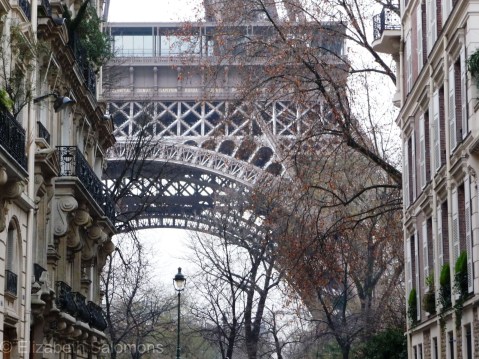
Europe’s Big Freeze continues, and yesterday, it snowed in Paris. “Paris sous la neige” means “Paris under the snow.” I took this photo last winter.
Český Krumlov
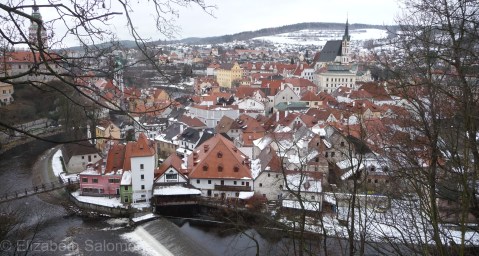
More than 100 people have died from the extreme cold experienced throughout Central and Eastern Europe this week. The news reminded me of my apprehension last winter after booking a weekend visit to the Czech Republic. I really wanted to see Prague covered in snow, but as the calendar inched closer and closer to my departure date, I started to have second thoughts. Would I spend the entire weekend ducking from café to café, trying to keep warm? I tracked the daily highs in Prague. They were averaging –10 °C ― a bit chilly for my thin Vancouver blood!
And then, the day before I was to fly from Paris to Prague, France was hit with a massive snowstorm. Flights at Charles de Gaulle airport were cancelled left, right, and centre. I began to doubt I would make it out of Paris. While travelling around Europe in winter does have its benefits, there are some serious drawbacks, too, particularly when the weather doesn’t cooperate.
However, my flight did leave the next afternoon … eventually … and after two delightful days in Prague, I took a bus through the Czech countryside to Český Krumlov (ches-key krum-lof).
Why Český Krumlov, you ask? I first heard of the town from some classmates the summer I spent in Prague. They had gone for the weekend and raved about how pretty it was. Several years later when my sisters were planning a train-pass trek around Europe and told me they intended to stop in Prague, I suggested they visit Český Krumlov as well. “I’ve heard it’s beautiful,” I told them. It ended up being one of their favourite stops on the entire trip. I repeated the recommendation to some friends a few years after that. They too told me the day they spent in Český Krumlov was the best of their European vacation.
I was beginning to realize I had missed out by not visiting the place myself.
But here I was. Finally.
I was the last person off the bus. After grabbing my bag, I stopped the bus attendant before she jumped back on the bus. “Which way to the Old Town?” I asked. “Over the bridge,” she said, pointing, and then she disappeared and the bus pulled away.
I walked over the bridge and headed into town. I knew Český Krumlov wasn’t a big place, but it was a little disconcerting not to see any tourists, not even a local. But this is one of the advantages of travelling in Europe in the middle of winter: you get the place all to yourself.
I reached the castle, where I popped into the tourist information centre to get a map. I asked the girl at the counter to point out exactly where I was, and where I needed to go, and then I continued on my way. I soon reached the Old Town Square and then, after only one or two wrong turns, Penzion U Náměstí, where I had a reservation for my two nights. U Náměstí means “at the town square.”
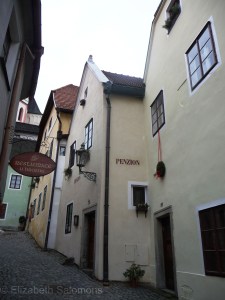
My pension was housed in a building dating back to 1530.
On my arrival at the pension, I discovered another advantage of travelling in winter: fabulous accommodations are available for fabulous prices. My attic room (a double, but I paid the single rate) was the largest room I’ve ever stayed in, by far. It was furnished with a queen-sized bed, an armchair, a loveseat, two coffee tables, and a small TV with satellite. The toilet and bathroom were off the little hallway leading into my room; at the end of this hallway was the door to my room. It felt like a suite. I was offered my choice of hot or cold breakfast served in my room at whatever time I chose. And (bonus!), there was a skylight over my bed so I could listen to the snow fall.
I spent the afternoon wandering around and orientating myself. Český Krumlov is a small town in southern Bohemia, one of the three historic provinces of the Czech Republic. Located about 180 kilometres south of Prague and 40 kilometres north of the border with Austria, it was founded in the early thirteenth century and is now a UNESCO World Heritage Site. Like Prague, the town is built around the castle that towers above it. Český (Czech) distinguishes the town from Moravský Krumlov.
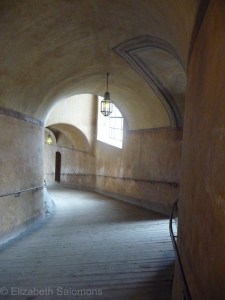
One of the corridors between courtyards in the castle
For lunch, I bought myself a trdelník ― a sweet pastry baked over hot coals and sprinkled with sugar and nuts ― from a shop selling the treats through a window. There was a small Christmas market in the Old Town Square with stalls selling ornaments and crafts made by local artisans. Much glühwein was consumed ― I had to keep warm, after all!
The next morning, I wandered up to the castle and spent several hours exploring it. The interior is closed for the winter (another drawback of travelling in the off-season), but much of the mile-long castle grounds, including five courtyards, are open to the public year-round. The tower of the Little Castle offered great views over the Old Town, as did the seven-level Cloak Bridge.

The Cloak Bridge
I spent the afternoon at the Egon Schiele Art Centre. Schiele was a student of Gustav Klimt’s. His mother was from Český Krumlov, and he himself lived there for a time. I can’t say I’m a big fan of his work, but I learned something new (which for me is the whole point of travelling) and I appreciated having a warm place to spend the afternoon.
In the evening, I enjoyed an Advent concert of local schoolchildren in the Old Town Square. It was great fun watching the children trying to sing while wrapped up snuggly in their winter coats, scarves, and hats, and many proud parents were gathered before the stage. I only lasted about a half hour though before I started to get very cold.
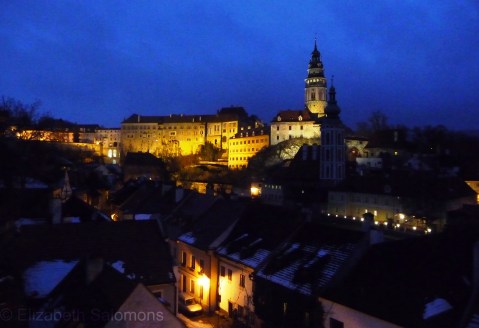
Český Krumlov Castle floodlit at night
As I settled my bill with the pension owner the next morning, I commented on the cold weather, and she said, “But I think Canada is much colder, yes?” I didn’t have the heart to tell her I live in a city with a much more temperate climate than Central Europe. I thanked her for the great accommodation, then wandered off to the bus station to wait for the bus that would take me back to Prague, From there, I caught my flight (delayed again!) back to Paris.
If you’re willing to put up with the travel delays that are inevitable in cold winter climates, and don’t mind wandering about a strange town in inclement weather, then I highly recommend travelling to Europe in the winter. There were few other tourists in Český Krumlov that weekend ― a large tour group of Asians seemed to be the only other guests ― and lower demand for accommodation means great deals. Granted, I really lucked out with the weather. It was cold enough for snow flurries, but warm enough (about –3 °C, I think) to walk for hours. The fresh snowfall made for some memorable photos, but I shudder to think how cold I might have been had the temperatures dipped to the levels they have been this week in that part of the world.

Český Krumlov with a coat of fresh snow
Home Exchanging 101
So many people have asked me how I got into home exchanging that the topic deserves a blog entry all on its own. Home exchanging is exactly what it sounds like: you exchange homes with another person who lives in a different city or country from your own. Now, if you’re the type of person who gets uncomfortable (Baby Bear–style) at the thought of someone sleeping in your bed or eating from your porridge bowl, then home exchanging is probably not for you. If not, then read on.
I started home exchanging the year I wanted to meet up with family members in Amsterdam in August, and then join some friends for a long-planned trip to Italy in October. I couldn’t afford to fly back and forth. Since I can work anywhere I have an Internet connection, I looked into renting an apartment for the month of September. That, too, was a bit beyond my budget, so I signed up with a home exchange site. These sites typically charge you a fee for posting your profile, but everything about the exchange is arranged privately between you and your swap partner. I posted my photos, wrote up a description of my home and a few details about my neighbourhood, and then … I waited.
I was shocked and pleasantly surprised to receive my first home exchange offer within days. After some back and forth negotiations and a phone call, my partner and I agreed to exchange for a month. Both of us were “home exchange virgins,” but speaking with him on the phone helped alleviate any concerns I had.
The key to home exchanging is to be flexible. I had dreams of spending a month in a Parisian garret, but “settled” for my first offer ― a house in Zaandam, only a twelve-minute train ride from Amsterdam. I say “settled,” but it wasn’t, really. It was a great offer. I spent four weeks in that house, and then went on to London where I’d arranged a swap with a couple who had a family wedding in Vancouver. Since then, I’ve done four more exchanges. Not all of them were long term or overseas ― a friend and I once spent a weekend in Portland, Oregon, and my closest exchange was in Victoria, BC.
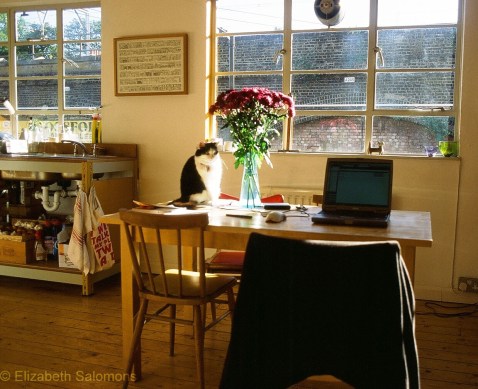
My temporary home in London
Home exchanging is perfect if you’re interested in experiencing a foreign city “as the locals do.” I loved shopping in the supermarkets of London’s East End and in northeast Paris ― far from the tourist zones ― and commuting home at the end of a day of sightseeing along with the Londoners and Parisians heading home from their offices. That’s not to say all home exchanges are out in the suburbs ― far from it. One of my exchange homes in Paris was only a ten-minute walk from Notre Dame.
Obviously, the other benefit of home exchanging is having free accommodation. That’s not to say you don’t have to do a bit of work. I use each home exchange as an opportunity to do a massive spring cleaning and to make sure everything in my home is in good repair. On the other end of the exchange, you have to clean your partner’s home before you vacate it. The deal is you each leave the other home exactly as you found it.
Keys are exchanged in person, sent through the mail, or left with a neighbour. I prefer to meet my fellow exchangers in person, simply because they are all such interesting people, but when circumstances don’t allow it, I can’t say not meeting my exchanger detracts from the experience.
Still interested in home exchanging? Here are a few things I’ve learned over the years:
1. There are dozens of home exchange sites out there; choose one that suits your interests and needs. Some, for example, cater to particular types of travellers, such as teachers and academics who have similar holiday schedules. Be sure to do some sample searches to make sure the site you sign up with has enough listings in the areas you’re interested in travelling to. I thought it would be easier to find a long-term exchange with another single person, so I signed up with a site that caters to singles. However, the site had so few listings that I received only one offer through it, whereas I’ve had dozens of offers through a second site I signed on with. Guess which one I’m still with?
2. Read each profile carefully before sending an exchange offer. I was surprised to get an offer from a family who wanted a house with a pool ― clearly they hadn’t read my profile! I myself have learned not to contact people with school-aged children because my preferred travel time is in the fall, when kids are in school.
3. Think of ways to make your offer sound more attractive. If you have a young child, advertise your home as baby-friendly to make it more appealing to other young families. Like animals? Offer to cat- or dog-sit if your potential swappers have a pet.
4. Be flexible and plan ahead. I can’t emphasize this enough. Arranging a home exchange is not like booking a hotel. If the location is important to you, offer a lot of flexibility in timing. If getting an exchange for a particular date is critical, be open to locations that might not be on the top of your list. When I was searching for an exchange in Portland, I had specific dates in mind. To sweeten the deal, I offered my potential swappers the choice of staying in my home during the weekend I wanted to stay in their house, or for an entire week in the summer when I was going to be away visiting family. They took the week and arranged to visit a daughter who lived out-of-state the weekend I and my friend stayed in their home. They thought they got the better end of the deal, but I was happy because I got my swap on the exact weekend I wanted.
5. Be clear about all expectations. Are long-haul flights involved? Confirm your dates before booking flights and, after booking, confirm your flight dates and times with your swap partner. Want to have friends or family members visit you at your swap home? Ask for permission before you invite guests to stay for a weekend or longer. Under what circumstances would either of you back out of the exchange? Make sure you have similar expectations about what you would do and what you would offer in compensation. After four successful, problem-free exchanges, I was shocked when a home exchanger told me I’d have to vacate her Parisian flat only days after my arrival. We had agreed to a three-month exchange, but hadn’t discussed any what-if scenarios. When personal circumstances required her immediate return to Paris, I had to find a new place to live ― or return home. Fortunately, I found another suitable home exchange within a week, but that was a close call on my part. In future, I will be much more careful about discussing all aspects of the exchange with my swap partner.

My Parisian kitchen
6. Once you agree to a swap, prepare your home. Put away any belongings you don’t want your swappers to use. Make sure everything is in working order. Leave written instructions for how to access the Internet, and how to use the TV, stereo, and appliances. Leave an emergency contact number. Make some room in your closets and clear out a dresser drawer or two, especially if it’s a long-term swap.
7. Be a good host. Leave plenty of brochures and perhaps a guide book of what to see and do in your home town. I also provide transit schedules and take-out menus.
8. When you arrive at your home exchange, expect to be a little self-reliant. There’s no concierge to call when you can’t figure out how to turn on the stove or if the hot water goes off. Also, after swapping with bachelors (twice), I’ve lowered my expectations about what a well-stocked kitchen contains.
Now, if you’ll excuse me, I have to reply to my latest exchange offer: a beach house in southern California for eight weeks next summer.
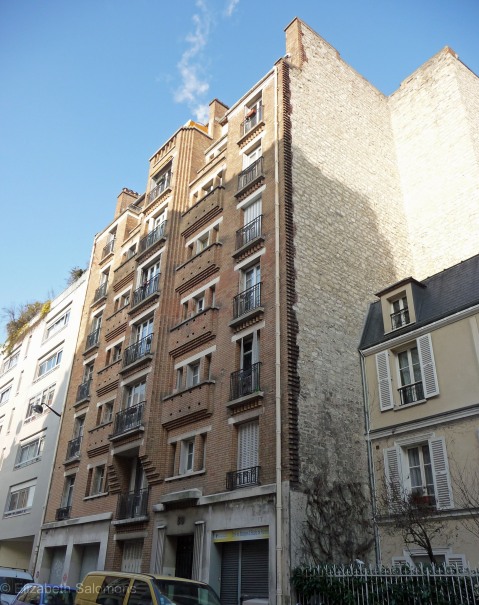
The exterior of my building in Paris
Through My Lens: Prague in Winter
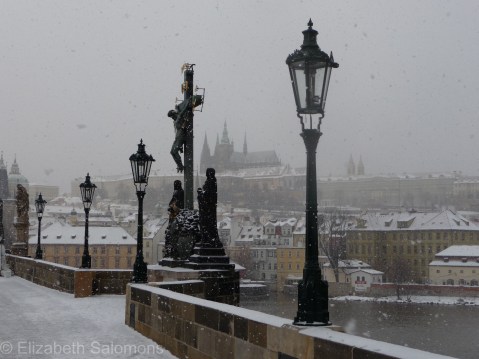
Many summers ago, I spent four weeks in Prague. Some years later, I came across a photo of the Charles Bridge and the Castle covered with a fresh blanket of snow. I don’t know if it’s because I’m Canadian, but I immediately said to myself, “Someday, I’m going back to Prague and I’m going in the wintertime. I want to see it with snow.” I finally got my chance last winter.
I took this photo on my first morning. It was snowing lightly. I felt like I had walked into a fairy tale.
Through My Lens: Stanley Park in Winter
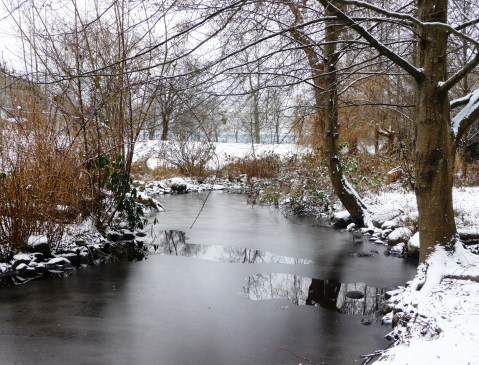
Vancouver received a blanket of snow this week. It doesn’t happen often and it never lasts long, but when it does, it’s awfully photogenic.
Mark Twain
Twenty years from now you will be more disappointed by the things you didn’t do than by the ones you did do. So throw off the bowlines. Sail away from the safe harbour. Catch the trade winds in your sails. Explore. Dream. Discover. ― Mark Twain


 There and Back Again