
On Safari in the Kalahari
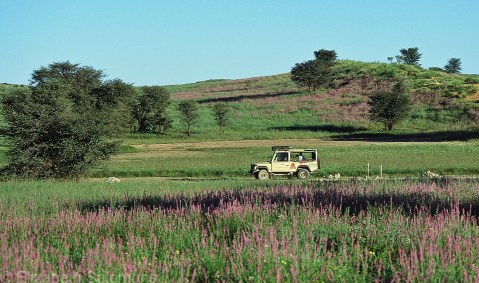
“This must not be your last time.”
So said our safari guide near the end of our time in the Kalahari and near the end of our safari ― my first ever. Never, in all my travels, did I think I would ever get the chance to go to Africa. Never, in all my dreams, did I think I would ever go on safari.
But when a friend who just happened to be travelling to South Africa invited me to meet up with her, I jumped at the opportunity. After I had worked out the details of how and where we would meet, my next step was to arrange a safari for us.
And here’s the first thing I learned: when you type the keywords “South Africa” and “safari,” the destination at the top of the list is the Kruger. Safari-goers like to talk about checking the Big Five off their list (Big Five = lion, leopard, rhino, elephant, and buffalo) and Kruger National Park, the largest game reserve in South Africa, has all of these and more. Plus, it’s conveniently located near Johannesburg. Which makes the Kruger a popular safari destination.
But with a little more digging, other choices are discovered. I began reading about the Kalahari in the northwest part of South Africa, near the Botswana and Namibia borders. It’s more remote, so it takes a lot more schlepping to get there, but I was intrigued by the descriptions of its landscape.

My friend said the choice was up to me. I went all pragmatic and made a list of pros and cons. The two options came out dead even, so I was right back where I started.
I then sought the advice of a co-worker who had grown up in Zimbabwe and had spent a lot of time in South Africa. In the end, my choice came down to her warning that, because we were going to be there in February, at the height of the rainy season, the foliage in the Kruger might be so lush and full we ran a fair chance of not seeing any game at all.
That settled it. We were going to the Kalahari.

Following a recommendation from my trusted Lonely Planet, and after several emails back and forth to South Africa, I booked us on a six-day camping safari with a small family-run operation out of Upington in the Northern Cape, the largest and least populated province in South Africa. Our safari would take us to Kgalagadi Transfrontier Park, a game reserve that straddles the border of South Africa and Botswana.
And so, on the appointed morning, our guide picked us up at our guest house in Upington. Introductions were made all around. There were only four of us on this safari and our companions were the best we could hope for: two Germans who never stopped laughing or joking around and destroyed every stereotype I ever had about Germans. By lunchtime on our first day, my friend and I realized they were going to be a lot of fun. (What was almost unbelievable, given how well they got on, is that this couple had never met before our safari.)
And our South African guide not only took very good care of us, he was a gifted tracker and a wise man. I enjoyed his stories immensely ― and I am pretty sure he enjoyed ours.
Upington to Kgalagadi Transfrontier Park is a bit of a trek and it took us most of a day to get to our first campsite. The roads inside the park are unpaved and covered in sand (which we soon learned makes them an excellent surface for tracking!).

A typical road in Kgalagadi Transfrontier Park
We also soon learned that these roads were prone to flooding because (1) it was the rainy season and (2) they follow dry river beds. Flanking the edges of these river beds were dunes. The day we drove cross country from the Nossob River bed to the Auob River bed gave us a marvellous roller-coaster ride over waves of dunes that rippled the landscape before us.
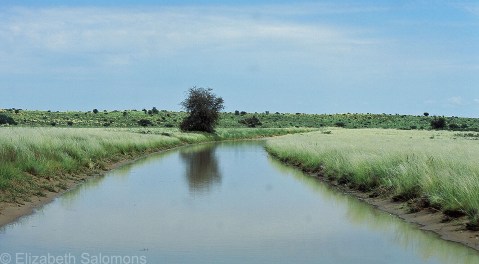
As it was the rainy season, some of the roads were completely flooded
We spent three nights camping in Botswana, in basic, unfenced campgrounds. (Basic = pit toilets and no running water. Unfenced = absolutely no leaving the tent at night without waking our guide.) There were two tents for the four of us paying customers that we quickly learned how to put up and take down ourselves. Our guide slept in a smaller tent or, when it was too windy, the back of the SUV.
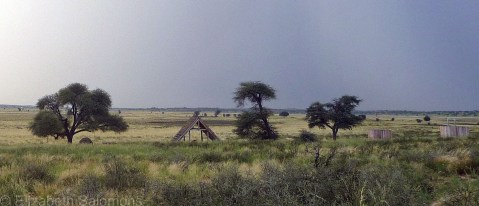
An unfenced campground on the Botswana side of Kgalagadi Transfrontier Park. You can just make out our tents below the camel thorn tree at far left.
The other two nights we camped in South Africa, in full-service campgrounds that included a gas station, small store, showers and flush toilets, and a high fence encircling the entire campground. The gates were closed from dusk to dawn, but by 6 a.m. each morning there was always a line-up of SUVs eager to start their game drives.
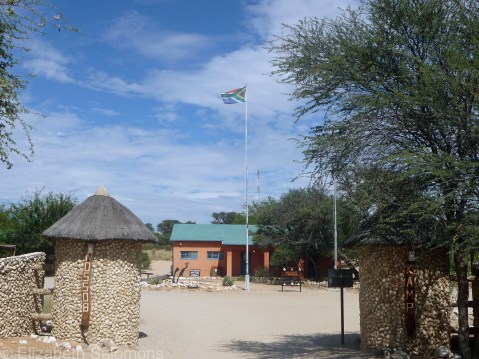
The entrance to a fenced campground on the South African side of the park
Our daily routine was rather basic. At 6:00 a.m. sharp, our guide gently woke us by calling out “morning, morning, morning.” At that hour it was scarcely light enough to see without a flashlight, but mornings were the best time to see game, so we wanted an early start.

Our evening ritual: the braai. Our guide stacked the wood to about knee-height, then lit it and let it burn down to coals. Only then was it ready for grilling meat.
Once we were on the road, we stopped anytime we saw game. On the days we moved camp, we’d reach the next campsite by early afternoon. On days we weren’t moving camp, we still went back to the campsite for the height of the afternoon as there was little to see in the way of wildlife at that time of day. There would be another game drive in the late afternoon/early evening, and then back to camp for our sundowners (gin & tonic were our drink of choice) and dinner: always a braai (Afrikaans for “grill”) prepared and served by our guide.
My safari experience, to put it simply, far exceeded my expectations and then some. I loved the landscape ― I blame my love of flat horizons on my Prairie upbringing ― and I loved the early mornings at dawn when the world was cool and soft. Although the Kalahari is a desert, the daytime temperatures never seemed overwhelming ― again, my Prairie temperament loves a dry heat.
As far as the main attraction of the safari went, my expectations were exceeded and then some as well: two cheetahs, 14 lions (three of them cubs), and springbok, gemsbok, blue wildebeest, and red hartebeest, including fawns and calves, by the herdful. Lots of birds as well. A handful of giraffes. A couple of jackals. And of course the barking geckos who serenaded us every single night.

A barking gecko
As we were driving back to Upington on our last day together, we teased our guide about the stories he would tell his next group about all our antics. He laughed along with us, but then turned serious for a moment and looked right at me and my friend. “This must not be your last time,” he said earnestly.
Never, in all my travels, did I think I would ever get the chance to go to Africa. Never, in all my dreams, did I think I would ever go on safari.
I can only hope and dream that I will get the chance again.
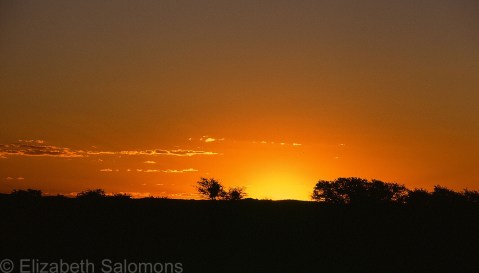
Kalahari Sunrise
So, here’s a thing: it wasn’t until after my African safari that I realized I wanted to do more with my photos than simply post them on Facebook. I also wanted to tell the stories behind the photos. Starting a travel blog seemed like the natural next step in my social media evolution.
But here’s another thing: even though it was five years ago this month that I was on that safari, and even though I am well into my fifth year of posting to this travel blog, I have yet to write about that safari.
So consider this a heads-up: my Kalahari safari will be the focus of this blog over the next few weeks months. If Africa and animals aren’t your thing, feel free to tune out for a couple of weeks.
To get us started, here’s a photo I took just before sunrise at one of the watering holes we camped beside.

Salt Spring Island Fall Fair

Yup. It’s another cow.
And no, this hasn’t turned into a Bovine Blog.

I took these photos a couple of weeks ago at the Salt Spring Island Fall Fair. My friend had been urging me to come over for the island’s annual fair, which, she claims, is the social event of the year for Salt Spring Island.

“Will there be cows?” I asked.
“Yes,” she said.
“I’m there,” I said.

Salt Spring Island has a long history of farming ― the island was first known for its fruit harvests, then the dairy and poultry farmers arrived. These days, Salt Spring is famous for its lamb …
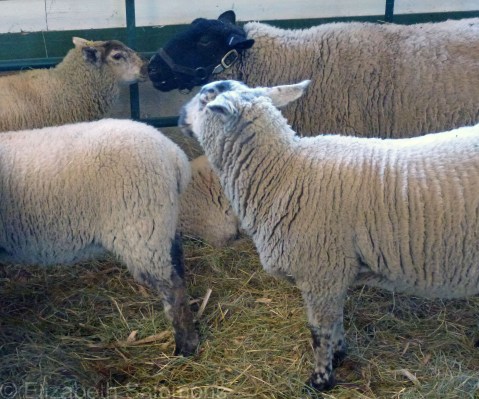
… and for its cheese made from goats’ milk.

In keeping with that history, the Salt Spring Island Fall Fair has been an island institution since 1896. This year’s theme was Celebrating Family Farming to coincide with the United Nations declaring 2014 the International Year of Family Farming. (I so wish I had made it to last year’s fair: its theme was Pirates of the Carrots and Beans.)
It seems like everyone on the island has something to exhibit at the Fall Fair ― from livestock to produce to baked goods to flowers to handcrafts.
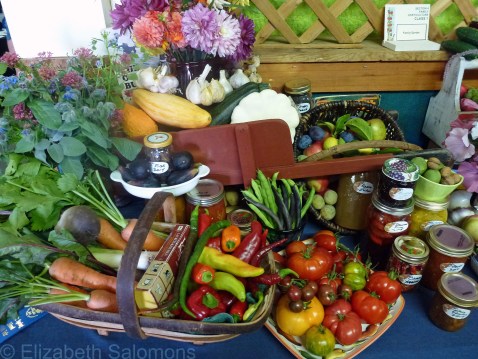
Although the sheepdog demonstration was fascinating and the zucchini races were, um, unlike any race involving green vegetables I’ve ever seen, my favourite event was the sheep shearing.
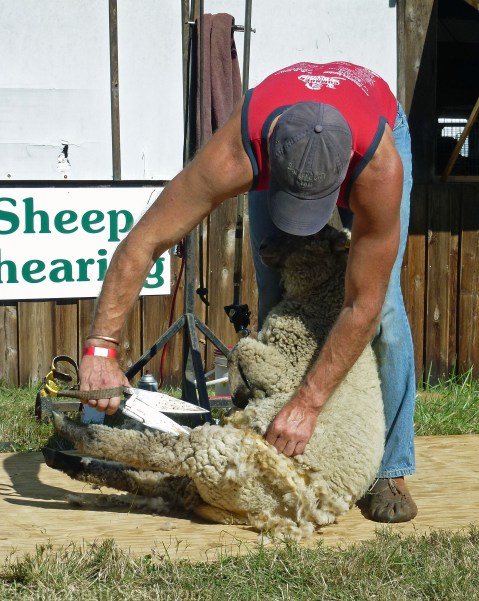
The shearer showed us how shearing used to be done ― with a big, shiny pair of blade shears …

… and then he showed us how it’s done today ― with powered machine shears.


The Salt Spring Island Fall Fair takes place every September. If I’m feeling in a year that my blog needs more cow photos, I now know where to go.
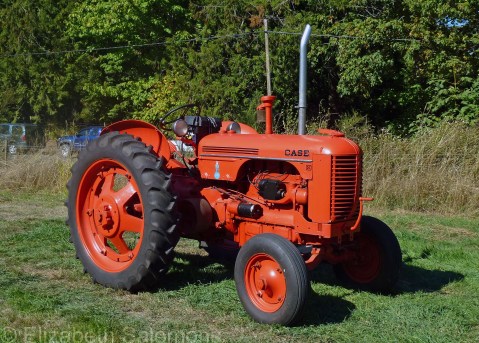
Through My Lens: Irish Cow

Now that I have cows on my mind, I can’t resist posting this photo. This cow was happily munching away when I rode past her, again on a bike, but this time in Galway, on the west coast of Ireland.
(And no, I did not lie on the ground to take this shot — the road and pasture were at slightly different elevations, about four feet apart. At the bottom left of the photo, you can just see the top of the stone wall that lined the road my friend and I were cycling along.)
Echte Nederlandse Koe
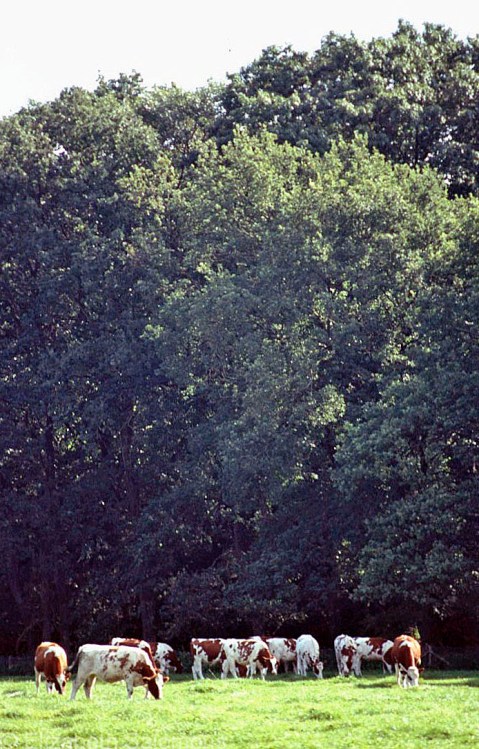
I’ve taken the train from Paris to Amsterdam many, many times. One of those times, I spent much of the journey eavesdropping on the idle talk of a Dutch couple sitting behind. From the way they spoke to each other, I surmised they might be brother and sister.
I’m by no means fluent in Dutch, so much of their conversation was way over my head. Except for shortly after we crossed the Belgium–Dutch border, when the woman said something I understood perfectly.
Nu is ere en echte Nederlandse koe. (Now there is a real Dutch cow.)
I smiled to myself. Could a cow seen from the window of a high-speed train possibly look more Dutch than Belgium or French? Really?
Really.
I knew what she meant. She was home ― back in her own country ― and everything looked familiar again. Oddly enough, I’ve always had the same feeling when travelling to the Netherlands from somewhere else by train ― only because, out of all the countries in western Europe, the Netherlands is the most familiar to me. It’s not my home, but crossing the Dutch border always feels like a home-coming of sorts.
I took the above photo while cycling through the Dutch countryside just outside of the city of Arnhem ― only because these cows struck me as particularly fine-looking specimens of Nederlandse cows.
Velella Velella
While my family and I were checking out the surf conditions at Long Beach the other weekend, we came across dozens of these.
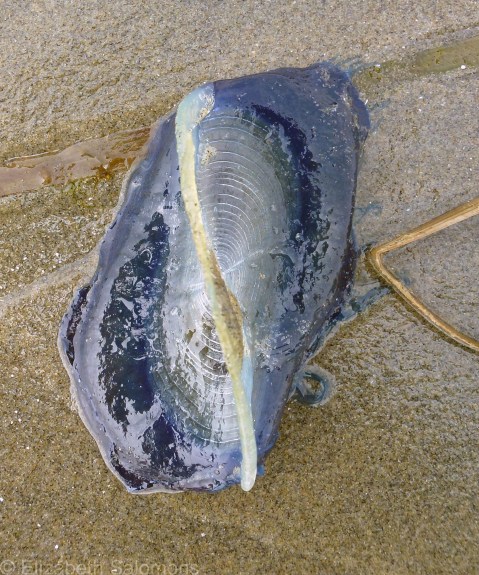
They’re velella velella ― a small animal about the length of my index finger. Related to the jelly fish, they are normally found hundreds of miles off shore. For some reason, they are sometimes washed ashore, which is what happened the other weekend on the beaches near Tofino. According to Tofino’s mayor, a marine biologist, it is a rare, but completely natural, event.
How cool that it happened the weekend we went to Tofino. (And how cool is it that Tofino’s mayor is a marine biologist?)
And Then There Were the Reptiles
Wanna know the No. 1 question I’ve been asked about my trip to Florida?
“Did you see any alligators?”
Why, yes, yes I did.
Although they are not nearly as photogenic as my feathered friends, I found Florida’s reptiles equally fascinating. I suppose the simple reason for that is because native reptiles are few and far between in my neck of the woods.
We do have snakes in Canada. And I saw a snake or two in Florida, which I found somewhat interesting.
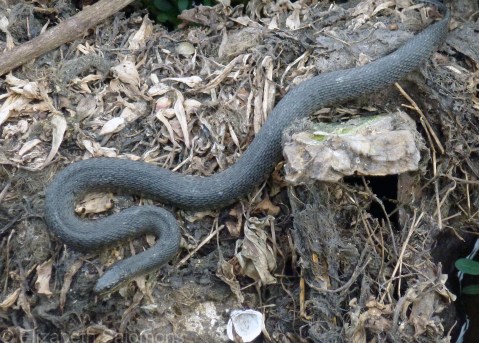
But we don’t have geckos, which I found adorable.

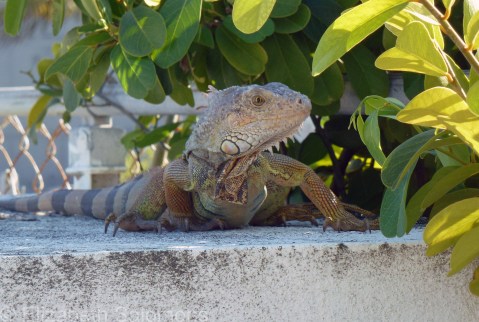
And we don’t have iguanas, which I found mesmerizing.

And we certainly don’t have alligators. (In case you can’t tell, all the floating logs in this photo aren’t. Logs, I mean.)

Here’s what one of those logs looks like up close.

What I really don’t get is why people would want to canoe right up to one of those floating logs.
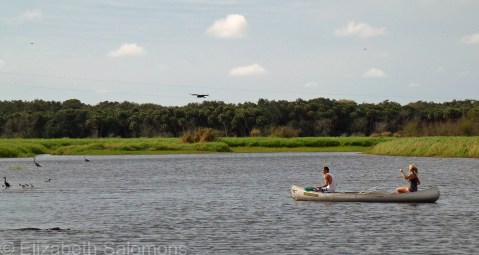
I suppose it’s no different than me sleeping in a tent in the middle of the Rockies knowing full well that bears tend to wander around campsites just before dawn.
Sleeping with bears? Canoeing with alligators?
Bears? Alligators?

I’ll take my chances with the bears, thank you.


 There and Back Again