
Through My Lens: Misty Mountain

November is notorious for being wet and windy in Vancouver, but we skiers don’t care. The more rain in the city, the more snow on the mountains. But this has been an unusual November in that the weather has been cold and clear for several weeks now. (Naturally, “cold” in Vancouver is relative; it’s hovering around 0°C most mornings ― quite balmy by Canadian standards.)
Turns out that cold and clear is perfect snow-making weather. Machine-made snow makes an excellent base, so as long as it doesn’t warm up when it (inevitably) starts to rain, we’re looking at a pretty good ski season. I can’t wait.
Someone must have known that, because this weekend the local mountains opened for the season.
The above photo was taken from Mount Strachan at the Cypress Mountain ski resort.
Reifel Bird Sanctuary

A couple of Sundays ago, I called up a friend.
“The snow geese are in town!” I said. “Let’s go check them out.”
And off we went.
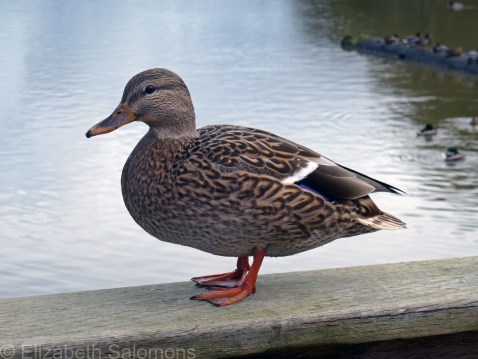
Our destination was the Reifel Bird Sanctuary on Westham Island at the mouth of the Fraser River. My friend and her daughter are frequent visitors; they came well prepared with little bags of bird seed ― one for each of us. (You can also buy seed at the entrance for a dollar a bag.)
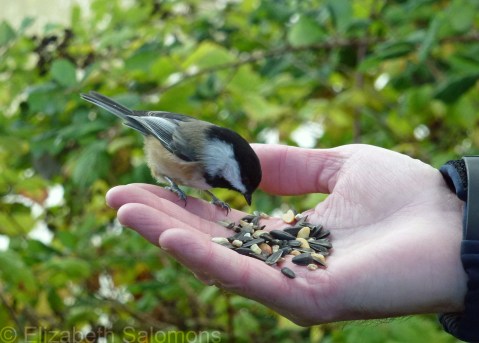
Within minutes of our arrival, we had Black-capped Chickadees eating out of our hand.
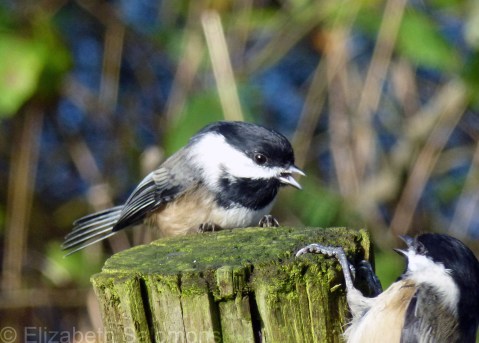
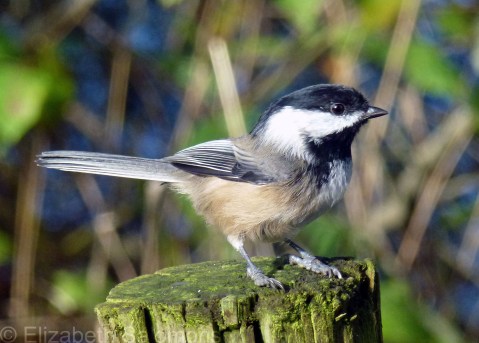
We saw a lot of waterfowl. Like these Wood Ducks.

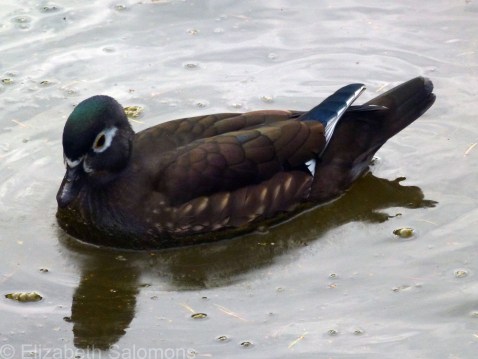
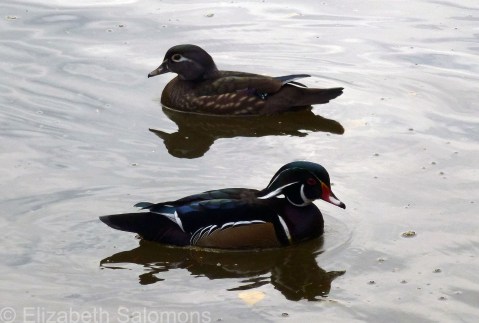
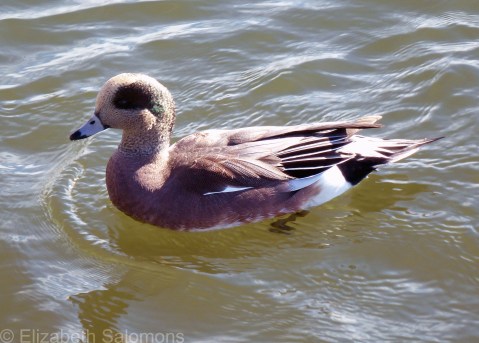
And these American Wigeons.

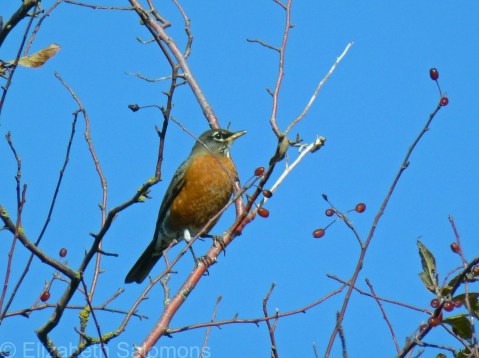
American Robins, too.
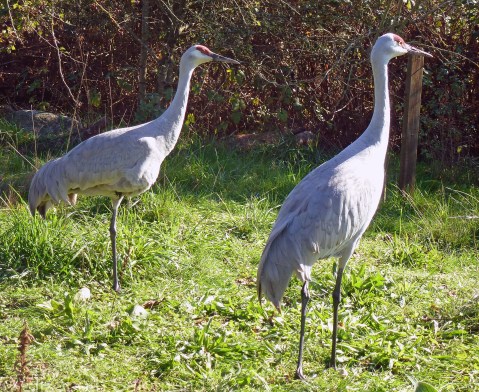
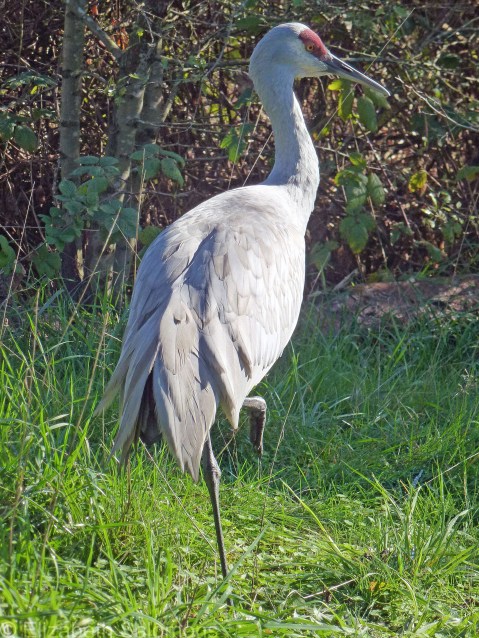
There were Sandhill Cranes.
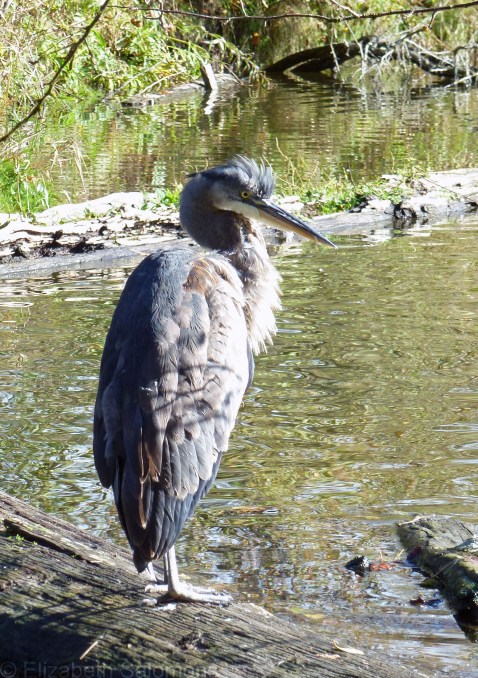
And my old friend, the Great Blue Heron, was there.
We did see our snow geese (a gaggle of them), congregated on a muddy field (as they are wont to do) just outside of the sanctuary. They attracted numerous photographers (a clique of them), all of us gathered on the road that bordered the field, cameras at the ready.
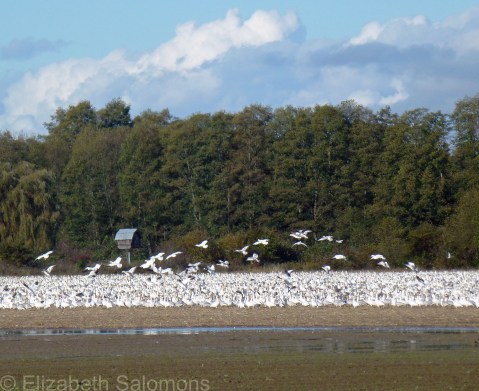
The Lesser Snow Geese spend their summers on Wrangel Island in the Russian Arctic and their winters in the Fraser and Skagit River estuaries. My friend lives just on the other side of the river from the bird sanctuary, and she told me the snow geese are frequent visitors to her daughter’s school. The kids have to be kept indoors on days when the snow geese decide they want to hang out on the school’s playing field. (Every Canadian knows what Snow Days are, but who knew there were Snow Geese Days?)
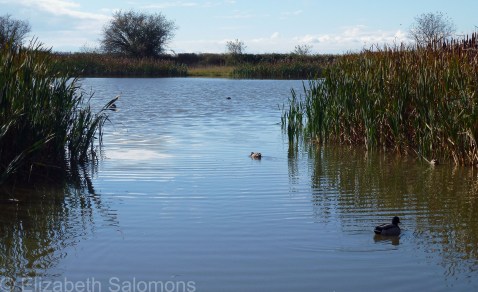
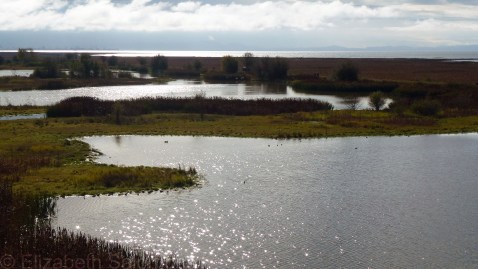
The George C. Reifel Migratory Bird Sanctuary consists of 300 hectares of marshland in the Fraser River Estuary and is a key stop for birds migrating along the Pacific Flyway. Dykes are used as walkways, giving visitors access to much of the sanctuary, including bird blinds and an observation tower. More than 250 species of birds have been spotted here; prime time viewing is during the fall and spring migration. And with an admission fee of $5 per adult and $3 per child (annual memberships also available), it’s a cheap day out.
One last tip: Pay attention to the birders with the supersize camera lenses. Chances are those lenses are pointed at something you want to see.
Through My Lens: Nitobe Memorial Garden in the Fall

More than a year ago, I posted a photo of Nitobe Memorial Garden in all its spring glory.
Here it is in the fall. Glory.
The Chan Centre
When I was blogging about spectacular European opera houses last spring, it occurred to me that spectacular Canadian opera houses are few and far between.
No matter. We do have some spectacular concert halls.
This is a photo of the Chan Centre. Located on the Point Grey campus of the University of British Columbia, it was designed by the Vancouver-based architect Bing Thom. Its main concert hall is shaped like a cello and the acoustics are state of the art.
This time of year, the Chan looks particularly spectacular.

Nelson Park
Stanley Park gets a lot of attention from Vancouver’s visitors, but it’s not the only park in Vancouver’s West End. One of my favourite parks ― so much so I try to walk through it each and every time I head downtown ― is Nelson Park.
Nelson Park is a small park, but it’s a busy park. Only one city block big, it shares that space with Lord Roberts Annex (a K–3 primary school) and its playground, which takes up about a quarter of the block. Several dozen community garden plots line the park’s walkways and the West End Farmer’s Market is held alongside the park every Saturday from May to October. Because the park is located kitty-corner to St. Paul’s Hospital and across the street from the Dr. Peter Centre (an assisted-living residence for adults living with HIV/AIDS), it’s not unusual to see patients making use of the park on warm, summer days.
But my favourite corner of Nelson Park is the fenced-in off-leash dog park, one of a handful in Vancouver’s West End. Walk past it after work any day of the week to witness Doggy Happy Hour ― complete with wagging tails.
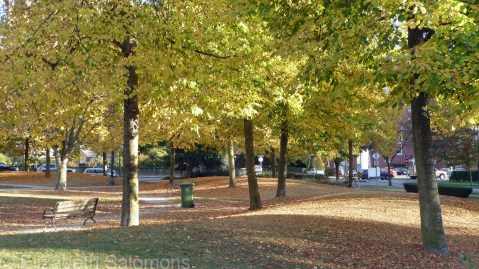
Here is a photo of Nelson Park in all its fall glory.
Highway 2

A week ago today, I hitched a ride down Highway 2 from Edmonton to Red Deer with my brother and his family. As we left the city’s outskirts, I had some fun teasing my nieces that they were doing a good job of ignoring their old aunt. (Their noses were glued to their devices.) Even my brother was planning to spend the two-hour drive alone ― with his book.

No matter. Within minutes, I was enthralled.
Eventually, my brother, too. His book lay forgotten in his lap.

Someone once told me they thought Highway 2 was the most boring stretch of road anywhere in Canada.
I beg to differ. I think it’s the most beautiful.
Salt Spring Island Fall Fair

Yup. It’s another cow.
And no, this hasn’t turned into a Bovine Blog.

I took these photos a couple of weeks ago at the Salt Spring Island Fall Fair. My friend had been urging me to come over for the island’s annual fair, which, she claims, is the social event of the year for Salt Spring Island.

“Will there be cows?” I asked.
“Yes,” she said.
“I’m there,” I said.

Salt Spring Island has a long history of farming ― the island was first known for its fruit harvests, then the dairy and poultry farmers arrived. These days, Salt Spring is famous for its lamb …
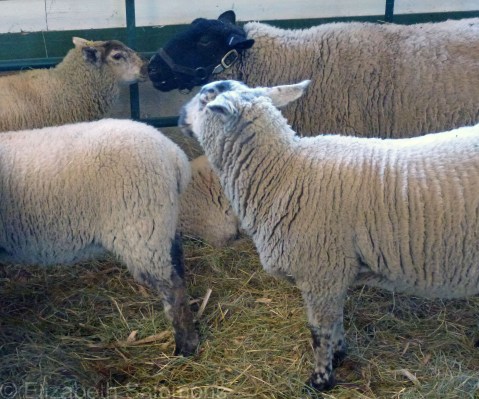
… and for its cheese made from goats’ milk.

In keeping with that history, the Salt Spring Island Fall Fair has been an island institution since 1896. This year’s theme was Celebrating Family Farming to coincide with the United Nations declaring 2014 the International Year of Family Farming. (I so wish I had made it to last year’s fair: its theme was Pirates of the Carrots and Beans.)
It seems like everyone on the island has something to exhibit at the Fall Fair ― from livestock to produce to baked goods to flowers to handcrafts.
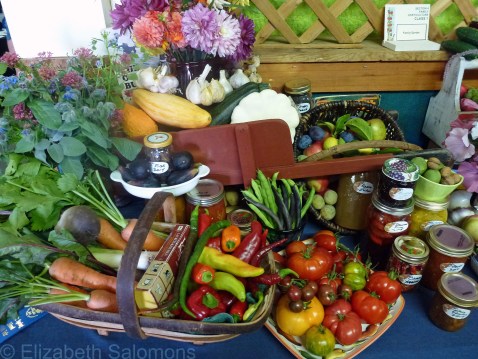
Although the sheepdog demonstration was fascinating and the zucchini races were, um, unlike any race involving green vegetables I’ve ever seen, my favourite event was the sheep shearing.
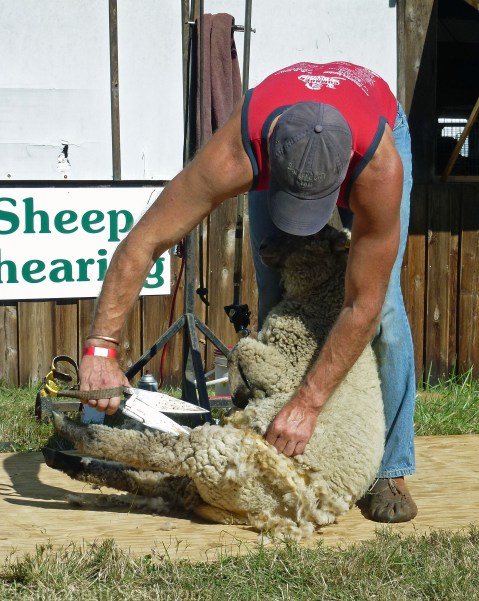
The shearer showed us how shearing used to be done ― with a big, shiny pair of blade shears …

… and then he showed us how it’s done today ― with powered machine shears.


The Salt Spring Island Fall Fair takes place every September. If I’m feeling in a year that my blog needs more cow photos, I now know where to go.
Happy Birthday, Bard on the Beach!

A few months ago, I posted a photo in honour of the Bard’s 450th birthday. Today, I’m posting in honour of Bard on the Beach’s 25th season, which concludes this week.
Every spring, the tents go up in Vanier Park at the south end of the Burrard Street Bridge, and every fall, they come down. As far as summer Shakespeare festivals go, Bard on the Beach isn’t bad. It is the most expensive summer Shakespeare festival in Canada after the Stratford Festival in Ontario, but then, with four productions a year from mid-June to mid-September, it’s also the largest Canadian Shakespeare festival after Stratford.
Perhaps it is too large. Three years ago, the popular festival premiered its new, much larger main stage tent, which now has a capacity of almost 750. But the larger canopy was acoustically challenged, and the festival now has its actors wear mics, which irks me to no end. (Maybe it’s just me, but I like to know who is speaking while I’m watching live theatre, and that’s no longer possible when the voices are coming from a speaker above you instead of from the stage in front of you.)

Bard on the Beach used to be general admission, so you had to show up really early to get a decent seat. This was no different from any of Canada’s other summer Shakespeare festivals. What was different is you were always made to stand for a good chunk of time in what’s called the Bard Village ― a lobby area of sorts where vendors are eager to sell you wine or beer, snacks, or merchandise ranging from T-shirts and tote bags to, um, beach towels.
One year I was standing in this line, waiting (waiting, waiting…), when Christopher Gaze, artistic director of the company, stopped to chat to the couple standing right in front of me. He obviously knew them as they talked for a quite while ― I don’t remember what about ― but then the couple asked Christopher why the festival tents didn’t have assigned seating and why we had to wait so long before we were permitted to be seated.
Christopher looked around him, then said thoughtfully, “We want to create atmosphere.” The idea behind the wait, he explained, was to encourage you to chat with the people in front of you, or with the people behind you, and to give you time to make friends.
Balderdash, I thought, grumpily. You just want us to buy stuff.
(What I find particularly galling is that the Bard Village also sells pre-packaged picnics ― aka sandwiches and salads ― which is a total rip-off of Toronto’s Shakespeare in High Park. That festival creates atmosphere by charging pay-what-you-can for its general admission seating on a hillside and by letting you bring your own food. And your own picnic blanket. It’s the perfect venue for a summer picnic.)
But I digress. On this particular evening, I had an entire conversation with Christopher in my head. Maybe he heard me because Bard on the Beach now has reserved seating.
As for its theatre productions, I’ll just say this: I’ve seen some of the worst performances ever at Bard on the Beach, but I have also seen some of the absolute best Shakespeare ― the kind where you want the play to go on and on and on. And it’s the latter productions that keep me coming back. I never know what I’ll get.
Happy birthday, Bard on the Beach. Here’s to another 25 years!
Recipe Box: Sockeye Salmon
A sure sign that summer is morphing into fall is when the salmon start running.
Four years ago, the Fraser River had the salmon run of the century. More than 30 million sockeye swam up river to spawn that year ― the highest number since 1913. This year, their offspring are returning to spawn in spades, and both the commercial and sports fisheries are expected to match their harvest of 2010. (Time for a quick biology lesson ― just in case it’s needed. Salmon are born in freshwater rivers, migrate to the ocean, then return to the rivers to spawn. They always return to the river where they were born; thus, it can be predicted that a good salmon run one year will result in another good run several years later.)
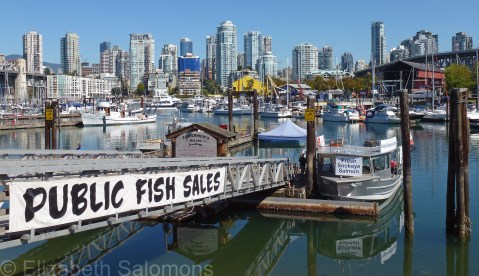
Now, if you live along the West Coast (as I do), you have the good fortune to be able to buy sockeye right off the boat (as they say). I bought a nice four-pounder last weekend. (I asked for the smallest one they had ― most were much bigger.) This year the sockeye are so prolific that the fishmonger up the street is matching the price I paid at the dock, and even my local big-chain grocery store is stocking whole salmon.

What to do with a whole salmon, you ask? Why, you fillet it. Or you cut it into steaks. (Trust me: YouTube is your friend on days like these.)
And then you grill it, bake it, pan fry it … the options are myriad.
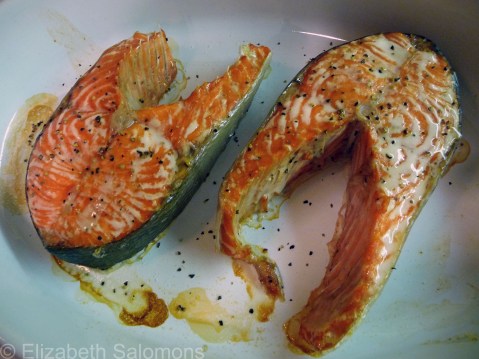
I’ve tried all kinds of recipes, but my favourite way to prepare sockeye salmon is to keep it simple: season with salt and pepper, then pop it into a preheated 450°F oven. Bake for about 12 minutes, no longer. The key when cooking salmon in the oven is to not overbake it or it will be too dry.
And then: enjoy!
Through My Lens: Fishing

Summer may be waning, but there are still photos to post.
I came across this woman fishing in Burrard Inlet early one morning several weeks ago.


 There and Back Again