
Through My Lens: Float Planes

There was a wee bit of excitement in Vancouver today about a couple of visitors. The Duke and Duchess of Cambridge are in British Columbia for an eight-day visit and today was their whistle-stop tour of Vancouver.
What I find amusing about the media coverage of the Royal Tour is how every story highlights that the Royals are being flown around the province by float plane. Float planes are, to put it mildly, a way of life in coastal BC. For some communities, it’s the only way in or out.
I took this photo of the planes docked at the Vancouver Harbour Flight Centre (aka Downtown Vancouver’s seaplane terminal) last summer. The Duke and Duchess arrived here from Victoria this morning ― by float plane.
Big Ben
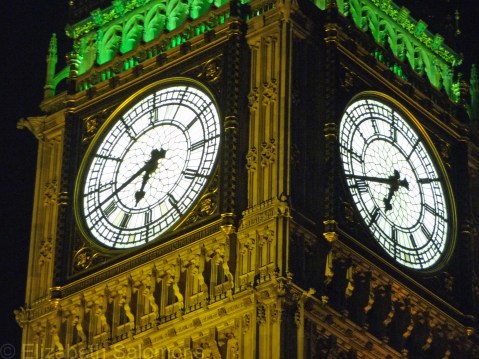
I’m pretty sure I don’t have to explain why I’m posting this photo tonight. What I suspect is the world’s most iconic clock is, I think, the best metaphor for what Brexit will do to the United Kingdom and Europe.
There is no turning back.
Happy Birthday, Charlotte Brontë!
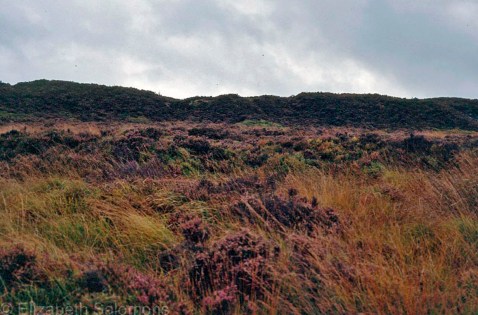
Not that I need a reason to travel, but I often select my travel destinations based on the books I’ve read. A setting comes alive in a way that it never can, quite, in a book. You don’t completely understand Sinclair Ross’s short story “The Painted Door” until you’ve witnessed a prairie blizzard. And I didn’t realize how much small-town Ontario influenced Robertson Davies’ fiction until I saw small-town Ontario for myself, many years after being introduced to his work.
And so it was when I saw the moors near Haworth.
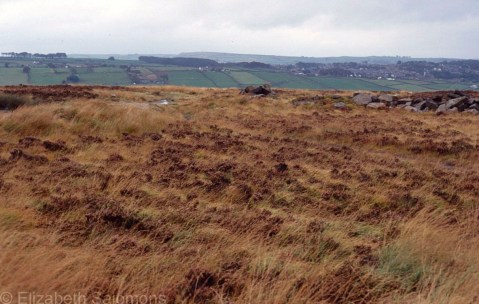
Haworth in West Yorkshire is where the Brontë sisters grew up. And the moors in Yorkshire just might be the bleakest landscape in all of England. They are certainly not what you picture when you hear the words “English countryside.”
And that is why I had a new appreciation for the Brontë novels after walking the moors by Haworth. I realized that the despair Jane felt when she walked away from Thornfield Hall was mirrored by the landscape she found herself wandering through, and I understood Heathcliff’s angst and turmoil after feeling the wind blow across the moors. (Wuthering, incidentally, is a Yorkshire word for “stormy weather.”)
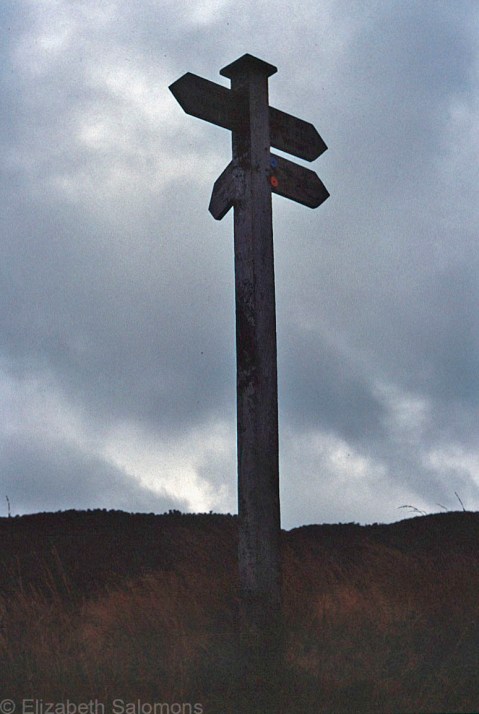
Of all the Brontë novels, Charlotte Brontë’s Jane Eyre is my favourite, and today is the 200th anniversary of her birth. Which is the reason for this post.
Happy birthday, Charlotte Brontë!
And thank you.
Through My Lens: Little Cloister of Westminster Abbey

This year, for Lent, I’m going to take you on a photographic tour of European cloisters.
For the First Sunday of Lent, here is a photo of the Little Cloister at Westminster Abbey in London that I took in 2007. That’s Victoria Tower behind.
Through My Lens: Jets on the Taxiway

Eventually, and usually inevitably, the European vacation comes to an end ― and we come home.
The long journey goes much quicker if you can find something to amuse yourself with en route. Like I was here. I took this photo of jets lined up on the taxiway at London’s Heathrow Airport in March 2011.
Through My Lens: Dolphin Lamp Post
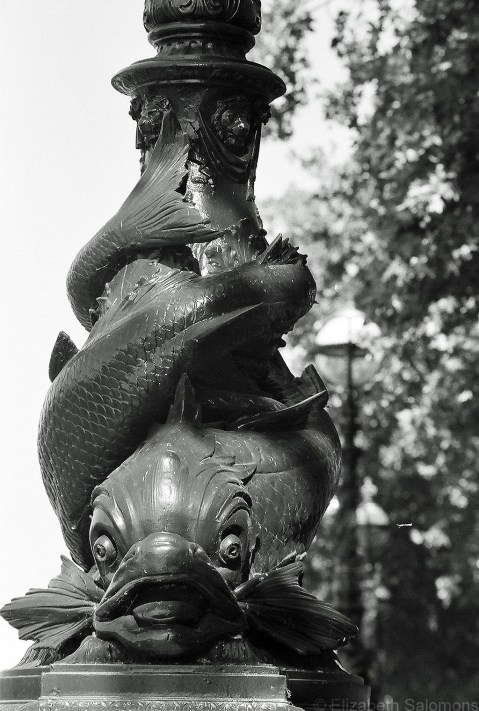
Hundreds of these lamp posts ― the first of which went up during Queen Victoria’s reign ― line the Thames Embankment in London. They’re known as the dolphin lamp posts. That’s because their designer, George John Vulliamy, modelled them after the dolphin sculptures in Rome’s Piazza del Popolo. The “dolphins” along the Thames are actually sturgeon.
Happy Birthday, William Shakespeare!
It’s his 450th birthday today ― the Bard’s, that is. I’ve been rummaging through my photos to see if I had any that link to William Shakespeare and I found this one. It’s of the Tower of London.
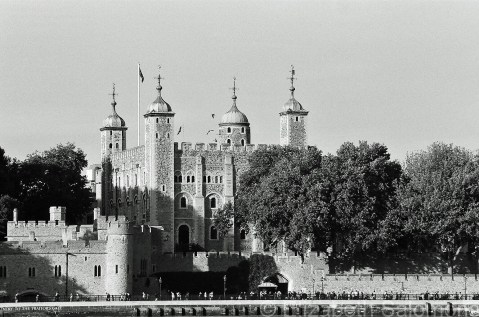
Richard III, considered by some to be one of Shakespeare’s greatest plays, was almost entirely set in London and several of its scenes take place in the Tower. You know the play. It’s the one that starts out with Richard talking about the end of his winter:
Now is the winter of our discontent
Made glorious summer by this sun of York
Richard doesn’t come off so well in the play. Shakespeare probably did more to malign his reputation than any historian. But never mind. It’s an entertaining play. And its setting gives me an excuse to post a photo.
Note the ravens in the photo. Six of them are kept at the Tower because legend has it that the Crown (Britain, too) would fall if the ravens were to ever leave the Tower.
Royal Opera House
Regular readers of this blog may have figured out by now how much I enjoy listening to live music. And that I especially enjoy seeking out opportunities to hear live music whenever I travel.
I have my mother to thank for that. She took my sister and me at the tender ages of twelve and thirteen to hear a recital of Bach organ music in the Bovenkerk of Kampen, the Dutch town where we happened to be living at the time. The sounds of the organ’s principal pipes reverberating in the centuries-old Gothic arches high above us made quite an impression on me (as did how cold we got sitting in an unheated stone church on a crisp evening in late November).
Something about that night stuck with me and, to this day, Bach remains my favourite composer. So much of a favourite that I even named my cat after him. Upon our family’s return to Canada, I was motivated enough to continue my music studies for another six years, soon switching from piano to pipe organ. I doubt my mother had any idea what a couple hours of Bach organ music could do to me.
But enough about Bach. Let’s get back to the other guy. You know, Mozart. My post the other week on Mozart in Prague reminded me of another memorable opera experience I’ve had, this one of hearing Rossini’s The Barber of Seville at London’s Royal Opera House (aka Covent Garden).
I’ve written before how the opera at Covent Garden is completely within reach of the budget traveller, so, unless you really cannot stand opera (and I won’t hold that against you), there is no reason not to go. The website for the Royal Opera House is easy to use and the nifty thing about ordering tickets online is that you see the view of the stage you will have from the exact seat you’ve selected before you commit to your purchase. How cool is that?
What’s particularly fun about the cheap seats (once you’ve caught your breath from climbing waaaaaay up into the rafters of the building) is what a terrific view you have of a truly remarkable building. And ― bonus ― you have a bird’s-eye view of the performance. I witnessed the dramatic entrance of the barber (that would be the Barber of Seville) as he ran all the way down the aisle from the back of the auditorium to the stage ― something the people sitting at the front of the orchestra level missed because all the action took place behind them.
Sadly, I have no photos of the interior of Covent Garden ― that will have to wait until my next visit to London. Here, though, is a picture of its exterior, which dates back to 1858. I took this photo after stopping by the box office to pick up my ticket that I had purchased weeks earlier before leaving home. It was the last time I saw the beautiful, Italian-made leather wallet I had bought a few years earlier in Rome ― less than a half hour later, I would reach into my bag to realize it was gone.
But that’s a story for another post.

University of Cambridge
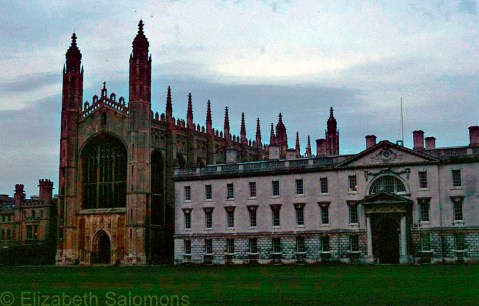
I went to Cambridge for one reason and one reason only: to hear the King’s College Choir.
I got to hear them sing a Choral Eucharist service in this chapel, the King’s College Chapel of King’s College of the University of Cambridge. Quite the chapel. Quite the choir.
I don’t remember much else of the University of Cambridge or the city of Cambridge. It was a quick one-night stop at the end of a three-week English walkabout and I was weary of sight-seeing.
But I’m never weary of choral music. It was worth the stop.
University of Oxford
When I applied to and was accepted at the University of Toronto, I enrolled as a student at Woodsworth College. I didn’t get the whole college-thing they had going at U of T, and didn’t much care what college they stuck me in, but eventually I discovered that all unclassified and part-time students (I was both) were lumped together at Woodsworth.
When I would introduce myself to my fellow undergrads, the first question after “What’s your major?” was always: “What college are you?” I quickly figured out that each college at U of T had its own personality, and prestige, and Woodsworth didn’t rank very high with respect to either.
This all seemed rather strange and unusual to me. In Western Canada, you applied to and enrolled in a faculty; in my case, I was a student in the Faculty of Arts at the University of Alberta. Colleges were independent entities, completely separate from the universities; I had attended one of those as well before transferring to U of A.
Like I said, I didn’t “get” the whole college-thing they had going at U of T.
Until I got to Oxford, that is.
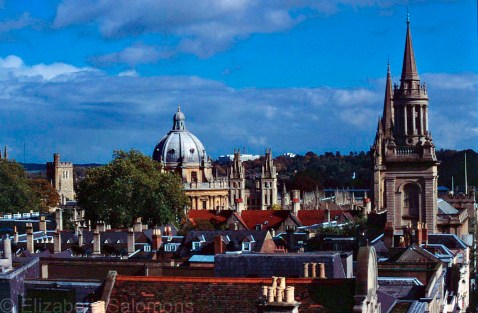
Oxford is chockfull of colleges ― 38 of them, in fact ― and as I wandered around the “city of dreaming spires,” I came to the realization that the University of Toronto is modelled after the University of Oxford. So that’s where U of T got the idea for all those colleges, I said to myself.
Many of the colleges of Oxford University are open to the public, and I walked reverently through several of them. I happened to walk by the entrance to the chapel of Magdalen College (where C.S. Lewis taught) and was warmly invited to attend the Choral Evensong service that was about to begin. In the Great Hall of Christ Church College, I was greeted by an elderly gent whose sole job seemed to be pointing out the “Alice” window to visitors. (That would be the stained glass window put in to commemorate the author Lewis Carroll, who had been a Christ Church scholar.)
Oxford is a beautiful town. I explored it while on walkabout in the English countryside some years ago, fell in love with it, and made a promise to one day return to it.


 There and Back Again