
Historical Hawaii
Remember James Michener? Author of super long books with super short titles that were on all the bestseller lists? Many years ago, I got about a third of the way through one of his books, Hawaii. It was a valiant effort, but ultimately I was defeated by its 1130 pages.
My mom finished the book, though. I have a distinct memory of her rant about the some of the characters in Michener’s novel — the American missionaries, to be precise. How stupid, she said, that they insisted on wearing fashions more suited to New England than the hot, tropical climate of Hawaii.
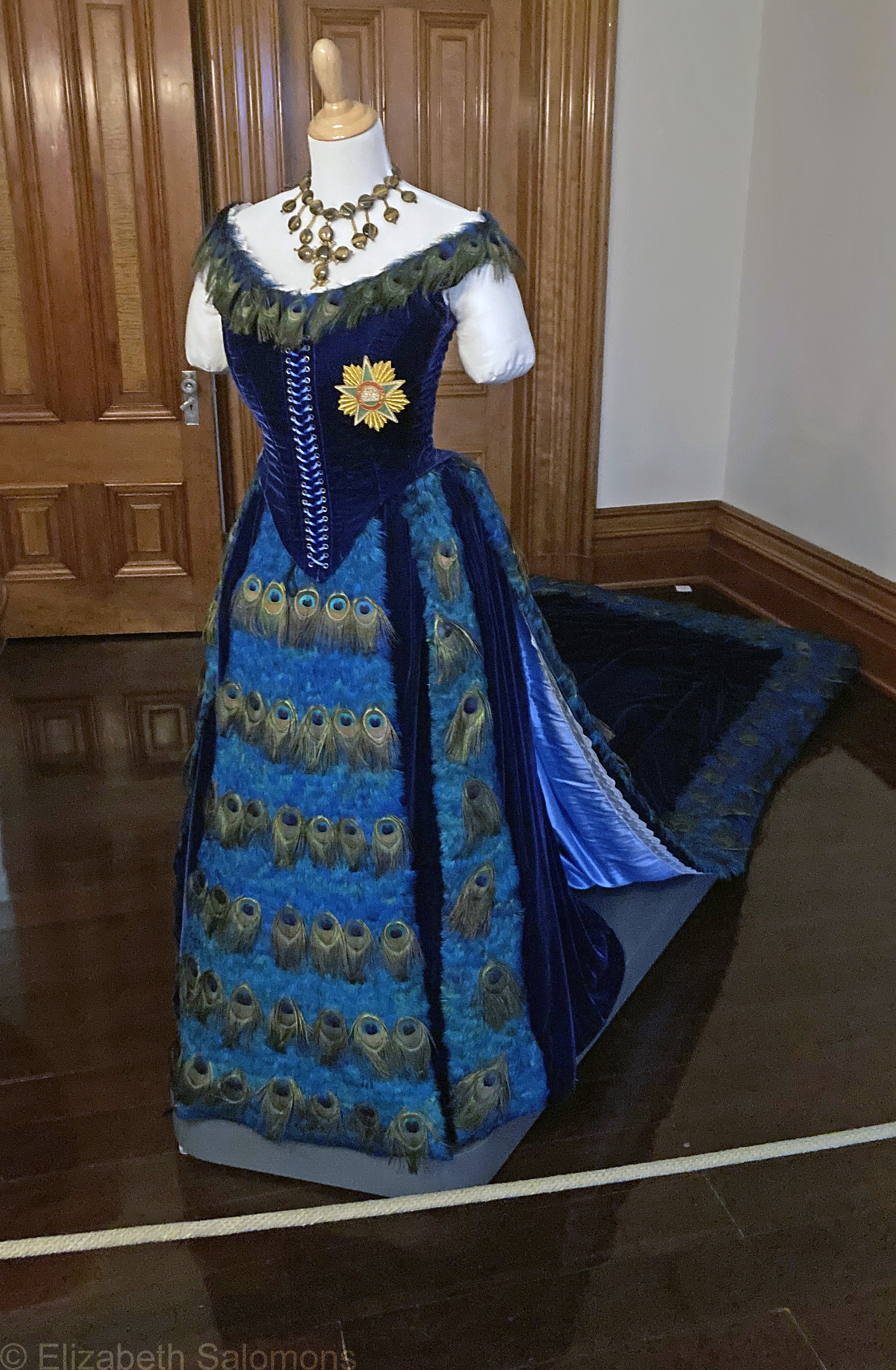
So imagine my surprise, as I took a deep dive into Hawaii’s colonial history last winter, when I learned that the Hawaiian royals also preferred Victorian fashion. This dress, for example. It’s a replica of the Peacock Gown that Queen Kapi‘olani wore to Queen Victoria’s Golden Jubilee in 1887.
I was also surprised to learn that Hawaii came this close to becoming a part of the British Empire. The first European to sail to the islands was the English explorer James Cook — he arrived in 1778. We’ll skip over the part where he was killed by the Hawaiians and jump ahead to George Vancouver, a member of Cook’s crew who returned with his own expedition in 1792, and again in 1793 and 1794. Vancouver became good friends with King Kamehameha I, and Hawaii became the base for British trade in the Pacific. It was Kamehameha who wanted the Union Jack as part of the Hawaiian flag that was adopted in 1816.
However, around this time, an assortment of missionaries was making advances in the Pacific. Amongst themselves, the British and American missionaries divided the Pacific between them: the British would restrict their evangelistic efforts to the south of the Equator, and the Americans went north. The Hawaiians would have preferred the reverse arrangement; Kamehameha II even went to England to arrange for a formal agreement with the King.
But as time went on, Hawaiian trade was increasingly linked to the US economy. Hawaiian independence suffered a fatal blow when a group of white planters and businessmen overthrew the last Hawaiian monarch, Queen Lili’uokalani, in January of 1893. She was held prisoner in her own palace for eight months. Formal annexation with the US took place in 1898 when the Spanish–American War made Hawaii a critical base for the American military while they were fighting in the Philippines, and the islands attained statehood in 1959.
About that deep dive into Hawaii’s colonial history: it took place here, at Honolulu’s Bishop Museum.

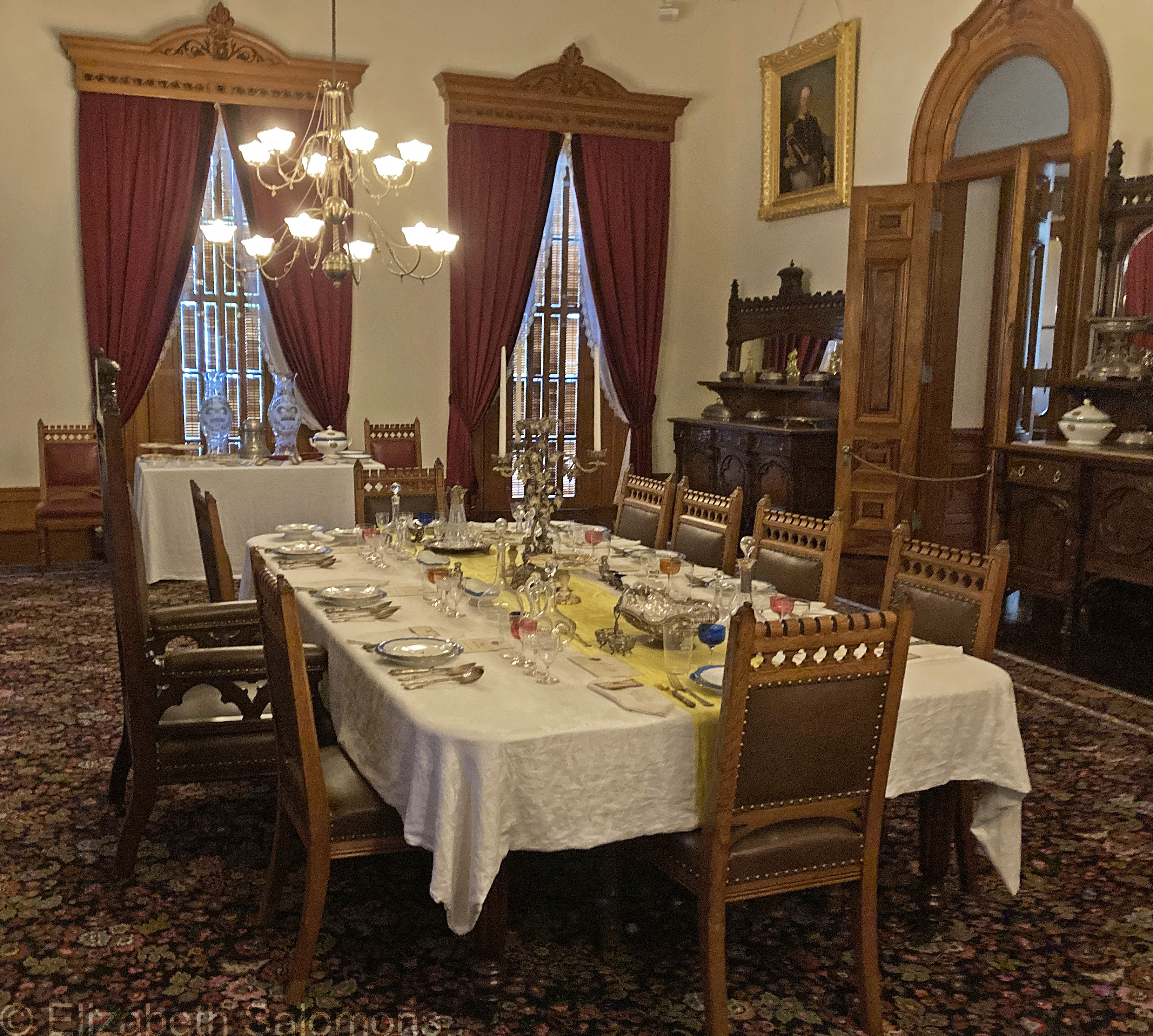
And also here, at Iolani Palace.

Bishop Museum was established in 1889 by Charles Reed Bishop to house objects and heirlooms of his wife, Princess Bernice Pauahi Bishop, last heir of the royal Kamehameha family. It is now considered the best collection of natural and cultural history in the Pacific, and it’s a great way to get a crash course in Hawaiian history in just a few hours.
Iolani Palace, located in downtown Honolulu, served as the State Capital until 1969. When it was built in the 1880s, it was fitted out with electric lights, indoor plumbing, and telephones — all modern conveniences far ahead of their time. It is the only official residence of royalty in the United States.
I still have my mother’s copy of Hawaii. And one of these days, I will finish the novel, now that I have a better and more complete understanding of the history of Hawaii.
Museum of Anthropology

One of Arthur Erickson’s most iconic buildings, completed in 1976, is the Museum of Anthropology at the University of British Columbia. It sits on traditional and unceded territory of the Musqueam people, at the tip of Point Grey, facing the Salish Sea.
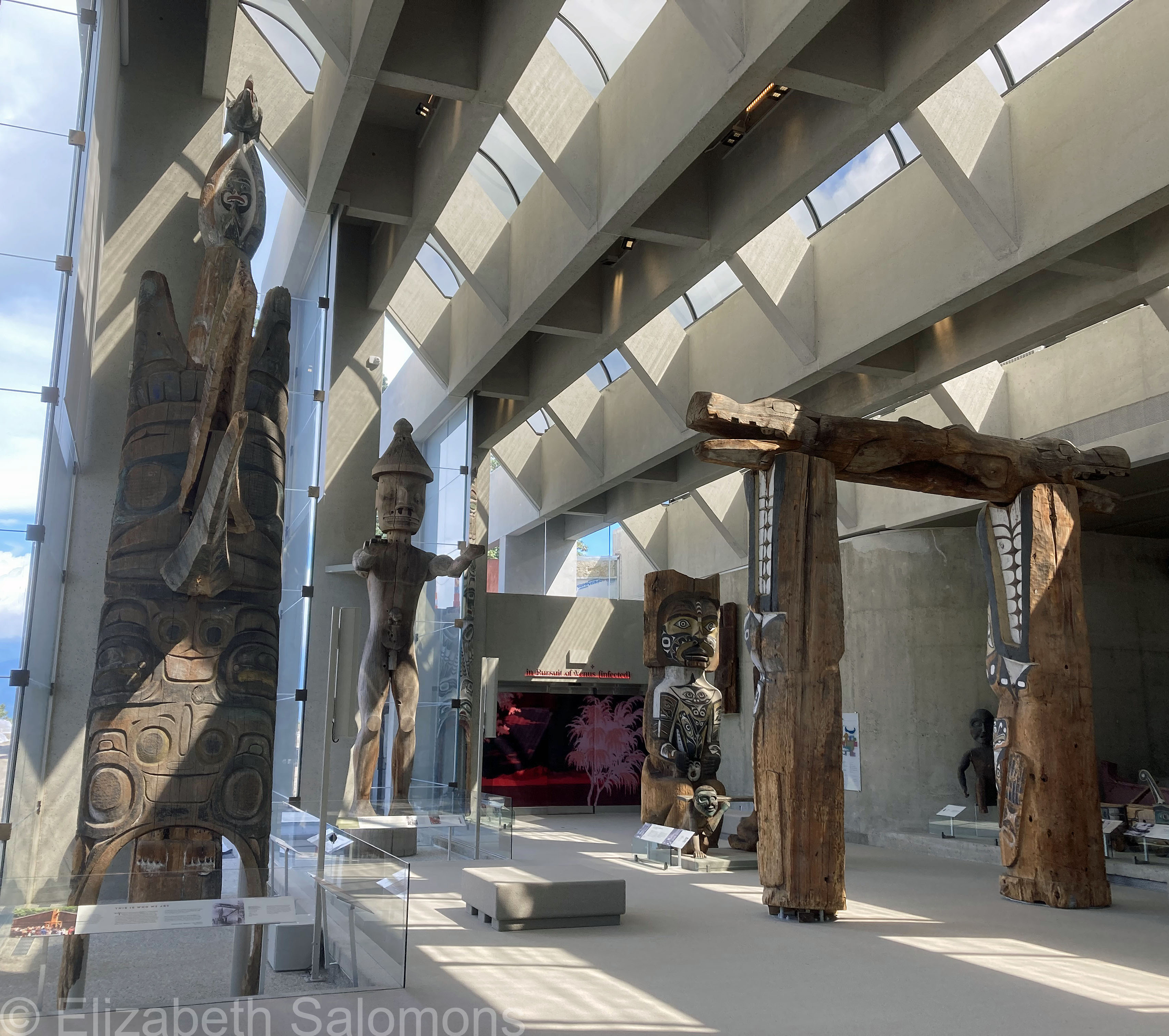
I’m told that the post-and-beam construction was inspired by the architecture of the Northwest Coast First Nations. The floor-to-ceiling windows of the Great Hall let in all the light. And when you stand outside and look back at the museum, you see the sky reflected back at you.

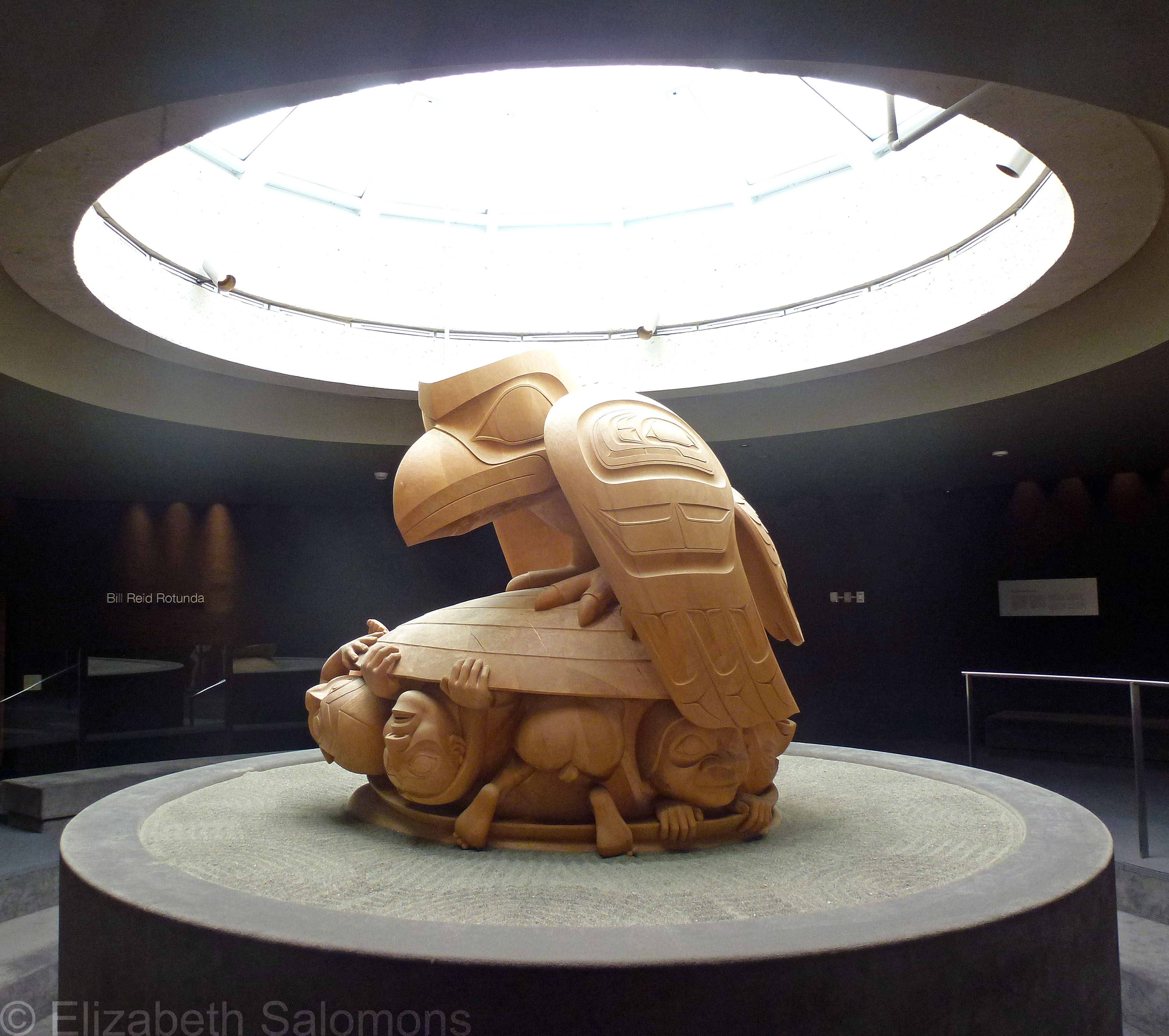
The building incorporates several World War II gun placements. Rather than ripping them out, Erickson incorporated them into the building’s design. One has been repurposed as the base for Raven and the First Men, a sculpture by Haida artist Bill Reid.
The Museum of Anthropology began in 1949 as a department of the Faculty of Arts at UBC. It has one of the world’s best collections of Indigenous art and is particularly known for its Northwest Coast collection. In 2023, the museum closed to undergo a seismic upgrade that involved completely rebuilding the 25 concrete pillars of the Great Hall. It reopened again last June in time for the centenary of Erickson’s birth.

Art Talk: Rijksmuseum
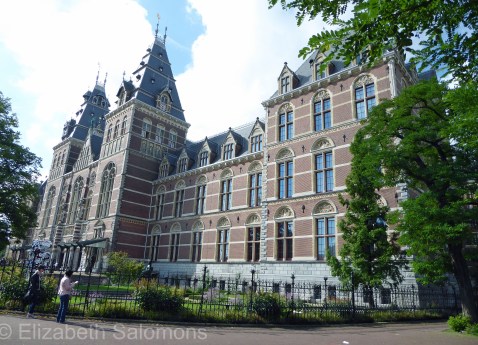
Given that I’ve ranted on this blog about my frustrations with the Vancouver Art Gallery, wrote about how I visited the best museums New York has to offer as an antidote, and started off this summer’s series of posts describing my week in Paris with two art-mad nieces, I would be remiss if I didn’t write about Amsterdam’s # 1 rated attraction (according to Trip Advisor).
No, I’m not talking about the Sex Museum.
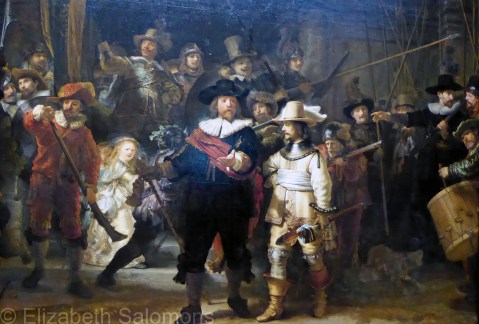
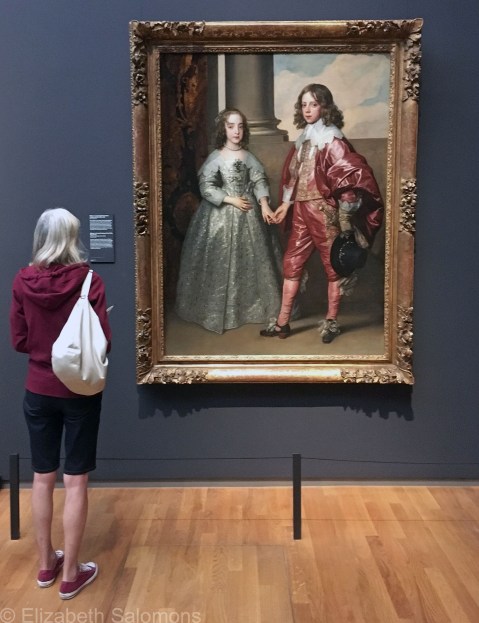
The Rijksmuseum is home to the national art collection of the Netherlands. If you didn’t know, you will after visiting this museum how much the Dutch revere their artists. Most of the second floor is taken up by what they’ve named the Gallery of Honour, with The Nightwatch by Rembrandt as its focal point.

And if you didn’t know, you will after visiting this museum that there is a bike path that runs through the centre of it. The Rijksmuseum went through a massive renovation (was supposed to take five years, but dragged on for ten), reopening to much fanfare in 2013. One of the hold-ups was the plan to alter the entrance and remove the bike path.
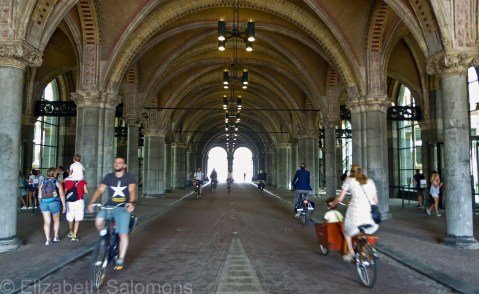
Turns out the Amsterdammers didn’t much like that idea and the architects were sent back to the drawing board. (It is fascinating to me how much power cyclists have in this city. But that’s a topic for another post.)
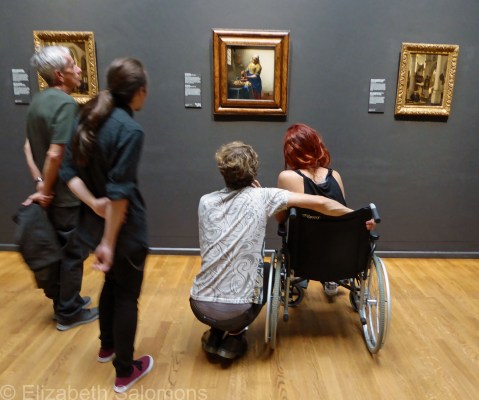
For the rest of this post, I’m going to let these images speak for themselves. And make a recommendation that if you only have time for one museum during your next visit to Amsterdam, make it this one.


Rembrandt House Museum
Of course, if you truly are a fan of Rembrandt, you really need to go to Museum het Rembrandthuis, or the Rembrandt House Museum. Located in Amsterdam on Jodenbreestraat, it is where Rembrandt lived from 1639 until 1658.
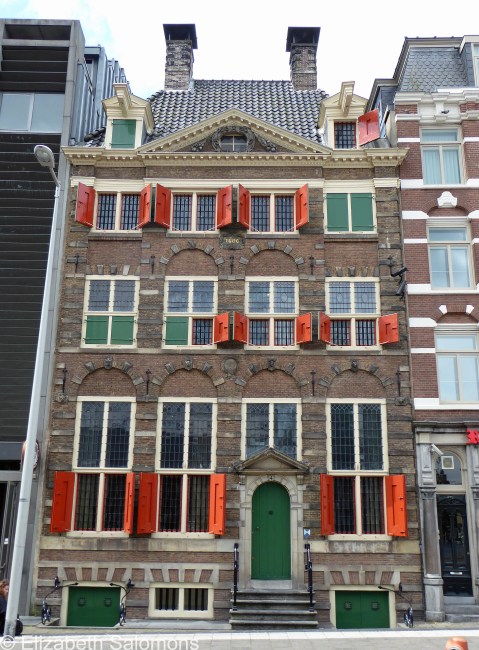
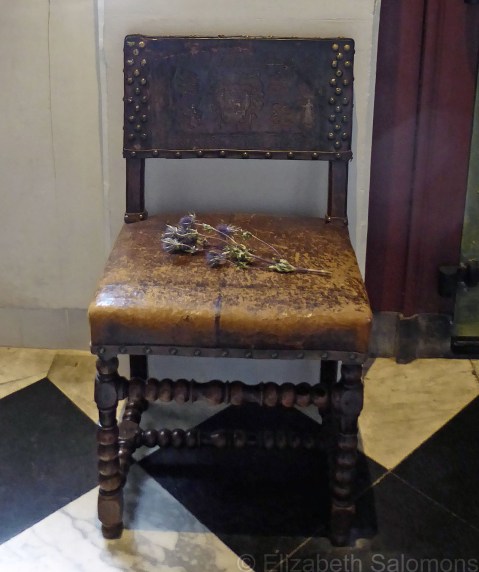
The museum provides an excellent window into how Rembrandt lived and worked. It is able to do this because there exists a comprehensive inventory of Rembrandt’s possessions and furnishings.
Why does such an inventory exist?
Because the guy went bankrupt. His possessions and the house were sold in 1658, after which Rembrandt rented a smaller house in another part of the city. He lived there until his death in 1669.
The house on Jodenbreestraat was bought by the city of Amsterdam in the early 1900s, and opened as a museum in 1911.

I’ve written before how much I like smaller art museums dedicated to a single artist; this museum is one of my favourites and I visit it every time I come to Amsterdam. The building next door to the original house is now a gallery where Rembrandt’s etchings are displayed. As fascinating as the reconstructed living rooms and studio are, the experience of seeing a roomful of Rembrandt’s etchings is easily the highlight of a visit to the Rembrandt House Museum.
Art Talk: Musée Rodin

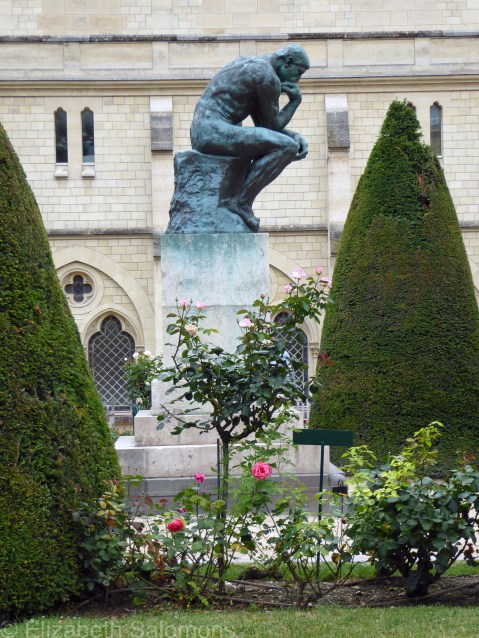
Every time I am in Paris, I make sure to stop by the Musée Rodin. It is, in my opinion, the most perfect of art museums.
I love the Musée Rodin because I love Rodin’s work, for one, but I also love it because it is located in such a beautiful setting and because it is the perfect size for an art gallery: it’s neither too big nor too small.

There are a number of similar, smaller museums in Paris — the Musée Picasso and the Musée Delacroix come to mind — and if you have a particular artist you want to explore in depth, you would do well to spend your time in one of these smaller museums and avoid the larger museums where the tourists tend to gravitate.
The Musée Rodin is housed in an eighteenth-century mansion known as the Hôtel Biron. At various points in its lifetime, the mansion was home to a Roman Catholic cardinal, the Russian ambassador to France, and three nuns who opened a boarding school for girls. In the twentieth century, the owners began to rent space in the building to artists, including Henri Matisse, and then, in 1908, Auguste Rodin. Rodin took over the entire building in 1911.

Also in 1911, the French government became the new owners of the Hôtel Biron, and after exacting a promise from the government that the building would be turned into a museum of his work, Rodin donated most of his sculptures. In 1919, two years after the death of Rodin, the Musée Rodin opened to the public.
Art Talk: Centre Pompidou

In contrast to the Louvre, the Centre Pompidou is a much more manageable art museum. For one thing, its permanent collection is displayed on two levels that are easily covered in one visit. And for another, its emphasis is much more focused: modern and contemporary art from 1905 to present day.

There are a couple of bonuses to the Centre Pompidou as well: the splendid view from the fifth floor, and the incredibly fascinating architecture of the building, which opened in 1977.

If the crowds of the Louvre prove to be too much for you, I recommend a visit to the Pompidou as the perfect antidote.
Art Talk: Musée du Louvre

When you spend a week in Paris with a couple of art students, it’s inevitable that you end up spending much of that week in the city’s art museums.
And when you choose to visit the world’s largest and most-visited art museum, it’s inevitable that you end up spending a considerable amount of time in line waiting your turn to enter.
That art museum would be the Musée du Louvre.

Rebellious Slave by Michelangelo
The line was long. Very long. And here’s a pro-tip: if you neglect to ensure you’re in the correct line before you begin your wait, you may well end up having to go to the back of yet another line, thus doubling your wait time.
Which is what happened to us.
Here’s another pro-tip: do not try to see the entire museum in one go. It is physically impossible. The Louvre used to be a royal palace, and the result is a confusing layout that is more maze than museum. If you were to walk through every one of its 403 galleries and down every one of its corridors, you’d cover 14.5 km and 15 acres containing more than 38,000 objects and pieces of art dating from ancient civilizations to the mid-nineteenth century.
I’m exhausted just from typing out that last sentence.

Dying Slave by Michelangelo
My nieces and I started in the sculpture galleries and the girls were both awestruck by what they saw and overwhelmed by the crowds around pieces such as the Venus de Milo. Because we knew we had to pace ourselves, we stopped to have a bite to eat in one of the Louvre’s many cafés, intending to tackle the Italian Renaissance paintings after our break.
But fate intervened, and an announcement over the PA system in French and English that the Louvre had to be evacuated due to a “security incident” thwarted our plans. We never did find out what the incident was — I suspect it may have been due to the record-breaking rain storm earlier that morning — but when I told the story to a friend who had been in Paris a year earlier, she recounted her experience of being evacuated from Versailles for what they eventually discovered was a thermos inadvertently left unattended.
We had waited more than two hours to spend scarcely an hour inside the Louvre. But we also wanted to be safe, and these days, in Paris, you cannot blame the museum or the police for being overanxious and overcautious.

Venus de Milo
We never did go back to the Louvre — we had other museums to visit and the girls decided they had seen as much of the Louvre as they needed to see. For myself, I’m glad we didn’t make it as far as da Vinci’s Mona Lisa. That gallery is a bit of a gong show and unless you’re small enough to squeeze to the front of the crowd or tall enough to see over the selfie sticks, you will walk away disappointed. At least my nieces were spared that.

The Louvre as seen from the top of the Arc de Triomphe
Through My Lens: The Whitney
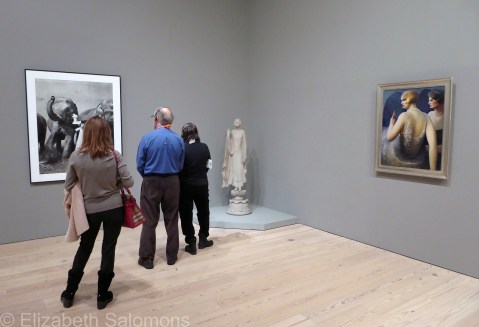
This photo shows some more of the art you can see in New York. At left is a photo by Richard Avedon and to the right is a painting by Guy Pène Du Bois. The sculpture in between is by Gertrude Vanderbilt Whitney, an American sculptor and art collector.
When Gertrude Vanderbilt Whitney offered her collection of work by American artists to the Metropolitan Museum of Art, it was refused. So she turned around and opened her own museum. The Whitney Museum of Art, which focuses on American art, opened in 1931 in Greenwich Village. It has had a number of homes since then, but its latest, a purpose-built building at the south end of the High Line, opened in 2015.
The Met, the Frick, and the Guggenheim
The real reason I went to New York last month had more to do with me wanting to visit another Met.
That would be the Metropolitan Museum of Art.

I’ve written before about my love–hate relationship with the Vancouver Art Gallery. Which is why, after a rather trying visit to a popular exhibition at the VAG late last summer, I lamented to the friend I was with that I needed a proper art fix at a proper world class art gallery. Preferably in a city like Paris. Or London.
Or New York.

A few hours later, as I was pondering my meltdown outside the VAG, I suddenly remembered that (1) I had enough points for a plane ticket to New York and (2) it had been far too long since I had visited my friend in Brooklyn.
A few emails back and forth, a few online bookings, and, within a few days, a few plans were in place.
And a few months later, just a few hours after touchdown at JFK, I was standing at the entrance to what most people rate as one of the top art galleries in the world.
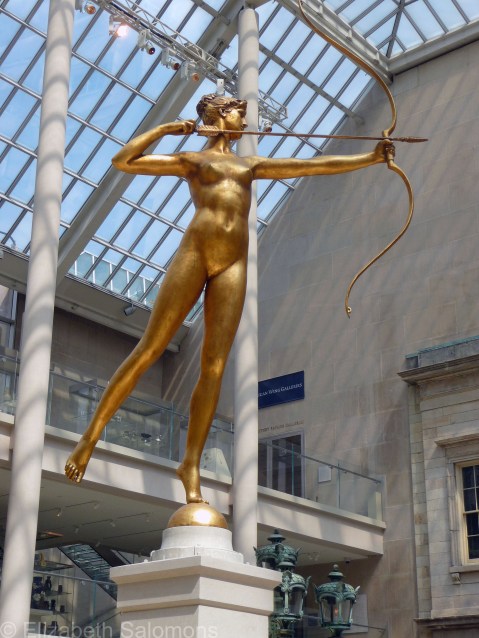
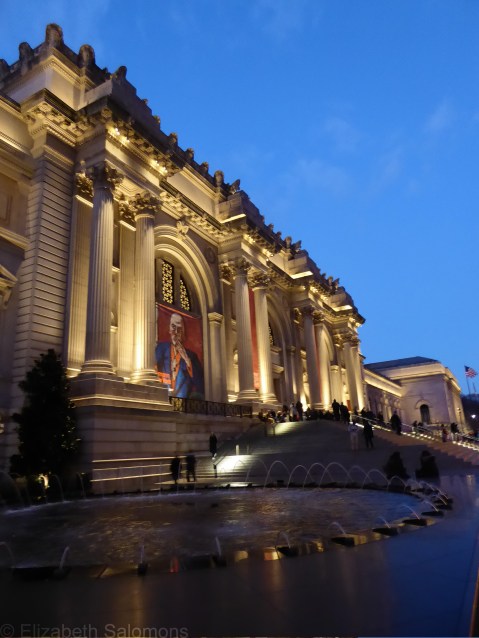
The first time I walked into the Metropolitan Museum of Art, on an earlier visit to New York, I did have a wee bit of a momentary breakdown. Its size almost did me in. I knew the Met was big ― I just didn’t realize it was that big. But within seconds, I shrugged off my frustrations. When you’re playing art tourist and you’re in the largest art gallery in the Western Hemisphere, there is no time to waste.
The trick to large art galleries is to get a map, and quickly zero in on what you want to see, picking a floor or wing to focus on. Don’t even thinking of trying to see it all. And don’t be afraid to ask for directions. Those gallery guards know their way around.
I tend to gravitate towards European Painting no matter what art gallery I am in. But if the Old Masters put you to sleep, not to worry. The Met has everything from Greek, Roman, and Islamic art all the way to present-day contemporary art. And if you’re there in good weather, don’t skip the roof garden. It has an amazing bird’s eye view of Central Park.

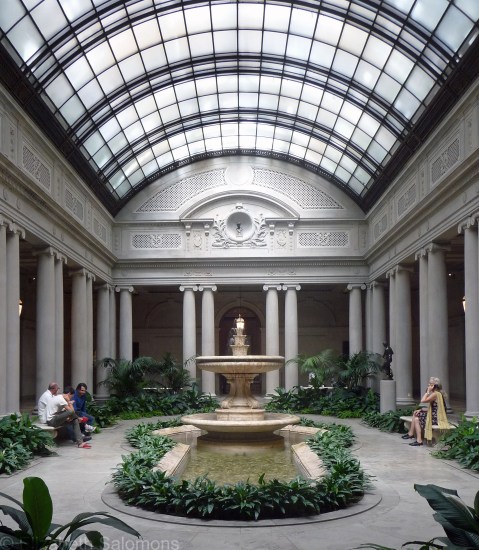
If oversized galleries aren’t your thing at all, then go to the Frick. The Frick was the perfect antidote to my morning at the Met. It’s so small you can see the entire gallery in a little more than an hour depending on long you linger in each room. Which is what makes it so delightful. The Frick is my idea of a perfect art museum, actually, as I truly believe art should be consumed in small doses before it all becomes a blur.

Henry Clay Frick, an industrialist who made his money in Pittsburgh steel, built the museum in 1914 as a private home for his family, although he fully intended it to be turned into a museum after his death. Many of the rooms remain furnished and decorated as they were when the Fricks lived there, including how and where the paintings are hung.
The collection focuses on European paintings, and has an entire room of Limoges enamels ― something I knew nothing about, but they are quite impressive. Old man Frick was quite the collector. How on earth did he get his hands on three Vermeers is what I’d like to know, given there are only about 35 in existence?
The Met and the Frick are both located on Fifth Avenue (aka Museum Mile). Still on Fifth Avenue, but further north, is the Guggenheim. This museum is worth a visit even if it is just to have a look at Frank Lloyd Wright’s amazing architectural design that is as much sculpture as it is building.

The Guggenheim focuses mainly on art from the last 150 years or so. I enjoy the Impressionist works and there are always interesting temporary exhibits.

Spending a long weekend zipping from art gallery to art gallery may not be everyone’s cup of tea, but it is mine, and I can’t wait to get back to New York for another art fix.
Head-Smashed-In Buffalo Jump
After Calgary, I had one last stop to make before I turned my rental car west towards home.

Located west of Fort MacLeod (which is south of Calgary), Head-Smashed-In Buffalo Jump is one of the world’s largest and best preserved buffalo jumps. It was declared a UNESCO World Heritage Site in 1981. That’s kind of a big deal ― being on the list puts Head-Smashed-In Buffalo Jump on par with the Egyptian pyramids and the Galapagos Islands. There are only 17 World Heritage Sites in all of Canada.
Essentially, Head-Smashed-In Buffalo Jump is a vast archeological site. The research that has been done on the site gives us modern-day folks evidence of how the Plains People hunted the buffalo in centuries past. We now know that Head-Smashed-In Buffalo Jump was in use for about 6000 years up until the mid-1800s.
What’s a buffalo jump, you ask? It’s a cliff over which the buffalo were, well, let’s say, encouraged to jump off. The hunters would disguise themselves with wolf skins and start a stampede of the buffalo herd, driving them towards the cliff.
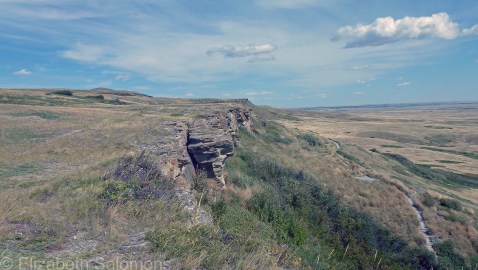
After the buffalo ran over the cliff, the hunters were then able to go below and butcher the dead buffalo.
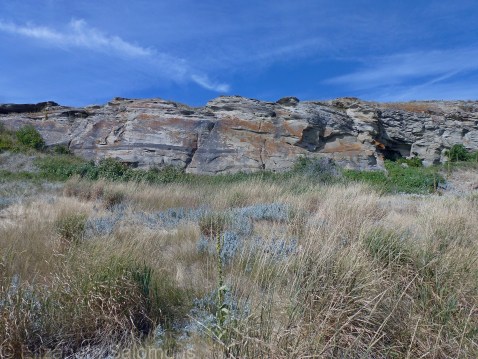
Archaeologists think that at least ten metres of buffalo bones still lie buried below the surface of the prairie at Head-Smashed-In Buffalo Jump.

There is an impressive five-level interpretive centre built into the side of the cliff at Head-Smashed-In Buffalo Jump. The exhibits will answer your every question about buffalo jumps.

In addition to the interpretive centre and the well-fenced view point above the buffalo jump, there is a short trail below the jump that provides you with some magnificent views over the prairie.
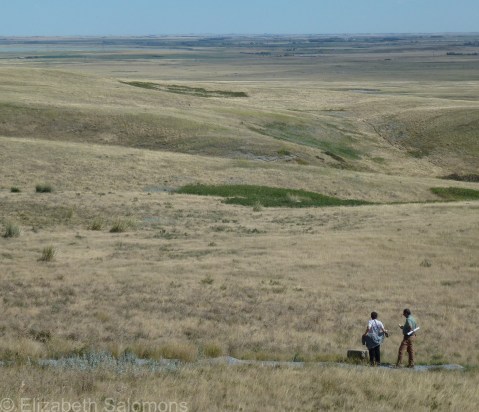
The wind is keen ― I was impressed by its power and by how much noise it makes. If you look carefully at this next photo, you can see a row of wind turbines in the upper left corner ― these are ubiquitous in this part of the province.

I’m so in love with this flat horizon.
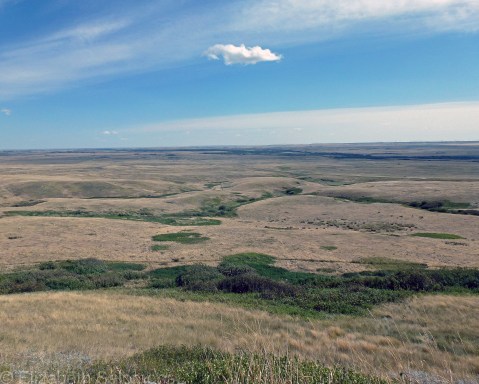
Oh ― and the name? It’s not about smashed buffalo heads. It was the name given to a small boy who wanted to see the buffalo jump over the cliff, but who got way too close. He was crushed by the falling animals.


 There and Back Again