
Amtrak Cascades
In my last post, I told you how my friends and I travelled to Seattle. Wanna know how we got home?
We took the train.
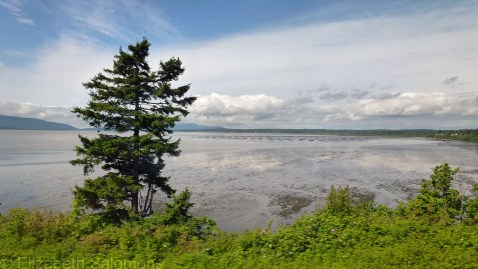
Semiahmoo Bay
I’ve been down Interstate 5 to Seattle more times than I care to count, both by car and by bus. The I-5 extends from the American–Canadian border all the way down the West Coast of the United States to Mexico. If you’re inclined to drive that far, it would be quite the road trip.
But, as efficient as they are, American interstates aren’t known for their beauty. I’ve always felt that taking the I-5 was a bit of an endurance test to get through before the prize: your final destination (in my case, usually Sea-Tac Airport). And thanks to the collapse three days ago of the Skagit River Bridge on the I-5 just north of Seattle, that will most definitely be true for many months to come until the bridge is repaired or replaced.
But the train! What a revelation that was.
The Amtrak Cascades is the name of the Amtrak route from Eugene, Oregon, to Vancouver, Canada. The northbound leg from Seattle to Vancouver hugs the Pacific shoreline for the first while, moves inland for a bit through some of Washington’s fertile farmland, and then heads back to the coast and crosses the Canadian border at White Rock, BC. Unless you’re paying close attention, you don’t even realize you’ve crossed the border. (All passengers, both northbound and southbound, go through customs in Vancouver.)
After rounding Boundary Bay, the train takes you across the municipality of Delta (named after the Fraser River delta) and east along the Fraser to New Westminster, where you cross the rail bridge beside the Pattullo Bridge. Then it’s a quick ride northwest through Burnaby to Pacific Central Station near downtown Vancouver.

Pattullo Bridge, with the Skytrain Bridge behind
If you book your tickets far enough in advance, the train costs about half of the bus fare. It’s a far prettier route than the I-5, and the wait to go through customs is far shorter. My second travel tip of the week? Take the train.

Pacific Central Station
Repositioning Cruises

Those in the know (which, believe you me, is seldom yours truly) know that “repositioning cruises” can offer some of the best deals on cruise fares. What’s a repositioning cruise, you ask?
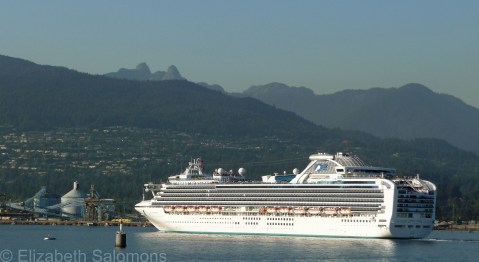
A repositioning cruise is when a ship based at one port sails to another port where it will be based for the next season. Typically, repositioning cruises take place on ships relocating from northern-hemisphere ports to southern-hemisphere ports, or vice versa, and they occur at the beginning or end of a season.
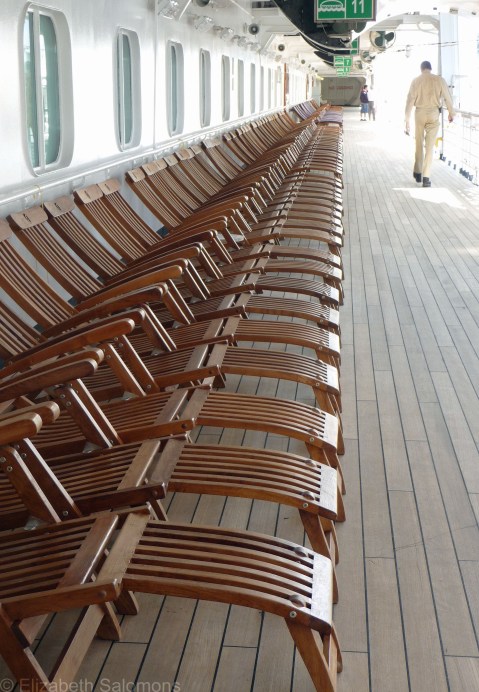
Twice a year, in May and September, there are repositioning cruises that stop to pick up passengers in Vancouver. These ships sail all the way to … Seattle. Yup, these would be the shortest of all repositioning cruises.
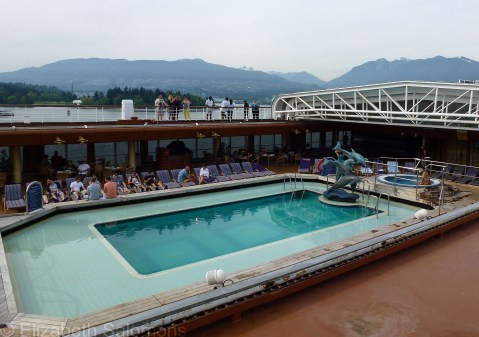
I’ve taken a couple of these cruises. One was a few years ago in the fall, when a ship was relocating from its base in Vancouver to the South Pacific after a summer of cruising up and down BC’s Inside Passage to Alaska. A friend and I boarded the ship in Vancouver. After we got off the next day in Seattle, the ship sailed on to Hong Kong and Australia.

The other was just two weekends ago, when my friends and I were on a ship that was repositioning from San Diego to Seattle, but made stops in Victoria and Vancouver along the way.
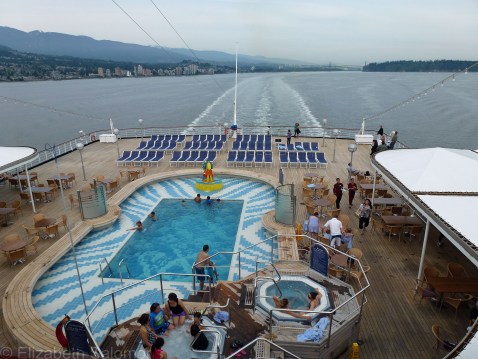
Mini-cruises are a great deal. Included in the fare are three meals, transportation from Vancouver to Seattle, and a night’s accommodation for less than you’d pay for one night in a Vancouver hotel. While on board, we saw couples, groups of couples, groups of friends, and entire multi-generation families who, like us, were enjoying all the amenities these ships have to offer.
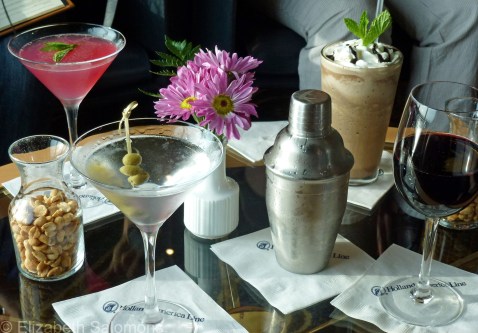
The cruises are also a great way to get a wee taste of cruising life before you commit the time and money to a longer cruise. For Vancouverites who are looking for something different to do on a weekend, but don’t have the time or inclination to go far, take a cruise to Seattle.

George Peabody Library
This week is Freedom to Read Week in Canada, so I thought it was high time I wrote another post about a book. Or, perhaps, many thousands of books. Like the ones in this library.
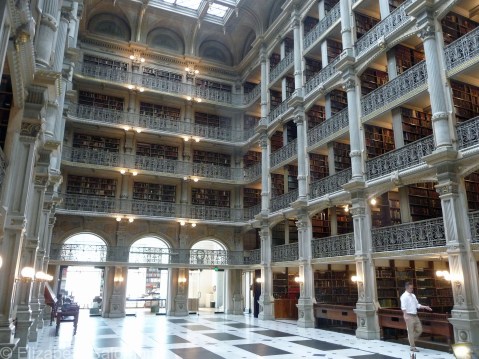
There are libraries. And then … well … and then there’s the George Peabody Library.
The George Peabody Library is one of the libraries of Johns Hopkins University in Baltimore, Maryland. It’s housed in a stunning building designed by architect Edmund Lind and has been open to the public since 1873. The library is named after George Peabody, the American–British financier and philanthropist who provided the funds for the library’s founding in 1857.
The collection consists of over 300,000 books, mostly from the eighteenth and nineteenth centuries, and specializes in all the good stuff: archaeology, British art and architecture, British and American history, English and American literature, Romance languages and literature, Greek and Latin classics, history of science, geography, and ― wait for it ― exploration and travel.
There are a lot of cool-looking libraries on this planet. As if I need another reason to travel, I plan to photograph as many of them as I can.
The National Museum of the American Indian
In my post the other week on the Smithsonian, I mentioned how splendid the building that houses the National Museum of the American Indian is.
And then didn’t bother to post a single photo of the building.
I didn’t post any photos because I think the building is so impressive its photos deserve a blog post all their own.
If you’ve ever been to the Canadian Museum of Civilization in Gatineau, Quebec, you’ll recognize the architect’s work. Both buildings were designed by Douglas Cardinal. Born in Calgary, Alberta, to a Blackfoot father and a mother of Métis and German origins, Cardinal’s designs are known for their curved lines and organic shapes.
I could photograph this building over and over again. Here, take a look.
Through My Lens: New Orleans
Wait, there’s a game on?
For all you non-football fans out there, here’s a photo of what I find fascinating about New Orleans. I took this photo some years ago when a couple of friends and I were in the Big Easy for the New Orleans Jazz & Heritage Festival.

Through My Lens: Grand Central Terminal

For my 100th post: a photo of the main concourse of Grand Central Terminal in New York City, because this magnificent building is celebrating its 100th birthday today. The doors to the station ― which New Yorkers refer to as “Grand Central Station” or simply “Grand Central” ― were first opened to the public at 12:01 am on February 2, 1913.
The Smithsonian
I’m sure there are a lot of perks to being First Lady of the United States of America, but there are also (in my opinion) a few downsides as well. For one thing, they don’t let you keep your clothes.
This, I discovered last summer when I spent a couple of days exploring the Smithsonian. That beautiful ivory silk chiffon gown designed by Jason Wu that Michelle Obama wore to the 2009 inaugural balls? It’s sitting in the National Museum of American History. And the ruby-red velvet and chiffon gown (also by Jason Wu) that she wore exactly a week ago today is designated for the National Archives. (How is it I know the name of Michelle Obama’s designer, you ask? Let’s just call it an occupational hazard of my day job.)
The National Museum of American History is just one small part of the Smithsonian. James Smithson, a British scientist, bequeathed his estate to the United States for the founding at Washington DC of the Smithsonian Institution, which he envisioned as “an Establishment for the increase & diffusion of knowledge.” After much discussion by politicians as to what such an Establishment might look like (a museum? a library? a university?), they settled on a museum, and the Smithsonian was established in 1846.
The Smithsonian Institute Building, commonly referred to as “The Castle,” was completed in 1855. The earliest collections, many of them donated by wealthy philanthropists, were first displayed here, but today it contains all of the administrative offices of the Smithsonian.

The Smithsonian Castle on the National Mall
I imagine it takes quite a bit of administrating. That’s because the Smithsonian isn’t your average museum ― it’s nineteen museums and galleries, and a zoo. Two are located in New York City, and the rest are in the DC area, with eleven of them scattered along the National Mall. And the best part? Admission to all of them is free. I managed to hit a grand total of three museums in two days. Even that was pushing it.
The National Museum of the American Indian is located in a splendid-looking building designed by Douglas Cardinal. It opened in 2004, and is the first American museum dedicated exclusively to the history of Native Americans. The exhibits are divided into four areas: Our Universes (Native beliefs), Our Peoples (Native history), Our Lives (contemporary Native life), and Return to a Native Place (Native peoples of the Chesapeake region). My time here was short, and I limited myself to a temporary exhibition entitled A Song for the Horse Nation ― an exhibit about how horses changed the lives of Native peoples. I’d like to go back and explore this museum some more.

My next stop was the National Museum of American History.

My goal here was simple: to see Julia Child’s kitchen. I succeeded by the skin of my teeth. The exhibit was in the process of moving and had been closed for months, but the museum opened up a temporary display for two weeks just for the 100th anniversary of Julia Child’s birth. Those two weeks overlapped with my visit ― did I luck out or what?

Julia Child’s kitchen

Julia Child’s pots and pans
Also on display at this museum is the original Star-Spangled Banner ― the one that inspired Francis Scott Key to write the American national anthem after witnessing the bombardment at Fort McHenry by the British during the War of 1812. It’s massive, very old, and looks its age.

Entrance to the Star-Spangled Banner exhibit
The exhibit on the American Presidency exhibit was particularly popular.

The Smithsonian has a nickname: “the nation’s attic.” Judging by some of the artifacts passed on to the museum by former US presidents, it’s easy to see why.

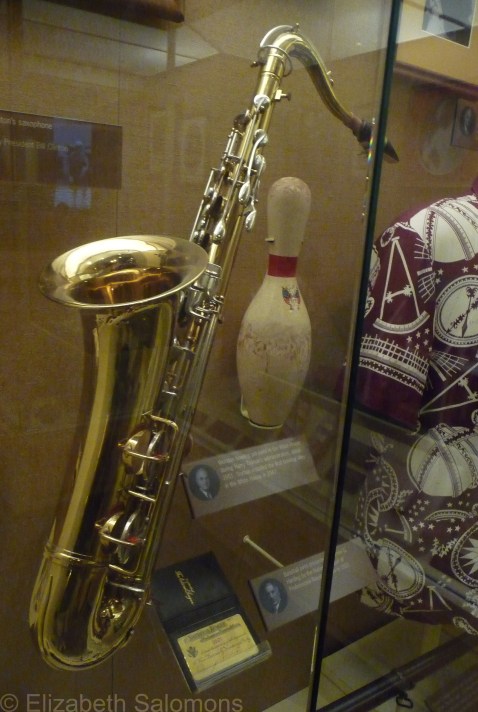
Bill Clinton’s saxophone
I was a bit creeped out by the top hat Abraham Lincoln was wearing the night he died, until it occurred to me that he probably wasn’t actually wearing it when he was shot, since he was indoors at the time.
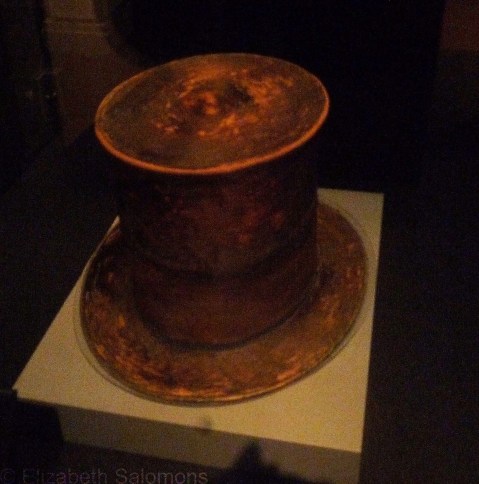
The hat worn by Abraham Lincoln the night he was assassinated
But the most popular exhibit? It was the one called, simply, The First Ladies. It included an impressive display of White House china, and display case after display case of gowns and dresses worn by the first ladies, including that Jason Wu gown worn by Michelle Obama I was talking about earlier.

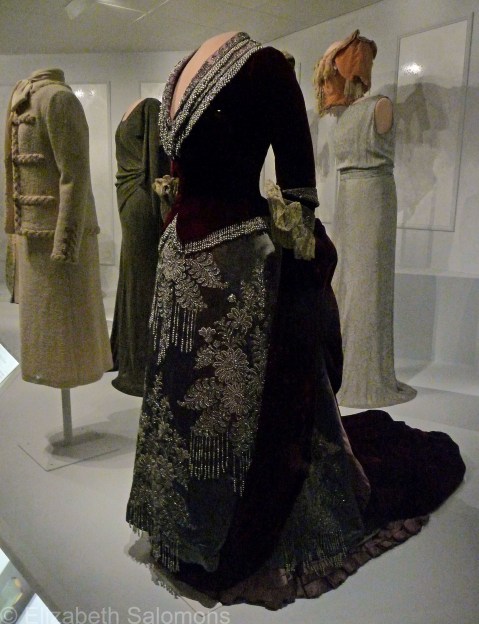
From left to right: suit worn by Nancy Reagan at the 1980 Republican National Convention, evening gown worn by Lou Hoover, evening gown worn by Caroline Harrison, and Eleanor Roosevelt’s 1933 inaugural ball gown

Michelle Obama’s 2009 inaugural ball gown

Mary Todd Lincoln’s china

A charred piece of wood from the White House, burned in 1814 by the British, and a painting of George Washington saved by Dolley Madison from the invading British soldiers
My last stop was the National Air and Space Museum.
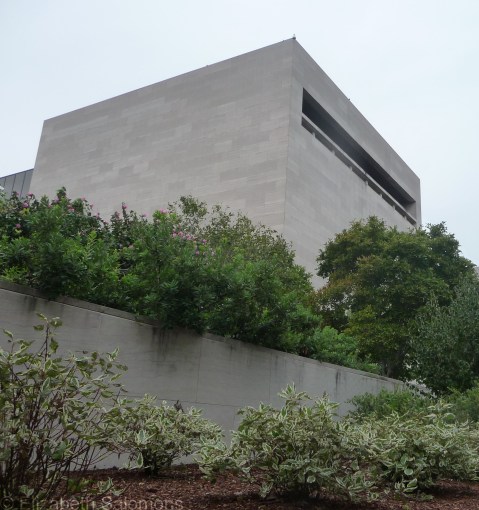
I lasted barely an hour here as it was extremely crowded and filled with screaming children. But I saw everything I wanted to see, including the 1903 Wright Flyer, the Spirit of St. Louis, and the Apollo 11 command module, Columbia. If you have even a middling interest in either aviation or space travel, check this one out.
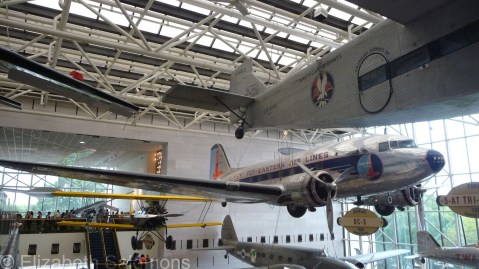
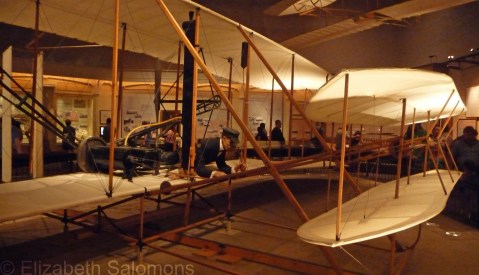


I didn’t get to any of the art galleries (there are seven), nor the Natural History Museum. I’d like to check out that zoo some day as well. The National Museum of African American History and Culture is under construction and is scheduled to open in 2015; I expect it will be fascinating.
The Smithsonian is included on most Top 10 Lists of the world’s best museums. No wonder ― it has something for everyone.
Through My Lens: Inauguration Day
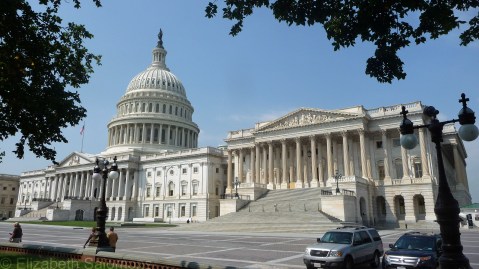
In honour of today being Inauguration Day, here is another photo of the Capitol. I was rather bemused to find out last summer that the swearing-in ceremony on Inauguration Day used to take place here, on the East Portico of the Capitol — which, as you can see, faces a parking lot. The ceremony wasn’t moved to the West Front (which faces the Mall) until 1981 when Ronald Reagan was sworn in for his first term as President.
I guess they were having trouble fitting all those spectators into the parking lot?
Dishing: Jean-Georges
 Now that you’re all firmly resolved, and well and truly into your New Year’s diets, I thought I’d write a few posts about food. Any objections? I thought not.
And since I have at least eight friends and/or family members who are looking forward to visiting New York in 2013, I’m going to return to that city to talk about a fabulous meal I enjoyed there last summer.
It would not be a stretch to say that, once I knew I was going to New York, what I was most anticipating was eating at Jean-Georges. Ever since my first meal at Market here in Vancouver, after which I discovered Jean-Georges has no less than eight restaurants in New York, I was determined to one day eat at his flagship restaurant in the Trump Tower. Last summer, I had my chance. Before leaving Vancouver, I made reservations for Sunday lunch the weekend we would be in New York.
 The décor at Jean-Georges is lovely; very light and airy with floor-to-ceiling windows overlooking Columbus Circle. We had a great table at the far end of the room against the wall. The furnishings are almost identical to the Vancouver Market restaurant. I especially loved the silverware. Call me old-fashioned, but it’s such a treat to eat with real silver at a restaurant. Feels more like an occasion, in my mind.
 We perused the menu, made some tentative choices between ourselves, then asked for some tips about which wines to choose with the courses we were thinking of ordering. Our server offered to check with the sommelier, then came back with his recommendations. Wine at Jean-Georges is served by the glass, which I appreciated as I wanted to vary what I would drink with each course.
After we made our selections, we were offered a choice of four types of bread. Then came a trio of amuse-bouches: a small glass of carrot purée, sea urchin on a small piece of dark toast, and fried okra over a miso purée. These were amazing bites of wonderment. So much flavor in one tiny bite.

Carrot purée, sea urchin, and fried okra
For my first course, I had tomato gazpacho, which was poured from a silver pitcher overtop grated fresh, soft mozzarella and a bed of olive oil foam. The gazpacho had a nice spicy touch, and I could taste summer in the tomatoes. My friend ordered charred-corn ravioli, tomato salad, and basil fondue. This plate consisted of small, bite-sized ravioli, heirloom cherry tomatoes, and a basil-based sauce. It was very tasty, and I regretted not ordering it myself.
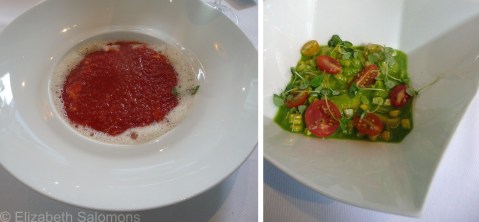
Tomato gazpacho and charred-corn ravioli
I wanted to taste one more course and so I ordered a second appetizer: a warm green asparagus salad, with Hollandaise sauce and a truffle vinaigrette, served on a bed of mesclan. This turned out to be my favourite course of the meal; I could eat asparagus every day for the rest of my life and never tire of it. The Hollandaise wasn’t too heavy, and the asparagus was perfectly steamed.

Asparagus salad
For my entrée, I selected the sesame-crusted salmon, which was served over a grilled eggplant purée and red chili butter. The butter provided a nice contrast, both in flavour and colour. It had a real kick, but was delicious with the salmon, which was perfectly cooked and a lovely pink colour.

Sesame-crusted salmon
My friend ordered the parmesan-crusted confit leg of organic chicken, with artichoke, basil, and lemon butter. She thought the lemon was too strong, but her chicken was moist and tender, just as a confit should be, and the parmesan crust was perfect. (Travel tip: Always travel with a friend who doesn’t mind you trying her food. You get to taste two meals for the price of one.)

Parmesan-crusted confit leg of chicken
Desserts at Jean-Georges are served as tastings: my friend ordered the cherry and I had the chocolate. She got sour cherry crème brûlée and marzipan, cherry sorbet, and deconstructed black forest ― the cream, cherries, and chocolate were served individually on a black slate slab.

Cherry dessert tasting
My chocolate tastings included white chocolate meringue with a layer of meyer lemon ice and cinnamon over top. I can’t say I tasted the cinnamon and, like my friend with her chicken, I found the lemon overpowering, almost to the point where I felt I was eating a dessert laced with household cleanser. However, Jean-Georges’ signature molten chocolate cake was delicious, with the vanilla bean ice cream on the side.
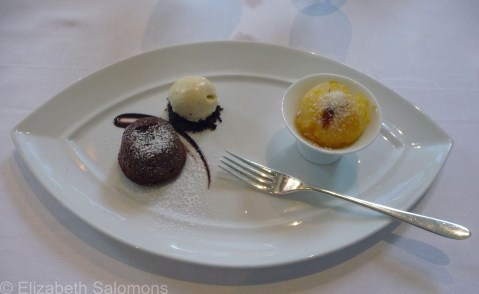
Chocolate dessert tasting
To go with our desserts, we each ordered a glass of Banyuls Reserva from Domaine La Tour Vieille in Roussillon. I know Banyuls from my visit to Roussillon many years ago, and it was the perfect accompaniment for both the chocolate- and cherry-based desserts.
But wait! There was more! We had scarcely made a start on our desserts when we were served a plate of homemade chocolates, another plate of miniature raspberry macaroons, and Jean-Georges’ homemade marshmallow, which is most definitely a step above the Kraft variety.
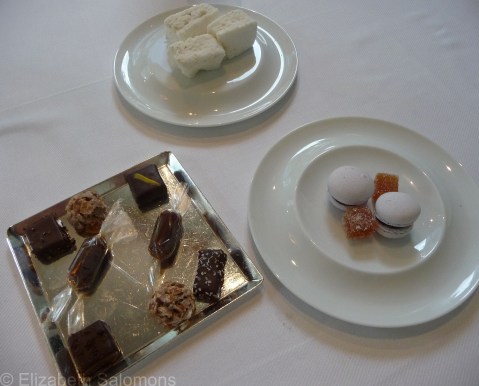
The finale
Although we had one server who seemed to be in charge of our table, we were waited on by several people throughout our lunch. The service was impeccably timed. Each dish was delivered in unison by two servers, and cleared the same way.
 After we had ordered our desserts, I asked to see the main menu once again, and when a server (not one of ours) noticed I was taking photos of the menu, he offered to give me a copy of both menus to take home. As he handed me the dark brown folder, he asked where we were from. He was very excited upon hearing I was from Vancouver, and told us he had a colleague from Vancouver. At this point, my friend jumped in and explained that I had eaten at Jean-Georges’ restaurant in Vancouver, and had been impressed, which was why we were here.
“That’s where my colleague worked!” he said. He then asked how the food compared and whether the meal I had just had was quite different from how food was served in the Vancouver restaurant.
“It’s very similar,” I said. “Just as delicious, but …” I paused as I thought for a second how to explain the difference, then said, “… but this is New York!”
He smiled knowingly and nodded. “Yeah,” he agreed. He reminded me of a young Woody Allen. Right down to his Noo Yawk accent and dark-rimmed glasses.
It was a delightful way to spend a Sunday afternoon in New York City. Lunch at Jean-Georges is a great deal as it’s prix fixe for two courses, with the option to order additional courses as I did. It was my first experience in a three-star Michelin restaurant, and now I have a new goal: to go back and try Jean-Georges’ seven other New York restaurants.
Fort McHenry and Fort York
This year being the bicentennial of the War of 1812, we Canadians have been bombarded with what strikes me as an odd media campaign celebrating our nationhood. Odd, because we Canadians don’t typically yell and shout out our patriotism. Odd, because videos like this one
seem to be doing a pretty good job at celebrating our nationhood at the expensive of the other guys. You know, the ones who are suppose to be Canada’s Best Friend. Longest undefended border and all that.
Truth is, I don’t remember ever being taught anything in school about the War of 1812. That might be because I was (mostly) educated in Alberta, and the war took place in Upper Canada (what we now call Ontario), Lower Canada (what we now call Quebec), and the United States. Or maybe it’s because we Canadians don’t really give that war much thought.
What little I know about the War of 1812 is that it had something to do with the British boarding American merchant ships and drafting American sailors into the British Navy. (Britain was busy fighting Napoleon at the time and needed all the sailors it could get its hands on.) The Americans didn’t like that much (who would?) and they declared war on the British.
What little I have read about the War of 1812 says that nobody actually won. It more or less came to a stalemate, and sometime in 1814 the powers that be worked out an agreement called the Treaty of Ghent that more or less left everything pre-war as the status quo. And ― oh yeah ― we burned the White House. That was in retaliation for the Yanks burning our Parliament Buildings in York (what we now call Toronto), which was then the capital of Upper Canada.
(As an aside: burning government houses was considered bad form back then, and trashing non-military targets simply wasn’t done in the age of the Gentlemen’s War. Which is why the Brits got a tad upset and why they turned around and burned the White House. I find it ironic that everybody remembers the Brits burned the White House, but nobody seems to remember that the Americans burned York.)
(And, just one more aside: I found out during my visit to Washington DC last summer that the White House came to be called that because, after said burning, it was painted white to cover up all the soot marks. President Theodore Roosevelt made it official almost a hundred years later by having stationery printed with the words “The White House” at the top.)
Back to the war: a more accurate assessment of the War of 1812 might be that we both won. The Americans call it their “second war of independence,” and after it was over we Canadians began to think of ourselves as a nation, and not just some fur trading post for the British.
And so (finally!), to the main topic of this blog post. On my visits last summer to Baltimore and Toronto, with the War of 1812 being foremost in my mind due to our tax dollars hard at work, I decided to visit Fort McHenry and Fort York.
 Fort McHenry, I discovered, is not just a National Historic Monument, but a National Monument and Historic Shrine. That was pretty much evident during the video presentation I watched at the Visitors’ Center. The last image of the video, with the American anthem playing after the voice-over ends, is of the American flag. At the same time, the screen rises so that you are looking outdoors at the American flag flying over Fort McHenry. I tried not to snicker, but it was a bit hokey.
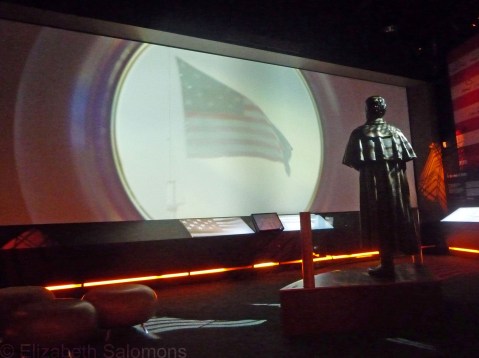
The end of the video presentation at the Fort McHenry Visitor’s Center. The statue is of Francis Scott Key, and he’s watching the Star Spangled Banner, still waving strong after the British bombarded the fort with rockets and guns for 25 hours.
Back to the War of 1812: the British knew they needed to capture Fort McHenry if their campaign against Baltimore was to succeed. They attacked the fort at dawn on September 13, 1814, bombarding the fort for a day and a night, but eventually they gave up and stopped the bombardment. The problem was, the American guns had a range of 1.5 miles, and the British guns had a range of two miles. The British navy parked itself just out of range of Fort McHenry’s guns, but that meant the shells from their guns couldn’t reach Fort McHenry accurately. Only two shells out of over 1500 fired actually hit the fort. Talk about a waste of ammunition.

Battery of guns overlooking the Patapsco River, with Francis Scott Key Bridge in the distance. During the Battle of Fort McHenry, the British fleet parked itself well past where that bridge now spans the river.

Another gun overlooking the Patapsco River

And yet another gun pointed at the Patapsco River
After the bombardment stopped, Francis Scott Key, an American lawyer who was being held by the British on a ship out in the Patapsco River, looked towards the fort and saw the large flag still flying. That told him the Americans were still in control of the fort. That same flag ― which measures an incredible 42 by 30 feet ― is now on display at the Smithsonian’s National Museum of American History.

When weather permits, an American flag the same dimensions of the original Star Spangled Banner is flown over Fort McHenry.
Francis Scott Key wrote the words to “The Star Spangled Banner” after the British released him and while he was on his way back to Baltimore. The “bombs bursting in air” line in the anthem refers to the British shells that were fired at Fort McHenry.
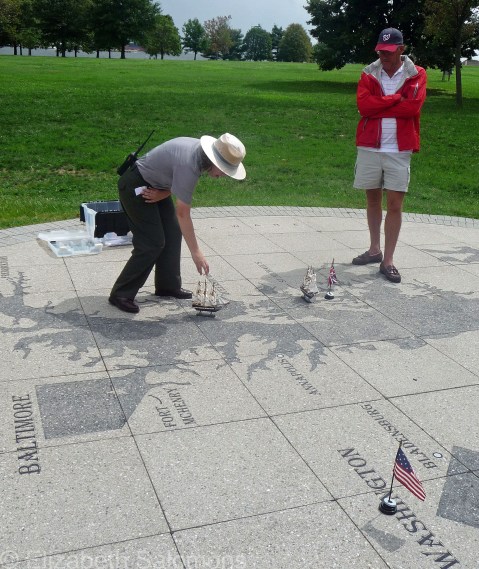
The national park ranger gives us a history lesson. I liked her model ships.
There isn’t much to see in Fort McHenry itself as it’s fairly small and there aren’t many buildings still standing. But you certainly get a feel for why its location was so important: it sits at the end of a narrow peninsula right at the entrance to Baltimore’s harbour, and is in a perfect position to defend the city. I took a water taxi out to the fort from Baltimore’s Inner Harbor, and it was a lovely, breezy way to see the harbour.

The barracks at Fort McHenry

Another view of the barracks. The barn-shaped building is the powder magazine.
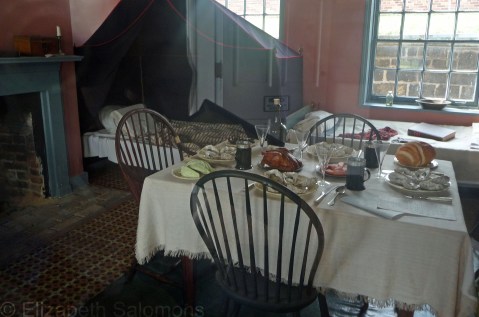
The junior officers’ quarters. Note the plates of oysters. Clearly the junior officers ate well.
Fort York, on the other hand, is located in the midst of a bustling, growing city, right beside Toronto’s Gardiner Expressway. This made for some intriguing photos as I looked for interesting angles.


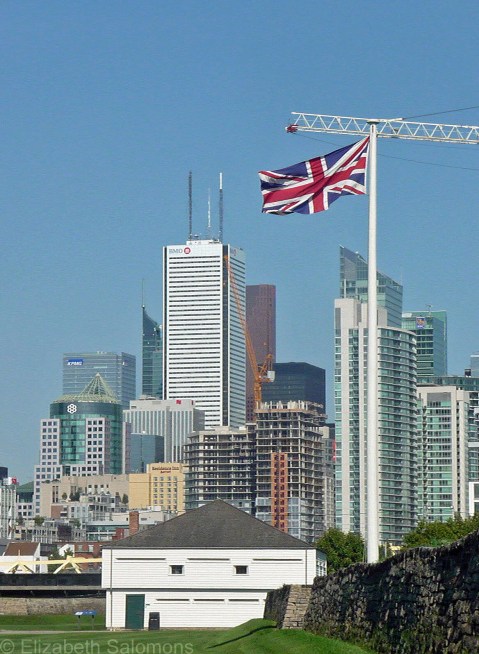


The museum displays at Fort York could use some updating, but it had many more rooms furnished in period pieces than did Fort McHenry, which makes a visit much more interesting. (Click on any of the photos below to open a slide show.)


The Americans attacked Fort York on April 27, 1813. The British were vastly outnumbered (750 British troops, 50 Mississauga and Ojibway warriors, and 12 guns vs. 2550 Americans, 15 naval vessels, and 85 cannon), and lost the battle, but the Americans suffered almost double the casualties of the British when the British blew up their own gunpowder magazine. The battle lasted six hours and cost 157 British lives and 320 American lives, including the American field commander. Afterwards, the Americans burned and looted the city of York, including the Government House and the Parliament Buildings (see above), and occupied the town for six days.

The Blue Barracks were built in 1814 to house the junior officers. These are a reconstruction.

The Brick Barracks and Mess, built in 1815, housed the unmarried officers and served as the mess for all of the garrison’s officers.

The Stone Magazine was built in 1815 and had room for 900 barrels of gunpowder. Its walls are two metres thick.
The Battle of York was a clear victory for the Americans, and marked their first invasion of British territory since the start of the war. But the battle itself wasn’t considered crucial to the outcome of the war and the Americans saw taking York merely as a stepping stone to the real prize: the Niagara Peninsula and, eventually, Kingston.
The Battle of Fort McHenry, on the other hand, was considered a turning point in the war, saved Baltimore from British invasion, and contributed to the early mythology of a nation still trying to forge its identity.
As for me, a gap in my Canadian history education has been filled, and my knowledge about the War of 1812 is now more complete. My government would be proud of me.


 There and Back Again