
The Acropolis
Since every time I turned around in Athens, I saw the Acropolis, it was only a matter of time before I got up close and personal.
The Acropolis is a sprawling complex of ruins that sits up high on a rocky plateau overlooking the city. Its name says it all: the word comes from the Greek akron (high point) and polis (city).
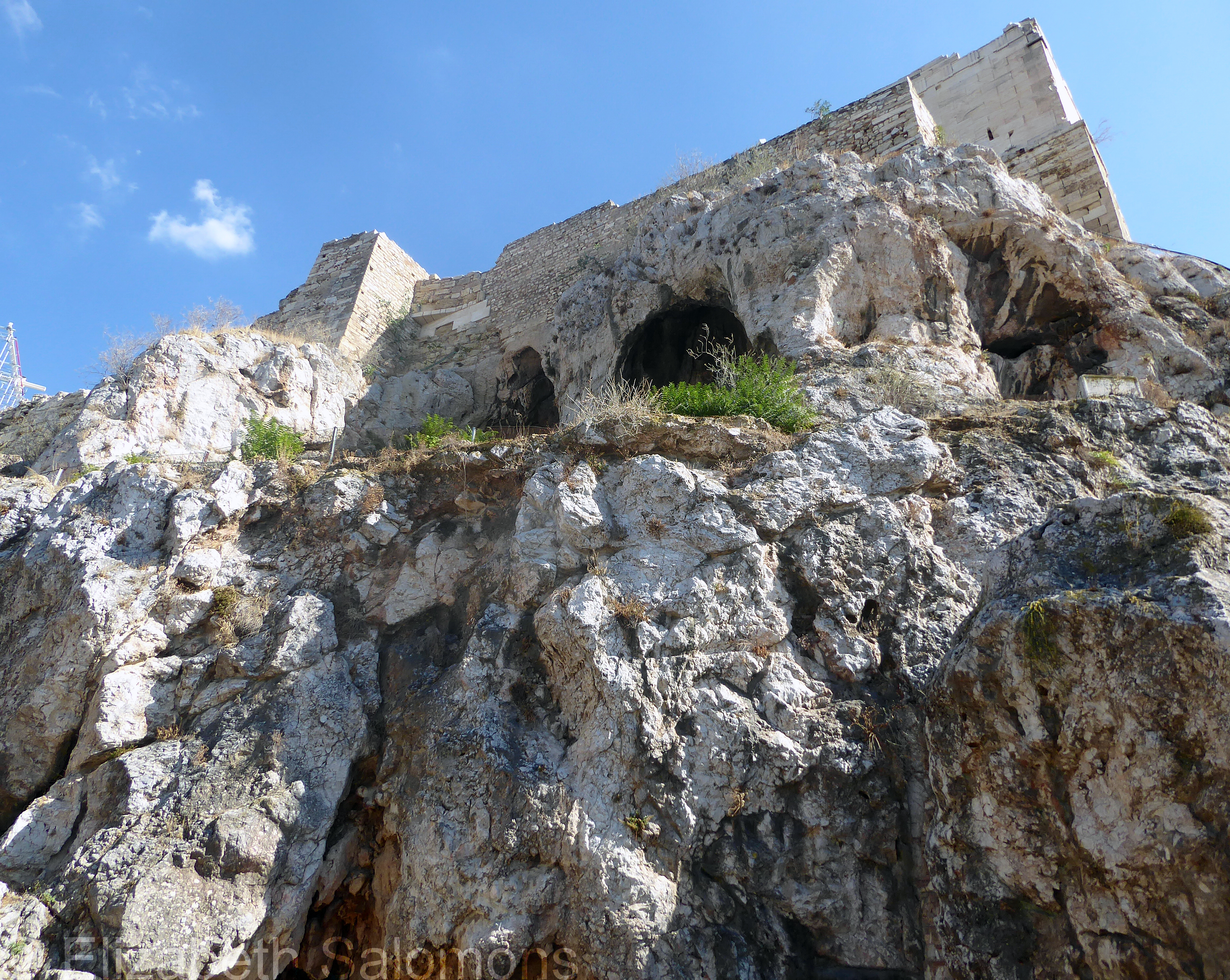
The first fortifications went up in the thirteenth century BCE and had a military purpose; around eighth century BCE, the site shifted to a religious focus dedicated to Athena, the goddess of Athens. A massive building program undertaken in the fifth century BCE resulted in the structures that have showcased ancient Greek’s architecture and art ever since.
I came in by the southeastern entrance, where a switchback trail leads you slowly up the hillside (called the “slopes”), past many ruins that serve as a teaser for the main event.


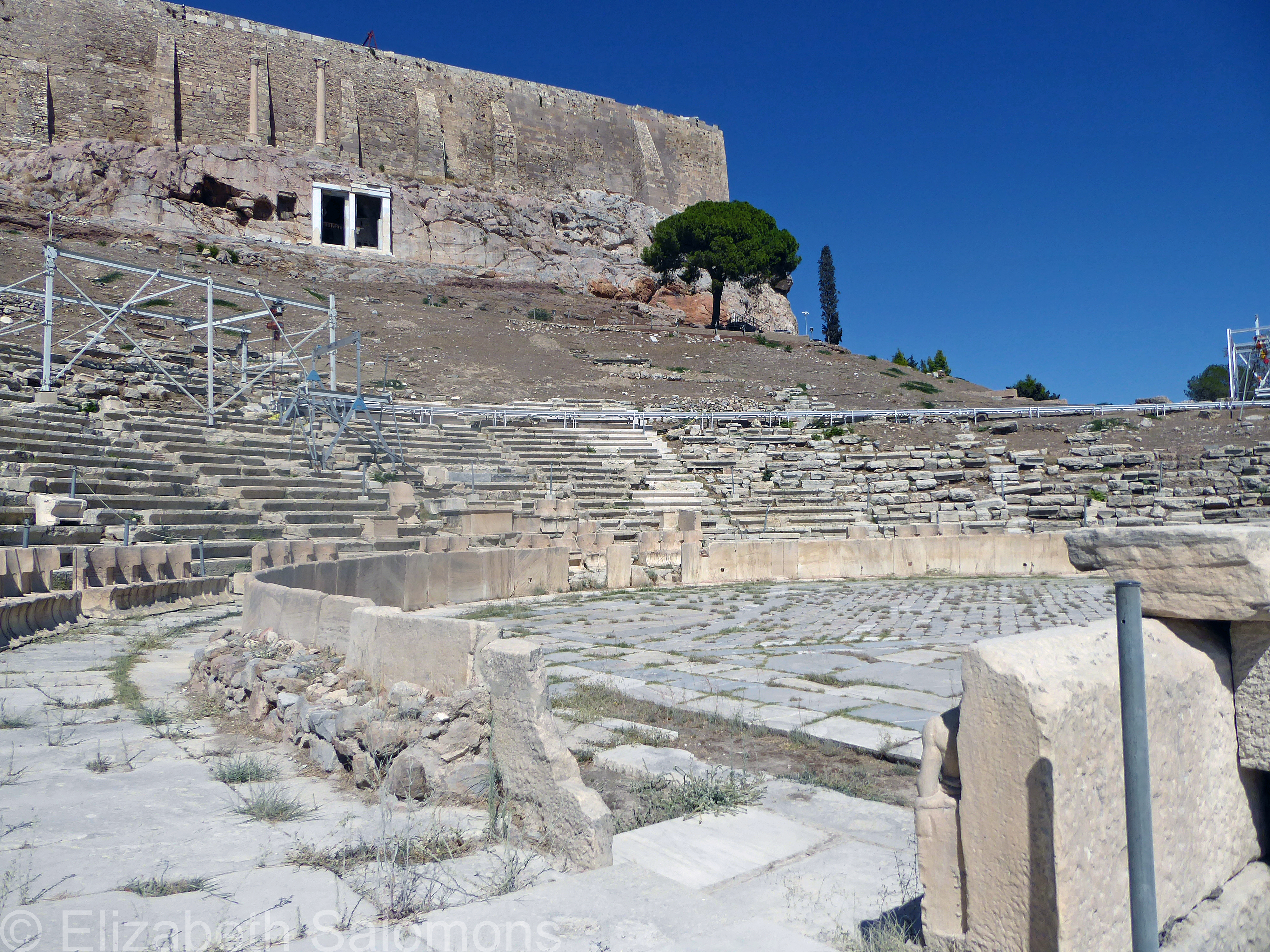
The Theatre of Dionysos is also located on the southern slopes. First built out of wood in the sixth century BCE, it was redone in stone and marble three hundred years later. It had room for 17,000 spectators seated in 64 tiers, of which 20 still survive.
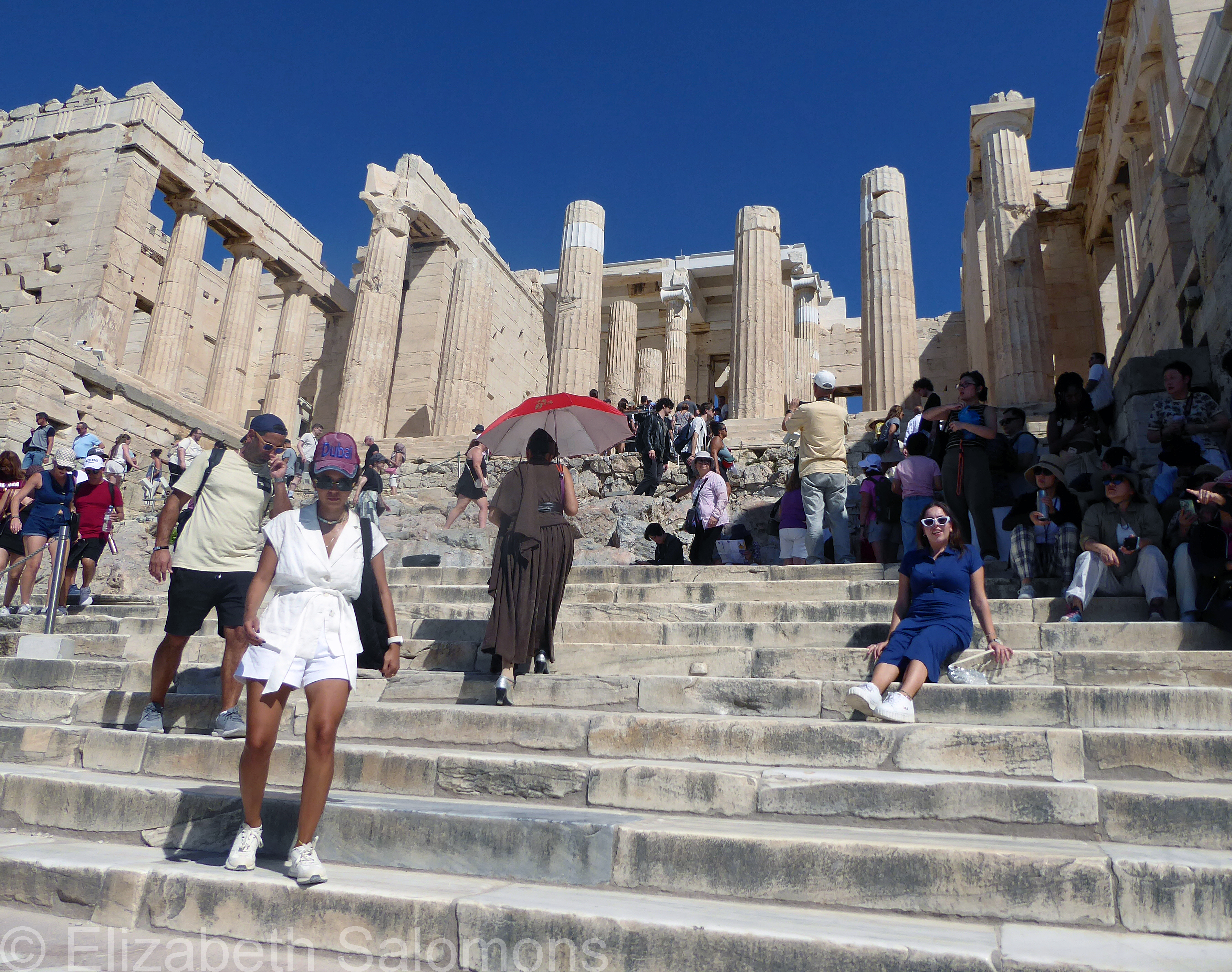
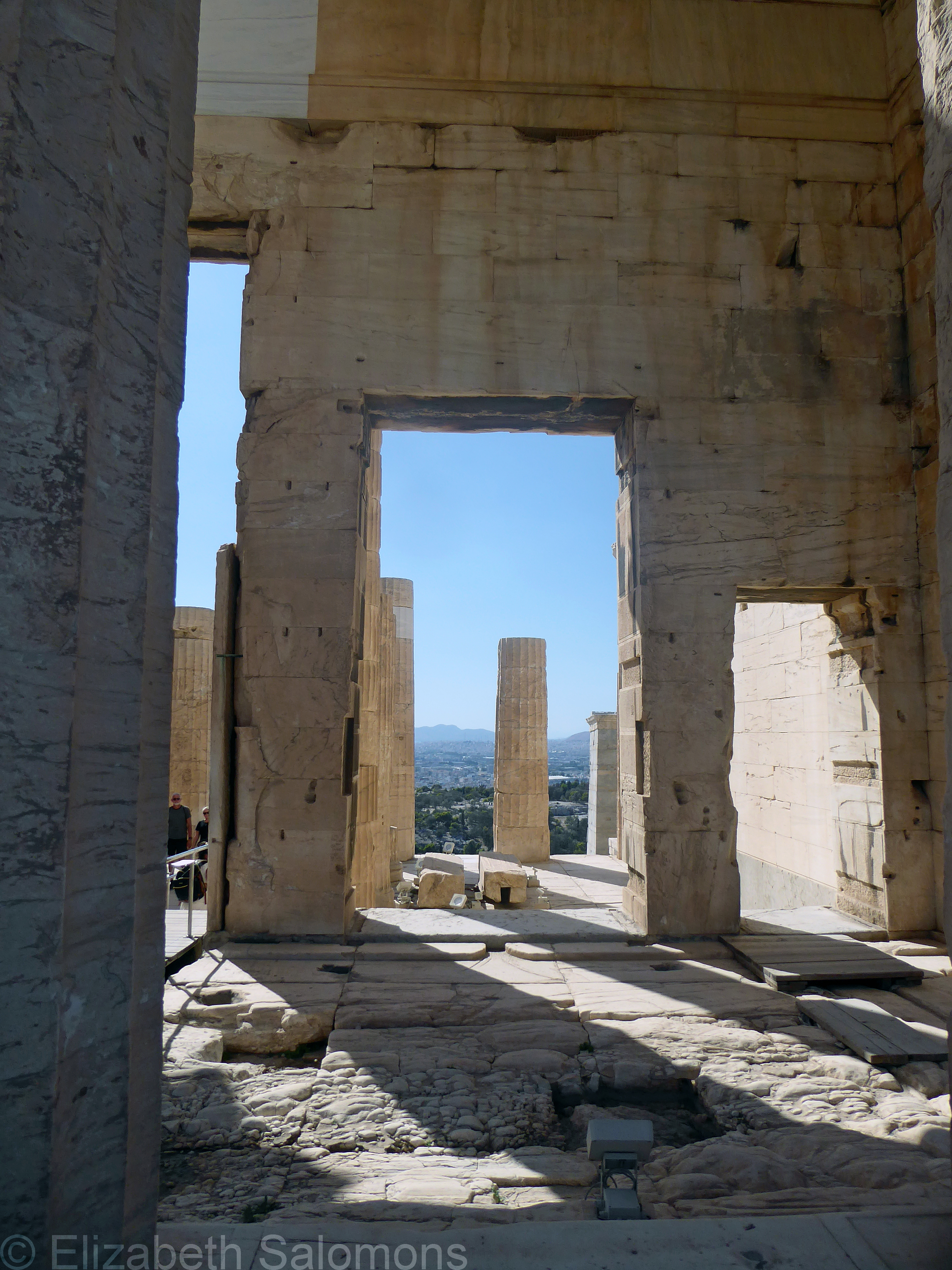
The Propylaea, built between 437 and 432 BCE, marks the entrance to the Acropolis. It was the only part of the Acropolis where I could not manage to get a photo without massive numbers of tourists.
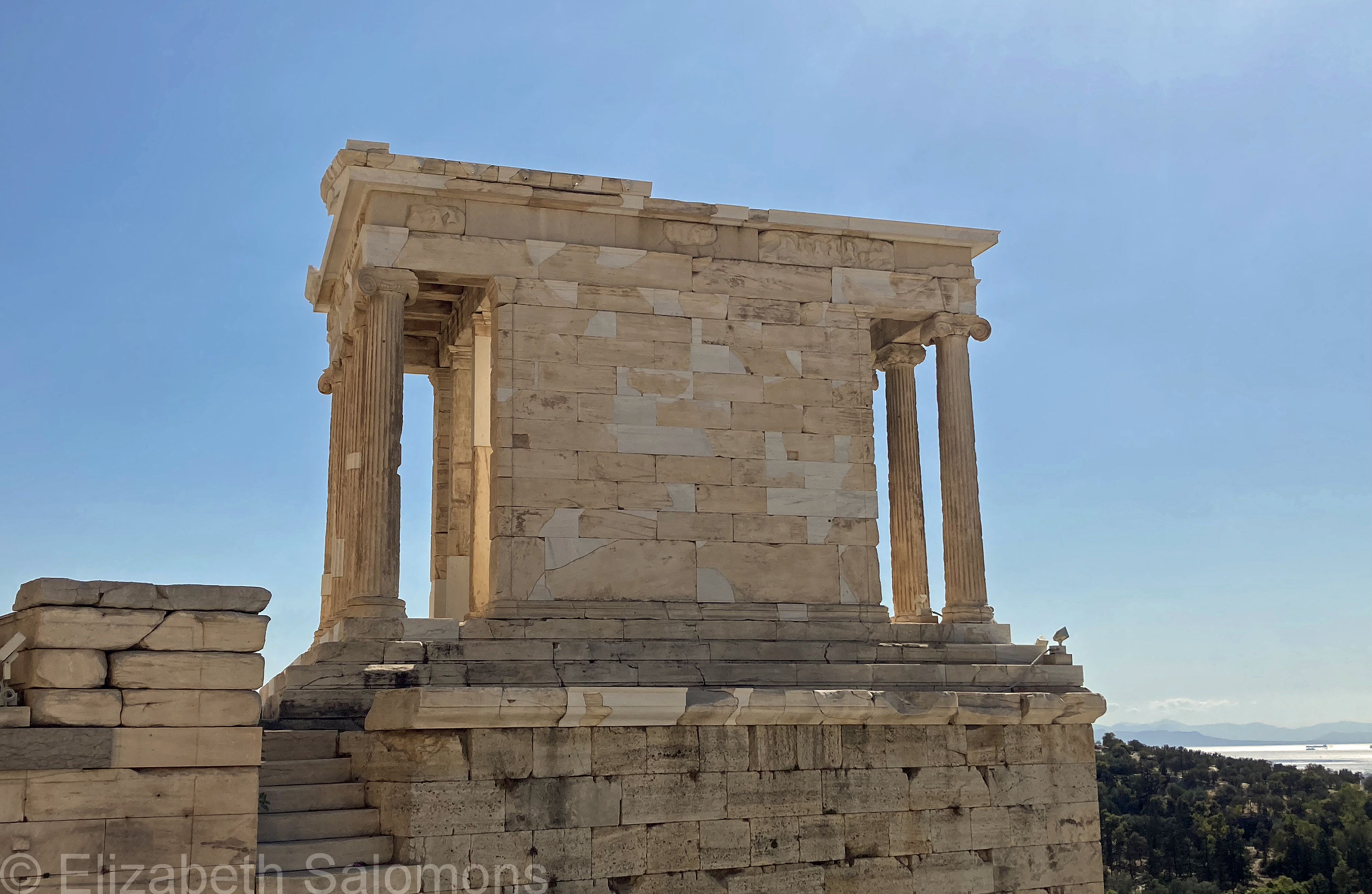
The Temple of Athena Nike (Athena as Victory) was completed in 425 BCE. It stands slightly before the Propylaea.
The Temple of Athena Polias (Athena of the City), or the Erechtheion, was finished in 406 BCE. This Ionic temple was built on the holiest part of the Acropolis, where Poseidon (god of the sea) struck the ground with his trident, creating a spring, and where Athena (goddess of wisdom) planted an olive tree.

(Quick aside: Athena and Poseidon were competing to see who would be patron of the newly founded city-state. The water in Poseidon’s spring was salty and so the citizens chose the olive tree, which would provide them with food, oil, and shade. This made Athena the winner and gave the city its name.)
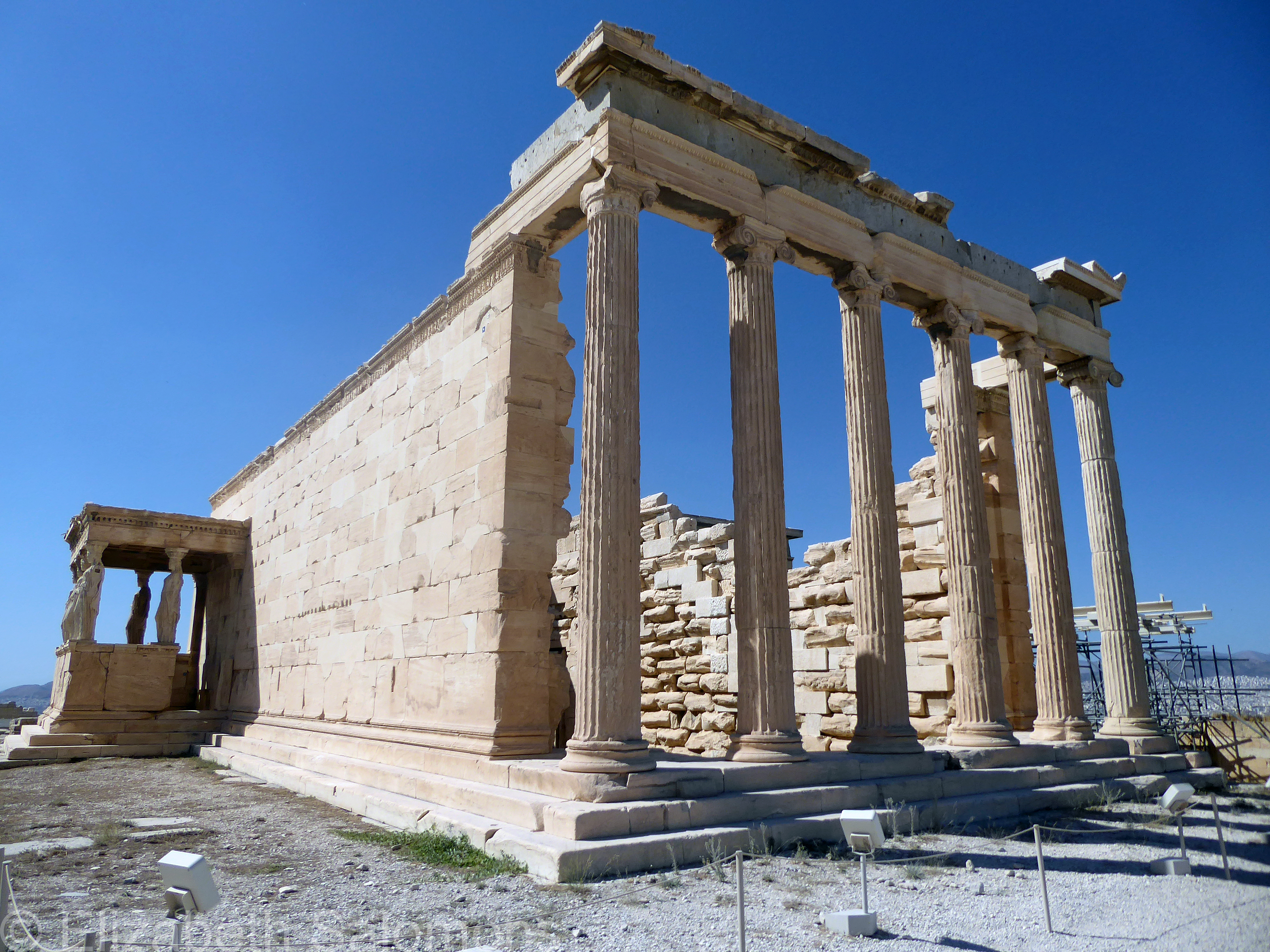
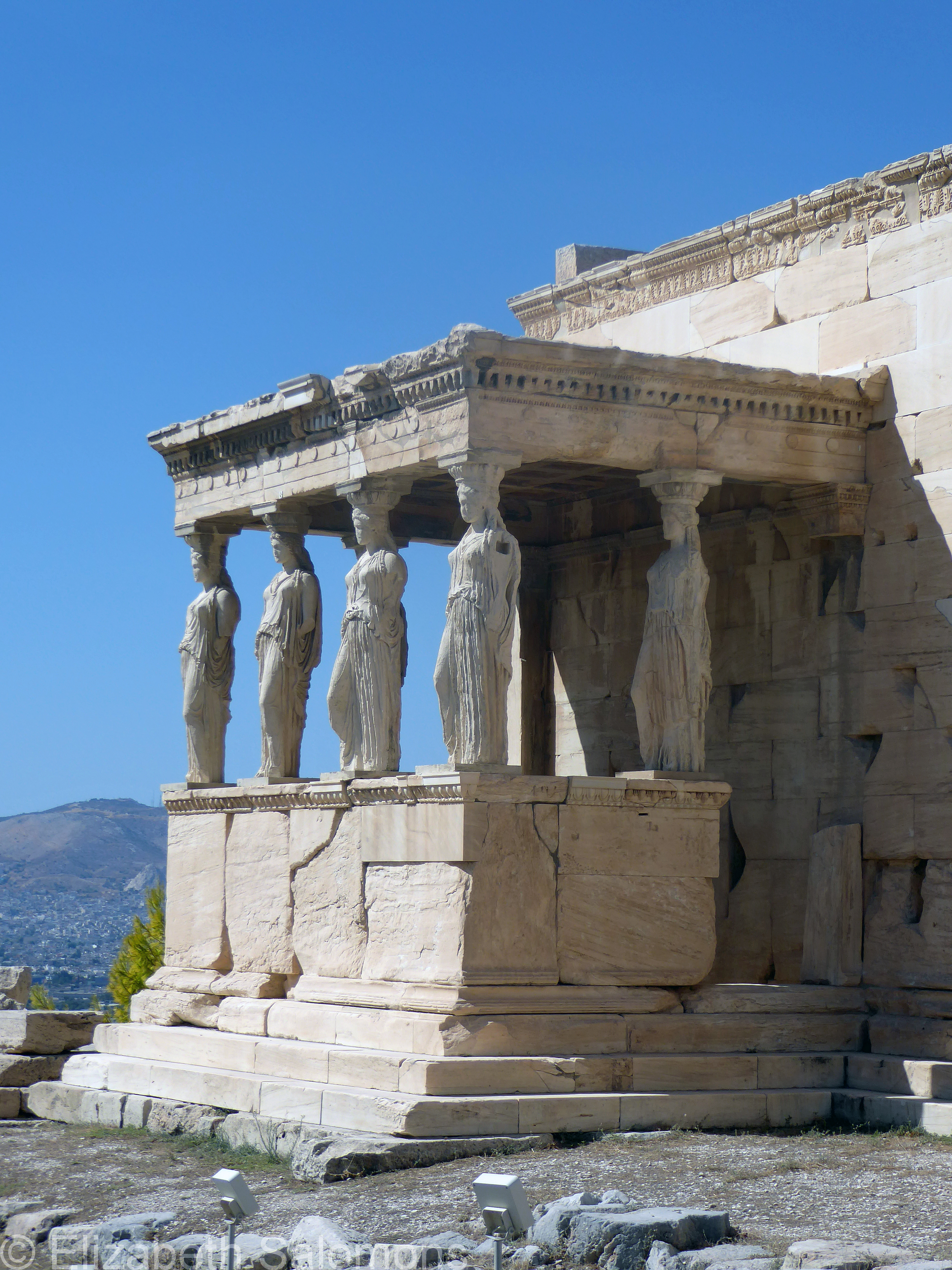
The six maiden columns of the Erechtheion, called the Caryatids, were completed in 415 BCE. The ones here are plaster replicas. Five of the originals are in the Acropolis Museum and the sixth is in the British Museum.
The largest structure on the Acropolis site is the Parthenon. This Doric temple, completed between 447 and 438 BCE, was dedicated to the goddess Athena Parthenos (Athena the Virgin). Its foundations are slightly concave and the columns slightly convex — an optical illusion that allows both to appear straight. When it was first built, its friezes were brightly painted.
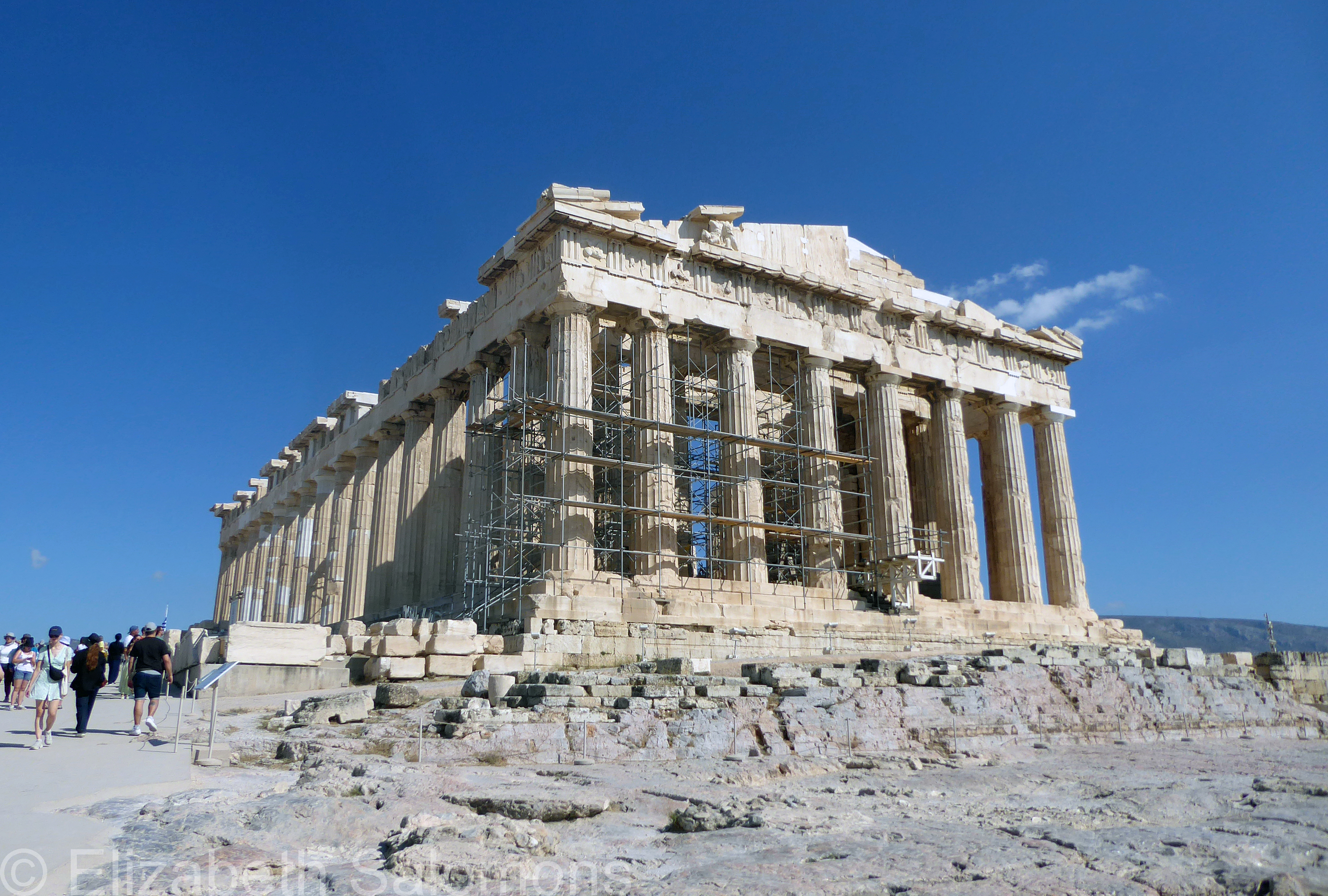
Sometime in the late third or fourth century CE, the interior of Pantheon was destroyed in a fire. In the sixth century CE, it was converted to an Orthodox church. In 1204, crusaders turned it into a Catholic church. When the Ottomans conquered Athens in 1458, it was converted to a mosque. And in 1687, when the Venetians held a siege of the Acropolis, a cannonball made a direct hit on the Parthenon. As it was being used as a powder magazine, the explosion destroyed the roof and much of its walls.
But the most severe damage to the Parthenon? That was between 1801 and 1812, when Lord Elgin carted half of its remaining sculptures off to England, along with sculptures from the Erechtheion, the Temple of Athena Nike, and the Propylaea. They remain there, displayed in the British Museum. The Greeks, naturally, want them back. The Elgin Marbles have been a source of tension between the two countries ever since.
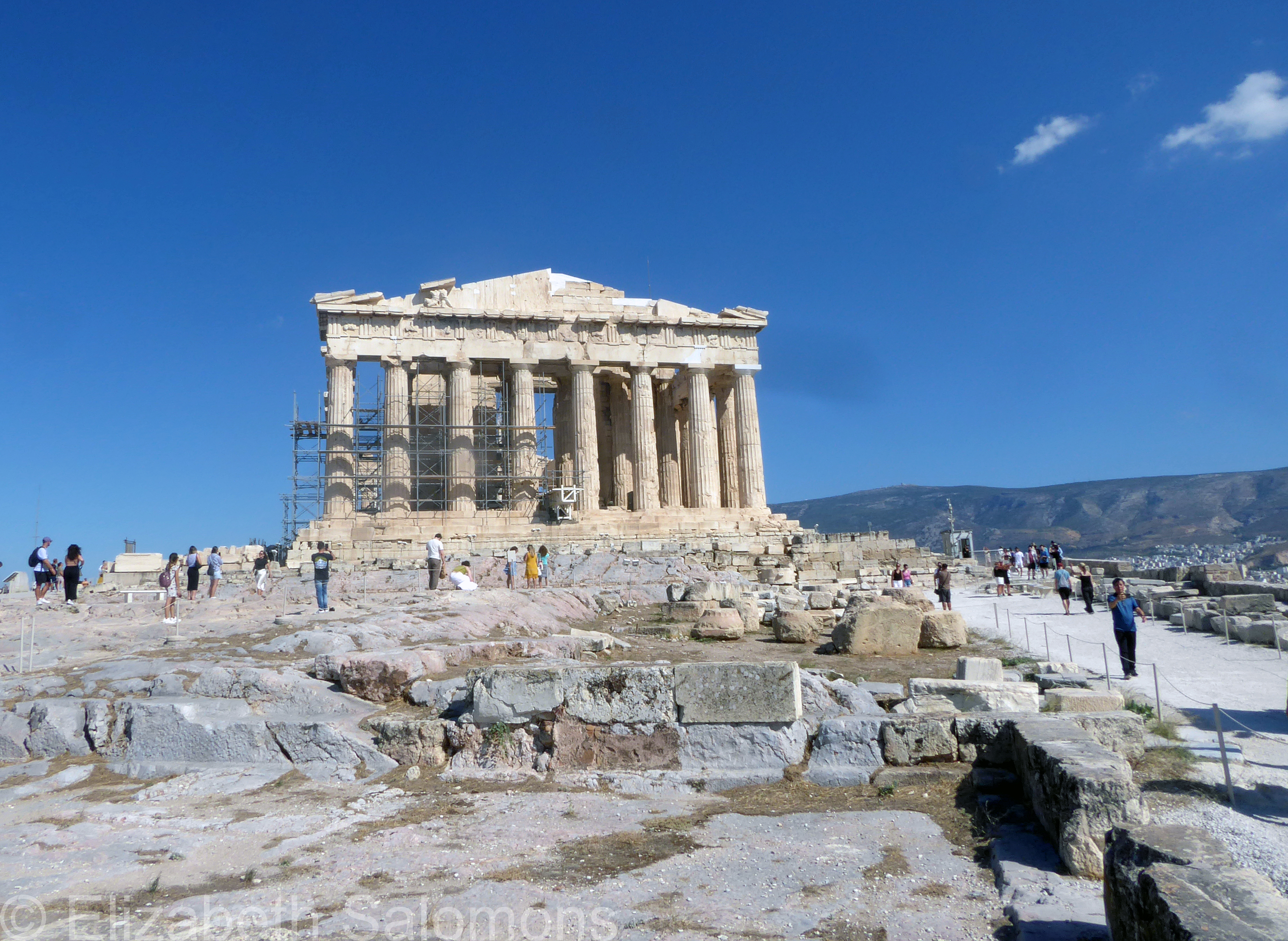
It doesn’t take long to walk through the Acropolis. I took my time, stretching my visit out to almost two hours (spent mostly waiting for people to move out of the frame as I took my photos), but you could speed through the entire complex in 30 minutes if you were in a rush. Bring plenty of water — it was hot, even in late September, and there’s no shade.
The Acropolis has been operating as an archaeological site since 1833, shortly after the establishment of the modern Greek state. It has always served as the religious and cultural centre of Athens, but it is also a symbol of the birthplace of democracy and the foundation of Western civilization. Yeah, no pressure there. Given the increasing fragility of democracies around the world (particularly noticeable this year, I might add), today seems like a good day to reflect on that legacy.
Merry Christmas!
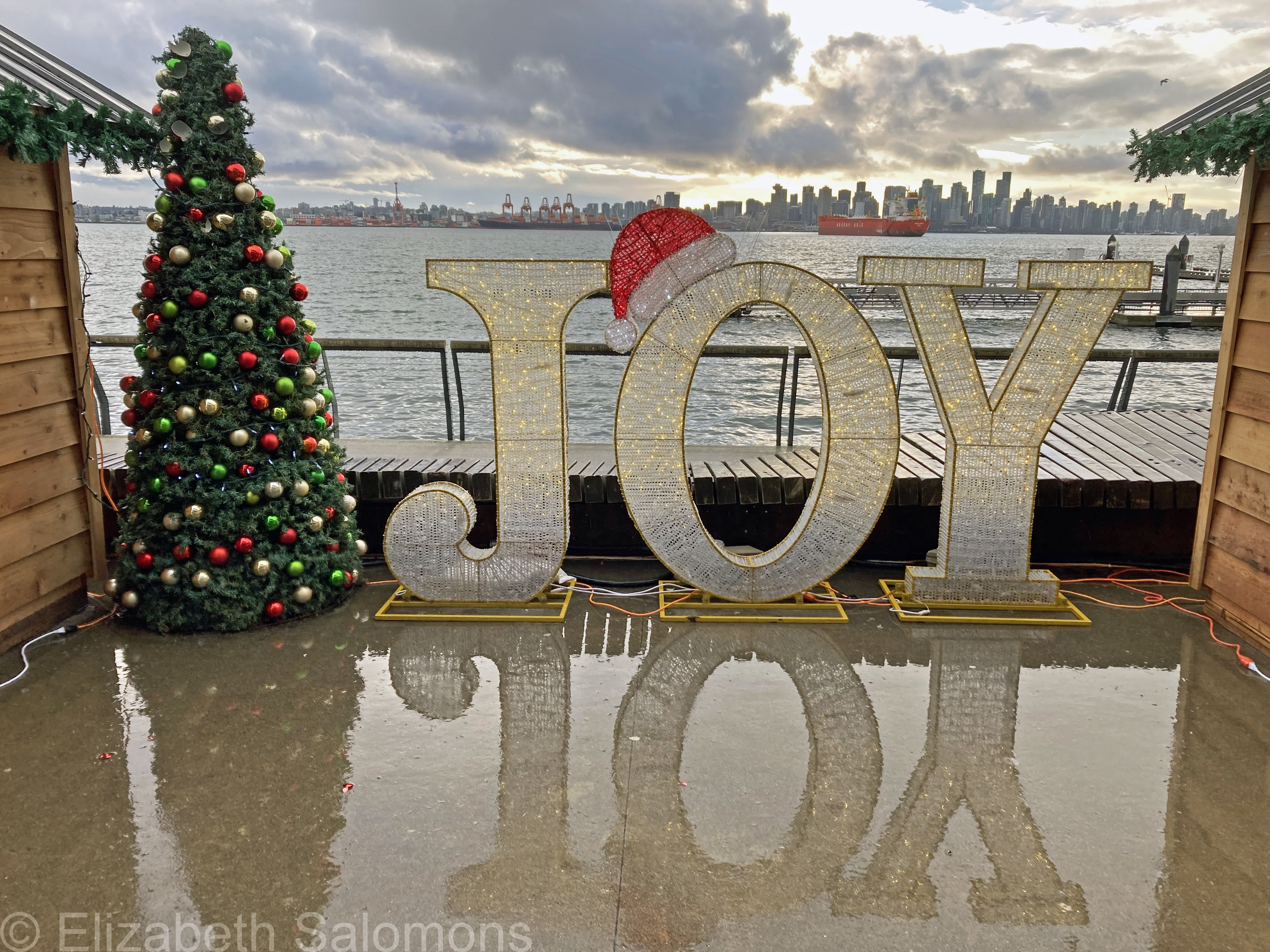
Shipyards Christmas Market, North Vancouver
Through My Lens: Shipyards Christmas Market
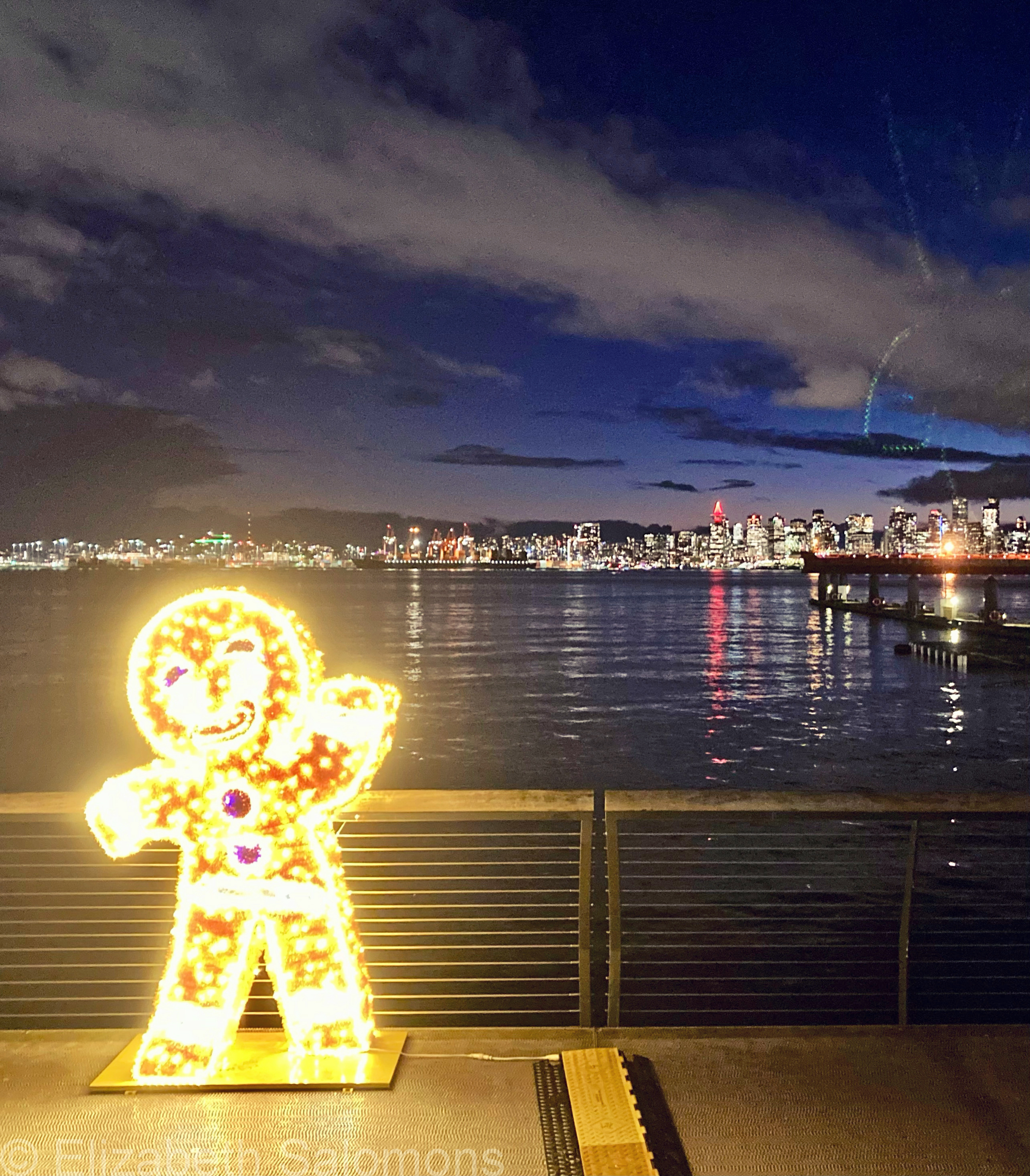
There’s a new Christmas market in town and I, for one, am beyond happy about it. Located at the Shipyards District in North Vancouver, it’s already two years old and this year’s market is even bigger and better than last year’s. In fact, it’s become so popular, they’ve put on extra sailings of the SeaBus to get you there.
And, bonus: that view of downtown Vancouver.
Happy Birthday, Jane Austen!
I wasn’t planning to write about the semiquincentennial of the birth of Jane Austen, born on this day in 1775. After all, I’d already written a post on the bicentennial of her death some years ago.
But when I woke up this morning, I thought, “C’mon. It’s Jane Austen! You need to post something.”
However, I’m a bit low on photos that represent Jane. The only place I’ve been to that connects with her life is Bath — and she didn’t much care for Bath. I was planning to visit Winchester, where she died and was buried, and where the house she lived the last eight years of her life has been turned into a museum.
In fact, I left Bath fully intending to go directly to Winchester. But after changing trains in Southampton, and realizing the train I had boarded was continuing on to London after it stopped in Winchester, I changed my mind. (You can do things like that with a BritRail Pass. I have to say: it’s very freeing, travelling that way.)
And so, I ended up in London that night. Winchester — and Jane Austen — would have to wait.
I always say, when travelling, that you should leave something undone to make sure you come back. One of these days (years?), I will return to Jane Austen country.
In the meantime, in honour of Jane Austen’s 250th birthday, here’s a photo of the Roman baths in Bath. I like the idea that Jane and I have both been to these baths — even though I missed her by almost 200 years.

Views of the Acropolis
The first thing I noticed while in Athens is how you see the Acropolis rising above the city every time you turn around. (It made me think of Paris, where you see the Eiffel Tower every time you turn around.)
Here are a few of the views I captured.
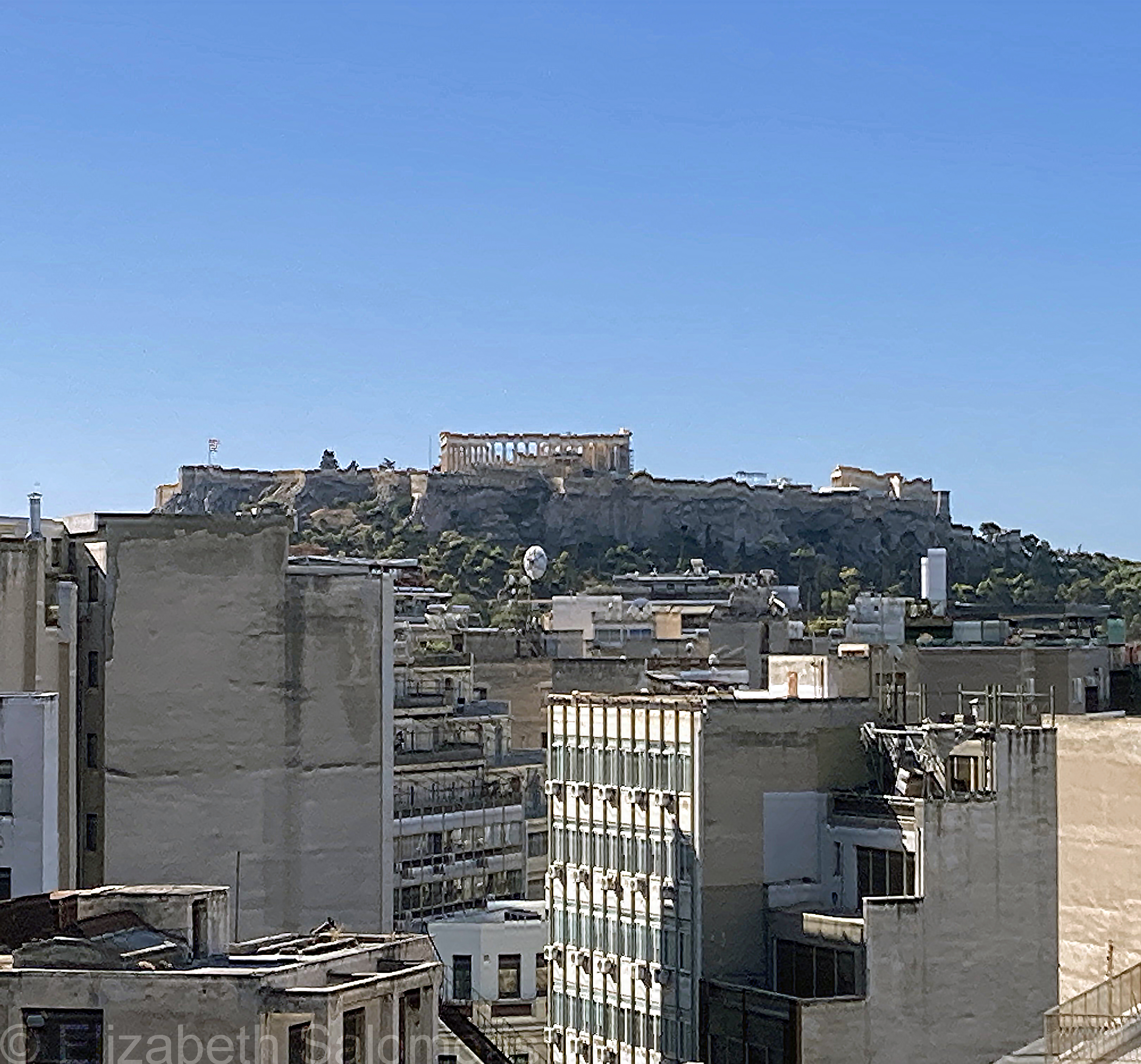
From the breakfast room at my hotel

From the top floor of the Maria Callas Museum

From the Acropolis Museum

From the Pnyx
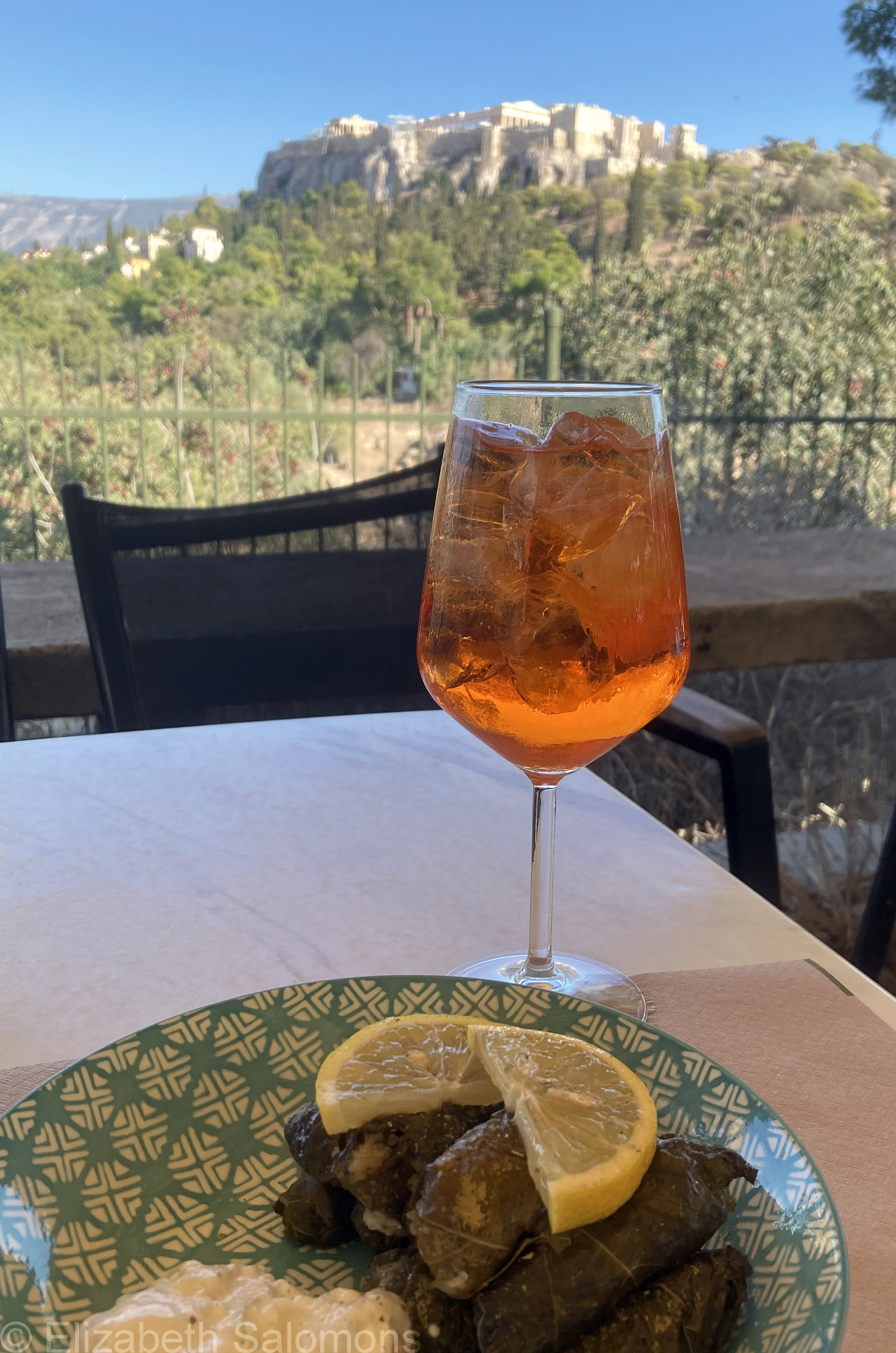
From Plateia Jacqueline de Romilly (while enjoying
an Aperol spritz and some dolmadakia)
Through My Lens: Sea Squill on Serifos

One advantage of travelling solo, I (re)discovered this past fall, is that nobody gets impatient when you stop to take yet another photo. It took me several tries to get a shot I was happy with of this plant, which I came across one day while wandering the hillsides of Serifos, a Cycladic island in the Aegean Sea. (I’ve since learned that the plant is called a sea squill.)
I have lots more photos to share from my month in the Mediterranean.
Let’s get started.
Vancouver Goldeneyes Home Opener
Vancouver gets behind its professional sports teams in a pretty big way. And now there’s a new team in town to cheer on. That would be the PWHL’s Vancouver Goldeneyes.
I was one of 14,958 lucky fans sitting in the Pacific Coliseum last night who got to watch the season home opener and the first game in franchise history. The atmosphere was electric.
The Goldeneyes are the first Professional Women’s Hockey League (PWHL) team to be an anchor tenant in their arena. Which means they are the only PWHL team that gets to play on ice branded with their team logo. It may seem like a small thing, but if you listen to the media interviews the players gave after the game, you realize, for them, it is huge.
These photos aren’t the greatest as I was shooting with a four-year old iPhone that’s pretty bad with distances. Even so, it was fun documenting a series of franchise “firsts” and I’m so glad I was there.

First sell-out game
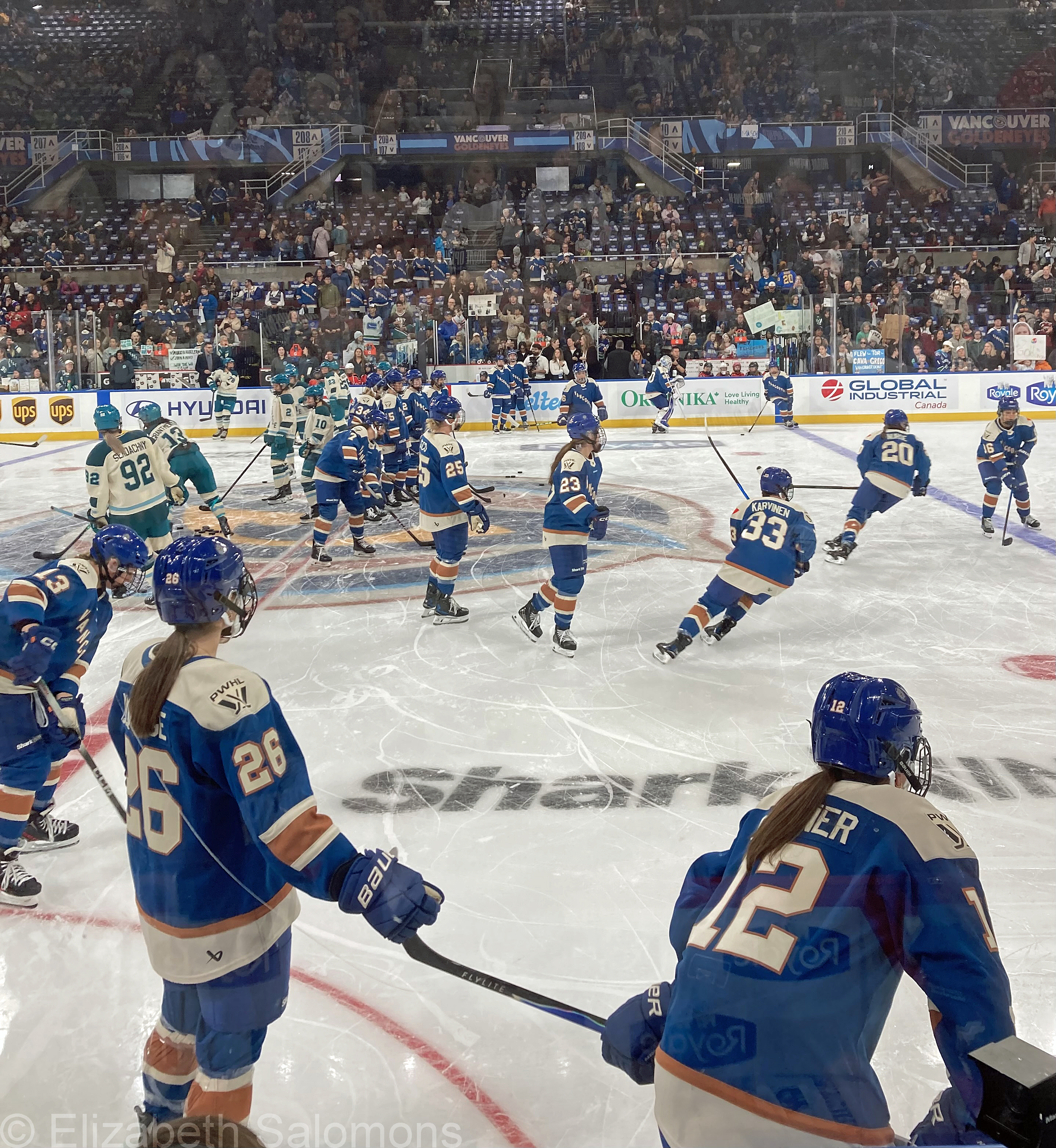
First warm-up

First ceremonial puck drop
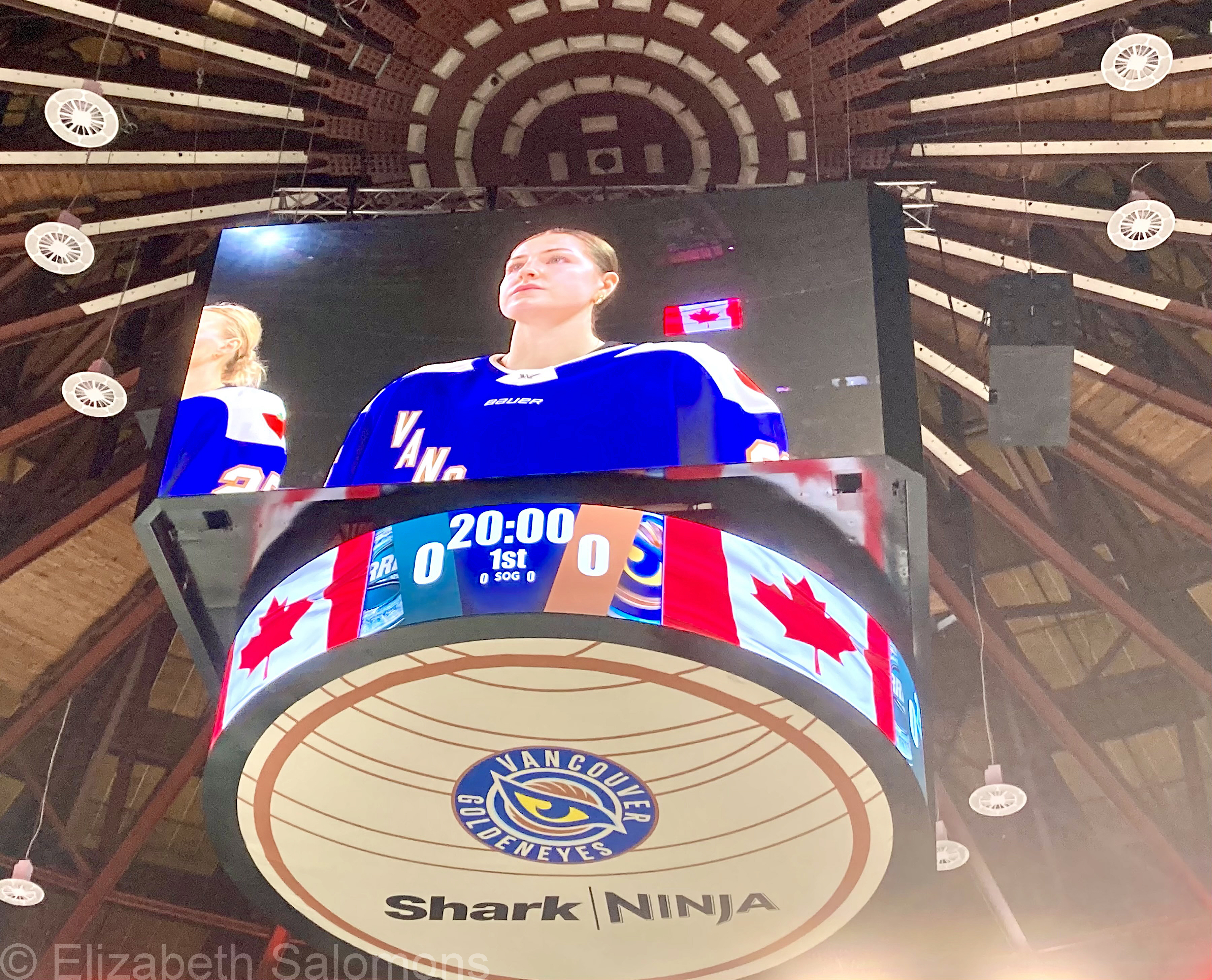
First national anthem
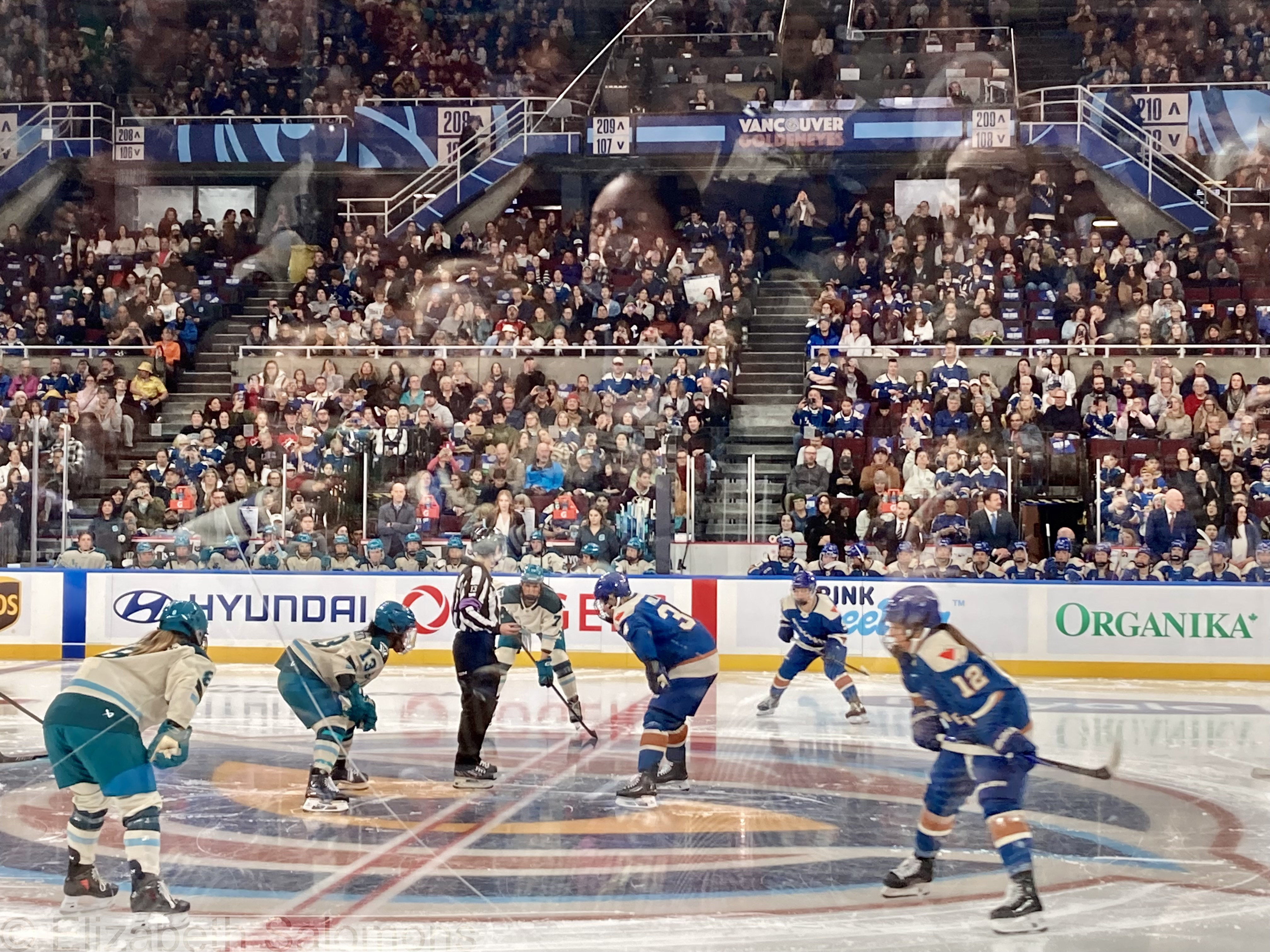
First game puck drop
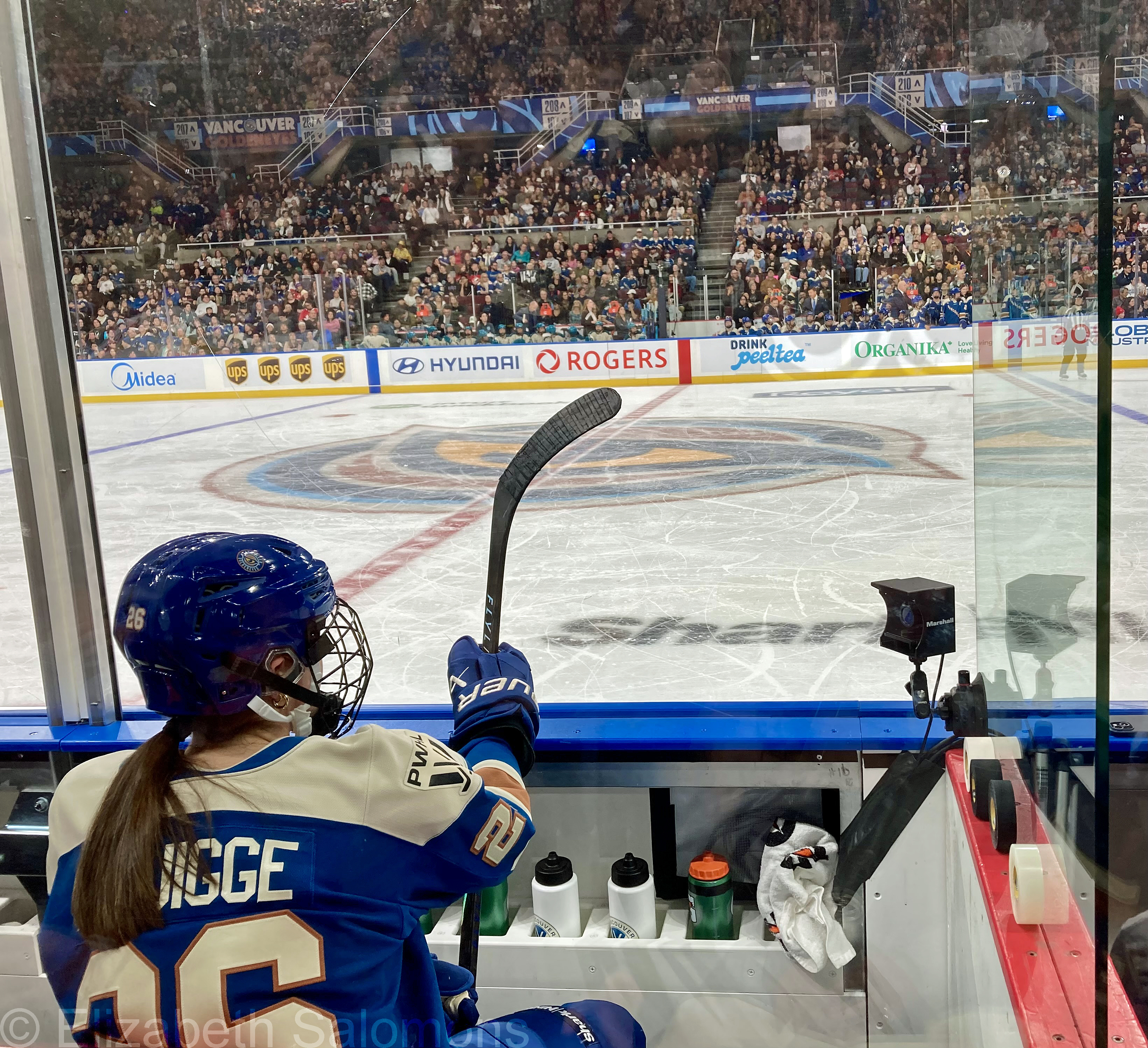
First penalty

First win
Through My Lens: Alberta Highway 540
A couple of times a year, I make the trek from Vancouver to Calgary (by plane) then on to Lethbridge (by car) to visit family — as I did last weekend. But instead of taking Highway 2 all the way back to Calgary as I usually do, I decided to make a left turn somewhere north of Nanton and south of High River onto Highway 540. And I’m so glad I did.
I mean, c’mon. Just look.

World Series 2025
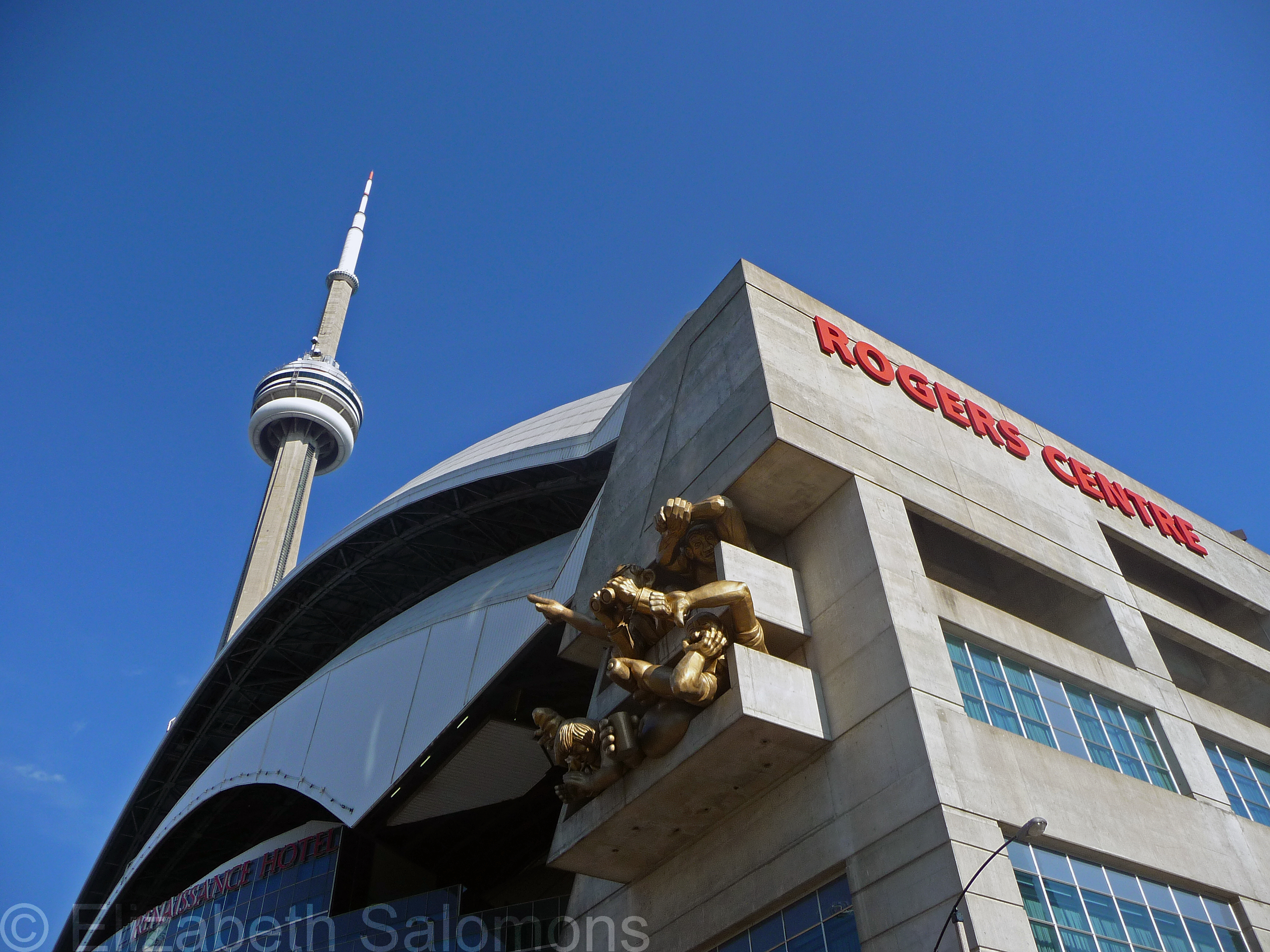
What a game. What a series.
Both of these things can be true: I haven’t watched a Blue Jays’ game since I moved from Toronto to Vancouver in 1998.
Also true: I remember exactly where I was when Joe Carter hit that home run (at a party hosted by my history professor where a bunch of us — including my prof — had decamped to the TV room to watch the game).
This week brought back so many great memories of how much fun it was living in Toronto in the early ’90s. It didn’t go our way last night, but there’s always next year.
Happy Birthday, Amsterdam!
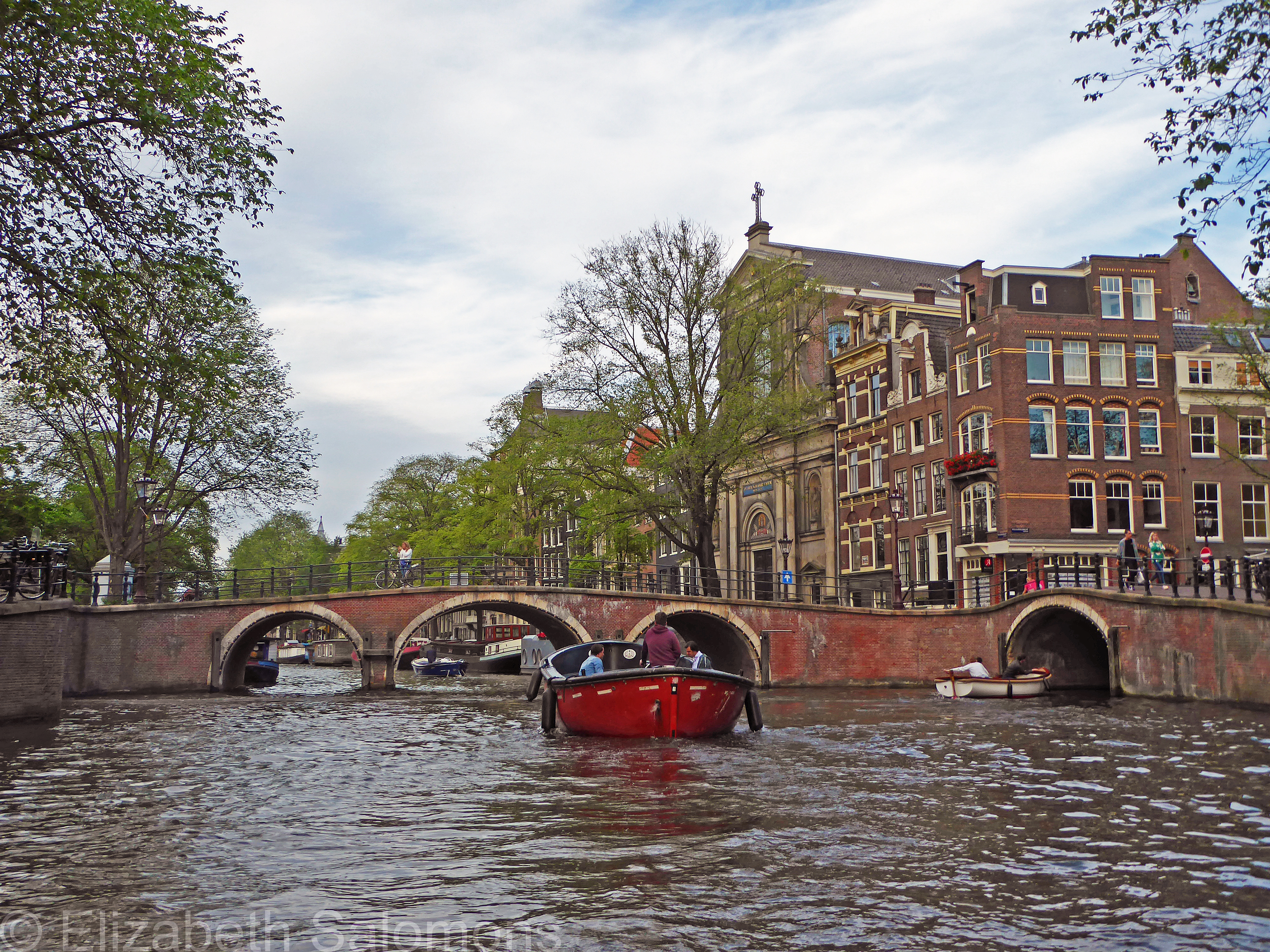
As far as European cities go, 750 years is rather young, but that’s how old Amsterdam is. And today marks the final day of a year-long celebration of the city’s milestone birthday.
The reason Amsterdam was settled later than other parts of the country and the continent is because it simply was not possible to build on the land until its water issues were resolved. After the Amstel River was dammed (hence the name: Amstel + dam), a fishing village was established. The first documents to register Amsterdam’s existence date back to 1275. By the seventeenth century, it was an economic powerhouse and centre of trade and finance — what’s known as the Dutch Golden Age.
I really came to know and appreciate the city during my summer in Amsterdam. Here’s hoping I get to repeat the experience again someday.


