
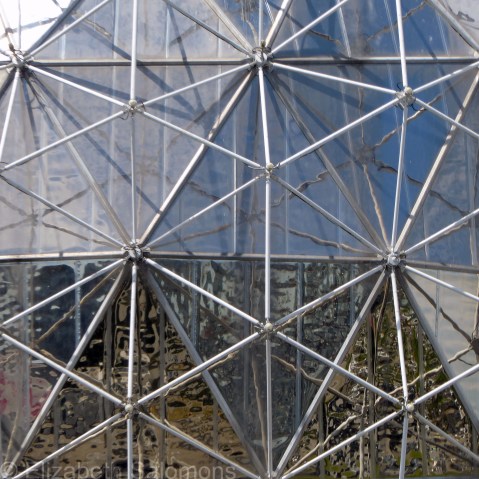
Science World
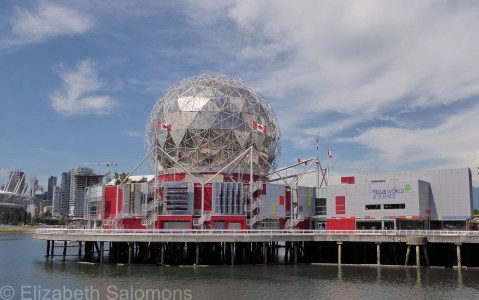
Another legacy site of Expo 86 is Science World. During Expo, it was called Expo Centre. Like most of the pavilions, it was intended to be dismantled at the end of the fair, but intense public opposition to that plan saved it, and it was turned into a science and technology centre instead.
During the 2010 Winter Olympics, it was transformed into Sochi World ― locally referred to as the Russia House ― to promote the 2014 Winter Olympics and to function as the hospitality area for the Russian national team.
Strawbabies
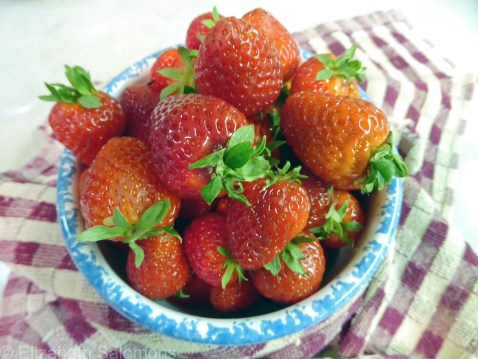
When I was in high school, the end of June meant the end of the school year and the start of strawberry season. My mother would throw the ice cream pails into the trunk of the car and off we went ― her and my siblings and I ― to one of the U-pick farms on nearby Westham Island. A few hours of picking (and snacking) later, we’d head home with our haul of luscious red berries. Mom would get to work making jam, while we would help her out by eating a handful of berries every time we wandered through the kitchen. My (then) baby brother called them strawbabies, and the name stuck.
BC berries are so tasty that I became a strawberry snob. To this day, I refuse to eat the pale and tasteless California strawberries that are sold in BC the rest of the year.
One final note: If there was ever any doubt that our climate is changing, the shifting of strawberry season by a whole month is enough evidence for me. Strawberry season now starts every year around the end of May and is already over by the last week of June.
Big Ben
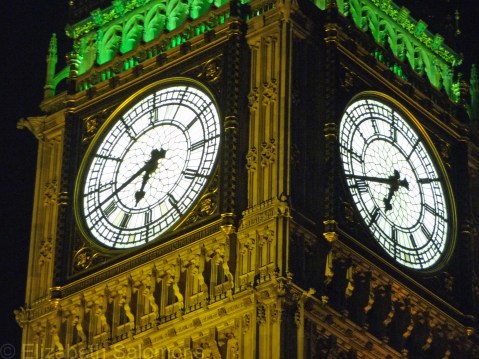
I’m pretty sure I don’t have to explain why I’m posting this photo tonight. What I suspect is the world’s most iconic clock is, I think, the best metaphor for what Brexit will do to the United Kingdom and Europe.
There is no turning back.
Through My Lens: Fraser River at Deas Island Park
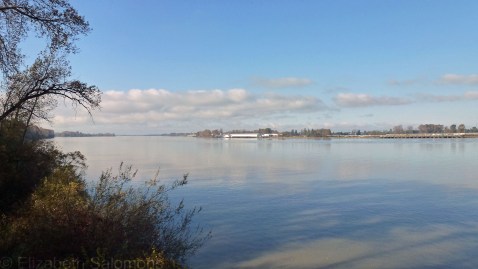
Here’s another view of the Fraser River. This photo was taken from Deas Island Park in Delta, near the mouth of the Fraser River. I’m looking west. Somewhere beneath all that water is the George Massey Tunnel, which is how Highway 99 (the highway that goes from Vancouver to the US border) crosses the Fraser River. The tunnel is going to be replaced by a 10-lane bridge sometime in the near future.
Which means this view of the Fraser River will be completely transformed.
Through My Lens: Fraser Valley

And this photo shows the view you have over the Fraser Valley from Mission Abbey.
The Fraser Valley is a major agricultural area of British Columbia. Vegetables, berries, mushrooms, pork, dairy, and poultry ― you name it, they grow it. Much of the produce I buy at the West End Farmer’s Market comes from here. And here’s your stat for this post: although less than 2 percent of the province’s Agricultural Land Reserve is located in the Fraser Valley, more than 60 percent of the province’s agricultural revenue comes from this region.
Through My Lens: Fraser River at Mission

Earlier this year when I was looking through my photos of Mission Abbey, I came across this one of the Fraser River. The river’s source is at Fraser Pass near Mount Robson, highest point of the Canadian Rockies. It is BC’s longest river and the tenth longest river in Canada.
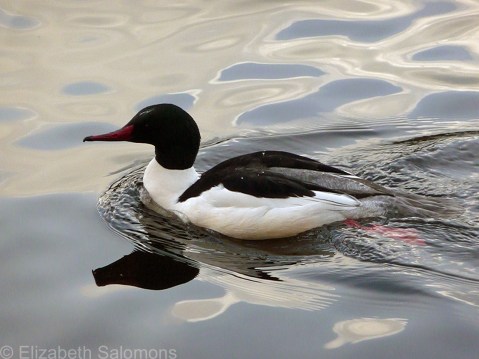
Common Merganser
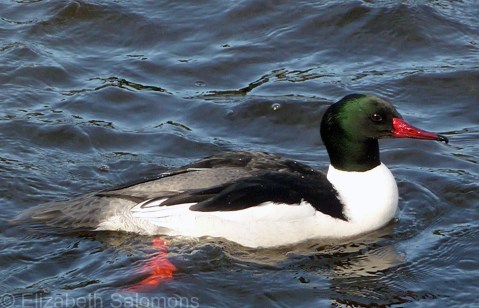
I started this month with photos of a pair of Hooded Mergansers and I’m going to finish the month with photos of Common Mergansers.
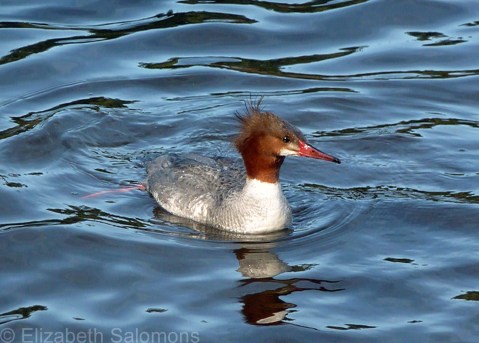
Of all the ducks that overwinter in Stanley Park, these two are what I like to call the Odd Couple. He looks so dignified with his tuxedo look, and she ― well, her crazed hair style always makes me laugh.
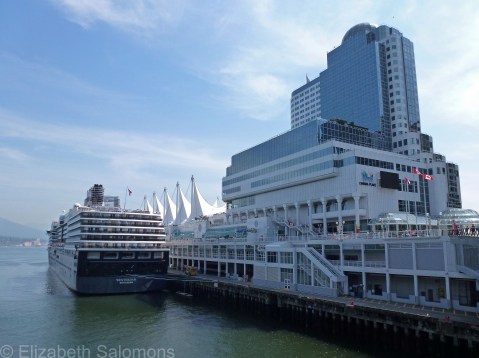
Canada Place
There’s been some big-time reminiscing going on this month in the Vancouver media about Expo 86. Yup, it’s been 30 years since the World’s Fair came to town.
More than 22 million people checked out Expo 86 between May 2 and October 13, 1986. That’s an awful lot of people and Expo has long been considered a turning point in our city’s history. According to Wikipedia, Vancouver went from being “a sleepy provincial backwater to a city with global clout.” A tad excessive on both counts, I’d say, but that’s Wikipedia for you. At any rate, you get the idea. Expo 86 was a really, really big deal for Vancouver.
I wasn’t living here at the time, so my Expo experience was limited to three days at the height of summer when I made a visit home to my parents. I remember some phenomenal pavilions and, yes, a lot of time spent standing in line to get into those pavilions.
The Canada Pavilion was located at what is today known as Canada Place. One of the better legacies of Expo 86 and now an iconic Vancouver landmark, Canada Place is home to the Vancouver Convention Centre, the Pan Pacific Hotel, and Vancouver’s cruise ship terminal.
One other fun bit are the Heritage Horns located on the roof of the Pan Pacific Hotel. Every day at noon, the ten horns sound the first four notes of “O Canada.”
Depending on which way the wind is blowing, I can hear them from my place, more than two kilometres away.

Through My Lens: Pike Place Market Mushrooms

Look at these beauties!
One drawback of arriving in Seattle by cruise ship is you’re looking for something to do early on a Sunday morning when most attractions are still closed.
But one advantage of arriving in Seattle by cruise ship is you get Pike Place Market all to yourself ― before the crowds arrive.
Which is where I was last Sunday morning.


