
Through My Lens: Siwash Rock
Big news this week: Tripadvisor named Stanley Park the # 1 park in the world. The world! We beat out both New York’s Central Park and the Luxembourg Gardens of Paris. Not bad, eh?
To celebrate, here’s a photo of Siwash Rock, one of the park’s most photographed attractions. Its Squamish name is Slhx̱i7lsh.

Through My Lens: Doors of Dublin
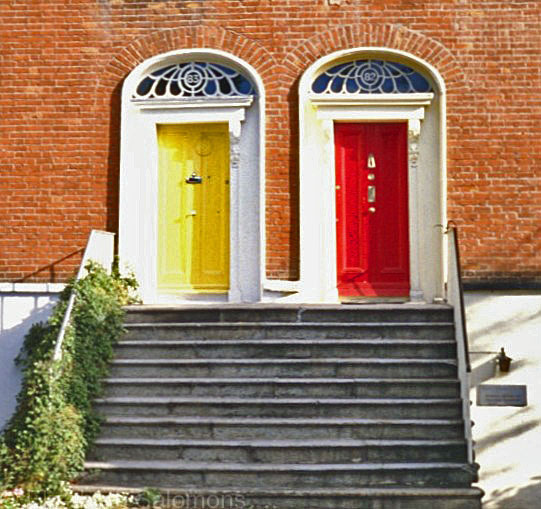
Not the best of photos, but it will do for Bloomsday, I should think.
This year is also the 100th anniversary of the publication of James Joyce’s Dubliners — a collection of short stories I’ve not looked at since my university days, but thoroughly enjoyed then.
Methinks it’s time I recommend to my Book Club that we read some Joyce.
World Cup Fever
World Cup Fever has hit Canada bigtime. The last (and only) time Canada had a team qualify for the FIFA World Cup was way back in 1986. Without a national team to cheer for, Canadians as a rule become hyphenated Canadians during the World Cup tournament and cheer for their country of origin.
It can get a little crazy if you live in Toronto’s Little Italy (and not only because it’s right next door to Little Portugal). I watched the 1994 World Cup final between Brazil and Italy with my Italian-Canadian friends (and 50,000 other hyphenated Canadians) at what was then called the Sky Dome where it was broadcast live on the jumbotron. What we didn’t realize until it was too late to move was that we chose to sit smack in the middle of the Portuguese-Canadians ― all of whom were cheering for the team we were not cheering for.
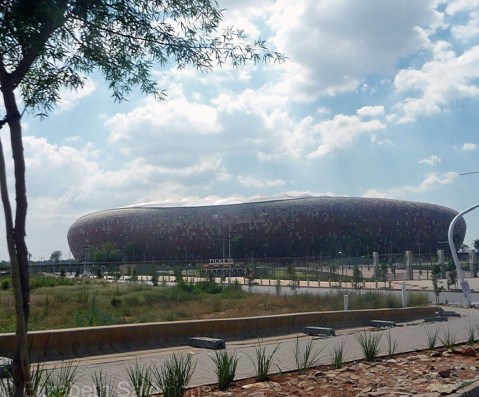
To celebrate the Netherlands’ glorious 5–1 victory over Spain today ― a rematch of the World Cup 2010 final ― this Dutch-Canadian is posting a photo of FNB Stadium in Johannesburg, South Africa, where that 2010 final was played. During World Cup 2010, the stadium was called Soccer City.
Normandy Beaches
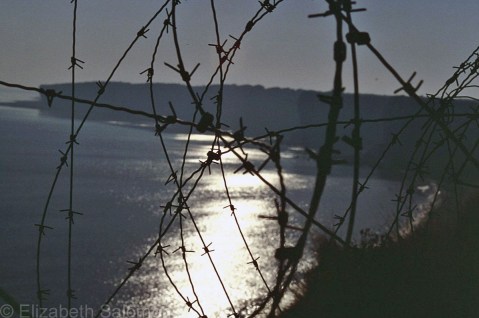
I don’t think I need to explain why I’m posting these photos.

But I will.
Today is the 70th anniversary of D-Day. On June 6, 1944, the Allied Forces launched the largest seaborne military invasion ever attempted. The invasion ― by no means guaranteed to succeed ― gave the Allies a toehold on the European continent, thereby opening up a Western front in the European theatre of World War II that eventually led to the defeat of Nazi Germany.

I’ve long had a keen interest in learning what happened in Europe during World War II ― I’ll explain the origins of that interest some other time. Today, I’m posting about my visit to the Normandy beaches on a sunny August morning many years ago.

I was backpacking through France and Germany with my dad ― if you’re going to visit military sites, be sure to go with someone who shares your interest in history. Dad was the perfect travel companion to take to Normandy, which is only three hours from Paris by car, slightly less by train. We based ourselves in Bayeux, a small city just 12 kilometres from the English Channel and the first to be liberated during the Battle of Normandy.
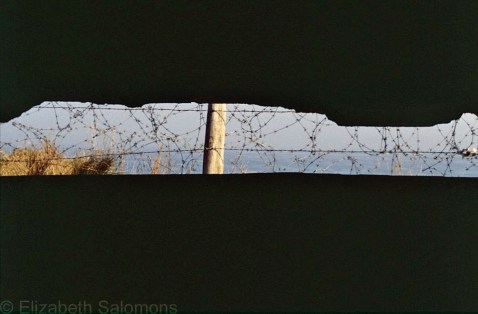
After settling into our hotel ― one so old I’m sure it was in the thick of it during the invasion ― we immediately marched ourselves down to the tourist information centre and booked a half-day tour of the Normandy Beaches.

Even if you have your own vehicle (which we did not), I highly recommend taking a guided tour of the Normandy Beaches. Without our guide navigating us from beach to beach, it would have been impossible for Dad and me to see as much as we did in one afternoon. And because there were only four of us on the tour, we had lots of time to pump our guide with questions and lots of time to explore at each stop.
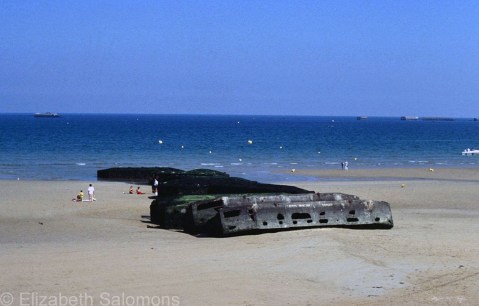
Our tour took us to Omaha Beach, the Normandy American Cemetery at Omaha, Pointe du Hoc, Longues-sur-Mer (where the remnants of a German battery still stand), and Arromanches (where the remnants of the Mulberry harbour built by the British forces still lie on the beach). My only complaint is that the tour we took was geared to Americans; next time I’m in Normandy, I will be sure to find a tour that caters to Canadians ― there are loads of them; we just didn’t think to ask ― so I can see Juno Beach.
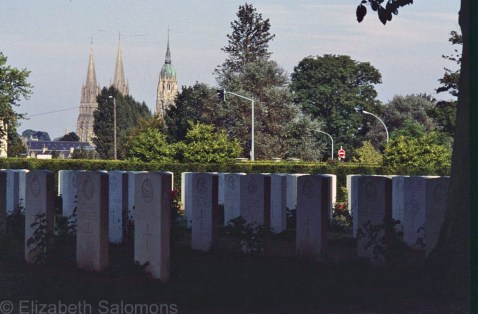
The Memorial Museum of the Battle of Normandy, which provides a good overview of the battle, is located in Bayeux, as is the largest British cemetery in France ― almost 4000 British servicemen are buried here. Dad and I visited both after our tour of the beaches.

Many years earlier, on my first backpacking trip to Europe, my girlfriend and I had bypassed Normandy completely except for an afternoon spent in Cherbourg. We were there to catch the boat to Ireland and ended up hanging out with an American guy who was waiting to catch the same boat. After exchanging stories and consuming many cups of coffee, we tagged along with him to the post office so he could make a collect call home. (This was way before Skype and email, kids.)
I didn’t mean to eavesdrop, but I overheard this guy telling his father how he had spent hours walking on the Normandy beaches — the same beaches, it turns out, where his father had landed on June 6, 1944. Although each of us has personal connections of all sorts to historical events, some of those connections seem just a little more meaningful. I was awestruck to think that someone not much older than me had a father who played a role in a significant battle in the war to liberate Europe. I promised myself then and there that I’d return one day to walk those same beaches — and I count myself blessed that I was able to take that walk with my own father.

Weeks after Dad and I returned to Canada, he phoned me one night. He’d just seen Saving Private Ryan, which was still playing in the theatres. The film begins and ends in the American cemetery above Omaha ― a cemetery he and I had walked through together only weeks before.
“We were right there!” he said with much enthusiasm.
“I know,” I said to him, with the same level of enthusiasm. “I know!”
I’ve mentioned several times before how I’m a bit of a history geek. Nothing gets my geekness going more than seeing places where history comes alive in a way that it never can in a book or a film. One small comment made by our guide, which has stuck with me all these years, illustrates what I mean. As we drove along, she pointed at the hedgerows that line the fields and roads in the Norman countryside. Those hedgerows, she explained, ended up providing highly effective protection for the German forces in defensive positions, resulting in high losses for the Allied forces even after they were safely off the beaches.
I could read a detail like that in a book, but it probably would not register. To see it in real life ― well, I’ve never forgotten it.
Chinatown Mural
Since I’m on a roll, here’s another mural. This one is from Vancouver’s Chinatown and it’s chock full of history. Just imagine all the stories the people portrayed in this mural could tell.

Lacombe Mural
Speaking of murals, here’s another. This one’s from Lacombe, Alberta. I took the photo on a grey November day and, once again, the colours of the mural blend perfectly with the surrounding sky.
Edmonton Mural
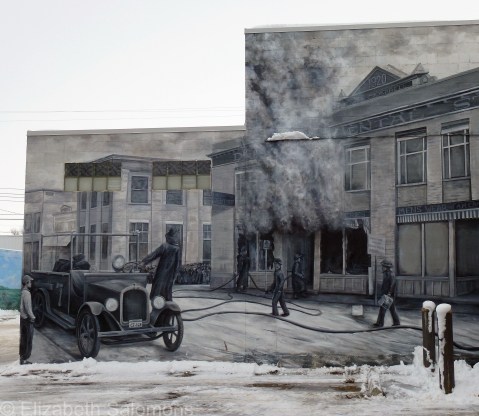
I’m thinking it’s time for another mural. This one is from Edmonton ― I took this photo last month when I was there over the Easter weekend to visit my family. I like the Greek touch, but I love how the colours blend so perfectly into that bright blue sky the Prairies are known for.

Hollandse Kaas
Look what I got!
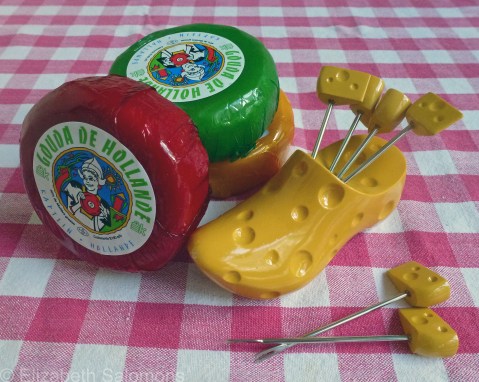
I was hanging out in Solo again these past few weeks taking care of a houseful of cats while my sister and her husband were gallivanting around northern Europe. I’m back home again, but as a thank-you gift for my hard work my sister brought a gift for me from the Netherlands: echte Hollandse kaas (real Dutch cheese)!
I thought the timing was too perfect to pass up, given my recent post about my love affair with Dutch cheese, and so I just had to post a photo. Now, if you’ll please excuse me, I’m going to go eat some cheese.
Spotted Towhee
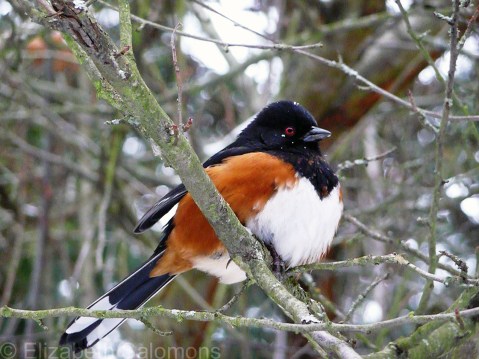
Since I now consider myself a quasi-birder, I thought I’d post a photo for World Migratory Bird Day, which this year is May 10 and 11. (Why it’s called a day when it’s actually a weekend is a puzzle to me, but there it is.)
This is a Spotted Towhee I photographed near Lost Lagoon in Stanley Park a couple of winters ago. Technically, it’s not a migratory bird for Vancouver as it lives here year round, but it is a seasonal bird in other parts of the continent.
Salt Spring Island Cheese
Last month, I told you all about the beginnings of my life-long love affair with cheese.
This month, I’m going to tell you about a stop I make whenever I visit Salt Spring Island — a place that’s perfect for cheese addicts (like me) looking for their next fix.

It’s the Salt Spring Island Cheese Company.
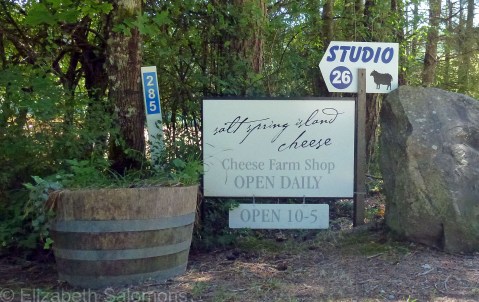
I’ve long been a fan of this cheesemaker’s dairy products ― they specialize in handmade goat and sheep cheeses that are available in grocery stores and at cheesemongers all across Greater Vancouver. What I did not know is how incredibly fresh the chèvres taste if you buy them straight from the source instead of waiting for them to be shipped to Vancouver. Who knew the difference a few days could make in the flavour and texture of fresh goat cheese?
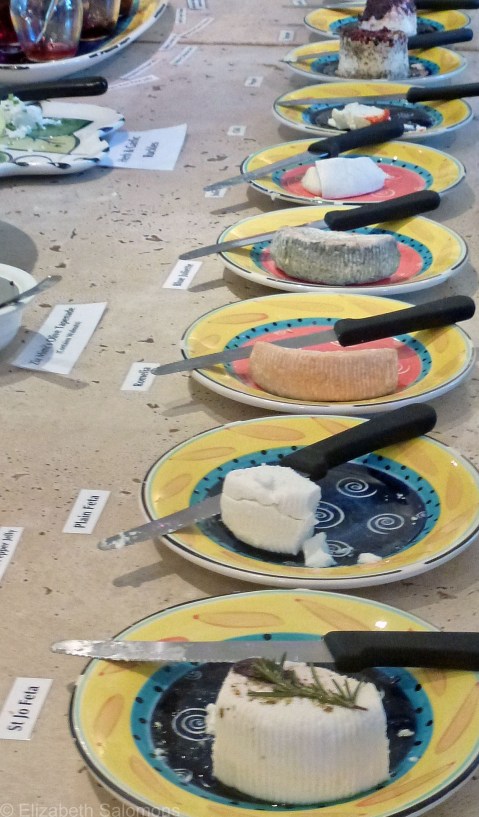
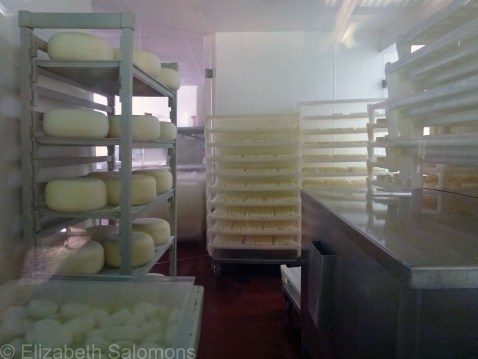
Salt Spring Island Cheese Company offers a self-guided tour of the cheese-making process from start to finish ― beginning with a walk through the barn where the goats are kept all the way to the final wrapping and display of the many varieties of cheese for sale in the shop.

If you’re as addicted to cheese as I am (is that even possible?), be sure to check out the Salt Spring Island Cheese Company the next time you’re on Salt Spring Island.


 There and Back Again