
Through My Lens: Hawaii

For my 50th post: a photo from the 50th state. I took this shot of Waikiki Beach in December 2008. That’s Diamond Head in the background.
I felt right at home in Waikiki. Hawaii has a large Asian population ― as does Vancouver. And the labyrinth of hotel-filled streets that make up Waikiki is just like Vancouver’s West End ― but with better weather.
Through My Lens: Saint Jean Baptiste Day
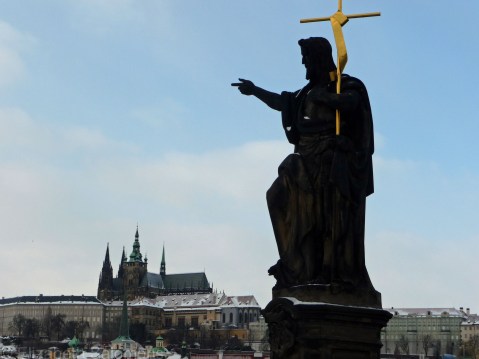
Today is Saint Jean Baptiste Day, so I’m posting a photo of the man himself. (Er … make that a photo of a statue of the man himself.)
This is on the Charles Bridge in Prague. That’s the Castle he’s pointing to.
Dishing: ensemble
Update: ensemble closed in August 2012.
 A number of months ago, my friends took me out to celebrate my turning another year older and (this is debatable) another year wiser. I chose ensemble for the event ― it’s yet another new place on the north-east corner of Thurlow and Smithe in downtown Vancouver that has seen a high turnover of restaurants over the past few years.
  But, more than a year after its opening in May 2011, it looks like ensemble is here to stay. The executive chef is Dale MacKay, winner of Top Chef Canada Season 1, and one reason, in addition to the reviews I had read, why I chose this particular restaurant. I was curious if the judges at Top Chef Canada knew what they were doing when they gave MacKay the top prize.
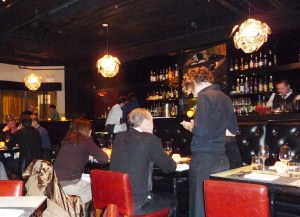
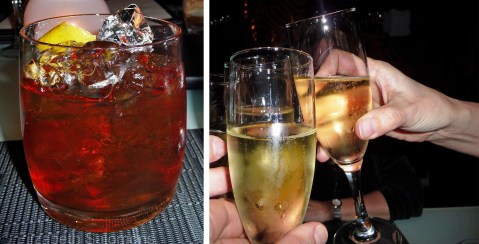
Two of my friends were waiting for me when I arrived; we ordered cocktails while we waited for our fourth companion, who finally showed up 45 minutes later. But, despite the busy room, there was absolutely no rushing us on the part of our server. The atmosphere was lively ― a perfect venue for a birthday party and for four boisterous, laughing friends who were in the mood to make a lot of noise.
Like many of Vancouver’s fine dining establishments, ensemble characterizes its food as “Contemporary French meets West Coast.” All of the dishes are tapa-sized, and we opted for the four-course tasting menu with wine pairings.
First up was a Dungeness crab crêpe with pineapple, daikon, and avocado. This appetizer was picture-perfect, served cold, fresh, and crisp, and the pineapple gave it the smallest hint of sweetness. I absolutely loved the wine choice: a bubbly Spanish cava.

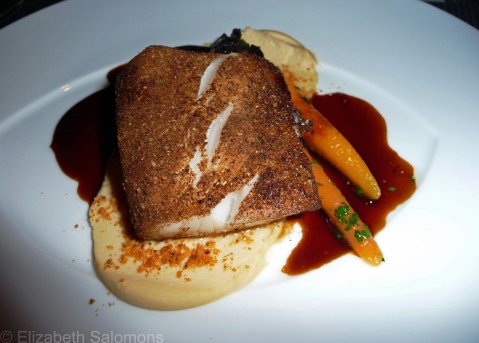
The second course was Moroccan spiced black cod, with chick peas, cashews, and black trumpet mushrooms. I’ve never had cod so delicate and light. The black trumpet mushrooms were the perfect accompaniment, as was the 2010 Pinot Gris from Penticton’s Poplar Grove winery.
The meat course was beef shin and fries, with watercress and a carrot purée, paired with the 2011 Enrique “Icque” Foster Malbec. Like the cod before it, the beef was melt-in-the-mouth quality. I’ve often eaten steak et frites in France, but have to admit that I’ve never been overly impressed with French frites. The fries that accompanied the beef shin, on the other hand, were the best any of us had had in a very long time.

To finish: chocolate fondant with hazelnut-nougatine ice cream. Chocolate fondant was a new experience for me and I loved it. Its soft pudding-like centre reminded me of a dessert a long-ago roommate used to make, with the rather ordinary name of Brownie Pudding.

In honour of my birthday, I was also presented with a cone of piping-hot sugar-dusted madeleines, which I gladly shared. For the dessert wine, we returned to the Old World with a glass of Broadbent Madeira.

By the end of the evening, both my appetite and curiosity were sated. Dale MacKay is certainly a Top Chef, and my friends and I were so impressed with our first experience at ensemble that I am sure we will be back.

New York, New York
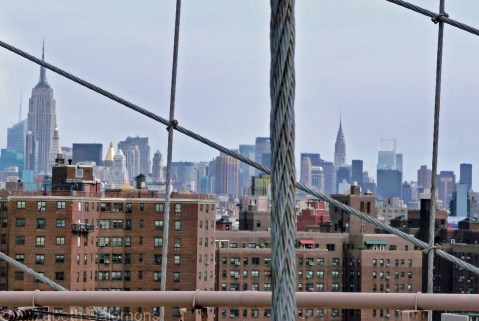
I chose the quotation for my last post very carefully. Yes, it’s finally happening. For the first time since I started this blog (six months ago today!!), I can write about the anticipation of travel, not merely about a recollection.
The destination: New York.
(And, on the way home: Baltimore, Washington, and Toronto.)
Flights are booked, home exchange is arranged, guide books have been bought. Anticipation is growing.
Stay tuned …
Edward Streeter
Travel is ninety percent anticipation and ten percent recollection. ― Edward Streeter
Chinatown
Last week, my dad and stepmom were in town, and my stepmom told me she wanted to go for Chinese in Chinatown. That was easy enough to arrange: there are oodles of restaurants in Vancouver’s Chinatown, one of the oldest and largest Chinatowns in Canada.
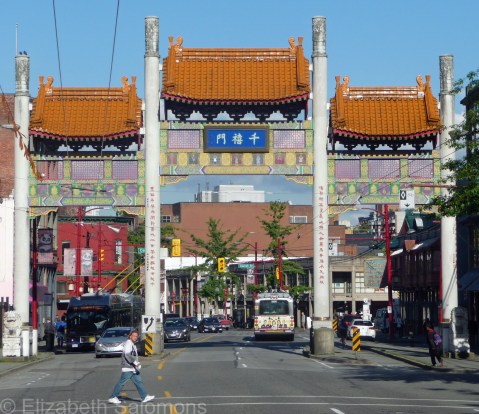
Afterwards I took them past the Millennium Gate. It was built in 2002 and serves as the unofficial entrance to Vancouver’s Chinatown, which was declared a National Historic Site in 2010.
There’s an awful lot of history in Chinatown to explore and to write about. For now, I’ll leave you with this photo of the Millennium Gate, and the promise of more posts to come.
Millennium Gate, Chinatown
A Diamond Jubilee
All eyes were on London this past weekend as it celebrated Queen Elizabeth II’s Diamond Jubilee. I would have loved to have been there in person, being the sap that I am for all things historical, royal, and British.
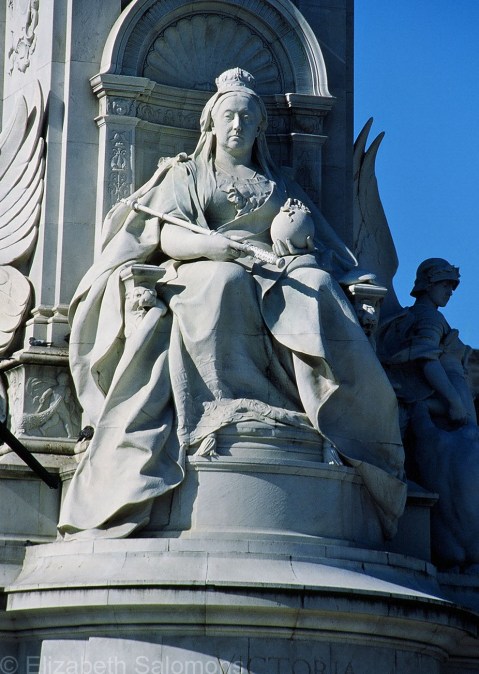
Here is a photo of the statue of Queen Victoria on the northeast side of the Victoria Memorial that stands in front of Buckingham Palace. Queen Victoria is the only other British monarch to celebrate a Diamond Jubilee, which she did way back in 1897.
Queen Victoria
Armchair Traveller: Under the Tuscan Sun
 Some twenty years ago, Frances Mayes bought an abandoned villa near Cortona, Italy. She and her husband spent three summers renovating it, and then she wrote a book. The travel memoir genre has never been the same since.
Published in 1996, Under the Tuscan Sun was on the New York Times Best Sellers List for over two and a half years. In 1998, I spent a week with a friend who was studying art in Siena for the summer. She was reading the book. All of her classmates were reading the book. Every bookstore I walked by that week had Under the Tuscan Sun on display in its window. In the aftermath of the book’s success (as well as that of Peter Mayle’s A Year in Provence a few years earlier), there’s been a rush to publish hundreds, if not thousands, of memoirs about ex-pats buying and restoring houses all along the Mediterranean. The saturation of the genre may be the reason for some of the criticism levied today against authors like Mayes and Mayle. The truth is: ex-pats were buying up property in southern Europe long before these two authors. They simply came up with the idea of writing about it ― and they did it brilliantly.
Mayes starts her book off as a love poem to Tuscany, and to the home described as “a house and the land it takes two oxen two days to plow” in the legal documents she and her husband signed upon purchase. She describes evenings “when the light turns that luminous gold I wish I could bottle and keep.” She includes recipes, and to show her growing interest in the cuisine of the region, she writes paragraphs such as these:
… cooking seems to take less time because the quality of the food is so fine that only the simplest preparations are called for. Zucchini has a real taste. Chard, sautéed with a little garlic, is amazing. Fruit does not come with stickers; vegetables are not waxed or irradiated, and the taste is truly different.
Under the Tuscan Sun has a little bit of everything: interior design, recipes, gardening, history, travelogue. If you’re looking for lots of detail on any one of those subjects, this is not the book for you. But if you think you might enjoy reading how an American poet and creative writing teacher fell in love with a crumbling villa in the middle of Tuscany, then this book is worth a read.
Recipe Box: Insalata Caprese

The food in Italy is one of the many reasons the country is so popular with tourists. But the reason Italian food tastes so good is because of the farm-to-table fresh ingredients so readily available over there. Try as I do, I can never quite replicate the flavours back home in my own kitchen.
However, I do keep trying.
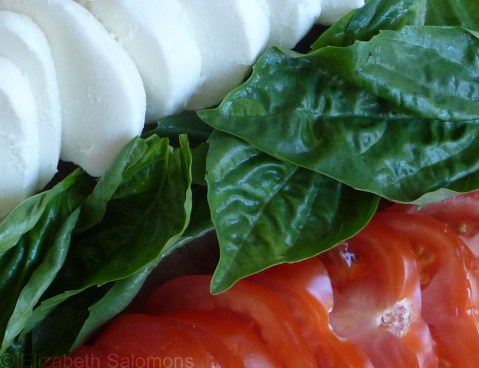
In the summertime, I like to make Insalata Caprese (Caprese salad), which I often have for lunch when I’m in Italy. Tomatoes, basil, olive oil, and cheese never taste so good as they do in this salad, which takes its name from the island of Capri.
The type of cheese used in the salad, mozzarella di bufala (buffalo mozzarella), is made from the milk of the water buffalo. It is porcelain white, very moist, and slightly salty. Italian delis or fine cheese shops import it directly from Italy; in B.C., the cheese is available through a producer on Vancouver Island that makes it from their own herd of water buffalo. Bocconcini balls made from cow’s milk are a cheaper substitute and can be found in most grocery stores.
Once you’ve located a source for the cheese, all you need are the freshest tomatoes you can find, fresh basil, and a good quality extra virgin olive oil.
Buon appetito!
Insalata Caprese
vine-ripened tomatoes
buffalo mozzarella
fresh basil
extra virgin olive oil
salt and freshly ground black pepper (optional)
1. Cut the tomatoes and the buffalo mozzarella into slices about 1/4 inch thick.
2. Tear the larger basil leaves in half.
3. Arrange the tomato, cheese, and basil on individual plates, alternating between green, white, and red (which just happen to be the colours of the Italian flag!).
4. Drizzle with olive oil, and season with salt and pepper.

Reel Life: Roman Holiday
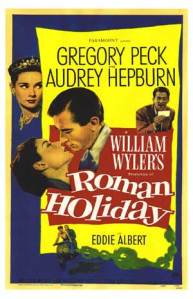
I don’t suppose there is anyone on the planet who hasn’t fallen a little in love with either Audrey Hepburn or Gregory Peck in Roman Holiday.
But … just in case … I thought I’d mention this lovely 1953 romantic comedy.
Roman Holiday was filmed entirely on location in Rome — a novelty at a time when most films were shot on studio lots in Hollywood. One of the most memorable scenes takes place at the Mouth of Truth. According to legend, if you told a lie with your hand in the mouth, it would be bitten off. While filming this scene, Gregory Peck decided to pull his hand up inside his sleeve as he was pulling it out of the mouth. Audrey Hepburn’s screams were the real deal, he said in interviews many years later, as she had no idea he would play such a trick on her.
The next time you’re in Rome, you can test the legend for yourself. The Mouth of Truth is located in the front portico of the Basilica di Santa Maria in Cosmedin, a small church next to the Tiber. There’s always a long line of tourists waiting to have their photo taken with their hand in the mouth — a credit to the enduring popularity of Roman Holiday.
Me: I’ve been there, done that. My next goal is to find myself a Roman apartment to rent, identical to that of Gregory Peck’s character, Joe Bradley. Something tells me I’ll be searching for a very long time.


