
World Series 2025
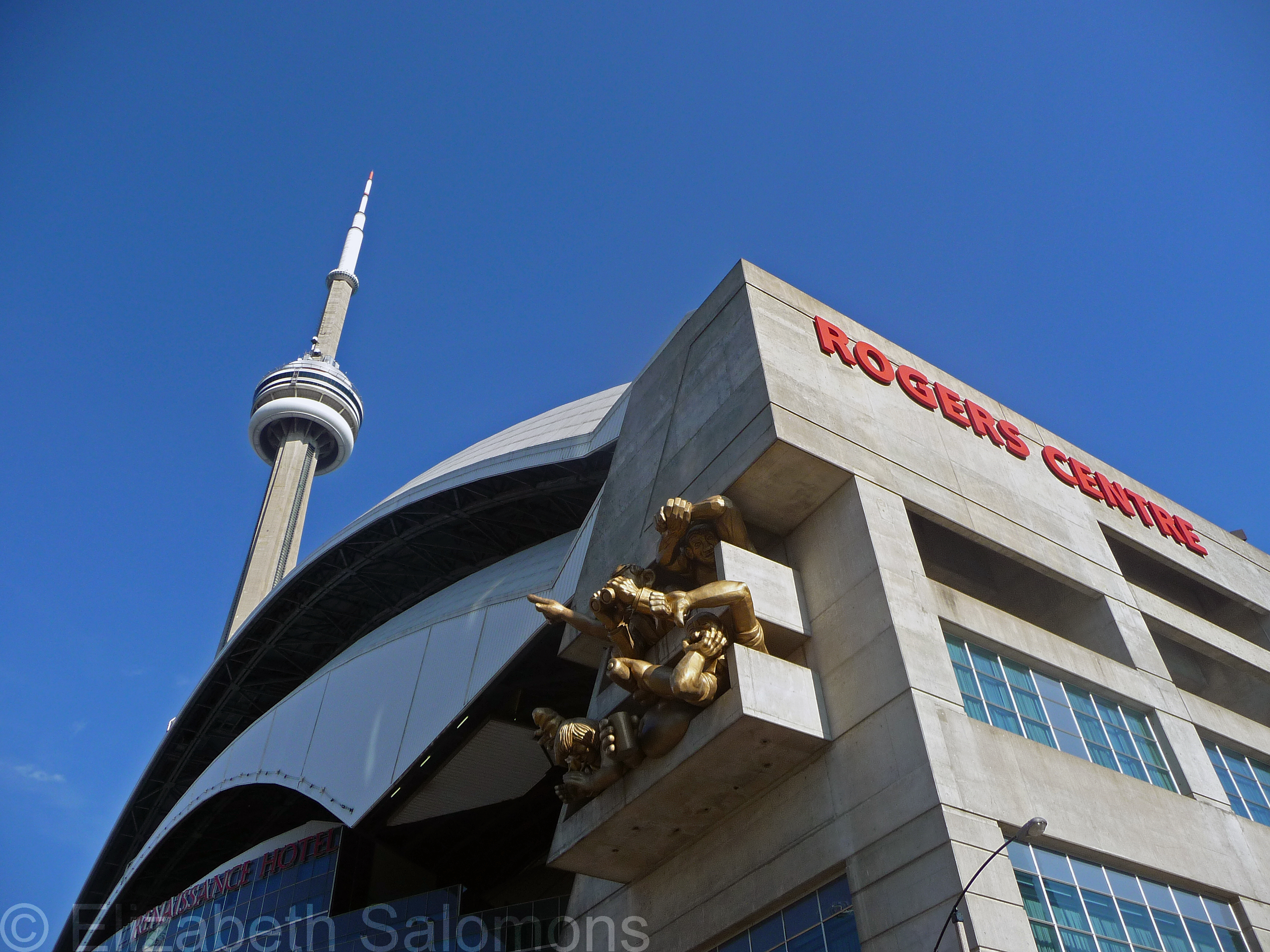
What a game. What a series.
Both of these things can be true: I haven’t watched a Blue Jays’ game since I moved from Toronto to Vancouver in 1998.
Also true: I remember exactly where I was when Joe Carter hit that home run (at a party hosted by my history professor where a bunch of us — including my prof — had decamped to the TV room to watch the game).
This week brought back so many great memories of how much fun it was living in Toronto in the early ’90s. It didn’t go our way last night, but there’s always next year.
Travels With My Friend
I was supposed to be travelling back from Nova Scotia today.
But I’m not. Instead, I went in early August. And instead of going to say good-bye to a close friend in person, I went to celebrate her life after she was gone, along with her family and friends.
These are hard words to write. You always think you’ll have more time. My friend thought she had more time — it was her suggestion I come see her in September, when all the tourists would be gone but the weather still like summer. She herself had a busy summer planned — travel, time with family, time with other visitors — and so I took the early-September slot.
I knew it wouldn’t be a normal visit. I knew she was much weaker than I’d ever seen her. I knew it would likely be the last time I could see and talk to her in person.
You always think you’ll have more time.
This is my travel blog. So why am I writing about the loss of my friend?
Because she was the best travel companion I’ve ever had.
I suppose that’s not a surprise. When you travel with your best friend, a person with whom you share so many of the interests that make travel so memorable — art, architecture, music, literature, good food — it makes travelling together so easy. Maybe it worked so well for us because we lived on opposite ends of the country, and so our periods of travel became our time to reconnect and to nurture our friendship.
After she was gone, I counted up how much of my travelling involved her.
Seventeen. Seventeen trips. Some of them as long as two weeks, others as short as a weekend.
It all started with a road trip. At that point, we were casual acquaintances, part of a crowd of thirtysomethings who hung out together in Toronto. One of my roommates was dating one of her roommates. We went to the same parties, had brunch together on Sunday mornings after church.
She told me about her upcoming trip to New Orleans. A mutual friend was driving her down for a job interview she had lined up with the New Orleans school board (she was a newly accredited teacher at the time, eager for a full-time teaching position when those were hard to come by). The two of them were also planning to go to the New Orleans Jazz Fest.
“I’ve always wanted to go to New Orleans,” I said.
“Why don’t you come with us?” she replied. It wasn’t an idle invitation — I could see she meant it. I had lots of flexibility with my time that year as I was finishing off a master’s degree while launching my freelance editing career. I was making slow progress on both at the time, so it wasn’t much of a decision for me.
“OK,” I said. “I’m in.”
I learned a lot about her on that trip. We enjoyed a memorable evening of live blues on Beale Street, saw Graceland, and had a bizarre three-hour tour of a Mississippi plantation where our tour guide looked old enough to have fought in the Civil War himself and we were the only tourists in sight.
What impressed me most about that trip was watching how my friend faced her fears. She was terrified of snakes, yet insisted we go for a long walk along creaky boardwalks through a Louisiana swamp. As we tramped along, she jumped at least a foot in the air at every little noise, convinced she would step on a snake before the walk was over. But she refused to turn back.
That road trip was the beginning of a friendship that lasted a quarter century. She introduced me to New York, a city she loved, and we went back several more times. The winter I spent in Paris, she joined me for Christmas and New Year’s. She couldn’t believe I had never tasted coq au vin, and so she insisted on teaching me how to make it. Chicken stewed in wine? Yes, please.
Another year she invited me to join her family in Florida for New Year’s. There were weeks in London and San Francisco, and a ski weekend in Whistler. We kayaked the Broken Group Islands (twice!) and Desolation Sound.
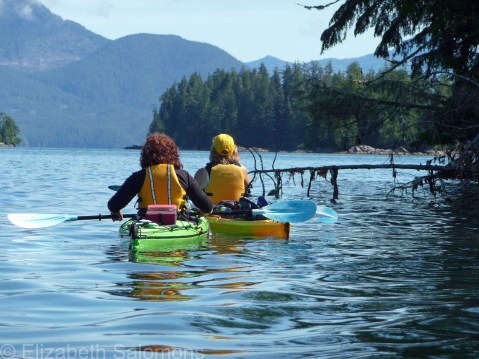
Kayaking in the Broken Group Islands, British Columbia
The summer she spent in Siena studying Italian art, I was in Prague on a writing course. We decided to meet up afterwards — or rather, I invited myself to stay in her dorm room for a few days before I had to travel on to Amsterdam to meet up with my father.
I tagged along when their entire class went to Padua to look at frescoes. We booked ourselves into a hotel room for two nights, along with some of the friends she had made on the course, intending to spend the next day in Venice. Being summer in Italy, it was hot, so we got an early start. By late afternoon, we were all knackered. There were five of us in total, and we decided to take a gondola ride. That led to beer and pasta with our gondolier. And that led to some of us sneaking out to smoke a joint along the canal with said gondolier. (You all know where this is going, right?)
To keep it short: we missed the last train to Padua. Five Canadian women looking for hotel rooms in Venice, at midnight in the height of tourist season. It wasn’t pretty.
But that mishap led to a lovely bonus day in Venice, and three of us decided to go to Murano, one of the islands adjacent to Venice, for lunch. My friend urged me to order the Caprese salad as I had never had it before. I was converted.
In addition to all of our, ahem, travel adventures, there were the numerous times she opened up her home to me whenever I was in Toronto. I would do my rounds of networking, as I called it, with clients, but I always had lots of catching up to do with my friends from when I lived there. She told me I was the perfect guest because I was never home, but, in truth, she was the perfect host.
Because of that hospitality, I always gave her first dibs whenever I lined up a home exchange, and she never said no. She joined me for 10 days the summer I was in Amsterdam — scheduling her time with me in between the chemo treatments for the disease that would eventually claim her life. I marvelled at how well she was doing. I could not keep up with her as we walked through the city’s streets. One day we cycled 20 kilometres to Haarlem and back. It was her idea to bike and that was the only day I could see she wasn’t 100 percent. She was close to collapsing when we pulled up to a café alongside a canal.
“You go sit,” I said, pointing to an empty table outside the café. “I’ll lock up the bikes.”
We spent another day in Delft, one of my favourite Dutch cities. It also happens to be where my friend’s father was born. She told me stories of childhood visits and we went looking for the house where he had lived. I’d met her father only once or twice, which is maybe why I could easily picture him as a small school boy running at top speed alongside the canals.
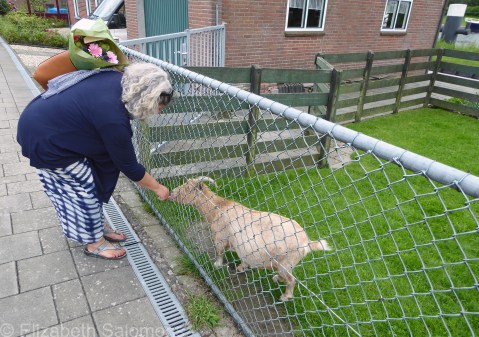
Interacting with the Dutch wildlife
In 2018, we spent a week together in San Francisco. We cycled across the Golden Gate Bridge to Sausalito — that time it was my turn to almost collapse at the end of our ride. And she joined me for a weekend in Montreal where I had another home exchange arranged. That was 2019. I had no idea at the time that it would be the last time I would see her. How could I? The pandemic kept us apart after that.
My friend was a high school photography teacher and she showed me the best places to catch that unique photo. Like the Eiffel Tower from a side street I would have never found on my own. We both loved taking photographs in old cemeteries, and so, on one of my visits to Toronto, she showed me the Necropolis, which has some of the city’s oldest graves. It was a warm summer evening, and we soon lost track of the time. Or maybe we didn’t know that the gates would be locked at 8 p.m.
Ever struggle to climb over a wrought iron fence in a short skirt? She had a good laugh that time — at my expense.
She never said a word about my photography skills until I asked her for feedback. “Well,” she said slowly. “Your horizons aren’t always level. And check your corners. You want to edit out any distractions.”
Needless to say, every time I edit my photos, I’m checking my corners. And thinking of her.

Photographing Gertrude Stein’s grave in Père Lachaise Cemetery, Paris
She was a far better friend to me than I was to her. There was one travel dream I had, a trip I haven’t yet taken and likely won’t, and years ago, when I first brought up the idea, she had mixed feelings about whether she wanted to join me. But later she told me about a conversation she had had with her mother. “You know,” she told her mom, “I really have no burning desire to make that trip. But it’s important to Elizabeth, so that’s enough of a reason to go.”
Who does that? Not me — that’s for sure.
I’m shattered I didn’t get one last visit with my friend and a chance to say good-bye in person. But I am so incredibly grateful she was able to spend her last years in Nova Scotia, surrounded by her family and by so much love. And I’m so grateful they shared her with me for so many years.
I will miss her more than I can say.
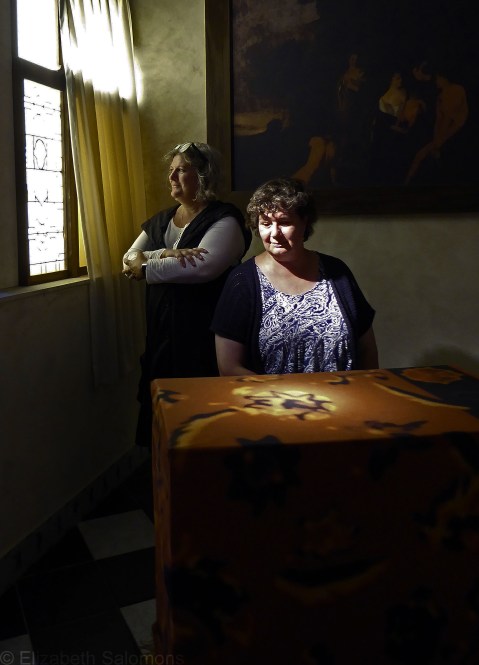
Having a bit of fun at the Vermeer Centrum Delft
Raccoon at Scarborough Bluffs
I spent much of May gallivanting around the Eastern Time Zone, and most of June sorting through my photos and planning what blog posts I might write about my travels.
This photo though. Not your usual holiday snap, but it makes me laugh every time I look at it. I met up with this raccoon one evening in Toronto while exploring the Scarborough Bluffs with a friend.

For my non-Canadian readers, raccoons are known in this country as trash pandas. They’ve adapted remarkably well to urban living and are known for finding their dinner in our garbage cans. Toronto spent millions developing and purchasing raccoon-resistant green bins — only they turned out to be not so resistant.
Back when I lived in Toronto, I had a mom and her three kits hanging around my house for an entire summer. Every evening, like clockwork, they would amble along the fence in my backyard as I watched from my kitchen window.
Here in Vancouver, I see raccoons mostly in Stanley Park, although one hot summer afternoon, I noticed a hefty raccoon napping in the tree outside my window. The tree is long gone — it came down in a winter storm — but I thought the clever creature had found a innovative solution to the heat.
The raccoon got its name from the Anishinaabe word aroughcun, which means “one who rubs and scrubs and scratches with its hands.” Raccoons are known for washing their food before they eat it.
City of Neighbourhoods

Toronto is many things to many people. For me, it is the city where I found my tribe, in that clichéd manner of speaking.
It’s where I moved to strike it out on my own as a young university grad. Back then, employment prospects in the Vancouver area — a region still struggling to rebound from a recession years after the rest of the country had recovered — were slim to non-existent. After a year of working at a dead-end job, I realized I had no chance of a meaningful career if I stayed. I didn’t know what I would find in Toronto, but I knew I wanted my chance to find out.
And so I loaded up my trusty Honda Civic with my belongings and drove across Canada. When I arrived in Toronto, people were shocked I hadn’t arranged for a place to live — the vacancy rate in the city at the time was close to zero. But as I perused the postings at the job centre, I knew I was in the right place. Toronto was booming. And, despite the naysayers, I soon found a place to live — a small post–World War II bungalow near Yonge and Finch that I shared with a college friend and some other people. The neighbourhood was called North York, but I knew it as Willowdale.
Back then, Willowdale was very much a white, suburban neighbourhood — not nearly as diverse as it is today. I had easy access to both the subway and the 401, but I was eager to move closer to downtown. I left Willowdale for Davenport — a neighbourhood on the edge of one of Toronto’s Italian neighbourhoods — and then, a few years later, on to Roncesvalles Village, the centre of Toronto’s Polish community. Another neighbourhood I got to know well was the Danforth, the largest Greektown in North America. Many of my friends lived there — still live there — and it is where I now stay when I visit Toronto.
This is the thing: Toronto is a city of neighbourhoods, each one as diverse and different from the others as one person is from another. It’s what makes Toronto feel like a small town, even though it’s so much not.
Once my Civic was unpacked, I signed up with a temp agency to give myself some time to figure out what I wanted to do next, which soon led to a permanent job. Grad school was beckoning, but so was a real job, and within a year, I was launched into the world of publishing, an industry that to this day I find extremely satisfying to work in. For that opportunity, and for the life-long friends I’ve met working in the industry (they would be my tribe), I will always be grateful to Toronto.
So when Toronto is hurting, so am I.
I started writing this post a few months ago, after the van attack in North York that killed ten people. The stretch of Yonge Street where all those people died on a sunny Monday afternoon in late April was the stretch of Yonge Street I drove or walked on an almost daily basis my first two years in Toronto. I wasn’t at all surprised that someone I know knew someone who witnessed the immediate aftermath of the attack. It’s a small world, after all.
Sometimes words fail and I gave up trying to write about what I was feeling at the time. But it has not been a good summer for Toronto. Once again, tragedy has hit close to home. Last Sunday’s shooting on the Danforth began only a block away from where a close friend of mine lives, and she missed being on the wrong street corner at the wrong time by a mere 15 minutes.
I’m still not sure I have the words I need. Hashtags are well meant, but I suspect will soon be forgotten by most of us in today’s world of five-minute news cycles.
Those five-minute news cycles are the result of our constantly changing world. I was reminded of this yesterday in my own neighbourhood. The garbage and recycling bins on Davie Street were taped shut in preparation for last night’s fireworks and city dump trucks were parked at the end of my street to prevent a van attack. Precautions like those are the new normal, but, truthfully, they do not worry me, just as going through security at an airport does not. I walk the streets of my neighbourhood in full confidence that I will return home again.
Sometimes the difference between making it safely home or being in the wrong place at the wrong time is only a matter of minutes. Why someone is spared and another is taken are questions we will never know the answers to.
What I do know is this: I have never felt unsafe on the streets of Toronto, nor do I believe I ever will. And I can’t wait until my next visit, when I will stroll the Danforth with my friend on our way to dinner on a patio.
Because there is nothing better than hanging out on a warm summer evening in one of the liveliest neighbourhoods in the City of Neighbourhoods.
Don Valley Brick Works

And … I’m back.
Back in Canada, that is.
After 10 days on walkabout in southern Germany and Belgium, I have my feet firmly planted once again on Canadian soil. It’s good to be here.
My week in Toronto is mostly about work, and I have to remind myself I’m still allowed to play tourist in a city I know so well.
Which is why I’m posting this photo. The friend whose home is my home when I’m in Toronto has been telling me about her new favourite place for months now, and she showed it to me last Saturday afternoon. The Don Valley Brick Works is an old quarry and brick factory that provided most of the bricks for Toronto’s oldest and finest buildings for over a hundred years. It ceased production in the 1980s and has been converted into a park and cultural centre since my last visit to Toronto.
I love city parks, and this one’s a gem.
Canada 150: Toronto
I think it would be terribly irresponsible of me not to acknowledge in my Canada 150 series the city that Canadians love to hate.
And that would be because I gave ten years of my life to that city. They were a great ten years and I have a lot of affection for Canada’s largest city.
To celebrate Toronto, here is a photo of the Gooderham Building, also known as Toronto’s Flatiron Building, which is located in the St. Lawrence area of downtown Toronto. Completed in 1892, it was built for the distiller George Gooderham and served as the headquarters of the Gooderham and Worts distillery until 1952.

World Cup Fever
World Cup Fever has hit Canada bigtime. The last (and only) time Canada had a team qualify for the FIFA World Cup was way back in 1986. Without a national team to cheer for, Canadians as a rule become hyphenated Canadians during the World Cup tournament and cheer for their country of origin.
It can get a little crazy if you live in Toronto’s Little Italy (and not only because it’s right next door to Little Portugal). I watched the 1994 World Cup final between Brazil and Italy with my Italian-Canadian friends (and 50,000 other hyphenated Canadians) at what was then called the Sky Dome where it was broadcast live on the jumbotron. What we didn’t realize until it was too late to move was that we chose to sit smack in the middle of the Portuguese-Canadians ― all of whom were cheering for the team we were not cheering for.
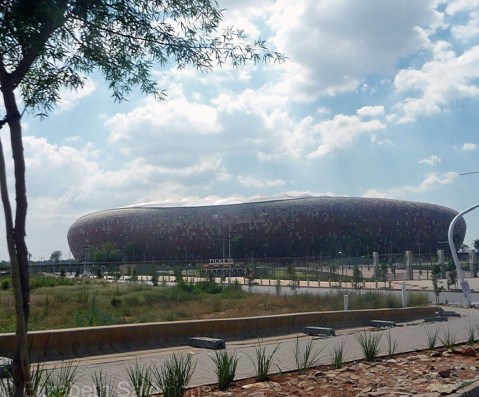
To celebrate the Netherlands’ glorious 5–1 victory over Spain today ― a rematch of the World Cup 2010 final ― this Dutch-Canadian is posting a photo of FNB Stadium in Johannesburg, South Africa, where that 2010 final was played. During World Cup 2010, the stadium was called Soccer City.
University of Toronto
Next up on my tour of schools I’ve photographed: the University of Toronto. I was a student here myself a long time ago, just for a year, and to this day I consider it the prettiest of all the schools I’ve attended (and there’ve been a few).
When I commented to my sister on the architectural style of the buildings at Johns Hopkins, she asked me what the buildings at U of T looked like.
“They’re neo-Gothic,” I said. Also called Gothic Revival, you see neo-Gothic buildings all over Canada ― our Parliament Buildings in Ottawa are probably the best-known example.
The University of Toronto has been around since 1827, has a dozen colleges on three campuses, and is the largest university in Canada with an enrollment of 75,000 students. I took these photos of the St. George campus when I was in Toronto exactly a year ago this week.


Not all of the buildings on the St. George campus are neo-Gothic. The main building of Victoria University, shown below, is called Richardsonian Romanesque, after its architect, Henry Hobson Richardson.
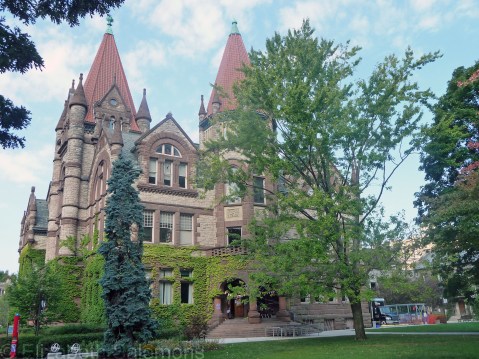
Trinity College is in the Jacobethan style.

And this monstrosity, Robarts Library, was built in the 1970s in what is known as Brutalist Architecture. Appropriate name for the look, I should think. It’s not-so-affectionately known as “the Turkey” by the students of U of T; I’m sure you can figure out why.

Dishing: Pizzeria Libretto
Here’s one last post on food, and then I’ll let you all go back to your New Year’s resolutions. (Which I know you’re following religiously.)
This post is about how I discovered Naples on the Danforth. The Danforth, for those of my readers unfamiliar with Toronto’s Greektown, is Souvlaki Central. A decade ago, there wasn’t much variety in the way of restaurants on the Danforth ― it was all Greek all the time. Every time I went back to Toronto for a visit, I made sure to get my fill of the best souvlaki in the country (in my humble opinion).
But during my most recent visit to the Centre of the Universe, I realized the Danforth is undergoing a transformation. There is still a heavy Greek influence, to be sure, but there’s a whole lot more as well.
Including Italian.
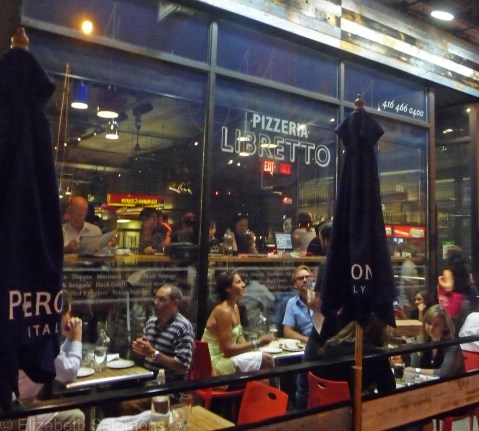
My friend insisted while I was in town that we eat at least one night at Pizzeria Libretto, a neighbourhood pizzeria that serves Real Neapolitan Pizza certified by VPN. (Verace Pizza Napoletana is a non-profit association that protects and promotes real Neapolitan pizza around the world.) She promised me I wouldn’t regret it.
I didn’t.
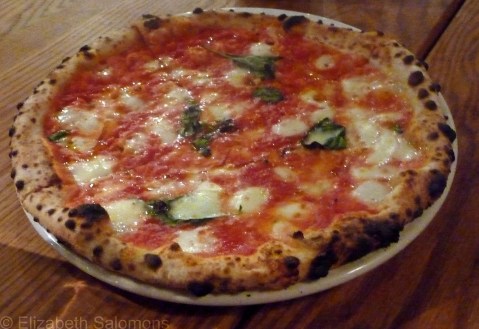
Pizzeria Libretto is about the closest I’ve been to Italian pizza outside of Italy. Libretto is Italian for “booklet.” You fold the pizza at Pizzeria Libretto like a booklet ― that’s the only way you’ll get it in your mouth, unless you deign to eat your pizza with a knife and fork. Pizza crust that soft and that thin ― that’s a true Neapolitan pizza. Our pizza Margherita had a super thin, soft crust, the thinnest layer of tomato sauce, the freshest basil, dollops of fresh mozzarella cheese … and it was baked in a wood-fired oven. Heaven on earth, truly, for pizza lovers.
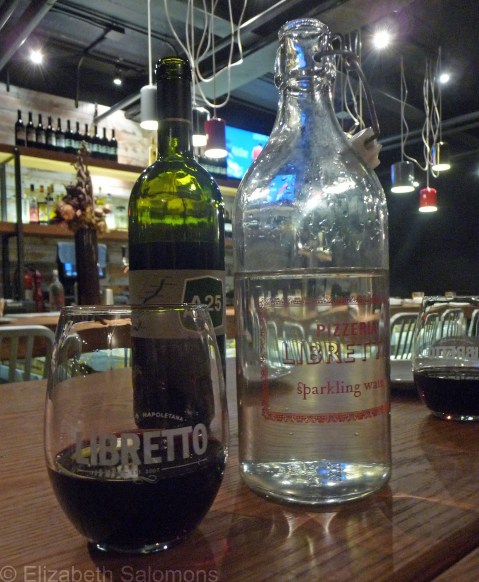
There was no room upstairs when we arrived (we didn’t have a reservation), but lots of room downstairs and the attentive service was excellent. Pizzeria Libretto has a stylish but down-to-earth décor ― I went dressed in a T-shirt, shorts, and Birkenstocks. I really liked the water bottles they used, with the name Pizzeria Libretto stamped on the side, and asked to buy one to take home with me. Our server said he was sure it wouldn’t be a problem, but then someone with a higher pay grade vetoed his decision. To help me get over my disappointment (I’m thinking), our server brought us complimentary after-dinner digestifs.
Before my evening at Pizzeria Libretto, I would tell people that the best souvlaki outside of Greece is made on the Danforth. Now I will tell everyone that the Danforth also has the best pizza outside of Italy. It was so good, in fact, I went back the next week with another friend for lunch. I never did get my souvlaki fix.
Dishing: Acadia
Update: Acadia closed in December 2013.
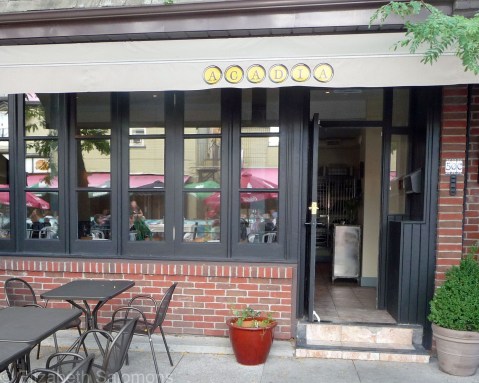
My friend was so impressed with our experience at Jean-Georges in New York City last summer that she decided we should check out some fine dining options in Toronto as long as I was in town. We decided on Acadia, which features the “flavors and techniques of Acadian and Lowcountry cuisine” and was rated by enRoute magazine as Canada’s fourth-best new restaurant of 2012. My friend (“C”) spends part of every summer in modern-day Acadia (aka Nova Scotia), she and I had travelled together many years ago to Louisiana, and I once spent a month in South Carolina, so we were both rather curious to see what Acadia had to offer on its menu.
Plus, a friend of C’s (“J”) ― also from Nova Scotia and in town for TIFF ― would be joining us. There was no debate. Acadia was our #1 choice.
(And we pause here momentarily for a brief history and geography lesson: Acadia, as I’m sure you all know, is that part of North America (present-day Maine, New Brunswick, Nova Scotia, and Prince Edward Island) settled by the French in the early seventeenth century. Its connection to Louisiana is that, when the British deported most of the Acadians between 1755 and 1763, many of them ended up in Louisiana, which at that time was still a colony of New France. Their descendents are known as Cajuns.
Not so well known (OK, yes, I admit it: I looked this up on Wikipedia) is the Lowcountry region. It’s the South Carolinian coast, and food typical to the area is known as Lowcountry cuisine.
That’s it for today’s lesson ― we now return to our regular programming.)
C and I arrived early, so we each ordered a bourbon-based cocktail to start. As we waited for J to arrive, we devoured an order of chicken cracklin’ with hot sauce and blue cheese. The cracklin’ are like thin, smooth potato chips, but they’re made from stretched chicken skin, not potatoes. I know, I know … it sounds disgusting, but trust me ― these are addictive. The blue cheese was foamy and light, and we scooped it up with each cracklin’ like dip.
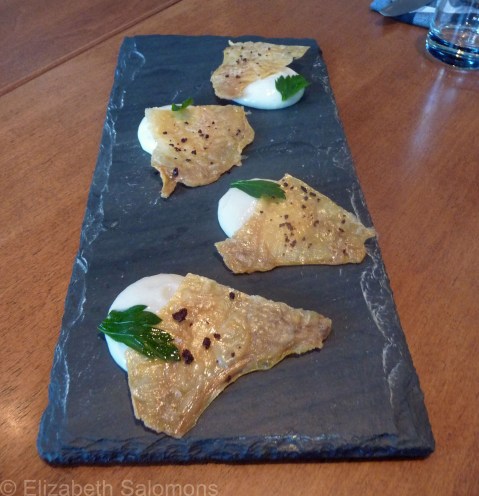
Chicken cracklin’ with hot sauce and blue cheese
When J arrived, appropriately famished as well, he ordered a beer and we ordered another round of the chicken cracklin’, as well as the spiced beer nuts, flavoured with brown butter and paprika, and Acadia’s cornbread, which is served with whipped pork butter and mesquite.
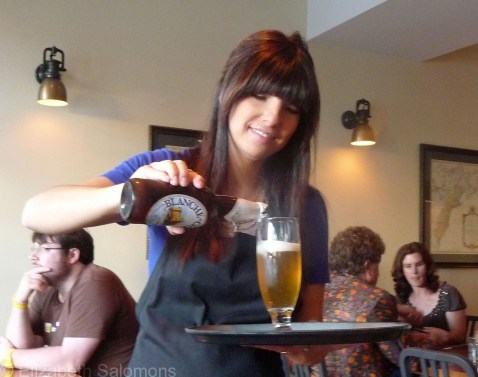

Acadia’s cornbread, with whipped pork butter and mesquite
After the nibblies and drinks were gone, we were ready for the serious stuff. We each ordered a different starter. C choose Anson Mills grits with Gulf prawn, oyster mushroom, pimento cheese, and ham hock consommé. Anson Mills is located in South Carolina, so these were the authentic southern grits I remember. I came to like grits mixed with scrambled eggs during my month of South Carolinian breakfasts. I like grits with eggs; I like grits for breakfast. But as a starter? With prawns? Never mind — C was happy. She gave me a taste, but I’ll be honest: not my favourite and I found it a curious dish.
J ordered the charred octopus served with crispy pork belly, tomatillo, new potato, spicy collards, and a black vinaigrette. He summed it up as simply the best octopus he’d ever eaten. I’ll admit I had some regrets on not ordering it when I saw his plate.
I had chilled corn soup with andouille, yellow plum, smoked cream, and tarragon. All the texture was in the andouille and plum that lay at the bottom of the bowl because the soup was as smooth as consommé. I soon got over my octopus-regret; my soup was delicious.

Chilled corn soup with andouille, yellow plum, smoked cream, and tarragon
Before the arrival of our main courses, our server came by with the most sincerest of warnings. We needed to prepare ourselves. More accurately, I needed to prepare myself, because, in her words, I was about to experience “some serious food envy.”
She wasn’t kidding. C and J had ordered the special of the night: an entire braised veal shank to share. It left all three of us speechless. It was encircled by chanterelle mushrooms and tomatoes of a variety of colours.
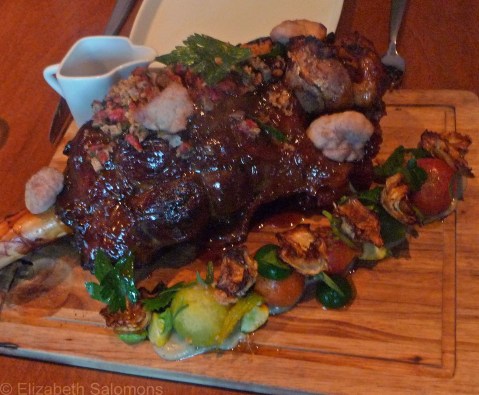
The magnificent veal shank
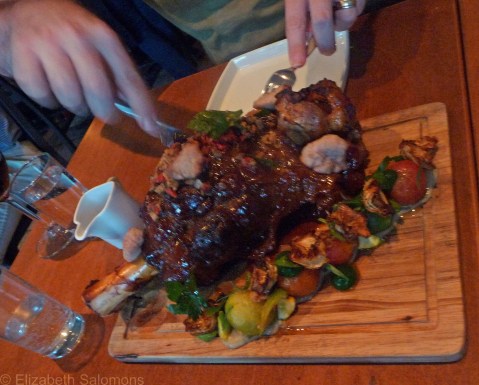
So magnificent it deserves a second photo
I had scallops (miniscule, our server teased me, compared to the veal shank), with shaved foie gras, celery purée, pecan, Concord grape, and scuppernong mustard. Scallop is one of my favourite types of sea food, so I can be quite forgiving, but no need this time. They were excellent. But I also had a few bites of the veal shank, and had to admit that it too was delicious.

Scallops with shaved foie gras, celery purée, pecan, Concord grape, and scuppernong mustard
It didn’t take long before J and C admitted they were defeated. Truthfully, that hunk of meat was enough for four people. Our server grinned. “Oh, so it’s going to be lunch tomorrow?” she asked.
C piped up that she would appreciate some suggestions on what to do with the veal in the way of leftovers. “I don’t want to ruin it,” she said. We were surprised and delighted to see Acadia’s chef, Patrick Kriss, come to our table after we had been served our desserts, speaking most earnestly, and advising C to braise the leftover meat in chicken stock to retain the moisture. “Don’t put it in the microwave,” he warned. “That will dry the meat out.” We were all impressed by the attention he gave us ― although, if I think about it, it was probably the veal shank he was most concerned about.
For dessert, I had wild blueberry sorbet with peaches, lavender, and ricotta, while J and C shared a dark chocolate cremeaux with milk sorbet, pistachio, and cherries. Espresso to finish, and we were sated. My Toronto readers: if you’re interested in a medley of cuisines and a lesson in geography, check out Acadia. I highly recommend it.
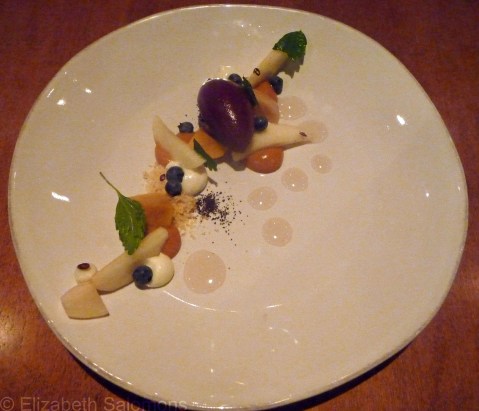
Wild blueberry sorbet with peaches, lavender, and ricotta


 There and Back Again