
MacMillan Bloedel Building
Ahem.
I promised you a series of blog posts about Arthur Erickson buildings that have shaped Vancouver, way back in (checks notes) June.
What can I say? A glorious BC summer got in my way and I’ve been spending as much time away from my computer as possible. I’m sure you understand.
However, I do want to showcase those buildings, and so, here we go.
First up is the MacMillan Bloedel Building that stands prominently in the centre of downtown Vancouver.

It was completed in 1968 and is a typical example of Brutalism, the style of architecture the dominated the middle of the previous century.
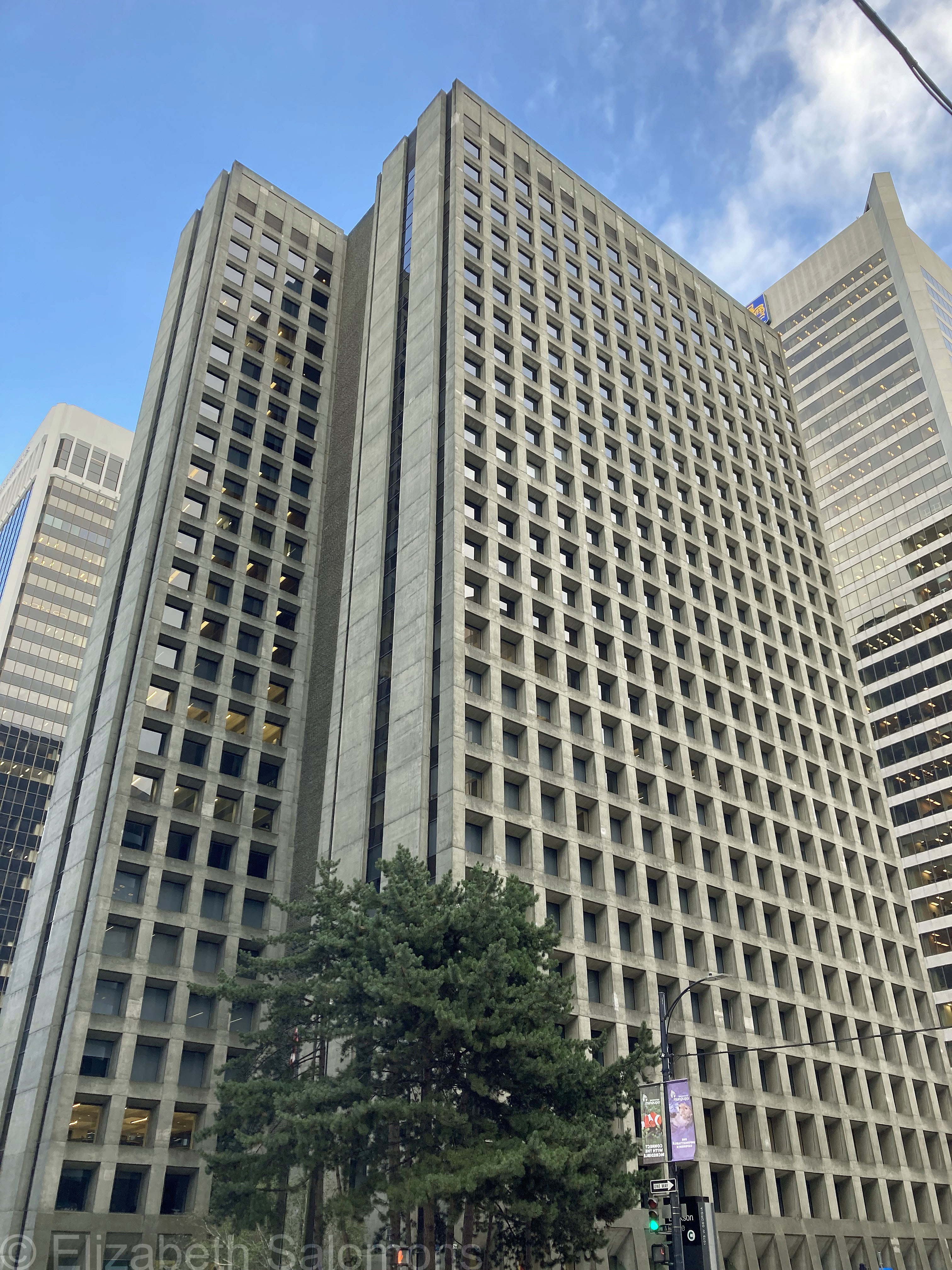
Each window measures 7 feet by 7 feet and is a single pane of glass. The lobby is separated from the street by a series of sunken pools and concrete planters filled with trees and other vegetation.
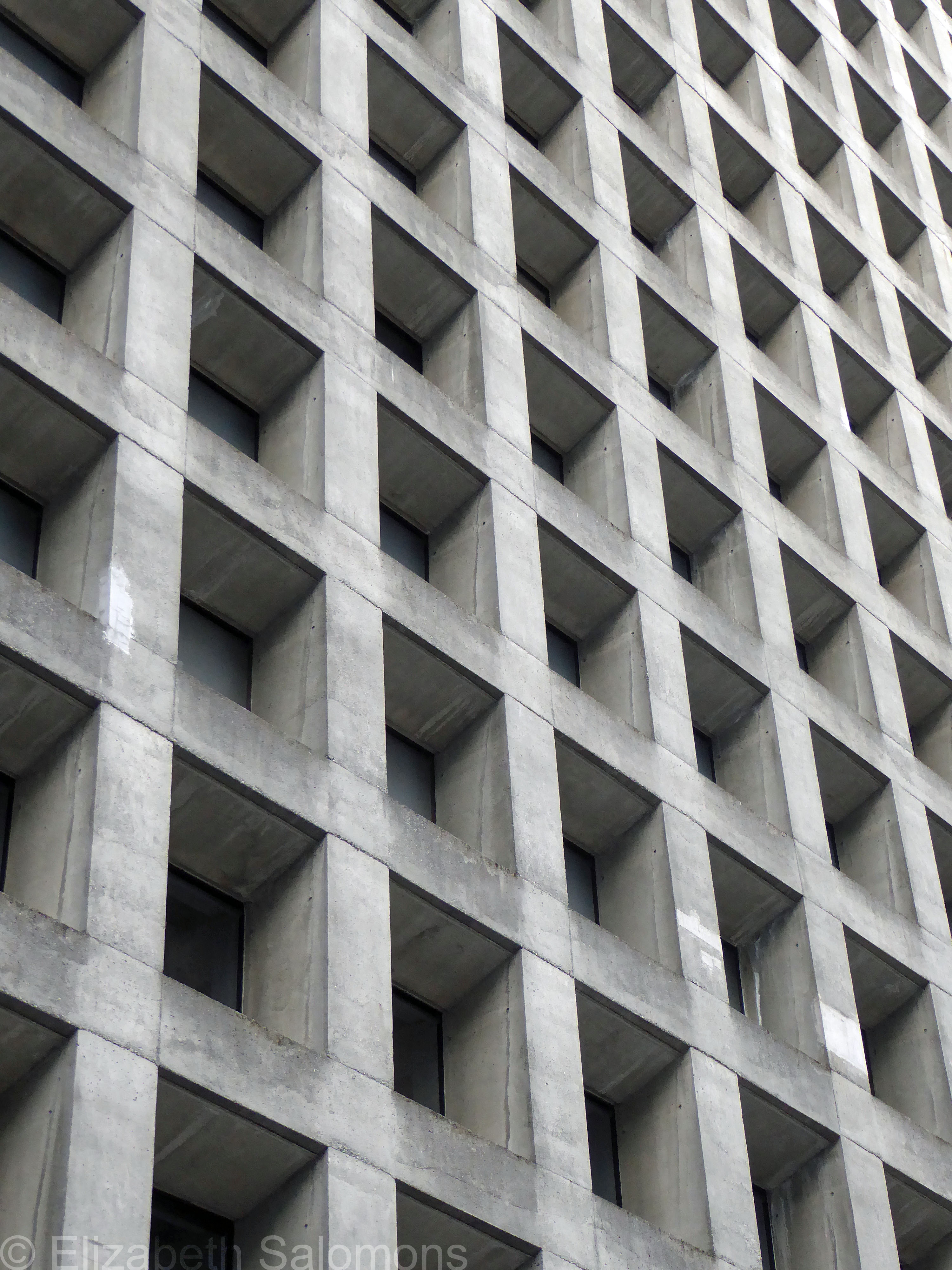
Standing 27 storeys tall, the MacMillan Bloedel Building was the tallest in Vancouver when finished. It was built to house the headquarters of MacMillan Bloedel, a forestry company that hasn’t existed for 25 years. Although it was renamed Arthur Erickson Place in 2019, it’s still commonly referred to as the MacBlo Building.

Through My Lens: Beech Tree

We are well and truly into the season where we start paying attention to the trees around us, and what will be eventually be some pretty spectacular colours.
Until then, here’s a beech tree I photographed last weekend in Stanley Park. Also pretty spectacular, even though its leaves haven’t yet turned.
Wapiti
My camping mini-break at the end of August with my brother and his kids got me thinking about camping when I was a kid. Back then, everyone I knew went camping in the summer. It was the only kind of vacation most parents with a carful of kids could afford.
Most of our school friends went to the Okanagan every summer, but my parents’ preference was to camp in the middle of the forest, so we headed to the mountains. A fully-treed campground was always the destination — I suspect my parents would have not cared for Ruckle Park because of how exposed the campsites are.
The “mountains” was what we called Banff and Jasper. We would do a circuit, spending some time in Jasper, then head south to Lake Louse and Banff, and then, when we were badly in need of showers and clean laundry, Dad would point the car towards Lacombe. There, we would spend time with our grandmother and all the aunts, uncles, and cousins who lived in the area.
When the news broke last July that the entire town of Jasper, along with some 20,000 park visitors, was being evacuated because of encroaching wildfires, my co-worker (who had also spent her childhood camping in the mountains) and I spent a horrified morning looking at video on social media. We were both relieved to learn that only (only?!) a third of the structures in Jasper townsite had been destroyed.
At first, there was no word about the rest of the park — it would take some months before the wildfires were under control. In fact, it wasn’t until last week that the news showed images of some of the campgrounds. Given the scale of the wildfires, I knew it would be bad. And it is. The forest is just … gone.
Forests rebound, I know that. But until they do, camping in the forests of Jasper National Park will be much different.
One of the campgrounds we used to camp at is named Wapiti. Wapiti, or elk, are commonly seen throughout Jasper — I took this photograph of an elk cow just as we were leaving our campsite for a day of hiking the last time I was in Jasper. Wapiti is a Shawnee word for “white rump.”

Ruckle Park
When I first visited Ruckle Park on Salt Spring Island, I made a promise to myself that one day I would return with my camping gear and spend some time here.
Who knew it would take several decades for me to fulfill that promise?
Located on the southeast tip of Salt Spring Island, Ruckle Park is one of the largest parks in the Gulf Islands. Its seven kilometres of shoreline give you oodles of tidal pools to explore at low tide, but there are also numerous walking trails throughout the coastal forest.
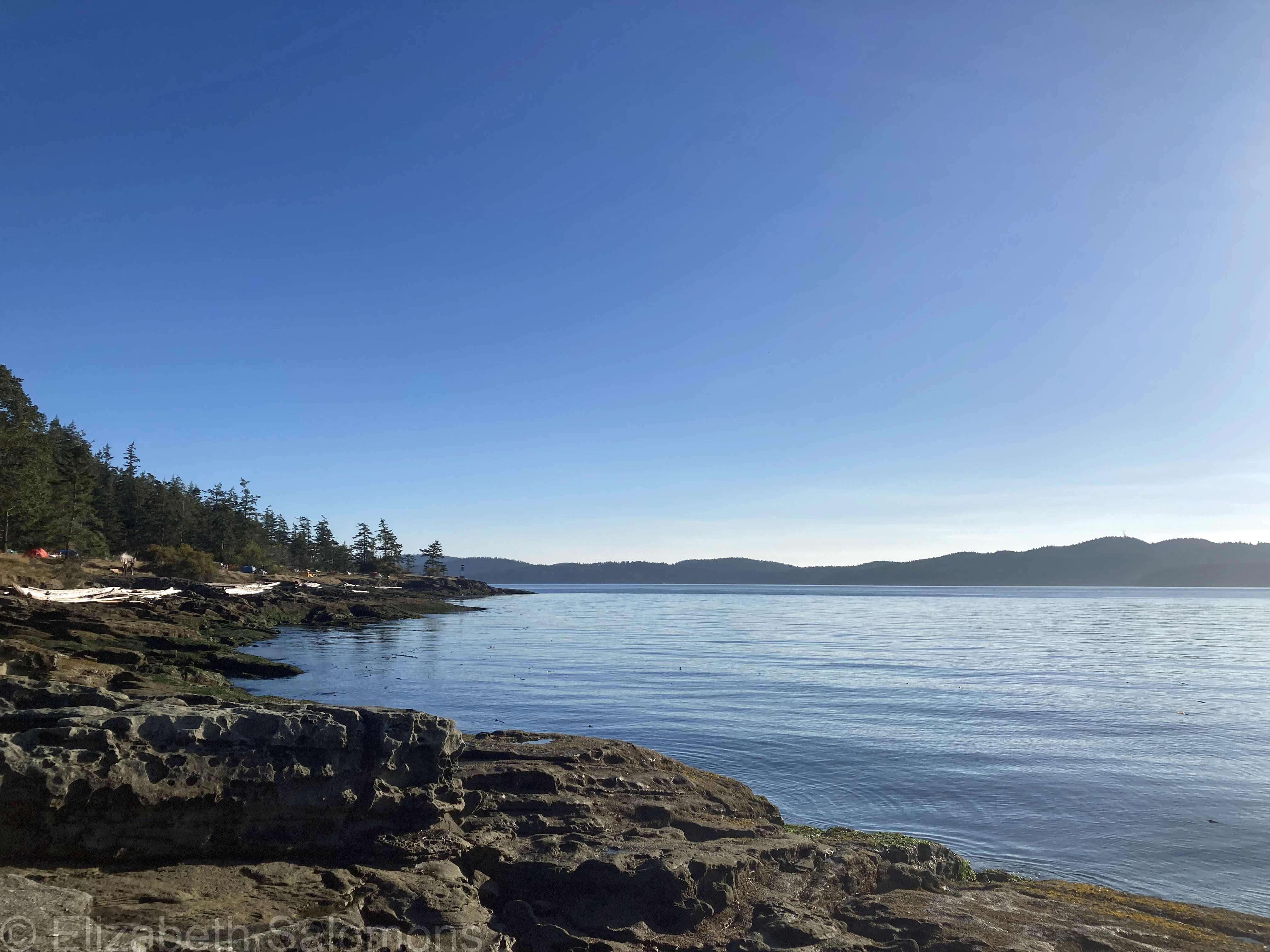
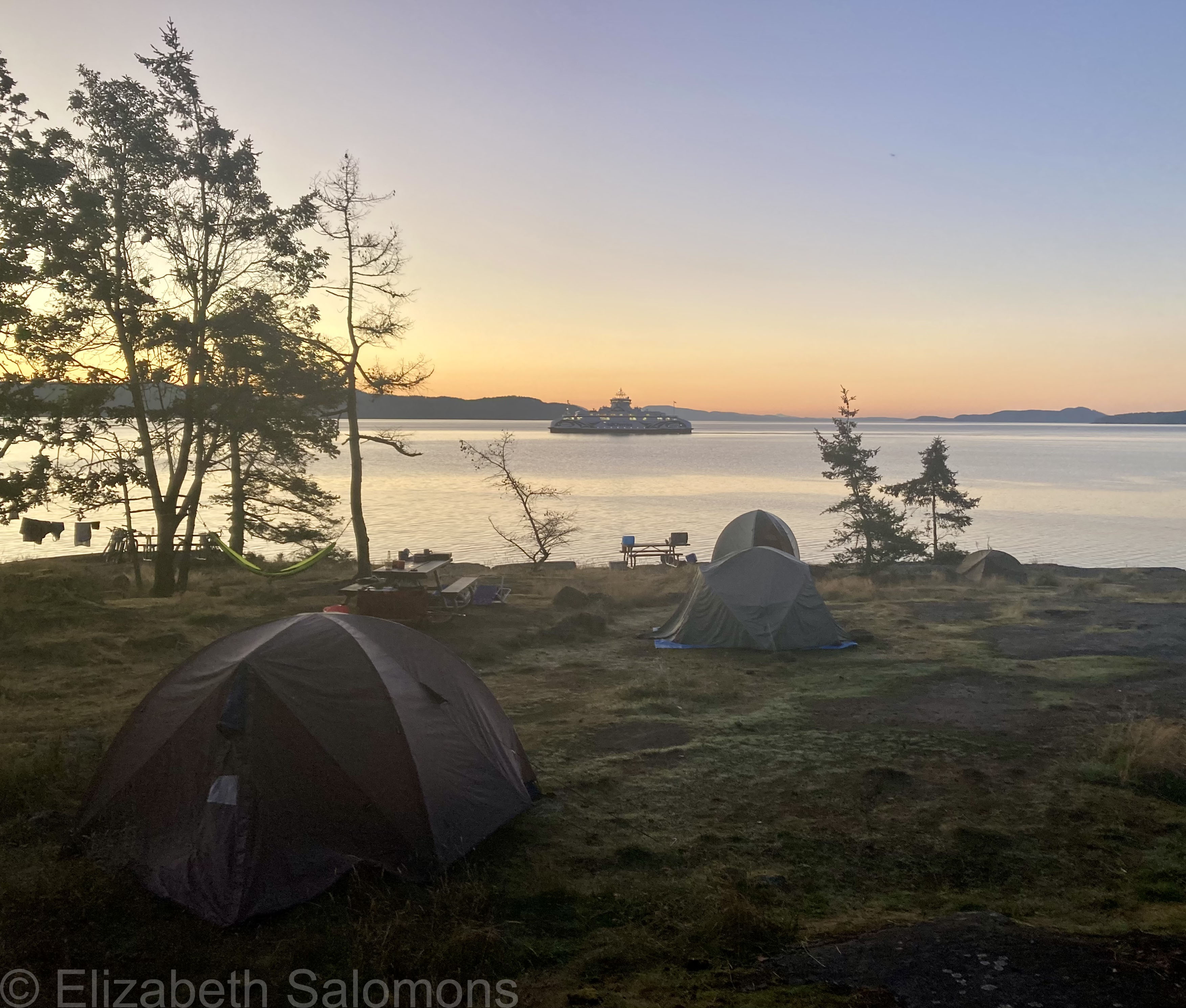
Most of the campsites are walk-in (first come, first served), but the bonus of that is you get to pitch your tent right by the water.
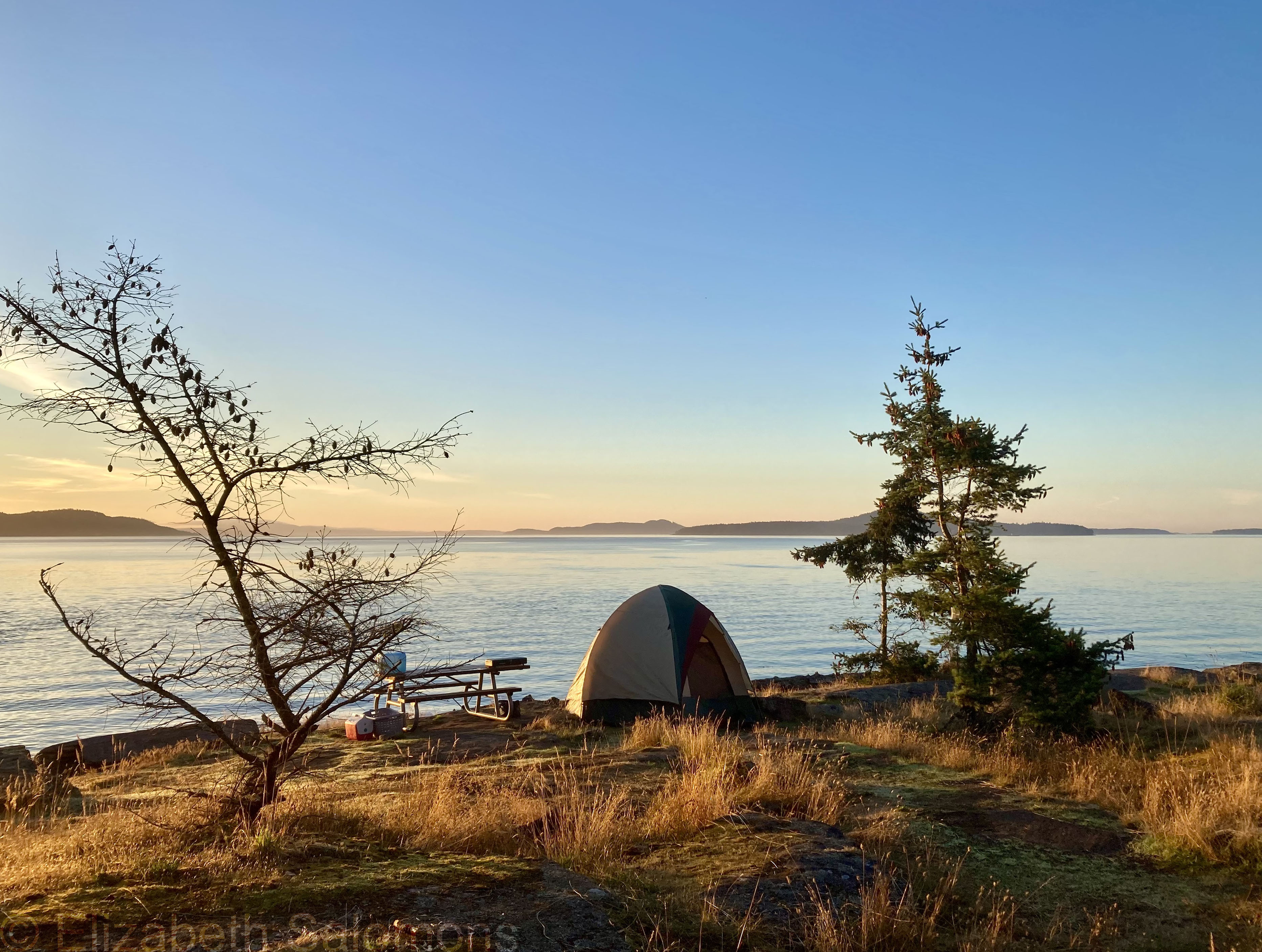
The sunrises? They are spectacular.

Once the sun is up, the morning’s entertainment starts with a round of musical campsites. Campers who spent the previous night in the overflow area come around to ask when those of us camped beside the water are intending to leave. The morning we left, there were four separate parties interested in our spot. The mornings we weren’t going anywhere, we got to watch people move gear and tents from one site to another, and then watch someone else move into the just-vacated spot.
The summer’s campfire ban was lifted the afternoon we arrived (talk about timing!) and the communal firepit makes it easy to get to know your neighbours.
Ruckle Park also has a working heritage farm.

My three days of camping at Ruckle last week with my brother and his kids was the absolute perfect way to finish off my BC summer. And I made another promise to myself: it won’t be several decades again before I return.
I’m already making plans to return next summer.
Salish Heron
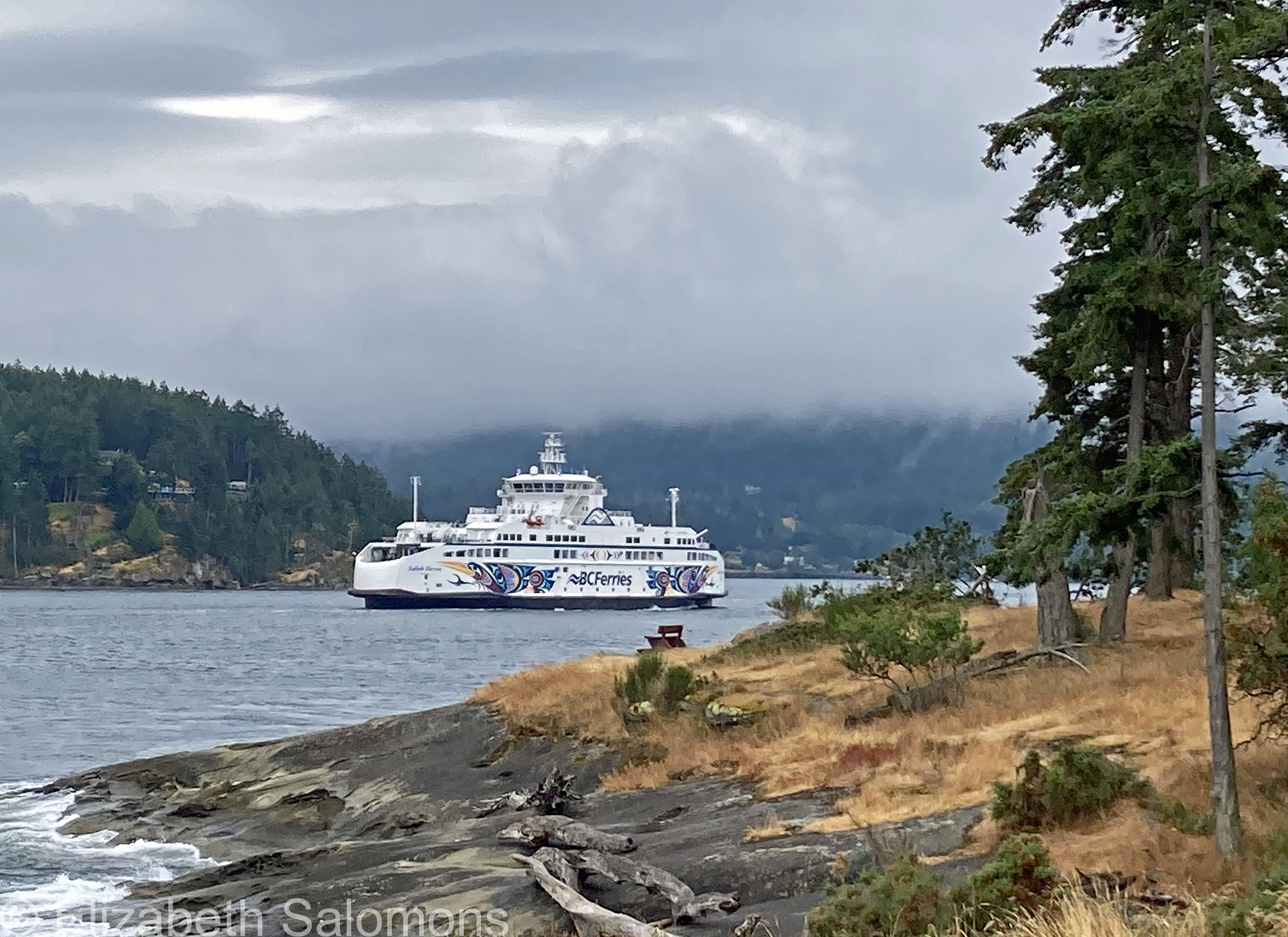
Time for my obligatory summer post about touring the Salish Sea on a BC ferry. I took this photo last month from the southern tip of Galiano Island. That’s the Salish Heron entering Active Pass.
Like the other Salish-Class vessels, the ferry is covered in original Coast Salish artwork inside and out. Penelakut First Nation artist Maynard Johnny Jr. was the artist for the Salish Heron.
Paris 2024
I cannot lie. Paris 2024 hit all the right notes for me.
I love the spectacle of the Olympics. The biggest sporting event on the planet bringing together thousands of athletes from more than 200 countries to compete in dozens of sports never fails to catch my attention, whether it’s in my own city or in one far away.
I especially loved the historical setting of these Olympics, which were hosted by my second-favourite city in the world. The iconic competition venues with magnificent backdrops like the Eiffel Tower or Château de Versailles never let any of us forget where these games were taking place.
The Opening Ceremonies (yes, yes, I know, but les Français, they’re just so … French) weren’t held in some generic sports stadium, but in the centre of Paris itself, putting the City of Light on display. The Olympic Cauldron (like Vancouver’s Olympic Cauldron) was accessible to Parisian residents and visitors alike from its location in the Jardin des Tuileries, where it aligned with key landmarks: the Louvre, Place de la Concorde, and the Arc de Triomphe. In a nod to history, the fuel-free cauldron was built in the shape of a hot air balloon to commemorate the first-ever flight by humans, which took place over Paris in 1783.
Even the medals are historical: each one contains a piece of the Eiffel Tower. (The fragments of iron were left over from renovation work done over the years.)
And if you doubt that the City of Love has special powers, remember this record set by athletes during Paris 2024: the most number of marriage proposals ever at an Olympic games (seven).
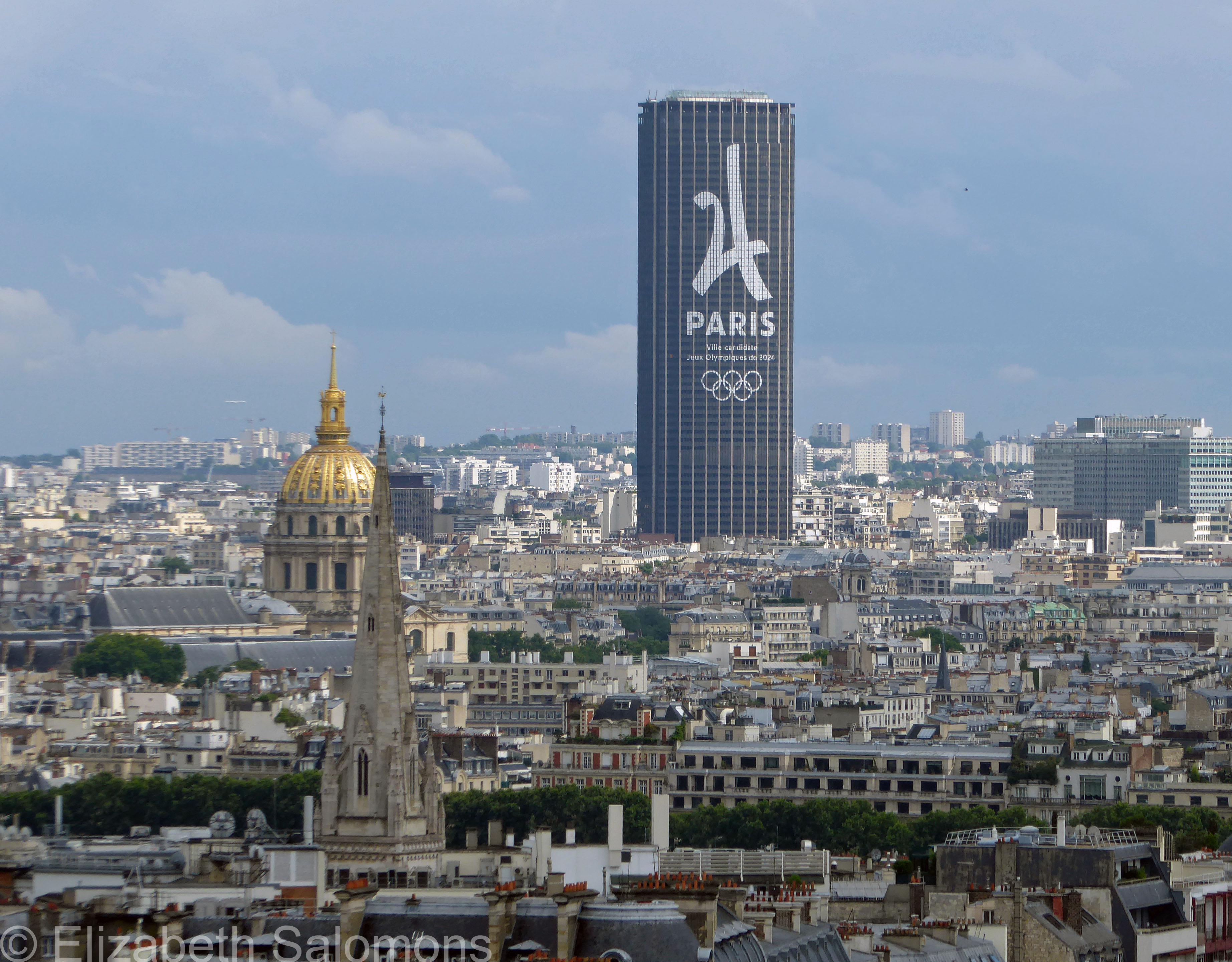
It’s always difficult for me to choose just one photo when I write about Paris, but then I found this and knew it was the one. That’s the Tour Montparnasse as seen from the Arc de Triomphe. I took this photo in the summer of 2017, mere weeks before Paris was announced as the host city for the XXXIII Olympiad.
Scenic Drives Around Oahu
Ahem. About that geology.
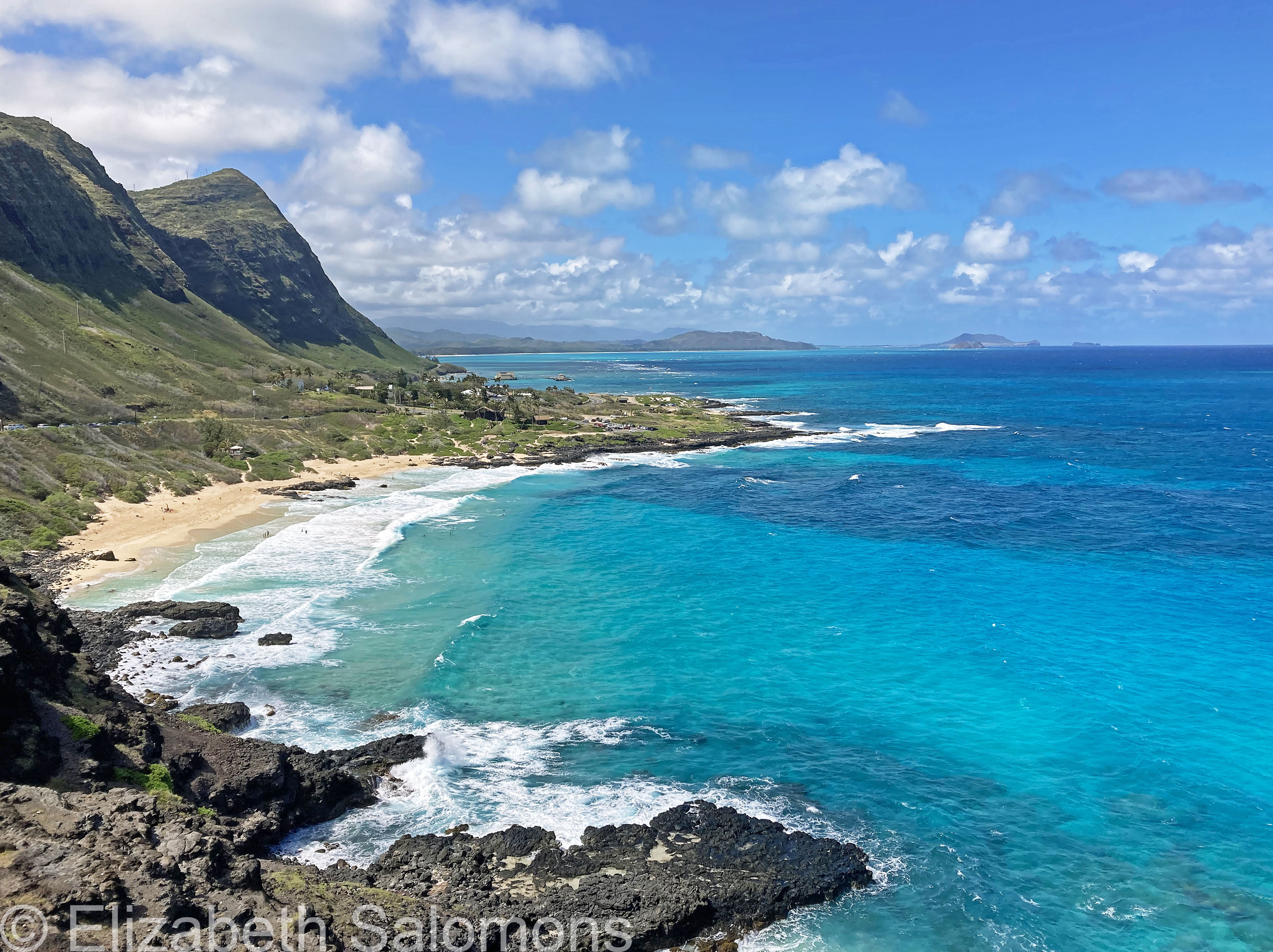
When you start exploring Oahu by car, the volcanic origins of Hawaii become very apparent. It makes for some stunning vistas.

Here is a close-up of that volcanic rock.

There are a total of eight islands in the Hawaiian archipelago — Oahu is the third largest. Our first glimpse of the island’s geology was along the Pali (paa-lee) Highway, which we took from the airport in Honolulu, through the twin Nu‘uana Pali Tunnels that pass beneath the Ko‘olau Range, to the windward side of Oahu and our home exchange in Lanikai. Directly above those tunnels is the Nu‘uana Pali Lookout. Pali is Hawaiian for “steep cliff.” If you look to the left, this is what you see.
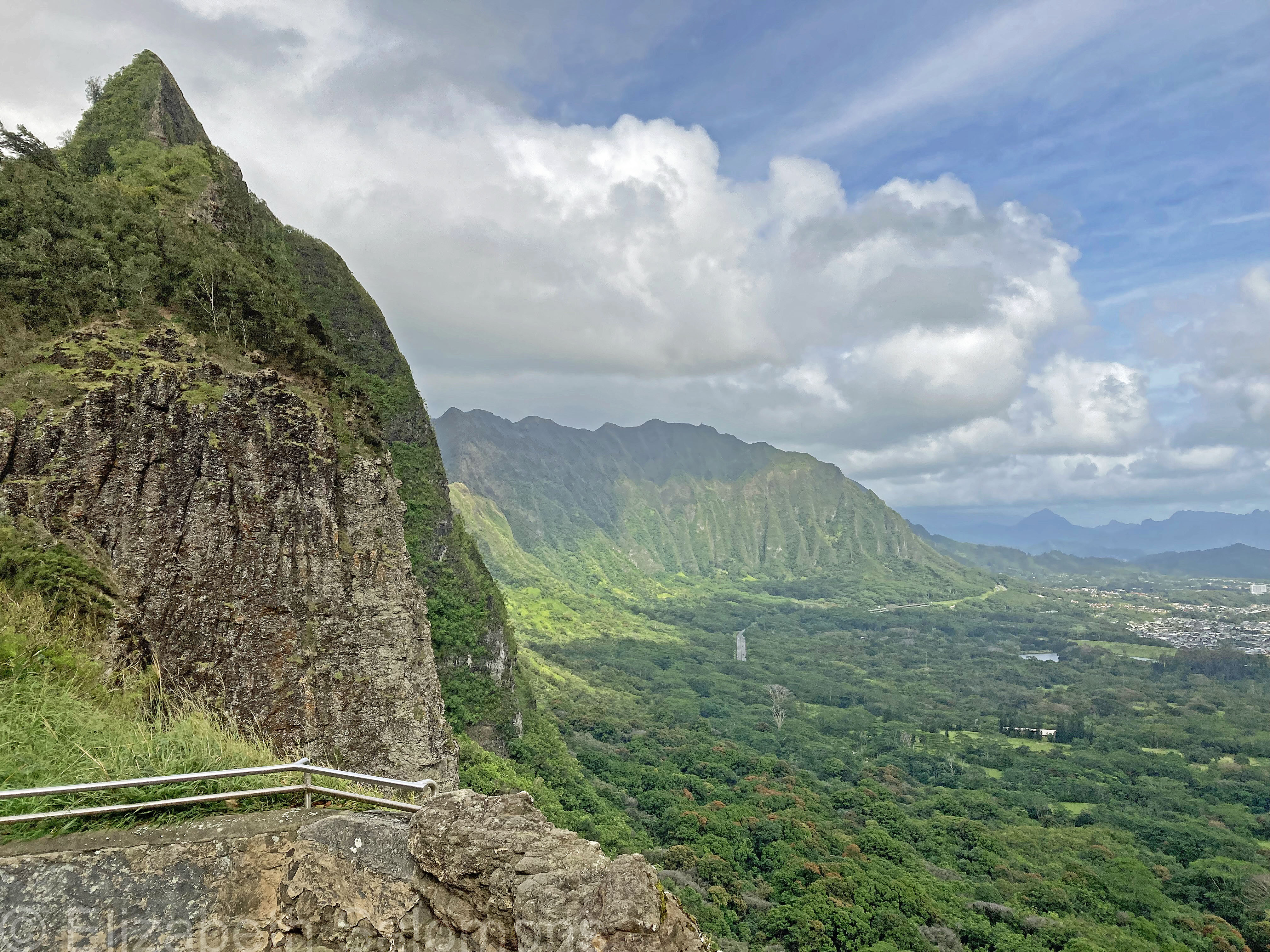
And if you look to the right, this is your view over the windward coast of Oahu.
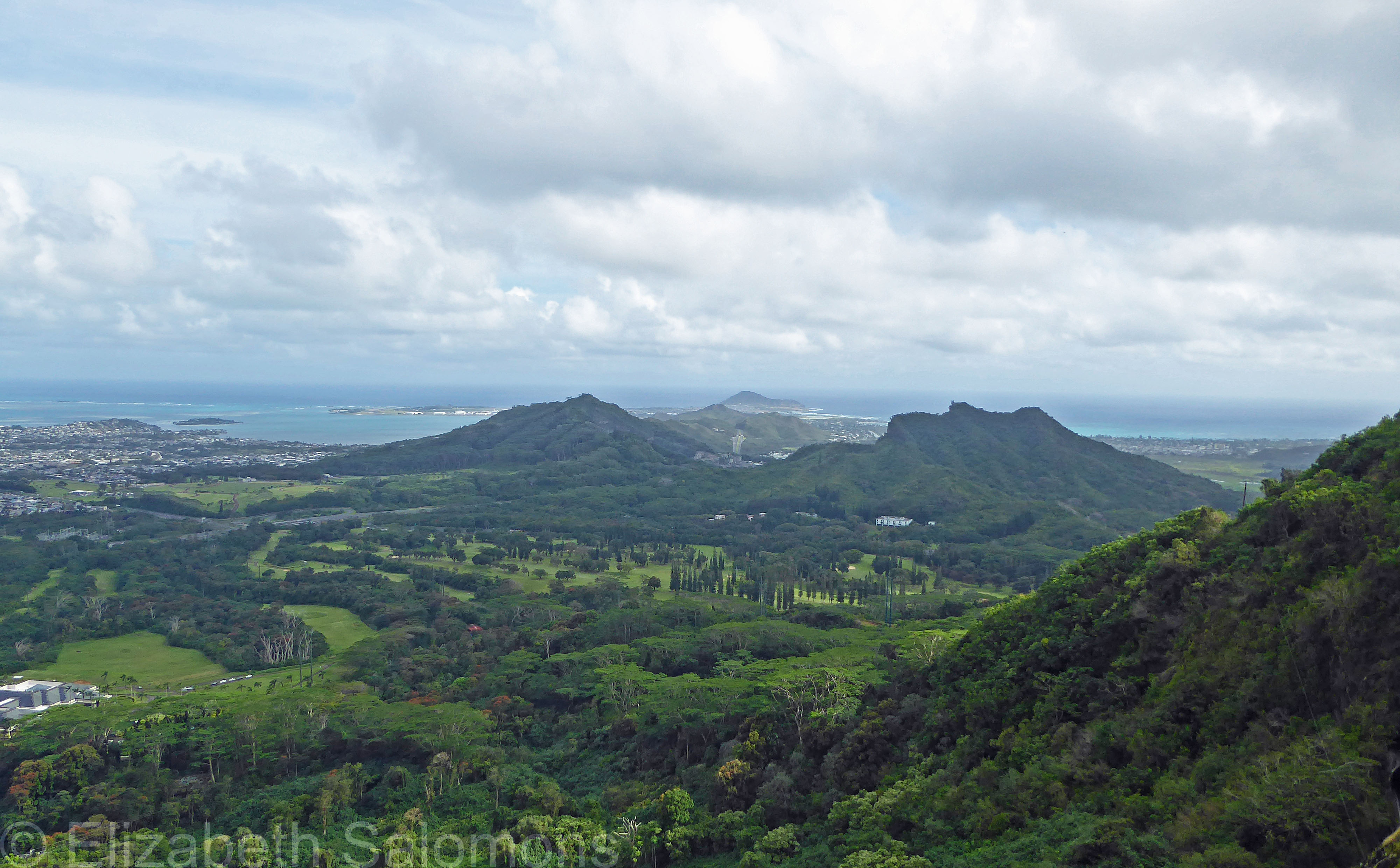
Much of the Pali Highway was built along traditional foot paths over the Pali pass. The tunnels were built in 1958; the highway that was used before then is the Old Pali Road, now a popular hiking route.
An alternative to the Pali is the Likelike (lee-kay-lee-kay) Highway, whose delightful name comes from the Hawaiian Princess Miriam Likelike. This trip, however, we always ended up taking the Pali Highway.
We also wanted to explore the coast, as much as we could by road, and take a peek at the famous surf of Oahu’s North Shore. This route took us along the Kamehameha (ka-may-huh-may-uh) Highway, named after King Kamehameha I.

Perhaps somewhat foolishly, my sister and I went for a dip in this surf. It’s invigorating, I’ll give you that.
After we rounded the northern tip of Oahu, the highway then took us down the middle of the island, between the pineapple fields, all the way back to Honolulu.
The last highway we drove along was the Kalaniana‘ole (ka-la-nee-ah-na-oh-lay) Highway, named for Prince Jonah Kūhiō Kalanaina‘ole. This drive took us from Lanikai to the backside of Diamond Head. That’s it, there, in the next photo.
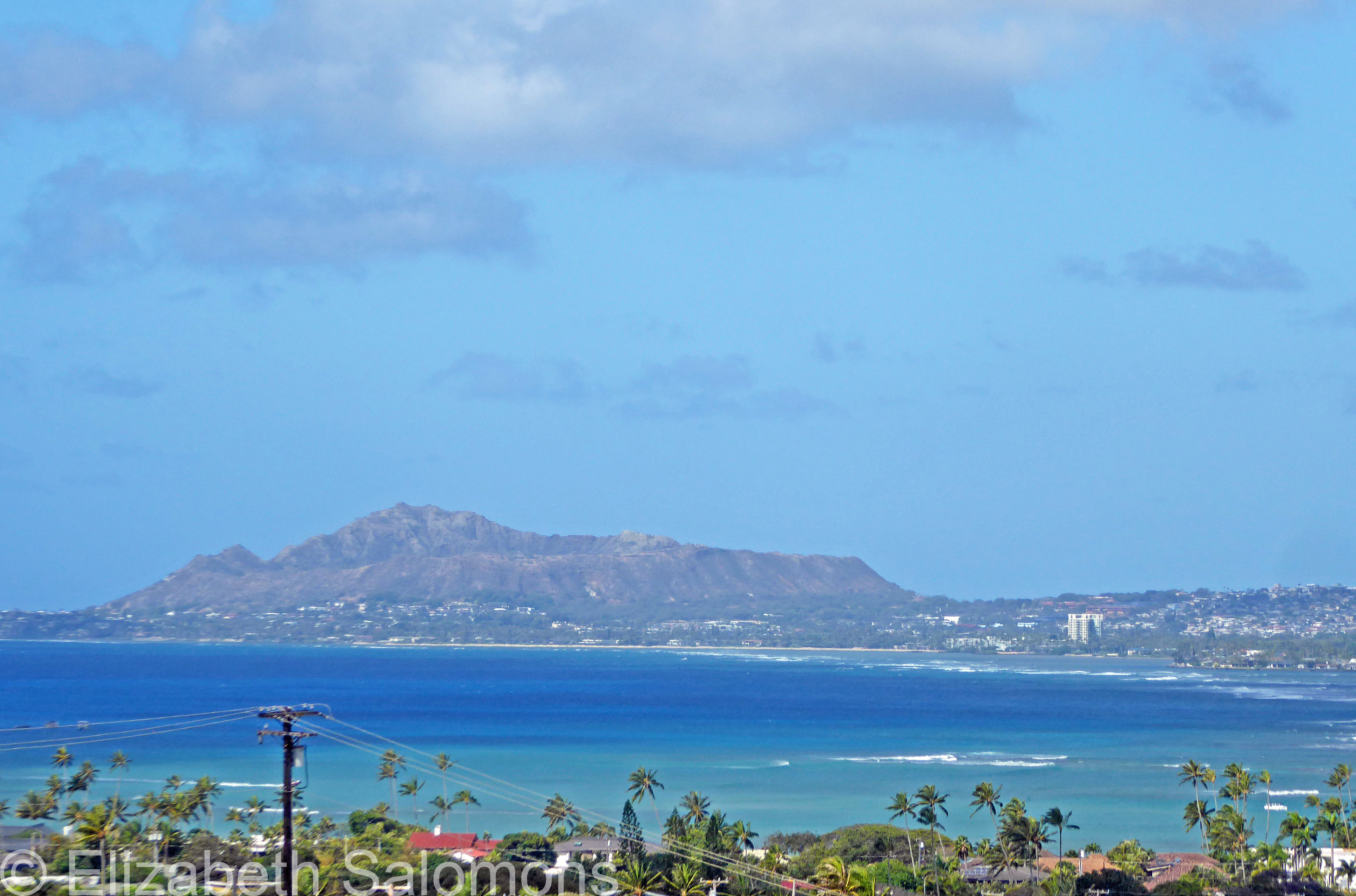
Some of our most spectacular views of the Oahu coast were seen on this last drive.
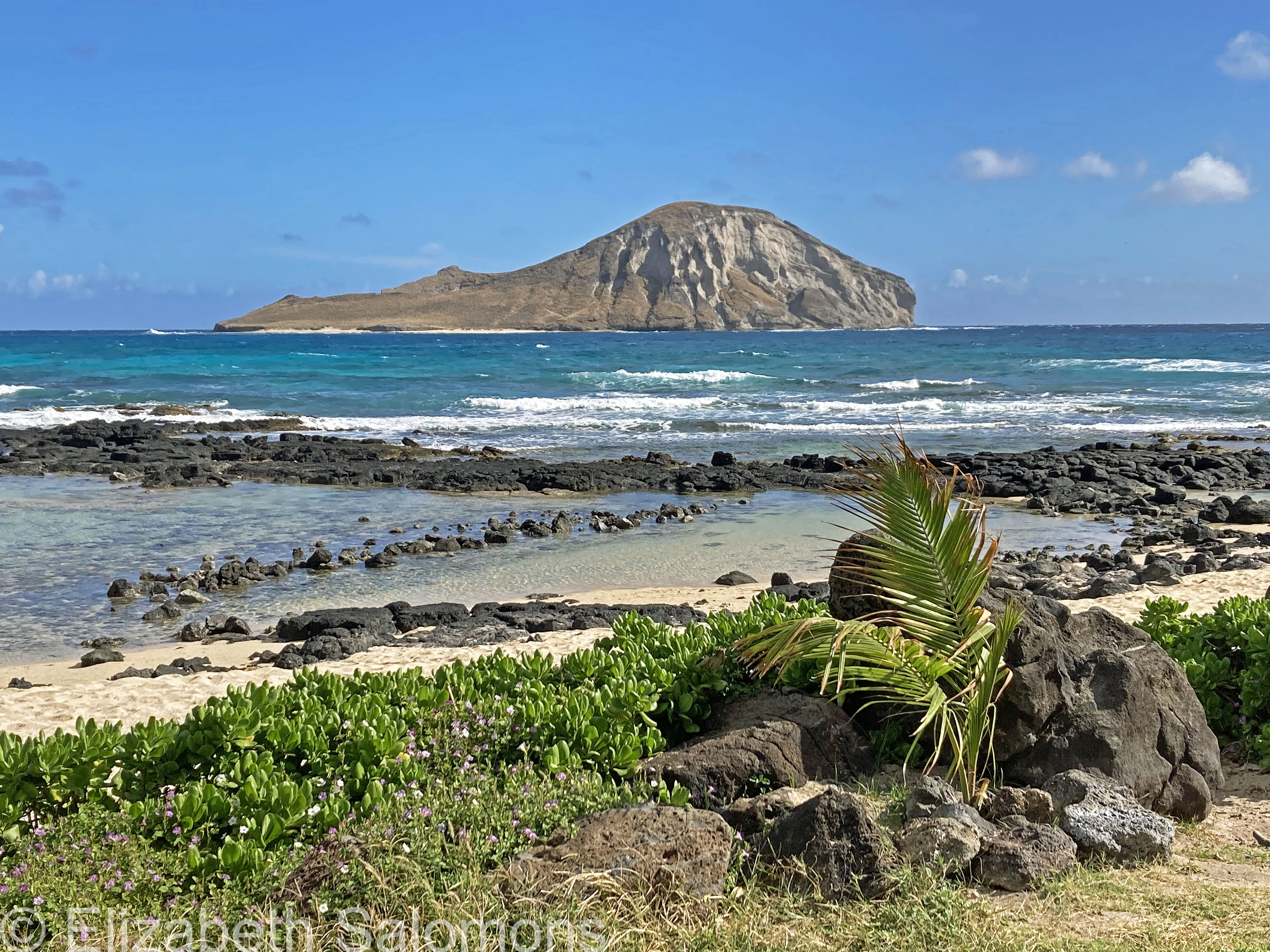
I rarely take driving holidays; my preference is to get out and explore on foot.
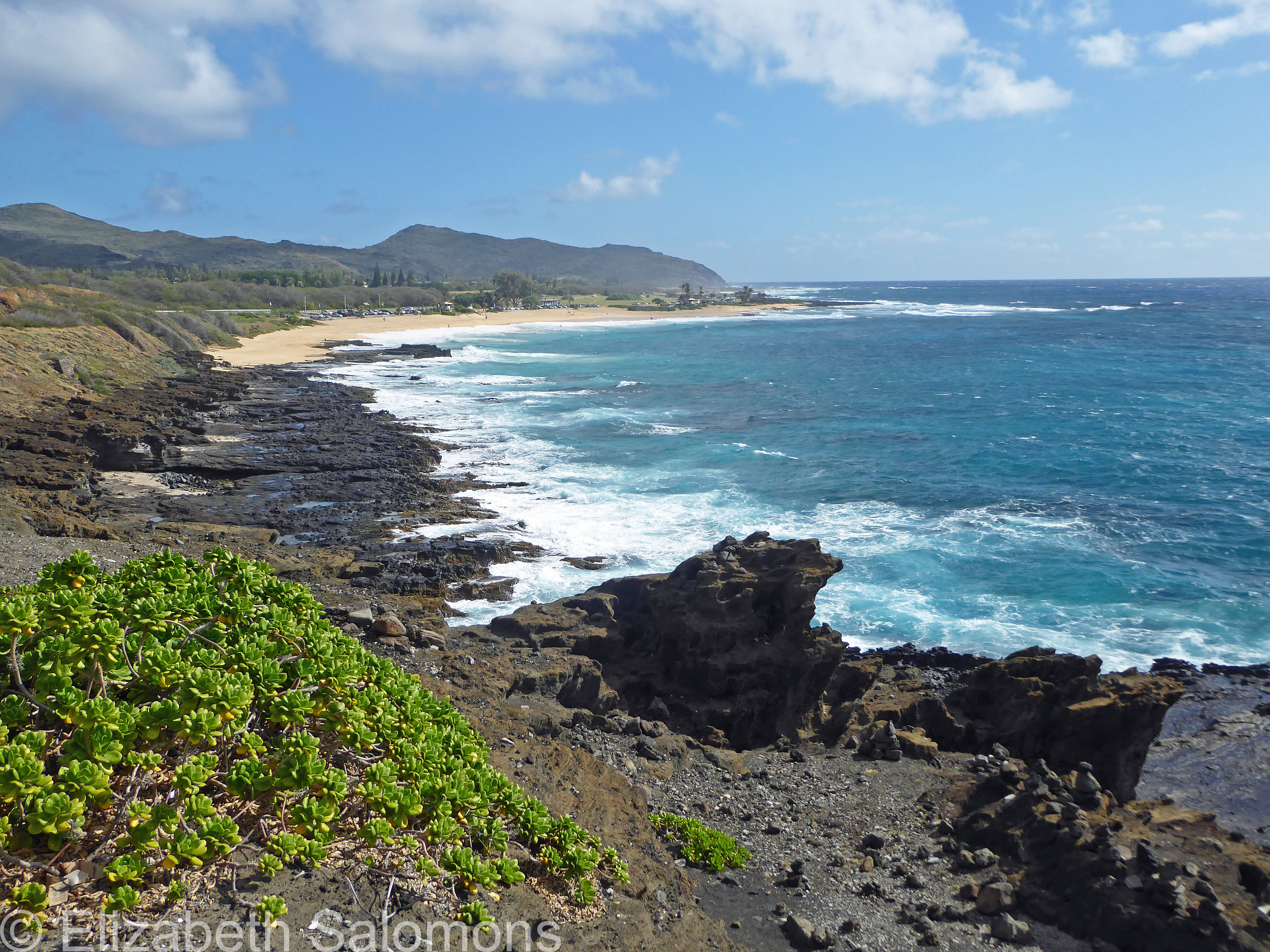
But there are some places you simply cannot get to without a car and some of those places are so worth visiting.
Like Oahu.
Happy Canada Day!

I was looking through my photos for an appropriate one to post for Canada Day when I came across this one. It’s a bit dated, but I’m thinking it works, this year in particular.
Why, you might ask?
Because our country has been hockey mad for the past two months.
Just over a week ago (why does it feel so much longer?), a German friend and I were chatting back and forth by email. He mentioned that Euro 2024 (which Germany is hosting this summer) was dominating their lives at the moment — had I heard about it?
I had, I replied, and then I invited him to visit me in 2026, when Vancouver will be hosting seven games of the FIFA World Cup.
Then I wrote this:
The big game that Canada is focused on happens tomorrow. Hockey (or ice hockey, as you call it). The Stanley Cup playoffs involve four rounds of best-of-seven games. Tomorrow is Game 7 of the final round, with the team from Edmonton playing a team from Florida. Canada has not won the Stanley Cup in 31 years. If Edmonton is able to win tomorrow, this country will lose its mind.
Sadly, our email chat ends with this brief message from me the following morning:
HEARTBREAK ACROSS CANADA. ☹
I’m never sure if my non-Canadian friends understand how much hockey is part of our national identify. It was certainly clear to me last week. The entire country had hopped on the bandwagon — even people who don’t care about hockey were making plans to watch the game.
It reminded me of another hockey game that once gripped the country’s attention: the Men’s Hockey Gold Medal game during the Vancouver 2010 Olympics. When Canada pulled off a win against the United States, the biggest-ever block party took over Vancouver’s downtown core.
I took this photo during those same Olympics. It’s from a hockey game between Germany and Canada, which could in no way be considered a nail-biter — Canada trounced Germany 8 to 2 — but it was still electric inside the arena and so much fun to be there.
If Edmonton had won the Stanley Cup this year, you can be sure it would be part of the Canada Day celebrations somehow somewhere today. But, even without the Cup, we can still celebrate the fact that we got to watch some really good hockey.
And, of course, there’s always next year.
Through My Lens: Tree Bathing

In what seems to have become an annual event, I was once again camping at Little Qualicum Falls with my extended family a couple of weeks ago. A good time was had by all as we enjoyed all the rituals of a weekend in the Canadian forest: hiking, swimming, s’mores around the campfire …
Also tree bathing. The Douglas firs do take your breath away.
Happy Birthday, Arthur Erickson!
Architecture, as I see it, is the art of composing spaces in response to existing environmental and urbanistic conditions to answer a client’s needs. In this way the building becomes the resolution between its inner being and the outer conditions imposed upon it. It is never solitary but is part of its setting and thus must blend in a timeless way with its surroundings yet show its own fresh presence.
— Arthur Erickson
Google “world’s top architects” and he doesn’t merit so much as a mention, but Arthur Erickson is arguably Canada’s best internationally known architect. He was born in Vancouver 100 years ago today.
After serving in the Canadian Army during and after World War II, Erickson had plans to become a diplomat, but his interests turned to architecture upon seeing the work of Frank Lloyd Wright. He completed his studies at UBC, went on to McGill, and also studied in the Middle East, Greece, Italy, and Japan. In 1962, after a decade spent teaching and designing, he opened his Vancouver-based architecture firm in partnership with Geoffrey Massey. After they won the competition to design Simon Fraser University, there was no stopping him.
Some say that Erickson’s architecture should be as well known as Margaret Atwood’s novels or Emily Carr’s paintings. Certainly his buildings have shaped the look of Vancouver. Erickson also shaped architects — many moved to Vancouver to work under his mentorship.
Centenary events are happening throughout Vancouver this summer. My own commemoration will consist of a series of blog posts about some of his most important Vancouver projects.
But, to begin, today I’m posting about the only building of his that I’ve photographed outside of Canada. That would be the Canadian Embassy in Washington, DC.

I don’t usually make a point of checking out Canadian embassies during my travels (unless required to, as happened during an unfortunate episode while in London on route to Paris — that’s a story I keep meaning to tell but haven’t gotten around to yet). However, I can attest that the Canadian Embassy in Washington is magnificent, and definitely worth a look-see.
If you’ve ever visited Washington, you know it’s a sea of Neoclassicist buildings. Erickson had to work under a series of restrictions so that the building he designed did not stand out too much from its surroundings.
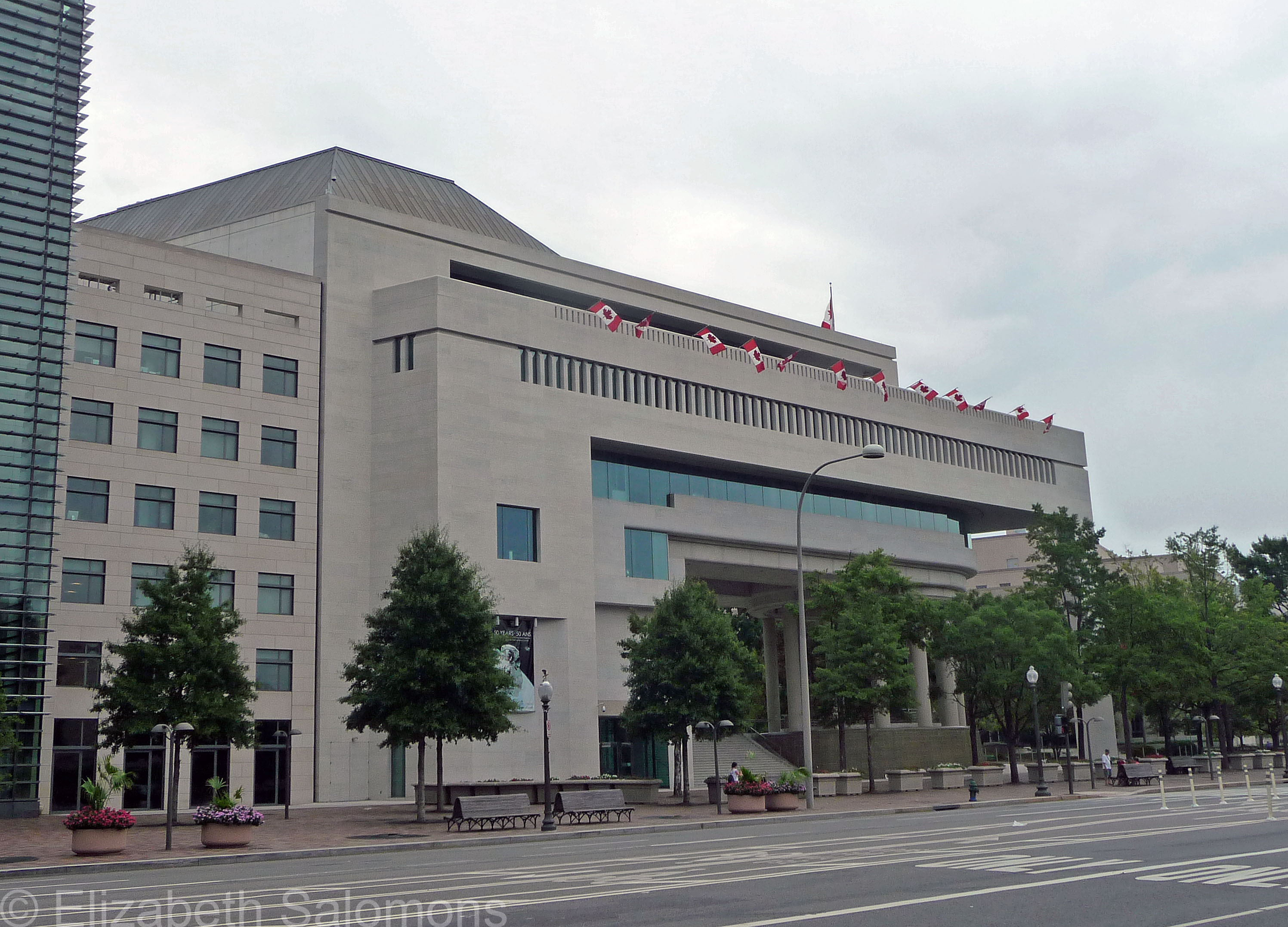
As you approach the embassy, its façade is imposing, but not severely so. The Rotunda of the Provinces and Territories consists of 12 pillars, representing 10 provinces and two territories. (Nunavut was not yet in existence when the embassy was built.)

The waterfall that surrounds the rotunda is meant to represent Niagara Falls, the world-famous waterfall that straddles the Canada–US border.
In the courtyard, resting in a pool of water, is the bronze statue Spirit of Haida Gwaii, the Black Canoe by Bill Reid. (A second casting of the same sculpture, Spirit of Haida Gwaii, the Green Canoe, is in the International Terminal at YVR Airport.)


The embassy opened in 1989 and is located on Pennsylvania Avenue between the United States Capital and the White House.


 There and Back Again