
Through My Lens: Tree Bathing

In what seems to have become an annual event, I was once again camping at Little Qualicum Falls with my extended family a couple of weeks ago. A good time was had by all as we enjoyed all the rituals of a weekend in the Canadian forest: hiking, swimming, s’mores around the campfire …
Also tree bathing. The Douglas firs do take your breath away.
Happy Birthday, Arthur Erickson!
Architecture, as I see it, is the art of composing spaces in response to existing environmental and urbanistic conditions to answer a client’s needs. In this way the building becomes the resolution between its inner being and the outer conditions imposed upon it. It is never solitary but is part of its setting and thus must blend in a timeless way with its surroundings yet show its own fresh presence.
— Arthur Erickson
Google “world’s top architects” and he doesn’t merit so much as a mention, but Arthur Erickson is arguably Canada’s best internationally known architect. He was born in Vancouver 100 years ago today.
After serving in the Canadian Army during and after World War II, Erickson had plans to become a diplomat, but his interests turned to architecture upon seeing the work of Frank Lloyd Wright. He completed his studies at UBC, went on to McGill, and also studied in the Middle East, Greece, Italy, and Japan. In 1962, after a decade spent teaching and designing, he opened his Vancouver-based architecture firm in partnership with Geoffrey Massey. After they won the competition to design Simon Fraser University, there was no stopping him.
Some say that Erickson’s architecture should be as well known as Margaret Atwood’s novels or Emily Carr’s paintings. Certainly his buildings have shaped the look of Vancouver. Erickson also shaped architects — many moved to Vancouver to work under his mentorship.
Centenary events are happening throughout Vancouver this summer. My own commemoration will consist of a series of blog posts about some of his most important Vancouver projects.
But, to begin, today I’m posting about the only building of his that I’ve photographed outside of Canada. That would be the Canadian Embassy in Washington, DC.

I don’t usually make a point of checking out Canadian embassies during my travels (unless required to, as happened during an unfortunate episode while in London on route to Paris — that’s a story I keep meaning to tell but haven’t gotten around to yet). However, I can attest that the Canadian Embassy in Washington is magnificent, and definitely worth a look-see.
If you’ve ever visited Washington, you know it’s a sea of Neoclassicist buildings. Erickson had to work under a series of restrictions so that the building he designed did not stand out too much from its surroundings.
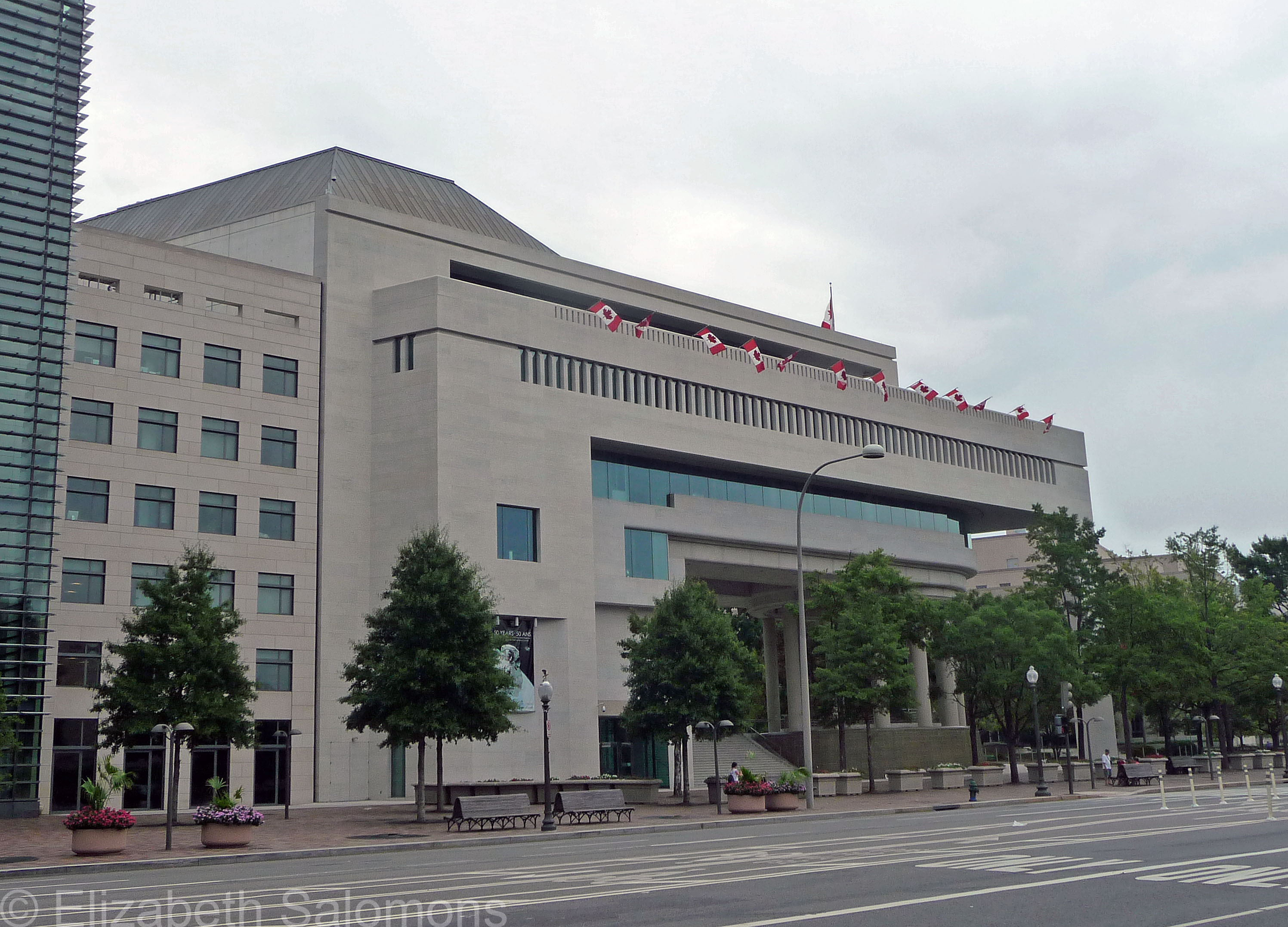
As you approach the embassy, its façade is imposing, but not severely so. The Rotunda of the Provinces and Territories consists of 12 pillars, representing 10 provinces and two territories. (Nunavut was not yet in existence when the embassy was built.)

The waterfall that surrounds the rotunda is meant to represent Niagara Falls, the world-famous waterfall that straddles the Canada–US border.
In the courtyard, resting in a pool of water, is the bronze statue Spirit of Haida Gwaii, the Black Canoe by Bill Reid. (A second casting of the same sculpture, Spirit of Haida Gwaii, the Green Canoe, is in the International Terminal at YVR Airport.)


The embassy opened in 1989 and is located on Pennsylvania Avenue between the United States Capital and the White House.


Manoa Falls
In spite of the beauty of Lanikai Beach just down the street from us, my sister and I were determined to thoroughly explore Oahu and not spend all our time on the beach.
First up? Hiking Manoa Falls.
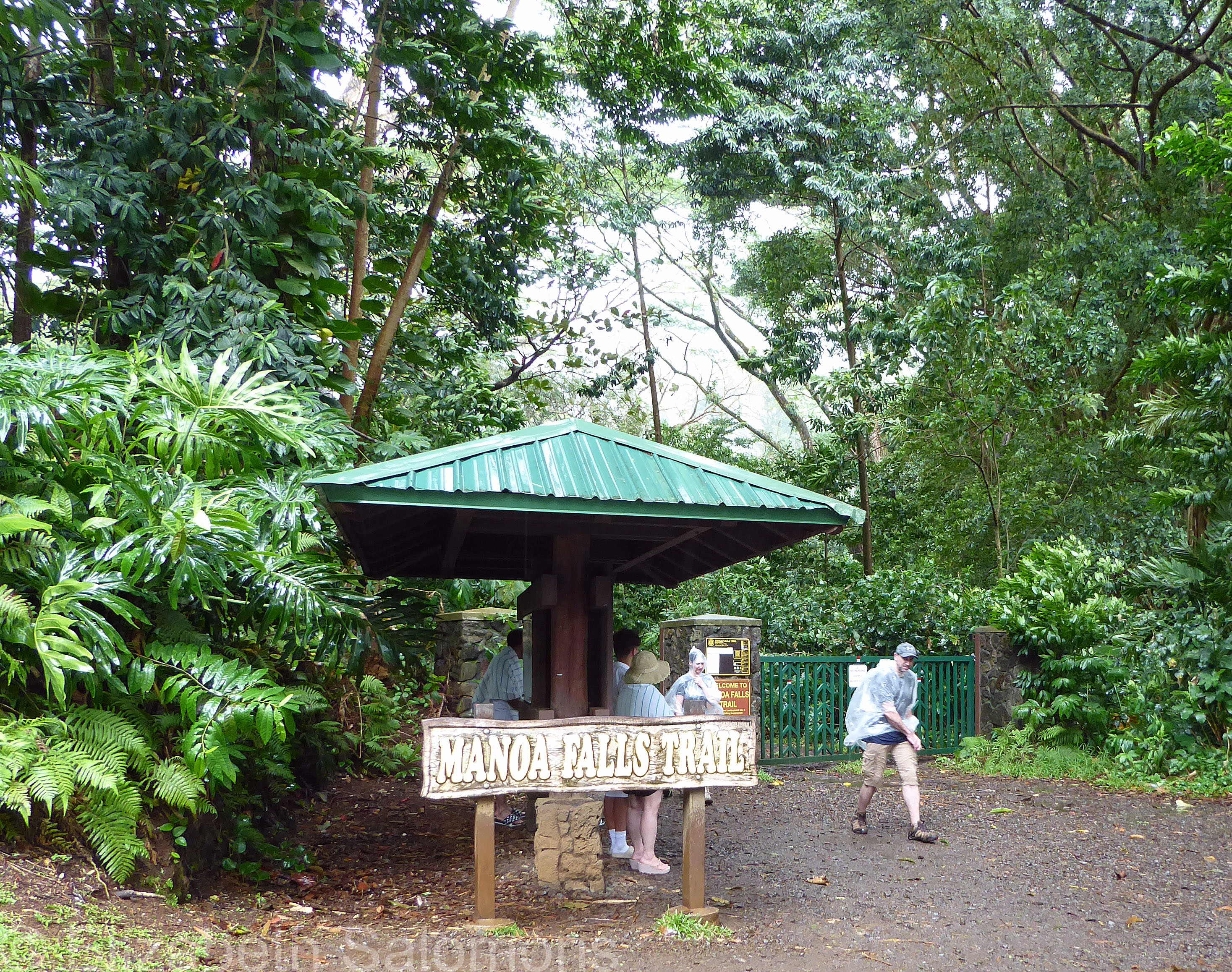
And this is where we realized that visiting Hawaii during the rainy season means … it’s gonna rain. (In other words, the top on our Mustang convertible was up far more than it was down.)
No matter. What’s a little moisture for two Vancouverites?
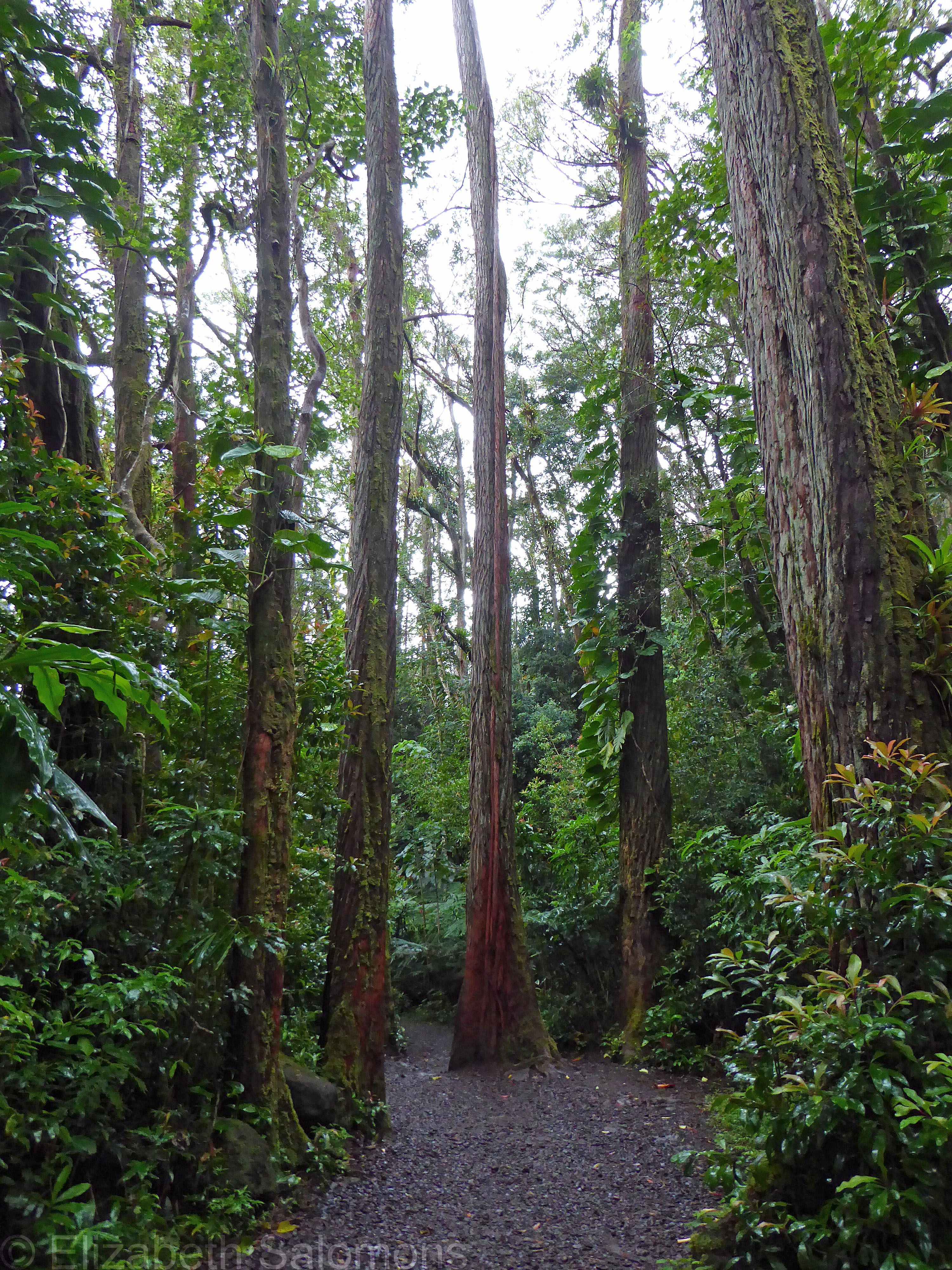
The trailhead of Manoa Falls Trail is reached by driving uphill through the suburbs of Honolulu. From the parking lot, it’s a short hike to the 45-metre-high falls.
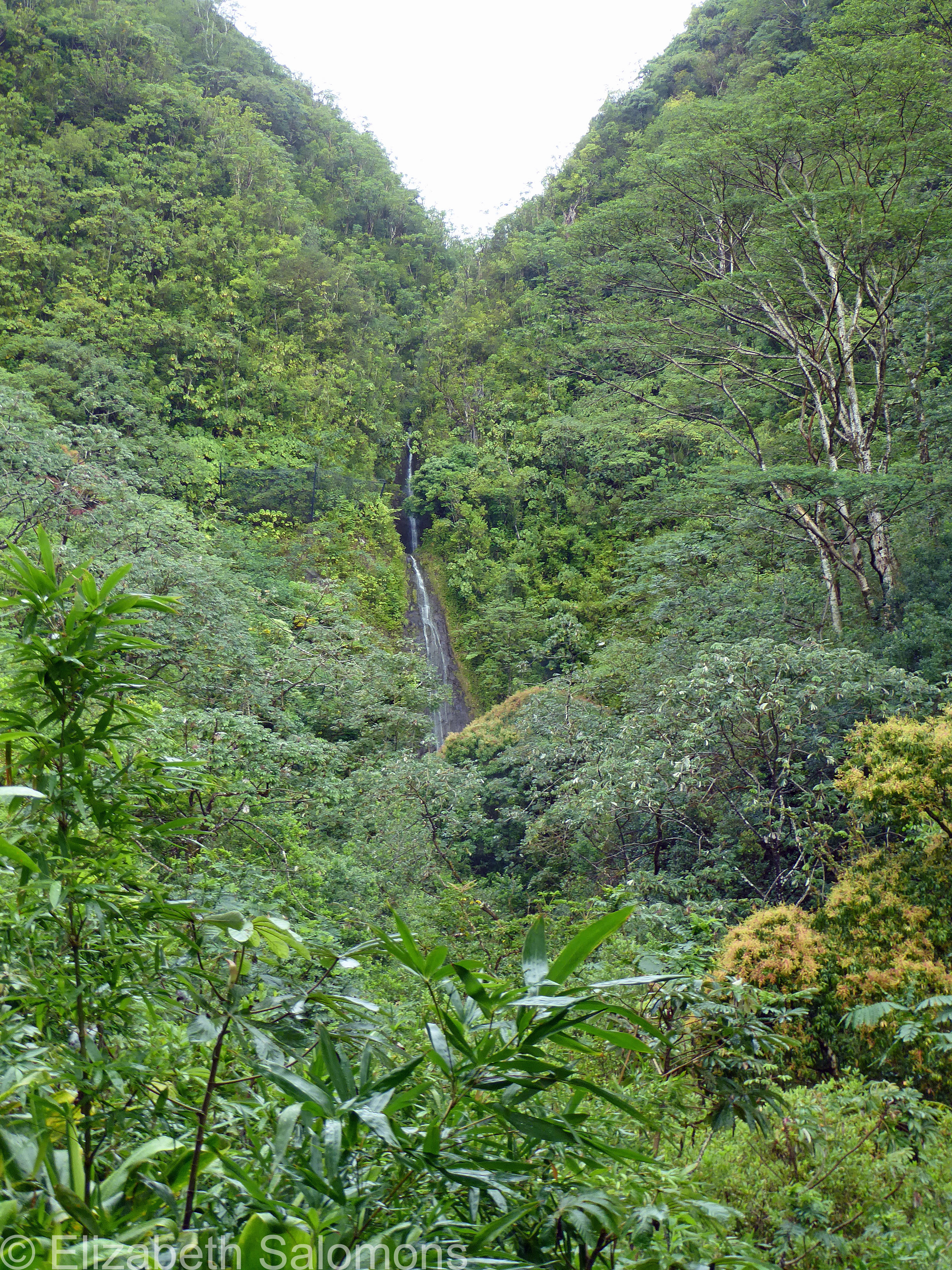
The trail is rocky and damp, but not at all difficult if you are sure-footed and wearing proper footwear. It doesn’t take long to reach the falls themselves.

Along the way, we got our first good look at the tropical rainforest that makes up Oahu. Think Jurassic Park — parts of which were filmed in this valley.

As you will see in my subsequent posts, the geology and botany of the Hawaiian Islands are stunning. It impressed me on my first ever visit to Oahu, and it was just as amazing to me on my most recent visit.
Lanikai Beach
So. We had arrived. We had wheels. Oahu was our oyster. What to do first?
Naturally, we went to the beach.

Hawaii is about so much more than its beaches, but, even so, it was a real treat to have a quiet, uncrowded beach walking distance from where we were staying. Lanikai Beach is not only one of the best beaches in Hawaii, but, some say, one of the best in the world. The colour of the water has to be seen to be believed.
The beach is backed by private residences and access from the street is through several public access walkways. There is no parking or facilities and it definitely has the vibe of a private beach in an upper-class neighbourhood.
The twin islands are called Na Mokulua (the two islands) or, simply, “the Mokes.” They are a popular destination for kayakers and we could see people sunbathing on the beach of the northern (left) island. The other island is a bird sanctuary and off-limits to the public.

Writing this post on a dreary, rainy day in Vancouver, it all seems like a dream, now. My sister and I checked out a number of beaches during our time on Oahu, but Lanikai was, by far, the best. My only regret is we didn’t spend more time here.
The Northern Lights
The whole world, it seems, was caught up with the light show happening in the skies above two nights ago, thanks to a geomagnetic storm on our nearest star. I myself jumped on the bandwagon and took a walk down to the beach around 11 p.m. to see what I could see.
To be honest? I was a little disappointed. As soon as I stepped out into my street, I looked up and saw a green haze overhead, visible even with all the light pollution generated in my neighbourhood, one of the most densely-populated postal codes in all of Canada. Down by the water, where it’s much darker, I could see that the haze was definitely aurora borealis, but it was faint. I set up my tiny camera on my tiny tripod, balanced it on a beach log, and tried a variety of exposures. This photo, taken with a 30-second exposure, was the best of the lot. The only editing I did was some cropping. That pink you see? Not visible to the naked eye. It only comes through with the long exposure.

Some years ago, I was travelling from Nanaimo to Vancouver late at night, and spent most of the ferry trip on the outer deck in the dark, watching a vivid display of dancing emerald green over the North Shore mountains. At the time, I didn’t know what I was looking at, but later realized it must have been the Northern Lights I had witnessed.
I didn’t know what I was looking at because it’s rare to see the Northern Lights this far south. In Alberta, they were almost routine. I remember many a winter’s night in Edmonton seeing white streaks of light in the sky like will-o’-wisps as I went about my evening.
The most spectacular Northern Lights’ display I’ve ever seen, and my first time seeing them in colour, was one summer while camping in northern Alberta with my sister and a friend. This was the same friend I had trained around Europe with the year before, and she and I started reminiscing about our travels as we sat around the campfire. My sister had long gone to bed when we noticed the Northern Lights above us. The mesmerizing dance of pink and green was unlike anything I’d ever seen.
I was kinda hoping for the same the other night. My suspicions are that the light pollution of downtown Vancouver interfered with my experience.
Even so, we got lucky this weekend with summer-like temperatures, so it didn’t take much effort to step out for a quick stroll before bed, and share an amazing other-worldly experience with dozens of strangers doing the same.
Arrival
It doesn’t matter where you go or how long it takes to get there. That feeling of “we’re here!” is always such a welcome sensation.
Having been to Oahu once before, I had some expectations about our arrival: the tropical temperatures as soon as you step out of the plane, the long arrivals hall at the airport sans walls (unheard of in Canadian airports), the ubiquitous palm trees …
Collecting a rental car at the airport is not typical for me, and we were both surprised at the long queue ahead of us. But once we were inside our Mustang convertible, we were up and on our way.
Arriving at a home exchange always involves one surprise or another. You read the description of the home and your hosts’ instructions carefully, but not everything completely registers until you see it in person. Hotel rooms are generic and pretty much all the same; a home is personal. It can be quirky and not quite what you expected. It can wildly exceed your expectations. Or, it can be both.
This home exchange was in Lanikai, which is a suburb of the town of Kailua on the windward side of Oahu, about a half hour drive from Honolulu. Kailua means “two currents” and is so named because of the two currents that run through Kailua Bay.
From the deck on the upper floor of the hill house where we stayed, we had a view of that bay. Here’s the first photo I took, within minutes after our arrival.
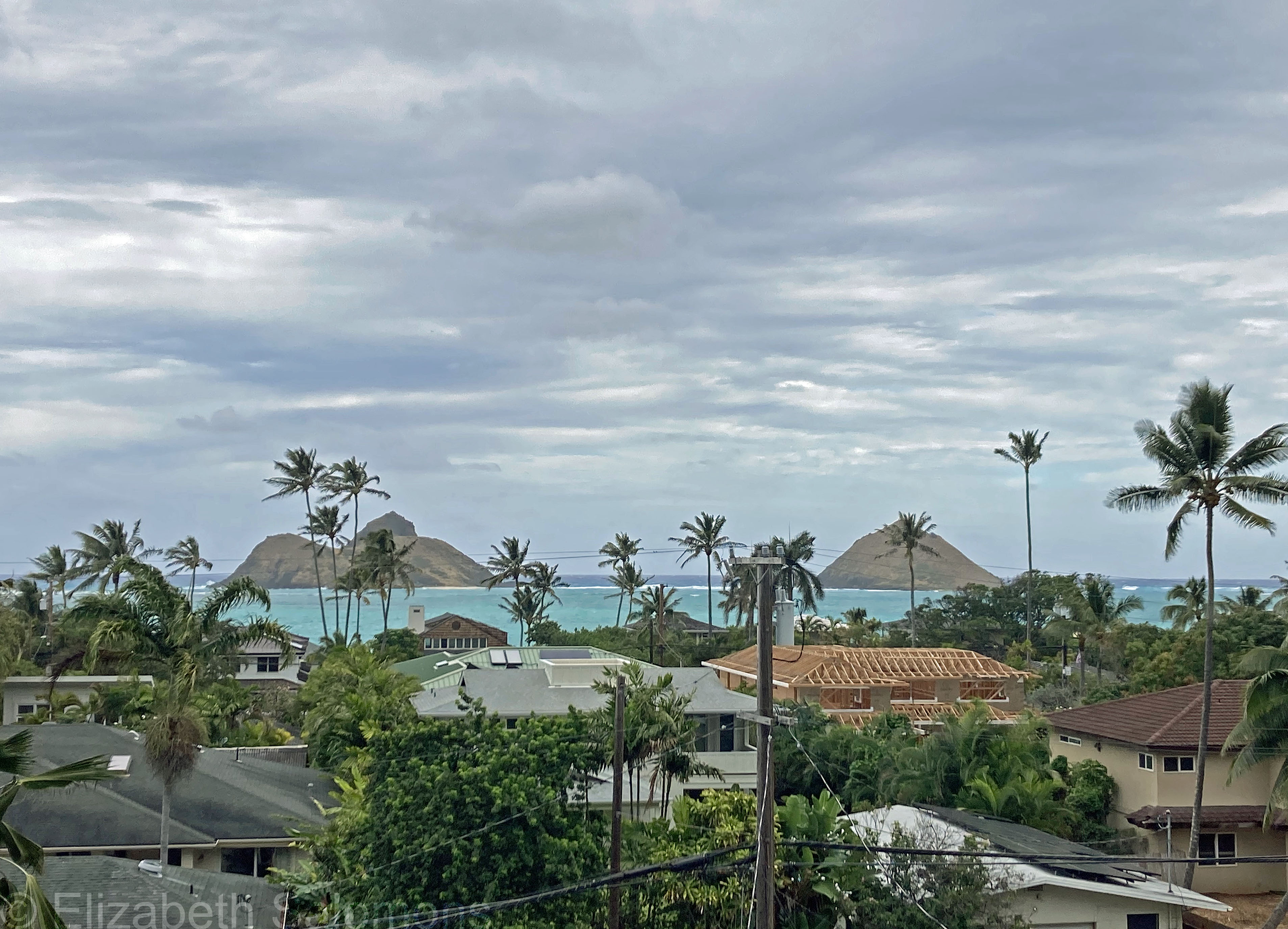
And here is the photo of our first sunrise the next morning.
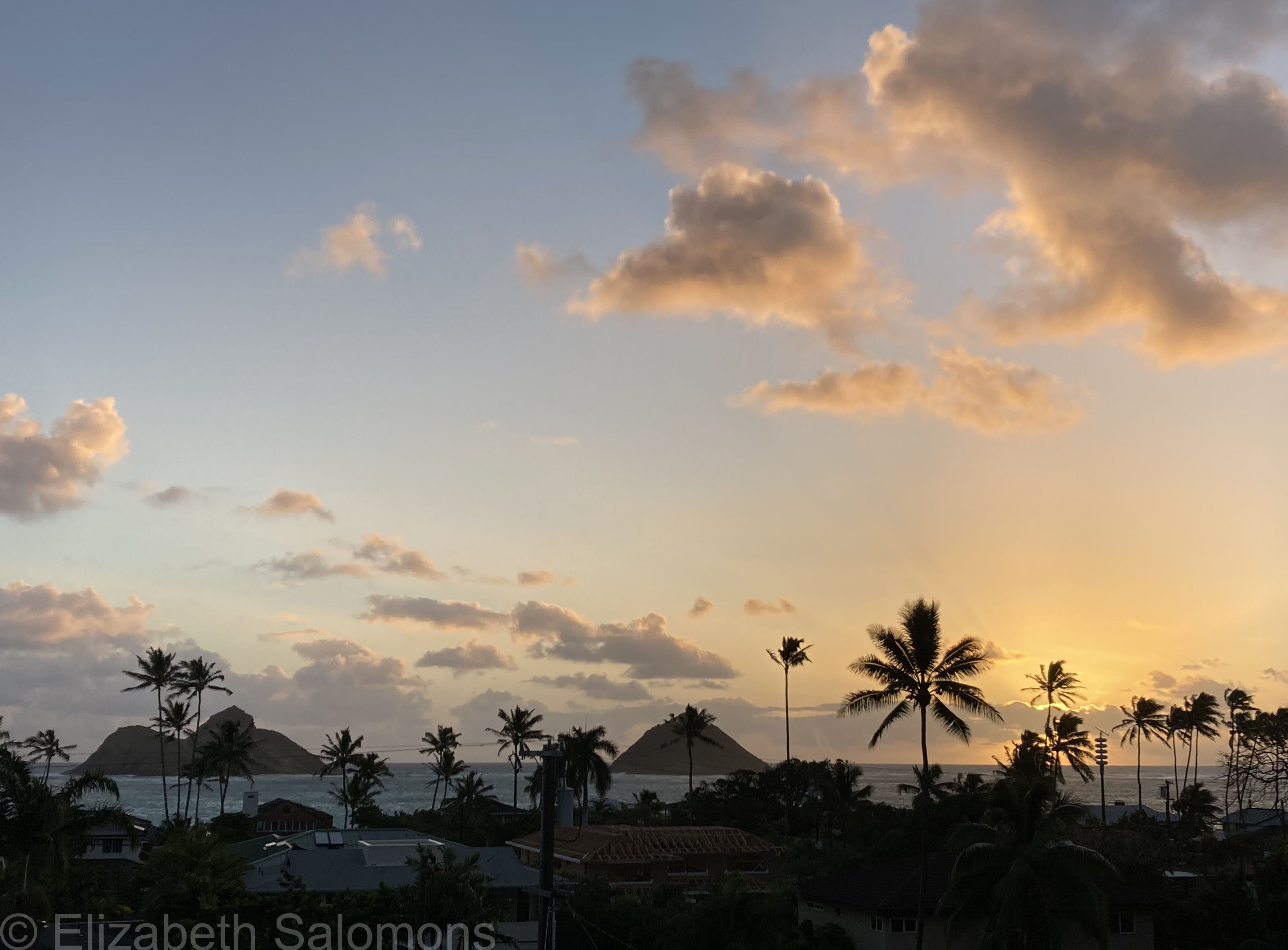
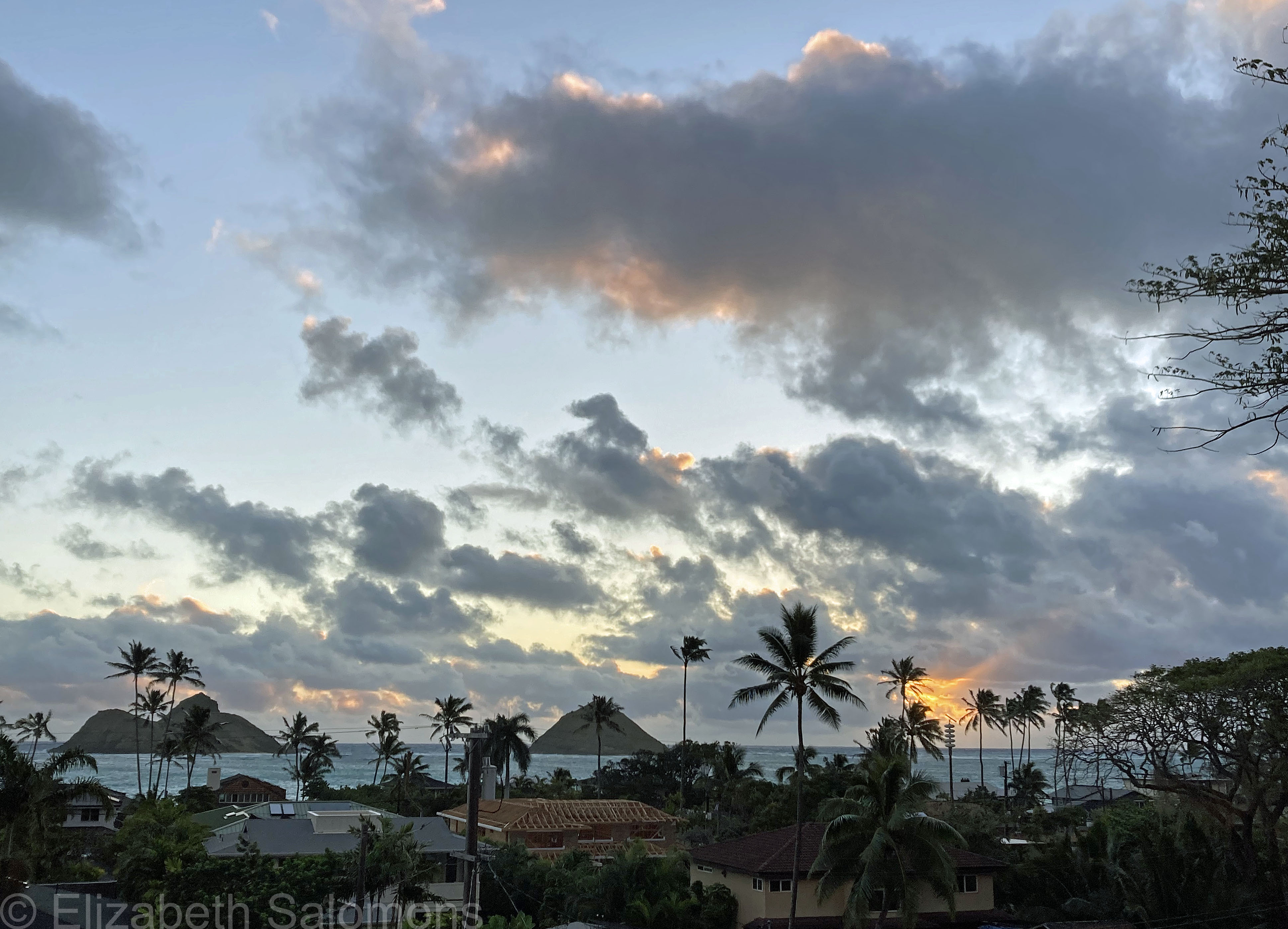
More or less by fluke, we ended up living on Vancouver time the entire week we were in Hawaii, which maximized our daylight hours, but also made it easy to get up every morning in time to see the rising sun peeking over the palm trees. The glorious thing about sunrises (or sunsets) is they are never the same.
Here’s another one.
Happy Easter!
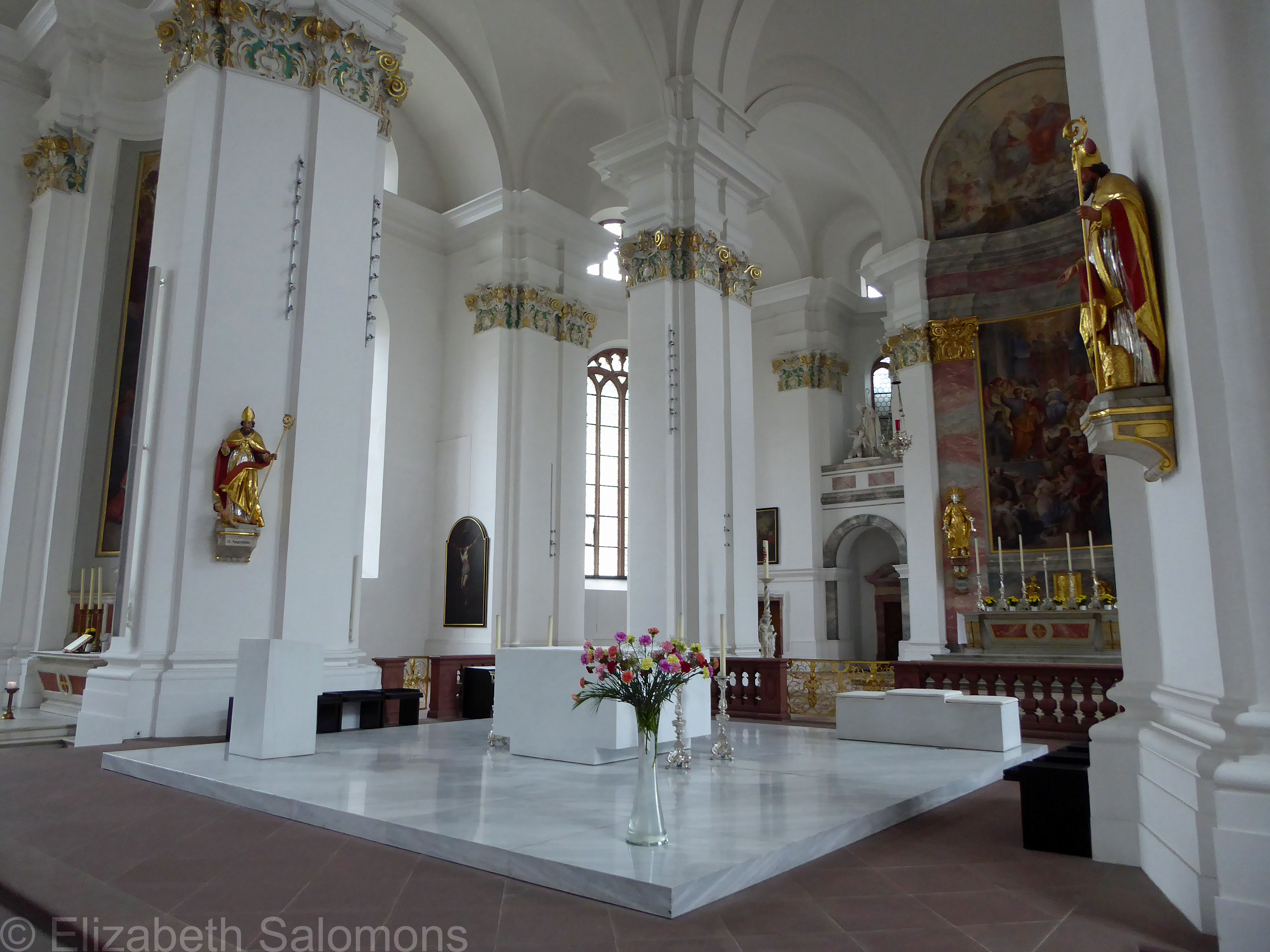
Jesuitenkirche, Heidelberg, September 2017
Through My Lens: Jesuitenkirche

For the past two Sundays, I posted photos of the Protestant Church that stands over the Old Town of Heidelberg. For today, Palm Sunday, I’m posting a photo of the Catholic Church that stands in the centre of Heidelberg’s Old Town. That would be the Jesuitenkirche (Jesuit Church).
This church, built in the Baroque style, was constructed in fits and starts throughout the eighteenth century. The Jesuits began the process in 1712, with the Elector Palatine at the time, Johann Wilhelm II, donating the land. The stone came from the Heidelberg Castle and the lumber from nearby forests. A bell tower (not seen in this photo) was added at the end of the nineteenth century.
After the Jesuit order was abolished in 1773, the church was taken over by the Lazarists. It later served as a hospital before eventually becoming the parish church of the local Catholic community in 1809.
Through My Lens: Inside the Heiliggeistkirche
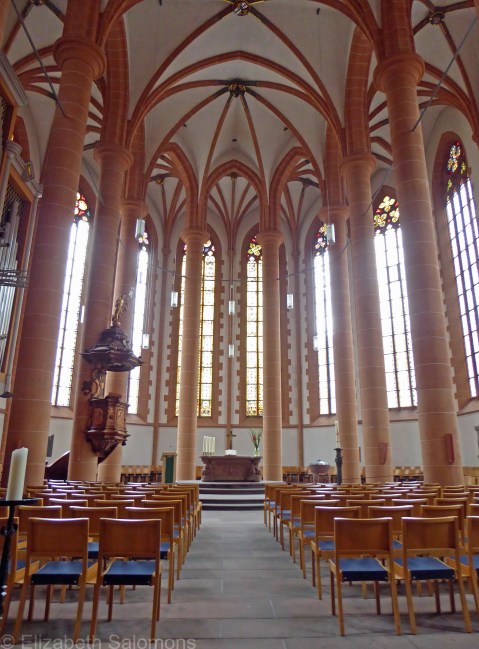
Last week I posted a photo of the Heiliggeistkirche in Heidelberg and today, for the Fifth Sunday of Lent, I’m posting a photo of what it looks like on the inside. That pink sandstone you see is from the Neckar Valley; it was used to build much of Heidelberg’s Old Town.
Like many churches in northern Europe, the Heiliggeistkirche was originally Roman Catholic. Today it is Protestant, but for much of its history, a wall divided the nave from the chancel and a second altar was built in the centre of the church. That way, the church could accommodate both Catholic and Protestant worshippers. The wall was not removed until 1936.
Hawaii Redux
Did you guess that Hawaii was the destination of my winter break? If so, you would be right.
It was my first time back to the Aloha State since my first visit more than 15 years ago, and it was lovely to be there. So very lovely.
I have many photos to choose from, but I decided to post this one first because, to my mind, Diamond Head is as iconic a symbol of Hawaii as the pineapple I posted last week.


