
Merry Christmas!

Morton Park, English Bay, Vancouver
Through My Lens: Kensington Place
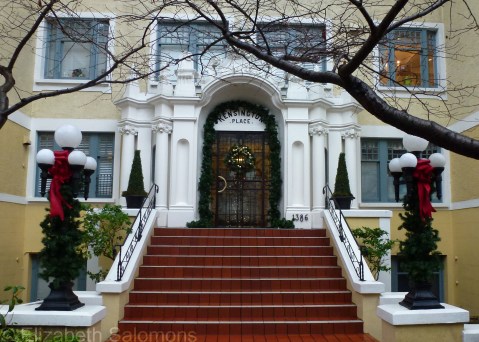
Just in case I am giving you the impression that only Europe knows how to dress for Christmas, here is a photo I took yesterday. This apartment building was built in 1912 and is a lovely piece of the West End’s historic past.
Through My Lens: Puerta del Sol
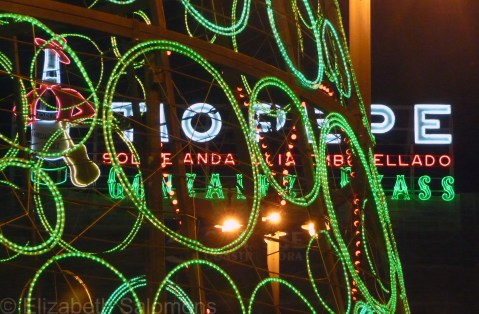
Just in case I am giving you the impression that only Paris knows how to dress for Christmas, here is a photo I took in Madrid’s Puerta del Sol in November 2010. This is the famous Tio Pepe neon sign framed by a towering Christmas tree of lights.
Les Fenêtres de Printemps
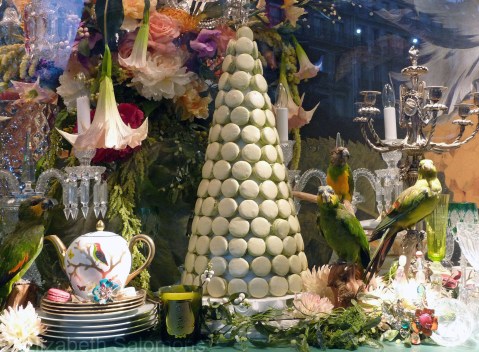
One thing the spectacular Parisian department stores do spectacularly well are its Christmas windows. They are so popular that the crowds in front of them extend from window to curb.
Which means it takes a great deal of patience to see them properly. After rather a lot of waiting and a little bit of clever maneuvering, I was able to get in close enough to take these photos of the Printemps department store windows on Boulevard Haussmann during the 2010 Christmas season.
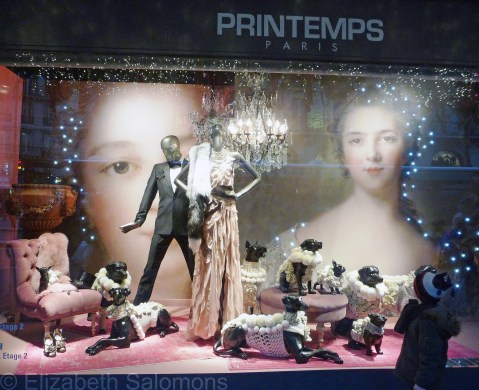
Often the Parisian department store windows have holiday themes related to Broadway musicals or animated films. (Yes, Disney has taken hold of Paris, too. I hear the windows of Galeries Lafayette are filled with, um, monsters this year.)
But these Printemps windows, not so much. I liked them especially because they were so quintessentially French. Created in collaboration with the Lanvin fashion house, the theme was Noël au Château (Christmas at the castle). Each window represented a different room in the château, lavishly decorated in that way the French do best and transporting me back to another century.
Which century? Why, the eighteenth, of course. When fashion was at its most opulent and France’s Ancien Régime was in its dying days.
Un noël XVIIIe siècle. Now there’s a theme I can get into.

Galeries Lafayette
I hate shopping.
I especially hate shopping this time of year. I’m sure I’m not the only one.
But … there’s one place on this planet where I love to go shopping.
Do I need to say it?

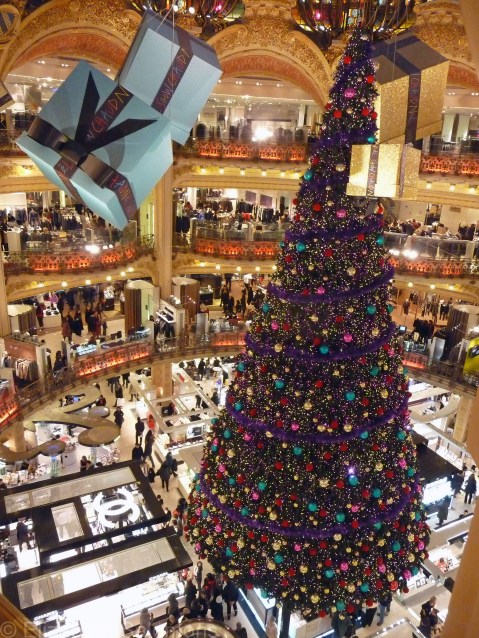
Paris has some spectacular department stores. This one, Galeries Lafayette, opened its doors in 1912. When you get there (because, really, everyone should go shopping in Paris at least once in a lifetime), be sure to check out the atrium with its glass dome.
And the food hall. Don’t forget to visit the food hall.
Sarasota Mural
Oh, look! It’s another mural.

This one is in Sarasota, Florida. I think it’s obvious why I like it.
Through My Lens: Malá Strana

And now for something completely different. Just because.
Malá Strana is Czech for “little quarter.” It’s located across the Vltava River from Prague’s Old Town.
Through My Lens: Florida Beach
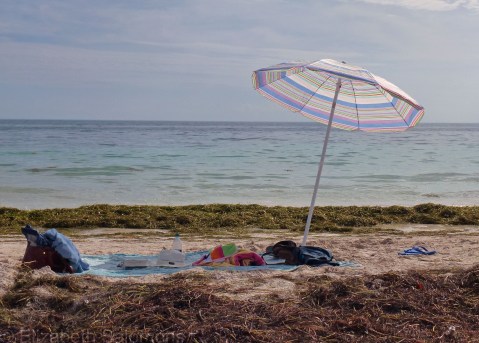
Speaking of migrating birds, most of the Canadian snow birds have flown south and are nicely settled in their warm(er) locales. I won’t be enjoying a tropical break this winter, but I can still dream about lying on a beach.
Like this one.
I took this photo last winter on the Atlantic side of the Florida Keys.
Through My Lens: Misty Mountain

November is notorious for being wet and windy in Vancouver, but we skiers don’t care. The more rain in the city, the more snow on the mountains. But this has been an unusual November in that the weather has been cold and clear for several weeks now. (Naturally, “cold” in Vancouver is relative; it’s hovering around 0°C most mornings ― quite balmy by Canadian standards.)
Turns out that cold and clear is perfect snow-making weather. Machine-made snow makes an excellent base, so as long as it doesn’t warm up when it (inevitably) starts to rain, we’re looking at a pretty good ski season. I can’t wait.
Someone must have known that, because this weekend the local mountains opened for the season.
The above photo was taken from Mount Strachan at the Cypress Mountain ski resort.
Reifel Bird Sanctuary

A couple of Sundays ago, I called up a friend.
“The snow geese are in town!” I said. “Let’s go check them out.”
And off we went.
Our destination was the Reifel Bird Sanctuary on Westham Island at the mouth of the Fraser River. My friend and her daughter are frequent visitors; they came well prepared with little bags of bird seed ― one for each of us. (You can also buy seed at the entrance for a dollar a bag.)
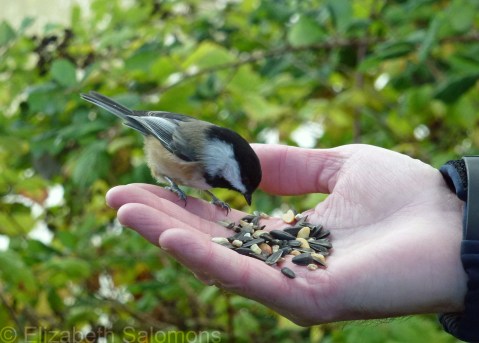
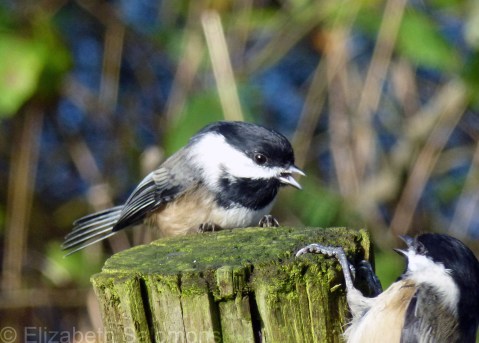
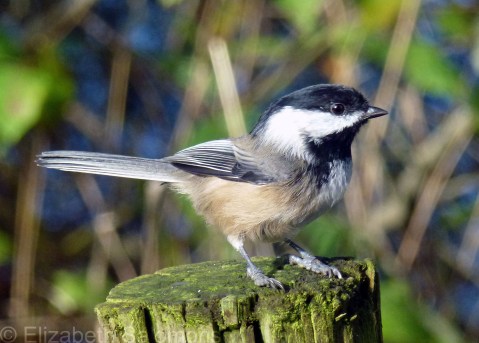
Within minutes of our arrival, we had Black-capped Chickadees eating out of our hand.
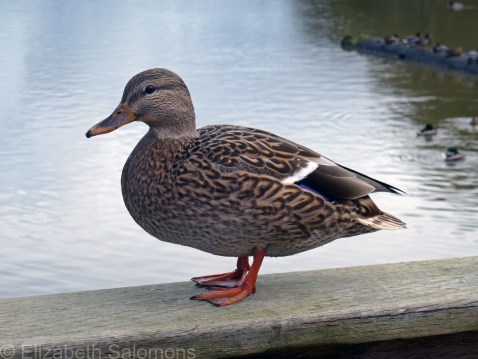
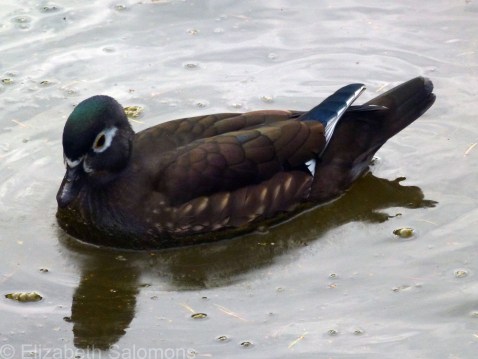
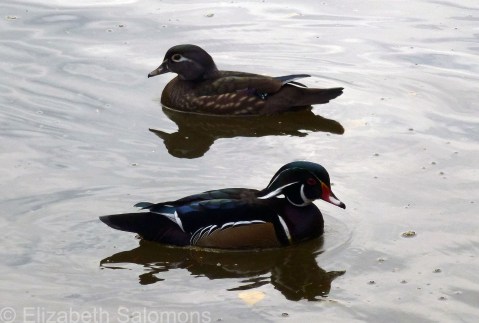
We saw a lot of waterfowl. Like these Wood Ducks.

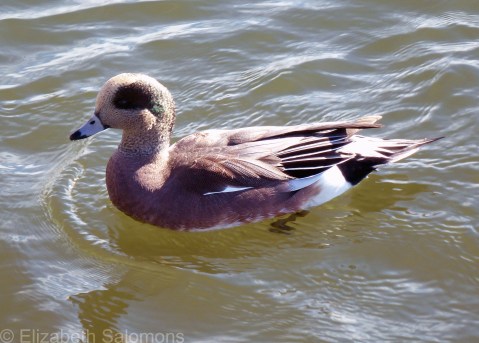
And these American Wigeons.

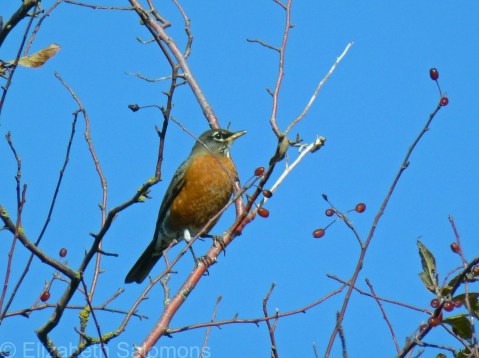
American Robins, too.
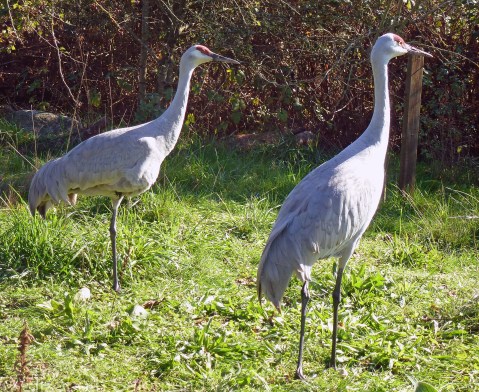
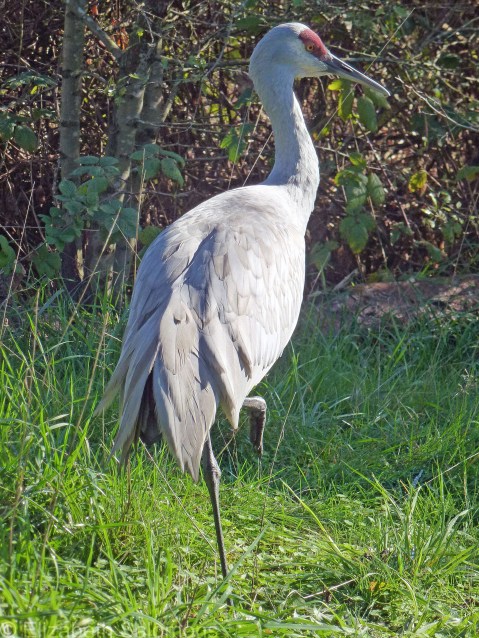
There were Sandhill Cranes.
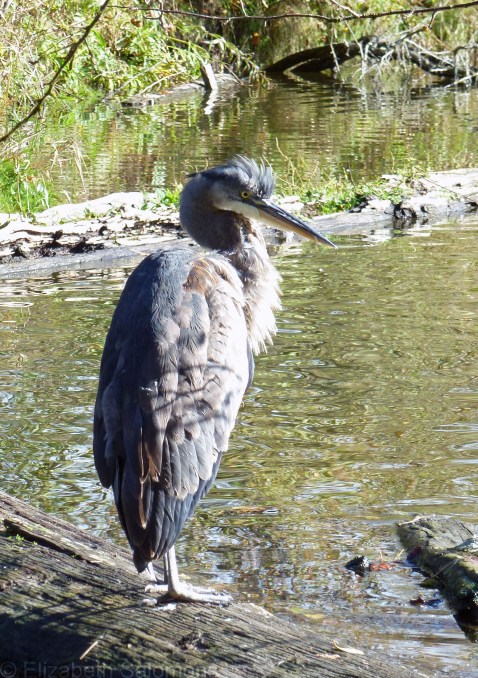
And my old friend, the Great Blue Heron, was there.
We did see our snow geese (a gaggle of them), congregated on a muddy field (as they are wont to do) just outside of the sanctuary. They attracted numerous photographers (a clique of them), all of us gathered on the road that bordered the field, cameras at the ready.
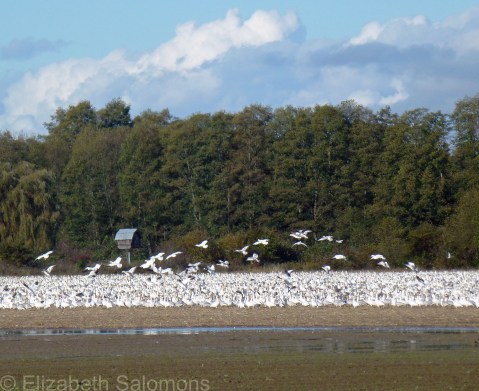
The Lesser Snow Geese spend their summers on Wrangel Island in the Russian Arctic and their winters in the Fraser and Skagit River estuaries. My friend lives just on the other side of the river from the bird sanctuary, and she told me the snow geese are frequent visitors to her daughter’s school. The kids have to be kept indoors on days when the snow geese decide they want to hang out on the school’s playing field. (Every Canadian knows what Snow Days are, but who knew there were Snow Geese Days?)
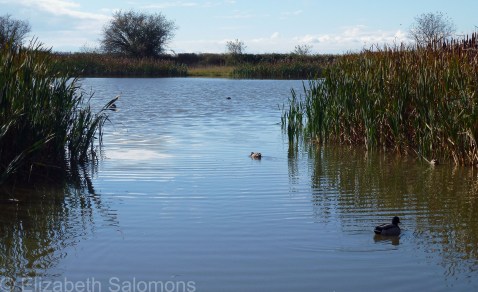
The George C. Reifel Migratory Bird Sanctuary consists of 300 hectares of marshland in the Fraser River Estuary and is a key stop for birds migrating along the Pacific Flyway. Dykes are used as walkways, giving visitors access to much of the sanctuary, including bird blinds and an observation tower. More than 250 species of birds have been spotted here; prime time viewing is during the fall and spring migration. And with an admission fee of $5 per adult and $3 per child (annual memberships also available), it’s a cheap day out.
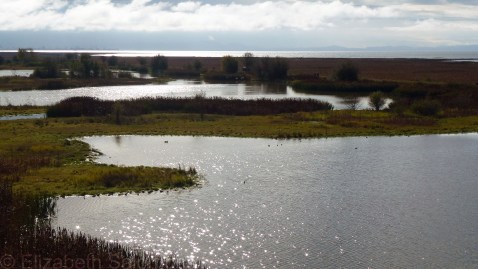
One last tip: Pay attention to the birders with the supersize camera lenses. Chances are those lenses are pointed at something you want to see.


 There and Back Again